Features
Tech Focus: KT Super K 2 Drive Pro Carbon – Rethinking the Foil Assist Experience
Foil Assist technology has come a long way in a relatively short space of time, and as the systems have evolved, so have the boards designed to accommodate them. What started with motors and batteries attached to conventional foil boards has developed into an entirely new category of equipment, with manufacturers looking for ways to integrate the technology without compromising the performance of the board itself. It’s an interesting engineering challenge, particularly when you consider that the characteristics we want from a high-performance foil board aren’t necessarily compatible with the practical requirements of a motorised system.
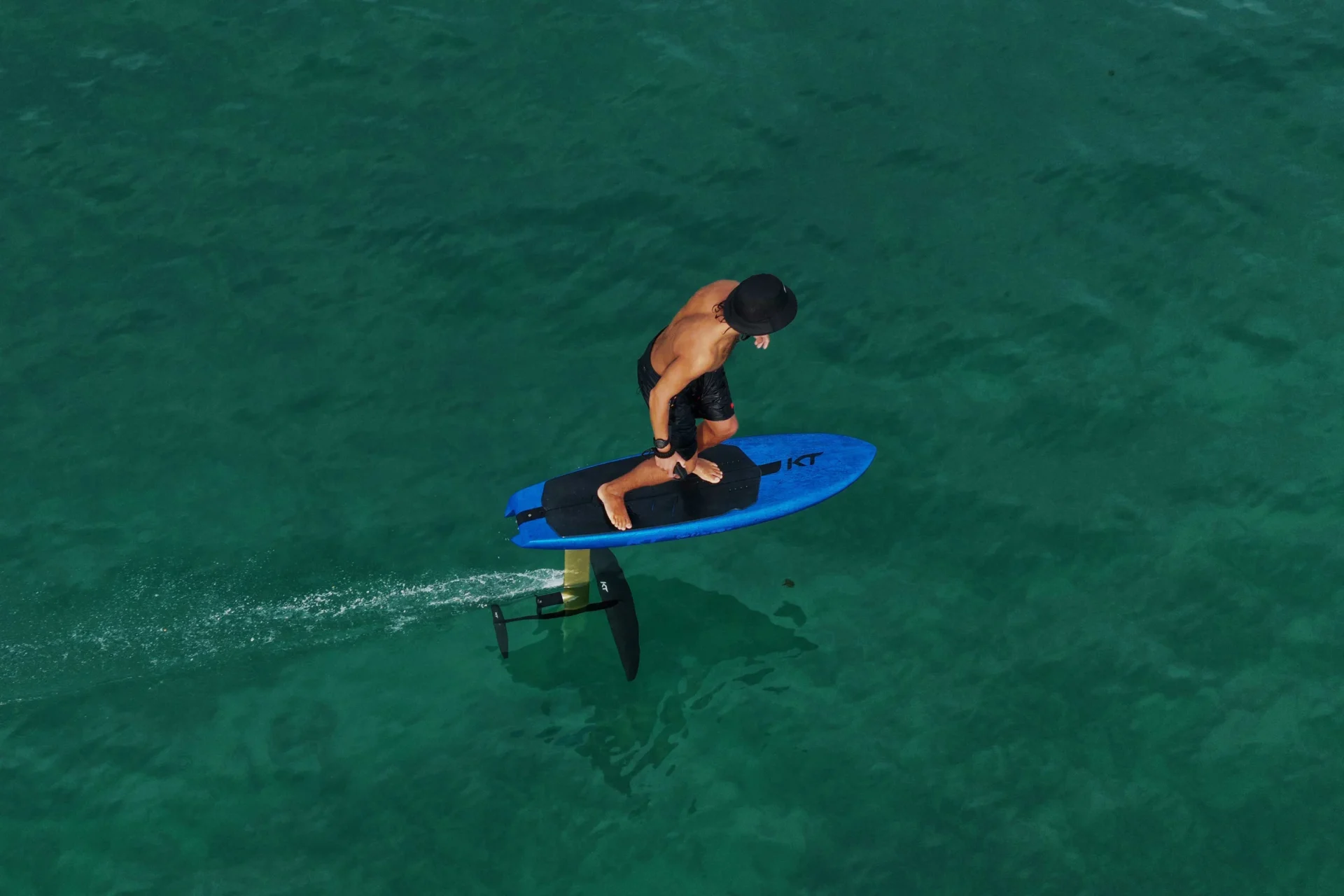
KT Foiling has been tackling this problem with the new Super K 2 Drive Pro Carbon, a board developed in collaboration with Foil Drive rider and employee Ryan Arzy. Based on the popular Super K 2 platform, the Drive version introduces a purpose-built recessed trench, an innovative removable carbon cover, and a number of subtle design changes aimed at improving both performance and everyday usability. We caught up with Ryan at AWSI in Hood River to find out how the project came together and why some of the smallest details proved to be the most important.
The Battery Problem
One of the biggest challenges with integrated Foil Drive boards is battery accessibility. Recessing the motor and battery into the underside of a board makes sense from a performance perspective, but traditionally, the trench needs to fit closely around the unit to minimise drag. The problem is that a tightly fitted trench makes changing batteries difficult, often requiring riders to loosen or completely remove the Foil Drive system before they can access the battery.
For Ryan, who works with Foil Drive and spends plenty of time using the equipment, this was one of the first problems that needed solving. “I work for Foil Drive, so working on a system that’s really convenient but performance-oriented is really important to me,” he explained when we met at AWSI.
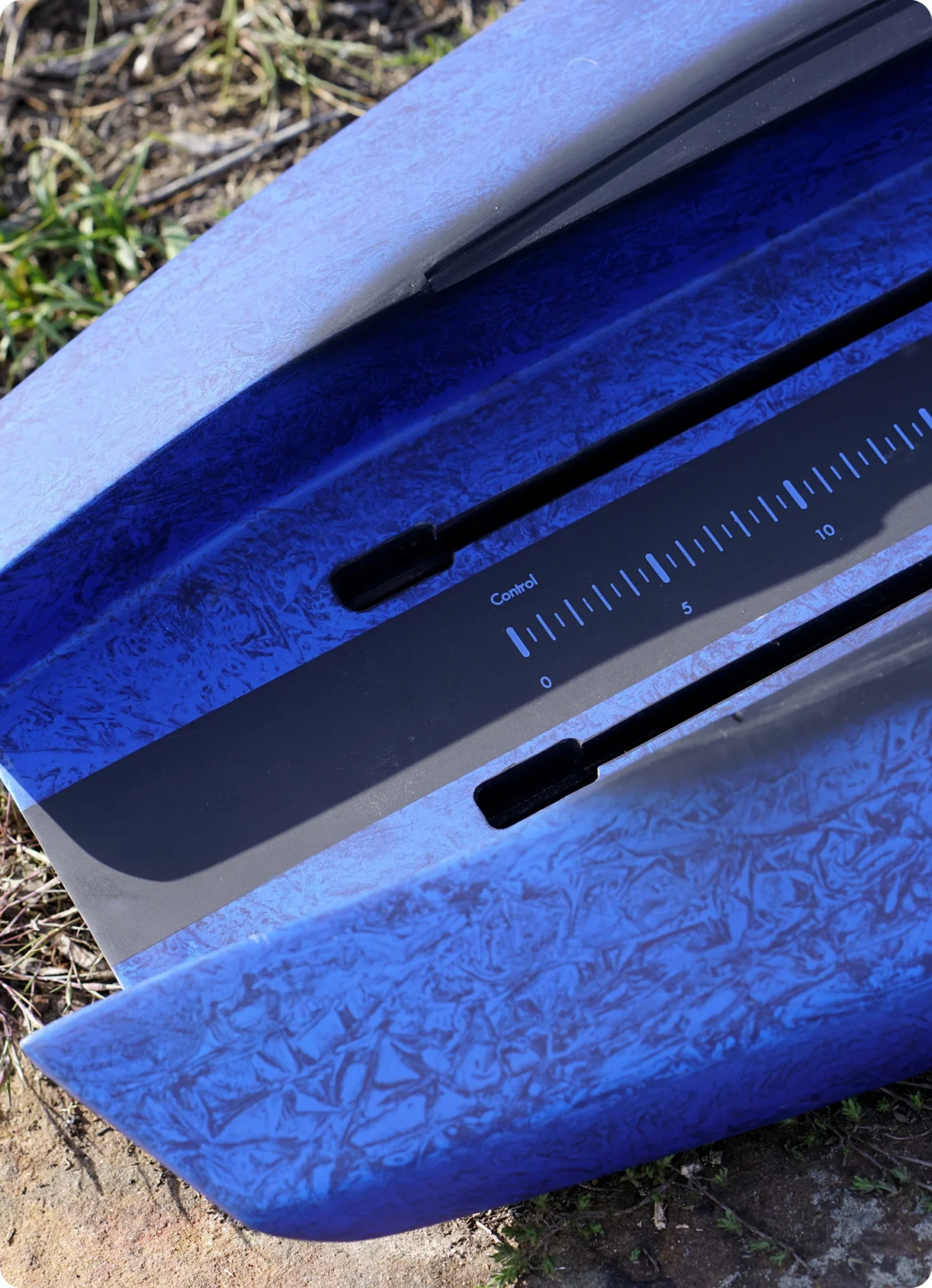
The solution was to make the trench considerably longer and wider than conventional designs, providing enough clearance to open the battery latches and remove the battery without disturbing the mounting system. KT states that the design accommodates the new Foil Drive MAX+, MAX, and Slim batteries in most common track positions, with the board also listed as compatible with the newer Fusion system.
It sounds relatively straightforward, but finding the right dimensions and positioning required more than a year of development. “We had so many iterations of how do we get this to fit? How do we make this practical? Where do we put the boxes so that in most positions of the board, people could still remove the battery?” Ryan told us.
Of course, creating a larger trench introduces another problem. The additional exposed cavity can increase drag when the board comes into contact with the water, particularly during take-offs and touchdowns. Solving one issue potentially makes another worse, which is where the cleverest part of the design comes into play.
“We’ve been working on this for over a year to really get the fitment of the unit underneath the cover, make the battery swaps easy without having to remove the unit from the board.”
Closing the Gap
The standout feature of the Super K 2 Drive is its removable carbon trench cover. Rather than compromising between battery accessibility and hydrodynamic efficiency, KT has developed a system designed to address both.
The trench remains large enough for convenient battery changes, but once the battery is installed, the carbon cover closes the exposed cavity, creating a cleaner underside profile. According to KT, this reduces the amount of water interacting with the trench during take-offs and touchdowns, helping the board release more cleanly and reducing the sticky sensation associated with larger open cavities.
It’s a neat solution, and one that riders can experiment with themselves by using the board with and without the cover installed. The cover is secured using three M6 screws with T30 heads, which is another small but carefully considered detail. Foil Drive owners already have a T30 tool supplied with their system, so there’s no need to carry additional equipment, and KT includes spare screws with the board.
“The removable carbon trench cover is the standout innovation, allowing riders to combine convenient battery access with a cleaner underside profile.”
Ryan was particularly enthusiastic about the versatility this creates. During a recent downwind session, he removed the Foil Drive system, fitted his conventional mast, and used the board with the carbon cover installed. Although water and air can enter the cavity while the board is stationary, he explained that once the board begins planing, the water quickly evacuates.
The result is a board designed to work across multiple disciplines rather than being restricted to Foil Assist use. For riders who regularly switch between powered and unpowered foiling, that’s an attractive proposition, particularly when the alternative might be owning several different boards.
A More Direct Connection
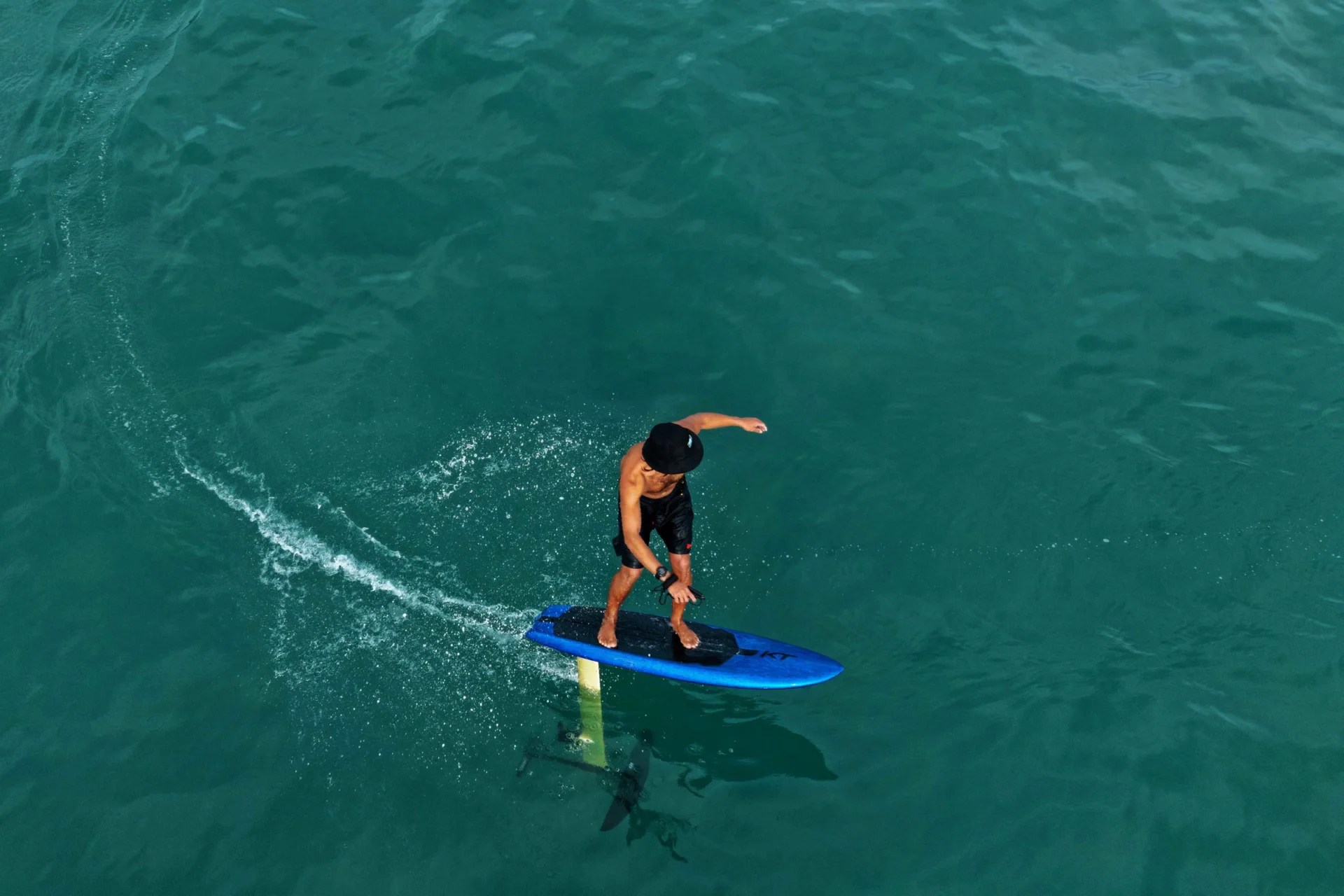
Another interesting consequence of recessing the Foil Drive system is that it brings the foil closer to the rider’s feet. By lowering the mast connection into the board, KT has reduced the distance between the standing area and the foil, something the company says creates a more responsive and connected feeling underfoot.
It’s an interesting design consideration because the distance between your feet and the foil influences how directly your movements are transmitted through the board and mast. The trade-off is that recessing the connection effectively reduces the amount of mast extending below the board, but Ryan believes the improvement in responsiveness is worthwhile.
“Making this thinner mounted standing area makes the foil feel way more direct,” he explained. “You are losing a bit of your mast length, but when I run an 85 mast in here and put the cover on it, it feels really responsive and direct.”
Combined with the lightweight Pro Carbon construction, the aim is to retain the lively, surf-oriented character of the original Super K 2 while accommodating the additional equipment required for Foil Assist.
“We had so many iterations of how do we get this to fit? How do we make this practical?”
Finding the Balance
Cutting a substantial trench into a foil board inevitably affects its volume distribution, and this was another area where the development team spent considerable time refining the design. The Super K 2 Drive is available in four sizes, 35, 45, 60, and 90 litres, with different approaches taken depending on the intended use.
For the 60 and 90-litre models, KT has retained the dimensions of the corresponding Super K shapes while removing approximately five litres of volume to accommodate the trench. Importantly, the recess extends a considerable distance forward into the board rather than concentrating all the removed volume around the tail.
“The trench runs pretty far up the board, so it doesn’t feel very tail-heavy,” Ryan explained. “You actually have a pretty even volume distribution of removal throughout the board.”
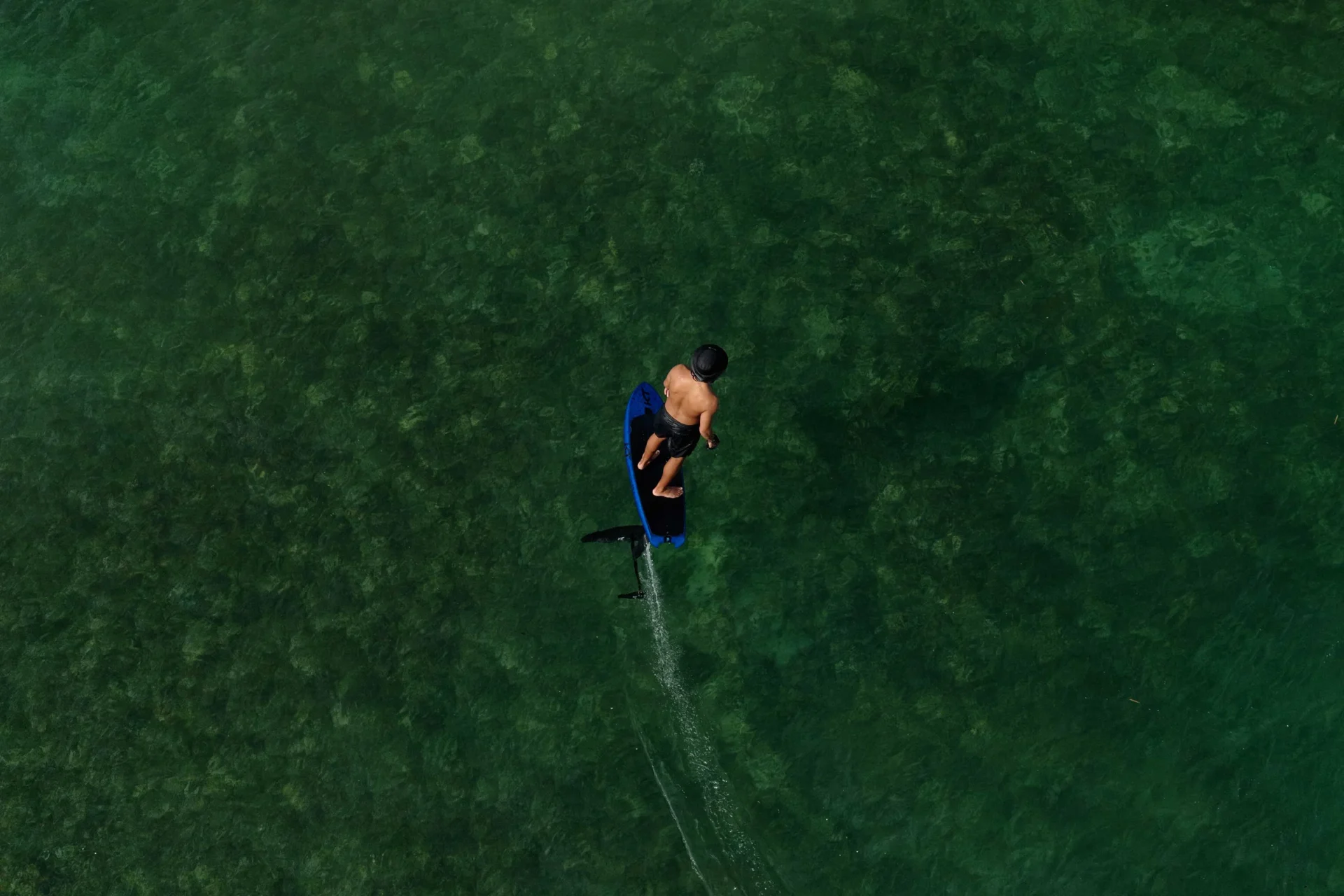
“The trench runs pretty far up the board, so it doesn’t feel very tail-heavy.”
This is particularly important for a board designed to accommodate a motor and battery, where weight distribution and balance can have a significant influence on how the equipment feels both on the water and in flight.
The smaller 35 and 45-litre versions take a different approach. Rather than simply adapting existing shapes, KT redesigned these boards specifically for performance-focused riders looking for a compact, manoeuvrable platform. Ryan explained that the smaller models were made a couple of inches shorter and approximately an inch wider than their conventional counterparts, helping to accommodate different riding positions while reducing swing weight.
The 35-litre model measures 4’8” x 18.25”, while the 45-litre version comes in at 5’2” x 19”. The larger 60 and 90-litre models measure 5’6” and 6’3” respectively, offering more volume and stability for riders looking for greater versatility or easier starts.

“Making this thinner mounted standing area makes the foil feel way more direct.”
The Little Details
One of the recurring themes during our conversation with Ryan was the amount of attention given to seemingly minor details. Footstrap positioning, for example, might not sound particularly revolutionary, but it’s an area where the requirements of surf-oriented Foil Assist riders differ from those of traditional wingfoilers.
Many riders prefer an offset stance when surfing waves, rather than the more symmetrical position commonly associated with wingfoiling. KT has addressed this with revised footstrap insert positioning, allowing riders to adopt a more natural surfing stance without feeling excessively weighted towards their heels.
“We put in strap inserts for people that want to ride with a single front strap and a rear strap if you want too. They are offset a little bit so that it feels comfortable and you’re not just on your heels the whole time like a traditional winging stance.”
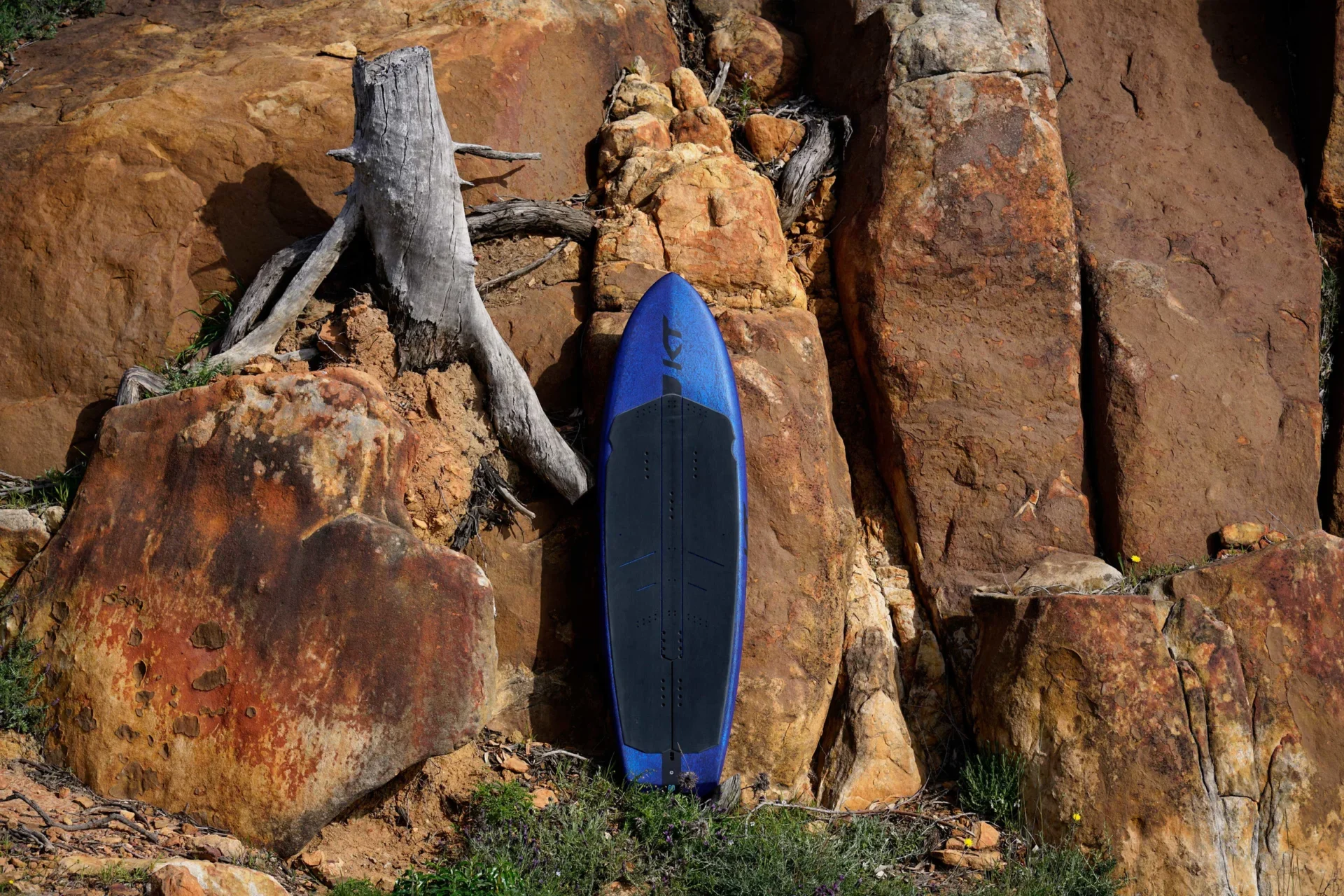
“The smaller 35 and 45-litre boards were redesigned specifically for performance-focused riders looking for a compact, manoeuvrable platform.”
The inserts offer half-inch adjustment increments, allowing riders to fine-tune their position, while the board comes supplied with adjustable MFC footstraps. The 14-inch reinforced foil tracks also provide plenty of scope for adjusting mast positioning, although the placement has been carefully considered to maintain battery accessibility across the most commonly used settings.
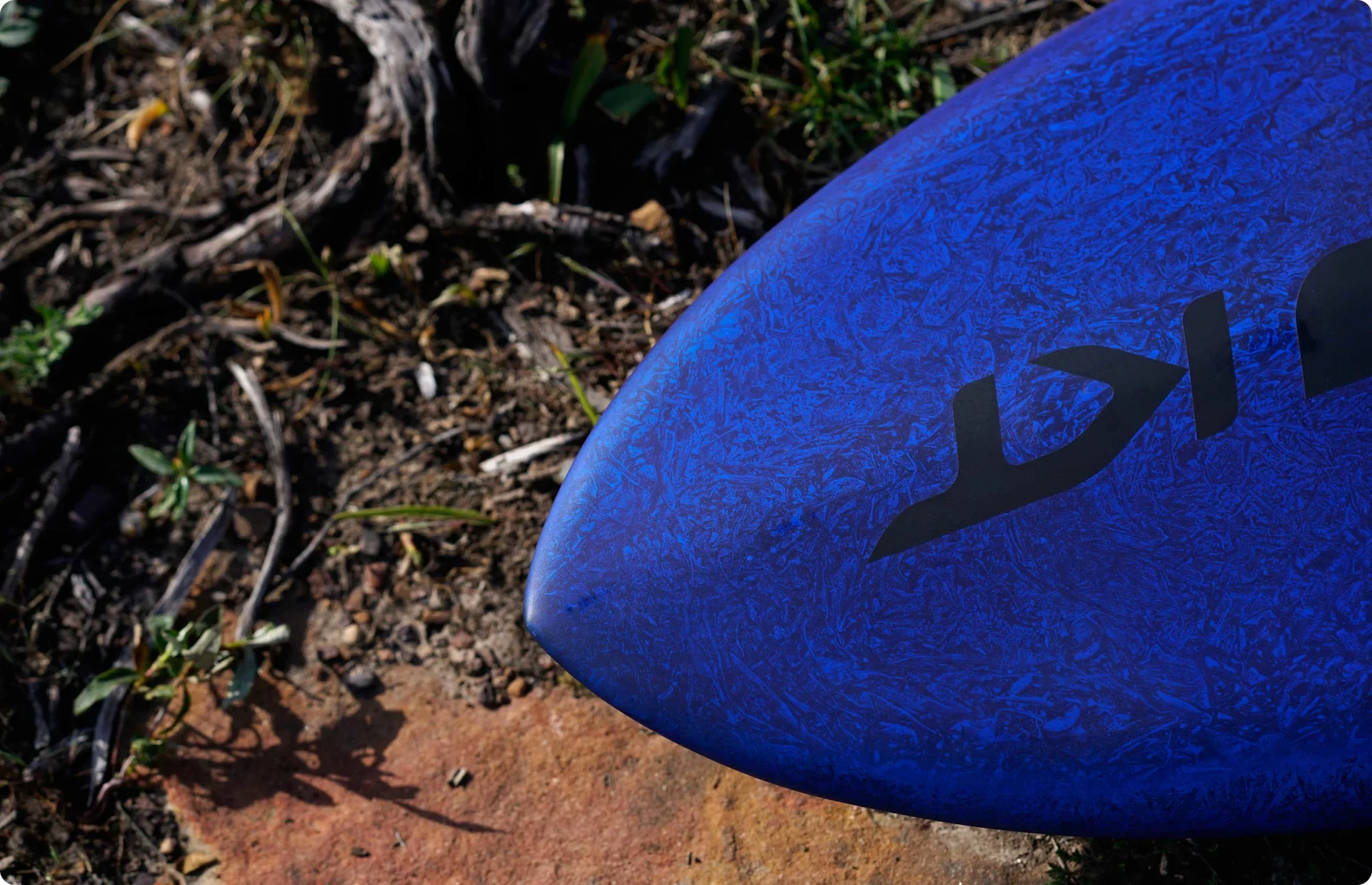
Underneath the Blue Marble finish, the board uses KT’s Pro Carbon construction, combining a lightweight EPS core with a full-carbon, high-density sandwich structure. Biaxial and unidirectional carbon reinforcement provides stiffness and strength, with additional reinforcement in areas subjected to higher loads.
There’s also an interesting detail hidden within the construction. Carbon fibre can interfere with wireless signals, so KT has incorporated fibreglass connectivity windows tuned for the 2.4 GHz communication used by Foil Assist systems. It’s another example of the additional engineering considerations involved when integrating electronics into a carbon foil board.
More Than Just a Trench
What makes the Super K 2 Drive particularly interesting is that it hasn’t simply been designed around accommodating a Foil Drive system. The development team has looked at how riders actually use the equipment, from changing batteries on the beach to switching between powered and unpowered disciplines, and tried to address the practical frustrations that can arise.
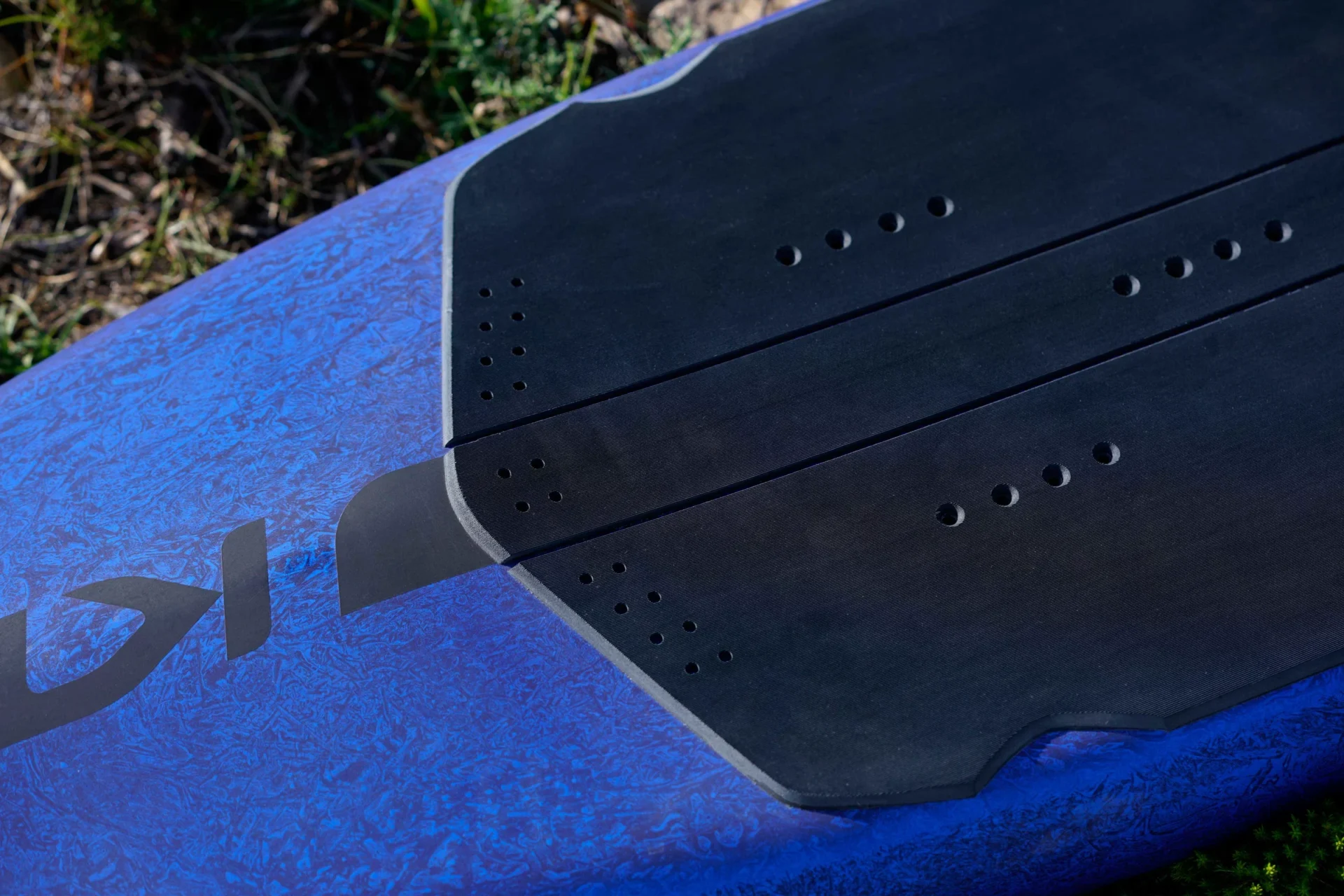
“From battery access and volume distribution to footstrap positioning, every detail has been considered to improve the experience on the water.”
“I spent a lot of time just trying to nail in all the little details that I feel like can be overlooked sometimes when people make a board,” Ryan told us. “Like the tracks are in the wrong place, or the straps are not in the right place, the stance is too wide.”
It’s this attention to detail that makes the project stand out. The removable carbon cover is undoubtedly the headline innovation, but the revised volume distribution, improved battery access, thoughtful stance options, and integrated connectivity all contribute to a more complete approach to Foil Assist board design.
As Foil Assist technology continues to evolve, we’re likely to see increasingly sophisticated integration between the propulsion systems and the boards themselves. The Super K 2 Drive is an interesting example of that progression, demonstrating how collaboration between experienced riders and board designers can produce solutions to problems that might otherwise be overlooked.
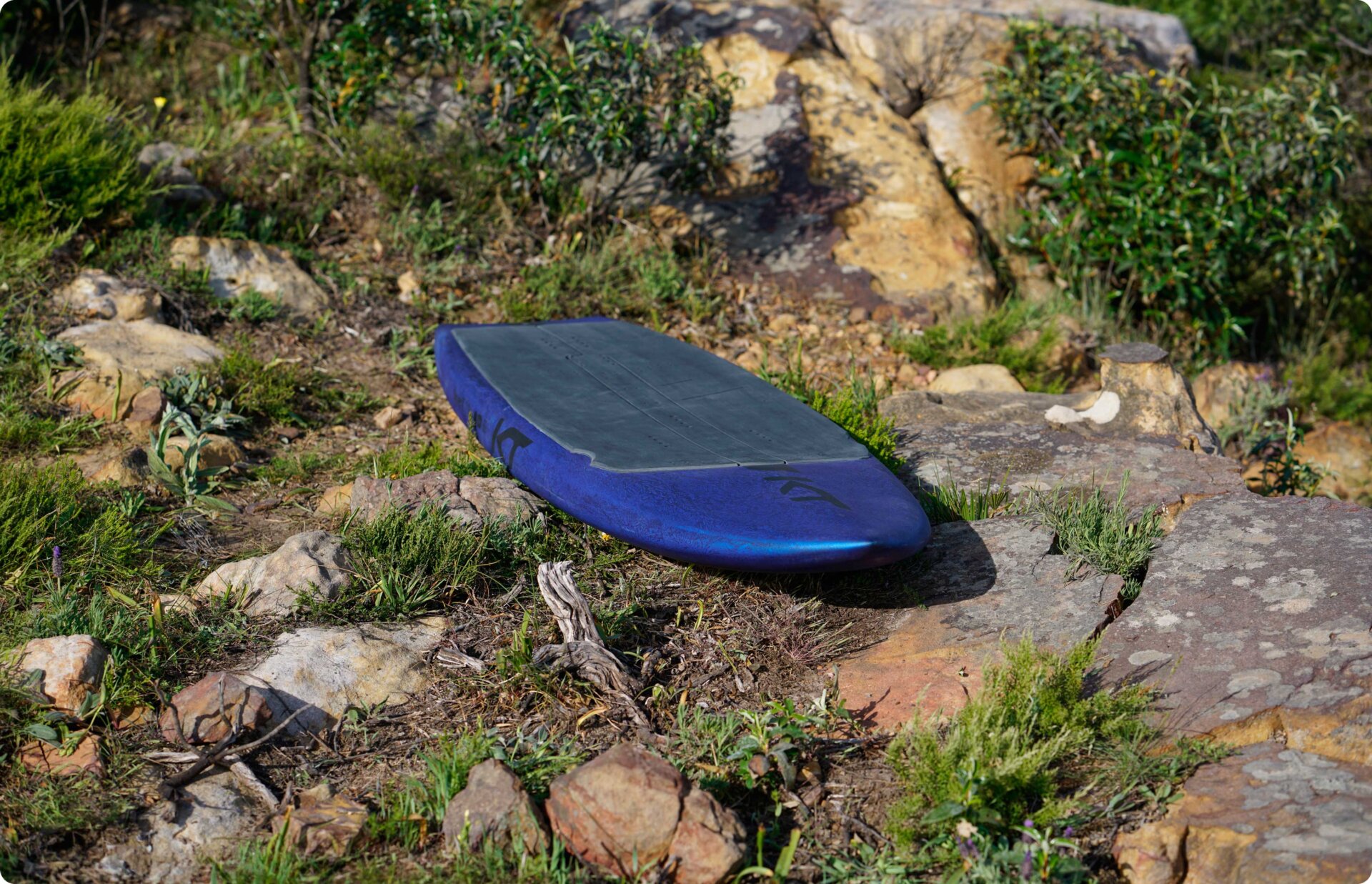
“Sometimes the most interesting innovations aren’t about reinventing the entire concept, but finding a smarter way to make everything work together.”
Whether the removable trench cover becomes a feature we see adopted more widely remains to be seen, but the thinking behind it makes plenty of sense. Sometimes the most interesting innovations aren’t about reinventing the entire concept, but finding a smarter way to make everything work together.
Keep exploring Issue 29
 01 Article 1 Gone South – Home of Armstrong Tour III
 02 Article 2 Meet the Domani – Cabrinha’s Foil for Tomorrow
 03 Article 3 From E-Foils to Foil Assist: Thomas Radiguet on the Electric Future of Foiling
 04 Article 4 AFS Presents “Lanzarote: The Last-Minute Mission”
 05 Article 5 Matt Maxwell – Playing The Long Game
 06 Article 6 Cash Berzolla: Blurring The Lines
 07 Currently reading Tech Focus: KT Super K 2 Drive Pro Carbon – Rethinking the Foil Assist Experience
 08 Article 8 Tech Focus – Ozone Afterburner
Swipe left or right