Features
Inside Starboard: Ollie O’Reilly – Innovation, Design and the Future of Foiling
Starboard has been making waves in watersports for decades, and its latest generation of foil equipment is no exception. With some unusual board shapes, new construction techniques, and an increasingly focused approach to foiling, there’s plenty going on at the brand’s headquarters in Thailand. Brand Manager Ollie O’Reilly has been part of the team for over a decade, helping take Starboard from the height of the SUP boom into a very different era of watersports.
There’s always been something a little different about Starboard. Back in the windsurfing days, when everyone was making long, narrow boards, Starboard started experimenting with shorter, wider shapes. Then SUP came along, and the brand was soon producing everything from enormous race boards to some pretty radical surf designs. Now foiling has arrived, and once again, some of its latest equipment looks quite unlike anything else on the water.
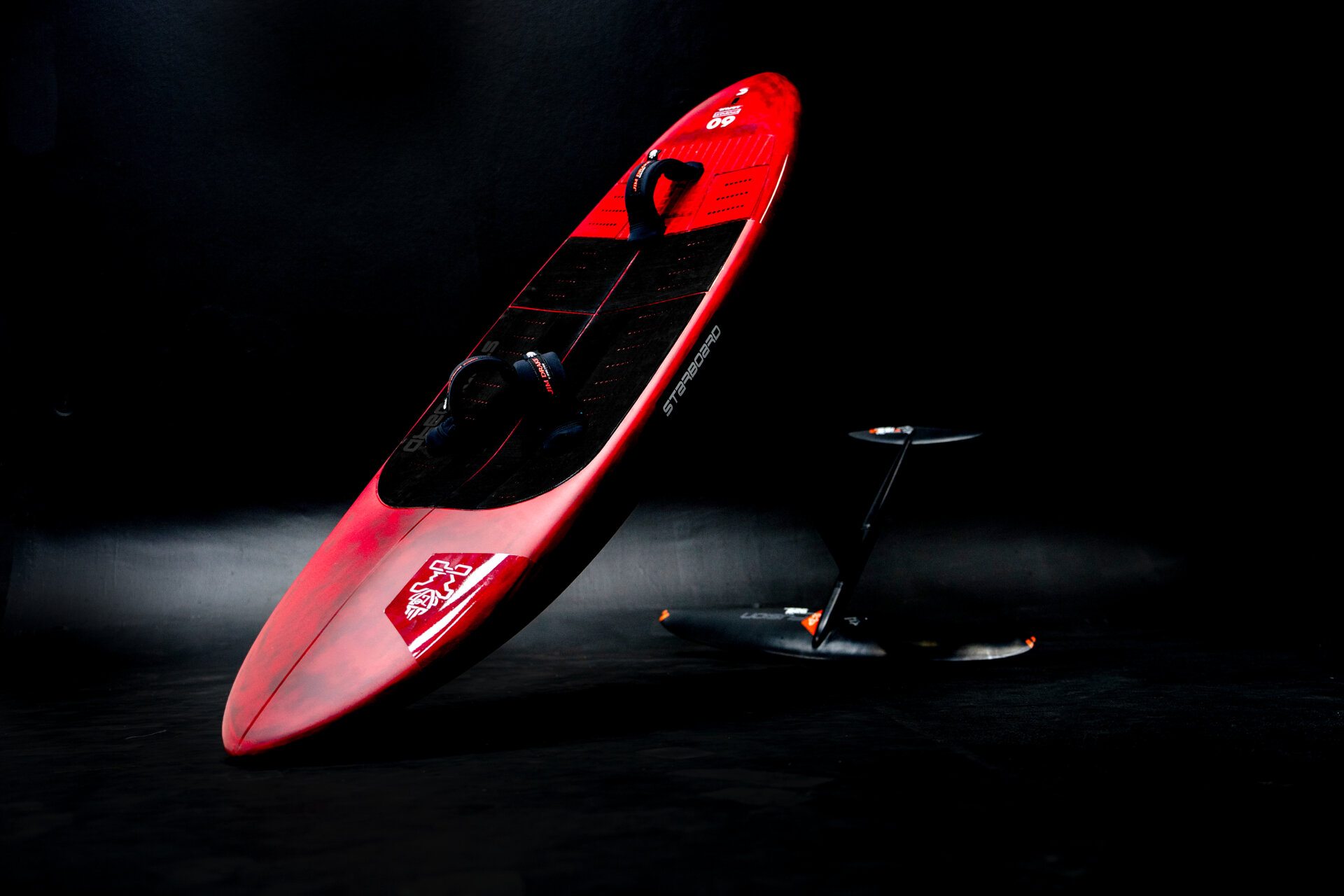
It’s not that Starboard sets out to make unusual-looking boards just for the sake of it. Much of the thinking comes from Svein Rasmussen, who has spent years questioning whether the accepted way of doing things is necessarily the best. Sometimes that means producing something that looks a bit strange until you actually get it on the water. The Above range is a good example, with its distinctive volume distribution and boxy rails, while the new Fire downwind board takes things considerably further.
Helping steer all this development is Ollie O’Reilly, who joined Starboard back in 2014. He’s been involved in product development for much of that time and now works as Brand Manager, overseeing an enormous range of equipment covering windsurfing, SUP, and foiling. It’s a big job, particularly when you consider how quickly the foil market is moving and how many different disciplines the brand is trying to cater for.
A Different Route Into Watersports
Ollie’s route into the industry started in Devon, where he grew up around the water. His father had worked in the merchant navy and as a fisherman, and his first proper experience of watersports came while working at a sailing school in Salcombe. It was there, around 2008 or 2009, that he first discovered stand-up paddleboarding, which was still a pretty unusual sight in the UK at the time.
While studying business at Cardiff University, Ollie spent his summers working at a restaurant in Kingsbridge. He became friends with the owner, Simon Harrow, who was also a surfer, and the pair decided to start a paddleboard school operating from the restaurant. They launched in 2011 with six boards, and the tidal estuary provided a fairly convenient working arrangement. When the tide was out, Ollie worked behind the bar. When it came in, he headed onto the water to teach. Meanwhile, customers sitting outside the restaurant would watch the lessons and often end up booking one themselves.
“Starboard has never been afraid to question whether the accepted way of doing things is necessarily the best.”
Running the school introduced him to Starboard and its UK distributors, eventually leading to a meeting with Svein Rasmussen at a dealer event in Costa Brava. After university, Ollie spent six months travelling, visiting Starboard’s headquarters in Thailand and meeting people involved with the company along the way. He subsequently secured an internship with Puma in Vietnam, which developed into a job offer, but the prospect of leaving watersports behind didn’t sit particularly well with him.
Rather than taking the job, he emailed Svein to see whether Starboard had anything available. It was a fairly straightforward proposition. He’d been offered a position elsewhere, but if there was an opportunity at Starboard, he’d much rather take it. Fortunately, there was, and in October 2014, Ollie moved to Thailand to join the marketing department. Within a year, he’d moved into product management, learning from the experienced designers and developers around him. He spent the next seven years or so heavily involved in SUP development before eventually taking on the Brand Manager role.
Ollie joined Starboard at the height of the SUP boom, when the brand was heavily involved in racing, surfing, and developing new board technologies. That experience would prove particularly useful as foiling began to take off. Years spent experimenting with hull shapes, volume distribution, construction, and stability provided a wealth of knowledge that could be applied to an entirely new generation of equipment.
“Some of the most interesting developments in foiling are coming from ideas first explored in windsurfing and SUP.”
Getting Foiling Off the Ground
Starboard was also quick to recognise the potential of foiling, working with GoFoil in the early days and bringing its considerable board design experience to a sport that was still finding its feet. Those initial videos of riders flying enormous SUP boards above the water caught plenty of attention, and Svein Rasmussen was quick to get involved, travelling to Hawaii to meet the people developing the technology.
Ollie’s first proper foil experience came through SUP foiling, with Benoit Carpentier helping him get started during a trip to Bali. The equipment was pretty basic by today’s standards, and learning wasn’t exactly straightforward. Getting on the foil was one thing, but staying there long enough to figure out what was happening was another matter entirely.
Anyone who tried SUP foiling in those early days will know the problem. You’d be paddling around waiting for a wave, catch one, get a few seconds of flight, and then have to start the whole process again. Ollie and the team experimented with towing behind boats and catching broken waves, anything that would give them more time on the foil.
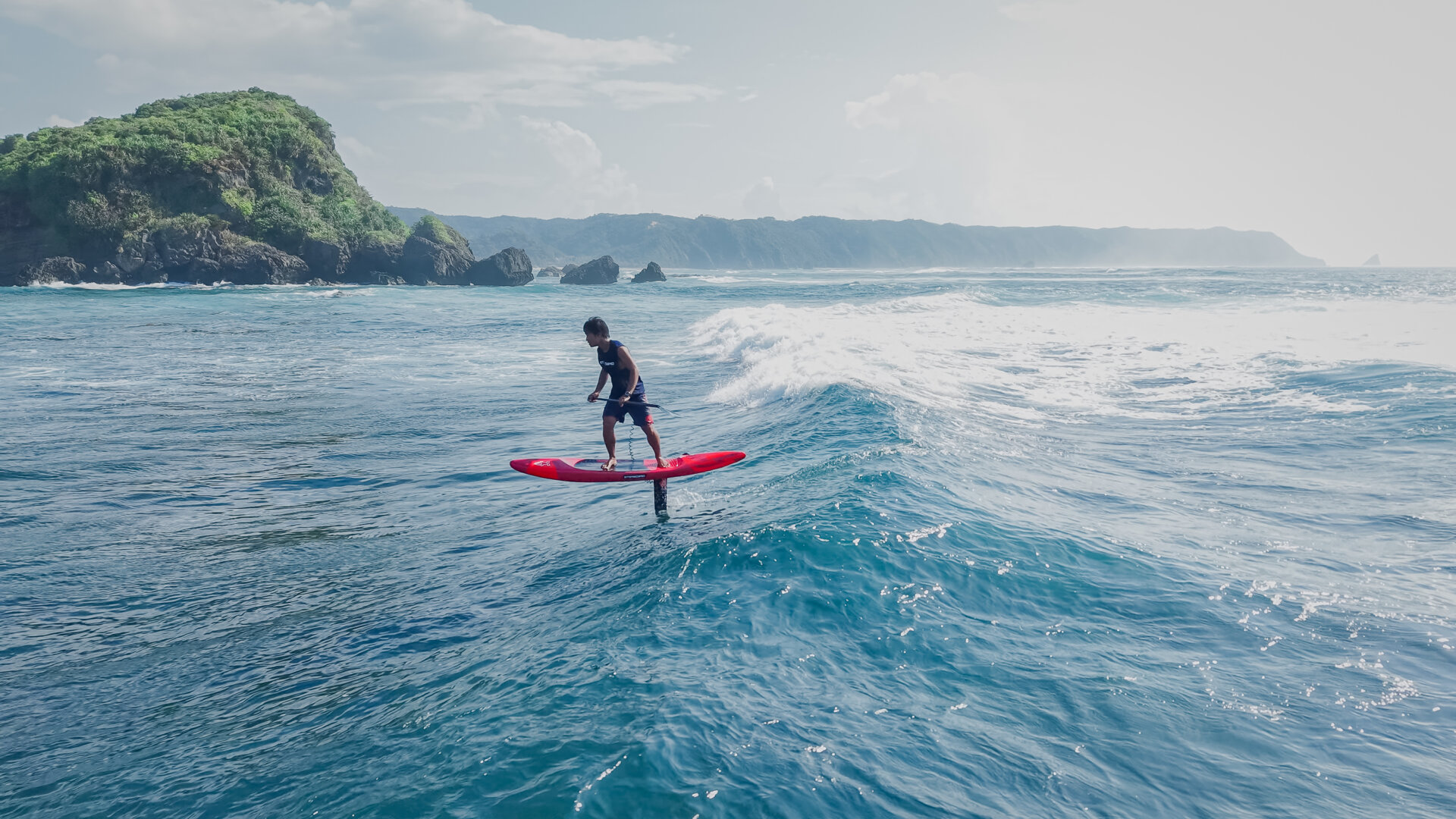
As the equipment improved, the possibilities expanded. SUP foiling led to flatwater paddle-ups, downwinding, and increasingly efficient foiling setups. Ollie’s background in SUP racing gave him a useful advantage, particularly for downwinding, where having a decent paddle stroke and understanding how to read the bumps makes a huge difference.
Even so, flatwater foiling initially seemed almost impossible. Watching riders like Zane Schweitzer getting onto foil without a wave was impressive enough, but trying to replicate it on the early equipment was another matter. These days, with modern foils and more efficient boards, Ollie can paddle up on flat water himself, something he admits once seemed completely out of reach.
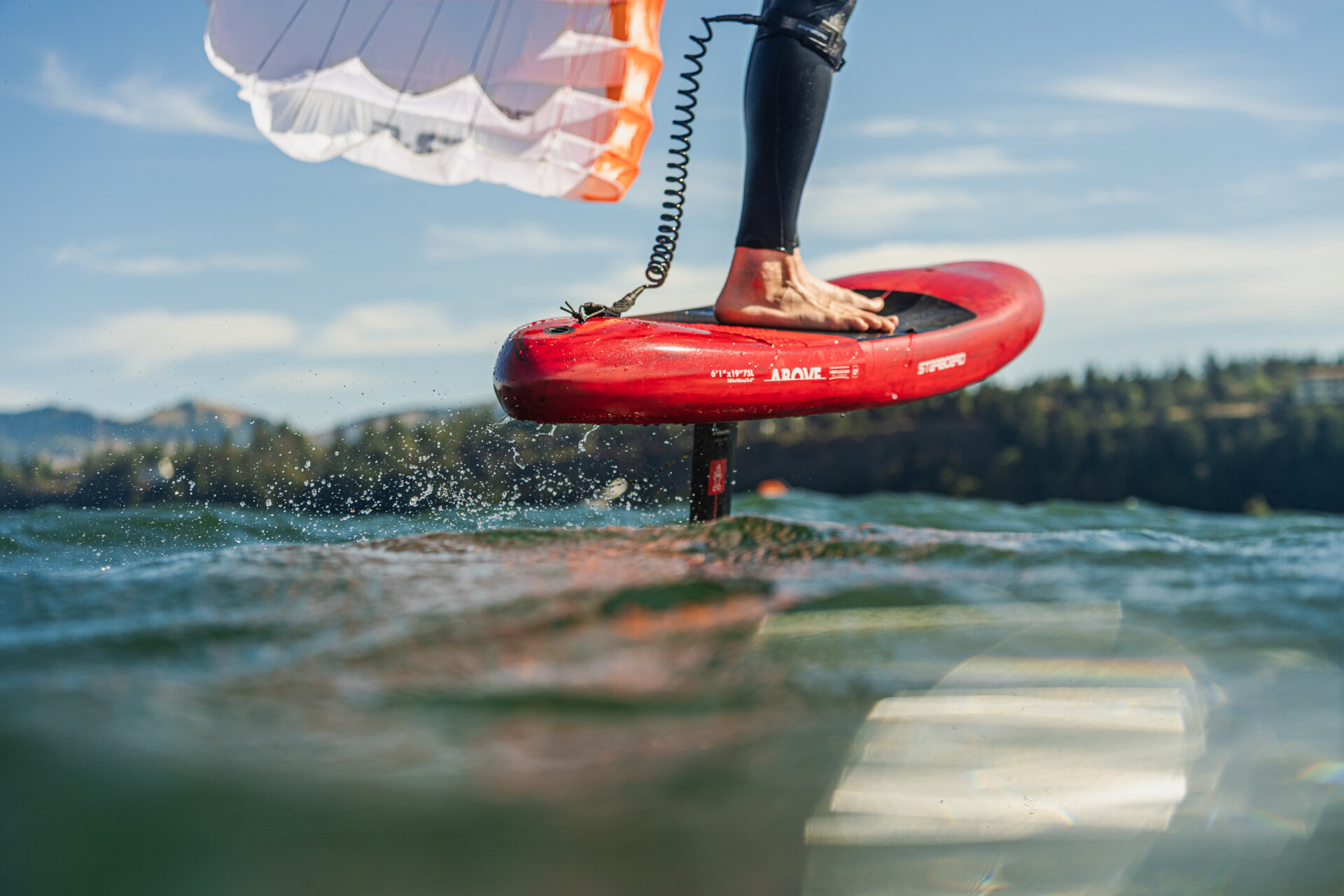
Wing foiling has brought another challenge. It’s a fantastic sport once you’ve got the hang of it, but learning requires quite a few different skills at once. Understanding the wind, controlling a wing, balancing on a board, and then trying to manage a foil isn’t particularly easy for someone coming into watersports for the first time.
“Getting a board moving efficiently is just as important as what happens once you’re up on the foil.”
Starboard has been trying to make that progression more manageable, with boards that can be used with or without foils. Learning to handle a wing on a conventional board before attempting to fly makes plenty of sense, although persuading someone who’s just watched videos of riders flying around to spend their first few sessions standing on a SUP isn’t always easy. It’s a challenge the whole industry faces if it wants to attract more people into the sport.
Why the Boards Look the Way They Do
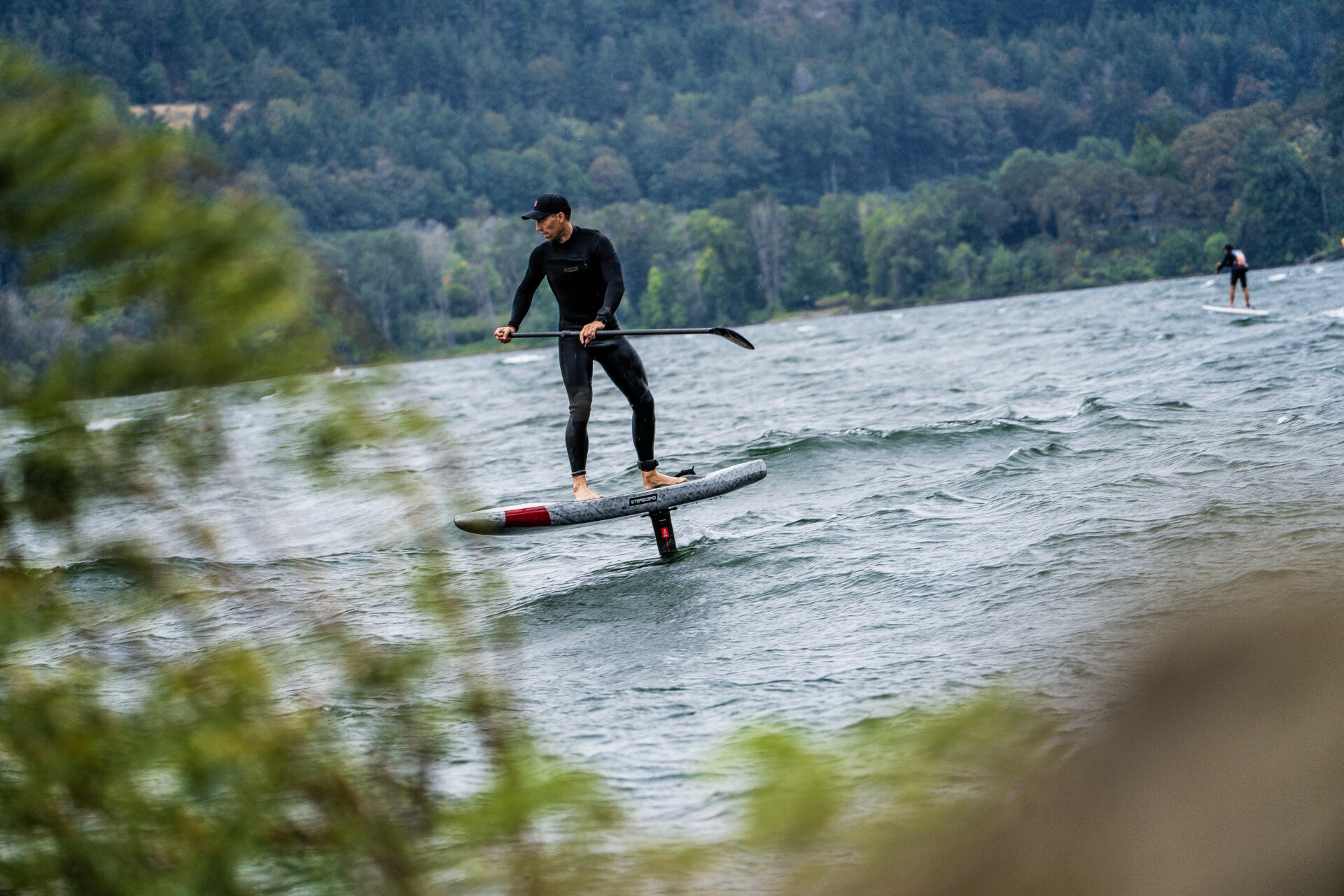
Starboard’s latest foil board range has some interesting shapes, particularly the Above and ACE designs. At first glance, some of the dimensions seem surprisingly narrow, while the rails and volume distribution look quite different from more conventional boards.
The Above range is particularly interesting because the shape changes considerably depending on the size. The bigger boards are designed with beginners in mind, offering plenty of volume and stability, while the middle sizes become more performance-focused mid-length shapes. At the smaller end, they’re compact enough for prone foiling.
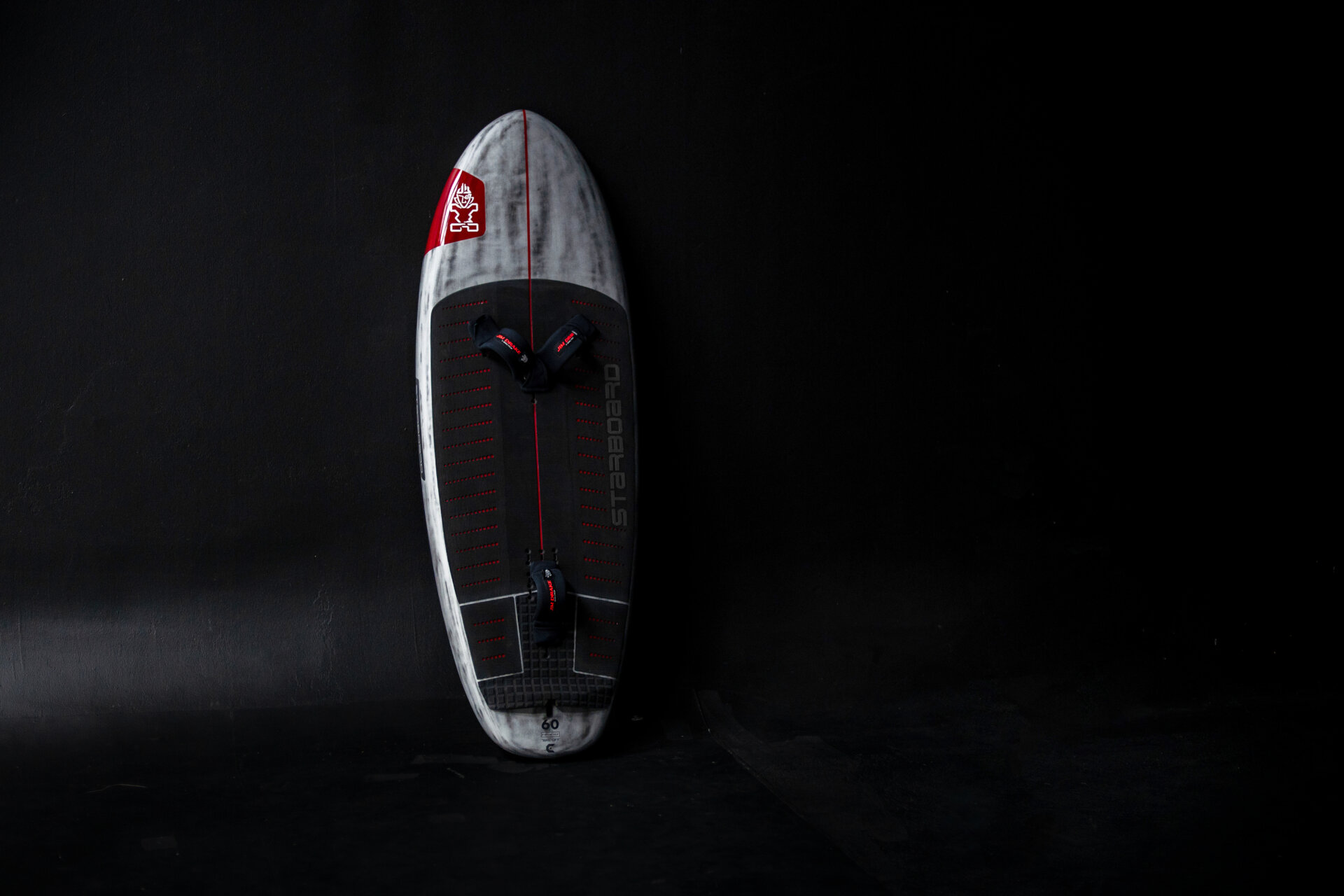
“A board might look surprisingly narrow on paper, but clever volume distribution can make all the difference once you’re standing on it.”
Rather than splitting these into completely separate ranges, Starboard has kept them together because the underlying design principles work across the different sizes. One of the key ideas is getting the rider as close to the foil as possible without sacrificing the flotation needed to get moving.
Much of this thinking comes from Starboard’s experience with dugout SUP race boards, where lowering the standing position improves stability. By putting more volume around the rider rather than directly underneath their feet, the designers can create a more connected feeling between the board and foil.
The rail shapes are another important part of the equation. Many foil boards have heavily bevelled rails, but Starboard has been experimenting with squarer, boxier profiles and harder edges. The problem with large bevels is that they effectively remove some of the board’s usable width, meaning designers often need to make the overall shape wider to compensate.
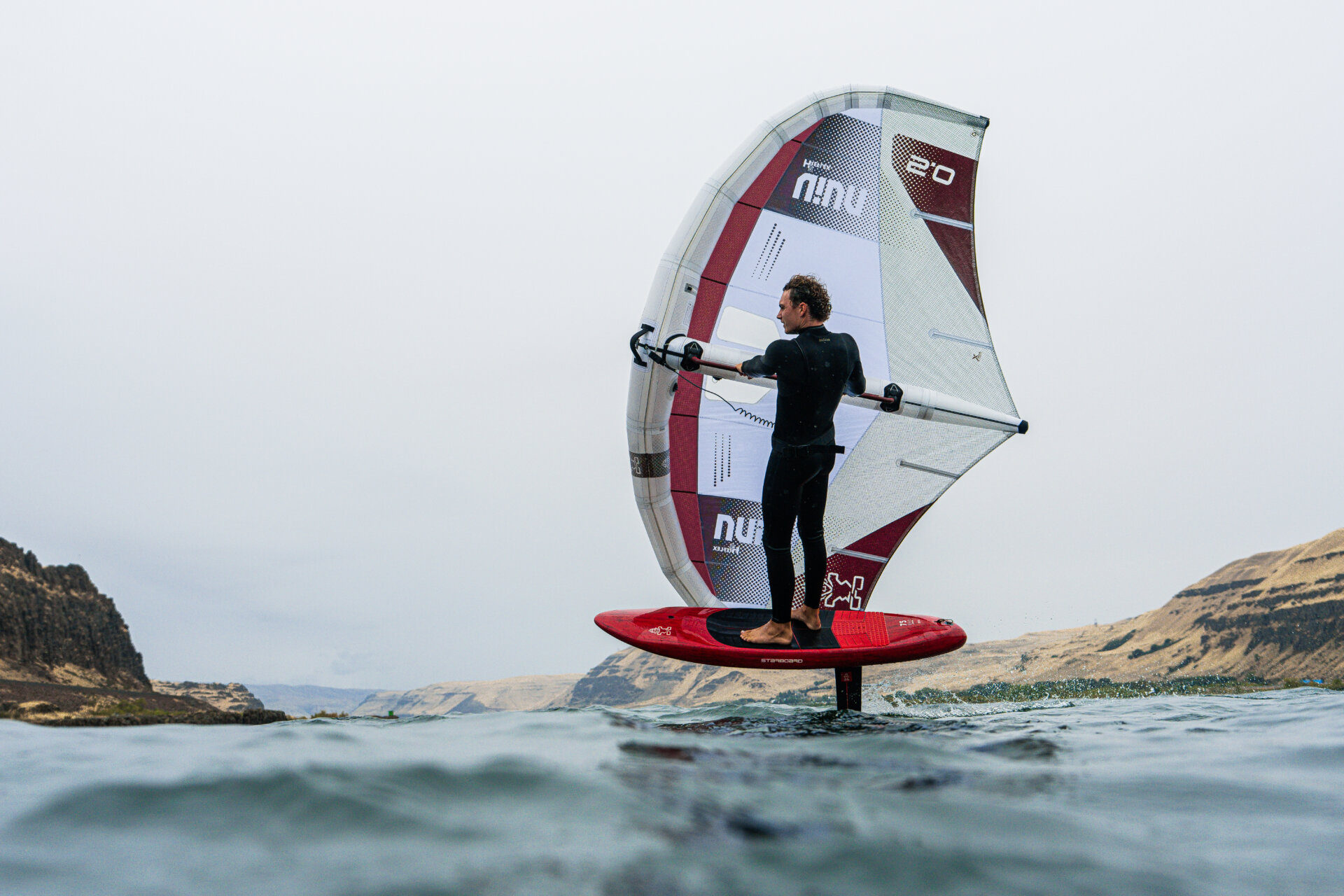
“The Above range takes a different approach to board design, bringing the rider closer to the foil without sacrificing stability.”
With a squarer rail and a defined tuck edge, Starboard can reduce the width while retaining plenty of secondary stability. The result is a board that might look quite narrow on paper but feels surprisingly stable once you’re standing on it. It’s one of those things that’s difficult to appreciate until you’ve actually tried the equipment.
The ACE foil boards take a similar approach, drawing heavily on lessons learned from SUP racing. Narrower boards generally accelerate more efficiently, which is particularly important for foiling, where getting that initial glide can make the difference between taking off easily and struggling to get moving.
Then there’s the Fyre, which is probably one of the strangest, yet best-looking downwind boards we’ve seen for a while. Developed by Svein Rasmussen alongside SUP racing world champion Shuri Araki, it’s designed to provide stability in particularly challenging conditions while allowing the rider to stand lower in the board.
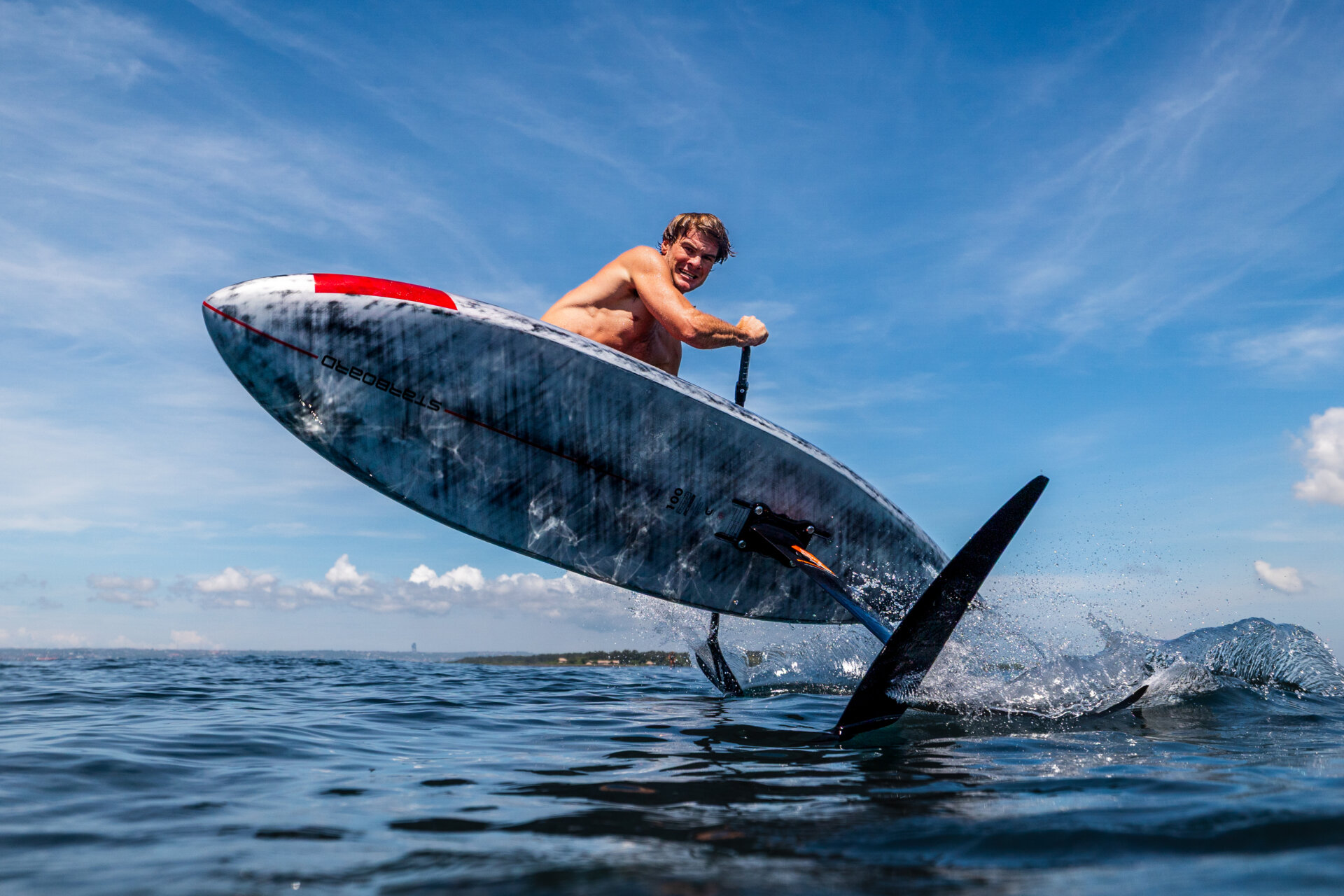
“With D2 construction, Starboard is finding new ways to reduce weight without compromising the strength of the board.”
The shape was influenced partly by the difficulties of paddling in choppy conditions in Okinawa, where conventional designs weren’t providing the stability needed. The new board puts lots of volume in the nose and tail, which is very narrow and drawn out, with a very sunken deck to lower the rider’s centre of gravity. Shuri subsequently won a downwind race in Barcelona using the Fyre, giving a solid glimpse into the performance possibilities of the board.
It’s a good example of Starboard’s approach. Rather than accepting that a downwind board should look a certain way, the designers have started with the problem they’re trying to solve and worked towards a shape that addresses it. Whether that approach becomes more widespread remains to be seen, but it’s certainly interesting to watch.
What’s Inside the Board?
Board construction is another area where Starboard has been experimenting, particularly with its new D2 technology developed alongside Cobra. While modern composite boards are already pretty sophisticated, there’s still plenty of scope to improve the balance between weight, strength, and stiffness.
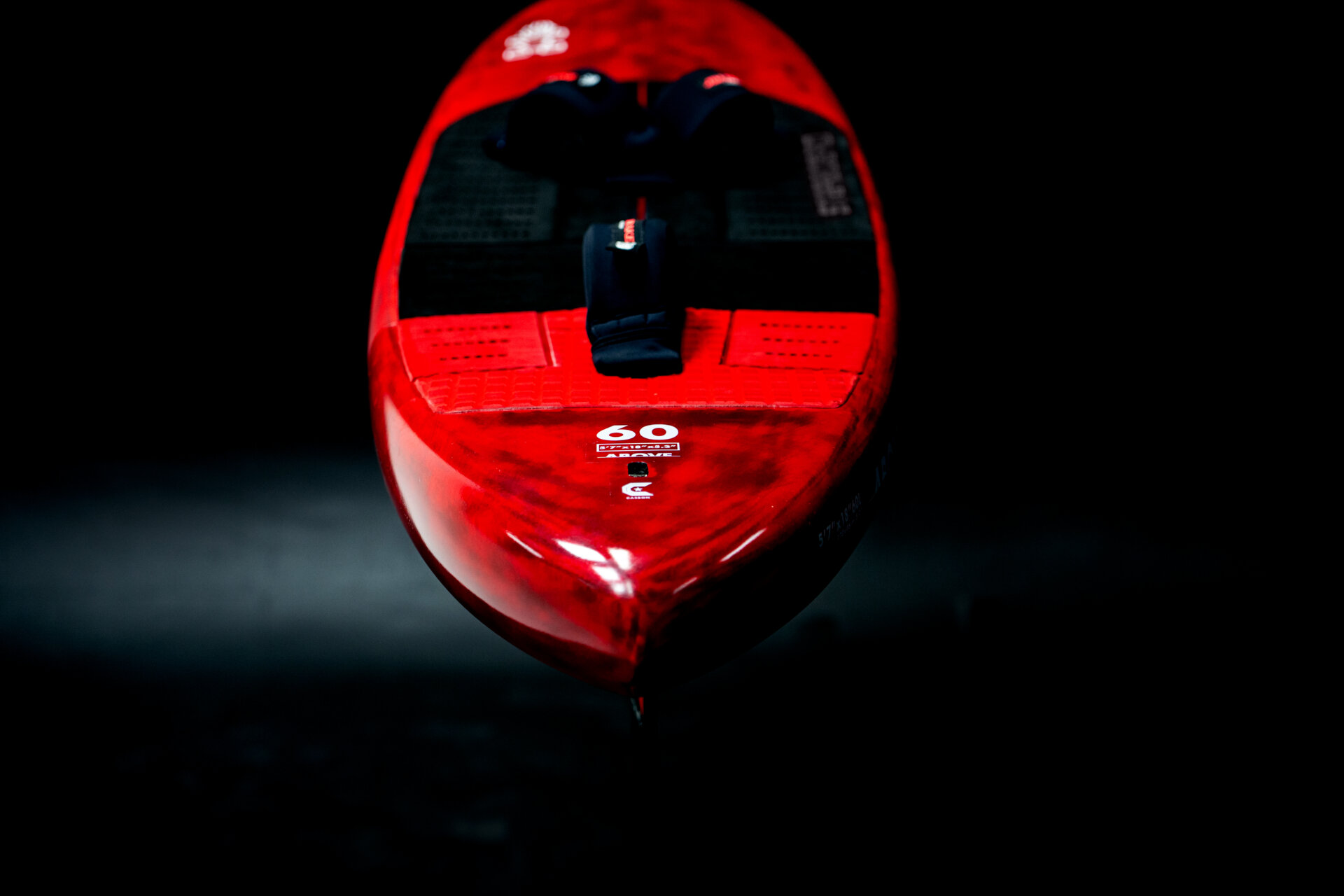
“The Fire is a perfect example of Starboard starting with a problem and developing a shape that challenges conventional thinking.”
Weight is especially important in foiling. A lighter board is easier to accelerate, gets onto foil earlier, and feels more responsive once you’re flying. But simply removing material isn’t the answer, particularly around the foil box, where you need plenty of rigidity to maintain a direct connection between the rider and foil.
D2 stands for Dual Density or Dual Core, and the idea is to use two different densities of EPS foam within the board. Traditionally, Starboard has used foam with a density of around 15 kg/m³, but the D2 construction reduces the inner core to approximately 13 kg/m³ while surrounding it with a denser 25 kg/m³ outer layer.
The lighter inner core reduces the overall weight, while the stronger outer layer allows some of the fibreglass or carbon reinforcement in the laminate to be reduced. That means Starboard can save weight in two different areas without simply compromising the strength of the construction.
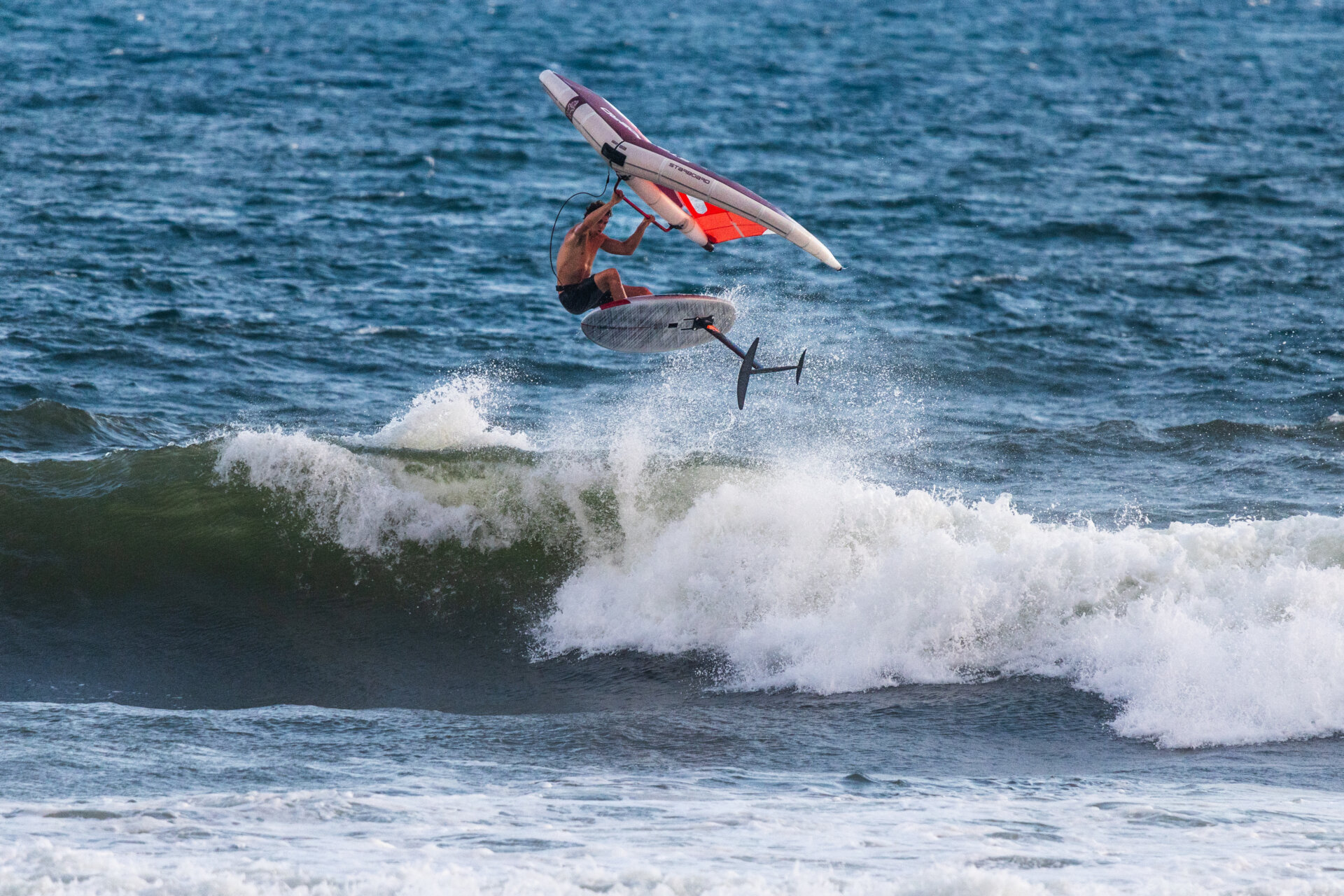
“Foiling has come an incredible distance in just a few years, and there’s still an enormous amount of room for development.”
The advantages are particularly noticeable on thicker boards with larger volumes. On a small, thin surfboard, there isn’t enough foam in the core to make a huge difference, but on a foil board or a large 14-foot race board, the savings become much more significant.
There’s also the question of flex. In SUP surfing, a degree of controlled flex can actually be beneficial, helping generate drive through turns. Foil boards are different, particularly around the foil mounting system, where stiffness is essential for transferring movements directly to the foil. Getting that balance right requires different approaches depending on what the board is designed to do.
Cost is another factor. It’s possible to produce incredibly sophisticated constructions, but if the finished board becomes too expensive for most riders, there’s not much point. Starboard has been working to simplify its construction options, generally offering two or three technologies within a range rather than numerous different versions of essentially the same board.
Where Starboard Goes Next
With so many different products being developed, keeping everything moving must be quite a challenge. Starboard remains heavily involved in windsurfing and SUP while producing an increasingly extensive range of foiling equipment. The company relies on specialist designers and riders working across different categories, but there’s also a lot of knowledge being shared between them.
Experience gained from developing windsurf boards can influence foil board construction, while years of SUP racing development have helped shape the latest downwind designs. Having a workshop in Thailand where new prototypes are constantly being produced and tested also allows the team to experiment without waiting months to see whether an idea works.
Professional riders are a big part of that process, pushing equipment to its limits and providing feedback, but the products also need to work for ordinary customers. A board that’s brilliant for a world champion isn’t necessarily much use to someone who’s still learning, and Starboard has always tried to provide equipment that covers the full progression from beginner to advanced.
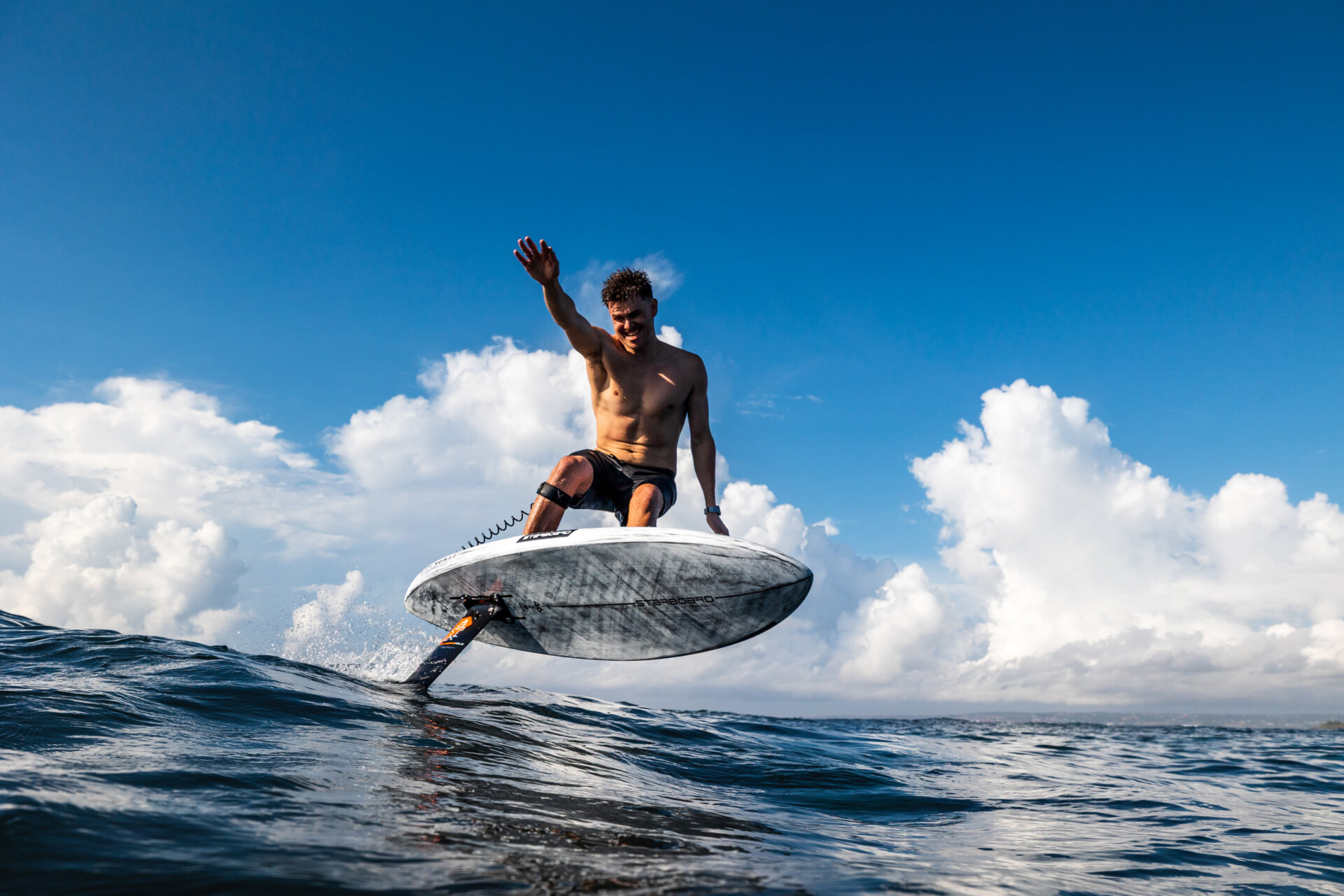
That’s partly why the brand has traditionally offered such a large range. Different markets have different requirements, and what works for riders in Japan might not be what customers in the United States are looking for. Finding the right balance between offering enough choice and making the range manageable isn’t always straightforward.
There’s been a conscious effort to simplify things recently, reducing the number of constructions and consolidating some of the board ranges. Ollie recalls a time when one SUP model was available in something like seven different constructions, which must have made choosing the right one a fairly confusing experience.
Foiling is now receiving a significant amount of Starboard’s development resources, although the company remains committed to windsurfing and SUP. With equipment evolving so quickly, there’s still plenty of room for improvement, particularly in construction, efficiency, and making the sport easier for newcomers.
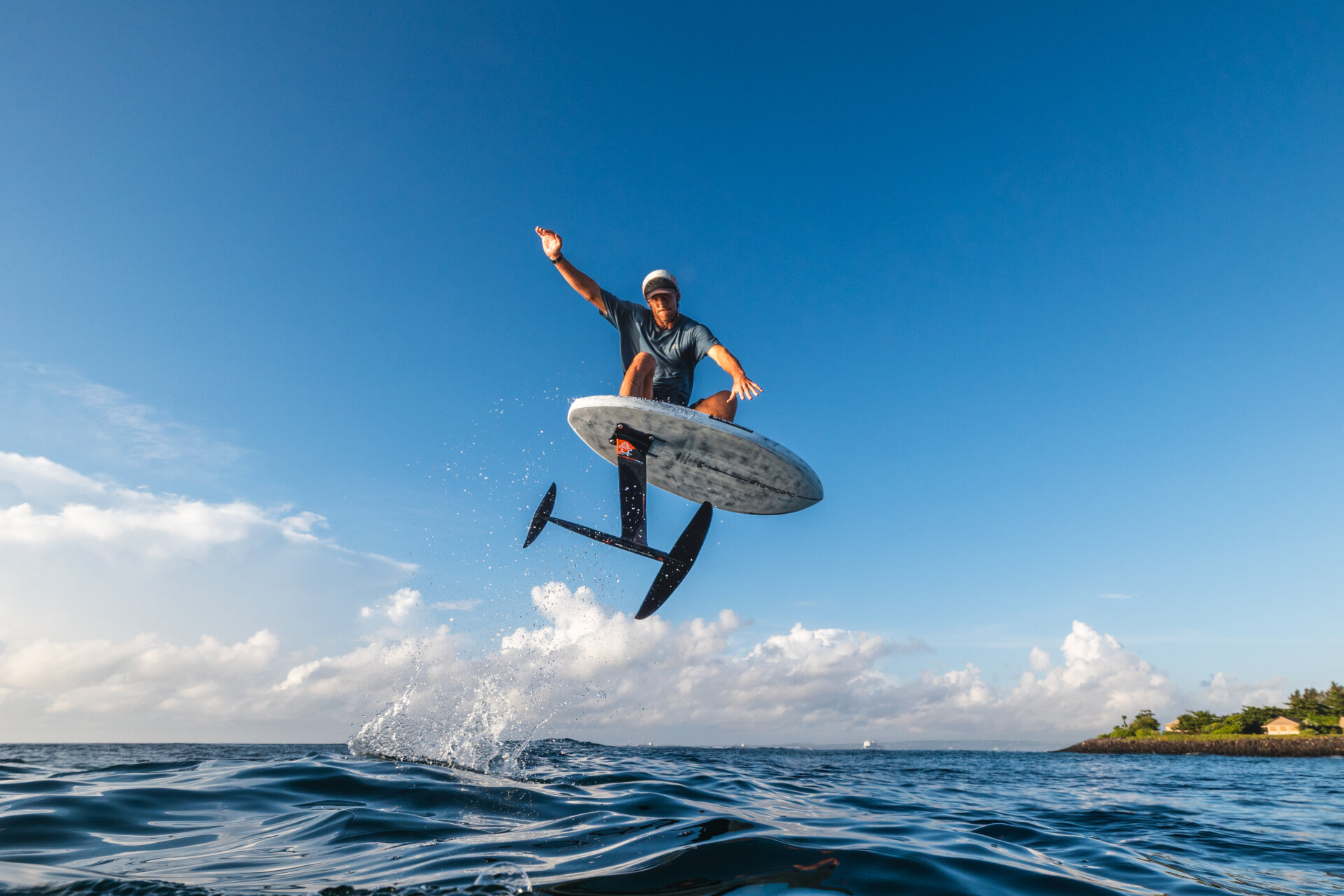
It’s remarkable how far foiling has come in a relatively short time. The boards and foils we were riding only a few years ago already feel dated compared with what’s available now, and there’s no reason to think that development is going to slow down any time soon.
Starboard has plenty of experience to draw upon, and the latest equipment shows that the company is prepared to try some fairly unconventional ideas. The Above and ACE ranges, the Fire, and the new D2 construction all approach familiar challenges in slightly different ways.
Having spent time on some of Starboard’s latest equipment, it’s good to see the brand putting so much effort into foiling. There’s still an enormous amount to learn about what makes the ideal board or foil, and some of the most interesting developments are likely to come from people who aren’t afraid to question what everyone else is doing.
Keep exploring Issue 29
 01 Article 1 Gone South – Home of Armstrong Tour III
 02 Article 2 Meet the Domani – Cabrinha’s Foil for Tomorrow
 03 Article 3 From E-Foils to Foil Assist: Thomas Radiguet on the Electric Future of Foiling
 04 Currently reading Inside Starboard: Ollie O’Reilly – Innovation, Design and the Future of Foiling
 05 Article 5 AFS Presents “Lanzarote: The Last-Minute Mission”
 06 Article 6 Matt Maxwell – Playing The Long Game
 07 Article 7 Cash Berzolla: Blurring The Lines
 08 Article 8 Tech Focus – Ozone Afterburner
 09 Article 9 Tech Focus: KT Super K 2 Drive Pro Carbon – Rethinking the Foil Assist Experience
 10 Article 10 Cabrinha Domani 960 2027
 11 Article 11 Armstrong Foils X-Wing Performance 5.0m 2026
 12 Article 12 Armstrong Foils Performance X and MKII Masts 2026
 13 Article 13 Ozone Afterburner 2027
 14 Article 14 Ozone Flow V2 3.6m 2027
 15 Article 15 Ozone Power Pack 4.3m 2026
Swipe left or right