

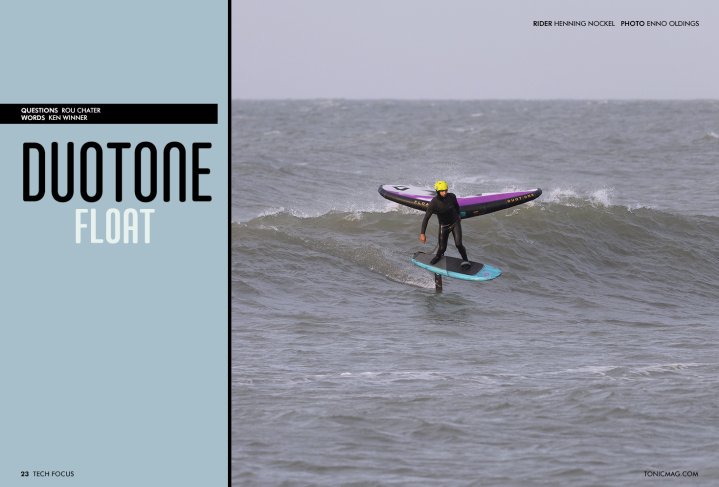
To explore the innovation and performance of the all-new Float, we spoke with Ken Winner, the visionary behind its design. Ken reveals the key engineering decisions that make the Float stand out in this interview. Whether you’re a passionate wave rider or simply intrigued by the evolution of wing design, we’re sure you will enjoy this behind-the-scenes look at the latest wing from the Duotone stable.
What was the development plan for this new wing, and why did you feel you needed me in the Duotone wing range?
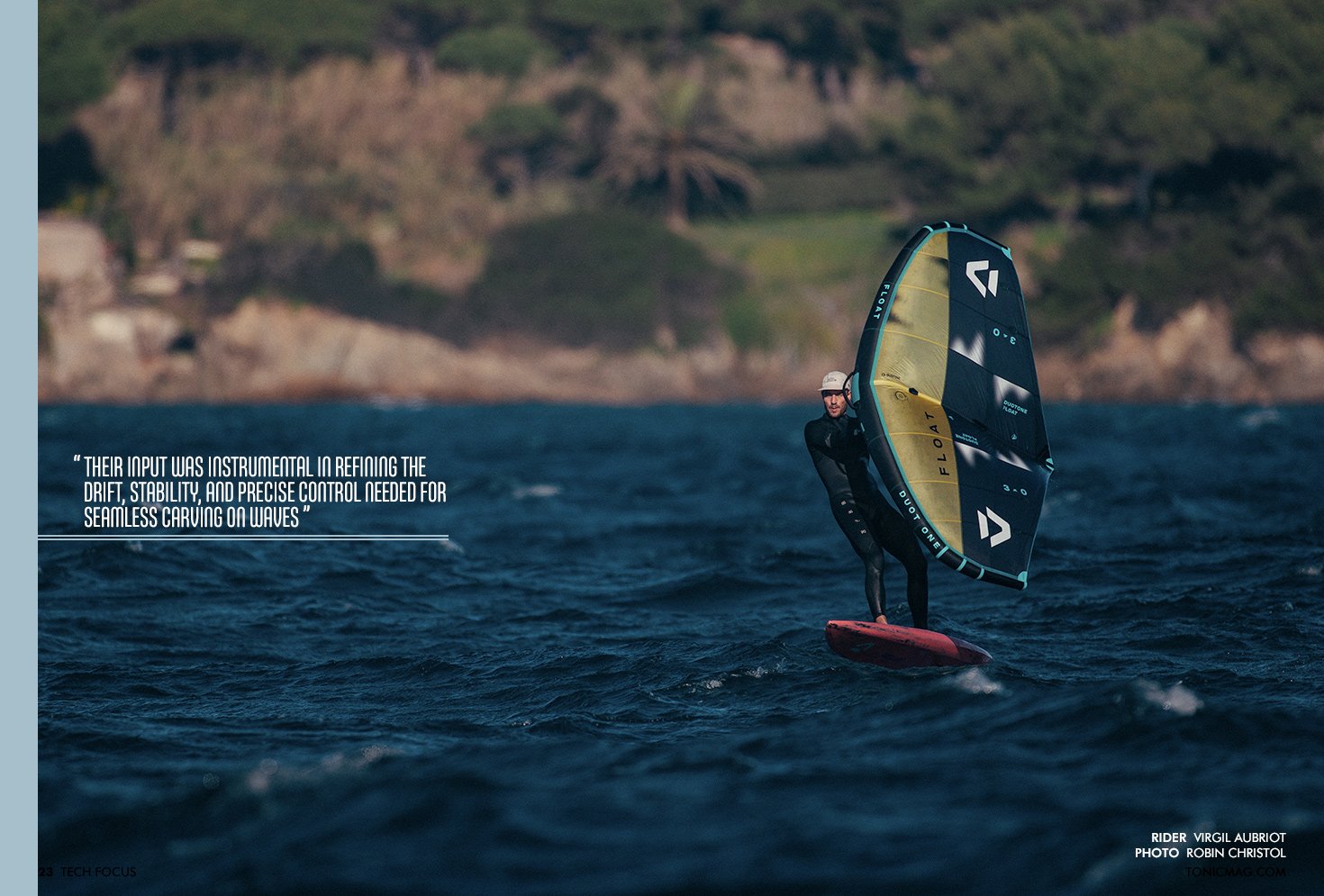
The Float was designed to bring wave and downwind performance back into focus. While our best-selling Unit evolved into an all-round wing, we wanted to create something explicitly tailored for pure surfing and gliding. To achieve this, we worked closely with our top wave riders, Jeffrey and Finn Spence. They bring years of expertise from their home base in Maui’s world-class conditions. Their input was instrumental in refining the drift, stability, and precise control needed for seamless carving on waves and effortless downwind runs.
How did you achieve these design goals, and what makes it such a good wing for wave riding?
The Float has been specifically designed to enhance wave performance, ensuring optimal control, manoeuvrability, and efficiency in dynamic conditions. The following design points were important here:
- A low sweep angle in the leading edge improves luff stability. When flagged out, the wing drifts naturally, making it easier to focus on the wave.
- Moderate dihedral for a balanced feel provides a smooth blend of stability and responsiveness that suits aggressive turns and relaxed down-the-line riding.
- Light front canopy tension enhances roll control, allowing for intuitive handling when carving through waves and making micro-adjustments mid-ride.
- The wide, stiff, leading-edge handle offers precise manoeuvrability, ensuring direct input from the rider translates into instant response, which is crucial for quick transitions and wave positioning.
- Neutral lift while luffing contributes to fluid turns and seamless transitions, reducing drag and maintaining speed without unnecessary lift and better flow.
- Low-weight construction eliminates unnecessary materials like windows, reducing overall bulk and improving drift for easier handling in variable conditions.
Weight reduction was a major design goal. How did you balance this with keeping the Float durable, especially given the rigours of winging in waves?
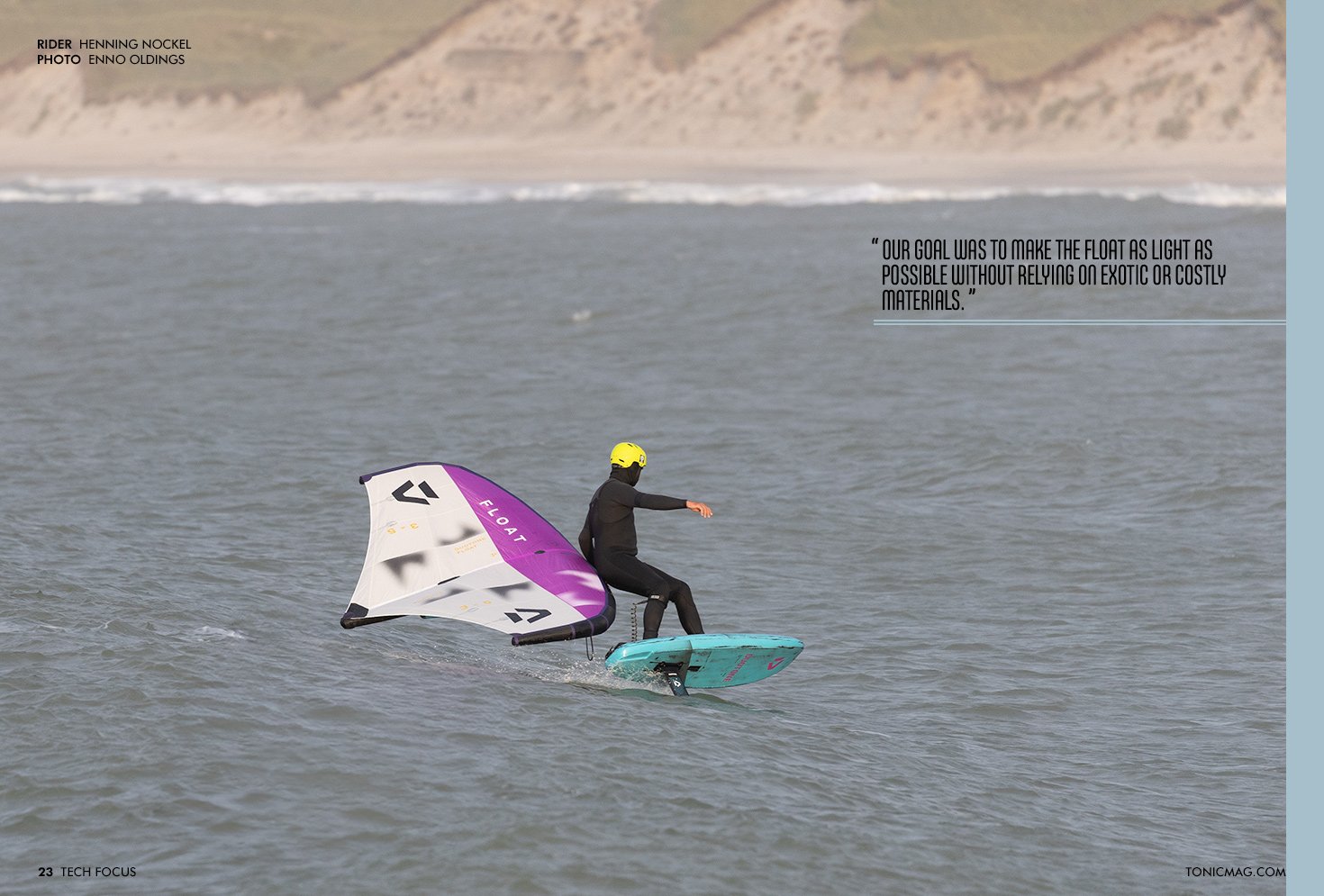
Our goal was to make the Float as light as possible without relying on exotic or costly materials. We used trusted Dacron and ripstop materials but removed the heavier Dacron from the centre of the leading edge, opting instead for a slightly larger diameter to maintain stiffness. Additionally, we eliminated the windows, as this material adds significant weight. Wave wings are mainly luffed, so windows offer no real benefit here.
Lately, there has been much discussion about loose and tight canopies in wing design. Different brands and models offer a wide variety of options. What did you settle on with the Float, and why?
We discovered that while high canopy tension improves speed and stability when sheeted in, it can reduce luffing stability. Though we’ve known this for years, we fully leveraged it while developing the Float. It features low canopy tension in the front, allowing the canopy to luff freely when sheeted out. This luffing creates drag and stability. At the same time, we maintained a strong leech tension for solid pumpability and power. The canopy tension also varies by size - larger Floats have more front tension to keep the draft from shifting in gusts, while smaller sizes have significantly less front tension. The result is excellent low-end power, a broad angle-of-attack sweet spot, and a surprisingly forgiving feel.
The unit has several booms and handles options. What did you decide to use for the Float?
We use only the Fusion Boom design for the float. This design keeps weight minimal and makes handling intuitive, making it an excellent choice for experienced surfers and beginners/intermediates downwind.
What sort of rider do you think should be looking at this wing, and why will they love it?
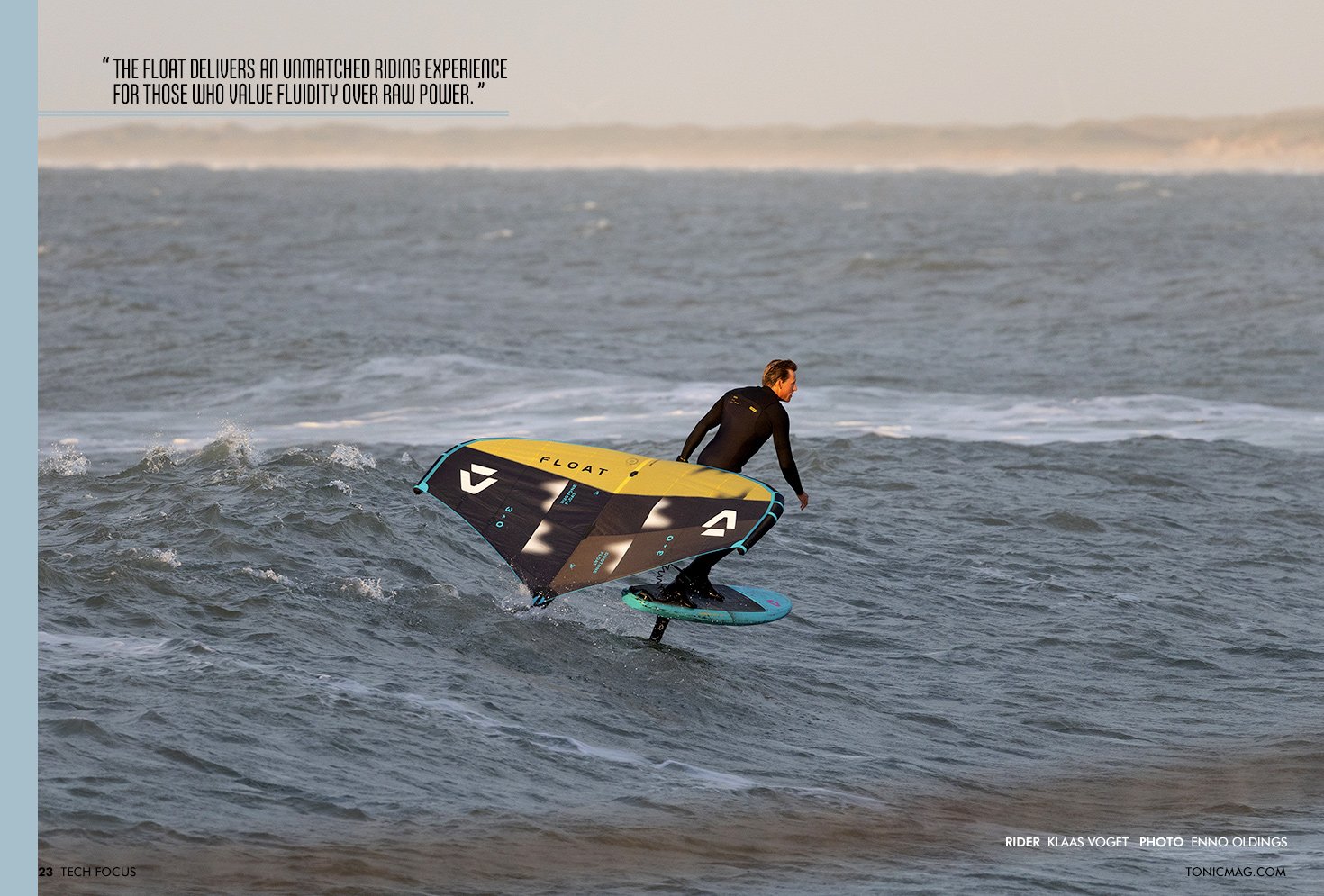
The Float is a top choice among wave and downwind riders prioritising smooth, effortless gliding. While it doesn’t match the Unit's speed or cater to freestyle tricks, it excels in flow, stability, and drift. Its lightweight design and balanced handling make it ideal for riders who want a controlled and predictable wing while luffing, allowing them to focus entirely on the waves or long downwind runs. Whether carving clean lines or cruising with minimal effort, the Float delivers an unmatched riding experience for those who value fluidity over raw power. It’s also a good choice for less experienced riders learning the basics.
Great, thank you so much, Ken!
Thanks, Rou!
Videos

By Rou Chater
Rou Chater has spent over twenty years working in watersports media and much of that time travelling the world in search of wind, waves, and stories. The founder and publishing editor of Tonic Magazine and IKSURFMAG, he launched IKSURFMAG in 2006 before embracing the rapidly evolving world of foiling and launching Tonic Magazine in 2019. A passionate waterman, he spends as much time as possible wingfoiling, prone foiling, downwinding, and exploring new ways to fly above the water, while still finding time to kitesurf whenever the conditions call for it. When he’s not behind a keyboard, hosting The Foil Pod and The Kite Pod, or testing the latest equipment, you’ll usually find him chasing wind and swell somewhere around the coast or further afield. He’s also known as the hardest-working journo in the industry!
