
Photo: Enno Oldigs / @wingfoilshots
Features
Boardercross: When Young Riders Help Shape the Course
A beach start, an optional jump, tight slalom turns and a wing-free pump finish, all in view of the crowd: a youth-influenced race format on Germany’s Baltic coast shows how varied and spectator-friendly wingfoil competition can be.
SEND IT WINGFOIL CLASH 2026 · FEHMARN, GERMANY · 30 OCTOBER 2026
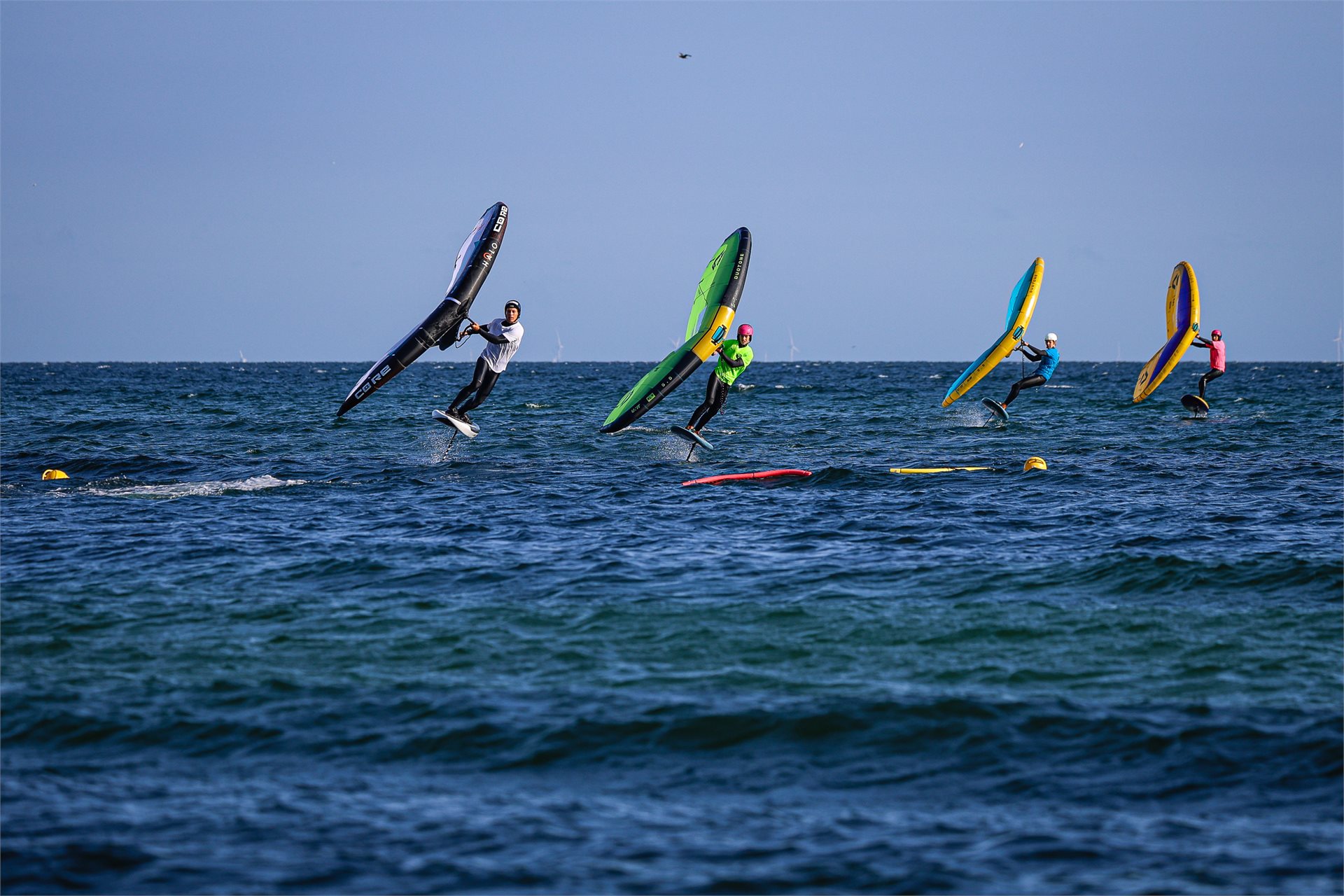
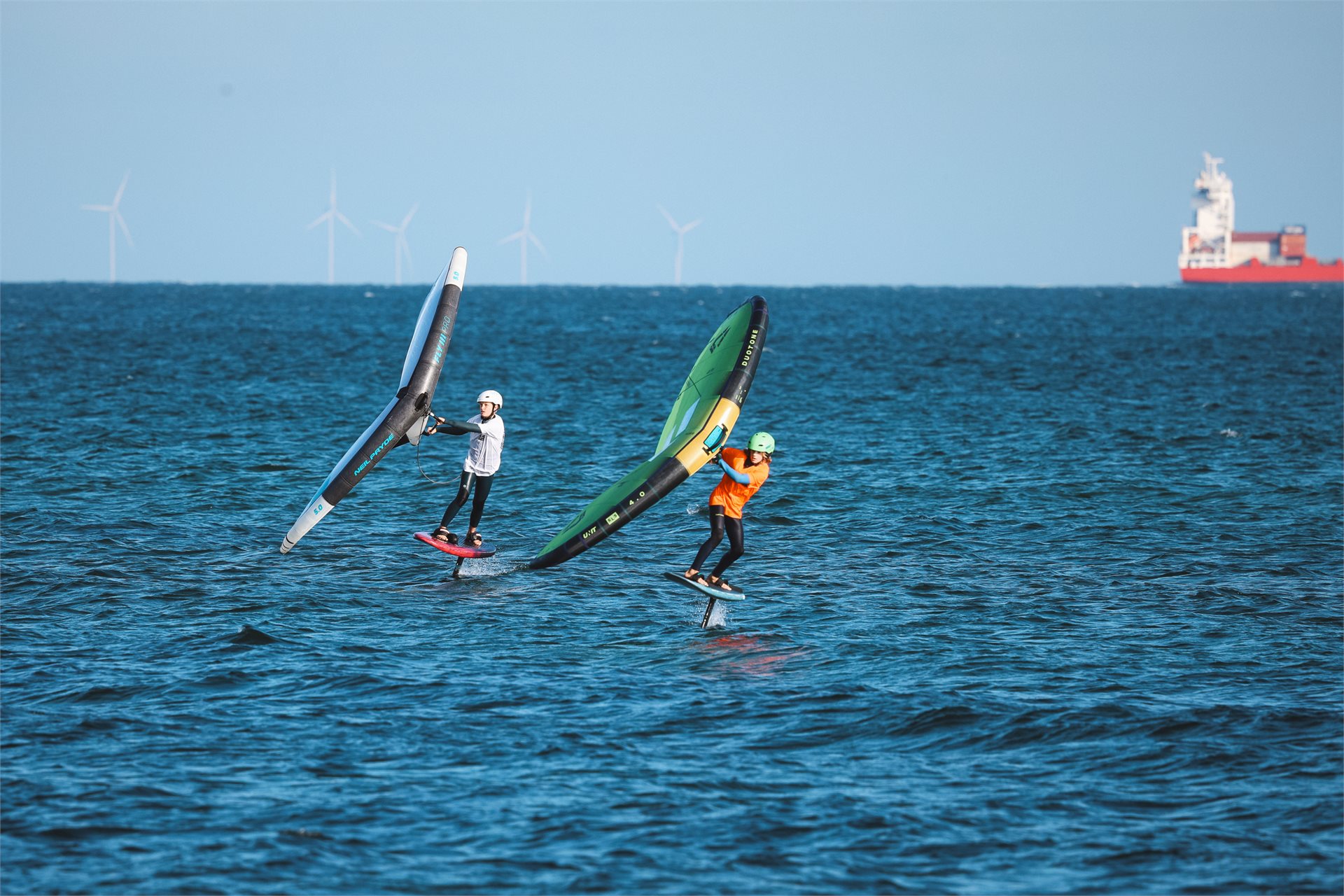
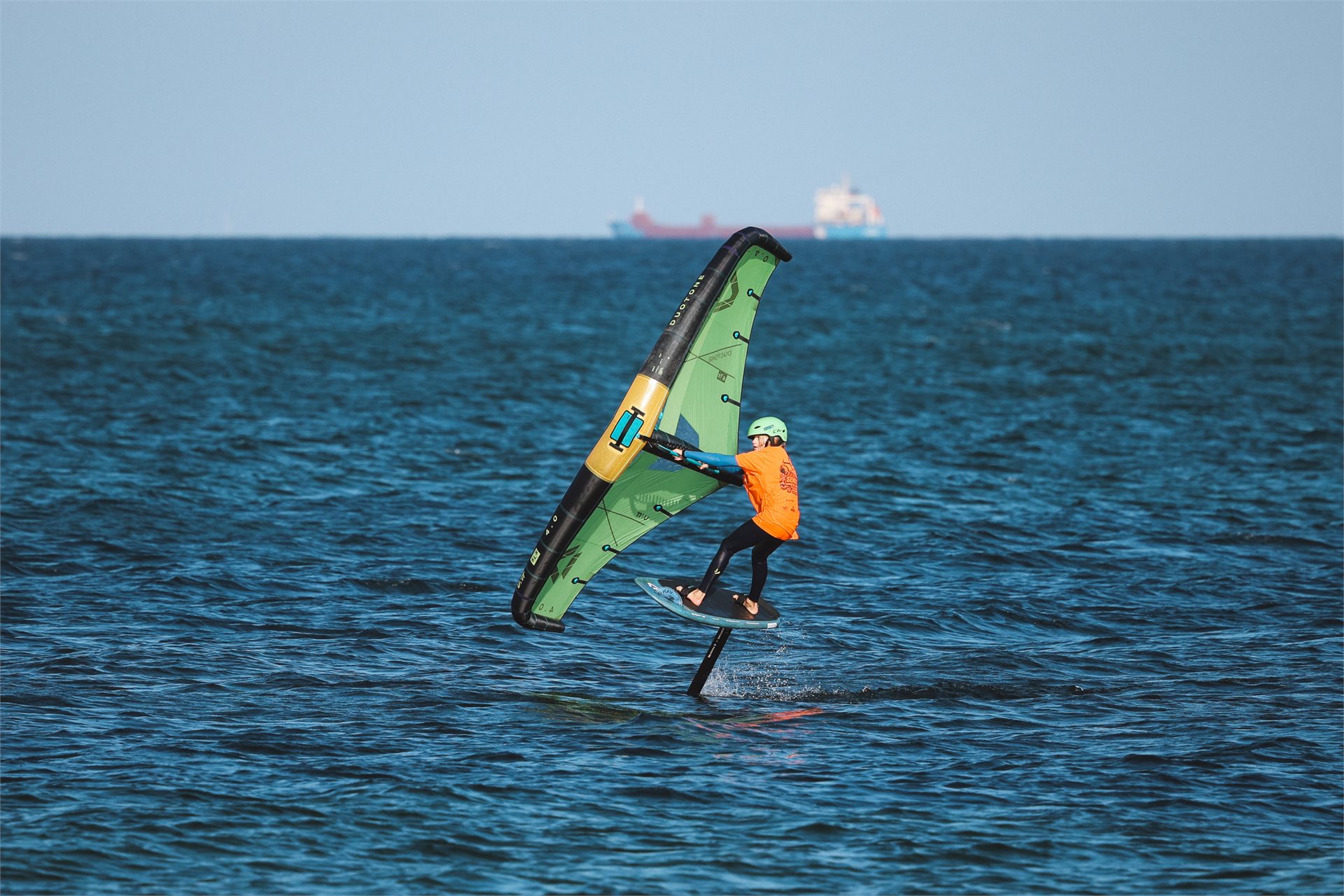
Who takes the jump? Who opts for the longer way round? And who still has enough energy for the final sprint? At the SEND IT Wingfoil Clash – AIR & CROSS, held at AHOI CAMP in Altenteil on the German Baltic island of Fehmarn, spectators could follow those decisions almost as they happened. Afterwards, one question kept coming back: what exactly is wingfoil boardercross, and when will it return?
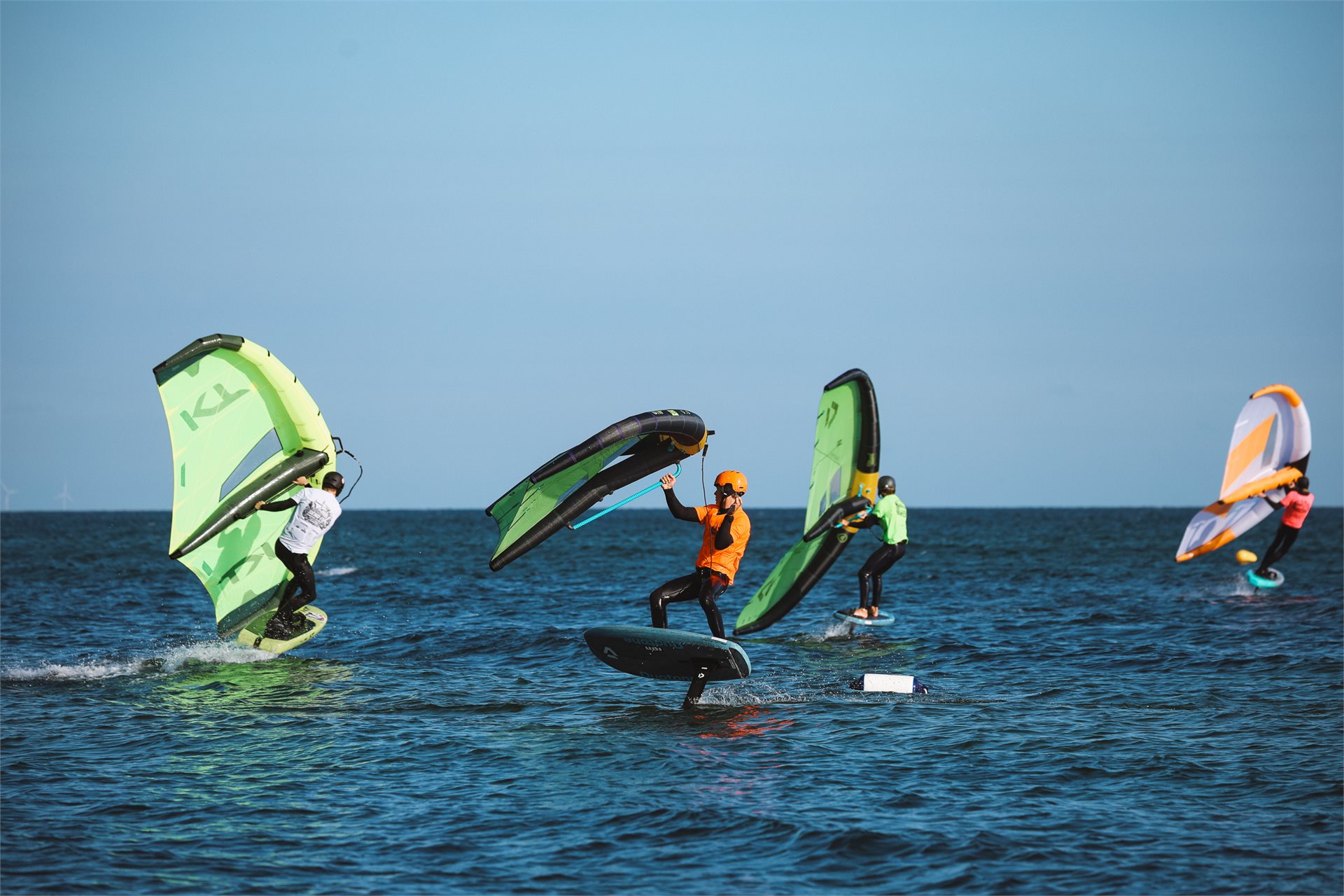
The idea is straightforward. A wingfoil race can demand much more than outright speed around a set of buoys. Boardercross combines acceleration, obstacle handling, tight turns, strategic choices and an unpowered finish in one race – with the decisive action close enough for people on the beach to understand.
A course spectators can follow from the beach
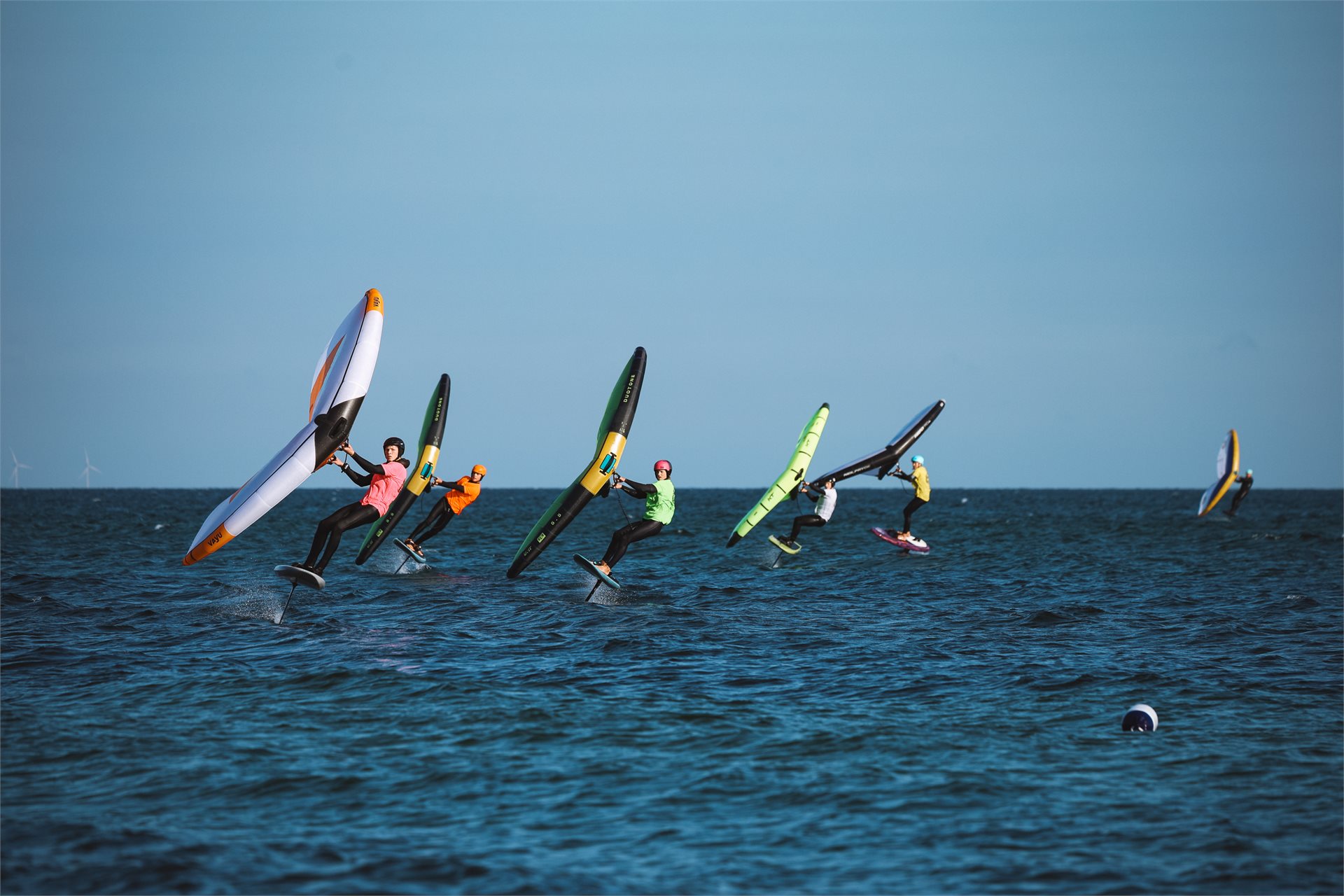
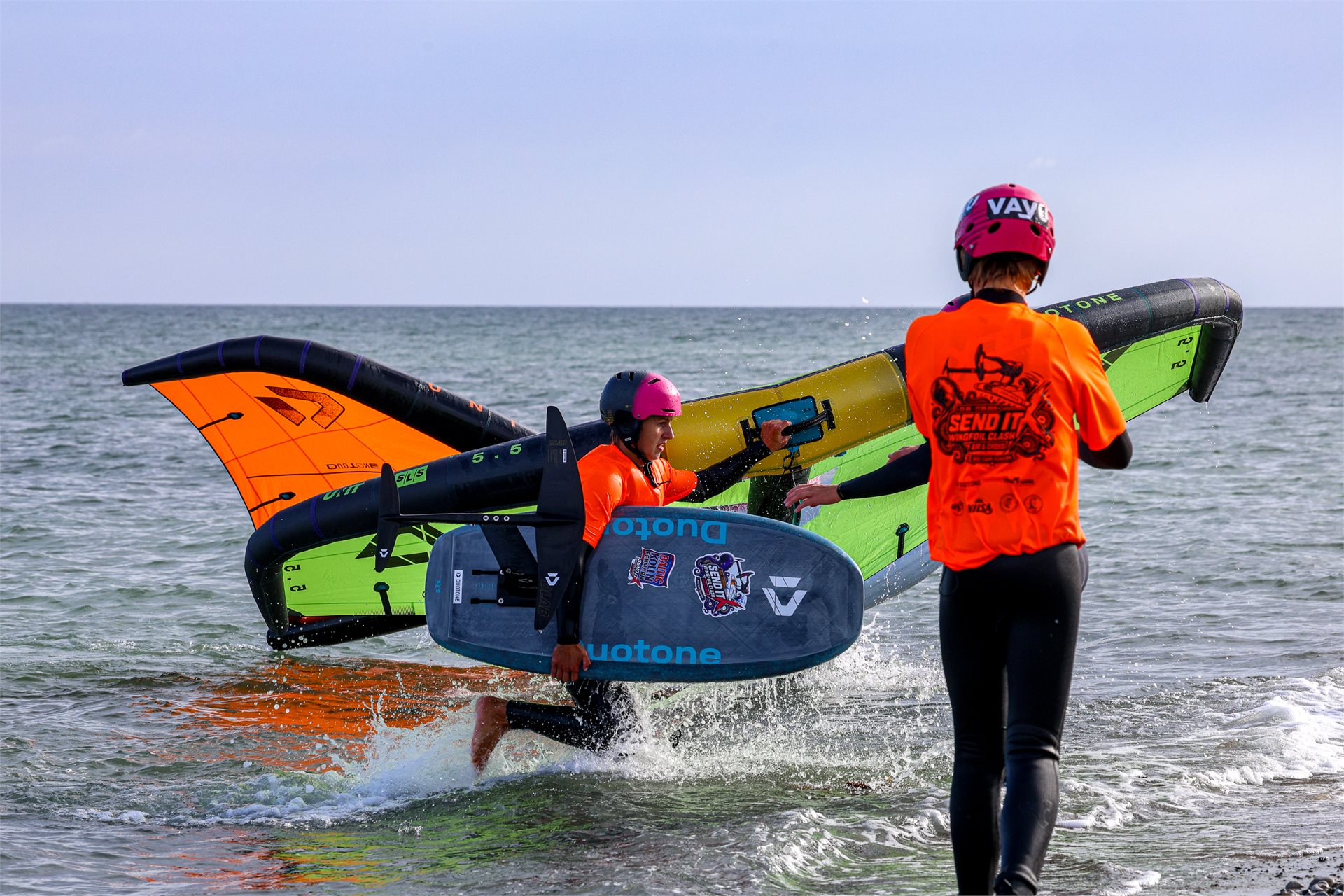
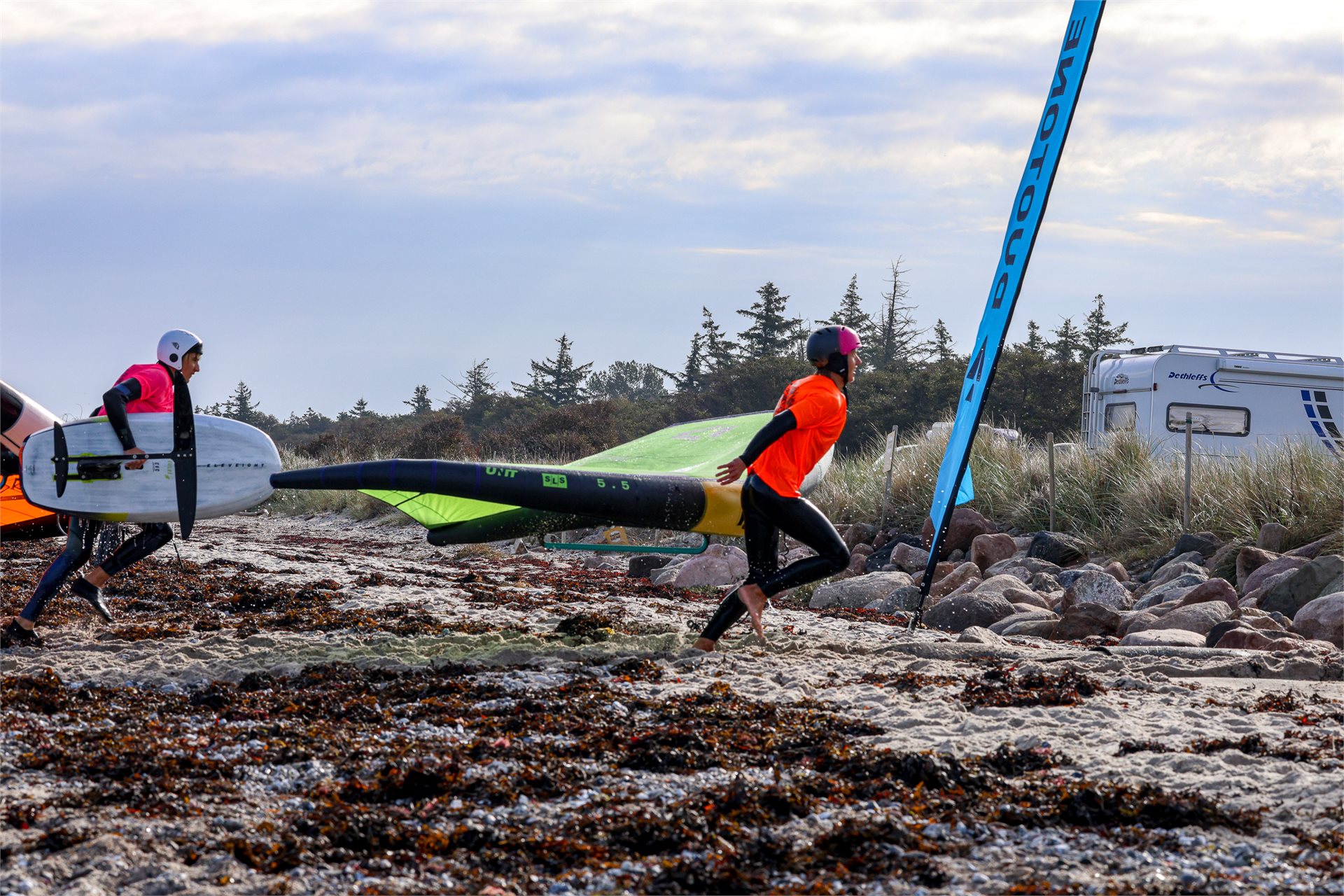
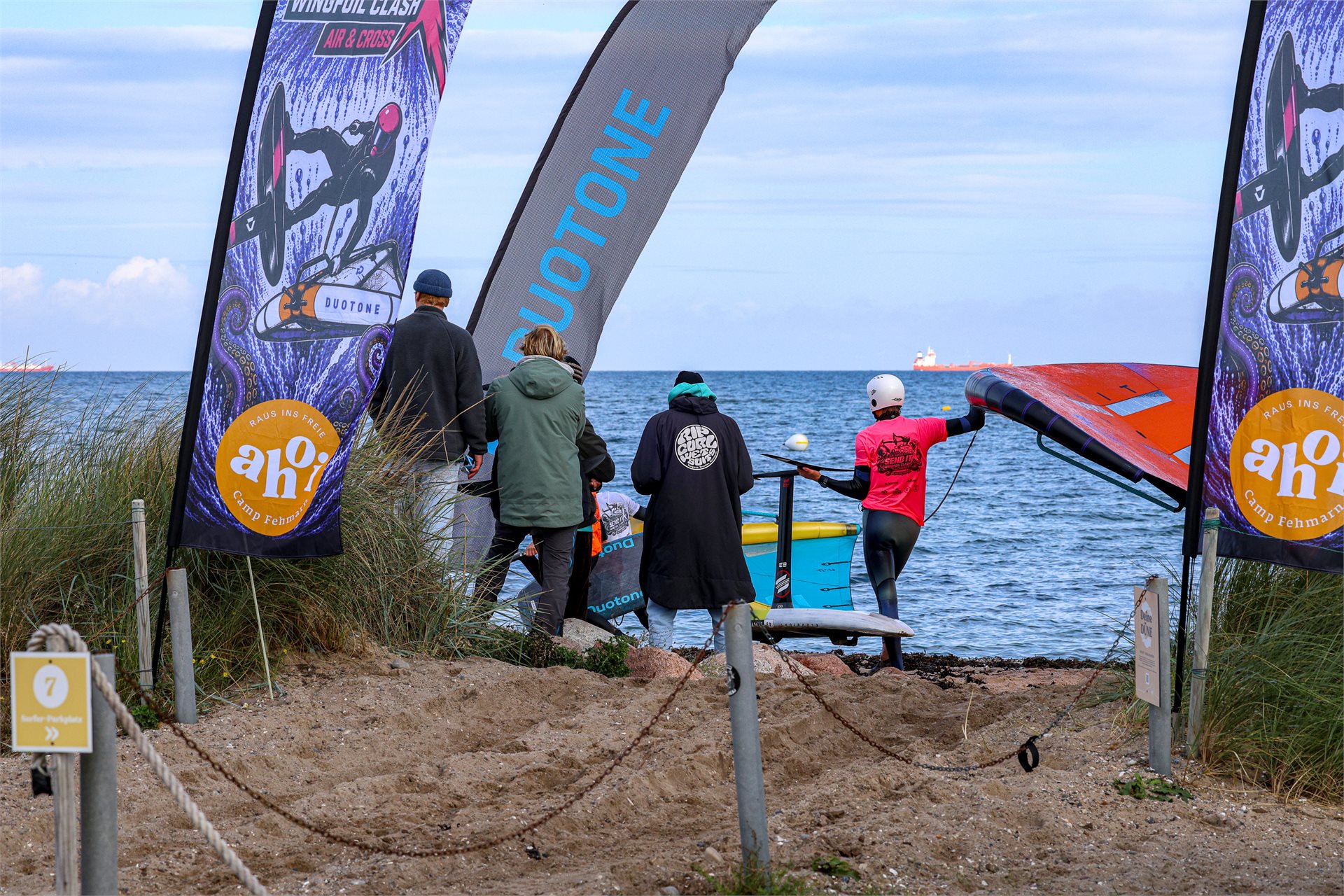
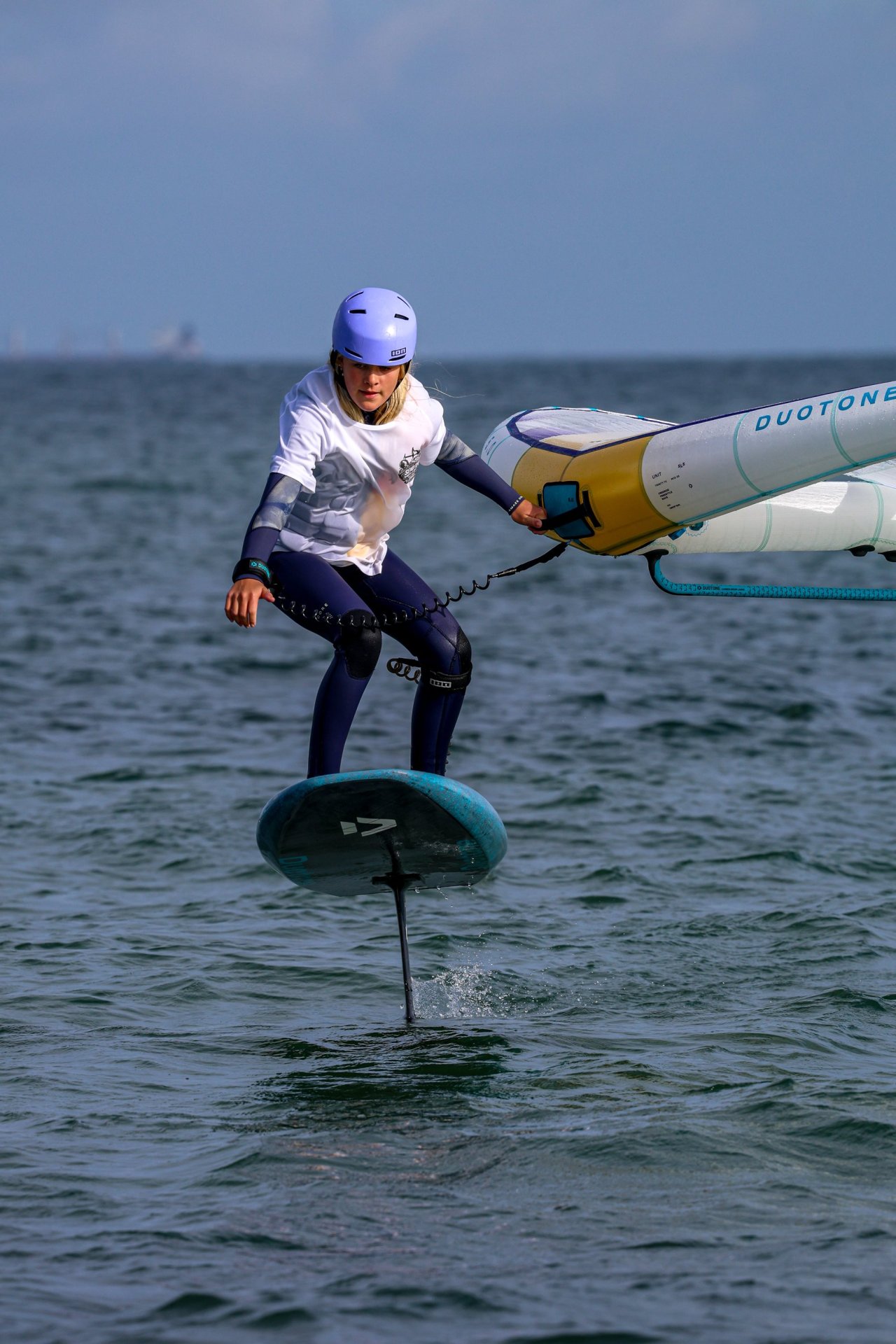
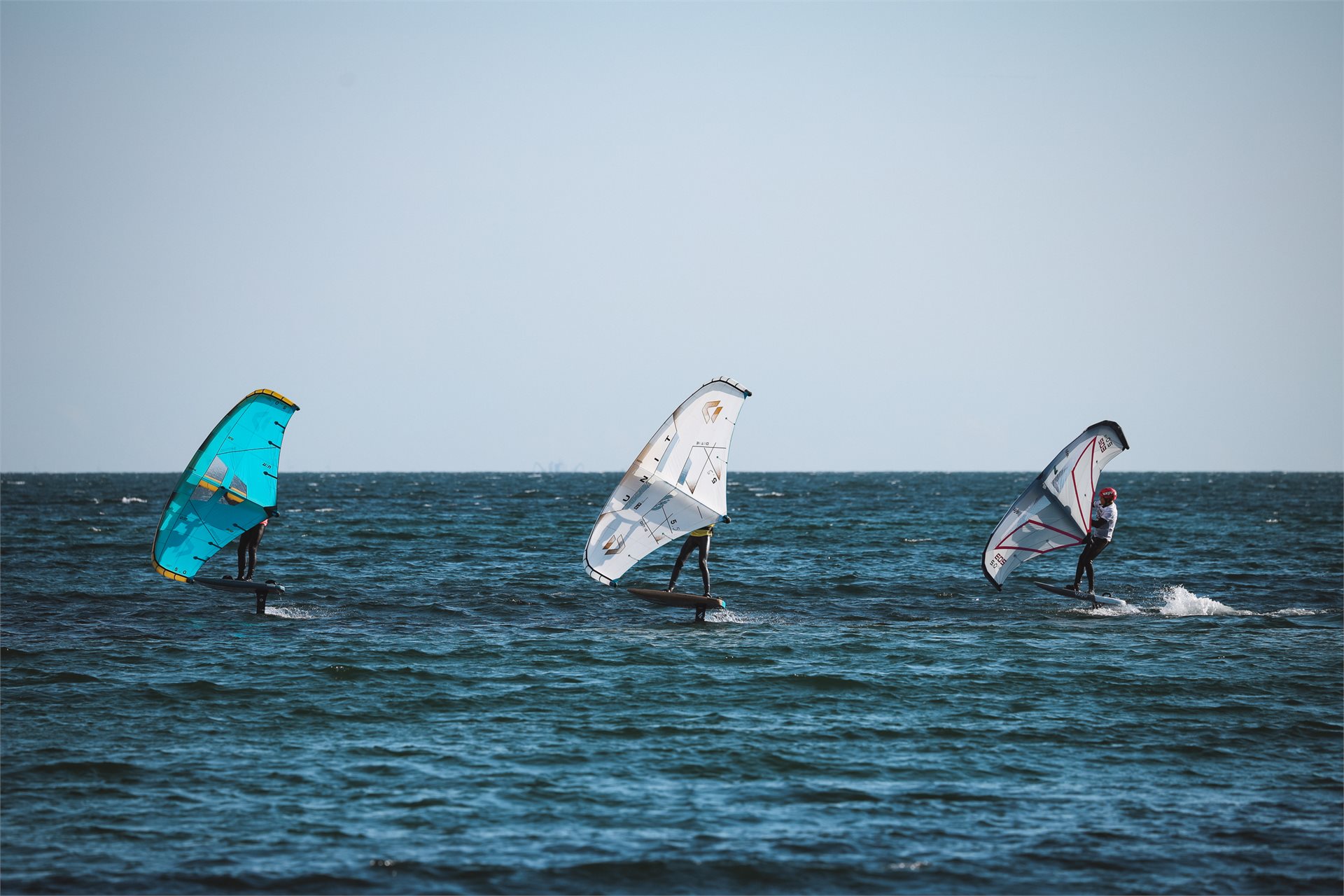
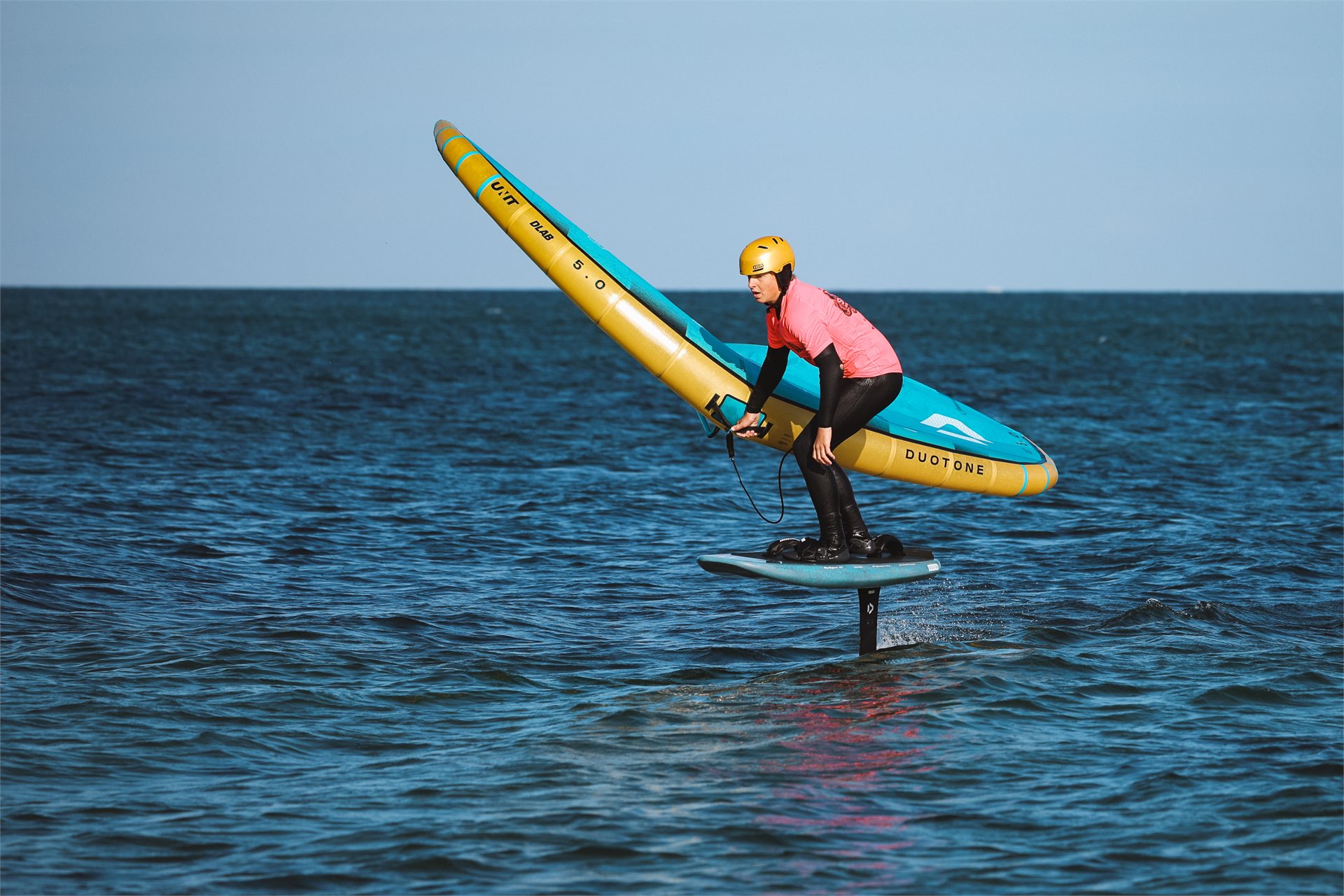
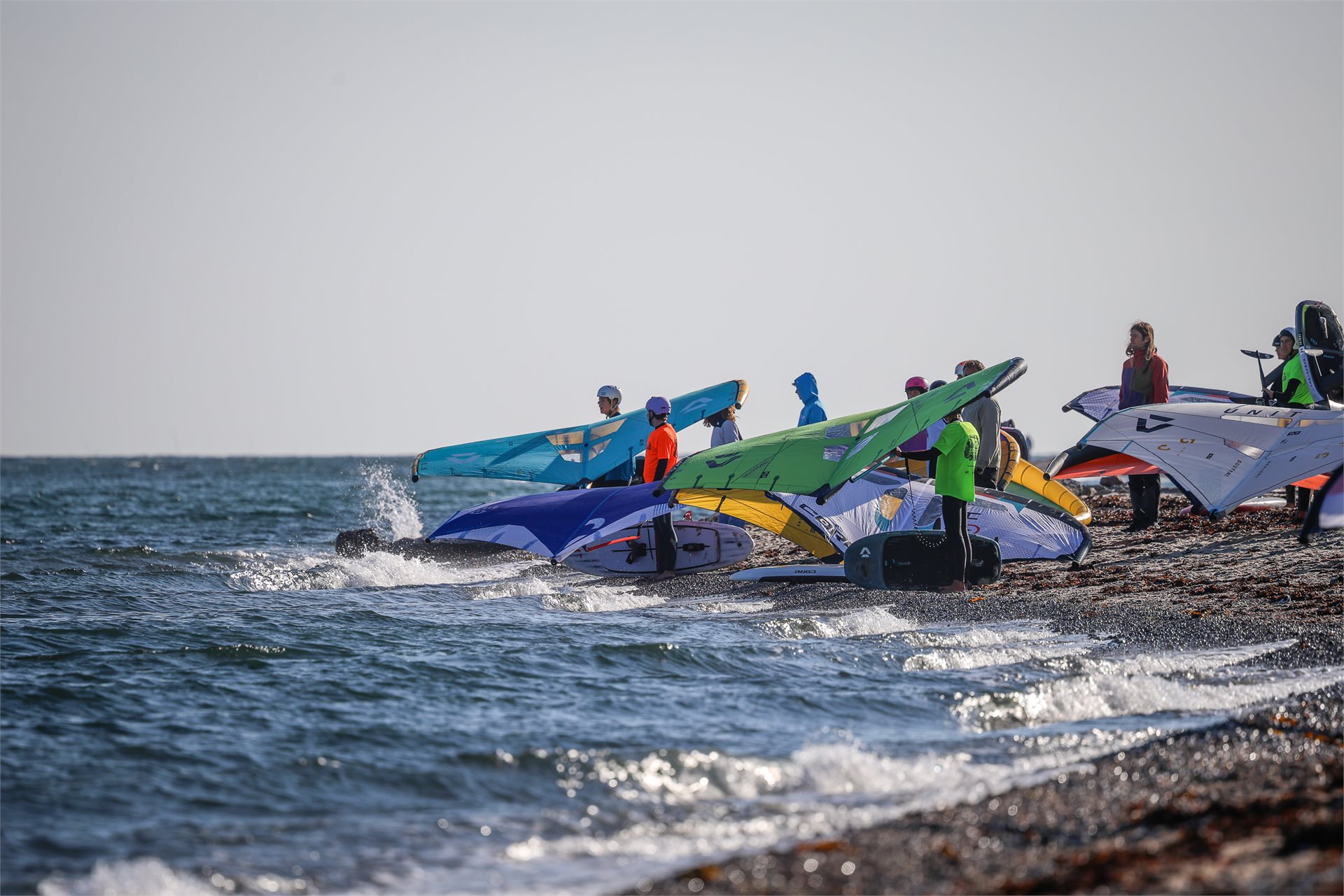
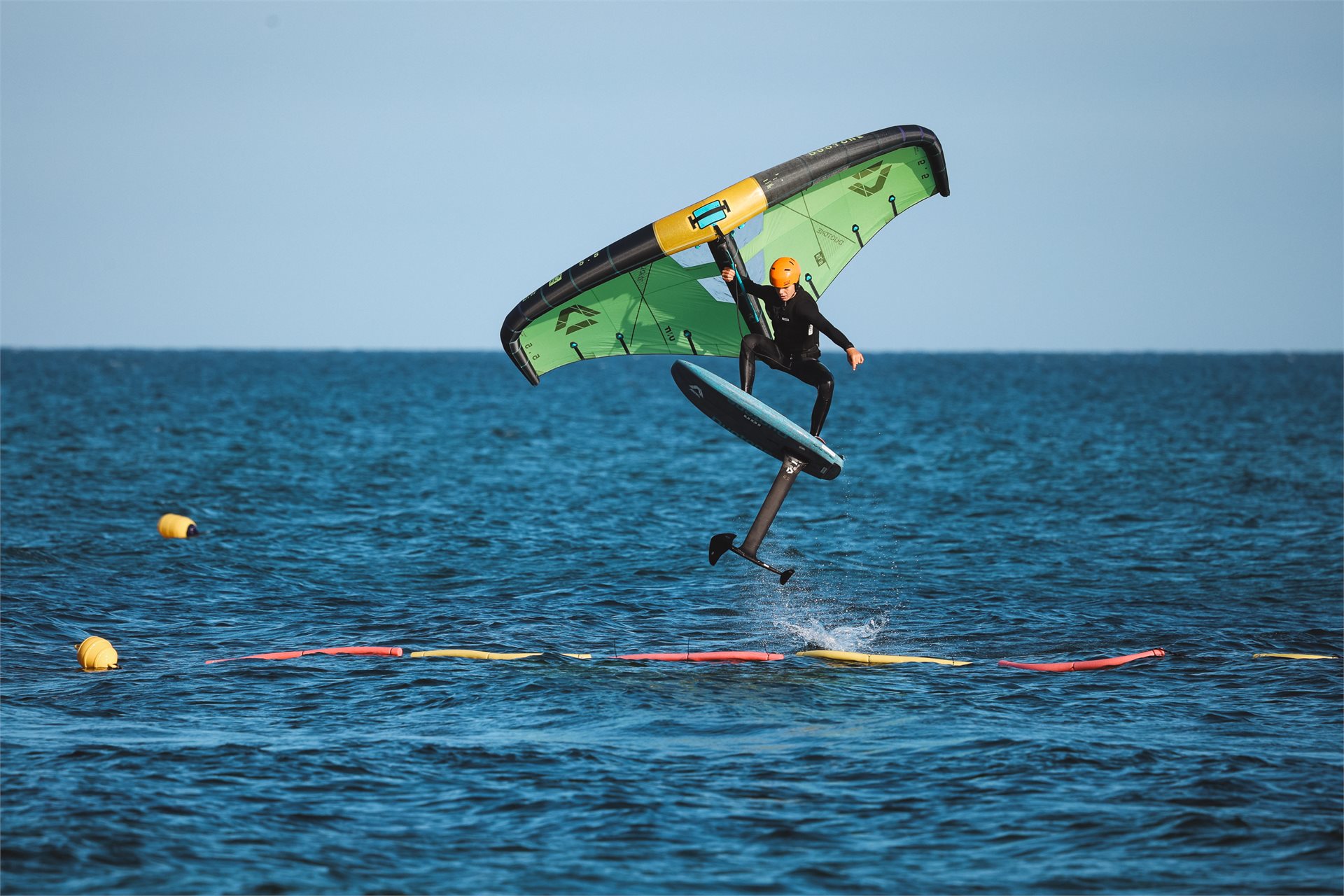
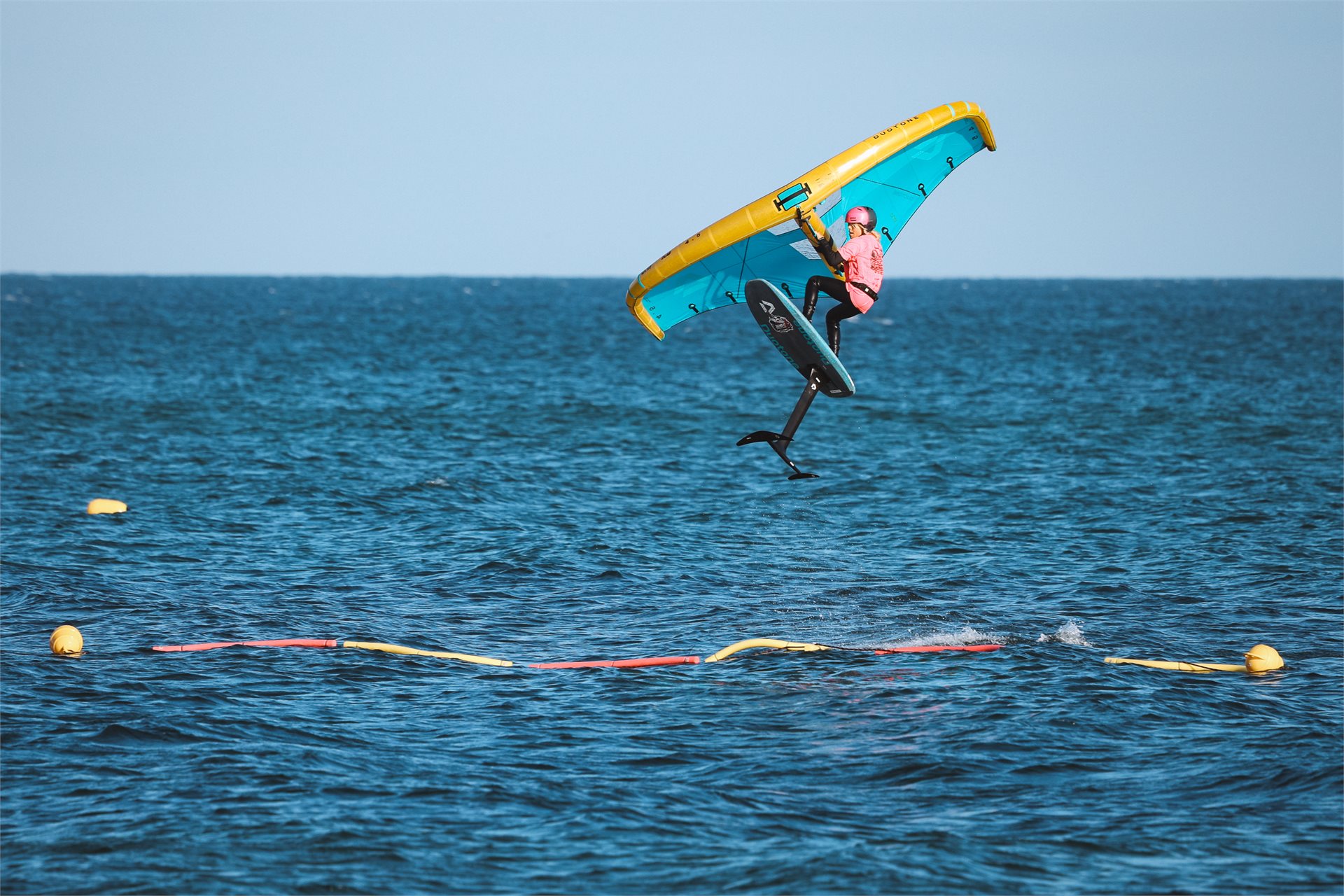
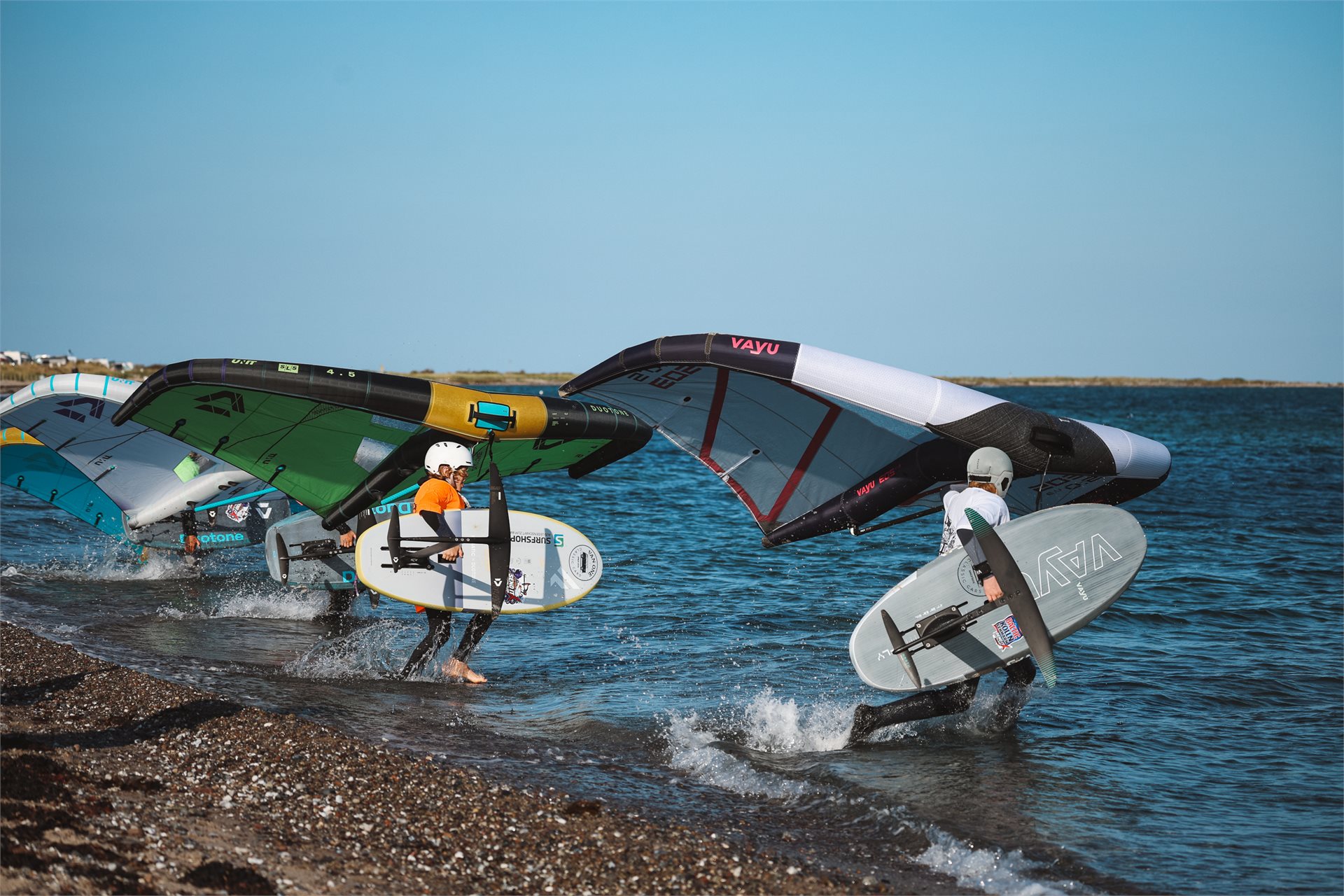
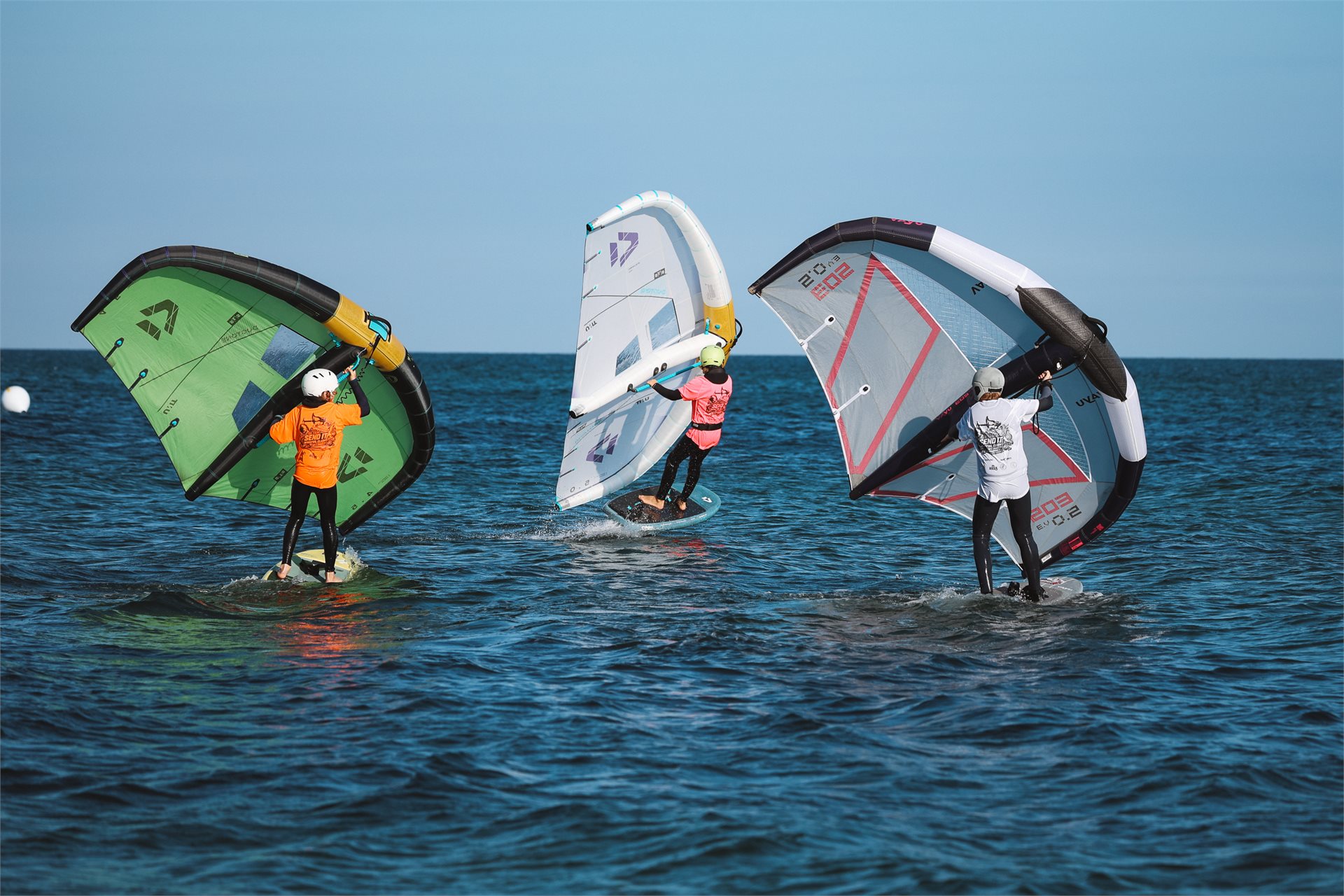
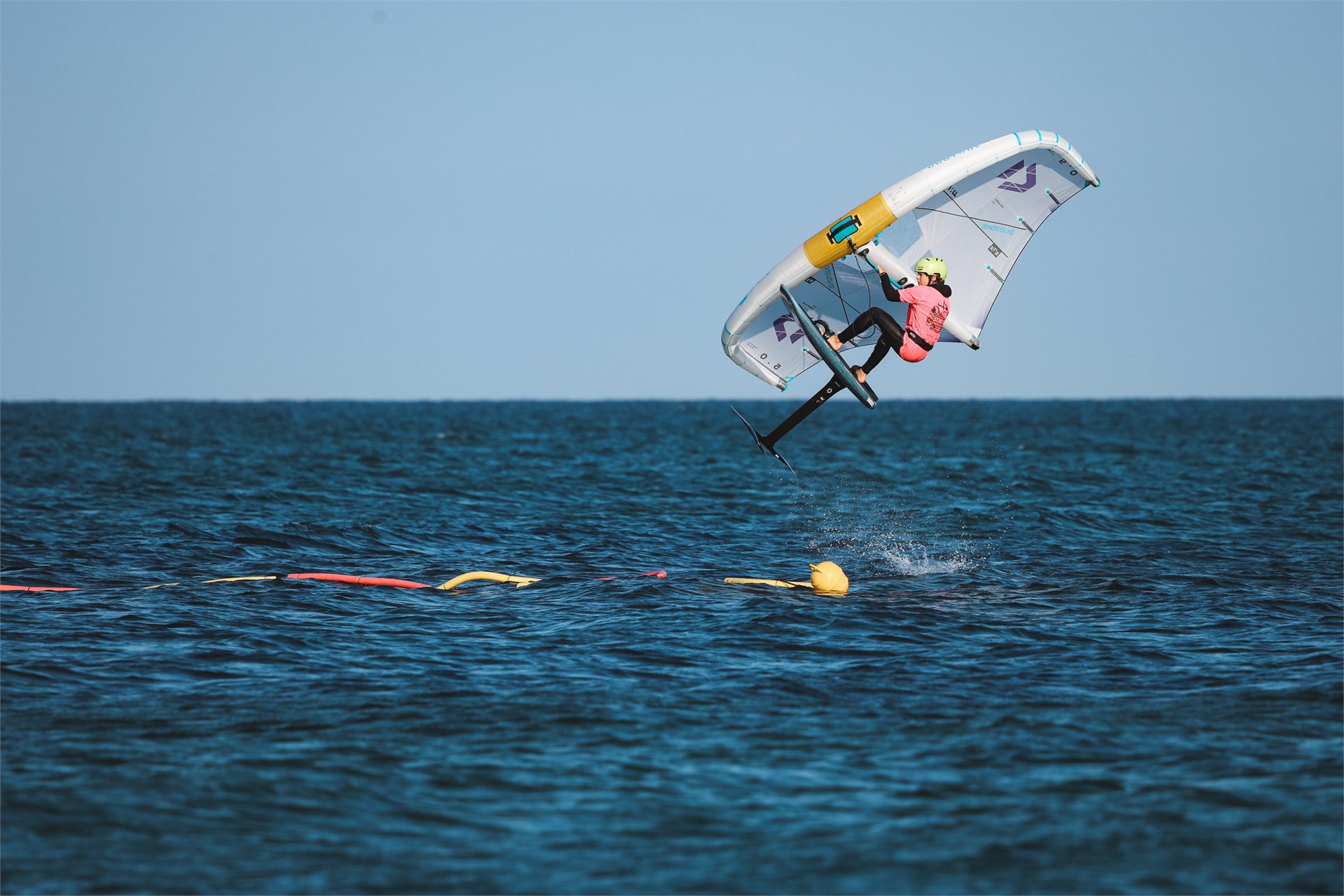
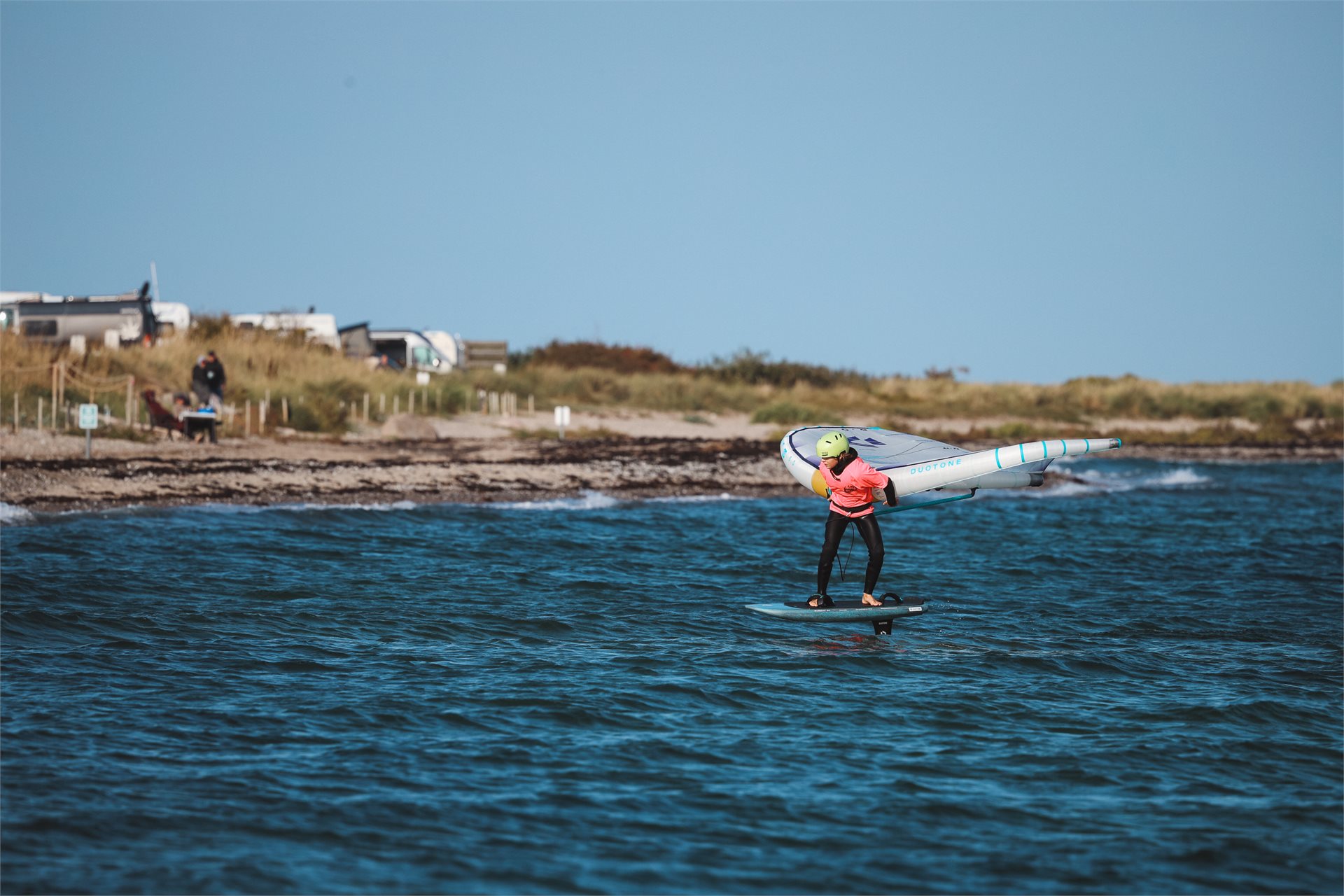
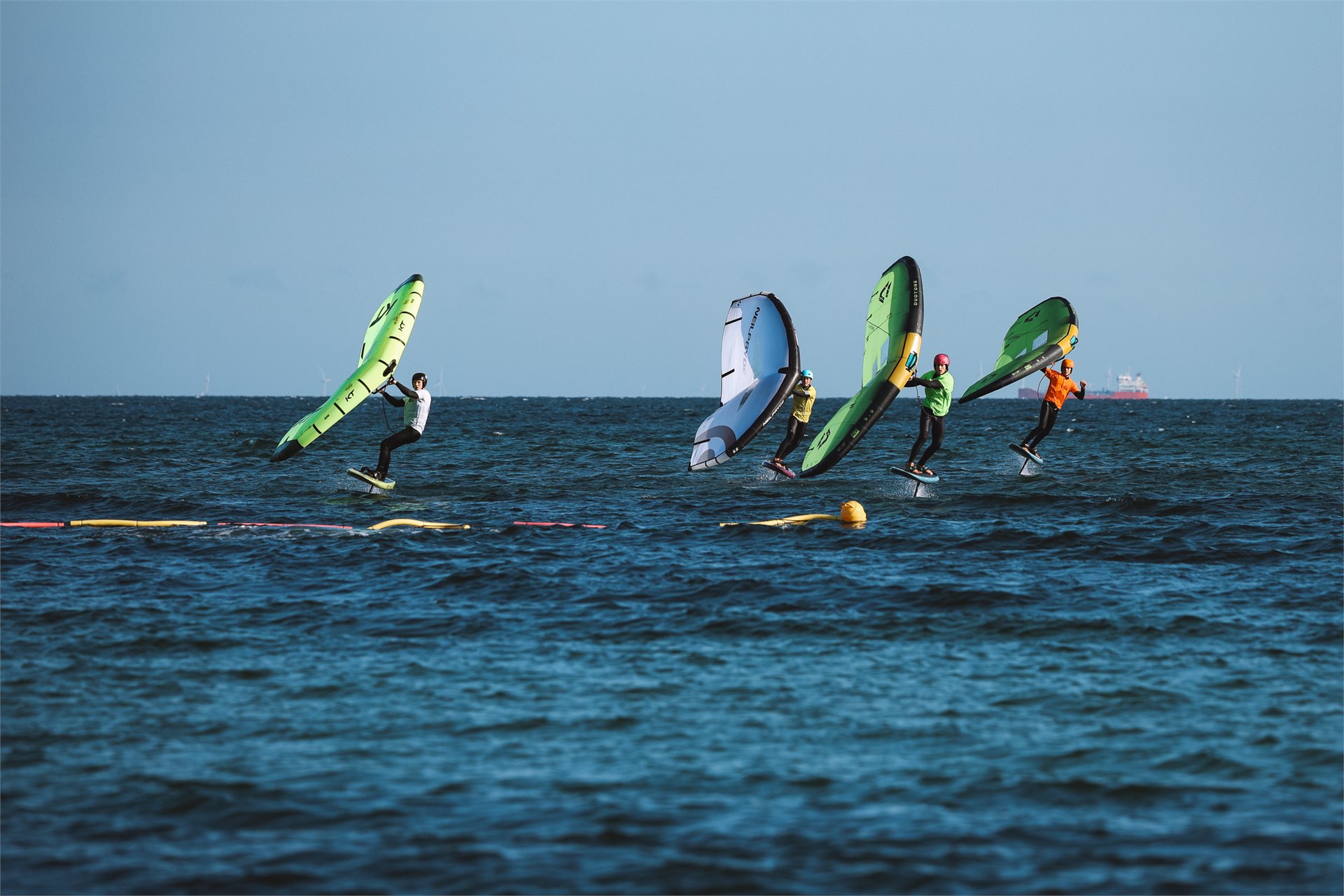
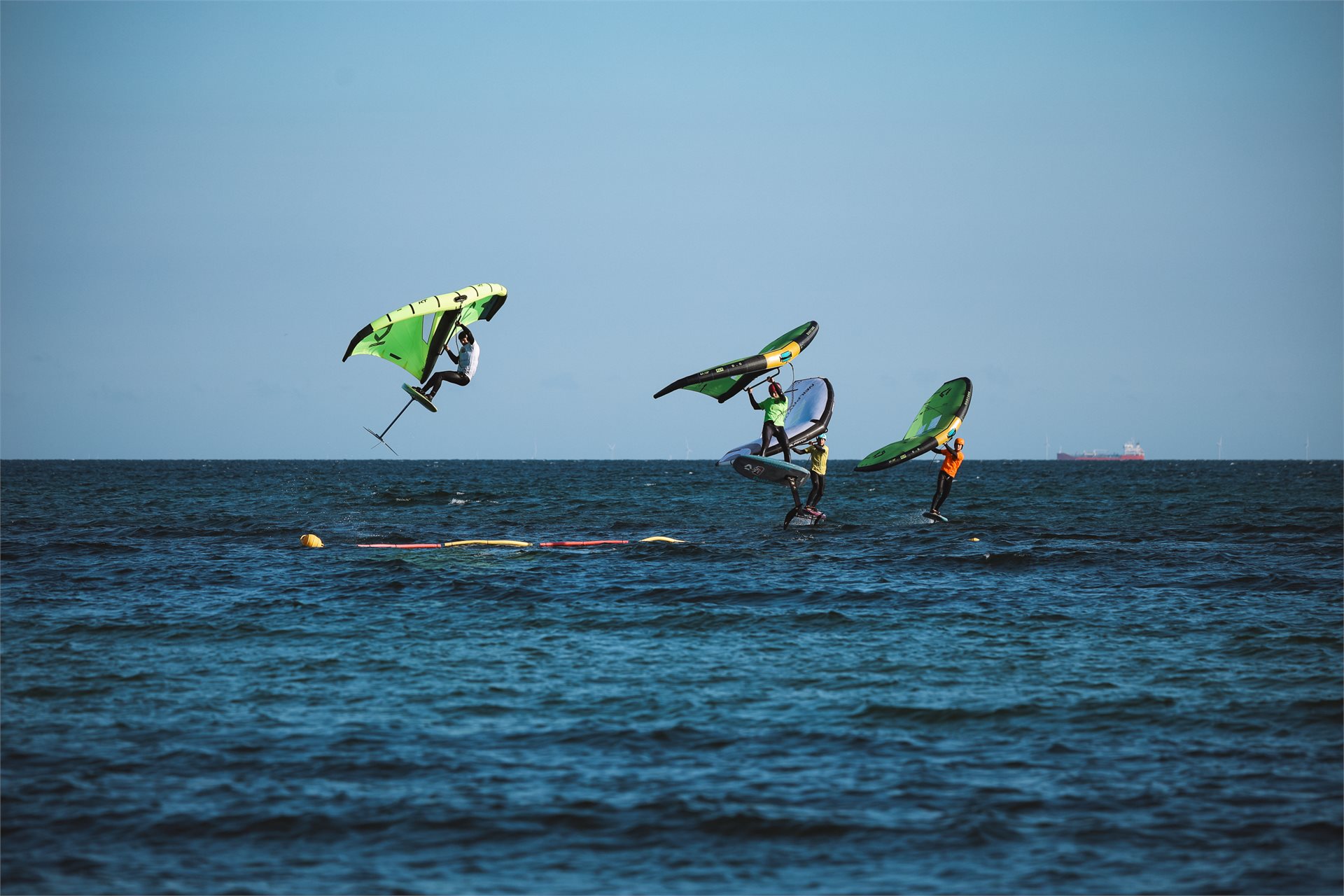
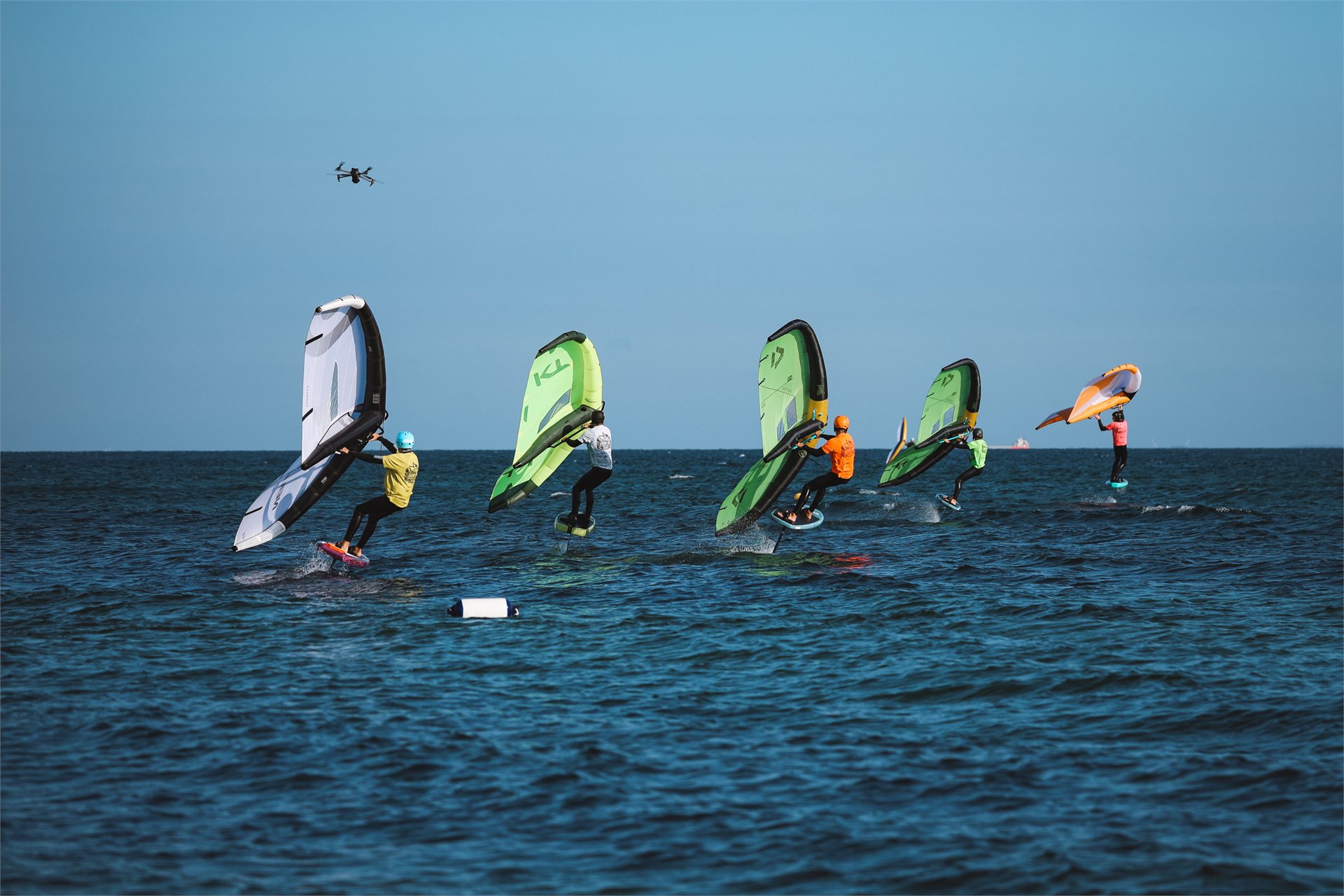
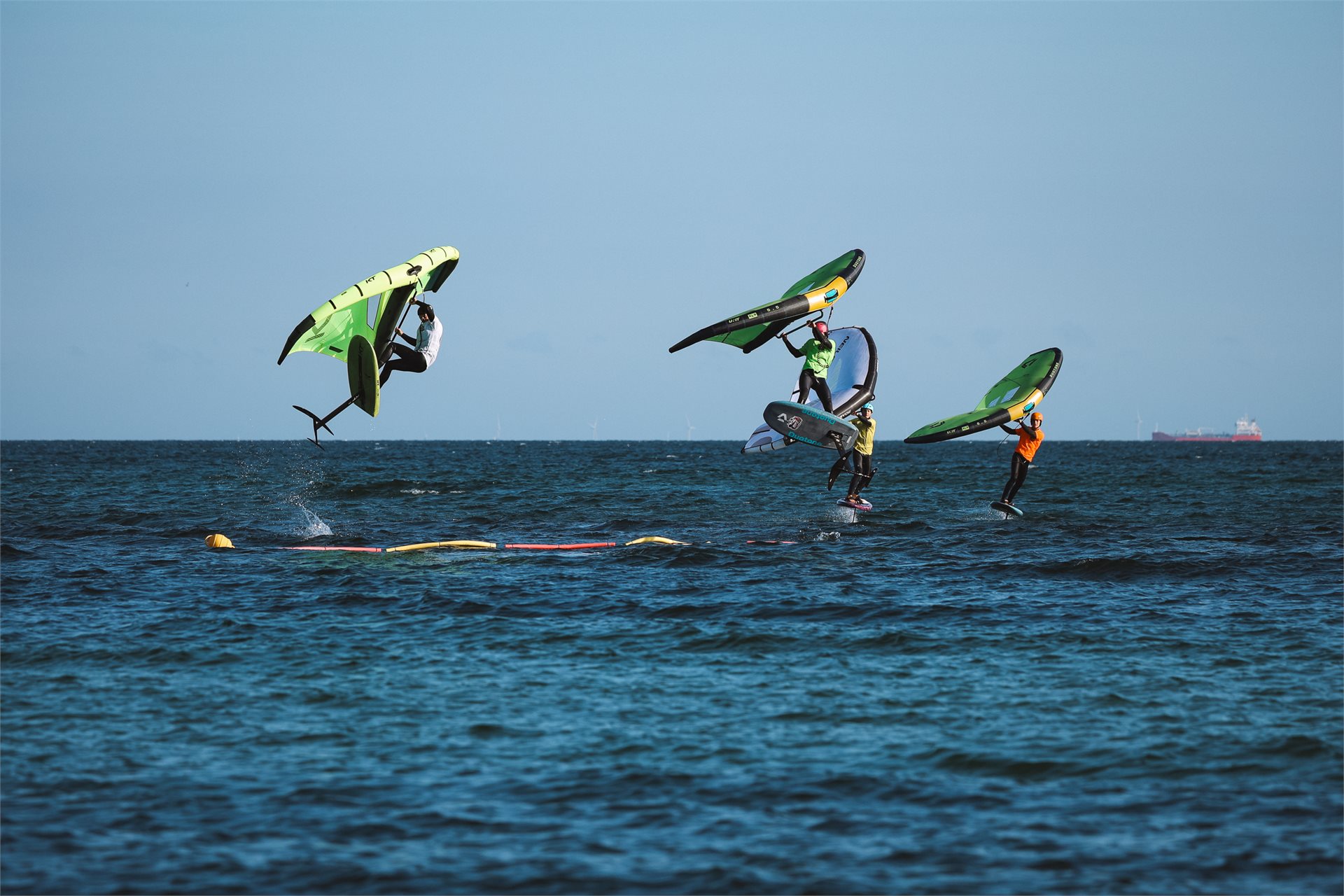
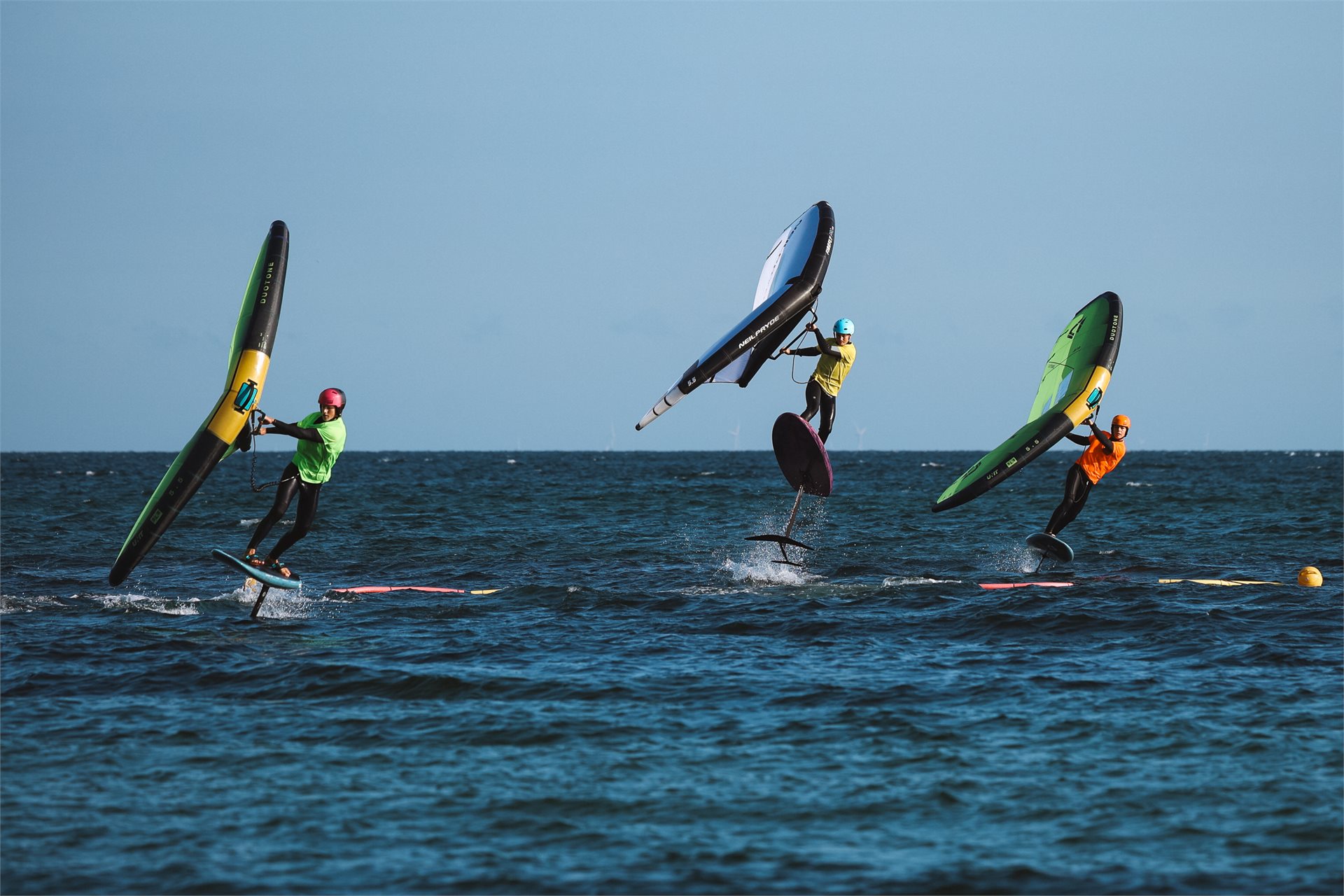
Several riders start together from the sand, carry their equipment into the water, get onto the foil as quickly as possible and head for an offshore turning mark. On the way back, a floating obstacle creates a choice: jump the barrier for the shorter line, or take a longer route around it. Jumping is never compulsory. A compact slalom section then tests fast changes of direction and precise foil control.
The final section adds another challenge. After passing a buoy gate, riders hold the wing by its handle without using it for wind-powered propulsion. They must carry their speed through by gliding, pumping or paddling. At Fehmarn in 2026 the race ended on the beach; in future, an equally visible finish gate on the water could keep the action close to spectators without requiring a beach landing.
“Boardercross combines acceleration, obstacle handling, tight turns, strategic choices and an unpowered finish in one race.”
The event ran from 25 to 27 September 2026. According to the organisers, the Deutscher Wing Foil Club e.V. (DWFC) – a registered German sports club – this was the first time boardercross had been staged in Germany as a separately scored wingfoil competition with its own results and podiums. It was a German first, not a claim to have invented boardercross internationally. Youth divisions, women’s categories and adult competitors were represented.
When young riders help shape the sport
There is another story behind the course. The Clash was designed not only to give younger riders, and women in particular, a more prominent competitive platform, but also to let young athletes help shape the kind of racing they wanted to see.
Two of the key voices were Duotone team riders Hubert and Wilhelm Christahl. Having competed in national and international slalom events, the brothers knew the excitement of speed – and the limitations of courses where top-end velocity can dominate. Why, they asked, should a race not reflect more of what makes wingfoiling technically exciting?
“Two different emphases, one shared goal: a course that rewards all-round riding at least as much as raw pace.”
Hubert was particularly drawn to the pump finish: no drive from the wing, just body movement, momentum and feel for the foil. Wilhelm focused on manoeuvrability, obstacles and the tactical choice between faster and safer lines. Two different emphases, one shared goal: a course that rewards all-round riding at least as much as raw pace. The DWFC then developed the practical Fehmarn format together with the young riders and organising team.
The thinking has a precedent in international racing. Álvaro Onieva – once a leading kite freestyler from the technically demanding NEW SCHOOL era of handlepass tricks such as the KGB and Slim Chance – later argued as head judge on the GWA Wingfoil World Tour for racing that places greater weight on rider skill than on highly specialised equipment. When FreeFly Slalom was introduced in 2023, broadening the range of skills and equipment in competition was part of the thinking. The Fehmarn boardercross course independently takes that principle further by combining different challenges in a single race.
That combination also changes the equipment equation. A high-speed race foil excels on long straights, but can be less suited to sharp turns, jumping or sustained pumping. At Fehmarn, even the opening leg started with a beach launch and the need to get foiling quickly. Through the obstacle, slalom and unpowered finish, there was no single material advantage that could settle every section. Control, versatility, judgement and fitness all mattered.
A positive response from riders and spectators
The reaction to the first edition was encouraging. Riders enjoyed moving between different tasks; spectators could see the choices unfold, follow overtakes and understand why a competitor might gamble on a jump or choose the safer detour. With the start, key sections and finish near the shore, the race was easy to follow even without specialist knowledge.
The course was also adaptable. On the second competition day it was run in the opposite direction, changing the challenges without needing a completely new venue.
Room to grow – for organisers and partners
A relatively simple floating obstacle and a carefully set buoy course were enough to demonstrate the potential. Event partners saw opportunities to develop the concept with additional course features and branded obstacles visible from the beach, while keeping safety and fair competition central. Crucially, there remains an alternative route for riders who do not want to jump.
“Control, versatility, judgement and fitness all mattered.”
This is not about replacing every racing discipline. It is about offering a different challenge that can be adapted to suitable venues and conditions – and one that is both technically demanding for athletes and easy for a crowd to understand.
Could it ever have an Olympic future?
The question is no longer entirely fanciful, although any conclusion would be premature. In late October 2026, World Sailing’s Events and Equipment Committees supported recommendations involving wingfoiling as a potential Olympic event for Brisbane 2032. Those recommendations still face further decisions. No Olympic place for wingfoiling has been finalised, and there has been no selection of boardercross as an Olympic format.
Even so, accessible racing, proximity to spectators, practical event infrastructure and an engaging visual format are all relevant considerations for the future of the sport. Boardercross offers an example of how those goals might be pursued, without claiming to be the answer already chosen by the governing bodies.
“The next generation is not simply waiting for a course to be set. It is helping to design one.”
There is no confirmed date or location yet for the next boardercross contest. The response in Fehmarn, however, has made the case for developing the format further.
Perhaps that is the strongest message from this first edition: the next generation is not simply waiting for a course to be set. It is helping to design one.
Sources and context: GWA Wingfoil World Tour, FreeFly Slalom / Álvaro Onieva (2023); Sailweb, World Sailing committee recommendations (29 October 2026); Inside the Games (29 October 2026); SURF, SEND IT Wingfoil Clash (30 September 2026).