

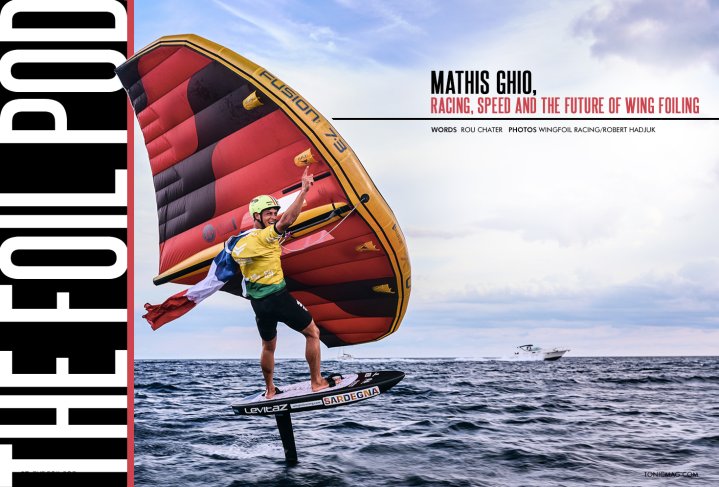
Wing foil racing is still one of the newest and fastest evolving corners of the sport, and few riders have had a better view of that development than Mathis Ghio. With a background in windsurfing and sailing, a sharp race brain and a growing role in the development of Ozone’s Fusion wings, Mathis sits right at the point where elite performance meets innovation. We caught up with him to talk about how he got started, why racing hooked him so quickly, what it feels like to hit over 40 knots on a wing, and where he thinks the sport is heading next.
Rou Chater: Let’s start at the beginning. How did you first get into watersports?
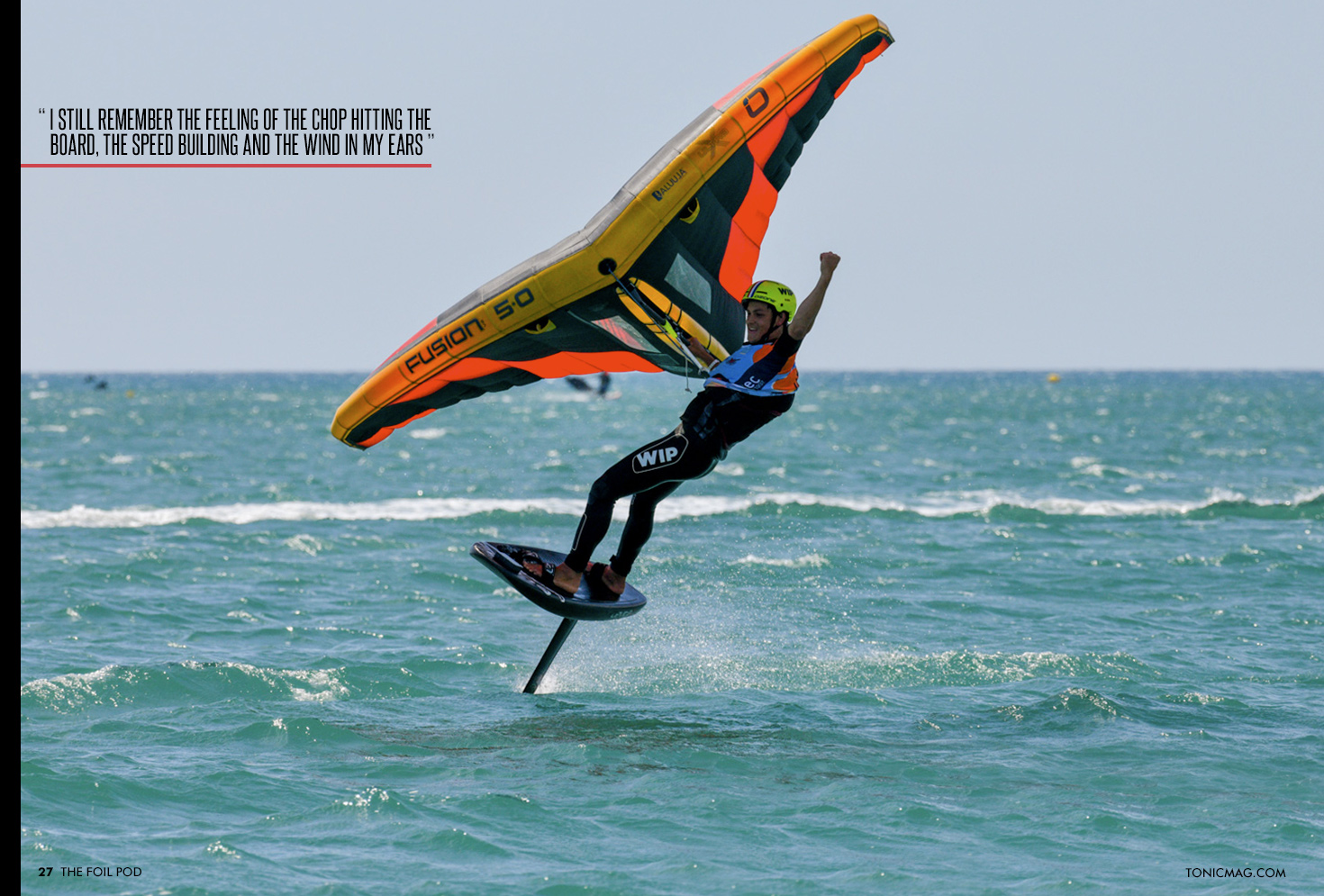
Mathis Ghio: It was really a family story. My father was a windsurfer and used to compete at a national level, so from a very young age, I was always on the beach watching him. I was bored with just playing in the sand; I wanted to be on the water with him. At first, I was too young, so he would sit me on the front of the board and take me out with him. I still remember the feeling of the chop hitting the board, the speed building and the wind in my ears. That is what made me fall in love with watersports.
After that, I started in the Optimist class, which gave me a lot of tactical and strategic knowledge, and then I moved into windsurfing. I spent around twelve years doing that, with national competitions and some international podiums, before eventually moving into wing foiling.
Rou: Did the Optimist and windsurfing background give you a big advantage when you moved into racing?
Mathis: Yes, definitely. The equipment is different, of course, but the race knowledge transfers really well. In the Optimist especially, I learned a lot about strategy, positioning and understanding the racecourse. I had very good coaches in France, and they taught me a huge amount. Even when I was young, I knew I was doing all of that to eventually windsurf like my father and my older brother, so I was always trying to absorb as much as possible.
Later on, once I had the basics of wing foiling sorted, all that race knowledge came back. That was a big help.
Rou: Was the Olympic pathway a serious goal for you before winging came along?
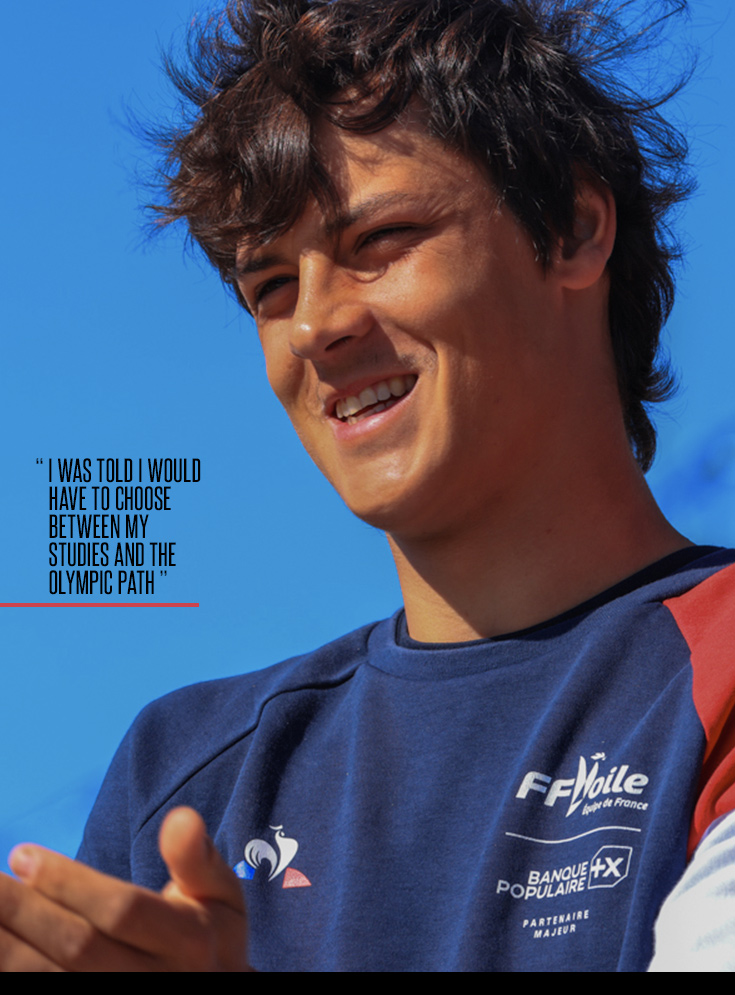
Mathis: Yes, that was the dream for a big part of my life. I really wanted to build an Olympic campaign in windsurfing. But when I reached the point where I wanted to join the French team properly, I was told I would have to choose between my studies and the Olympic path. I was doing engineering studies at the time, while some of the other riders were fully focused on sport. The federation did not believe I could do both in the long term.
So I made the choice to continue my studies and move into wing foiling. Looking back, I am happy with that decision.
Rou: What was your first wing foiling session like?
Mathis: Honestly, it was much closer to swimming than wing foiling. I started on a 29-litre board with a five-metre wing, so it was not exactly the easiest setup. I did not even manage to fly on that first session. It was a very long swim back to shore.
But even then, I could already feel there was something special in the sport. Then a strong Mistral came in, with waves in the south of France, and the next session was amazing. I was not tacking or jibing yet, but I was able to ride the swell and feel those free flight moments. That was when I really got hooked. Being able to put the wing aside and just ride in silence, that is what made me fall in love with wing foiling.
Rou: Did you get into winging with racing already in mind?
Mathis: At the very beginning, no, I was just trying to get my jibes, my tacks and the foundations. But I have always had a competitor’s mindset. Since I was very young, I needed competition to really feel like myself. So, quite quickly, I wanted to enter an event and see what the level was like.
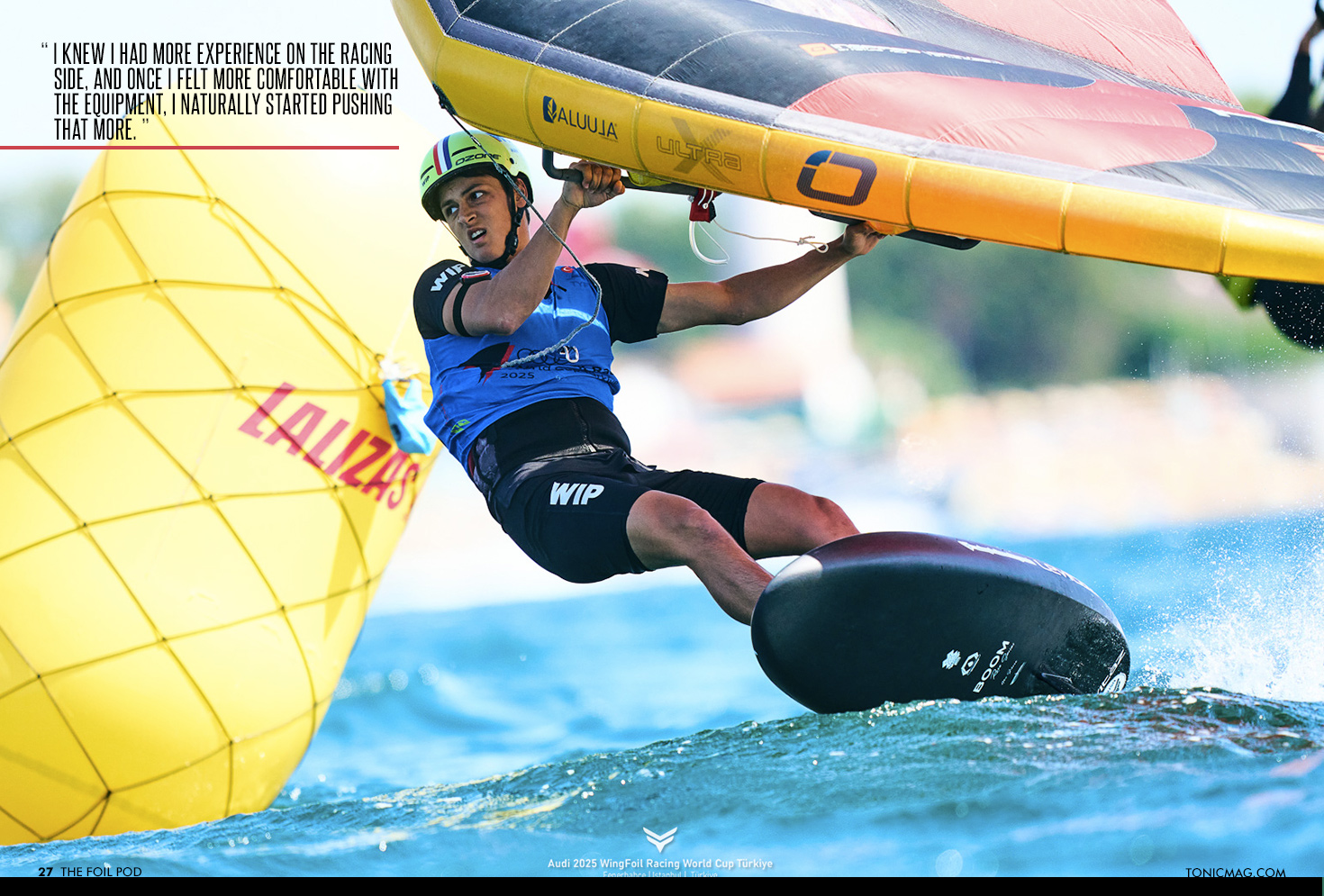
At that time, the scene was still small enough that we could do both freestyle and racing at the same events, so I tried both. But I knew I had more experience on the racing side, and once I felt more comfortable with the equipment, I naturally started pushing that more.
Rou: When did you realise wing racing was going to become seriously competitive?
Mathis: In 2023, really. That was when I started seeing more and more riders coming in from windsurfing, people I had raced against before, and I knew immediately the level was going to jump. Riders like Alessandro Tomassi, for example, people I had competed with as teenagers, suddenly we were meeting again on a wing foil racecourse years later. That was exciting because I knew what level they could bring once they adapted to the equipment.
Rou: How do you feel about the direction of wing foil racing now, especially with governing bodies and format changes?
Mathis: I think we are in a transition phase. The class is still evolving, and a lot is still being built step by step. But I do like some of the newer formats, especially the medal series system, where more riders still have a chance on the last day. It creates drama, which is good for the public and for making the sport more watchable.
At the same time, the big goal is to move towards the Olympics in 2032. That is exciting, but I also think it is important that wing racing keeps its own identity and does not just become a copy of kite foiling or IQFoil. That matters to me.
Rou: Do you have 2032 on your own radar as an athlete?
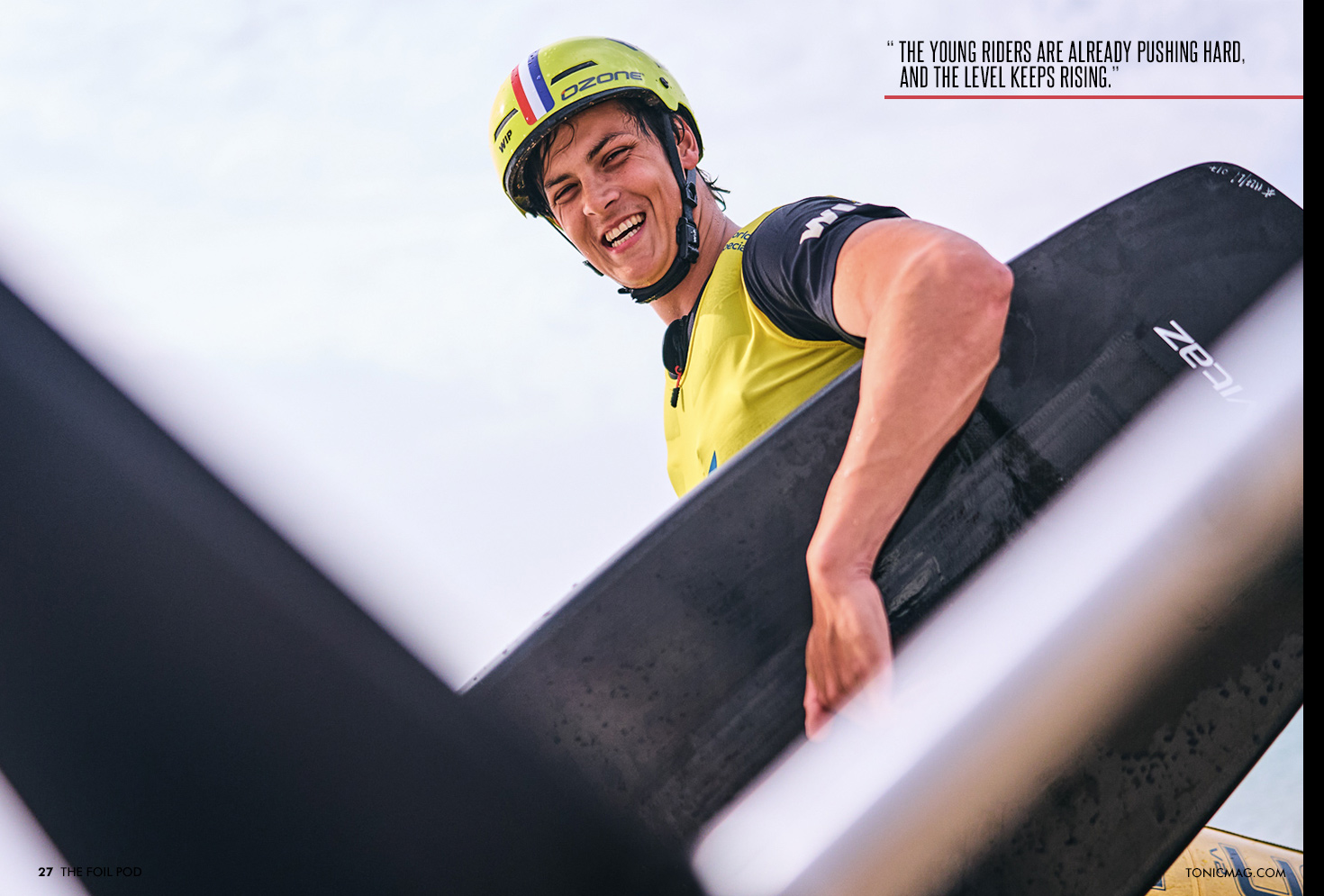
Mathis: It is hard to say. I will be 30 then, and the sport is moving very quickly. The young riders are already pushing hard, and the level keeps rising. I do not know whether I will still be one of the top competitors or if I will be more involved as a coach or in another role. But I do want to help the sport get there. That is the first priority for me.
If I can be part of bringing wing racing into the Olympics while keeping its authenticity, that would already mean a lot.
Rou: What is it actually like on the start line in a big race? From the outside, it looks absolutely terrifying.
Mathis: It is a lot of adrenaline, for sure. You have that shaky feeling because you do not know exactly what the riders around you are going to do, what tactical choice will be best, or what will happen when the horn goes. But there is also trust. We are all there to race hard, not to hurt each other, and usually, you are racing with riders of a similar level, so the fleet spreads quite quickly.
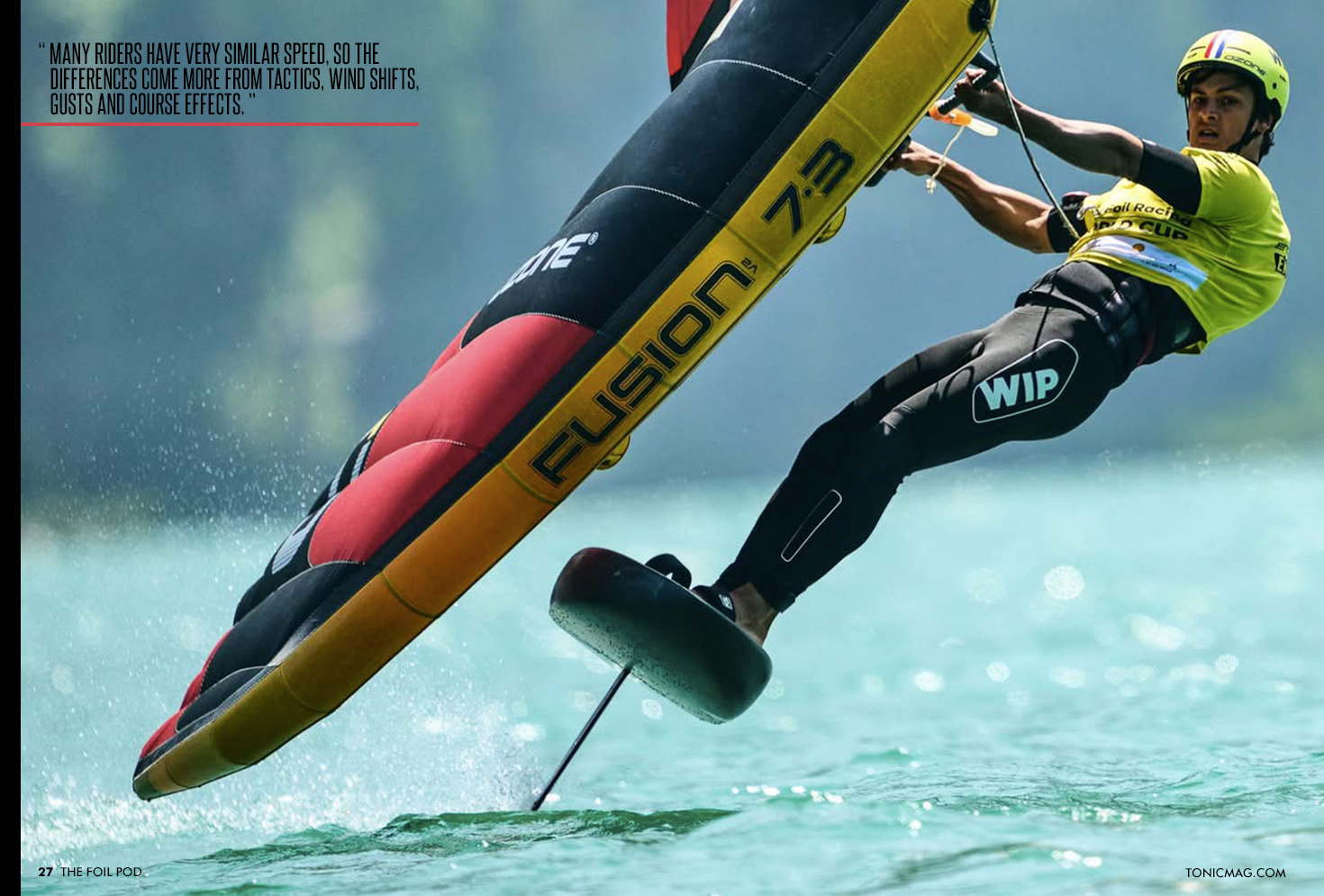
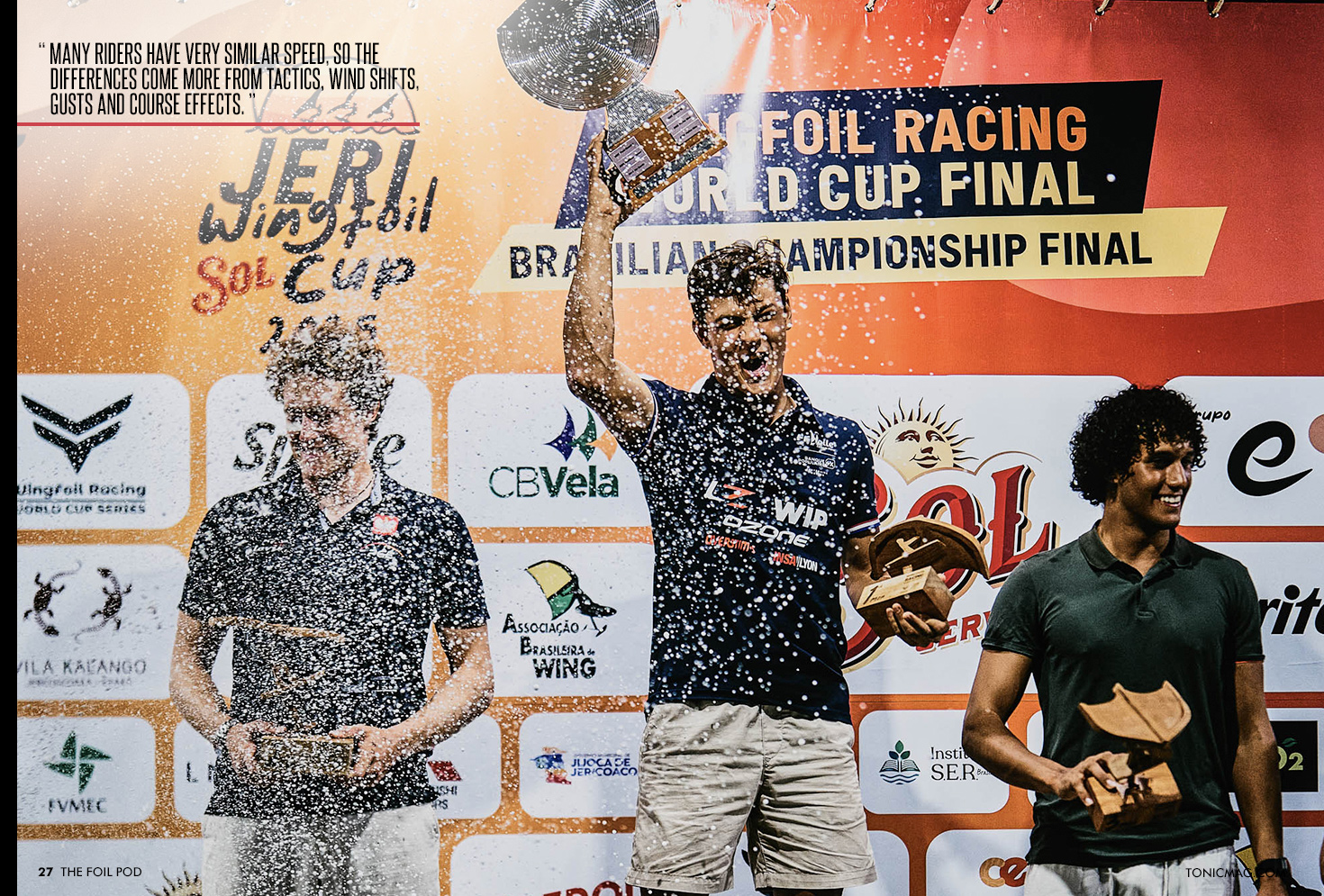
Once the race gets going, it is not only about speed. At our level, many riders have very similar speed, so the differences come more from tactics, wind shifts, gusts and course effects. That is what I love about it. You have the cardio, the pumping, the physical effort, but at the same time, you are making strategic decisions all the time.
Rou: Talk us through your current foil setup.
Mathis: Right now, I use the Levitas Air 6 foil, with a 480 square centimetre front wing, paired with a 1.12 metre mast and a Levitas race board. What is very special about this foil is how efficient it is in light winds. The span is very high, so when I pump it really converts the energy well. That gives me a big advantage in those conditions, because I can climb higher and maintain speed more efficiently.
Rou: The other huge talking point is obviously the Ozone Fusion. What did you think when you first saw it?
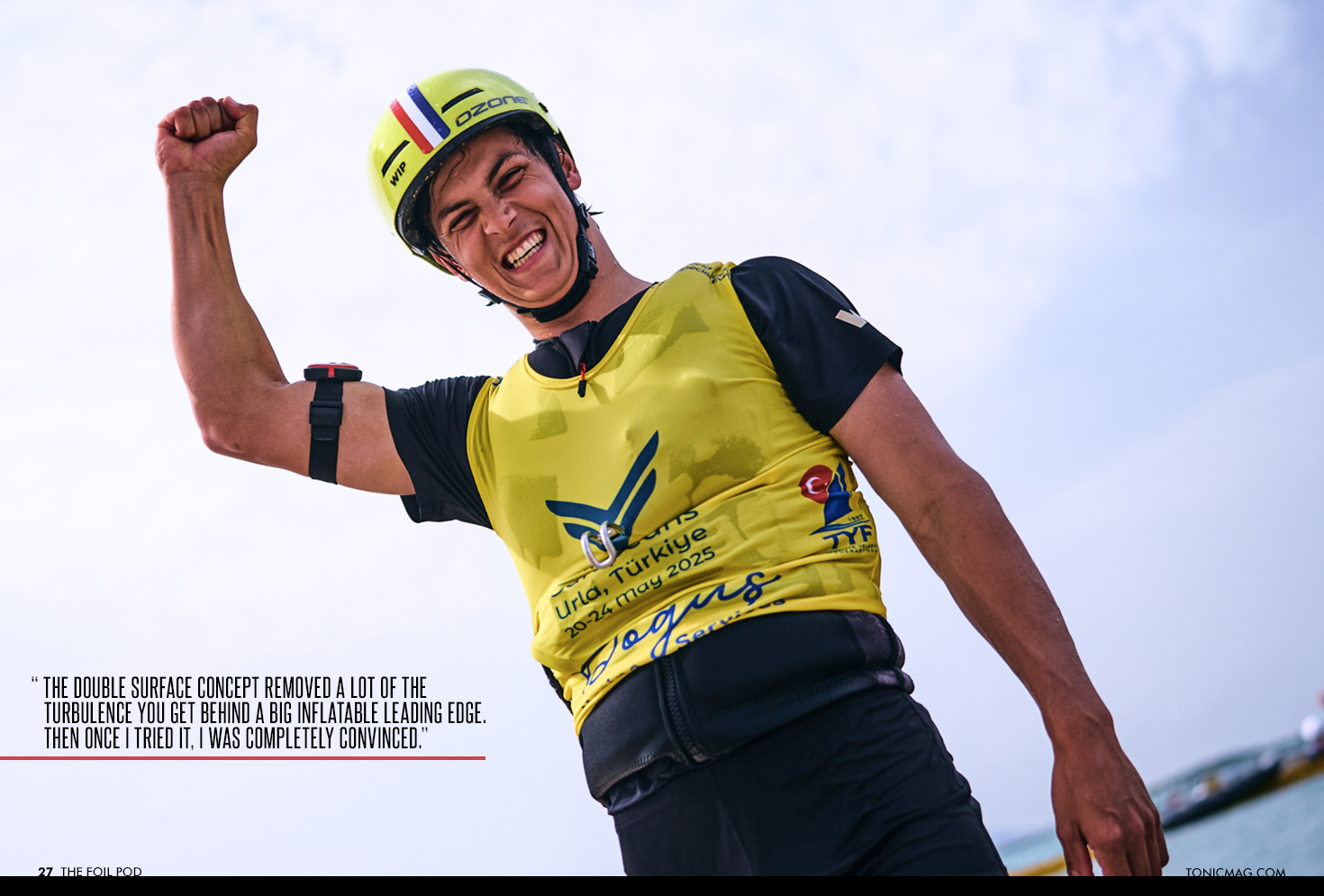
Mathis: I saw it first as a prototype at AWSI in Hood River, and immediately, I thought it made sense. Even before riding it, I could see it was the direction to go. Aerodynamics had become the priority, and the double surface concept removed a lot of the turbulence you get behind a big inflatable leading edge. Then once I tried it, I was completely convinced.
The first thing you notice is the stability, but it is not only about stability. The upwind angle is much better, the overall speed improves, and because the wing is calmer, you have more freedom to think about tactics and the riders around you instead of always having to manage the wing itself.
Rou: So the double surface concept really has changed the race scene?
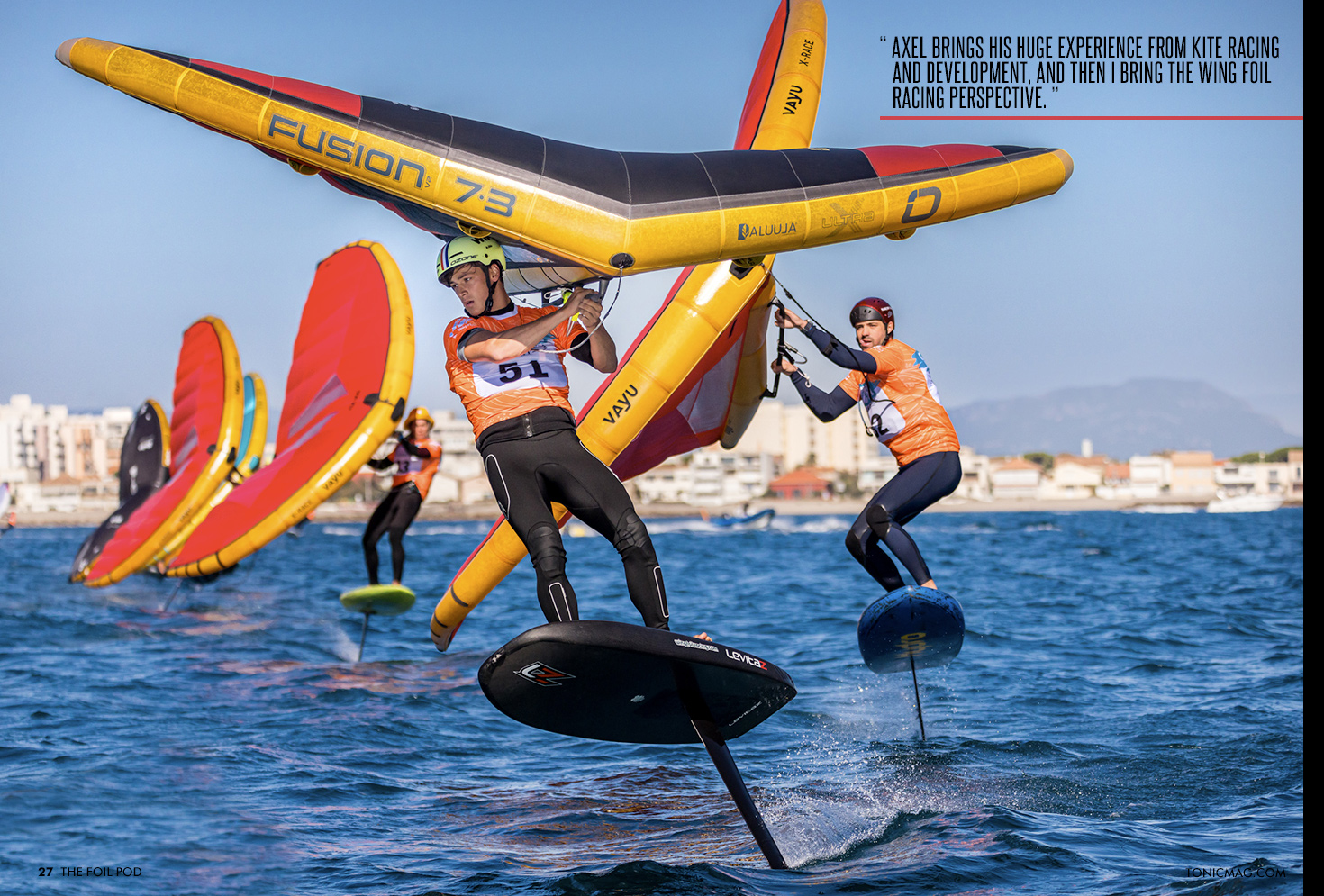
Mathis: Yes, absolutely. In the top ten now, maybe only one or two riders are not on full double surface wings, but on the podium, it is basically always full double surface. It just brings too many advantages. You go faster, you point better, and you can focus more on racing.
Rou: A lot of freeriders look at those wings and wonder if they are a nightmare when you crash. Is that actually an issue?
Mathis: Not really, once you know how to handle them. The main thing is to keep the air intakes facing the sky and not let them sit on the water. If you do get some water inside, it drains out quite quickly through the system. So on the racecourse, I would say there is no real disadvantage.
The bigger disadvantage is probably only when you need to repair one, because the sail repair people are not always so happy to see them coming.
Rou: You have also been deeply involved in the development side with Ozone. How has that relationship worked with your engineering studies?
Mathis: It works really well. Ozone has given me a lot of freedom to continue my studies while racing and training, and I am very grateful for that. It means I can pursue both goals at the same time. Then, naturally, because I have the race experience and I am studying engineering materials, it made sense to get involved in development too.
This year, I have been working more closely with the R and D team, especially with Connor Bainbridge and Axel Mazella. Connor works on the design side, Axel brings his huge experience from kite racing and development, and then I bring the wing foil racing perspective. We test, compare, refine and try to make the fastest wing possible.
Rou: You mentioned there are already new refinements in the next generation. What sort of things are being worked on?
Mathis: One of the things we worked on was an adjustable trimming system that can be used while riding. The idea is to adapt the profile of the wing more effectively between upwind and downwind, so you can have better lift and power when you need it downwind, but still keep the wing more neutral when you want it to fly by itself.
I had been working on a version of that myself, using ideas from windsurfing and from my studies, and then Connor and Axel improved it and made it more durable and easier to use. So it is really satisfying to see that process work, where your ideas can help shape the final product.
Rou: Let’s talk speed. You broke the 40 knot barrier on a wing foil, which is just mental. What did that feel like?
Mathis: It was incredible. I was in the south of France at Le Rouet, with very strong Tramontana, and from the moment I arrived, I knew it could be the day. It was absolutely nuking. Sand everywhere, chop everywhere, everything was smoking.
When you bear away and really load the wing, there is this moment where everything around you starts to feel slower. The water, the chop, even the other riders. Then the wing starts to fly more by itself, the foil feels flatter and easier to control, and you are just trying to hold the whole thing together for as long as possible. It is a very intense feeling. A lot of adrenaline, but almost silence at the same time.
Rou: And the crashes?
Mathis: Very hard. I was wearing a helmet and an impact vest, but even then, I felt like I needed more protection. After the first session, I came back with a full wetsuit reinforced with foam in different areas, because when you are pushing for that kind of speed, the crashes are serious.
Rou: Do you think 50 knots is possible one day on a wing foil?
Mathis: Fifty is still a step away, I think. But 45 knots, yes, I believe that is already possible with the current generation of equipment. The gear is much more stable now than it was when I first broke 40. So I think we will see that barrier move again quite soon.
Rou: And finally, what advice would you give to any younger riders or anyone listening who is thinking about getting into racing?
Mathis: Just do it. That is really the advice. The atmosphere in wing racing is amazing, and the level of progression you can make at a competition is far beyond what you can usually do alone at home. Being around other riders, learning from the fleet, racing in that environment, it pushes you forward very quickly.
And if you ever get the chance to do something like Defi Wing, you have to try it. Six hundred riders on the line, that is something special. It is very hard to describe that feeling, but it is something every wing foiler should experience at least once.
By Tonic Mag
