

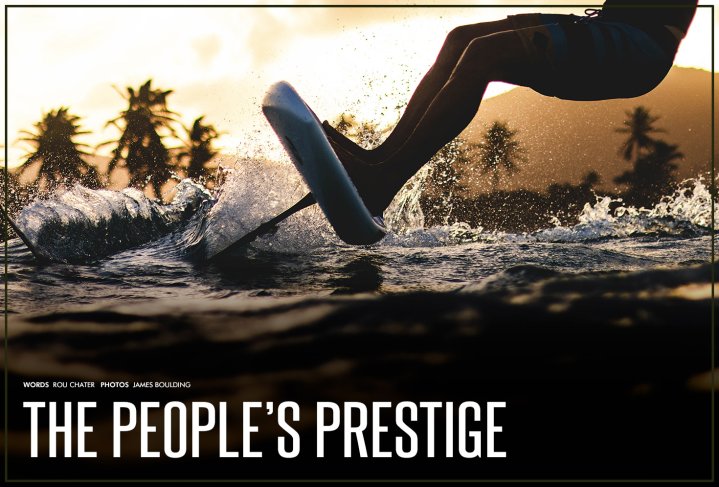
When Cabrinha released the Prestige foil using the new Union system, it created plenty of conversation, a new connection, a stiffer mast and a redesigned range of wings promising a step forward in performance. But the real story only appears once riders start putting hours on the water in real conditions. Over the past few months, we have been hearing from foilers around the world riding the Prestige in everything from small wind swell to long downwind runs, and the feedback has been remarkably consistent.
When a new foil system launches, there is always plenty of marketing noise around it. Technical claims, design explanations and carefully produced test videos all promise the same thing: better performance and a better ride.
But the real story usually appears a few months later.
That is when the early adopters have been riding the gear in their own conditions. Small waves, messy wind, long downwinders, harbour walls, reef scrapes and the everyday sessions that actually define what we do on the water.
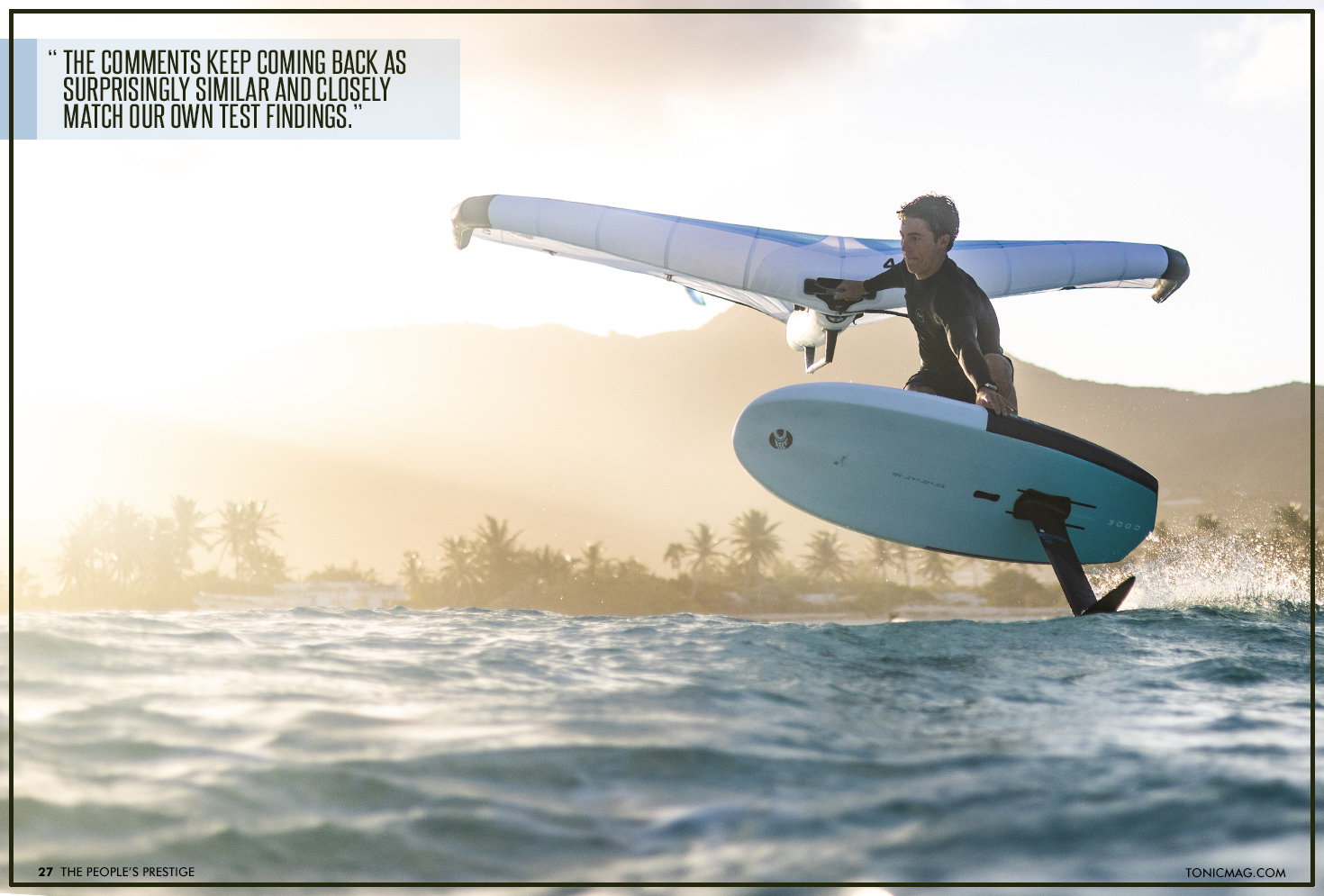
Since Cabrinha released the Union system and the Prestige range of foils, we have been hearing a steady stream of feedback from riders around the world. Some of them have been riding Cabrinha gear for years; others have switched from other brands, but the comments keep coming back as surprisingly similar and closely match our own test findings.
Stiffness.
Glide.
Simplicity.
And a feeling that the foil somehow gives you more time when you are riding.
To dig a little deeper, we spoke with riders who have been spending serious time on the Prestige and looked through the conversations happening around the community.
This is the foil as described by the people who are actually riding it.
Patrick – @foilwithme
If there is one thing you notice straight away when talking to Patrick, it is how quickly his enthusiasm for foiling comes through.
He has been riding the Prestige 1150 paired with the 160 stabiliser, and for him, the standout characteristic is just how easy the foil feels in real-world down wind conditions.
Small swell, shifty winds and low power in the ocean are exactly the sort of conditions where a foil can either shine or frustrate you.
For Patrick, the Prestige quickly made things feel simple.
“The paddle up was super easy,” he explains. “These waves are really small and fast, but I can park the foil and just stay right on them.”
What surprised him most, though, was the sheer range the foil has once you are up and riding.
“The range on this thing is insane. You can sit there and slow it right down, then when the wave starts running, you just kick it and start racing the section.”
That mix of efficiency and performance is something many riders have been talking about.
For Patrick, it means the foil adapts to whatever the wave decides to do.
“You can just stay in the pocket or shoot past sections and pick up another wave. It is so smooth and so easy.”
But he is quick to point out that the ease of use does not mean the foil lacks performance.
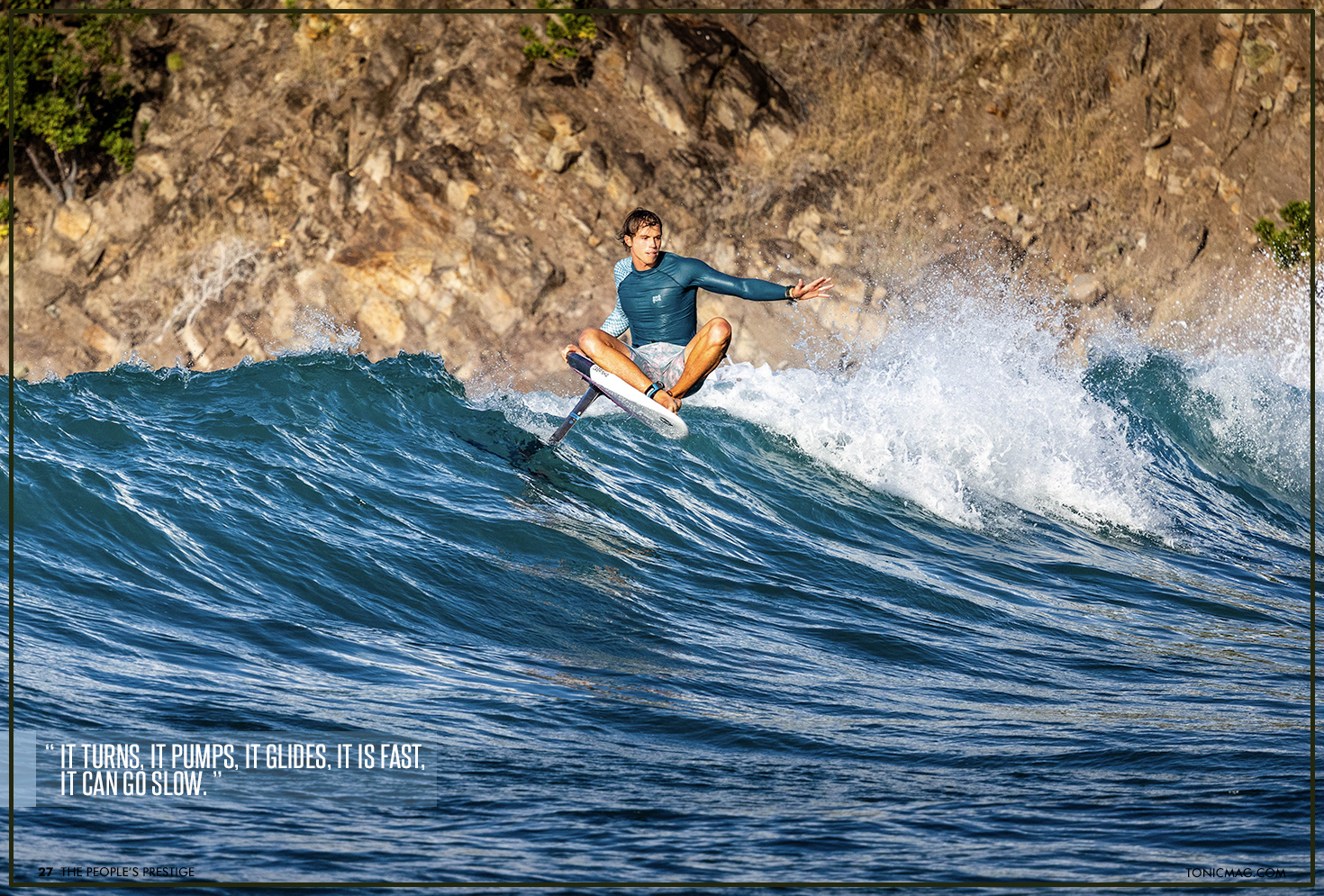
“It still feels high performance. It turns, it pumps, it glides, it is fast, it can go slow.”
Then he pauses and laughs.
“I know we all hate hearing someone say something does everything, so I am not going to say that… but honestly, it kind of does.”
Nick Goldspink – A Lifetime in Board Sports
Nick’s journey into foiling stretches back through several generations of watersports.
He first started surfing at the age of eleven, long before hydrofoils even existed in the public consciousness.
Now sixty-three, he has seen the sport evolve from traditional surfboards to windsurfing, then kitesurfing and eventually wing foiling.
“When I joined the military, I got posted to Cyprus,” he explains. “There was no surf there, so I got into windsurfing instead.”
That path eventually led him to competitive racing.
“I sailed the Division One World Championships in 1987,” he says. “Those big Mistral boards, they were absolute tanks.”
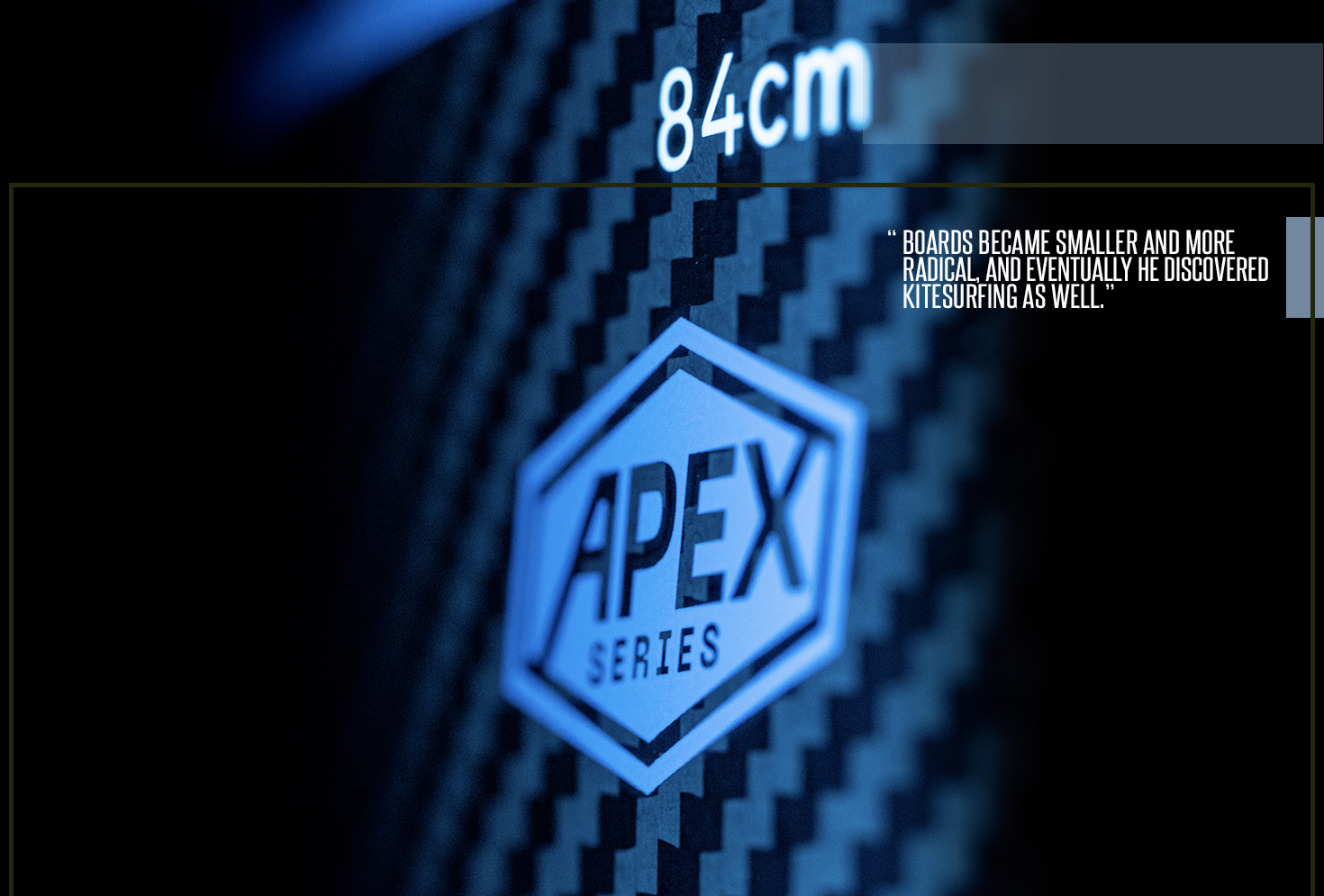
Over time, the equipment evolved, boards became smaller and more radical, and eventually he discovered kitesurfing as well.
“We saw people like Laird Hamilton kiting and thought we had to give that a go.”
Nick’s first kite was a Cabrinha Black Tip, and his first board was a Cabrinha Prankster. From there, he stayed closely connected with the brand as foiling began to develop.
Like many riders, he started with Cabrinha’s early foil systems, including the Double Agent and later the Carve series.
When wing foiling arrived, he moved to the first-generation X Series, though he admits that experience was not entirely positive.
“Honestly, I thought it was terrible,” he says bluntly. “It was really difficult to ride while I was learning.”
He eventually switched brands for a while before returning when Cabrinha released the X Series Mark II.
That foil worked well for him, particularly paired with the hollow mast and a 1300 front wing, but like many bigger riders, he experimented with mast options to find the right balance.
“At first, the hollow mast felt a bit twitchy,” he says. “I am quite a big rider, about six foot five and around 105 kilos, so I actually bought the aluminium mast to stiffen things up.”
Eventually, he returned to the hollow mast once he became more comfortable riding waves.
But when Cabrinha announced the Prestige system, he was not immediately convinced.
The Switch to Prestige
Nick remembers his first reaction clearly.
“When Cabrinha said they were changing the whole connection system, I was a bit annoyed,” he admits.
For riders who have already invested in a foil setup, major design changes can sometimes feel like a forced upgrade.
“If you have just bought a setup and suddenly everything changes, it can be a bit of a turn off.”
However, curiosity eventually won.
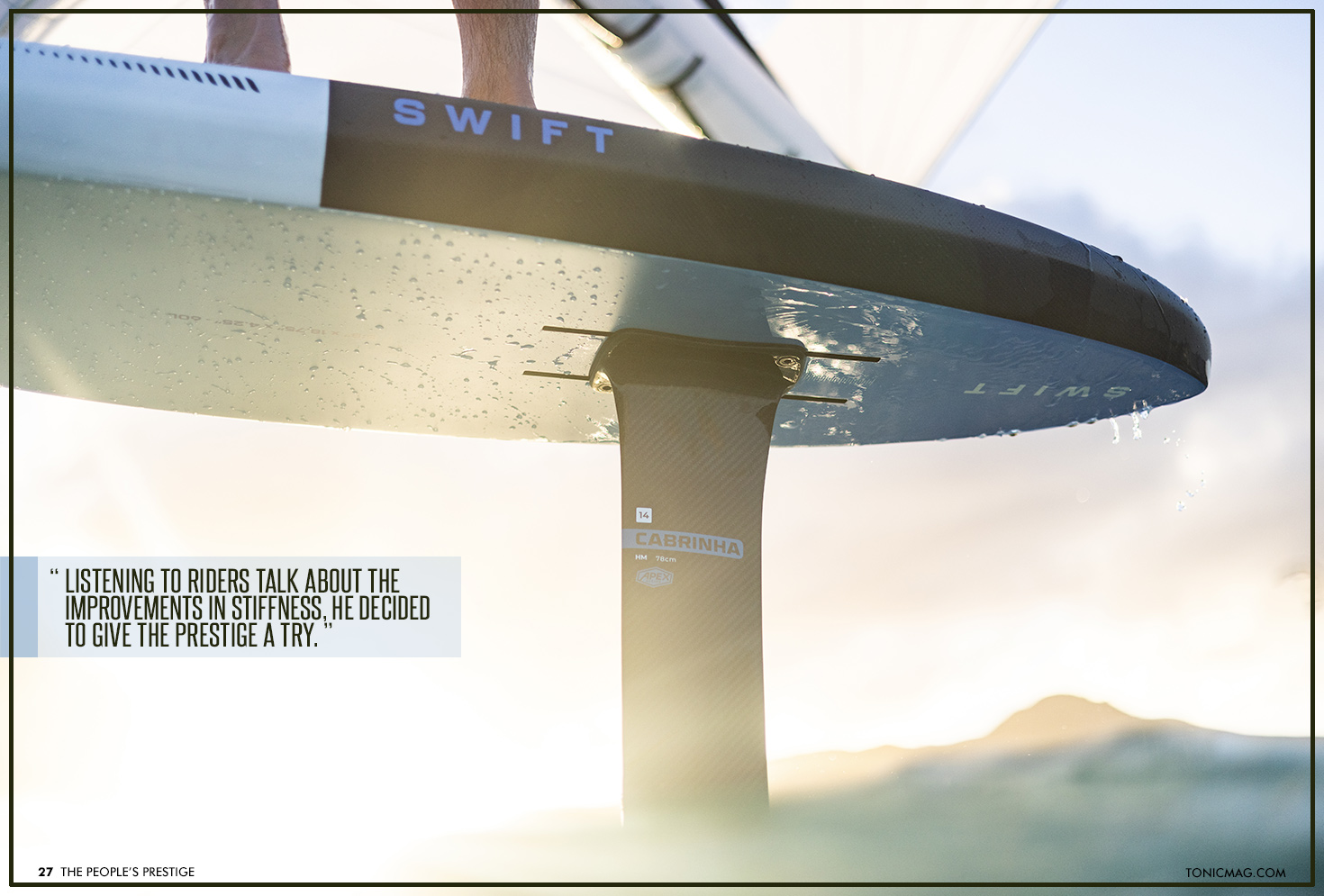
After hearing more about the reasoning behind the design, particularly the move from M6 bolts to stronger M8 bolts, and listening to riders talk about the improvements in stiffness, he decided to give the Prestige a try.
His first session answered many questions very quickly.
“The first thing I noticed was stiffness,” he says. “The whole system just feels much stiffer.”
That additional rigidity changes the way the foil responds under load.
“Everything feels more connected. When you put pressure through the foil, it reacts instantly.”
In terms of lift, he found the Prestige 1150 comparable to the larger wing he had been riding previously.
“The lift is very similar to the old 1300 Mark II. There might be a tiny difference, but it is very close.”
Where the new foil stood out, though, was speed.
“Because you are effectively dropping a size, the foil feels much faster,” he says. “The old 1300 could feel a bit sluggish sometimes, but the Prestige never feels like that.”
Instead, he describes the overall feel as simply more refined.
The Glide Factor
If there is one characteristic that keeps coming up when riders talk about the Prestige, it is glide.
That sensation of effortless forward motion that allows you to link sections, complete transitions calmly and stay on foil even when the energy in the wave fades.
For Nick that was the moment the foil really impressed him.
“The first thing I said to my mate afterwards was that I could not believe how much time it gave me.”
That sense of extra time can completely change the way a session feels.
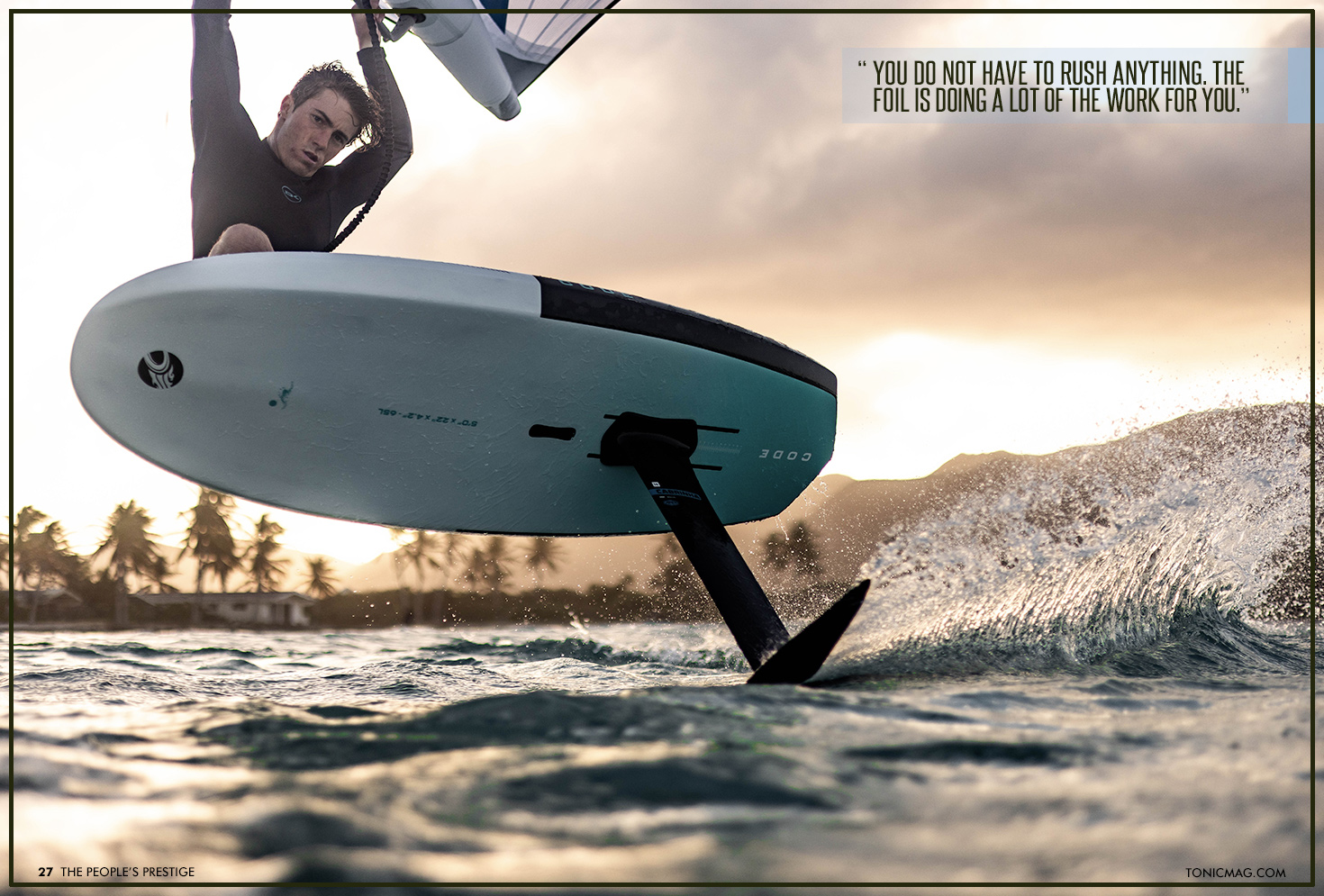
“It feels like you have loads of time to complete transitions,” he explains. “You do not have to rush anything. The foil is doing a lot of the work for you.”
For many riders, that glide also translates into better riding overall.
“It actually improves your riding because you are not constantly scrambling to stay on foil,” he says. “You can just focus on the wave.”
Living in an area without big, powerful surf, Nick also noticed another advantage.
“With the Prestige I can ride really small waves and still have fun,” he says. “For me, winging is mainly a way to get onto waves.”
At this stage of his life, he is not chasing huge surf.
“I am not interested in double overhead waves anymore,” he laughs. “Waist to shoulder high waves are perfect.”
And for that type of riding, the Prestige works exactly the way he wants.
Built for the Real World
One of the most interesting aspects of the Prestige story is that the feedback from riders is remarkably consistent.
Across different riding styles, winging, prone foiling, downwinding and surf foiling, the same themes appear again and again.
One of the most talked about elements is the Union connection system, which simplifies the way the foil assembles.
“I am in love with the simplicity of the assembly and stiffness of the whole Union system,” said one rider.
Others focus on the mast itself and how stiff the setup feels in the water.
“The stiffness you have achieved in a fourteen millimetre thick mast is genuinely impressive.”
That structural rigidity translates directly into feedback for the rider.
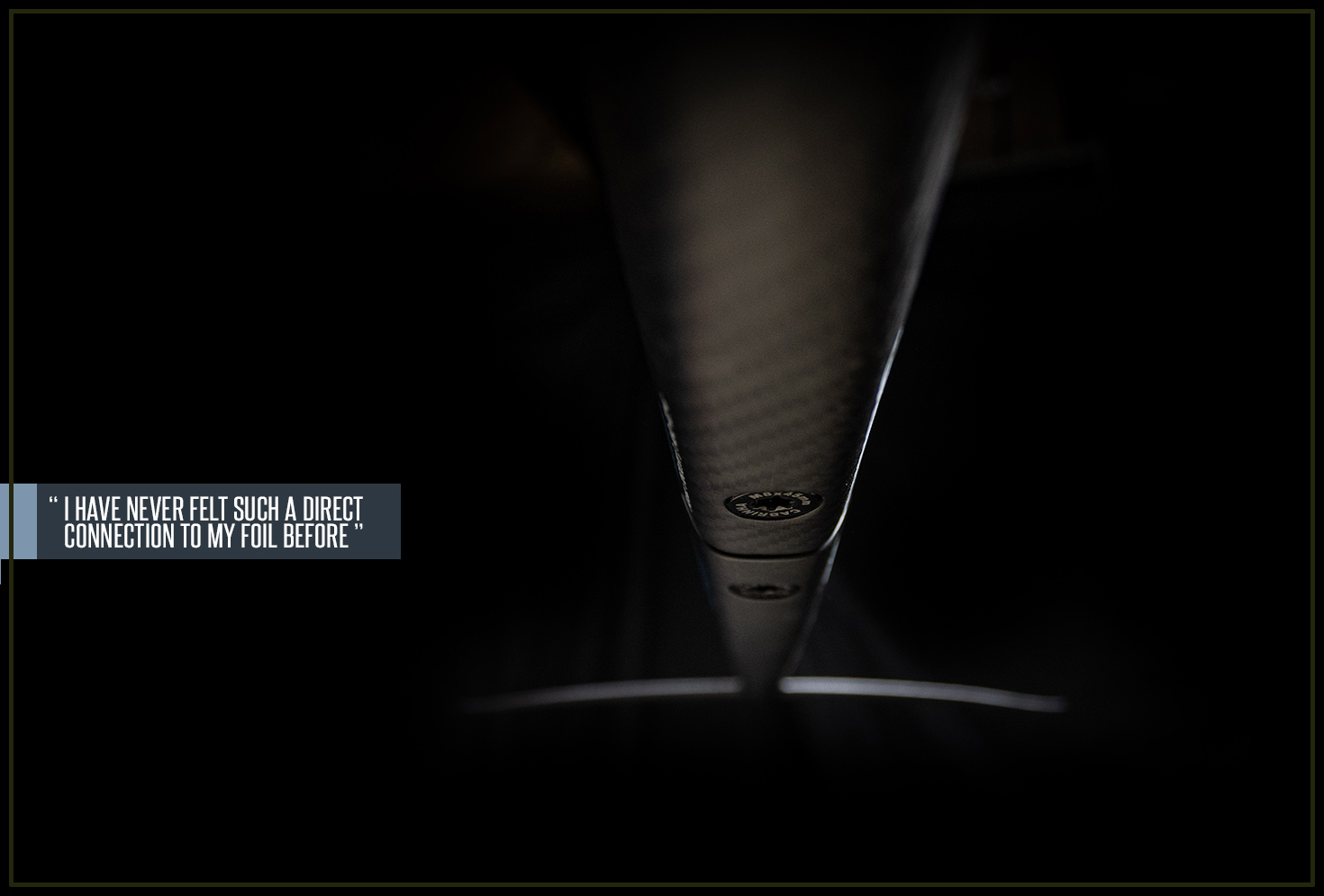
“I have never felt such a direct connection to my foil before.”
And sometimes the comments are even simpler.
“Cleanest feeling foil I have ever ridden.”
“Stupid easy to use… can I keep it?”
Speed, Glide and the Cheat Code Feeling
Beyond construction and setup, many riders talk about the way the Prestige feels once it is moving.
One comment that stood out describes the Prestige 1150 as a foil that almost feels like cheating.
“The 1150 is the undisputed glide champ,” the rider explained.
“When you get it high in the water column it feels like you are riding an e-foil. It just goes.”
That efficiency becomes particularly noticeable when linking waves or pumping across flat sections.
Other riders have been equally impressed by the smaller wings in the range.
The 760 in particular has developed a reputation for combining speed with surprising lift.
“The low-end lift on the 760 is absurd,” one rider commented.
Meanwhile, the 905 has become a favourite for riders looking for one foil that covers multiple disciplines.
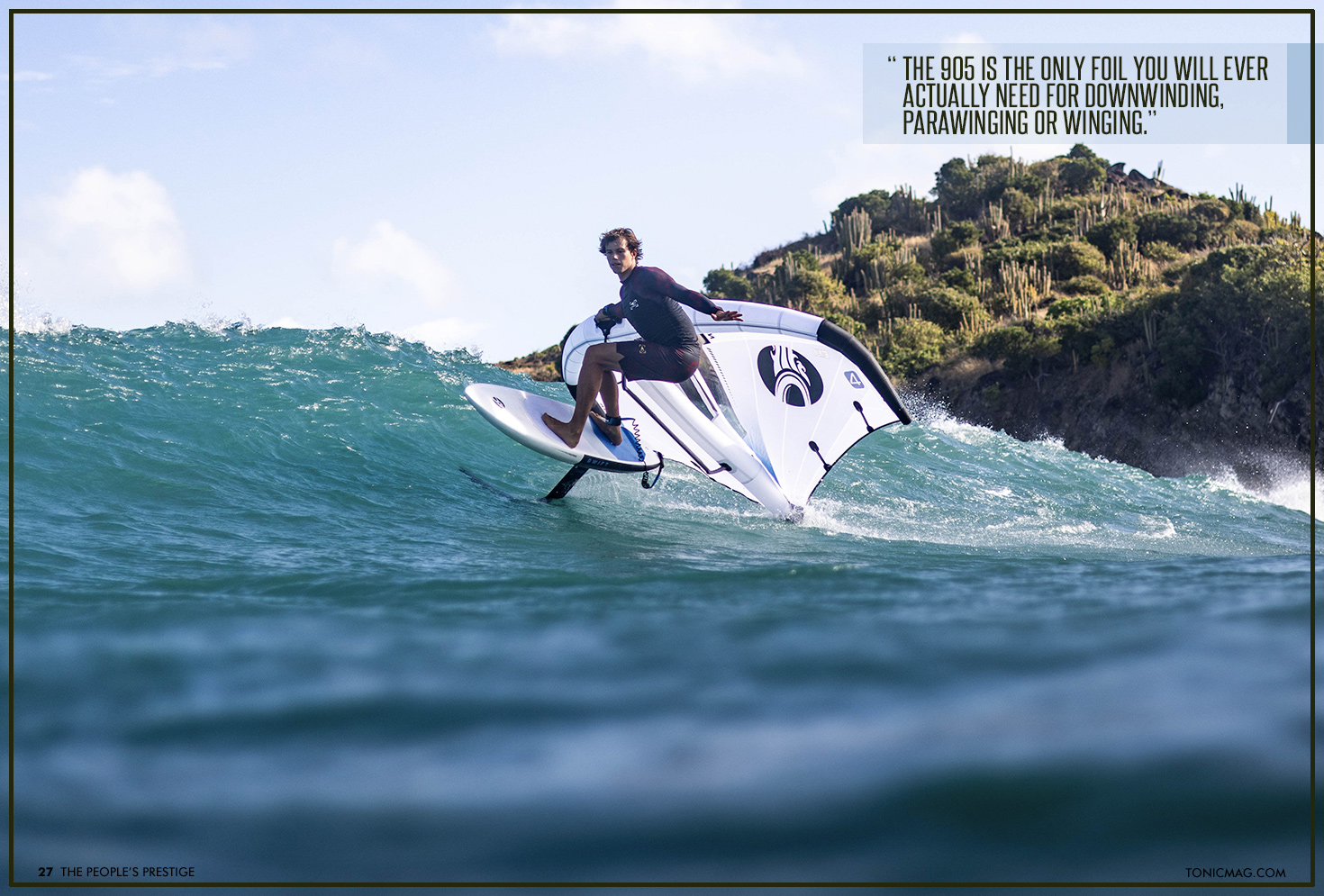
“The 905 is the only foil you will ever actually need for downwinding, parawinging or winging.”
That versatility is part of what makes the Prestige range so appealing.
Rather than feeling like specialised equipment that only works in perfect conditions, the foils seem to adapt easily to the messy reality of everyday sessions.
Surviving the Unexpected
Gear durability rarely gets mentioned in promotional material, but it quickly becomes important once you start riding in challenging environments.
During a recent trip to Morocco, we unintentionally gave the Prestige system a fairly serious durability test.
The swell was huge, and the conditions were chaotic.
While prone foiling, we snapped two leashes, and the board and foil were dragged across the reef and smashed repeatedly against a harbour wall before we managed to retrieve everything.
Under those circumstances, most riders expect significant damage.
Instead, the foil came back with only a couple of small scratches and some cosmetic damage to the tips.
After a quick sand down using a rock on the beach, it went straight back into the water.
For riders who regularly deal with reefs, rocks and heavy surf, that sort of resilience matters.
The Verdict from the Riders
When we asked Nick whether the Prestige lived up to the expectations he had built up before riding it, his answer was simple.
“Yes, I think it does.”
He also points out that new riders entering the sport today are benefiting from years of experimentation.
“We have all done the guinea pig work testing the early gear,” he says.
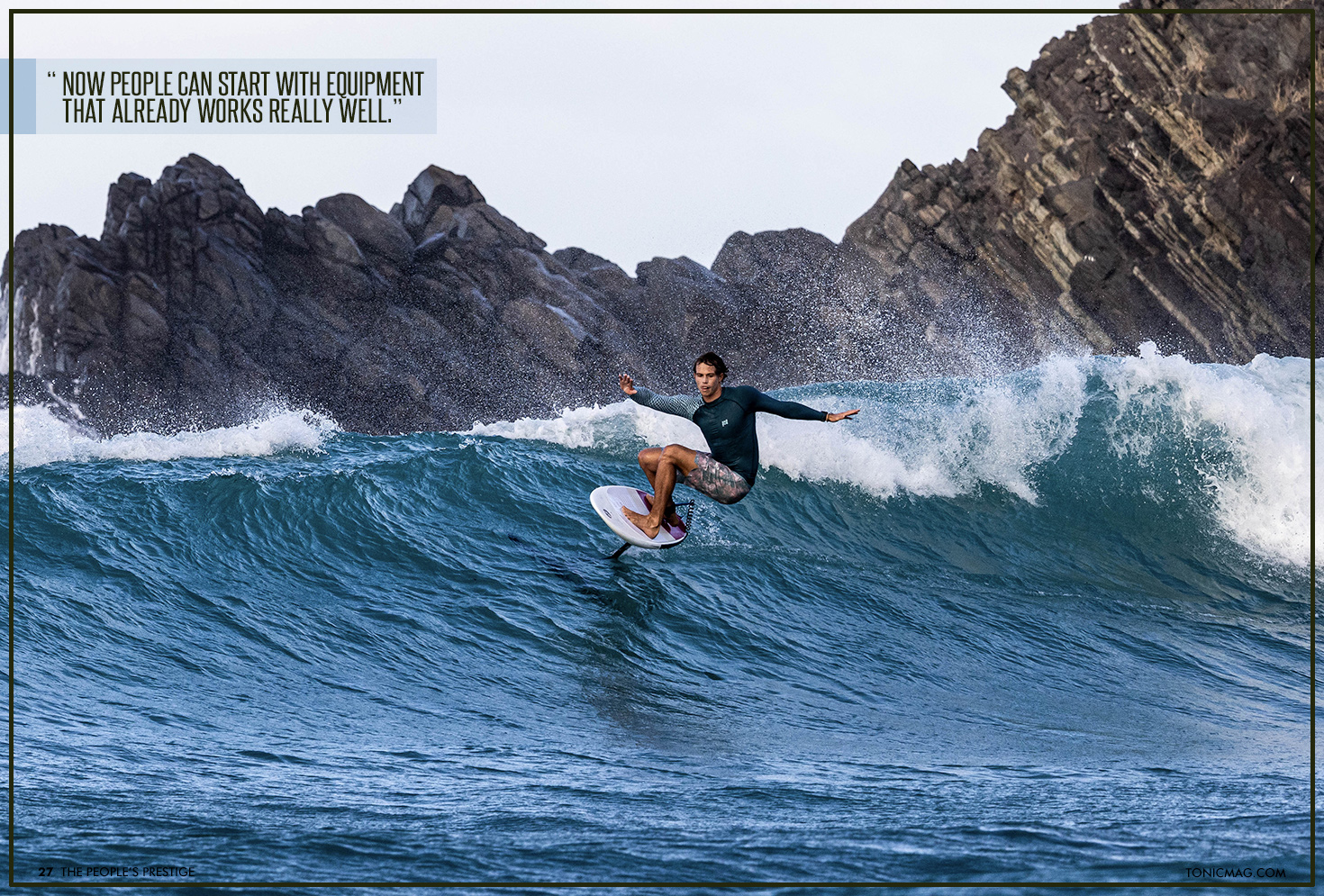
“Now people can start with equipment that already works really well.”
For him, the Prestige represents that next stage of refinement.
“It ticks a lot of boxes,” he explains. “Technically, it is probably an intermediate foil, but it is still very user-friendly considering the performance it offers.”
And in the end, that balance between accessibility and performance might be the biggest compliment riders can give it.
Because once the equipment disappears beneath your feet, the session becomes about the riding itself.
As Nick puts it,
“If the kit works properly, you cannot blame the equipment anymore. Then it is just about improving your own skills.”
And judging by the conversations happening across the foiling community, that is exactly where the Prestige seems to be putting riders.
Right where they want to be.
By Tonic Mag
