

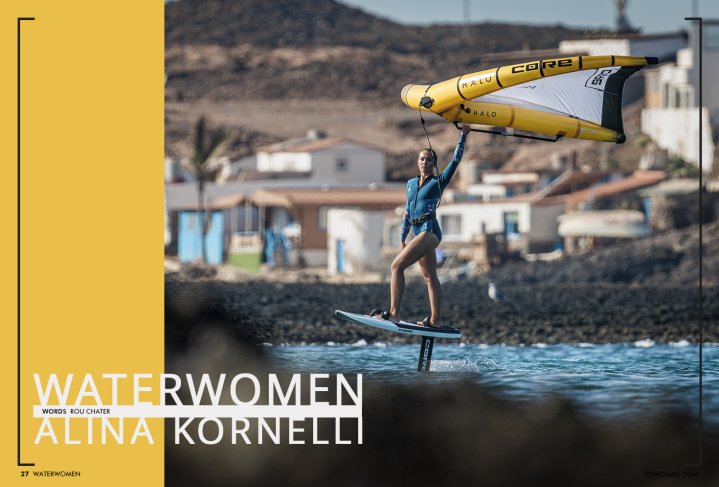
From Olympic kite foil racing to dock starts in jeans, Alina Kornelli has built her path through watersports by staying curious, competitive and creative. We caught up with her to talk about growing up in Bavaria, the realities of Olympic racing, her love of foiling in all its forms and how social media has opened up a whole new chapter.
From Olympic kite foil racing to dock starts in jeans, Alina Kornelli is not easy to pin down. The Bavarian-born athlete has built a career on movement, curiosity and a refusal to stay in one lane for too long. One minute, she is chasing Olympic qualification, the next she is wing foiling in Cape Town, pump foiling on a lake near Munich or figuring out how to make social media work on her own terms. We caught up with Alina to talk about growing up far from the coast, the intensity of Olympic racing, why dock starting clicked, and how she has built a social media presence that feels completely her own.
Rou Chater: Let’s start at the beginning. How did you first get into watersports?
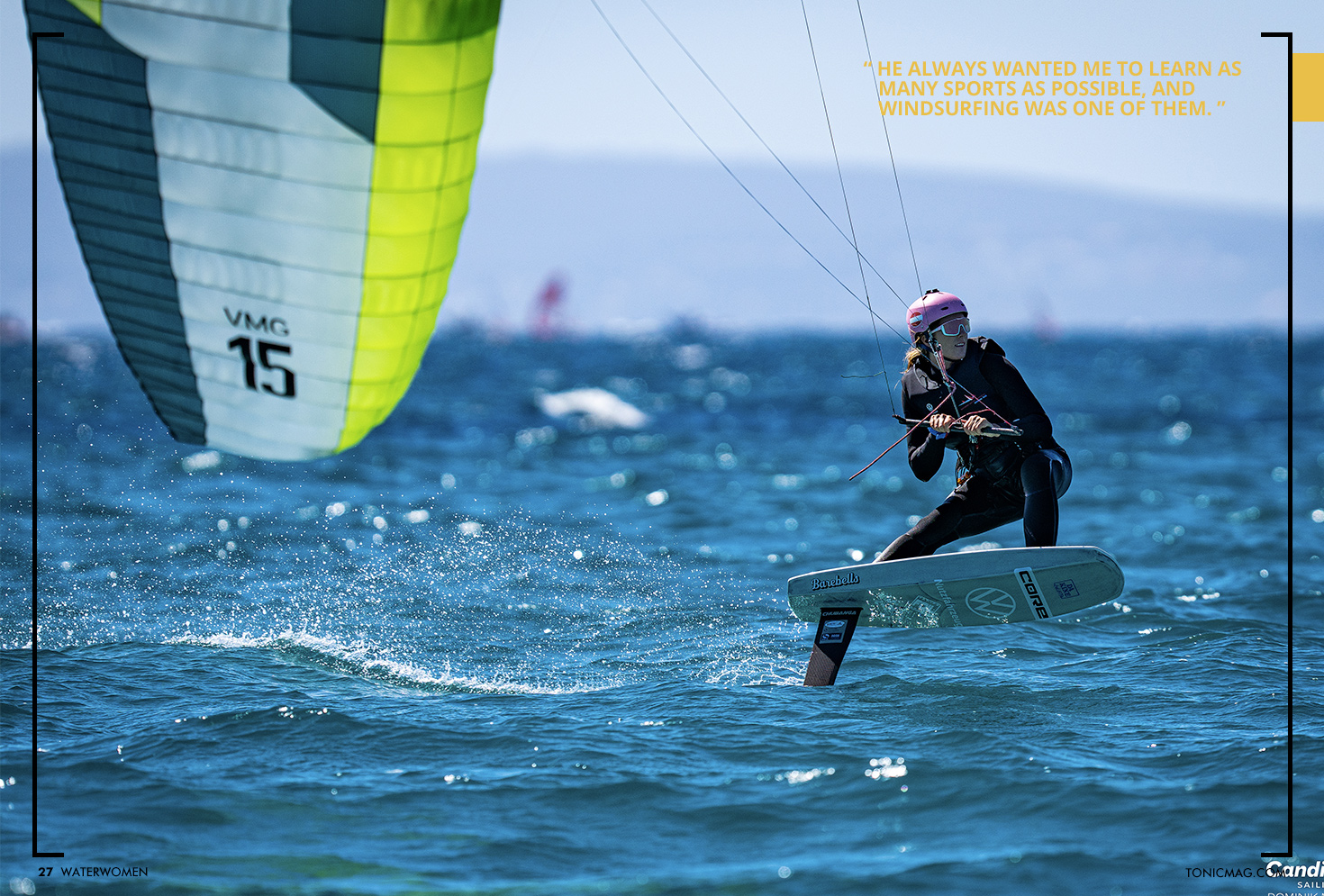
Alina Kornelli: I’m from Bavaria, from the south of Germany, so not exactly the first place people think of for kitesurfing or wing foiling. But my dad used to be a professional windsurfer, so I grew up around it. He always wanted me to learn as many sports as possible, and windsurfing was one of them. When I was about ten, we would travel to Spain or Italy, and that was where it all started. Then, in 2011, I got into kitesurfing because my older brother skipped windsurfing completely and went straight onto a kiteboard. I thought what he was doing looked so cool, so I wanted to do it too.
At first, I was really just a holiday kitesurfer. I perhaps only kited 30 days a year. But then I started posting a few photos on Instagram, and people at school were surprised that I could actually ride properly. That was how it all began, really, just every holiday going somewhere to kitesurf.
Rou: You were also into snowboarding quite seriously. Were you always competitive?
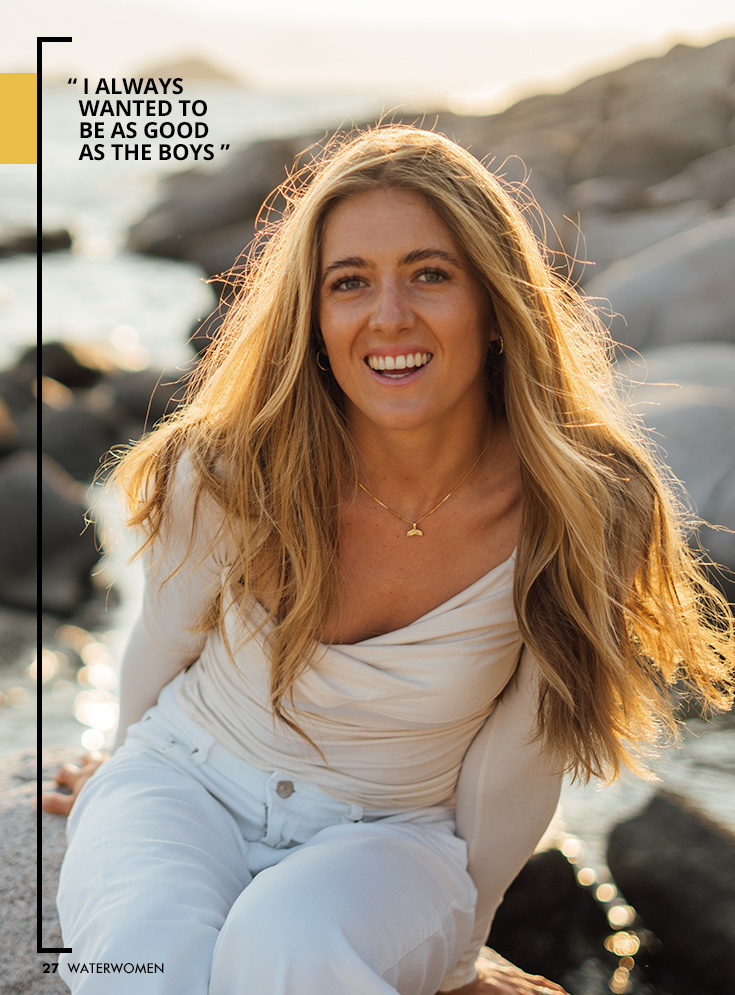
Alina: I was not super competitive as a little kid in the obvious way, but I always wanted to be as good as the boys. That was probably the thing driving me most. I wanted to be the best in sports class, and I wanted to be good at everything I tried. Through friends, I got into snowboard cross, and I ended up doing pretty well. I became the German youth champion. At the same time, though, there was a chance for me to go to the Youth Olympic Games in kitesurfing, so I got to a point where I had to decide.
I could either go properly into snowboarding and join the national team pathway there, or I could choose kitesurfing. I could not do both anymore. In the end, I chose beach life.
Rou: At that stage, the Youth Olympic format was twin tip racing, right? Then later you moved into foil racing. That is quite a jump.
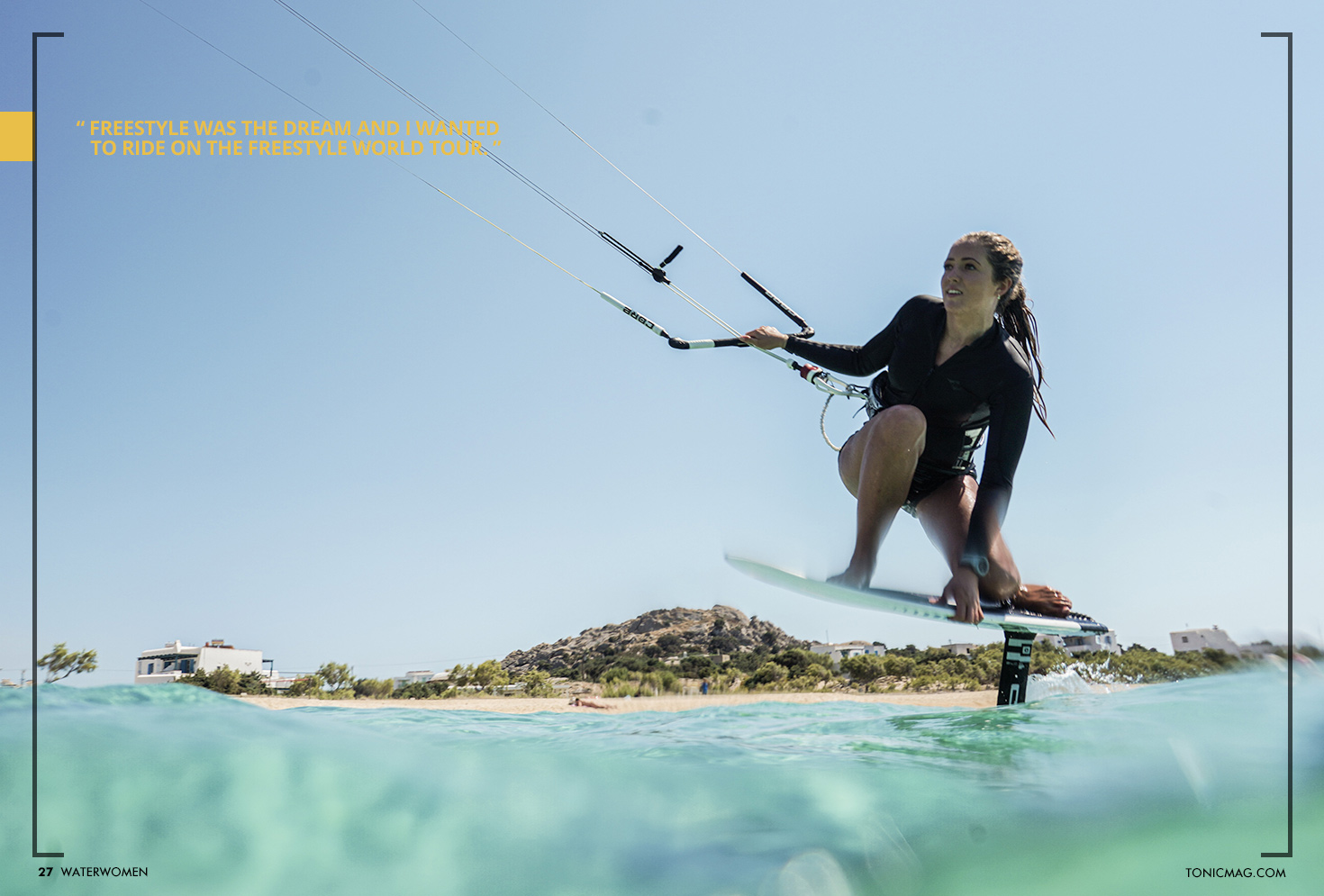
Alina: It is. At first, I actually wanted to do freestyle. Around 2016, that was what looked cool. Big air was not really the thing it is now; freestyle was the dream, and I wanted to ride on the freestyle world tour. Then the Youth Olympics came along, so I started doing twin tip racing because it was a big opportunity.
After the Youth Olympics in 2018, I thought I would go straight back into freestyle. But then I heard kite foiling was becoming an Olympic sport. At first, I did not want to touch it. My mum thought it was too dangerous, all those sharp foils, and honestly, I thought maybe I would just stay with freestyle. But after a while, I realised that if I wanted to go for the Olympics, I had to focus. You cannot seriously do three disciplines at once. So I chose the Olympic path and moved into foiling.
Rou: What was your first kite foiling session like?
Alina: Funny enough, I usually pick up new sports pretty quickly, so I expected kite foiling to be easy. I went to Egypt with my dad and tried it first on a normal kite foil with a tube kite. That part was actually okay. I could get going quite quickly, even if my stance was completely wrong and still very twin tip.
But the step from that to proper race gear was massive. Suddenly, you are on a race board, a race foil and a foil kite, and it feels like a completely different sport. It was like learning from zero again. The kite feels different, the bar feels different, and the whole body position is different. And then of course you want to learn everything fast. Tacks, gybes, racing in light wind, racing in strong wind, riding in flat water, in waves. I remember falling again and again, trying to get those first good tacks and gybes.
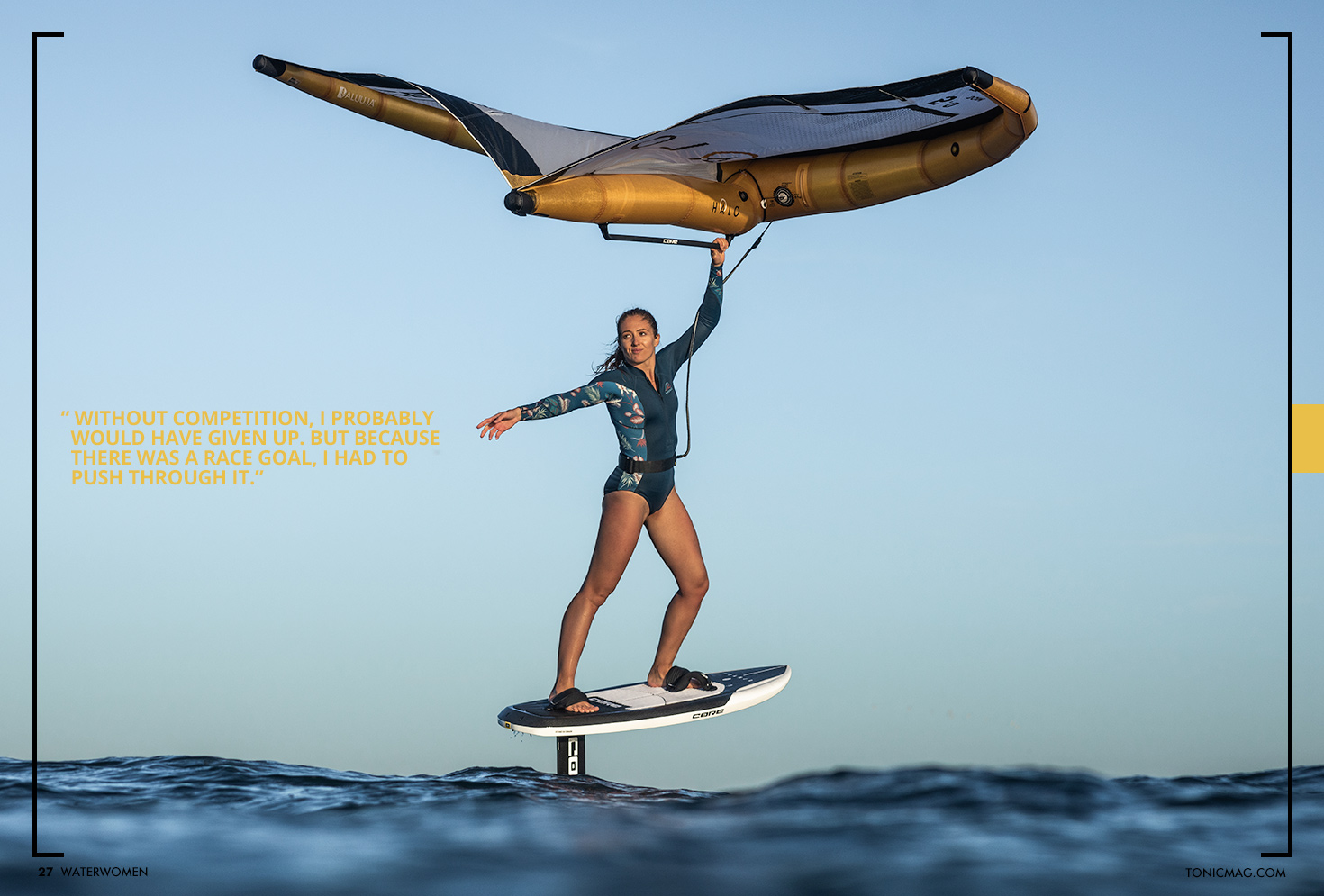
Without competition, I probably would have given up. But because there was a race goal, I had to push through it.
Rou: That race environment must have been intense. What was it like going from twin tip racing to full kite foil racing in a fleet?
Alina: It was a huge step up. Twin tip racing and kite foil racing are just not the same thing. Foil racing is really high-performance. It is fast, technical and honestly pretty scary at times. Once you trust your gear and your own level, you start riding a lot on instinct, but in the beginning, it is a lot.
I had one really bad incident in 2022 that stayed with me. We were reaching into a mark at full speed, and a girl in front of me lost control. It happened maybe half a metre ahead of me, and I had no time to react. Her foil just exploded into me. Luckily, I was wearing a full wetsuit even though it was hot, and that probably saved me from a much worse injury. It still cut my foot open and left a huge bruise on my leg.
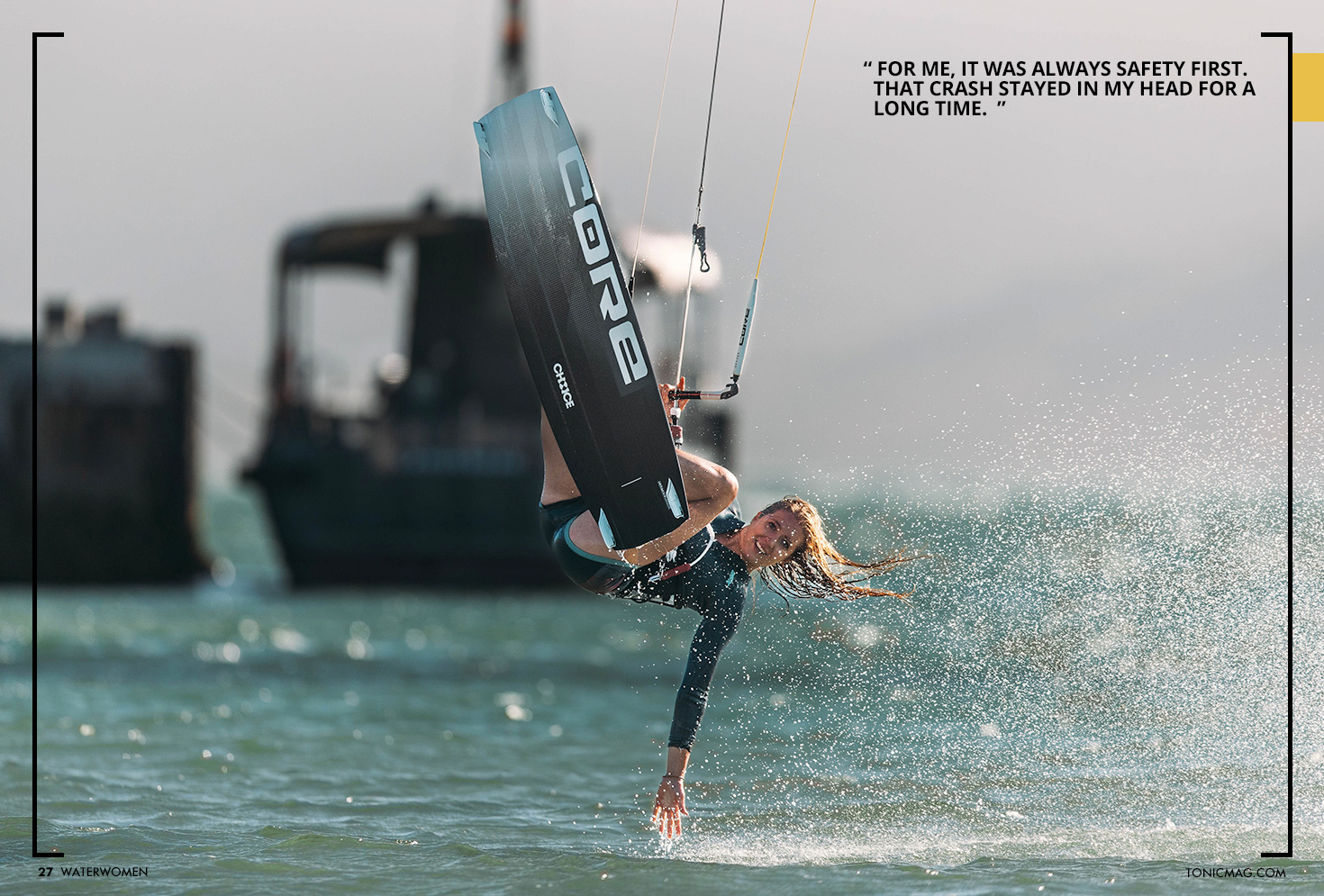
After that, I definitely became more cautious in close situations. There are some riders who will never back off; they just want to be first, and maybe that is the right racing mindset. But for me, it was always safety first. That crash stayed in my head for a long time.
Rou: You competed for Austria in the Olympic campaign. How did that come about?
Alina: My mum is Austrian, and my dad is German, so I could choose. For me, Austria made more sense because I live very close to the Austrian border, and it was easier logistically than working with the German federation, which is based much further north. The Austrian Sailing Federation was also really enthusiastic about kite foiling, and they supported the project from the beginning.
It was a very professional environment. We had coaches, support boats, physios, a personal trainer, everything. It was very different from what I had known before in freestyle or twin tip. It felt like a proper Olympic sport. The only difficult part was that in Austria, it was just me and Valentin Bontus in kite foiling, so I did not have a big training group as some other nations did. I had to find training partners from different countries.
Rou: The weight issue in Olympic kite foiling became a big talking point. How difficult was that to deal with?
Alina: It was honestly one of the hardest parts for me. At the start, everyone was just trying to learn the discipline. Then, after a while, we all got technically quite close, and it became obvious that the heavier riders had a real speed advantage. It was not subtle. You could see it.
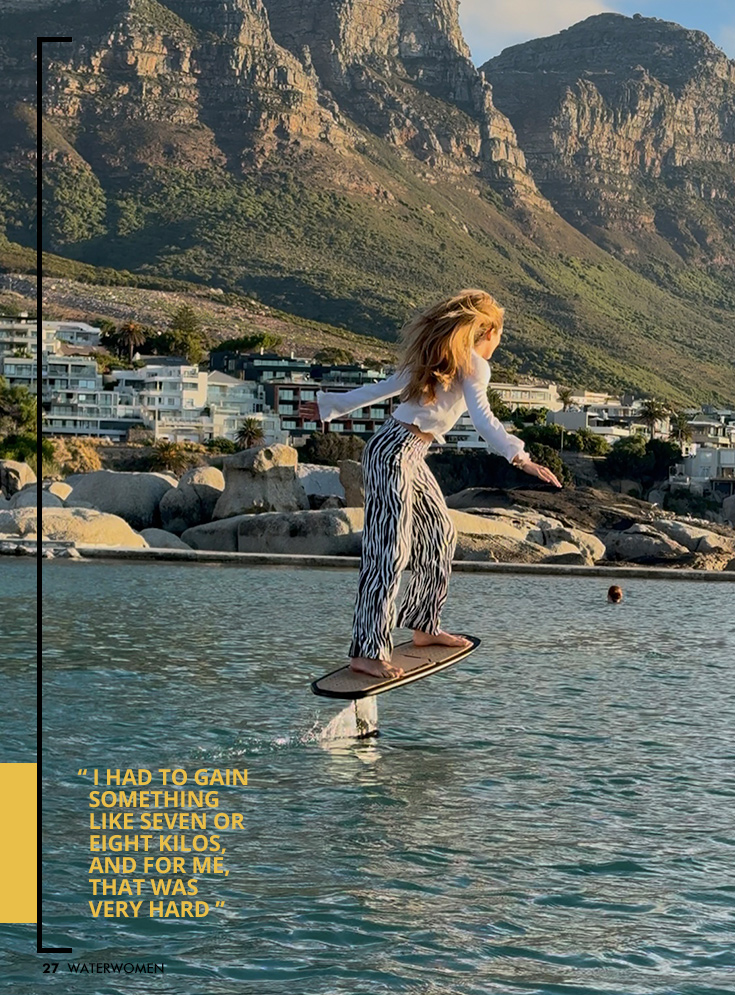
So then everything became about weight. More gym, more food, more shakes, less cardio, less extra sport. I had to gain something like seven or eight kilos, and for me, that was very hard, not only physically but mentally too. I love being active. I love doing sports all the time. Suddenly, the message was basically, do less, eat more, and keep the weight on. That is really strange for someone whose whole identity is built around movement.
It was especially frustrating because in very strong wind and waves, or in really light technical conditions, I was very good. But in those flatter, medium wind conditions, the heavier girls just had more speed. That was hard to accept.
Rou: Was it all still worth it when you made it to the Olympics?
Alina: Yes, definitely. The whole experience was worth it. The opening ceremony was amazing. We travelled to Paris for that, even though the sailing events were in Marseille, and for those few days, it felt like all the pressure had finally lifted. You had done everything. The training, the testing, the sacrifices, the weight gain, all of it. You could just stop and think, okay, I made it.
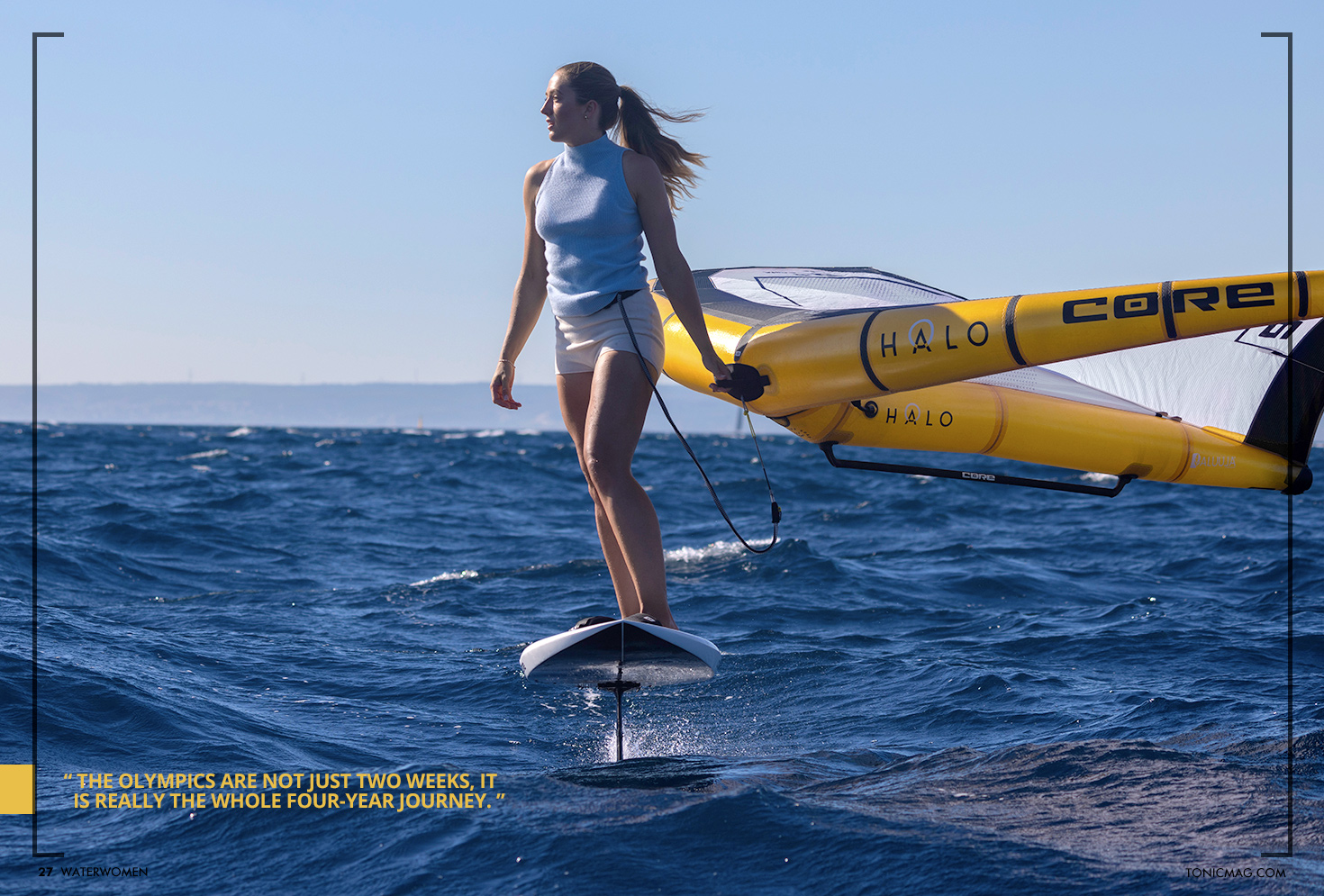
But I think a lot of people only see the two weeks of the Olympics. For athletes, it is really the whole four-year cycle. That is what the Olympics are. It is not just arriving there; it is everything that comes before it.
Rou: You had already started wing foiling during that period, right?
Alina: Yes, always a bit on the side. I think I get bored if I only do one thing for too long. If I get good at something, I often want to learn something new. That keeps me motivated. So I was wing foiling in my time off from kite foiling, or when the conditions suited it better. If there were nice waves, I would go winging for an evening session.
Then, after the Olympics, I went to Cape Town with both my kiting and winging gear, and that was where I really felt myself leaning more into wing foiling. The wave conditions there are just so good for it.
Rou: What do you spend most of your time doing now?
Alina: Right now, it really depends on the conditions. If I am in Cape Town and the waves are good, I want to wing foil. If there is no wind, I might surf. If there is flat water and a chance to twin tip, I would love to go kiting because that is still so much fun. In summer, I want to do more kite foiling again in lighter winds.
I also want to get better at SUP downwind foiling and parawinging. I did my first parawing downwinders here in Cape Town, and that was so fun too. I think my favourite thing now is just choosing the right tool for the conditions.
Rou: Did wing foiling come easily because of your kite foil racing background?
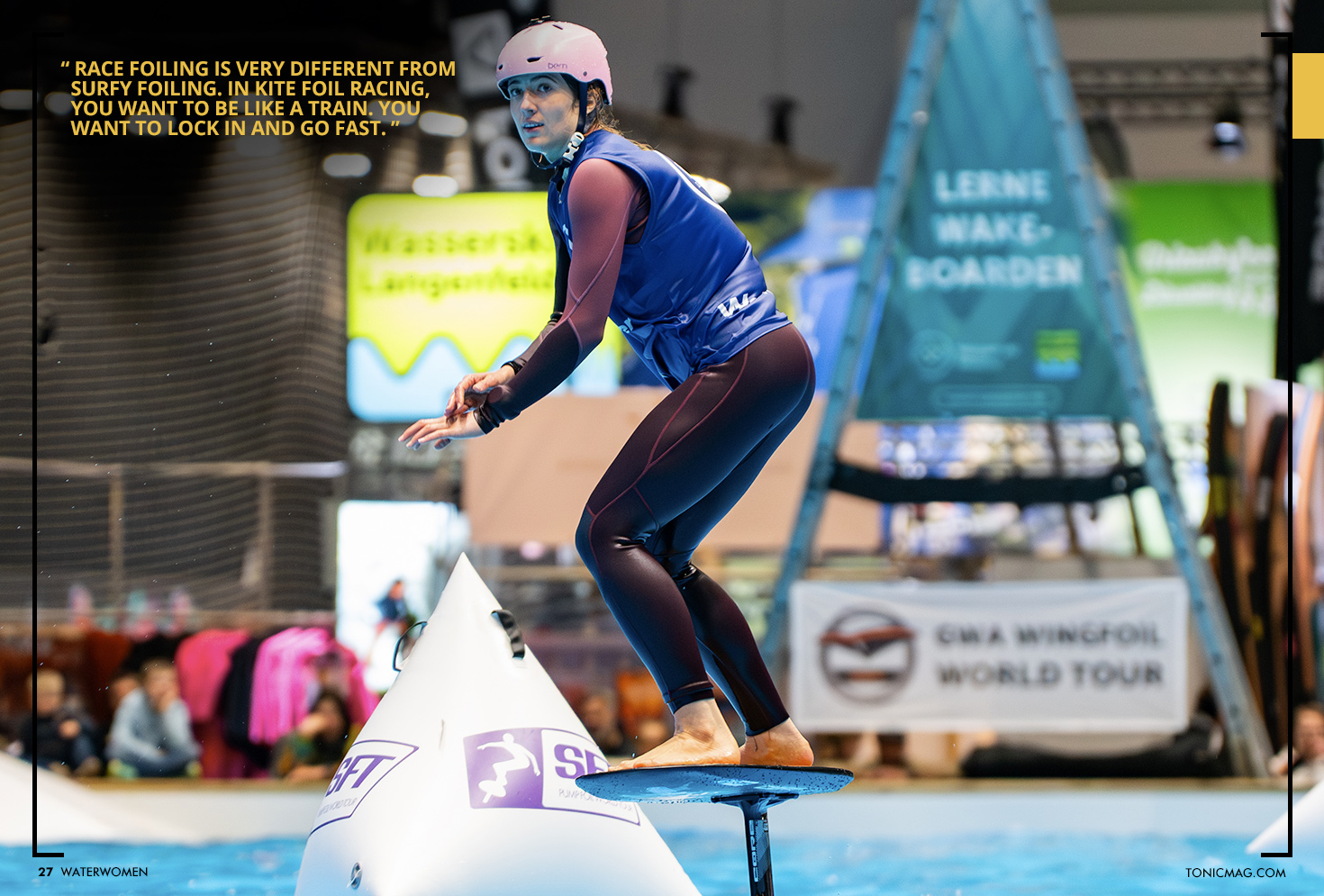
Alina: Yes and no. The foil control definitely helps. If you have spent years on a foil every day, a lot comes naturally. But race foiling is very different from surfy foiling. In kite foil racing, you want to be like a train. You want to lock in and go fast. You do not really do all those smooth carving, surf-style turns. So the pure control was there, but the wave-riding side of winging was something different.
Still, the race background definitely made the learning curve much easier.
Rou: Let’s talk dock starting. When did that become a real thing for you?
Alina: I first tried it in 2021 because everyone was doing it at foil events when there was no wind. But I did not love it at first. The pump foil setups are huge and felt a bit wild, and I was worried about getting injured on non-race days. So I left it alone.
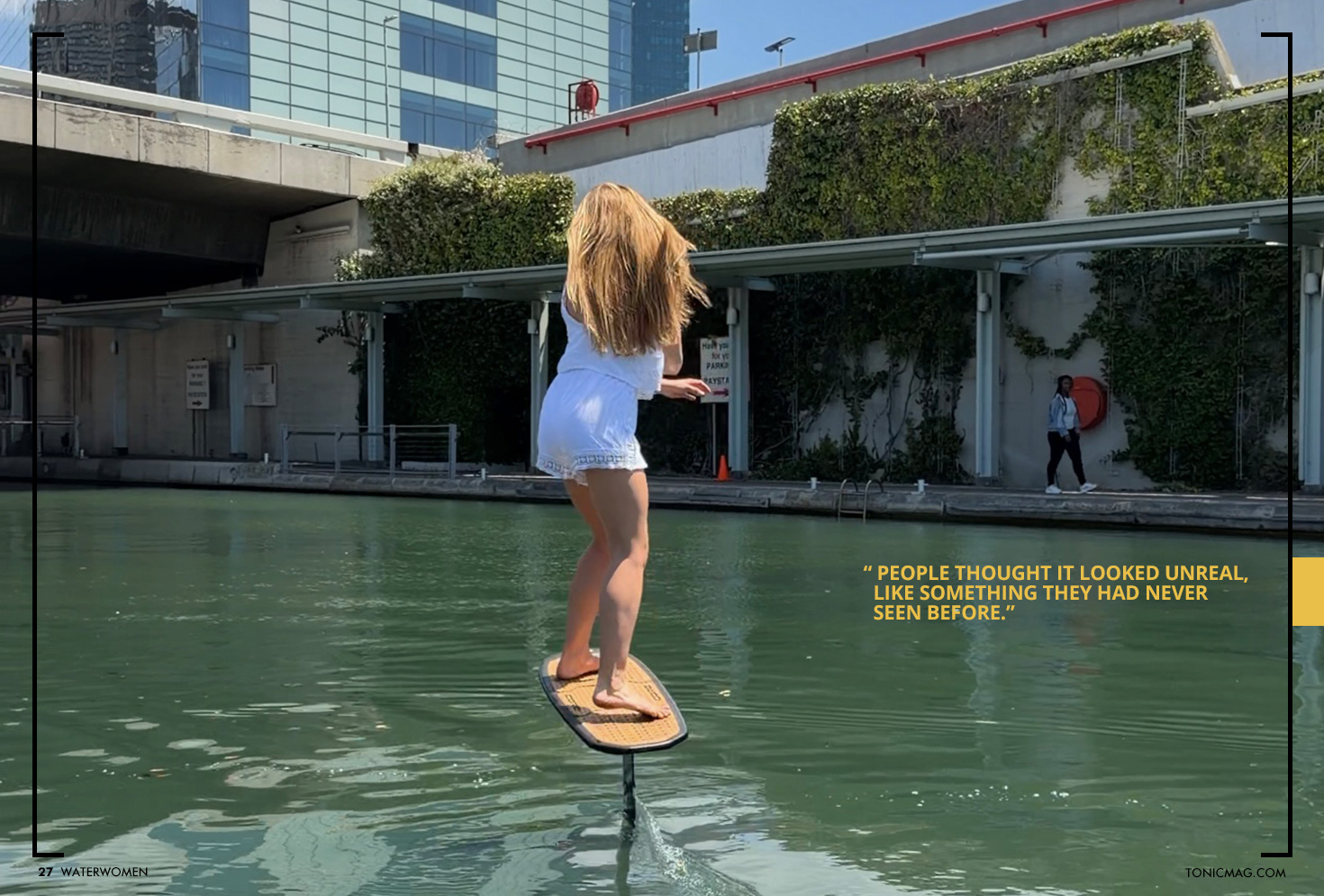
Then, after the Olympics, I got into SUP downwind foiling, and that really taught me how to pump properly. Later, a friend took me behind a boat on a lake in Munich and suddenly, pump foiling felt really easy. I posted a random video from that day, and it got around 2.8 million views. That was the moment I thought, okay, maybe I should actually learn the dock start properly.
Once I had a good technique explained to me and got over the awkwardness of running with the board in my hands, it clicked pretty fast.
Rou: Your dock start videos are what a lot of people know you for now, especially the ones where you are fully dressed. How did that idea happen?
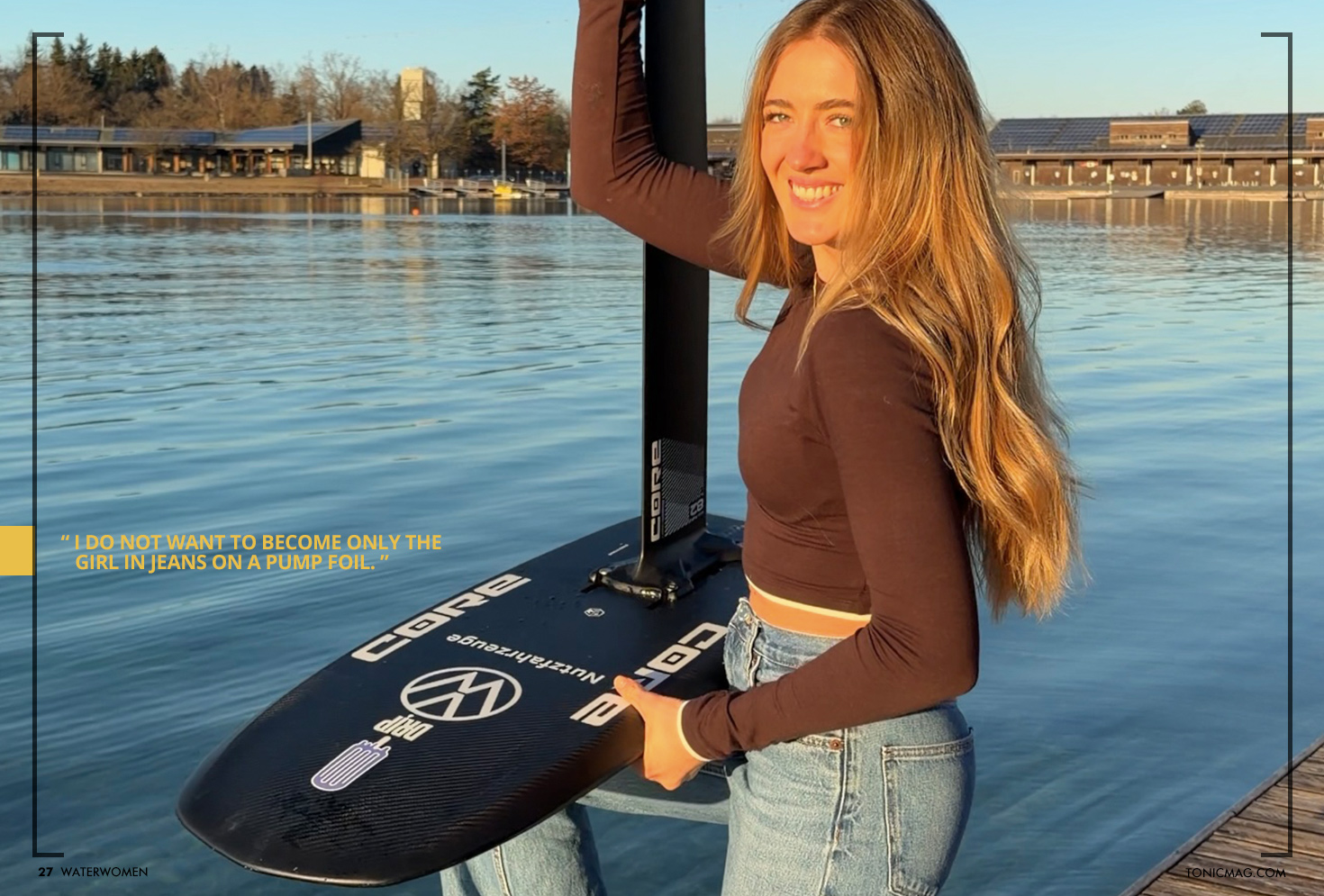
Alina: It was very random. I had started thinking more seriously about social media after the Olympics, and I wanted to post regularly. I had been learning a new dock start spot in Munich, and one day I was wearing white jeans and a black top. I just said to my boyfriend, imagine if I did the video like this. He said maybe wait until you are a bit more confident, but I told him just to film, and if I made it, I made it.
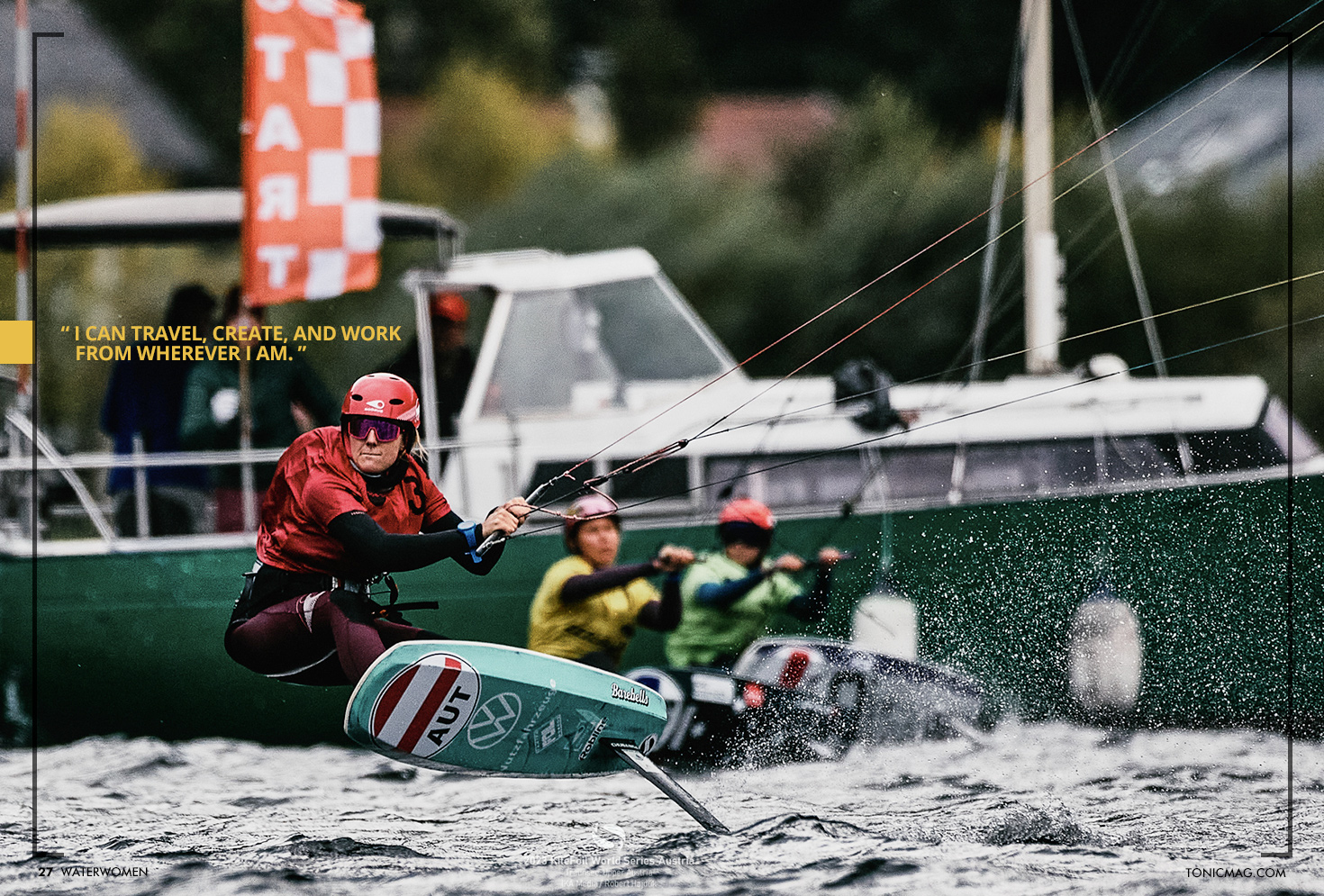
I landed it first try.
After that, people loved it. I think it looked unreal to them, like something they had never seen before. A girl with dry hair and normal clothes flying over the water. People kept commenting that it looked like AI. Then it became a bit of a signature. The dry hair, the jeans, changing outfits between clips. Suddenly, it was a whole thing.
Rou: It does feel different from what a lot of women in watersports are doing on social media. Was that deliberate?
Alina: Not in some big planned way, but I think it happened naturally. A lot of people have told me it is cool that I did not go the bikini route and still managed to grow. For me, it was more about making something that looked surprising and satisfying, something people would stop and watch. The clothes just made it look even more unusual.
I think there is space to do it differently and still get attention. Maybe that can be inspiring for younger girls, too.
Rou: How serious has social media become for you now?
Alina: It is a proper job now. Before, I was always doing a bit of everything, racing, sponsor work, training, and posting when I could. After the Olympics, I decided to really focus on social media and see what happened. I started researching more, posting more, editing more, trying to understand what worked and what people connected with.
A few months ago, I had around 19,000 followers, and now I am around 80,000 across Instagram and YouTube, so it has grown very quickly. I still do everything myself, the editing, the ideas, the emails, brand conversations, all of it. My boyfriend helps me with decisions and strategy, but the day-to-day work is all mine. It takes a lot of time, but it also gives me freedom. I can travel, create, and work from wherever I am.
Rou: Has that changed your relationship with the sport?
Alina: In some ways, yes. It gives me independence. Before, a lot depended on sponsors, photographers, shoots or events. Now I can think of an idea and go make it happen. That is really exciting. At the same time, I do not want to become only the girl in jeans on a pump foil. That is a cool part of what I do, but I also want people to see the rest of it, wing foiling, kiting, snowkiting, travel, all of those adventures too.
Rou: You have been with Core for a long time. What has that relationship meant to you?
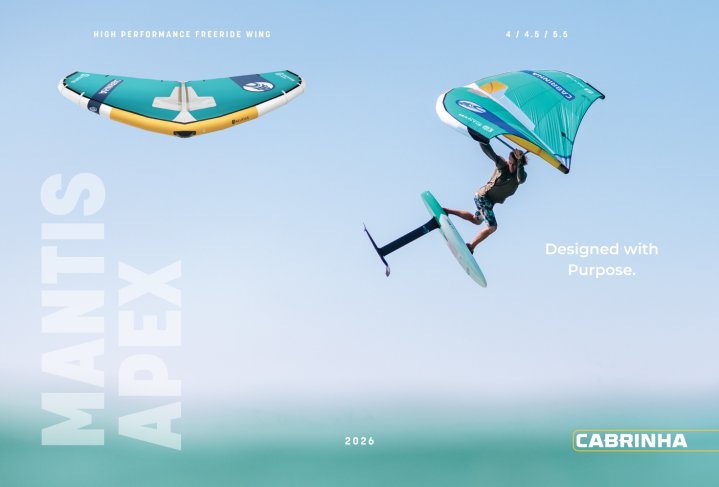
Alina: A lot. The first kite I ever used was a Core kite, because my dad was friends with one of the founders, and then later I started riding for them properly. I have been with Core for more than ten years now. They supported me even through the race foil years, even though I was not using Core race gear because they do not make race foils. They were always supportive of whatever direction was right for me.
That long relationship means a lot now because I can tell a full story. I can post a clip from when I was a kid and a clip from now, and it all connects. That is something special.
Rou: What are you riding most at the moment?
Alina: For wing foiling, I am mostly on a 38-litre Roamer in Cape Town, though my 45-litre board is probably my real all-around favourite because I can ride it from around 10 knots. I love the Halo Pro wings because they are so light. That is probably my favourite thing about them, my arms never get tired.
For kiting, I still enjoy the Fusion board for freeriding and a bit of big air. And then of course the pump foil setup. It is stable, forgiving and perfect for the clothing videos.
Rou: Last one, what would you say to any young riders listening who want to follow a similar path?
Alina: The biggest thing is to have fun. If it is not fun, it is really hard to stay motivated. For me, having a good group of friends around the sport was always a huge help. You push each other, you enjoy the sessions, and that makes you want to go again.
Then, of course, do not give up. You might crash 100 times before something works, but maybe on the 101st try you land it. That is just part of it.
And finally, think step by step. It is great to have a big dream, whether that is the Olympics, building a big social media channel or learning a new trick, but you have to break it down. What is the next small goal? What do you need to learn first? If you just keep building like that, opportunities come. That is how it happened for me.
By Tonic Mag
