

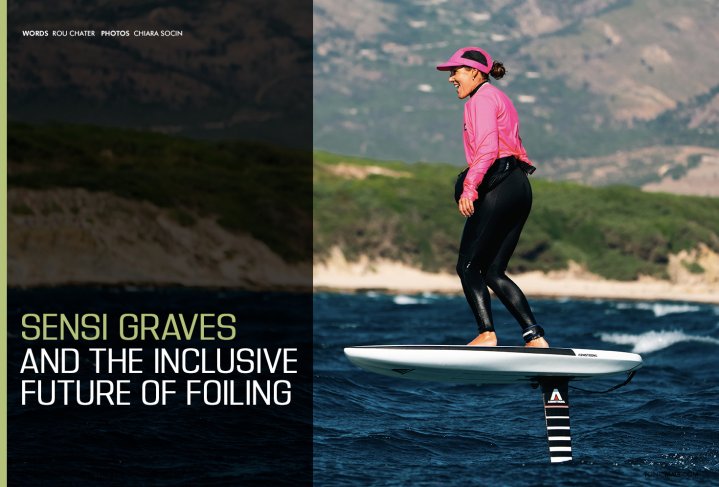
Foiling is evolving faster than almost any other watersport on the planet. New disciplines appear almost yearly, gear continues to improve and riders are discovering entirely new ways to use wind and swell. But while the technology is moving quickly, the biggest shift in the sport may actually be who is getting involved. Former professional kiteboarder Sensi Graves has found herself at the centre of that change, not just as a passionate foiler, but as someone helping open the door for more women and newcomers through coaching, community events and her own journey balancing life on the water with motherhood.
At first glance, Sensi Graves looks exactly like what you might expect from a modern foil athlete. She rides everything, wing foiling, parawinging, downwinding, tow foiling, prone, and spends much of the year chasing wind and swell between Hood River, Baja and beyond.
But talk to her for a while, and it quickly becomes clear that what drives her goes far beyond simply riding the latest gear or chasing the next discipline. Sensi has quietly become one of the people helping shape the culture around foiling, particularly when it comes to welcoming more women and newcomers into the sport.
From organising free demo sessions on the Columbia River to coaching clinics around the globe and mentoring riders who are taking their first tentative steps into winging, her work sits right at the intersection of progression and accessibility.
In a sport that has often been defined by its technical edge and relentless gear evolution, Sensi represents a different kind of momentum, one built around community, confidence and the idea that more people should feel like they belong on the water.
A Different Way Into Wind Sports
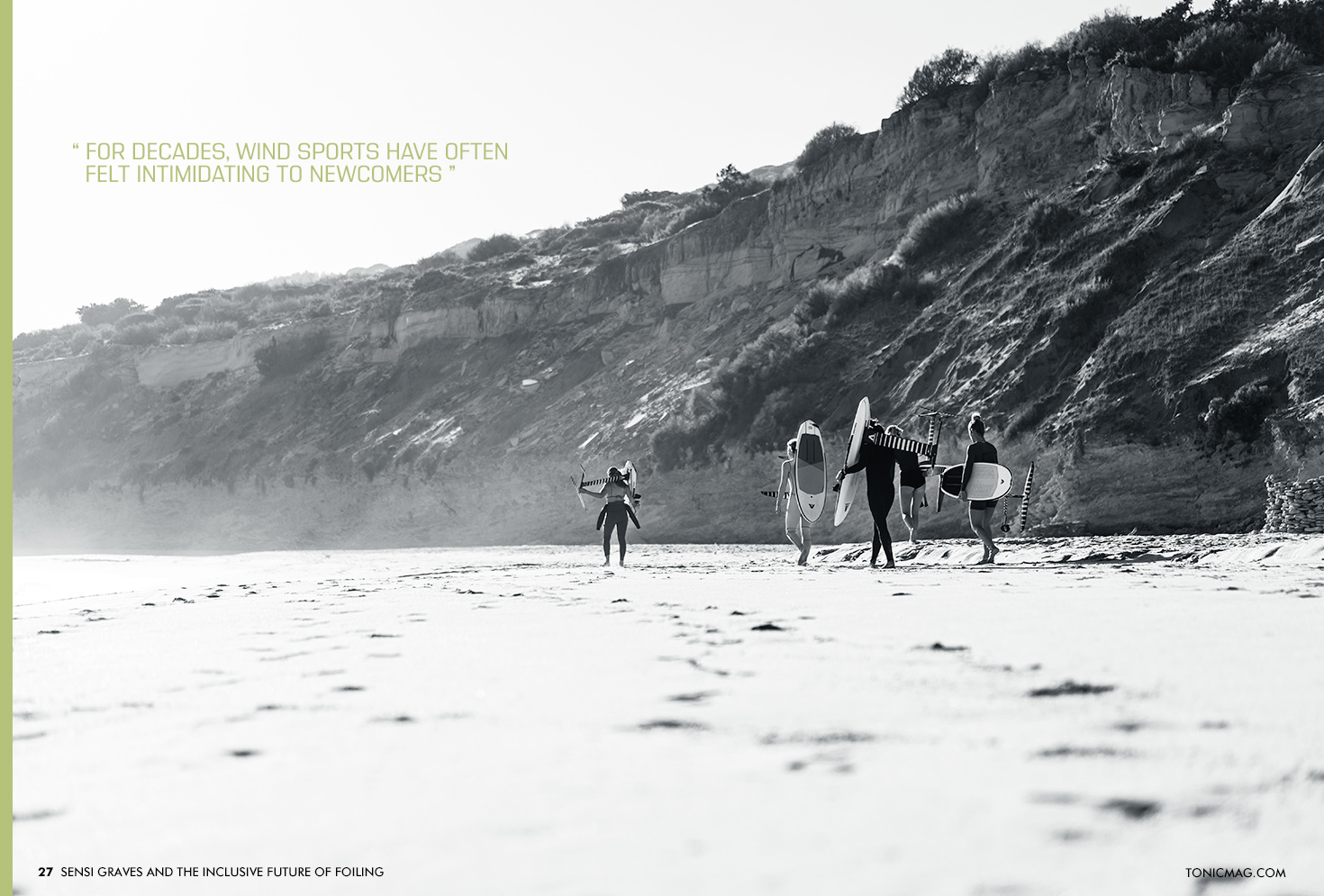
For decades, wind sports have often felt intimidating to newcomers. Kitesurfing, windsurfing and other disciplines require a lot of equipment, technical knowledge and confidence, and for many people that barrier was enough to keep them on the beach rather than in the water.
Sensi knows this firsthand. She started her career as a professional kiteboarder, riding park style and competing at the highest level before becoming one of the early adopters of kite foiling.
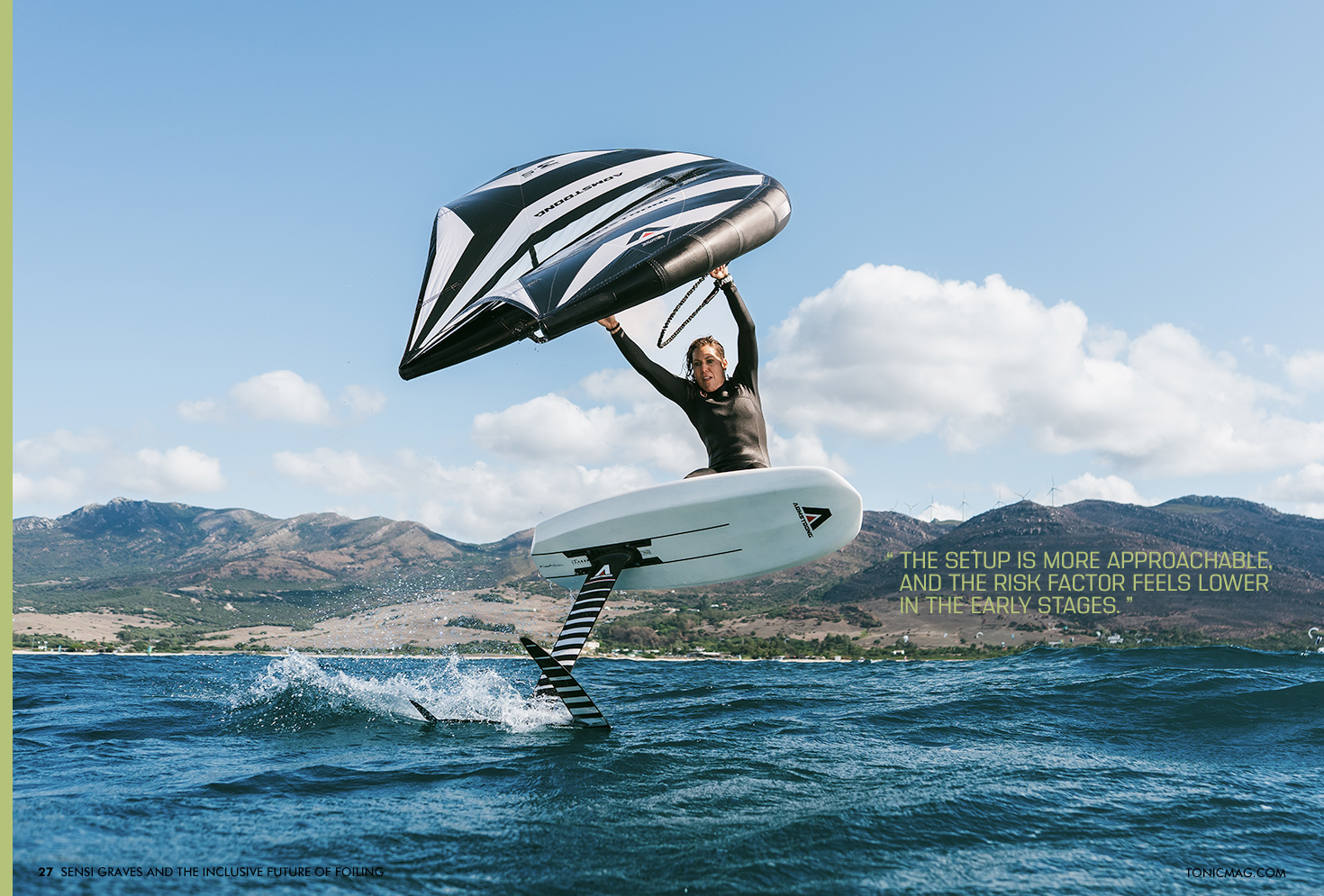
But when winging arrived around 2019, something changed.
“I remember seeing the first wings at an industry trade show and thinking this looks ridiculous,” she laughs. “Everyone was walking up and down the beach trying to make it work, and I was like, what is this sport?”
Like many riders, she struggled during the early sessions.
“If you’re not cursing at the wing, you’re not winging,” she says. “It took me about a week of thinking, this sucks, this is really hard.”
And yet, that challenge turned out to be part of the appeal.
Unlike kitesurfing, where a powerful kite can feel intimidating to beginners, winging offers a different learning curve. The equipment is simpler, the setup is more approachable, and the risk factor feels lower in the early stages.
“It’s not that winging is easy,” Sensi explains. “It’s still really hard to learn. But it’s less intimidating. You’re often learning on a big board, you’re close to the water, and you don’t have this huge kite pulling you around.”
That difference has opened the door to people who might never have considered wind sports before.
A Community on the Water
Nowhere is that shift more visible than in Hood River, Oregon, where Sensi lives. The town has long been one of the world’s wind sport capitals, famous for its powerful summer winds and rolling river swell on the Columbia.
In the past, those conditions made it a hub for windsurfing and kitesurfing. Today, winging has exploded across the river.
“We still see plenty of kiters and windsurfers,” she says. “But the number of wings on the water now is incredible.”
The accessibility of the sport has played a huge role in that growth. And Sensi has been actively helping to fuel it.
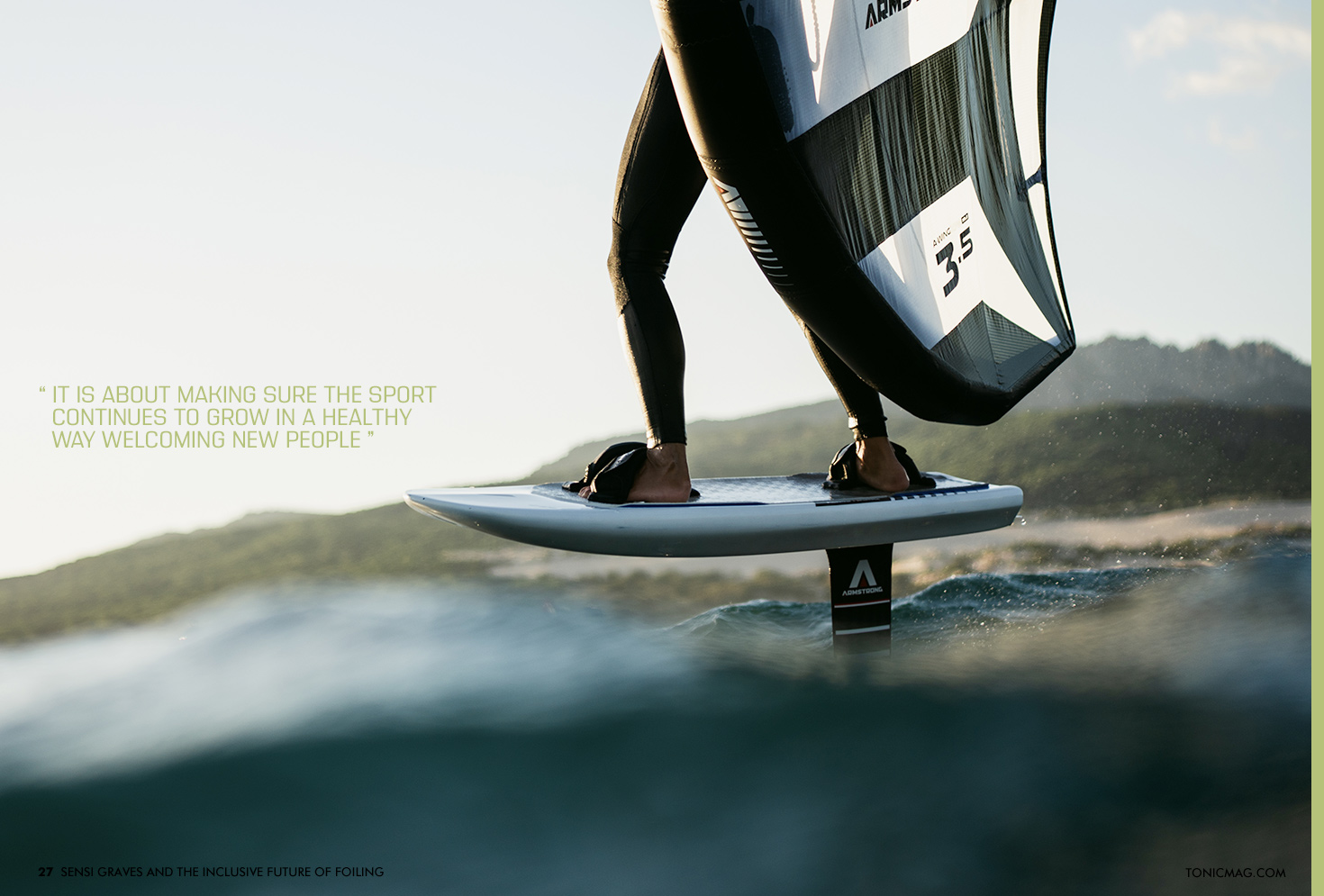
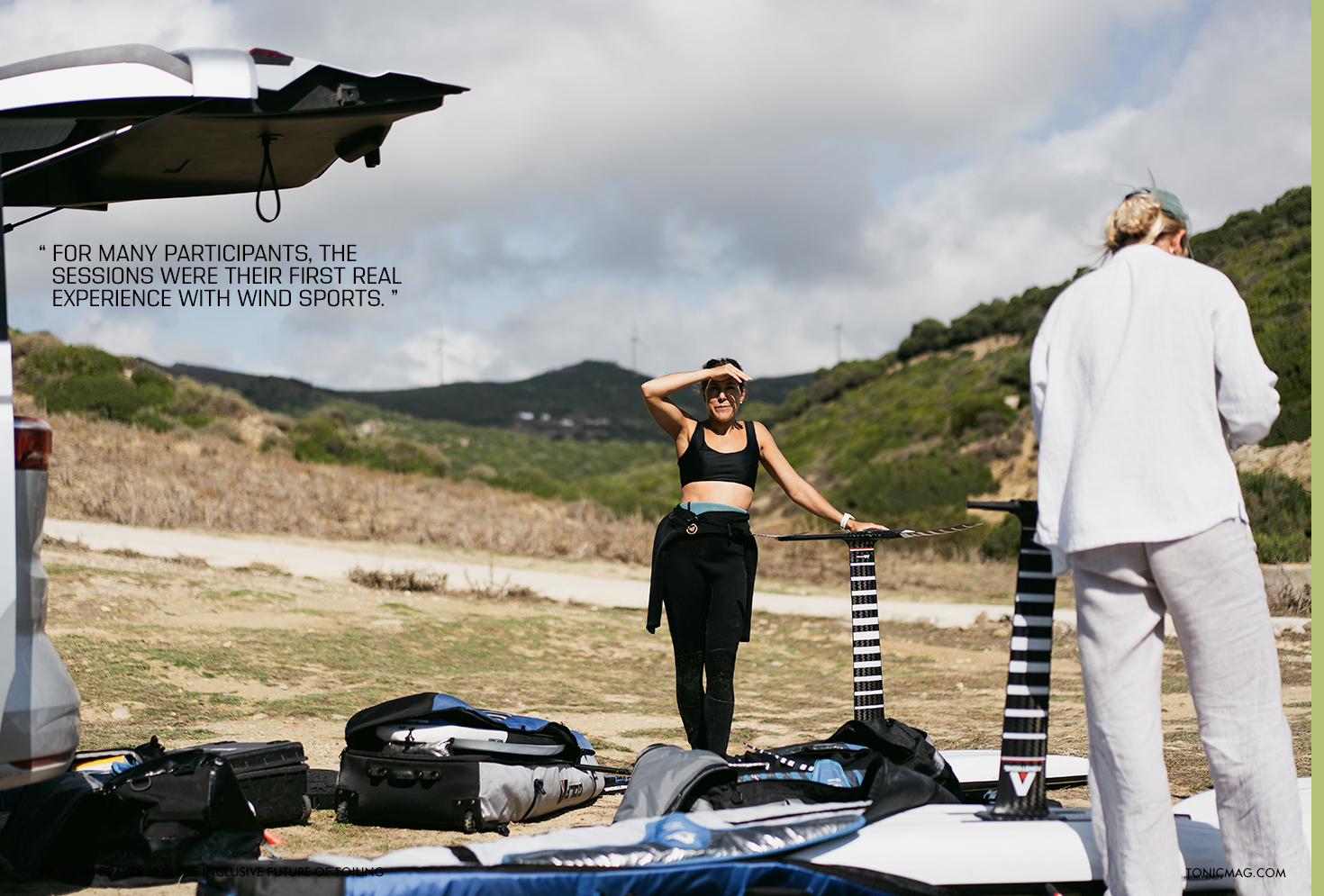
Last summer she ran a series of sessions called Women’s Wing Wednesdays, free demo days where women could try the sport in a supportive environment.
Every other week throughout the summer, riders gathered at the river to test Armstrong gear, ask questions and take their first steps on the foil.
“We had so many women turn up every single week,” she says. “At one point I was like, I need an assistant.”
For many participants, the sessions were their first real experience with wind sports.
“We get women from all kinds of backgrounds,” Sensi explains. “Some used to windsurf years ago, some have partners who kite, and some have absolutely no wind sports experience at all.”
And that is exactly the point.
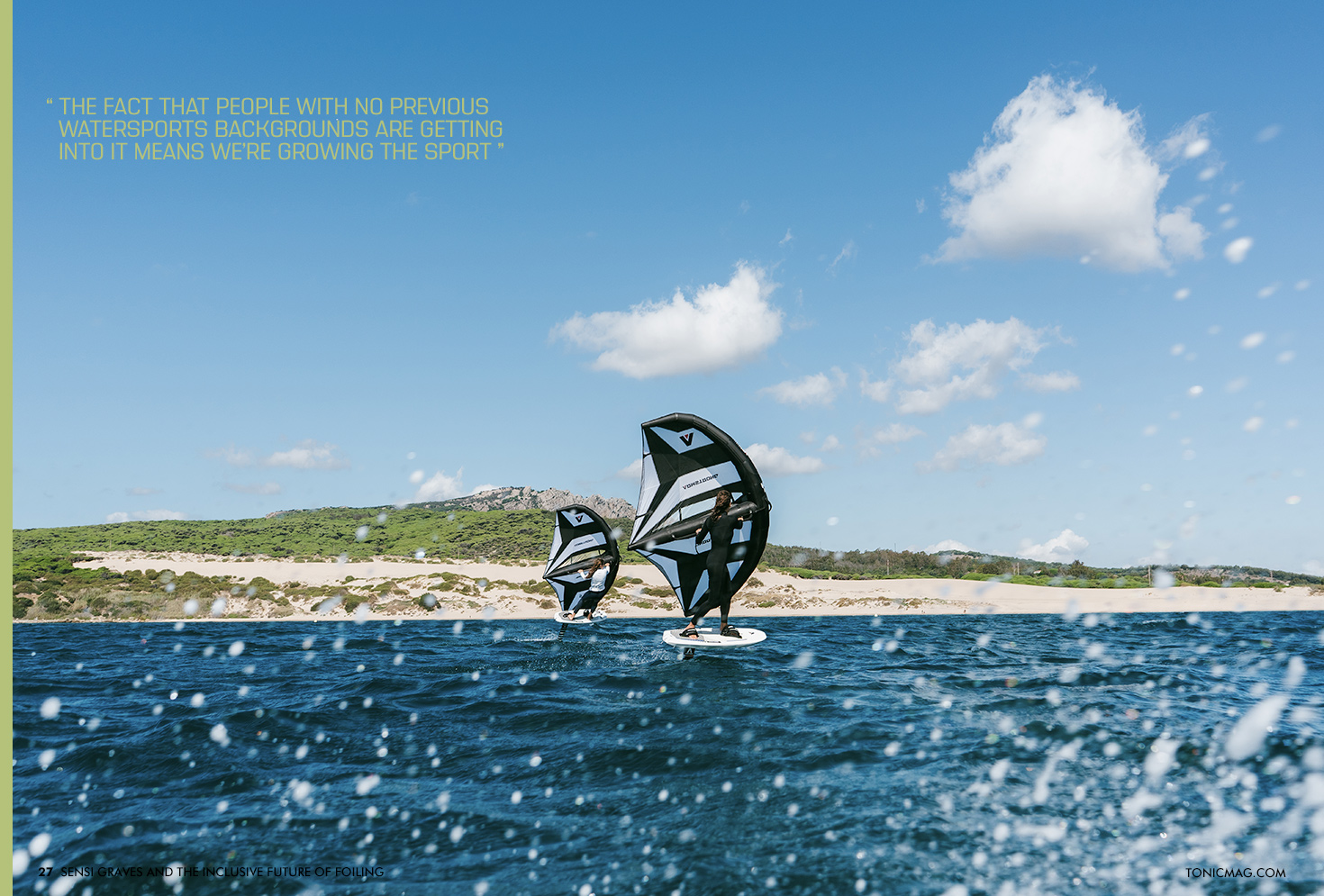
“The fact that people with no previous watersports backgrounds are getting into it means we’re growing the sport,” she says. “That’s really exciting.”
From the Beach to the Water
One of the most powerful changes Sensi has noticed is how winging is reshaping who feels welcome in the sport.
“For years you’d see women sitting on the beach while their husbands or partners kited,” she says. “Now they’re looking at winging and saying, actually, I could do that.”
The difference is not just physical; it is psychological.
Because the equipment is smaller and the learning environment often feels more manageable, people who might have been hesitant to try kiting are suddenly curious.
And once they start, many quickly fall in love with the feeling of foiling.
“You progress a little bit every time,” Sensi says. “Even when you think you’re not getting better, your body is learning.”
That idea has become a central message in her coaching.
“People get really frustrated and start telling themselves they suck,” she explains. “But the reality is, just showing up and trying is already a big step.”
In fact, she often reminds students how unusual their situation really is.
“Think about how many people in the world are even putting themselves in the position to learn to wing,” she says. “Very few. So just being out there is something to celebrate.”
Life, Foiling and Motherhood
While Sensi has been helping grow the sport on the water, the last two years have also brought major changes in her life away from it.
In July last year, she gave birth to her son, Flint.
For many athletes, motherhood can feel like a moment when their careers slow down or even stop altogether. Sensi was determined not to let that happen.
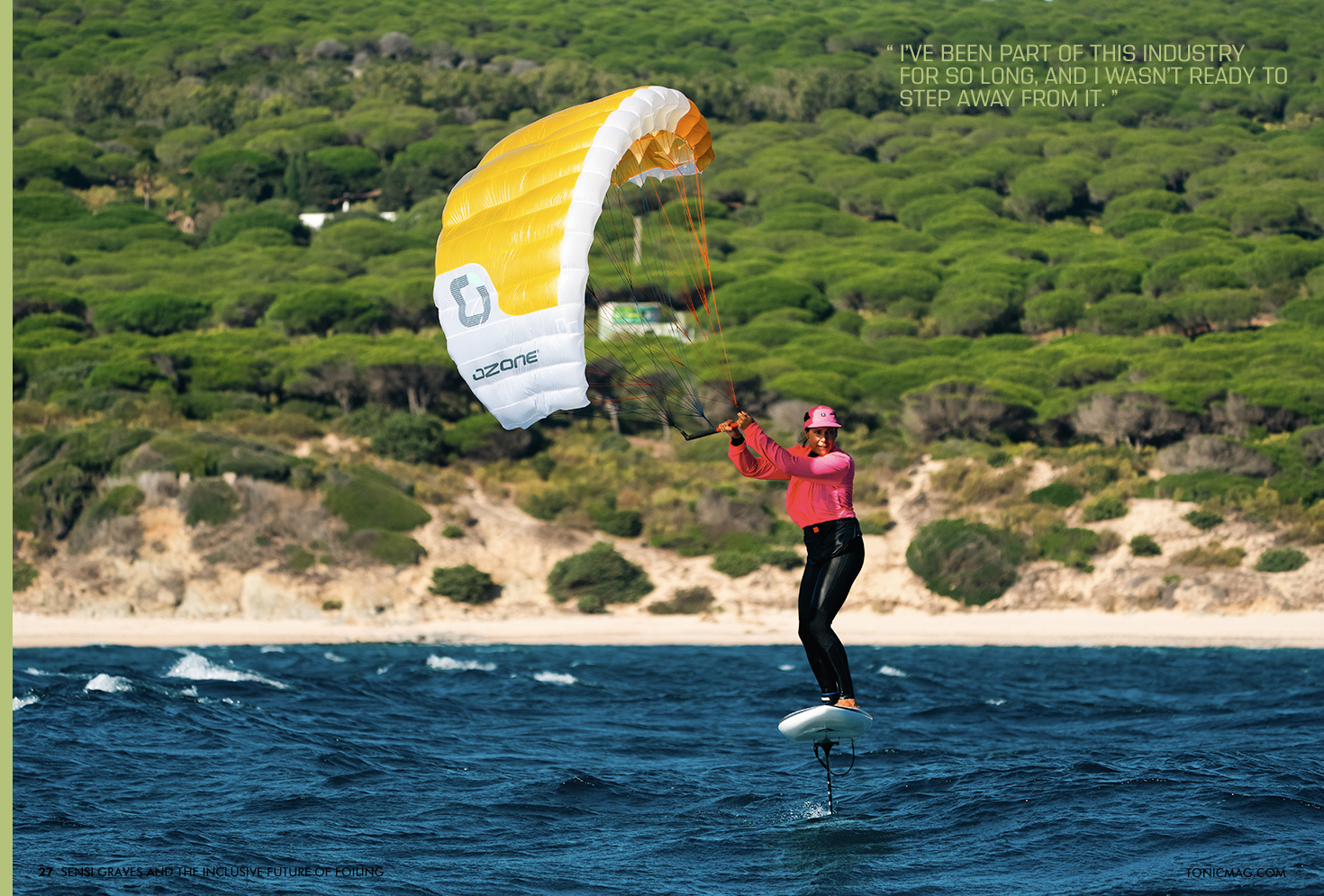
“I didn’t want having a baby to be a limitation on my career,” she says. “I’ve been part of this industry for so long, and I wasn’t ready to step away from it.”
Her return to the water came sooner than many expected.
Just five weeks after giving birth, she found herself back on the river.
“It wasn’t some big goal,” she says. “It just happened that the conditions lined up, and Brandon asked if I wanted to go.”
The first session, however, was humbling.
“It was horrible,” she laughs. “I could barely get up.”
Still, the experience reminded her why she loves the sport in the first place.
And now Flint is simply part of the routine.
Trips to the beach take longer, and sessions are often shared between her and her husband,t Brandon, each taking turns on the water while the other watches Flint.
“We rarely ride together now,” she says. “But we still get out there.”
In many ways, the change has strengthened their connection to the lifestyle they built around wind and water.
“Our philosophy is that Flint comes along with us,” she says. “We don’t want having a baby to stop us from doing the things we love.”
More Than Just Progression
In a sport that evolves as quickly as foiling, it is easy to focus entirely on the next piece of equipment or the next discipline.
Wing foiling leads to downwinding, which leads to parawinging, prone foiling and tow foiling. The list keeps growing, and many riders find themselves chasing each new challenge.
Sensi is no different.
“I’ve been trying all the disciplines,” she laughs.
But for her, the bigger picture is about something else.
It is about making sure the sport continues to grow in a healthy way, welcoming new people rather than intimidating them.
That means encouraging beginners when they struggle, creating spaces where women feel comfortable learning and reminding people that progression does not happen overnight.
And sometimes, it simply means embracing the challenge.
“Embrace the suck,” she says, quoting author Brené Brown. “It’s going to be hard. But that’s part of the journey.”
Because once you break through those early frustrations, the reward is something special.
Foiling has a way of pulling people in completely. The sensation of flying above the water, linking swell lines and gliding silently across the surface is addictive in the best possible way.
And thanks to riders like Sensi Graves, more people than ever are discovering it for themselves.
By Tonic Mag
