
Leashes aren’t exactly the most exciting bit of foiling equipment, but they’re something we all rely on every time we head out. Ride Engine has been looking at how they could work better, and its new Re-Tractable Leash takes an old idea and gives it a modern twist. With a clever recoil system, progressive shock absorption, and a few different mounting options, there’s quite a bit more going on here than you might initially think.
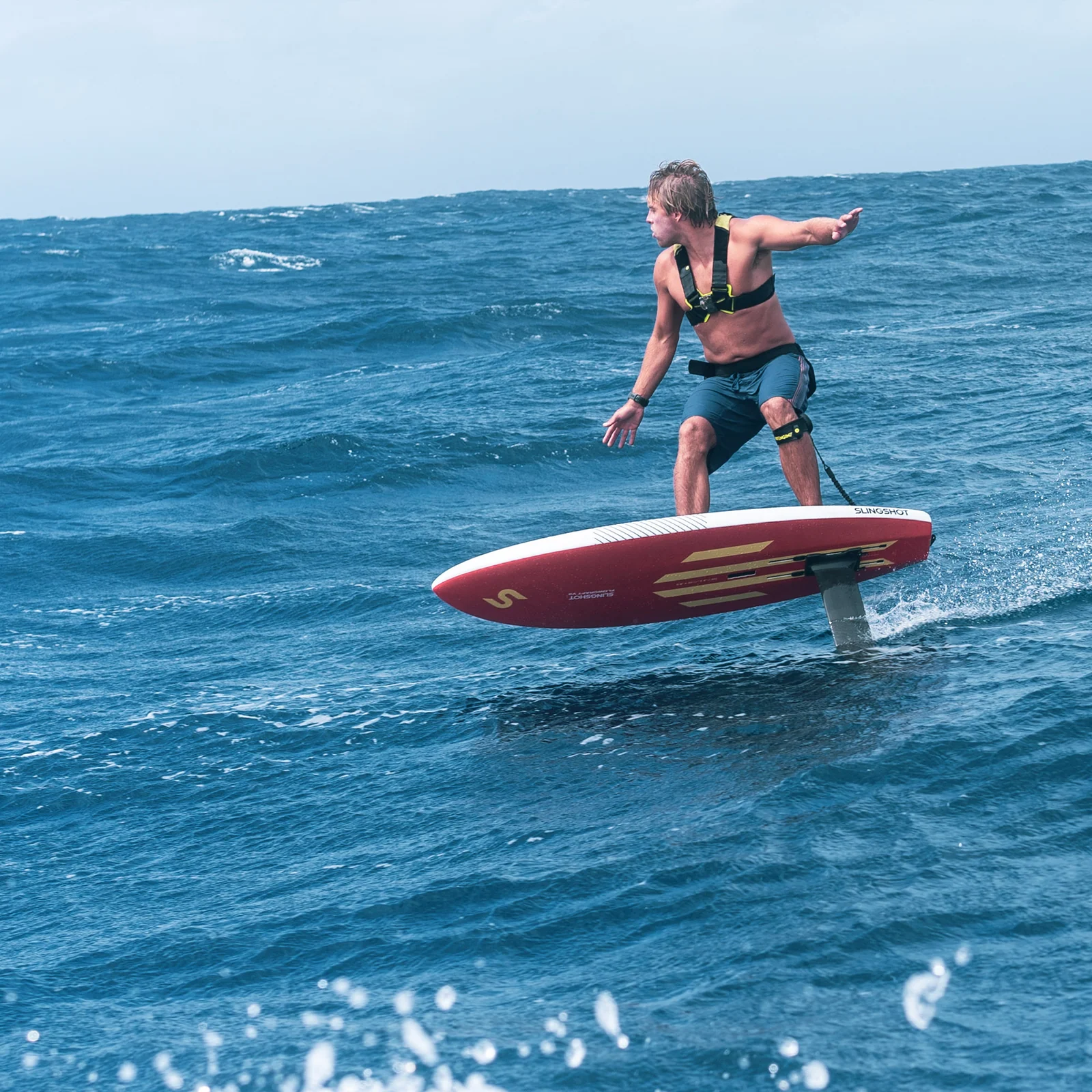
If you’ve spent any time wingfoiling or parawinging, you’ll know that crashing can sometimes be a fairly chaotic experience. There’s your board, the foil, your wing, and yourself, all suddenly occupying the same bit of water. Sometimes everything separates nicely, but other times your board comes bouncing back towards you, your foil gets tangled in something, or you end up with an expensive hole in your canopy. It’s all part of the learning curve, but Ride Engine has been working on something that could make those moments a little less eventful.
We caught up with Gary Siskar at AWSI to take a closer look at the new Re-Tractable Leash, which the brand first showed at the event a year earlier. Having spent the intervening months refining the design, the product has now made it into production, and there’s some interesting thinking behind it.
Retractable leashes have actually been around for years, although their history in watersports isn’t particularly glamorous. Back in the early days of kiteboarding, you would occasionally see people using retractable systems that had been borrowed from other applications. They weren’t designed specifically for the sport, and as Gary pointed out, seeing someone wearing one was generally a good reason to give them a wide berth. Ride Engine certainly isn’t recommending this new version for kitesurfing either, but with the arrival of wingfoiling and, more recently, parawinging, the idea of a retractable leash suddenly makes a lot more sense.
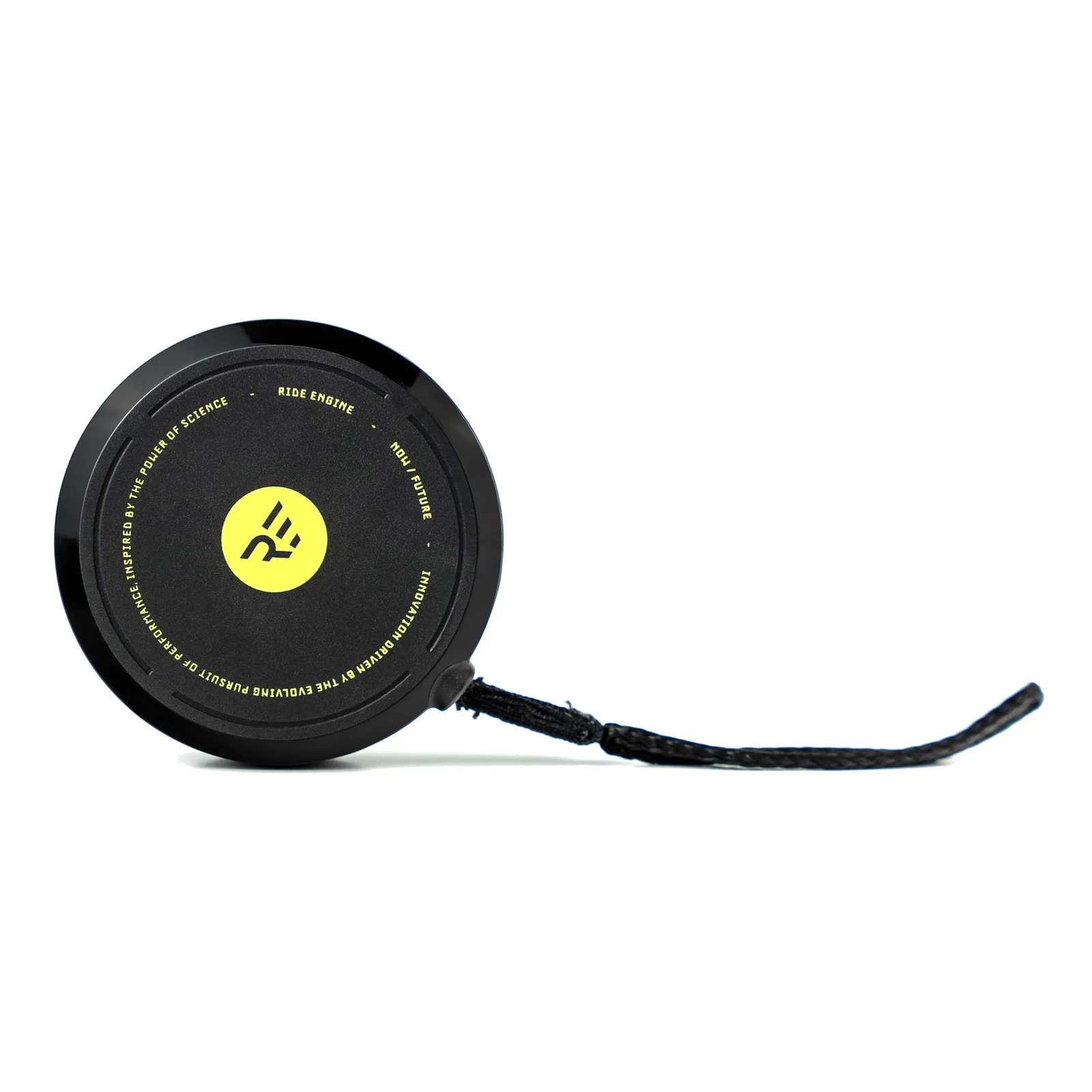
The biggest advantage is the separation it creates between you and your equipment when things go wrong. Inside the compact housing is 1.8 metres of Kevlar-reinforced webbing, and on the waist-mounted version, there’s another metre of shock cord. That gives you roughly three metres of distance between yourself and your board when everything is fully extended. Compare that to a conventional coiled leash, which naturally wants to pull the board back towards you, and you can see why this might be useful, particularly when you’ve got a foil and a wing to worry about.
One of the cleverest aspects of the design is actually something the leash doesn’t do. Rather than immediately pulling the board back towards you after a crash, the spring tension has been deliberately tuned to allow it to remain at a distance. This gives you time to recover your wing, untangle yourself if necessary, and generally get organised before bringing the board back towards you. Anyone who’s had a foil bouncing around uncomfortably close to their body will appreciate the thinking behind that, and it should also help reduce the chances of your foil finding its way through your wing’s canopy or leading edge.
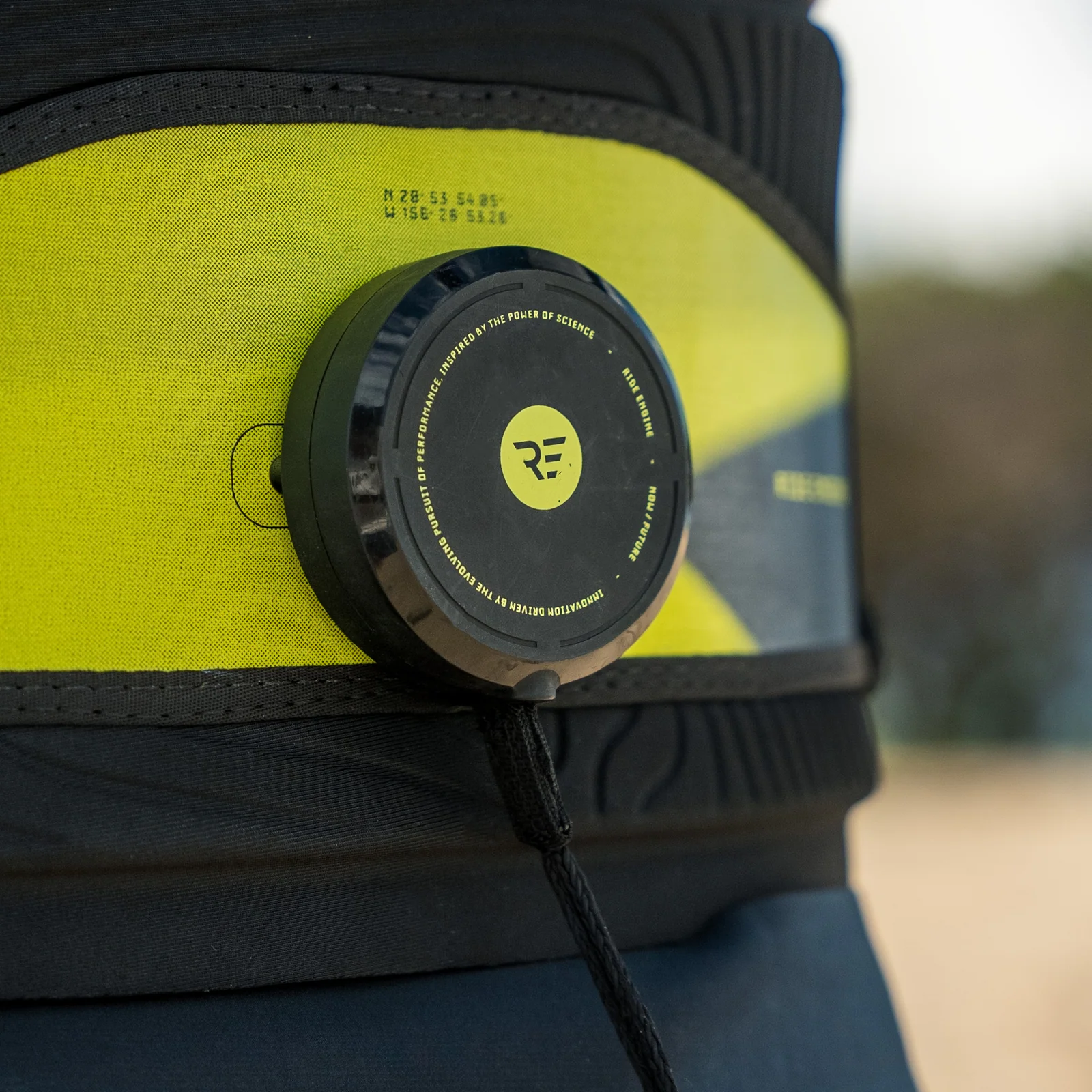
“Rather than having several metres of leash trailing around behind you, the system stores most of that length inside a compact retractable housing.”
There’s some equally interesting engineering going on with the bungee system. Ride Engine has developed what it calls a dual-stage bungee, which is designed to manage the forces involved when the board reaches the end of the leash during a high-speed crash. The initial section stretches relatively easily, but as the bungee extends further, the resistance increases significantly. This creates a more progressive stop rather than transferring all that energy directly into the leash attachment.
It’s particularly relevant for the faster end of foiling, where riders are regularly travelling at speeds that would have seemed fairly ambitious just a few years ago. Imagine you’re flying along on a small foil, carrying plenty of speed, and suddenly breach the surface. Your board shoots off, the webbing extends to its maximum length, and the bungee then helps absorb the remaining energy. Rather than everything coming to an abrupt halt and putting a massive load through your leash plug, the system is designed to bring the board to a more controlled stop. It’s a sensible approach, especially when you consider the forces involved in some of the crashes we see these days.
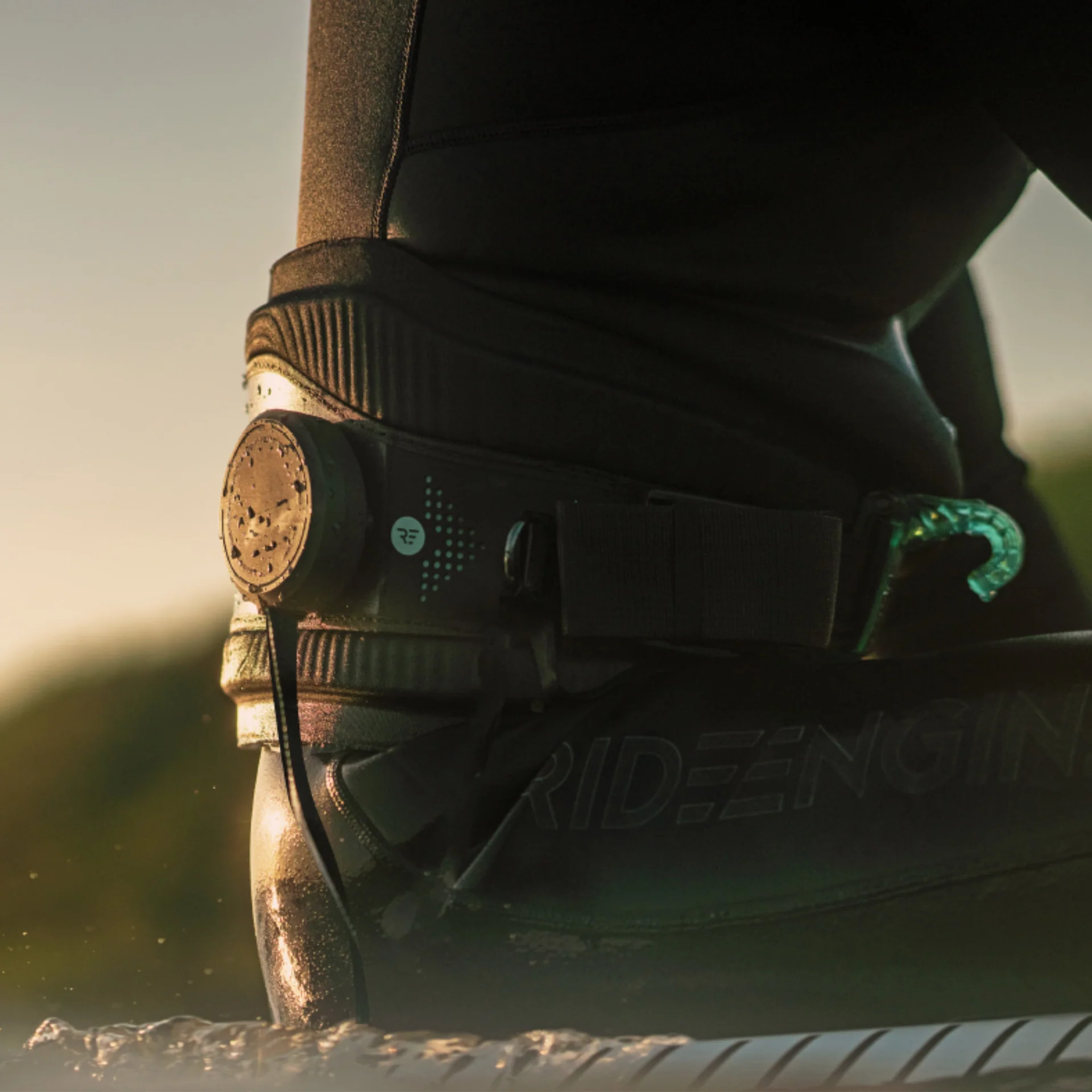
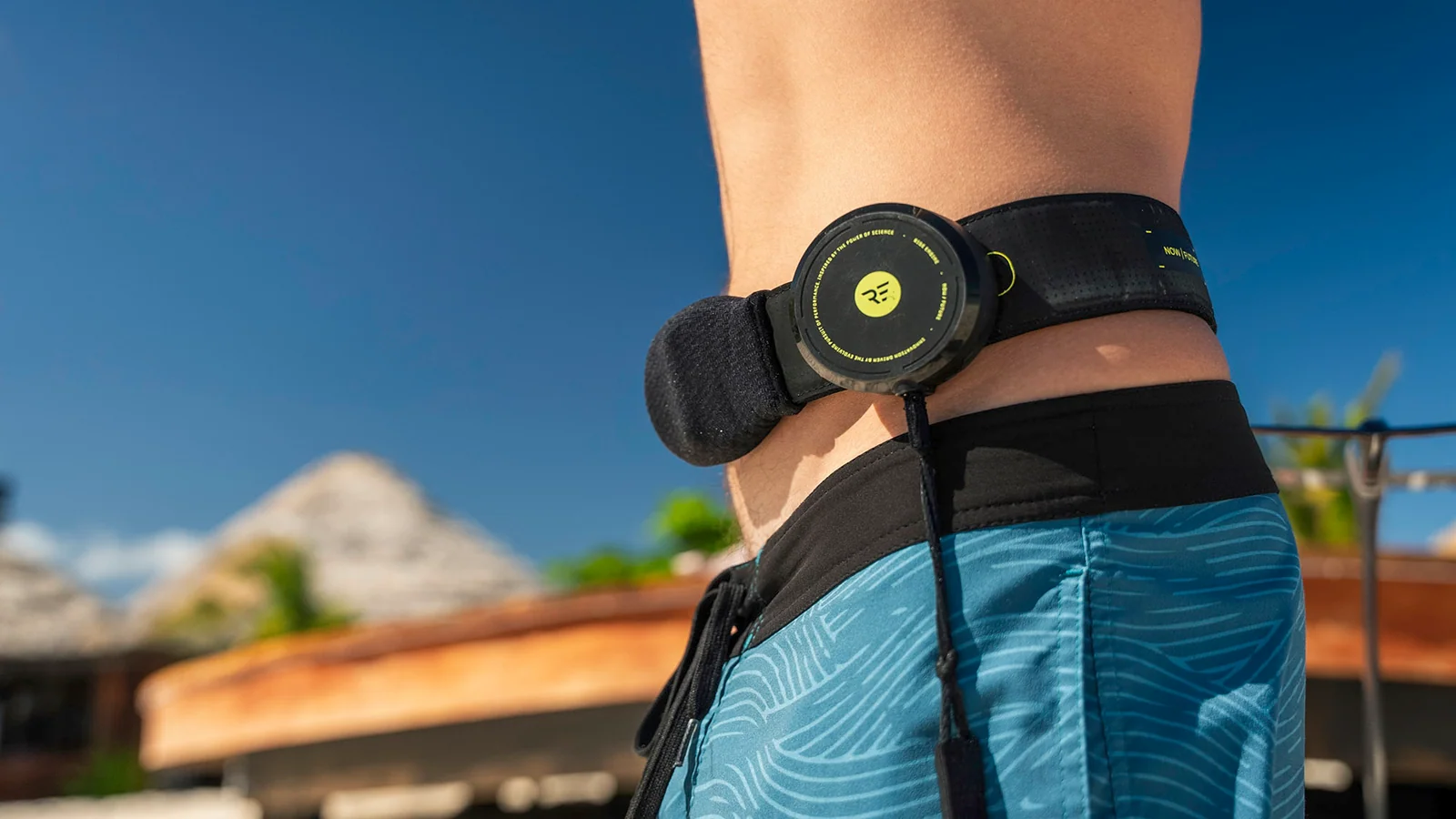
Of course, all of this would be fairly pointless if the mechanism was enormous and uncomfortable to wear. Ride Engine has worked hard to keep the housing compact, using a circular design that accommodates the retractable spring and webbing in the smallest practical space. The idea is that once you’re wearing it, you barely notice it’s there, and because the webbing retracts into the housing as you get closer to your board, there’s considerably less loose leash getting in the way while you’re riding.

“The spring tension has been deliberately tuned so that, once the leash has extended, the board doesn’t come shooting straight back.”
That’s another benefit that shouldn’t be overlooked. Anyone who’s spent a session pumping with a conventional leash will know how annoying it can be having a cord constantly slapping against the back of the board. Likewise, stepping on your leash during a foot change is never particularly enjoyable, especially when you’re already concentrating on keeping everything balanced. With the Re-Tractable system taking up the slack, there’s less cord trailing around, which should make for a tidier setup whether you’re pumping, carving, or simply cruising around.
Ride Engine has also recognised that everyone seems to have their own preferred way of attaching a leash these days, particularly with the growing popularity of parawinging. There are three different configurations available, starting with a waist-mounted version that uses a specially designed non-mechanical buckle. Rather than relying on the flexible plastic clips found on many conventional belts, the fastening avoids the moving plastic tabs that can eventually weaken or break. It’s also covered in smooth neoprene, which helps prevent parawing lines from catching around the buckle, something that’s particularly important when you’re dealing with a handful of thin lines in the water.
There’s also a calf-mounted version, which is the setup Gary has been using himself. He prefers to keep his wing leash attached around his waist and his board leash on his calf, creating as much separation as possible between the two. The calf version uses a shorter dual-stage bungee because it’s already positioned closer to the board, but otherwise follows the same basic principles as the waist model.
The third option is probably the most interesting for anyone who has already spent time perfecting their setup. Called the Base Leash, it’s essentially a DIY kit that includes the retractable mechanism, a longer bungee, and a selection of mounting hardware. This allows you to integrate the system into an existing waist belt, stash bag, or compatible hard-shell harness, rather than having to change everything just to accommodate a new leash. Given the variety of harnesses, impact vests, flotation devices, and other accessories people are using these days, that flexibility makes a lot of sense.
What’s interesting about the Re-Tractable is that Ride Engine hasn’t simply taken an existing retractable leash and stuck its logo on it. The brand has looked at the particular challenges of wingfoiling and parawinging and developed something specifically around those demands. From the way the spring tension is controlled to the progressive bungee and different attachment options, there’s clearly been a fair amount of thought put into what might otherwise seem like a relatively simple piece of equipment.
Whether retractable leashes become the norm remains to be seen, and ultimately, the proof will be in how they perform over time in the sort of conditions we all put our equipment through. But the idea of having less leash getting in the way while you’re riding, combined with more separation between yourself and your equipment when you crash, is certainly appealing. It’s one of those products that might not immediately grab your attention on the shop shelf, but could turn out to be a pretty useful addition to your foiling setup.
“When everything is fully extended, that gives you roughly three metres of separation between yourself and your board.”