
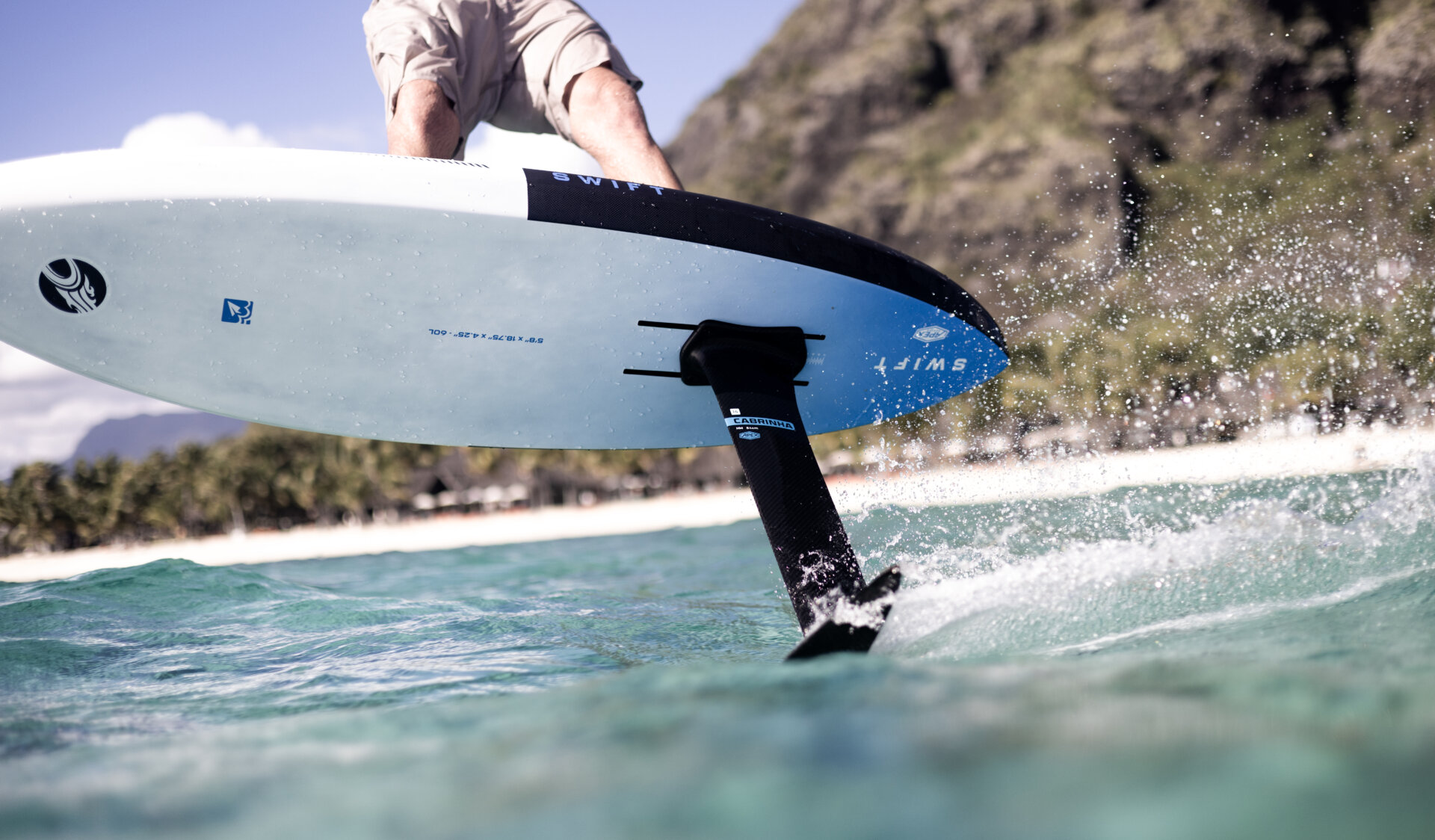
Cabrinha has been on something of a roll with its foil programme, and after the success of the Prestige and Union Connection System, the brand is looking ahead to 2027. In the latest episode of The Foil Pod, Rou Chater sits down with Cabrinha owner Jon Modica to talk through the new Domani foil, the evolving Union tail options, Cabrinha’s move into parawinging, and the wider thinking behind its next generation of products. Listen to the full conversation below, and check out our feature with exclusive insights and images from the brand.
A year ago, Cabrinha made a significant statement with the launch of the Union Connection System and Prestige foil range. Rather than arriving with an enormous collection of front wings and endless overlap between sizes, the brand kept things deliberately focused, building the range around a clear idea: create a high-aspect foil with exceptional glide and pumping performance that could still turn.
Twelve months later, that decision appears to have paid off. Cabrinha owner Jon Modica says the Union system and Prestige have become some of the most successful products the company has ever released. “I talked to our sales team the other day, and our head of sales has been with us for over twenty years. He said it’s been the most sold-out product we’ve had in the history of the company,” he explains. “We didn’t really have any extra stock until a week or two ago. Basically everything was pre-sold before it got in.”
That success has given Cabrinha a strong platform to build from, but rather than simply adding more sizes to the Prestige range, the team has gone in a different direction. The result is the new Domani, a foil designed not to replace the Prestige, but to solve a completely different problem. Domani means “tomorrow” in Italian, and Modica sees the name as fitting for what he believes will become the next step for a lot of experienced foilers. While the Prestige focuses on easy lift, pumping, glide and accessibility, the Domani is aimed at riders who already have plenty of energy available and want to control it more effectively.
“It solves a totally different problem,” Modica explains. “You have enough power now, you have enough speed, you have enough energy in the wave, your kite, your parawing or your wing, but you need to control that energy better. This is all about control and manoeuvrability in a higher-aspect package.” Every Domani uses an aspect ratio of 10, compared with the variable 11-12 aspect ratio range of the Prestige. On paper, that might not sound like a dramatic difference, but the two foils behave very differently underfoot. The Domani needs slightly more energy to get going and does not generate the same effortless low-speed lift as the Prestige, but once moving it accelerates hard, holds speed, and remains composed when pushed.
My own experience of the 960 has followed almost exactly that pattern. Coming directly from the Prestige 905, the Domani needs a little bit more energy either from the wave or your wing to get going. It wants a little more power before taking off, but once flying, the personality changes completely. Acceleration is immediate, glide remains surprisingly strong, pumping performance is far closer to the Prestige than I expected, and the ability to turn at speed is on another level.
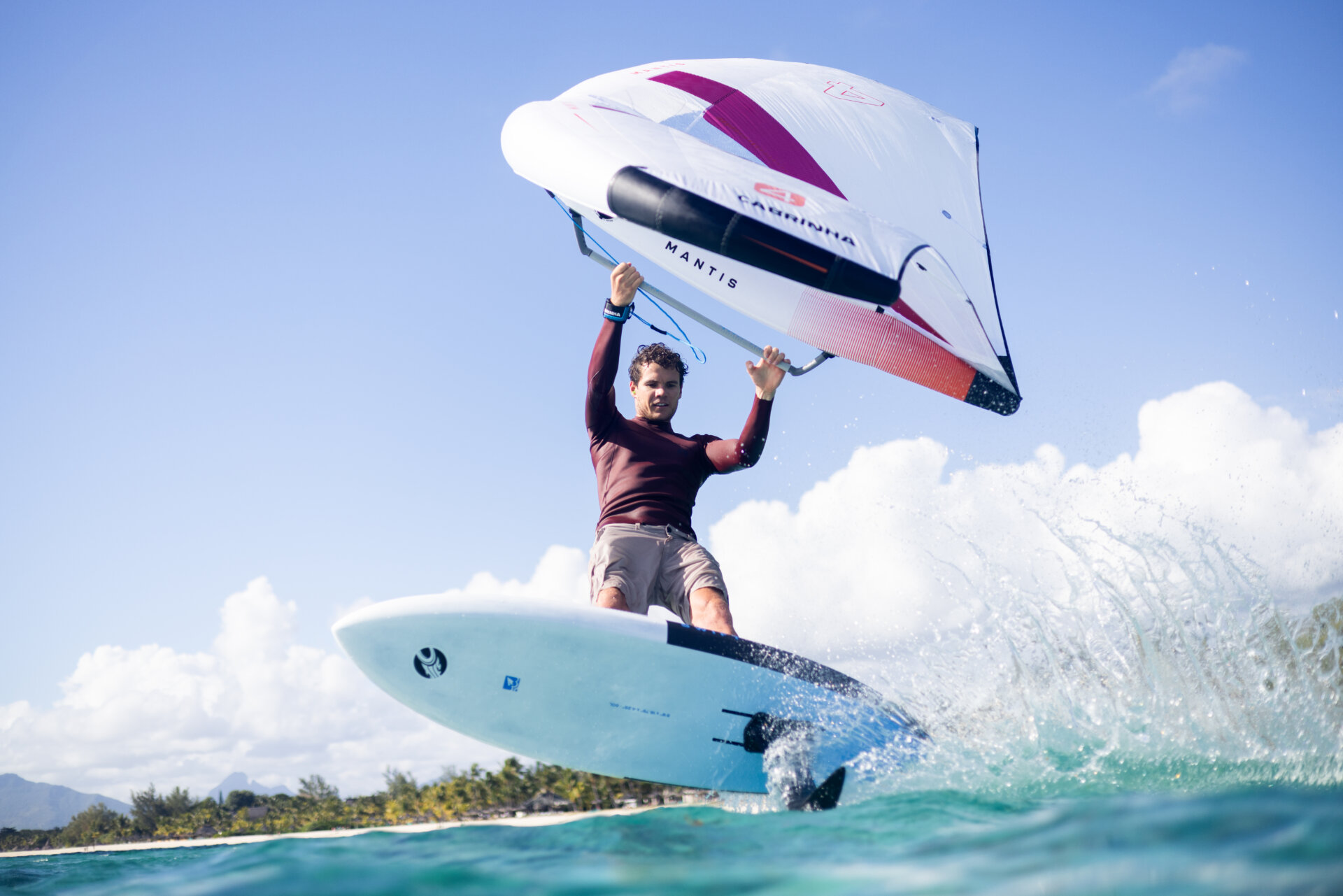
“The Domani is all about control and manoeuvrability in a higher-aspect package.”
That really became apparent when I took it prone foiling. Small, weak waves exposed its need for energy almost immediately; this doesn’t have the low end of the Prestige. However, on the following day, with waist-to-head-high surf and more power available, the foil suddenly came alive. Its low early lift makes steeper takeoffs much easier and more controlled. Once you’re on the wave and on the foil, it becomes something much more aggressive and engaging, carrying speed through the pocket and allowing much tighter changes of direction.
Modica describes the difference in terms of gears. If the Prestige is exceptionally strong in first gear and good into second, the Domani starts to come alive in second, third and fourth before continuing into what he jokingly calls “overdrive”. That extra speed range is particularly noticeable when there is real energy in the conditions. “You need a little more energy to benefit from it,” he says. “But you don’t need to size down as quickly.”
That final point is important, because for several years foiling has been caught up in an obsession with reducing equipment size. Smaller boards, smaller wings and smaller foils have often been treated as a badge of progression, even when the end result has been equipment that is harder to start and less enjoyable to use.
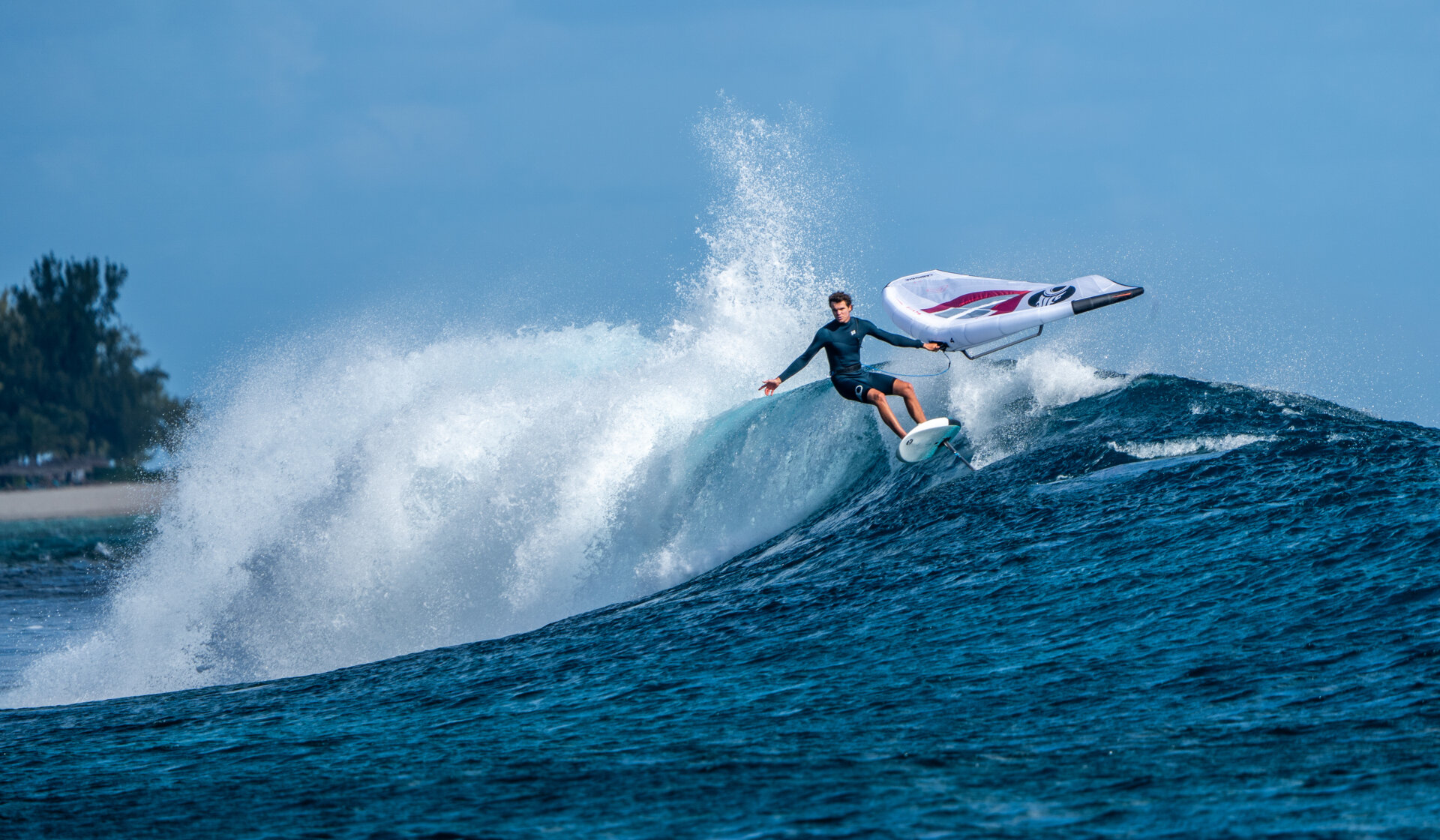
“You need a little more energy to benefit from it, but you don’t need to size down as quickly.”
More Range, Less Compromise
Modica believes the Domani represents part of a wider move away from that thinking. Because the foil manages speed so effectively, riders can remain on a larger surface area without experiencing the excessive lift and top-end limitations traditionally associated with bigger foils. His own favourite is the 960, which he describes as his “desert island foil” because of the range it covers, from surf and winging through to parawinging, downwinding and Foil Drive. For Modica, who is a bigger rider, the current travel quiver is an 1150 Prestige, 960 Domani and, when he knows there will be really big waves, a 700 Domani. In reality, he says there are remarkably few conditions where the 960 feels too large.
That mirrors a trend we are beginning to see elsewhere in the sport. The move towards mid-length boards has already demonstrated that easier equipment does not necessarily mean lower performance, and foil design appears to be heading in the same direction. Faster sections and more sophisticated profiles allow larger foils to maintain their range instead of hitting the traditional speed wall. The Domani will launch in five sizes, 580, 700, 830, 960 and 1160cm², all using the same ten-to-one aspect ratio. Cabrinha originally questioned whether the larger sizes were necessary, but Modica says the 1160 proved to be one of the surprises of the development programme, particularly for heavier riders.
Rather than buying four or five front wings with tiny increments between them, Cabrinha’s philosophy remains refreshingly simple. “Between a Prestige and Domani, two foils will go pretty much around the world,” says Modica. “There’s no real reason to have the four or five foil kit. Two covers eighty percent of it or more.” It is a philosophy that makes sense not only from a performance perspective, but from a practical one too. Having fewer, more capable foils makes it easier to choose what to ride, reduces the amount of kit you have to carry, and ultimately means less time standing in the car park wondering whether you have made the wrong decision.
The most visually obvious feature of the Domani is its pronounced gull-wing or moustache profile. There is substantially more curvature through the span than the flatter Prestige, although Modica is keen to point out that the visible planform is only part of the story. “The profile gives it all the control and breaching ability that you’d want,” he explains. “You get stiffness through the middle, and when you tip breach there’s an insane amount of release from the water.” The centre of the foil uses anhedral before the tips sweep back through positive dihedral, with the intention of combining stability and control through the centre section with clean tip release when the foil is banked hard or partially breached.
Perhaps even more important is the section itself. Cabrinha has employed a significantly faster foil profile than the Prestige, reducing the amount of lift being generated as speed increases. That difference is obvious on a steep wave face. The Prestige naturally wants to keep producing lift, which is one of the reasons it performs so well at low speed and pumps so efficiently. When dropping into something steeper, however, that same characteristic can require more front-foot control. The Domani is far happier being pointed down the face and allowed to accelerate, and Modica describes the top end as feeling almost limitless.
Getting there took considerable work. Cabrinha experimented with different aspect ratios, profiles and sections throughout development, producing more Domani prototypes than Modica says they had generated for their previous three foil families combined. The objective throughout was to avoid redundancy. Cabrinha already had the Prestige for glide and accessible high-aspect performance, while the Whippet occupied the pure surf and turning end of the spectrum. The Domani had to justify its place between them, and the finished version does that by combining genuine high-aspect efficiency with a distinctly more dynamic feel.
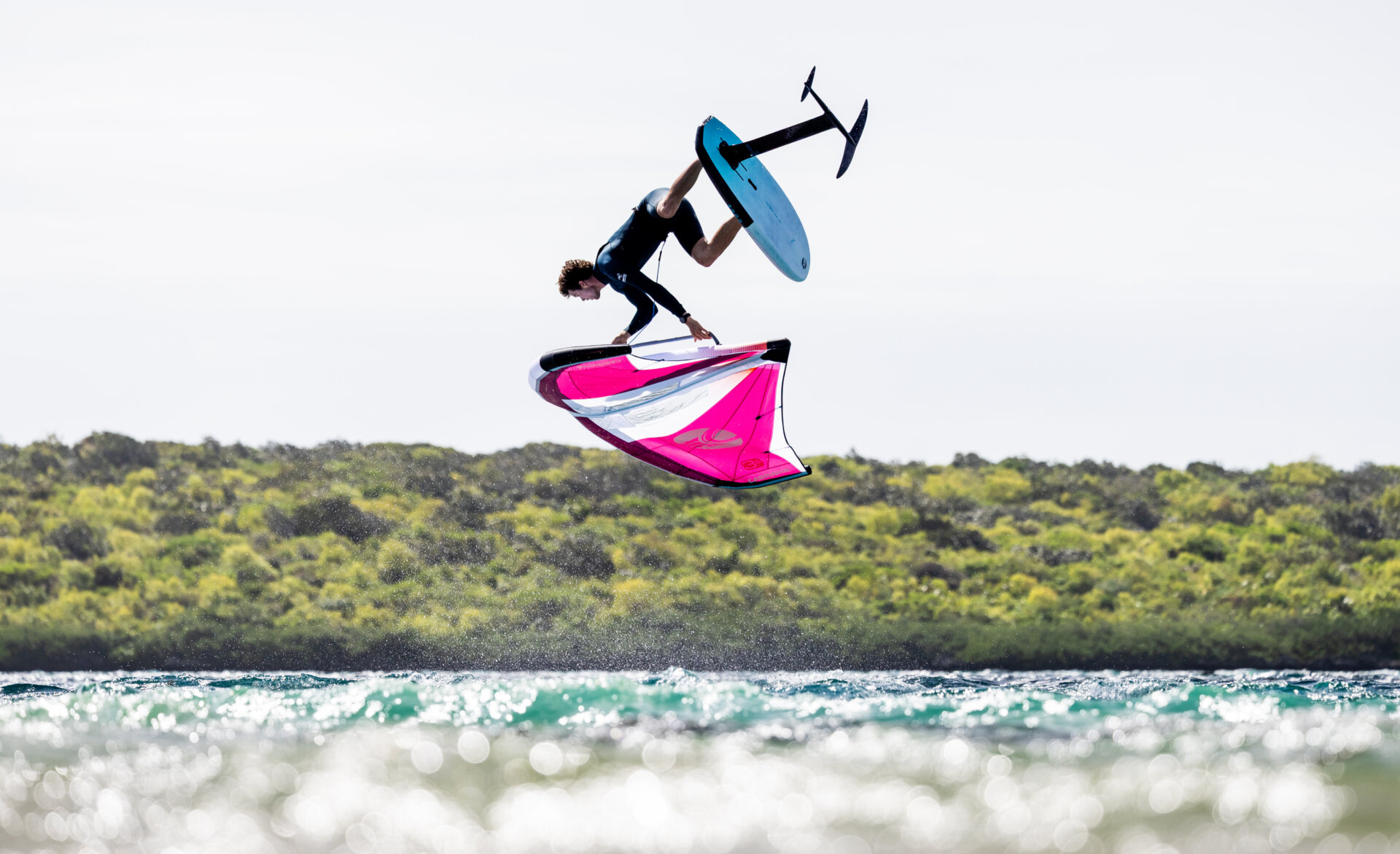
“My desert island foil is definitely the 960 Domani.”
Tuning The Union
The Domani also arrives as Cabrinha continues to expand the Union ecosystem around the front wings. I initially rode the 960 with Cabrinha’s 160 Monobloc tail so I could change as little as possible between the Prestige and Domani, but later swapping to the Tweaker tail system transformed the character of the foil again. The Tweaker allows riders to alter stabiliser angle using interchangeable shims and is available with different fuselage lengths. The shorter 340 setup sacrifices pitch stability in exchange for a dramatic increase in manoeuvrability, while Modica personally prefers the more forgiving 390.
“The 340 is definitely for the advanced guys,” he says. “I don’t even test with it because I think it’s such a narrow range. We’ve got pro riders on the team who test it and love that stuff. For me the 390 is as short as I’d ever go.” Cabrinha supplies the Tweaker with five shim settings. The standard blue option delivers a feel close to the existing Monobloc stabilisers, while increasing the angle produces more control and a looser, more snowboard-like turning sensation. Reducing the angle moves in the opposite direction, sacrificing pitch control for greater speed and glide.
Modica admits this level of adjustment will not appeal to everybody, and that is very much the point. “Some people buy the gear because they want to ride the gear. Some people buy the gear because they want to experiment. Some people enjoy the experimenting part as much or more than the riding part. I fall into that category.” For riders who want the result of that experimentation without constantly changing shims, another option is coming. During our conversation, Modica revealed a new Monobloc stabiliser called the Winglet. It uses the same 390mm fuselage length as the longer Tweaker but combines it with a different stabiliser profile and fixed angle. The idea is to deliver some of the additional control and manoeuvrability riders have discovered through experimenting with the Tweaker, but inside a cleaner and simpler Monobloc package.
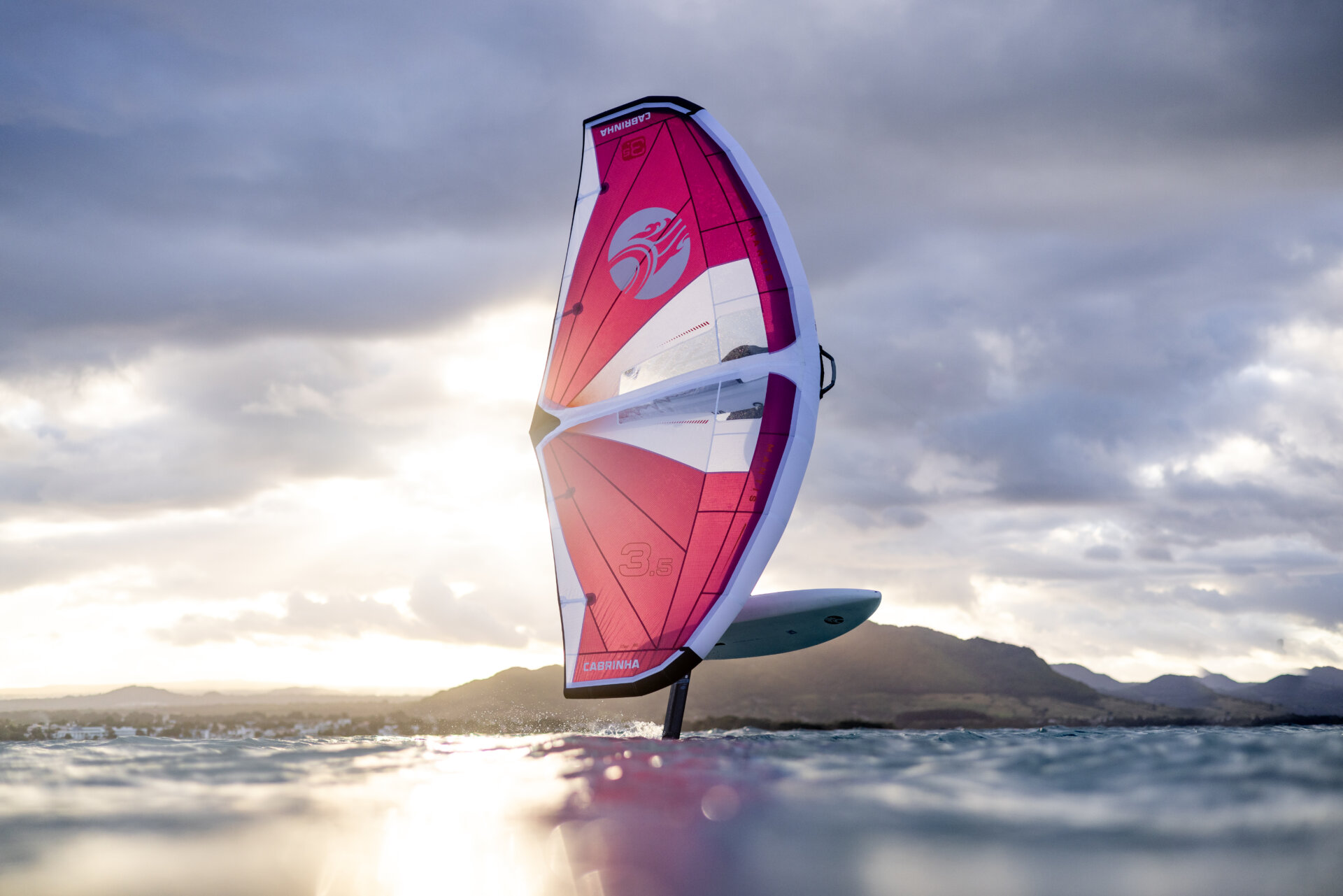
“There really almost feels like there’s a limitless top end.”
The Winglet will work across the entire Union range rather than being limited to the Domani. For someone looking for maximum stability, the existing Monobloc remains the straightforward option. Riders wanting complete control over setup have the Tweaker, while the Winglet will eventually occupy the middle ground for those who want a more manoeuvrable feel without constantly experimenting with shims.
Cabrinha Enters the Parawing Game
Perhaps the biggest indication of where Cabrinha sees foiling heading next is another new product entirely. The company is entering the parawing market, but Modica says the team deliberately resisted the temptation to rush something out simply because the category was exploding. “We didn’t rush into the parawing,” he says. “Certain brands rushed into it and really struggled, because a lot of people are making really good parawings. It’s not a product we’ve made before, so we really took our time and said, how do we do this right? How do we offer something that is very different for people?”
Cabrinha eventually partnered with Element, a company with extensive paraglider experience and a background producing some of the fastest race kites on the kite racing circuit. The project has been in development for more than a year. Rather than chasing extreme performance for expert riders, Cabrinha concentrated on three priorities: power, stability and upwind ability. “I wanted a really powerful, really stable wing that goes upwind well,” says Modica. “When you pump it, it pumps a little more like a natural wing where you can actually generate pull rather than relying on super-high advanced foiling skills to generate the lift for you.”
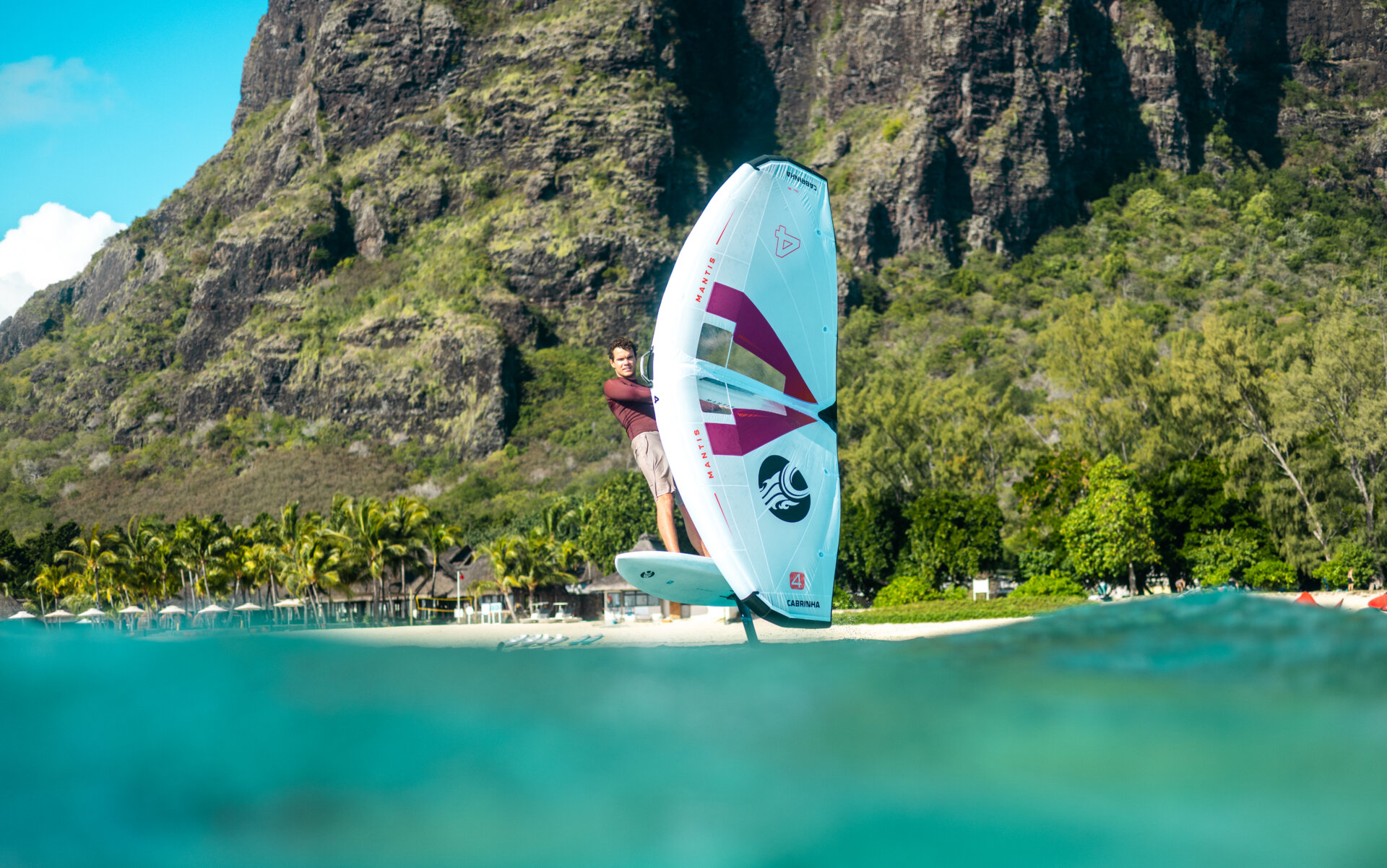
“Between a Prestige and Domani, two foils will go pretty much around the world.”
That philosophy makes considerable sense. The earliest parawings demonstrated the potential of the concept, but they also demanded considerable technique. As the category matures, making the equipment more intuitive could be far more important than adding outright performance. Cabrinha has also paid close attention to weight, with Modica showing us an all-carbon bar weighing roughly sixty grams, with no metal or plastic components and a thin EVA grip similar to the handles used on Cabrinha wings. “When you’ve got an alloy bar dangling from this super-light thing, it just makes no sense,” he says. “You lose all the feel.”
The new Cabrinha parawing is expected to arrive alongside the Domani, adding another component to an increasingly diverse foil range. What ties these launches together, however, is not simply technology. There is a clear change in philosophy taking place at Cabrinha. Modica is acutely aware of the pressures facing the watersports industry. Retailers have been forced to carry increasingly complicated ranges, consumers have become accustomed to heavy discounting, and the proliferation of different disciplines has fragmented spending across kiteboarding, winging, foiling, parawinging and everything in between.
His response is not to make more equipment for the sake of it, but to reduce duplication, keep ranges understandable and ensure each product has an obvious reason to exist. “We’re not going to do these ridiculously big ranges that retailers can never stock,” he explains. “We try to make our products really clear who they’re for and not just say, ‘It’s amazing, it’s the best thing ever, it’s for everybody.’” That is exactly why the Domani makes sense. It does not replace the Prestige, nor does it try to outperform it in the areas where the Prestige excels. If conditions are weak and you want maximum lift, effortless pumping and easy glide, the Prestige remains the obvious choice. If you have plenty of energy and want to convert it into speed, harder turns and greater control, the Domani takes over.
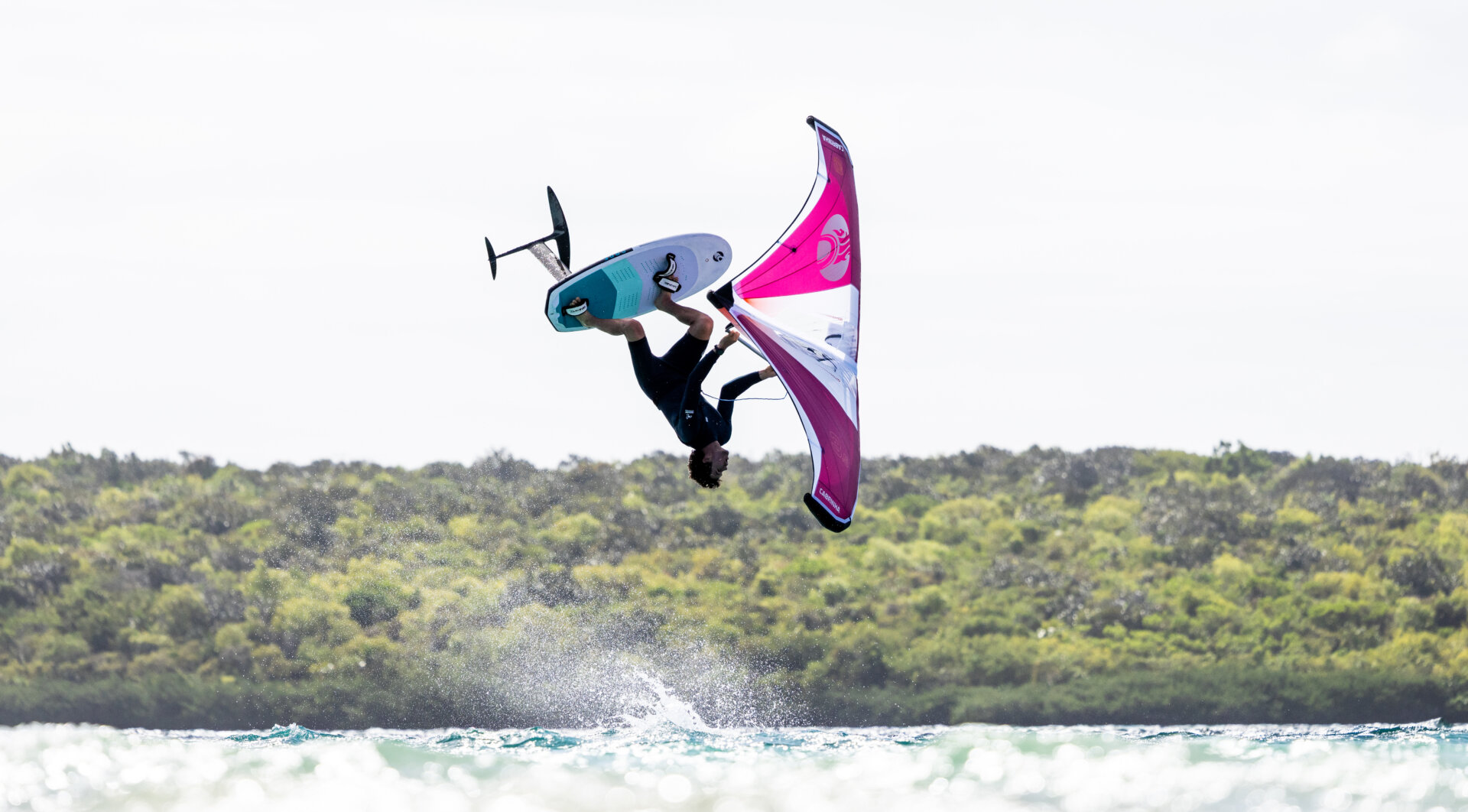
“Some people enjoy the experimenting part as much or more than the riding part.”
Likewise, the Whippet remains Cabrinha’s outright surf-oriented option. The Tweaker exists for riders who want to experiment, while the Winglet will offer a fixed solution for riders chasing more manoeuvrability. The new parawing brings Cabrinha into another rapidly expanding foil discipline, but again the emphasis is on usability rather than simply joining the trend. It feels like a more mature way of building a product range, and Modica believes that clarity is going to become increasingly important. “The people who will thrive will be the ones that offer product and services that best serve local retailers who support the ecosystem,” he says. “Without lessons, without local support, this is all for nothing.”
After riding the Domani over several different disciplines, the logic behind it is already becoming clear. The Prestige remains one of the easiest high-aspect foils I have used, and in weaker conditions it will still be the obvious choice. The Domani does not have that instant low-speed magic, but feed it enough energy, and it becomes something else entirely. It is faster, more composed and significantly more aggressive through a turn, while still maintaining enough glide and pumping ability to make it far more versatile than those characteristics might suggest.
For heavier riders especially, the 960 looks particularly interesting. It has the potential to cover winging, parawinging, prone foiling, downwinding and Foil Drive without constantly forcing you onto smaller front wings as conditions increase. More importantly, it feels like a foil built around where the sport is heading rather than where it has already been. Cabrinha called it Domani because it means tomorrow, and after spending time on it, you can see why.
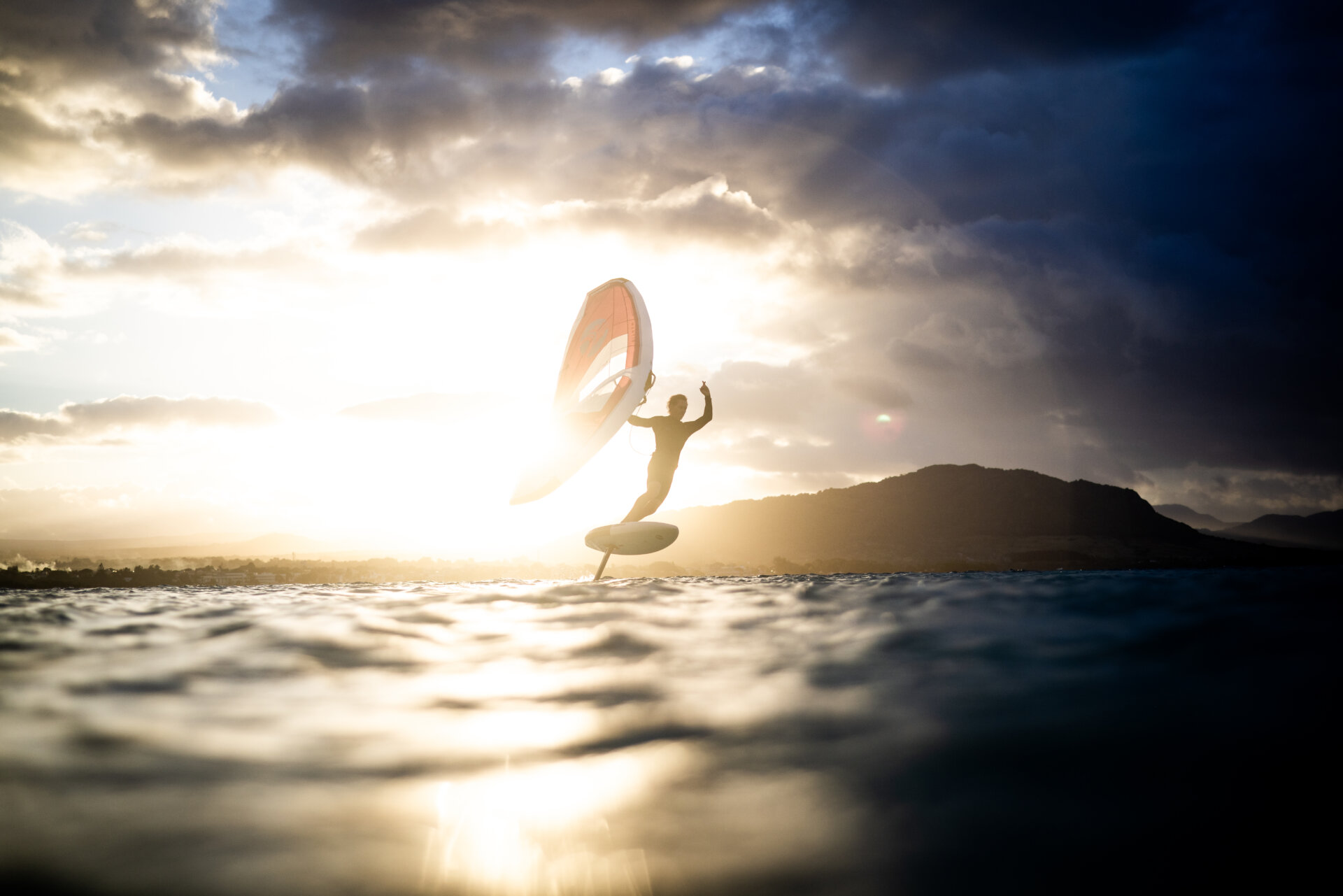
“We didn’t rush into the parawing. We really took our time and said, how do we do this right?”