

Features
Into The Deep South: Guy and Emma Bridge on The Home of Armstrong Tour
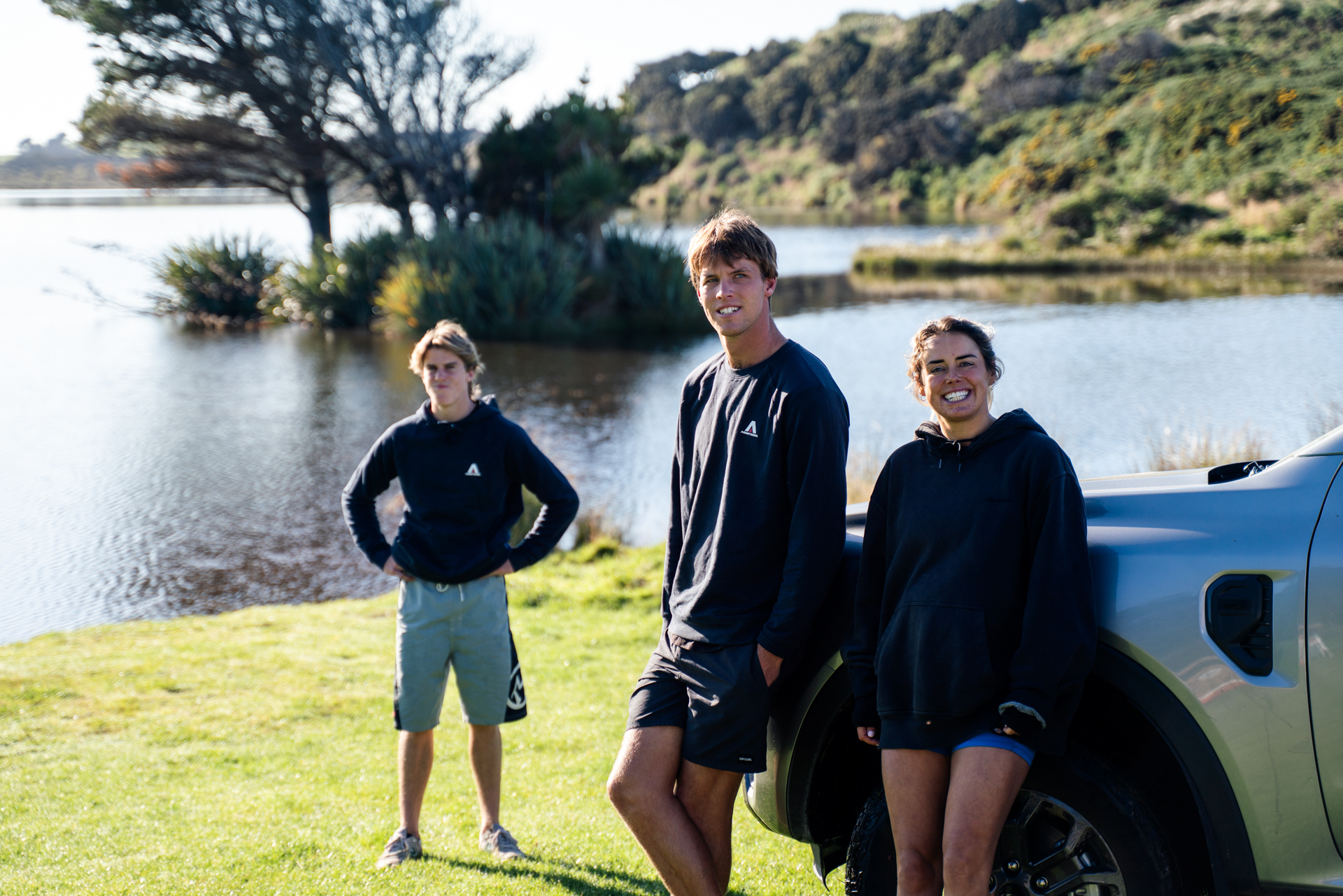
The Home of Armstrong films have always been about more than simply putting good riders in front of good waves. New Zealand is an intrinsic part of the brand, and the films tap into that connection by bringing together riders from across the Armstrong team and sending them into some of the country’s more remote corners. For the latest instalment, that meant heading deep into New Zealand’s South Island, with Guy and Emma Bridge joining the crew for their first taste of the country.
We caught up with Guy and Emma shortly after the film was shown at the Kernow Foil Classic, where they had both been competing while simultaneously navigating life with their new daughter, Nina. The trip itself had taken place earlier in the year, with Emma around five months pregnant at the time, adding another dimension to what was already going to be a fairly serious mission.
For Guy and Emma, it was also their first major Armstrong production since joining the brand, and an opportunity to experience the New Zealand roots behind the company first-hand.
Joining Armstrong
Guy’s route onto the Armstrong team was surprisingly informal. He had previously been riding for another brand when a chance meeting with Armstrong CEO Nathan Armstrong in Cornwall eventually led to a message asking if he would be interested in joining the team.
Leaving wasn’t an easy decision, but the move subsequently opened the door for Emma to join Armstrong too, and with it came the opportunity to ride for one of the biggest foiling companies on the planet and travel to New Zealand.
“We’d always had New Zealand on our bucket list,” Guy explains. “When we’ve done the Western Australia trips, we’ve always thought about extending them and going to New Zealand, but you can imagine the amount of gear we travel with. Logistically, it’s never easy.”
“We described New Zealand as the UK on steroids.”
When the invitation came through to join the Home of Armstrong shoot, however, they decided to turn it into a proper trip. Rather than simply flying in for filming, Guy and Emma spent time exploring the North Island before heading south to meet the rest of the Armstrong crew.
They arrived without much of a brief. There was no detailed shot list or tightly scripted schedule waiting for them. They were essentially given a time and a place, told the production would be based in the South Island, and asked to get themselves there.
That loose approach would ultimately become an important part of the film.
“You feel like we didn’t even scratch the surface.”
Heading South
After a couple of weeks exploring the North Island, Guy and Emma flew into Queenstown before travelling further south with the Armstrong team. It was here that the scale and remoteness of the trip really began to sink in.
“There was a buzz around the fact that we weren’t just going to the South Island, but right down into this deep south area,” says Emma. “It really hadn’t been explored that much from a foiling point of view. It’s just so wild and so remote. You hardly see anyone.”
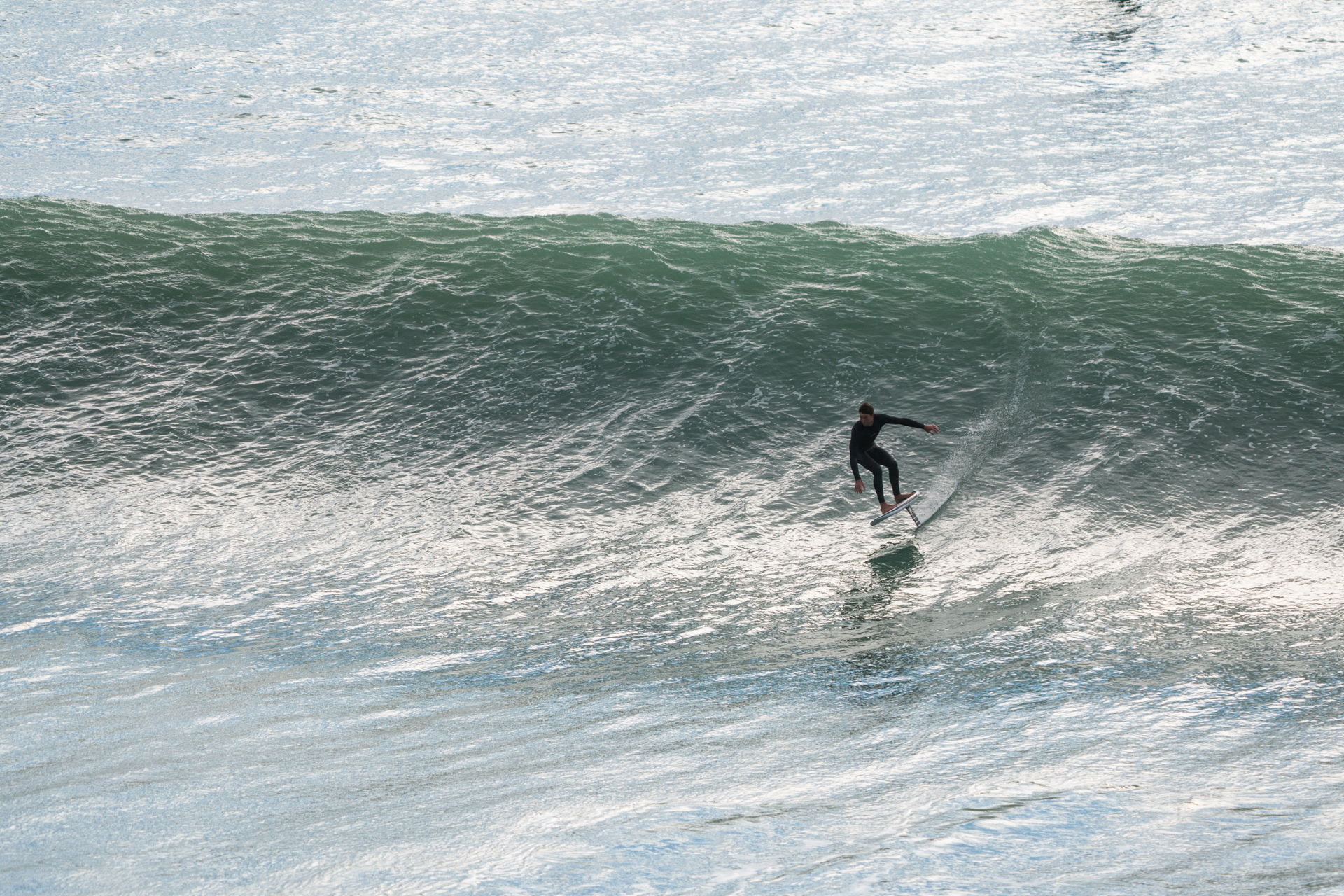
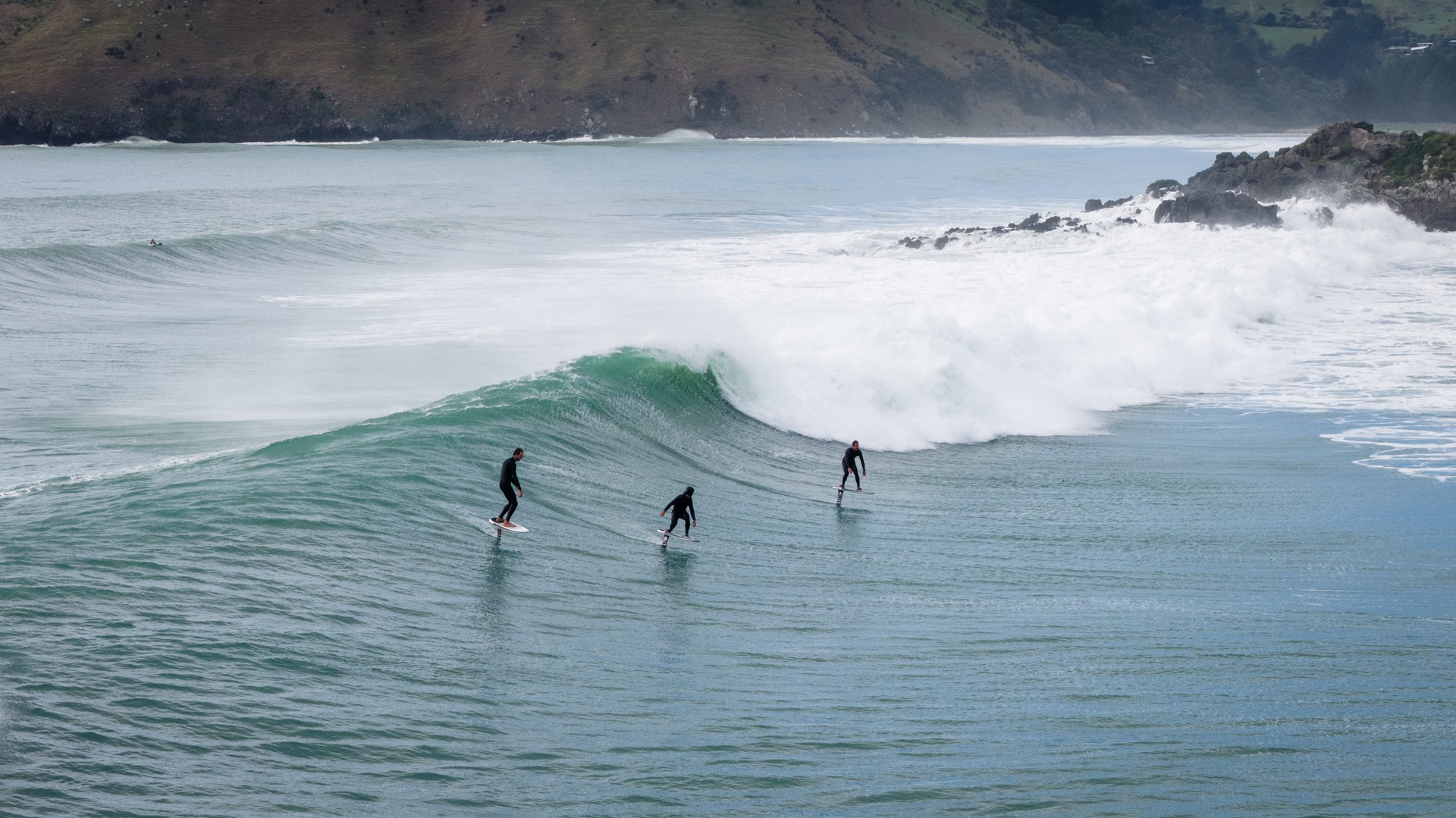
The landscape plays a significant role in the finished film. Huge stretches of empty coastline sit beneath intensely green hills, with cold blue water and Southern Ocean swell arriving on an exposed coast that feels a long way removed from the more familiar foiling destinations around the world.
For two riders accustomed to the UK coastline, there was something strangely familiar about it too.
“We described New Zealand as the UK on steroids,” says Guy. “The weather felt similar, the water temperature was similar, and in some ways it reminded us of Cornwall. But everything was just a bit heavier and a bit more gnarly.”
The Deep South is exposed to a huge amount of ocean energy, and although the crew arrived beneath a relatively stable band of high pressure, there was no shortage of swell. Guy reckons two metres is almost a baseline in some of the areas they visited, and with jet skis available, the team could look beyond the waves that were accessible under paddle power.
“It’s just so wild and so remote. You hardly see anyone.”
That opened up an entirely different side of the trip.
Beyond Paddle Power
Guy and Emma are no strangers to big conditions, but towing is not something they get to do regularly at home. In New Zealand, the skis gave them access to waves that would have been extremely difficult, if not impossible, to paddle into on a foil.
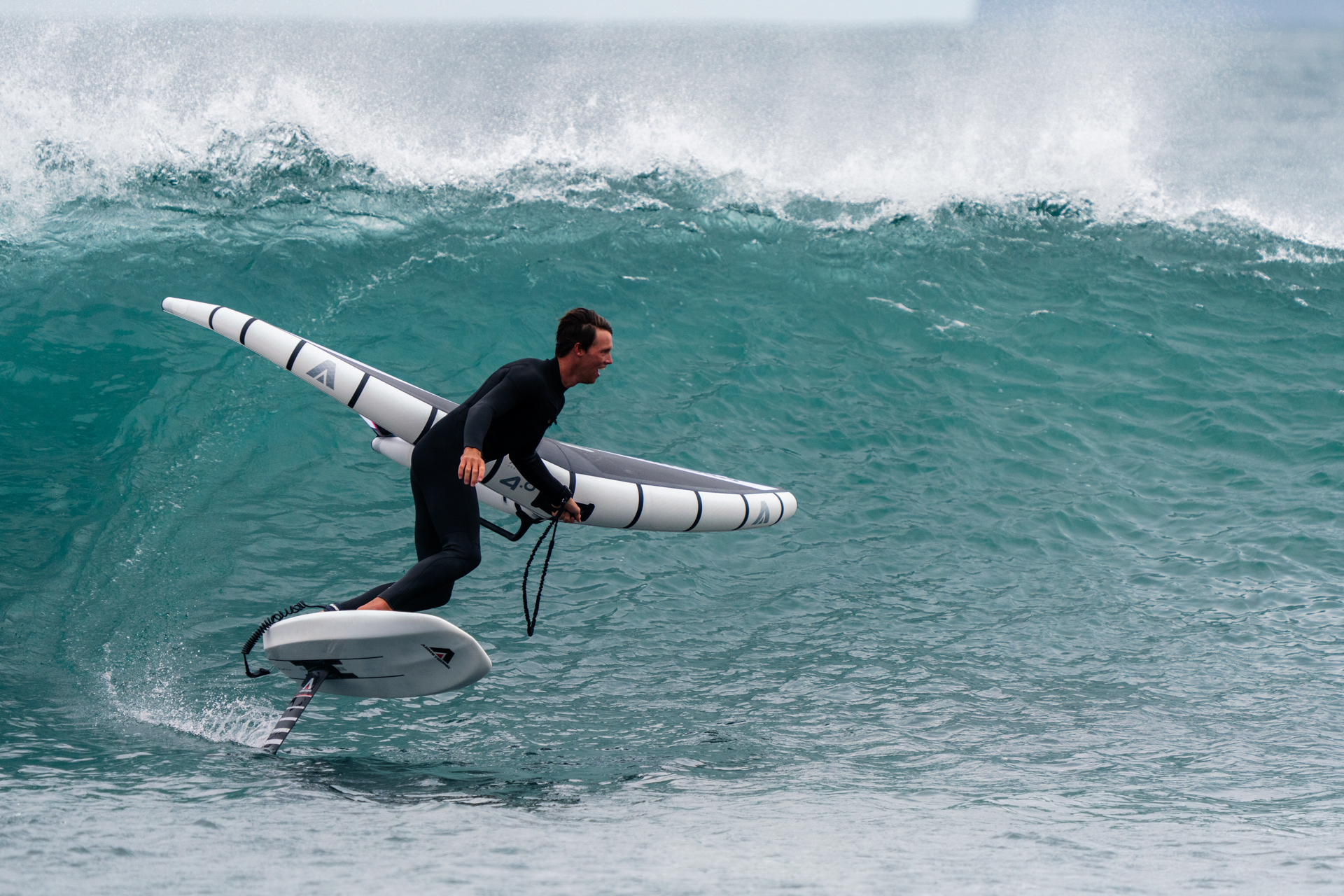
“We had some really good towing and some really slabby waves,” says Guy. “We hadn’t done that much towing, especially in those kinds of conditions, so it was really exciting.”
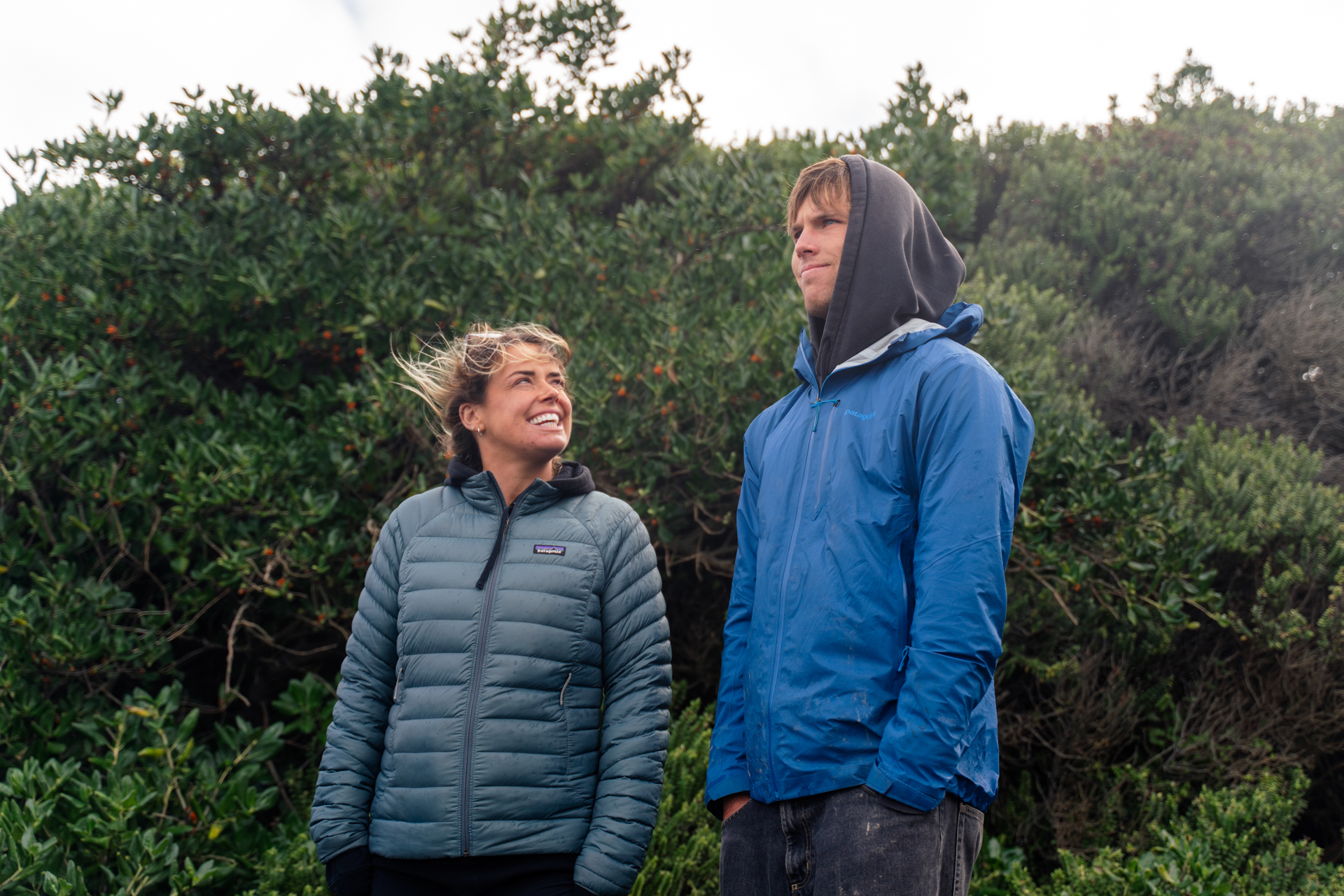
“Coming from the UK, half the time you’re battling with chop and everything else.”
The combination of unfamiliar waves, kelp, serious ocean swell and New Zealand’s reputation for sizeable marine life ensured there was no shortage of adrenaline. At one spot, appropriately nicknamed Dinner Plate, six or seven riders were sharing a couple of skis, inevitably leaving plenty of time sitting in the water waiting for the next tow.
The sharks stayed away, but the wildlife certainly didn’t.
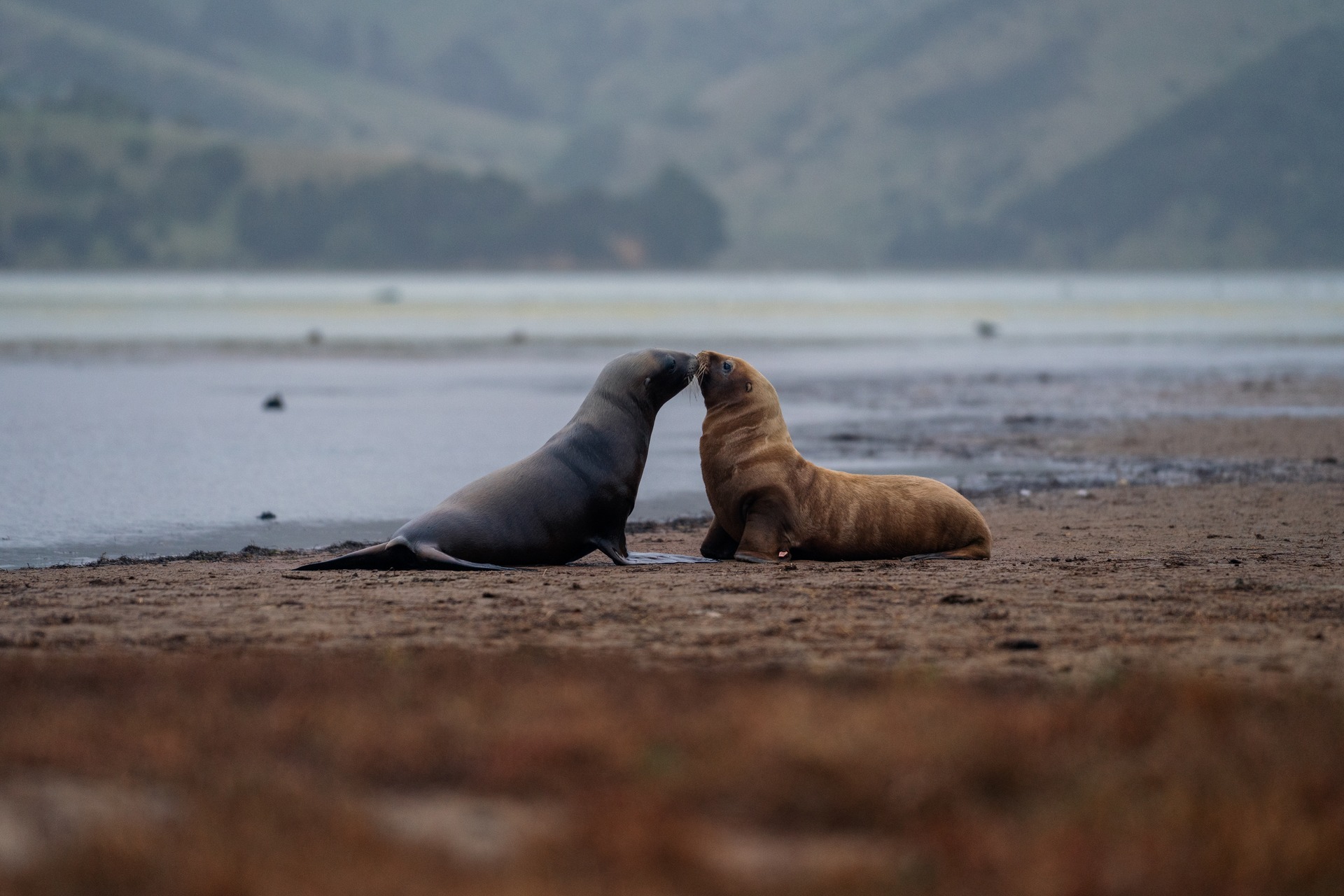
Sea lions, seals, elephant seals and penguins became regular companions during the trip. At one wing spot, large sea lions were sunning themselves on the rocks before entering the water alongside the riders, making falling near them considerably less appealing.
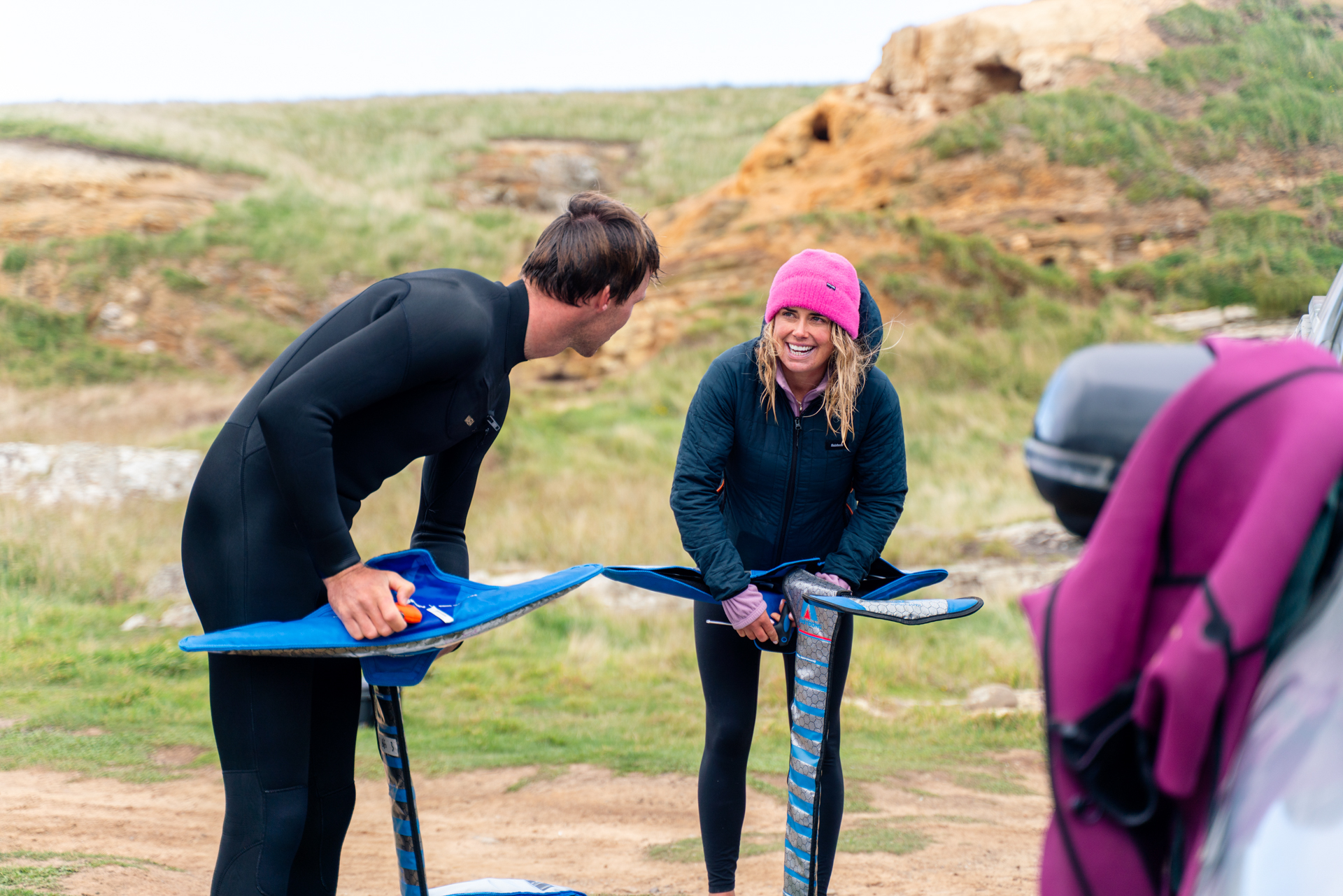
“When everyone is at that level, it’s really nice to watch the different riding styles.”
“The wildlife was probably the most unexpected part,” says Emma. “There were penguins on the beach in the mornings heading back into the sea, sea lions randomly lying on beaches and elephant seals. There was just so much wildlife.”
For all the potential ingredients for disaster, however, the trip was remarkably drama free. No destroyed rental vehicles, major jet ski disasters or serious injuries, although Guy admits Cash Berzolla appeared to spend a fair amount of time operating somewhere close to the edge.
The Value of Local Knowledge
The real key to unlocking the area was a local rider named Nick. In a coastline governed by tides, swell direction, shifting banks and access through private farmland, his knowledge proved invaluable.
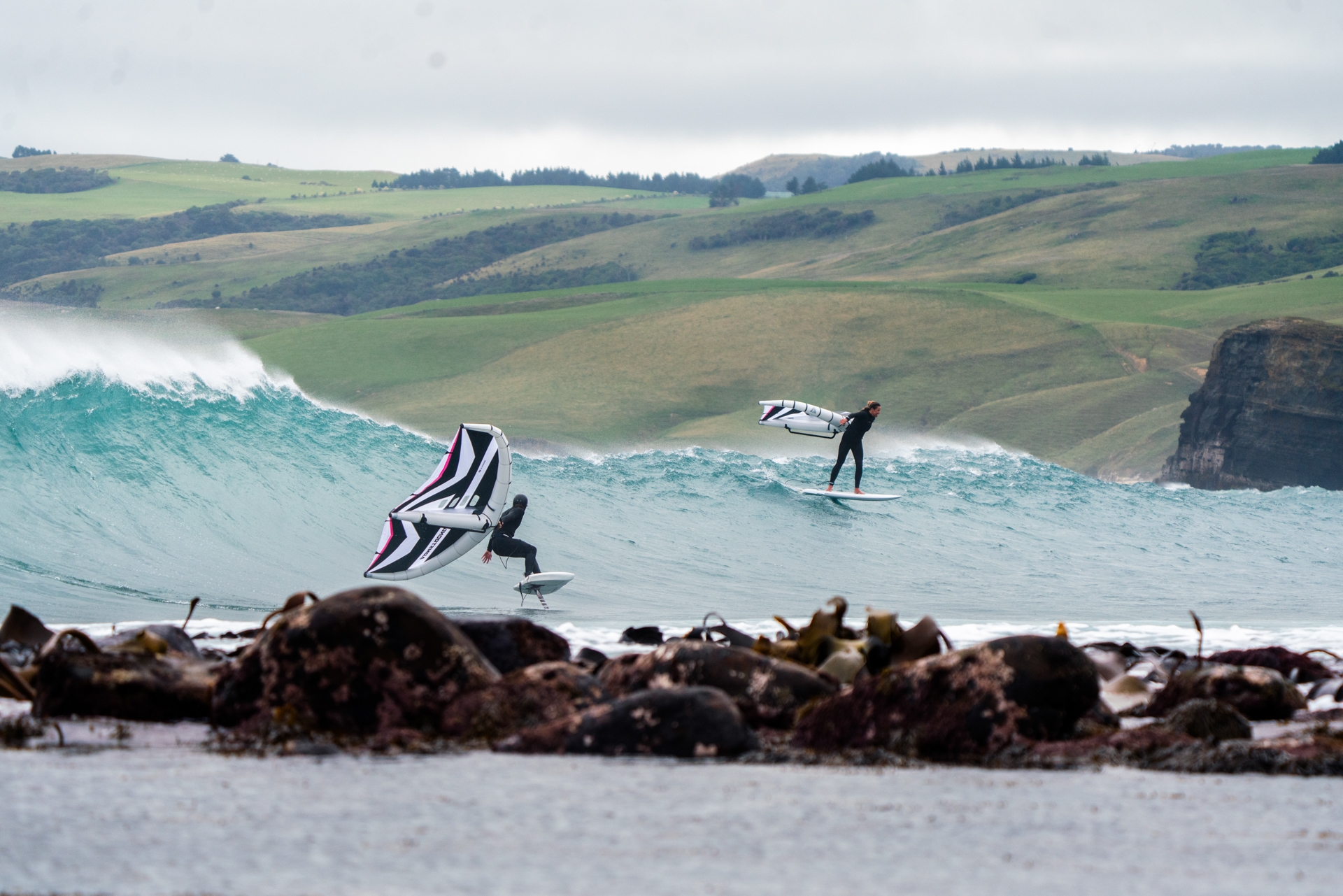
“You could probably be there for six months and still not scratch the surface.”
“He was so on it,” says Emma. “He’d suddenly say everyone needed to be ready in an hour, then he’d head off with the ski. He knew exactly when everything was going to work.”
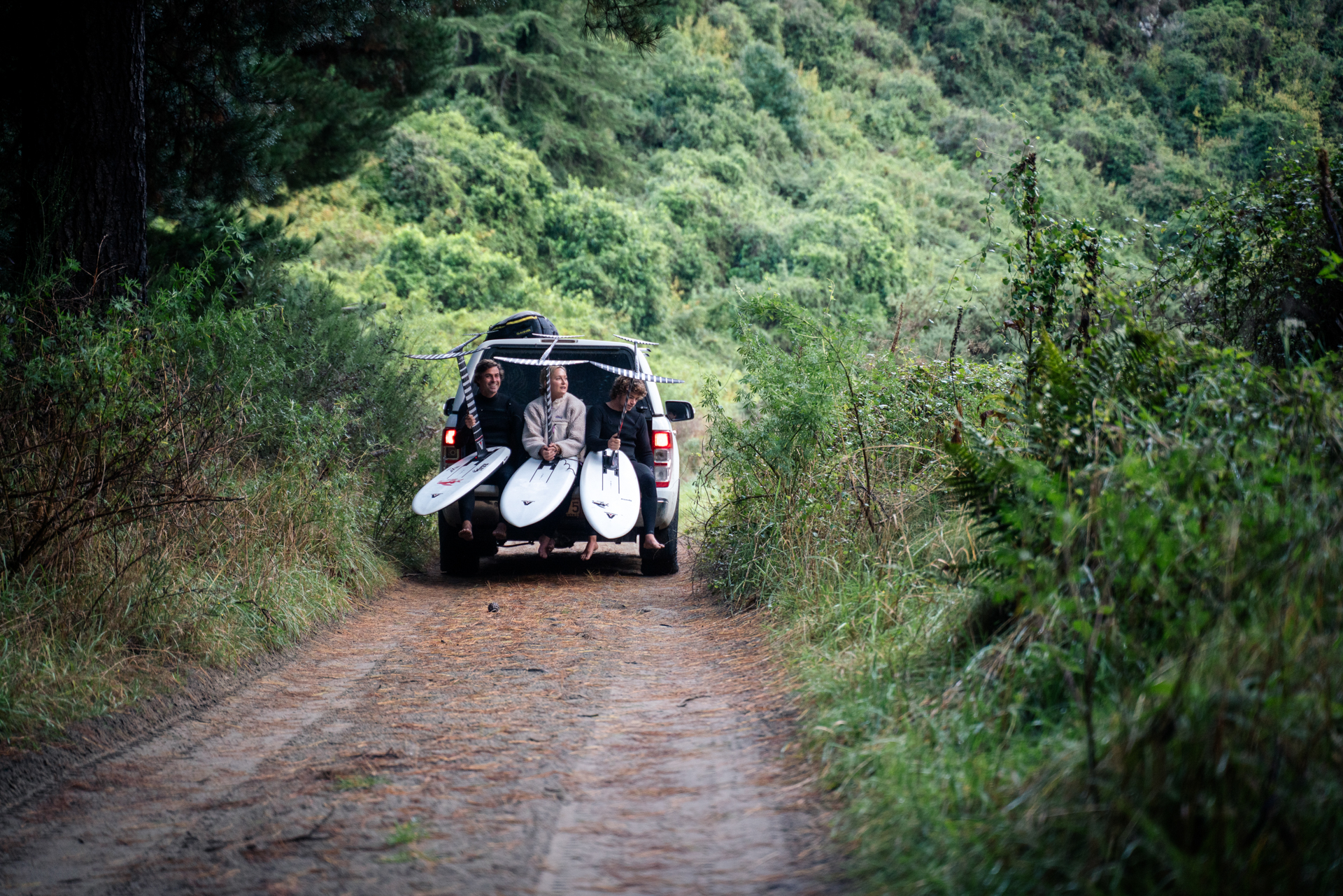
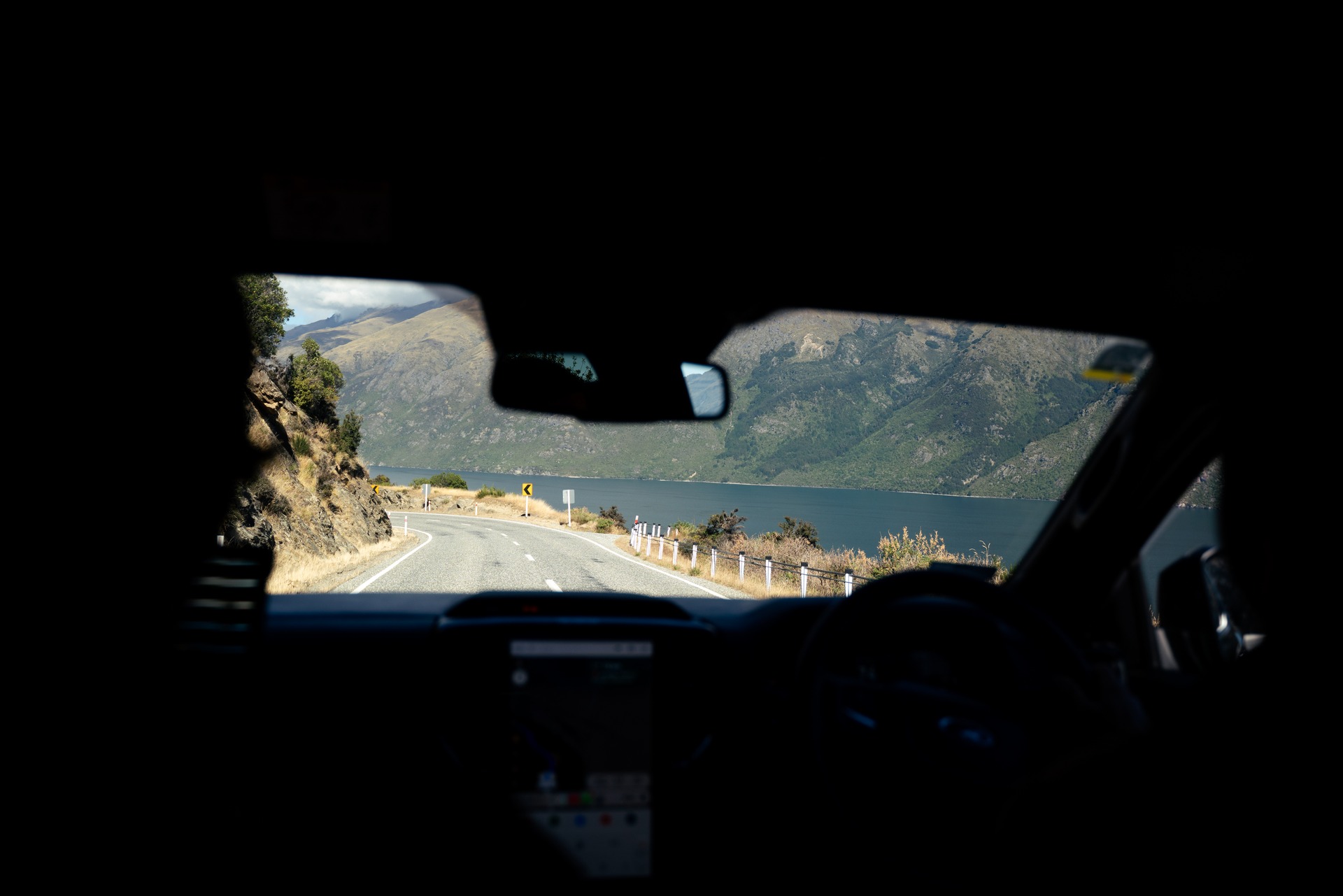
Some sessions involved driving through farmland after Nick had arranged access with local landowners, crossing fields and trekking through dunes before arriving at waves the crew would have had little chance of finding independently.
For Guy, it highlighted something familiar to anyone who has travelled extensively in search of waves. Finding a spot on a map is one thing; understanding when it actually works is another entirely.
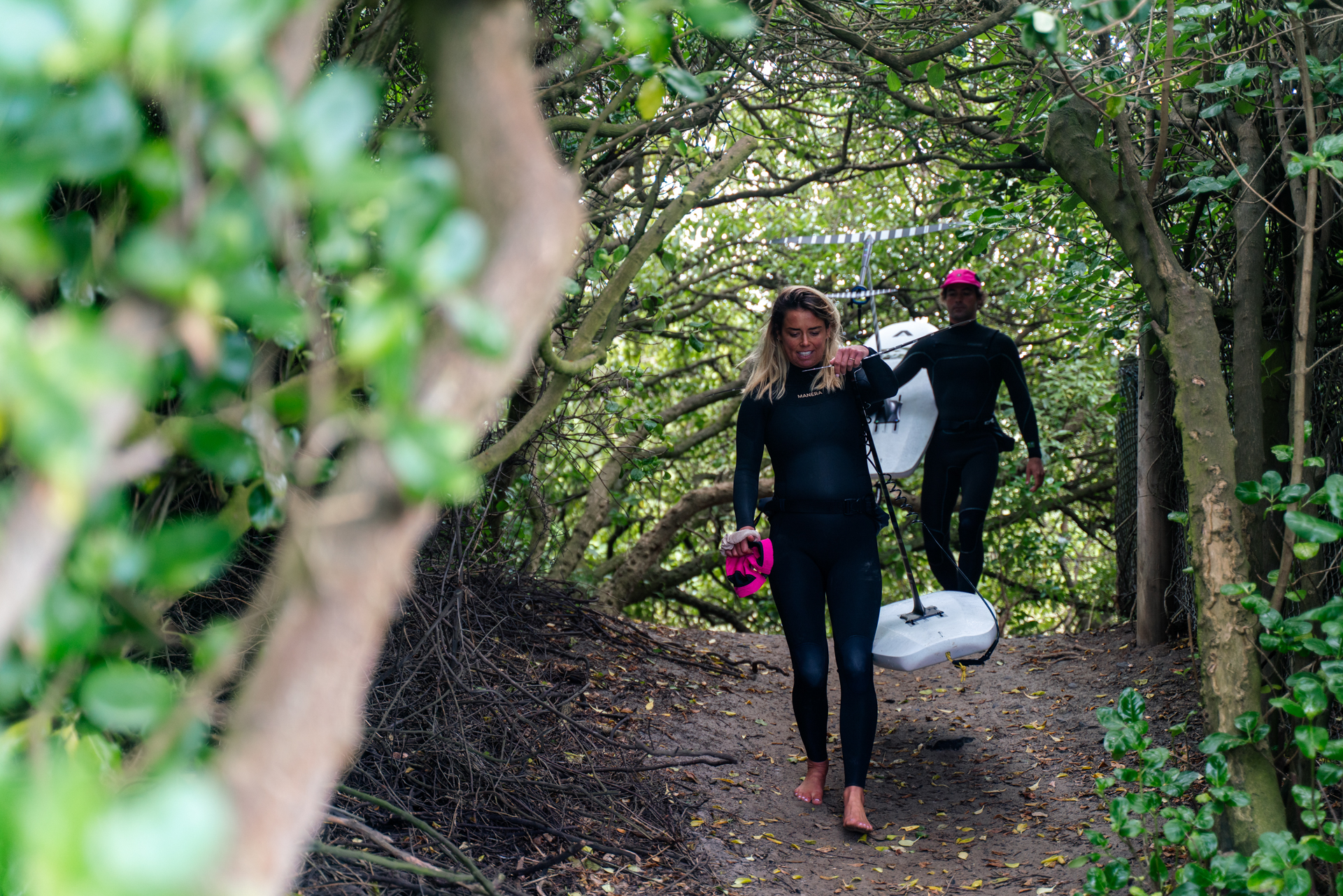
“Going to those world-class conditions really showcases your skills.”
“You know what it’s like when you go somewhere new,” he says. “It takes time to dial in what you’re actually doing there. If someone came to Cornwall or Pembrokeshire, they could easily miss all the good conditions. Having a local there helping with the spots and knowing exactly when everything worked made such a difference.”
It also allowed the relatively small production crew to make the most of every opportunity. Slater, who has worked extensively with Armstrong and filmed previous Home of Armstrong projects, handled the moving images and drone work, while photographer Oscar captured the stills. It was a compact operation considering the scale of the finished film.
Riding With The Team
Bringing so many talented riders together inevitably lifted the level on the water. Cash Berzolla was an obvious standout for Guy and Emma, but they were equally impressed by the different approaches across the wider team.
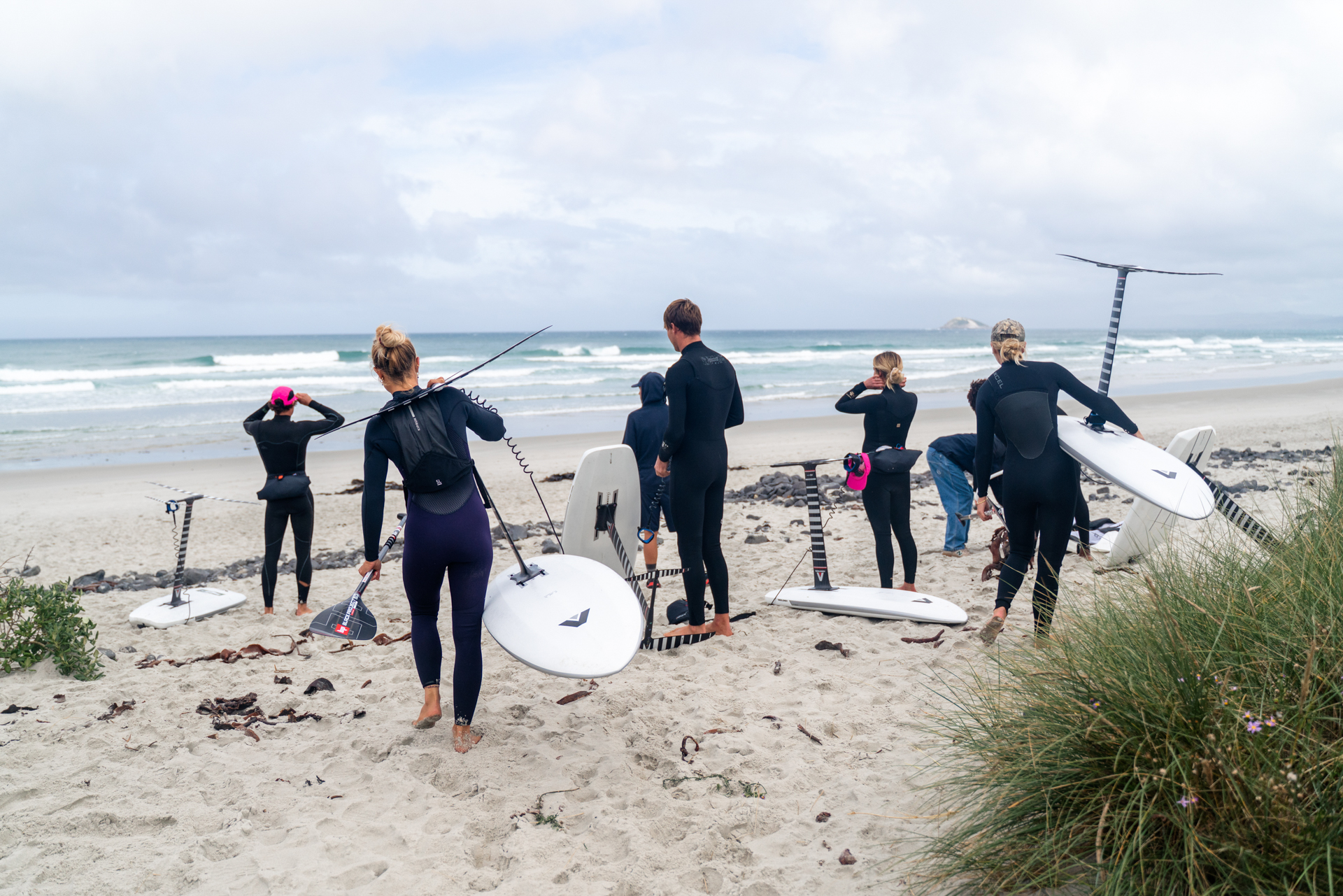
“Having a local there helping with the spots and knowing exactly when everything worked made such a difference.”
Zany Guy brought his own style from Cape Verde, while Annie Reickert and Naumi Burrell were among the riders Emma particularly enjoyed watching. James Jenkins added another dimension with strapped riding and aerial manoeuvres.
“When everyone is at that level, it’s just really nice to watch the different riding styles,” says Emma. “I loved watching Annie ride because she really puts herself in the section. It makes you think that you need to push yourself harder. Naumi’s riding style is just beautiful too.”
Being surrounded by that level of riding had the desired effect. Rather than simply performing for the cameras, the riders began feeding off one another, particularly when the conditions lined up.
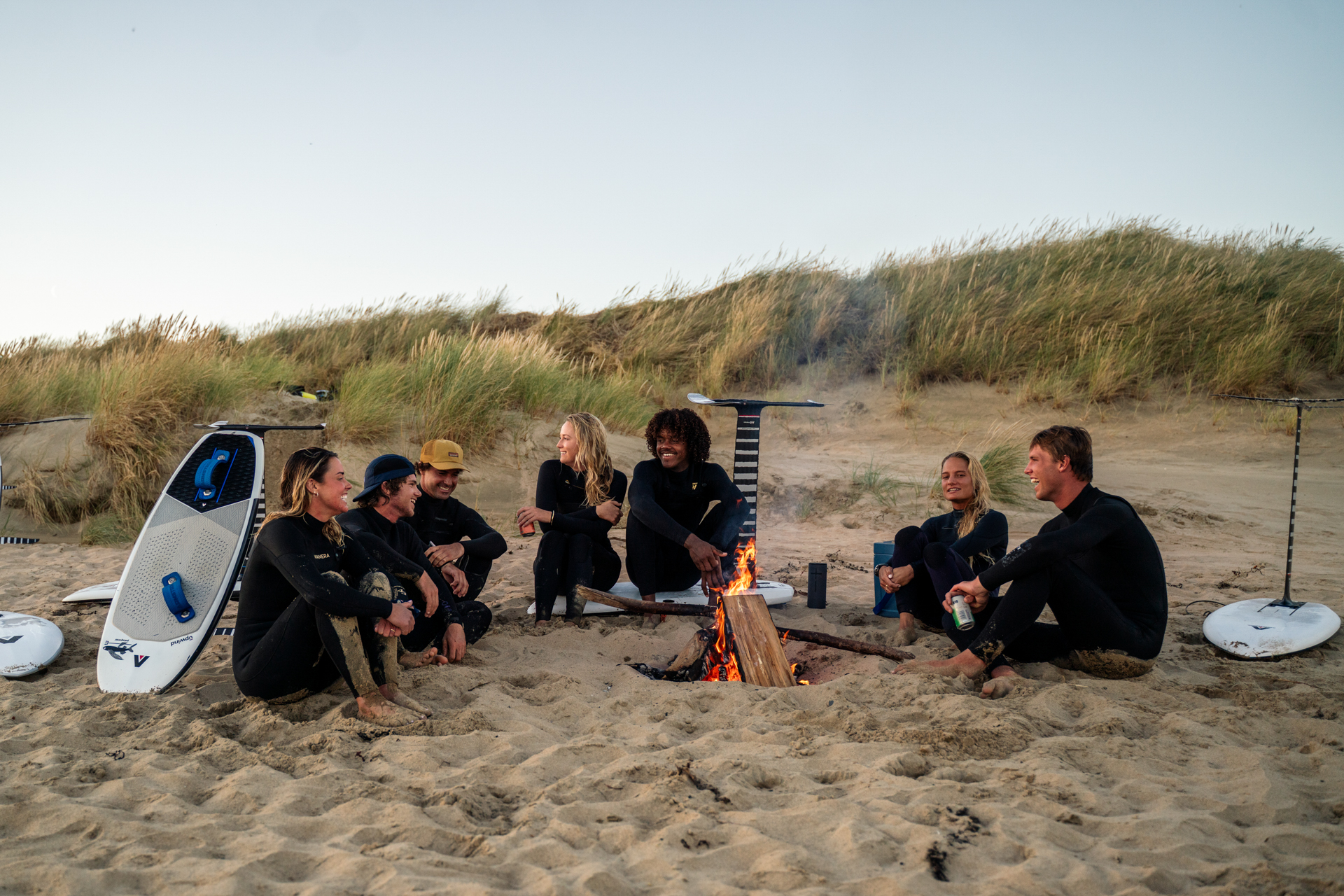
“Towing into those waves was something we’d never normally get access to.”
Guy believes that is one of the advantages of bringing an international team into genuinely world-class conditions. Riders who spend much of the year battling inconsistent wind, beach breaks and difficult conditions suddenly find themselves presented with clean faces, powerful swell and the means to access waves they would rarely encounter at home.
“It really showcases what you can do,” he says. “Coming from the UK, half the time you’re battling with chop and everything else. Then you get onto a really nice clean face and it’s beautiful to foil.”
Five Months Pregnant And Still Charging
There was another factor making Emma’s performance on the trip particularly impressive. By the time filming began, she was around five months pregnant with Nina.
“The whole area is just so wild, you feel like there are waves everywhere.”
Armstrong already knew before the trip, and there was no pressure for Emma to ride beyond what felt comfortable. As it turned out, she still managed to get involved in plenty of the action, including some sizeable waves.
“I told Armstrong when we were in Australia, before we got home,” she explains. “They were just like, ‘It would be great to have you there. If you feel comfortable, just do whatever.’”
Emma adapted her equipment and technique throughout her pregnancy, moving onto larger foils and changing the way she got onto her boards as her body changed. For downwinding and waves she moved onto a 970 UHA, rather than the 670 or 770 she might ordinarily have ridden.
“Being towed into those waves was next-level adrenaline.”
The result is that Nina technically completed her first Home of Armstrong trip before she was even born.
It also says something about the way Guy and Emma approach life on the water. Nina is now very much part of that routine rather than a reason to abandon it, as anyone who watched the pair juggling competition heats and parenting duties at the Kernow Foil Classic will have noticed.
The Home Of Armstrong
Before heading south, Guy and Emma had also spent time around Armstrong’s New Zealand base north of Auckland, giving them a closer look at the development side of the company.
“Everyone was frothing to be on the water all the time.”
For a brand so closely associated with New Zealand, it was an important part of understanding where the equipment and ideas originate. The Armstrong crew divide their time between New Zealand and manufacturing operations in China, and when they are home, much of that time is spent testing.
Chris, one of Armstrong’s designers, and John O’Connell were among those riding with them on the trip, blurring the line between product development, riding and work.
“They’re just so full-on testing when they’re back in New Zealand,” says Guy. “They’re really involved in the riding and making the gear as good as it can be. It was cool to see the different things they’re working on.”
That connection between the people making the equipment, the athletes riding it and the landscape in which much of it is developed is ultimately what gives the Home of Armstrong concept its identity. This isn’t simply a team trip transported to an exotic destination. New Zealand is part of the Armstrong story.
For Guy and Emma, three weeks was nowhere near enough.
“You feel like we didn’t even scratch the surface,” says Guy. “You could probably be there for six months and still not scratch the surface. There are so many nooks and crannies and incredible spots.”
With thousands of kilometres of coastline, radically different conditions between the east and west coasts and vast areas that remain relatively unexplored from a foiling perspective, there is plenty left for another trip.
For now, though, the latest Home of Armstrong film offers a glimpse of what happens when a seriously talented group of riders heads into one of New Zealand’s wildest corners with skis, foils, cameras and a local who knows exactly where to look.
And if Guy and Emma get their way, it certainly won’t be their last visit.