
Turning Up The Speed
Parawing design is evolving at an extraordinary rate. What began as a simple way to access swell and then pack the power source away has rapidly developed into a much broader discipline. Riders are going further, pushing harder upwind, using smaller and faster foils, and increasingly asking more from the parawing before they stash it.
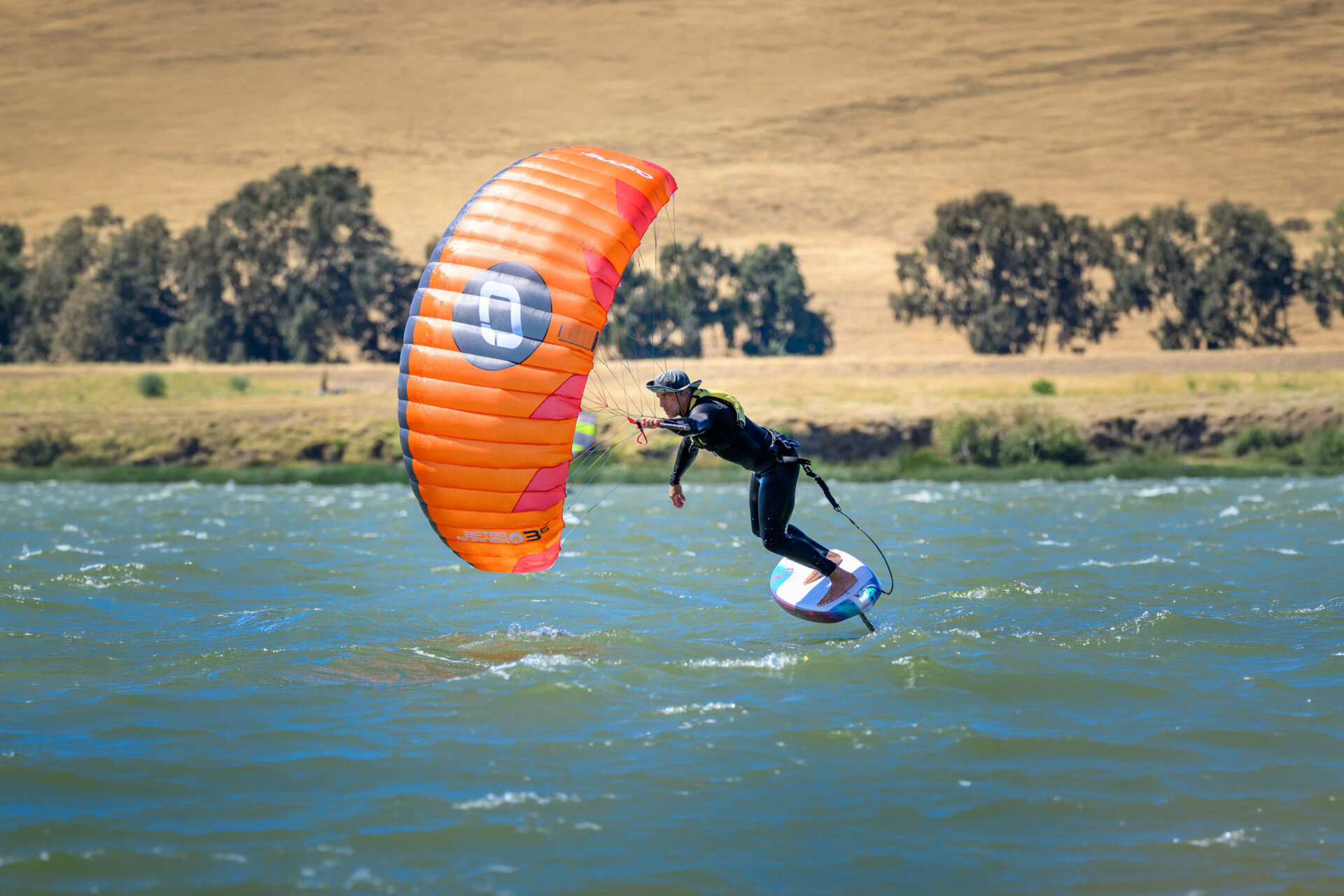
The new Ozone Afterburner has been developed specifically around that progression. Rather than focusing purely on making a parawing as compact and easy to stash as possible, Ozone has pushed aerodynamic performance much further, creating a high-aspect design intended to deliver significantly more speed, top-end control, and upwind ability.
It is an interesting direction because it could change how a parawing is used. If you can efficiently cover serious distance upwind before packing the wing away, suddenly the downwind run doesn’t necessarily need another vehicle waiting at the other end.
Performance Before The Stash
The fundamental compromise with any parawing is relatively simple. You want enough structure and aerodynamic efficiency to generate useful power, but everything eventually needs to disappear into a small package while you’re riding the swell.
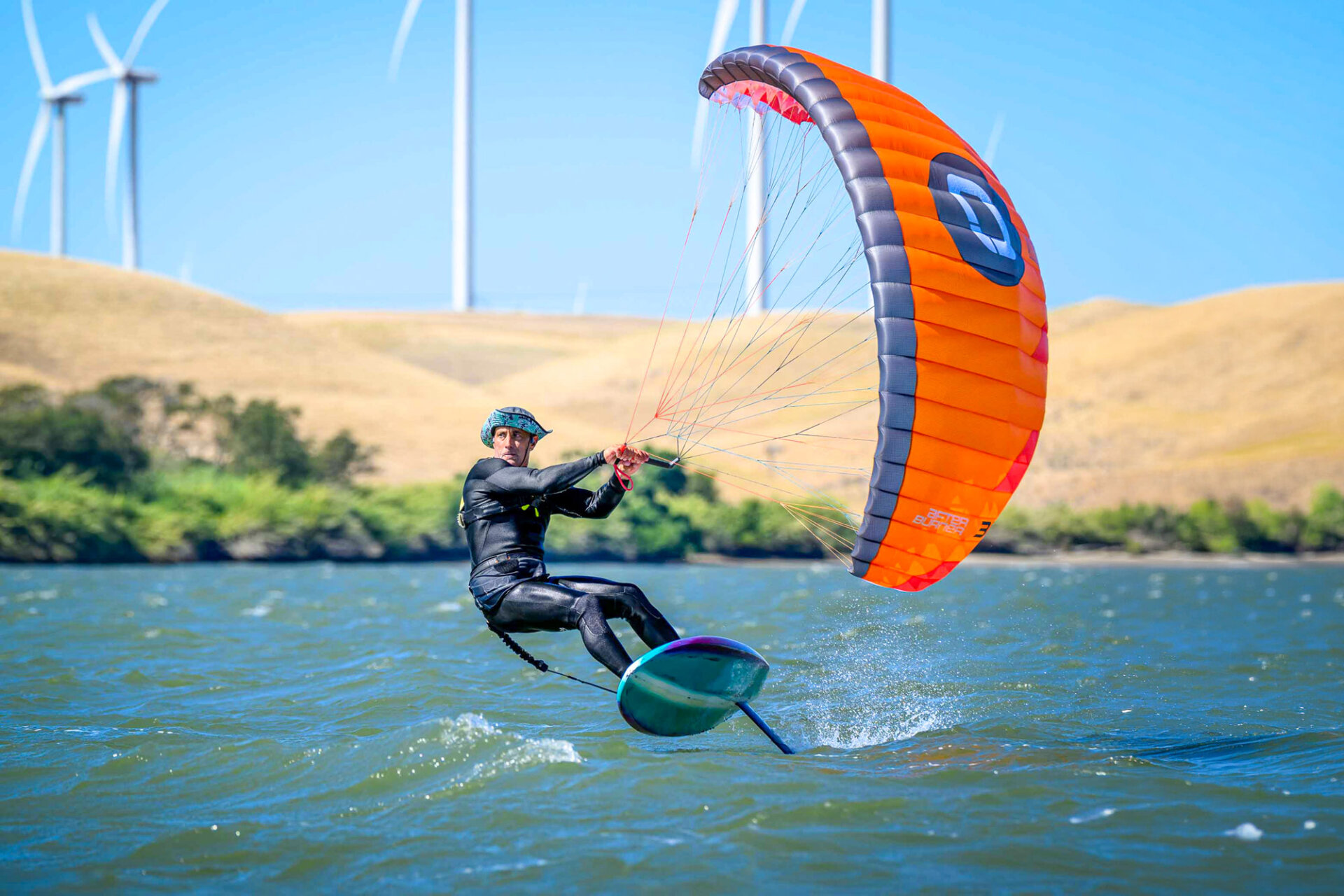
With the Afterburner, Ozone has deliberately moved that compromise towards aerodynamic performance. The high aspect shape is combined with an increased cell count and fully supported rib structure, allowing the designers to distribute loads more evenly through the canopy and maintain a cleaner aerodynamic profile when the wing is powered.
That matters increasingly as riders begin using faster hydrofoils. At higher speeds, a parawing that distorts or begins to lose its shape can quickly become the limiting factor. The Afterburner is designed to remain composed as the apparent wind builds, allowing the rider to load the foil harder without the canopy becoming unstable.
“A parawing capable of travelling efficiently upwind begins to change the equation.”
Ozone claims the low end remains comparable to the Pocket Rocket V2, but the Afterburner is designed to distinguish itself at the other end of the wind range. Rather than simply hanging on as the wind increases, the idea is that the additional aerodynamic efficiency allows the rider to convert that power into speed and a higher upwind angle.
Multiple kite race world champion Johnny Heineken has already been exploring that performance using the 4.3m with a 625 race foil.
“Using the 4.3m Afterburner with a 625 race foil definitely gave me the feeling of kiting with efficient race gear. I was riding full power all around the bay. Super fun. The smaller designs should be totally insane!”
“Afterburner feels like a mix between a foil kite, wing and a parawing.” - Dom Zimmermann
Borrowing From The Race Department
There is a fairly obvious reason Ozone has been able to explore this direction. Long before parawings appeared, the company had accumulated decades of experience designing foil kites, competition paragliders, and high-end kite race equipment where reducing drag and maintaining an accurate aerofoil under load are fundamental to performance.
The Afterburner effectively brings some of that thinking into the parawing world.
Lead designer Dom Zimmermann explains that this background played a significant role in the development process.
“With our 25 years of experience in creating race & competition paragliding and kitesurfing equipment, we were eager to explore what could be transferred into a parawing design without sacrificing bottom-end performance or stashability.”
The resulting design isn’t intended to be a pure racing product. Ozone R&D rider Axel Mazella used the Afterburner’s performance to win races at the 2026 Défi Wing, but Zimmermann is clear that the ultimate goal is a fast freeride parawing rather than an uncompromising competition machine.
“The Afterburner feels like a mix between a foil kite, wing and a parawing and we stayed true to our ‘Accessible performance is true performance’ motto.”
“I was saving gas on the Afterburner yesterday!” - Jon McCabe
The bridle has also received considerable attention. Thin Kevlar lines are used in the upper sections to reduce aerodynamic drag, while thicker, stiffer lines are retained through the mid-level bridle and risers. Those larger lines are less prone to tangling and easier to manage during stashing and deployment, so once again the design balances aerodynamic performance against the practical realities of using a parawing on the water.
Upwind To Go Downwind
Perhaps the most interesting consequence of the Afterburner’s design is not outright speed, but what that efficiency allows you to do with a session.
Downwinding normally involves logistics. Someone needs to drive, vehicles need to be shuffled around, or riders need to organise transport back to wherever they started. A parawing capable of travelling efficiently upwind begins to change that equation.
“It’s the parawing I’ve always wanted.” - Cynbad Brown
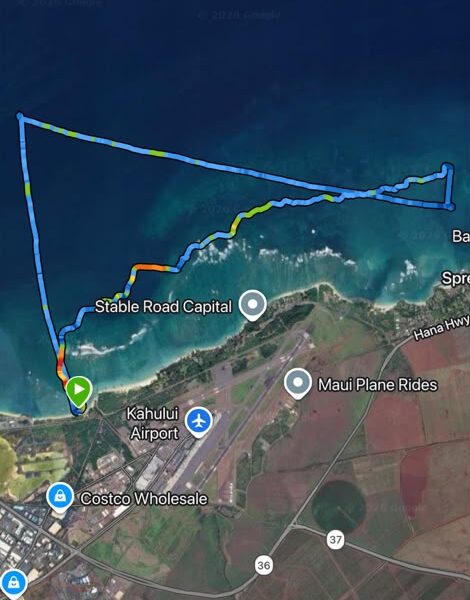
Instead of driving to the beginning of the run, the concept is to start where you ultimately want to finish. Ride the Afterburner several miles upwind, stash it, and use the distance you’ve just gained for the downwinder home.
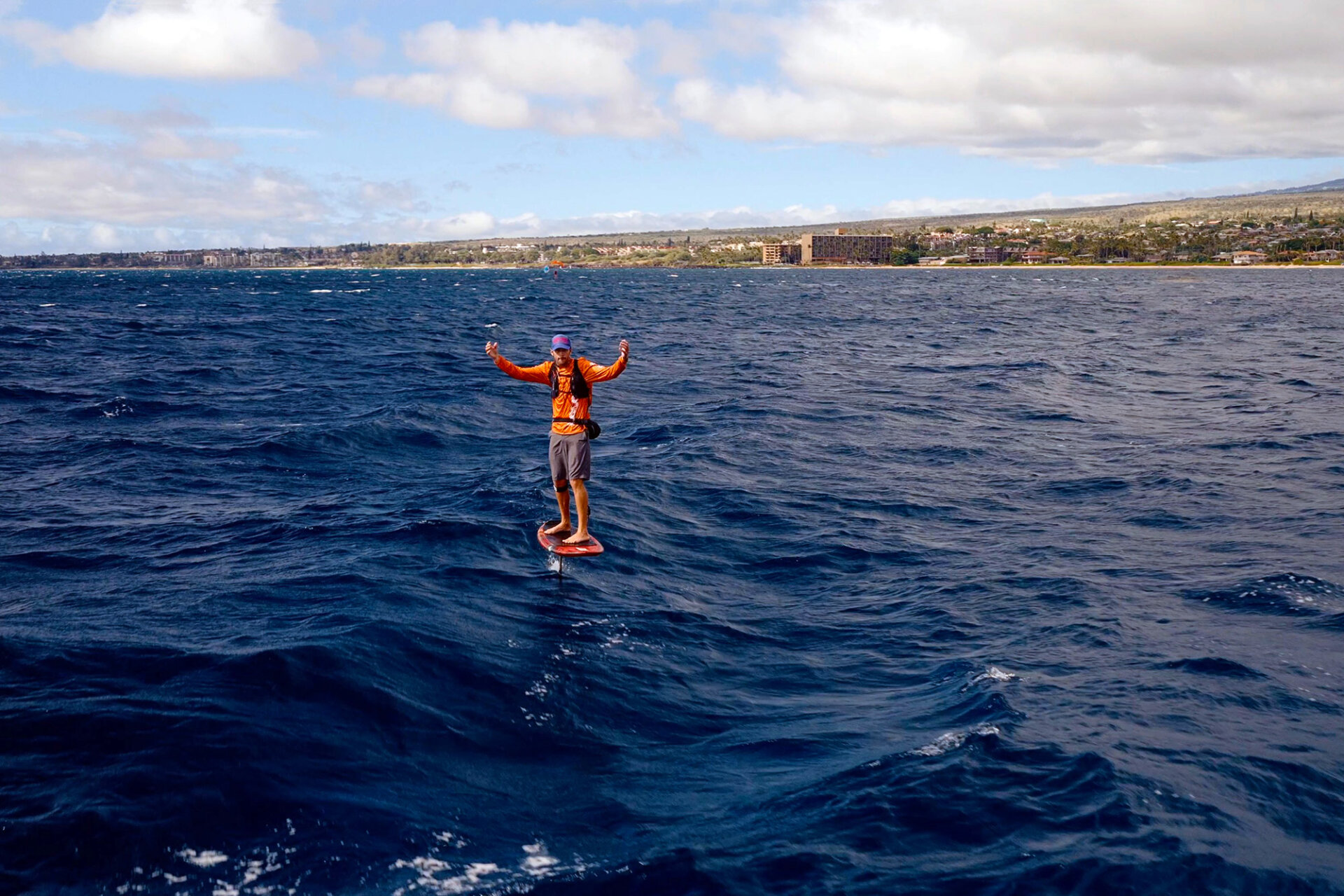
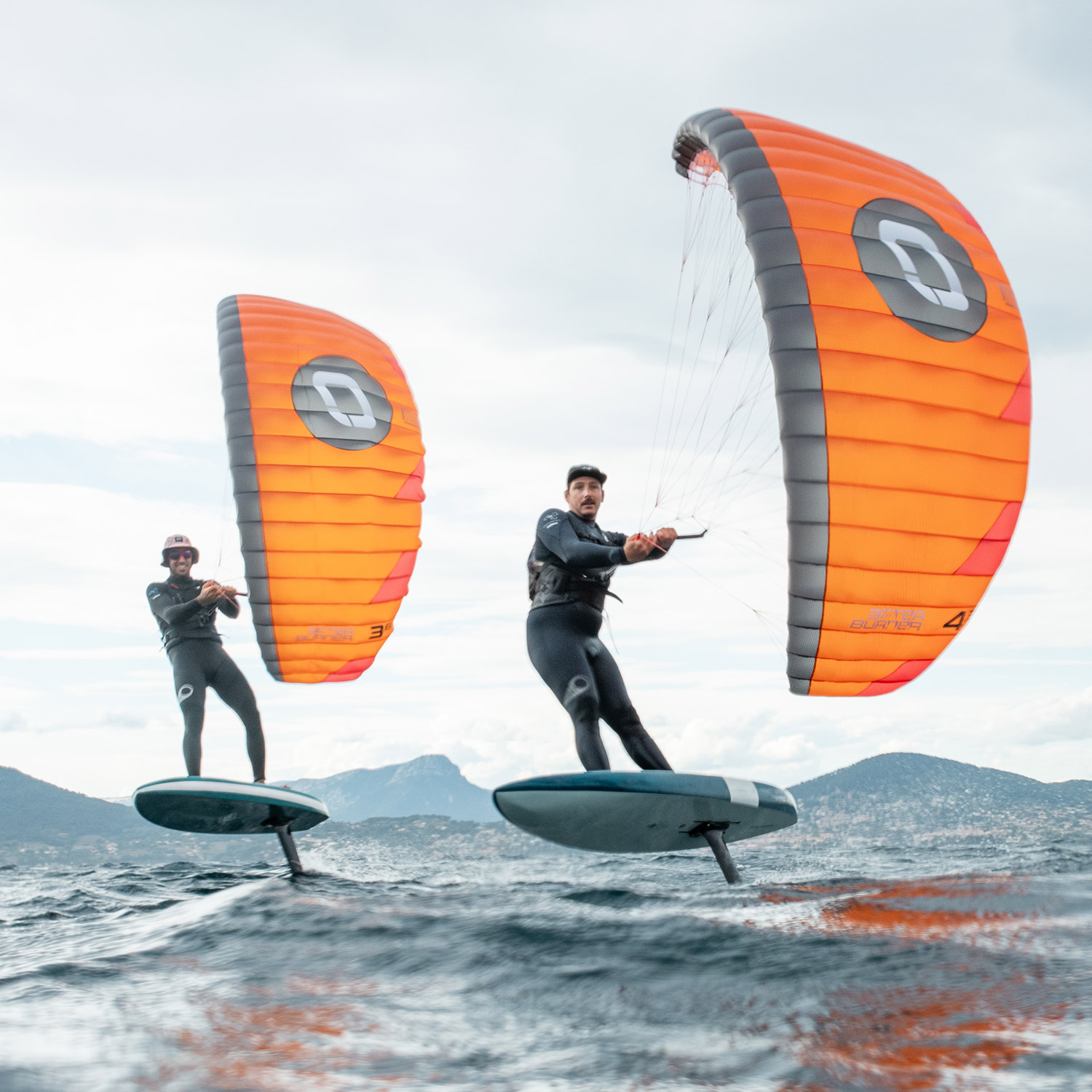
Ozone ambassador Jon McCabe demonstrated the idea during a session on Maui, travelling five miles upwind with only two tacks before turning around for the downwind run.
“I was saving gas on the Afterburner yesterday! Loving this weapon for flying upwind while everyone else is stuck ‘parawaiting’ for the next ride.”
“The smaller designs should be totally insane!” - Johnny Heineken
Cynbad Brown joined him for the session and was equally enthusiastic about just how much ground they could cover.
“It’s the parawing I’ve always wanted. It was crazy how our team of Afterburners rocketed that 5 mile upwind.”
It is perhaps the clearest demonstration of why improving parawing efficiency matters. Speed for the sake of speed is entertaining, but speed and pointing ability that fundamentally increase the amount of water you can explore are considerably more useful.
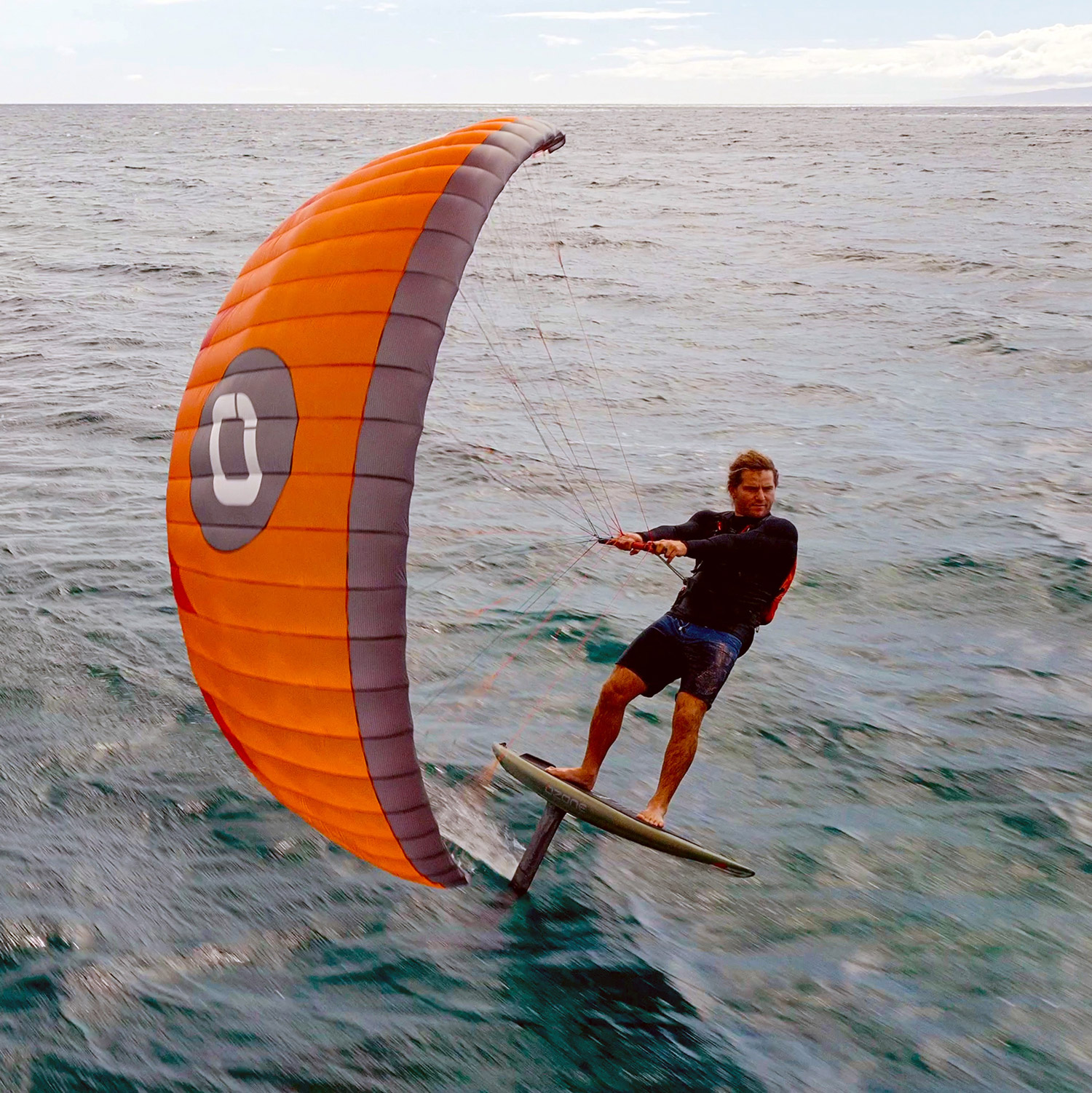
“Speed for the sake of speed is entertaining, but speed and pointing ability that fundamentally increase the amount of water you can explore are considerably more useful.”
The Carbon Connection
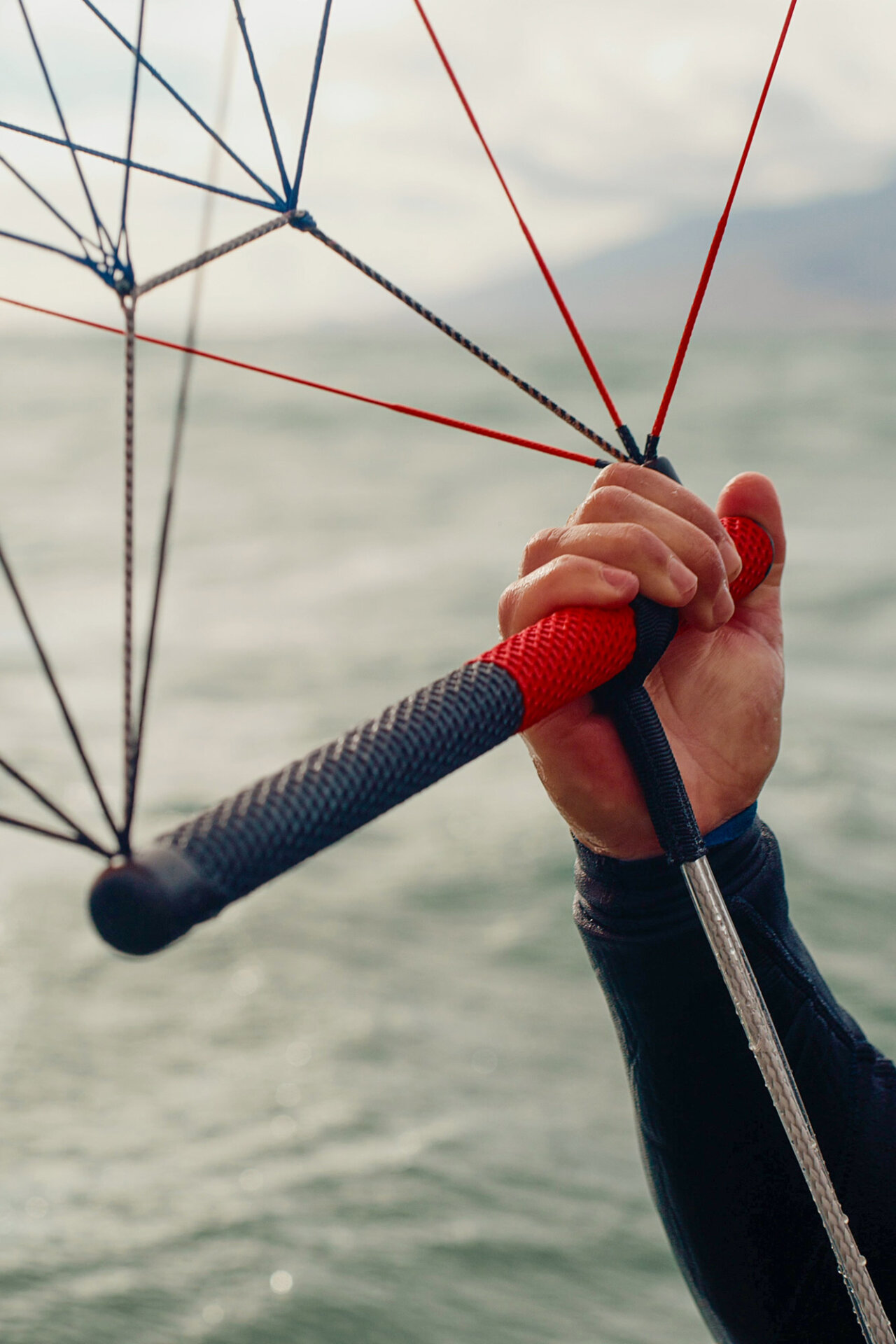
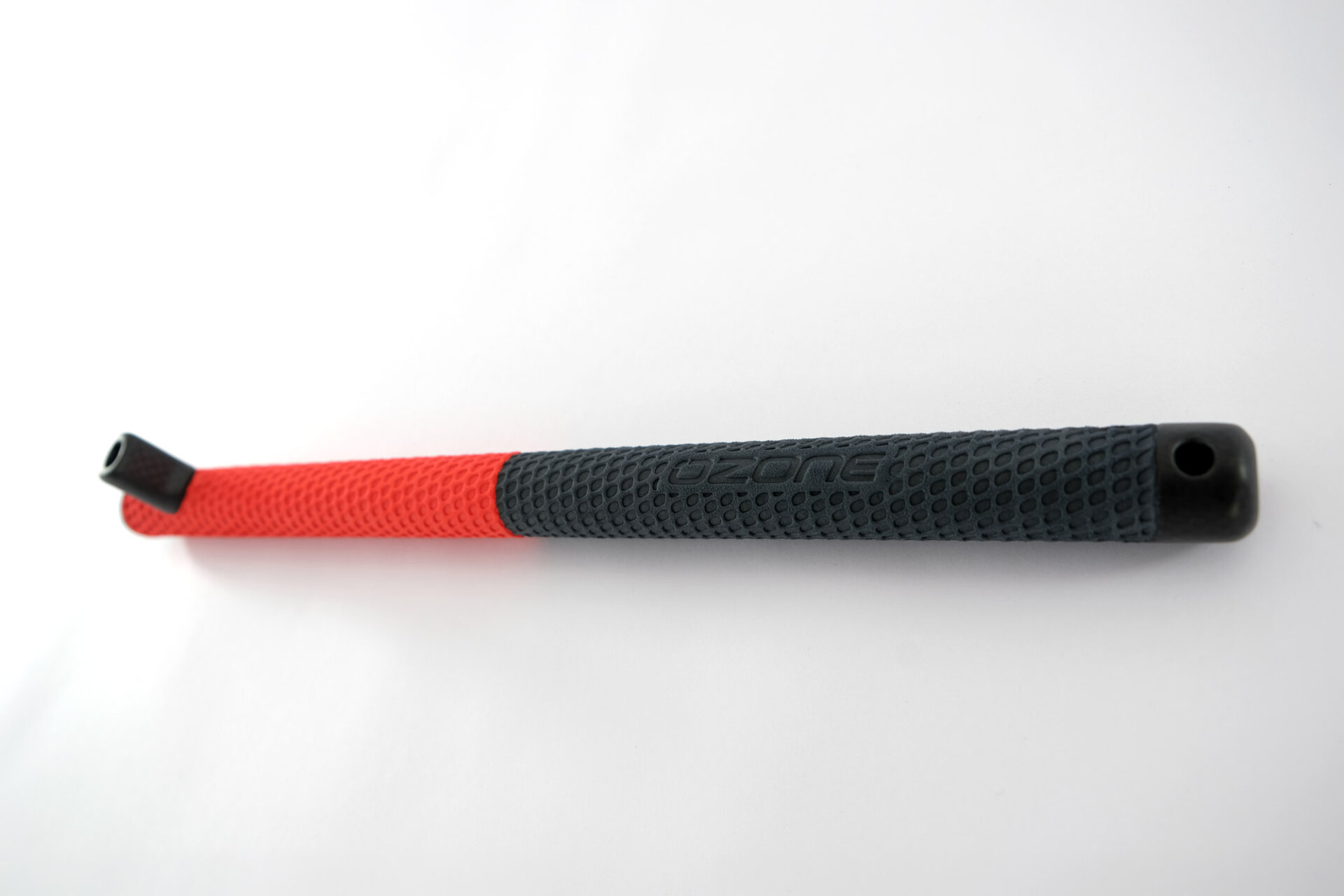
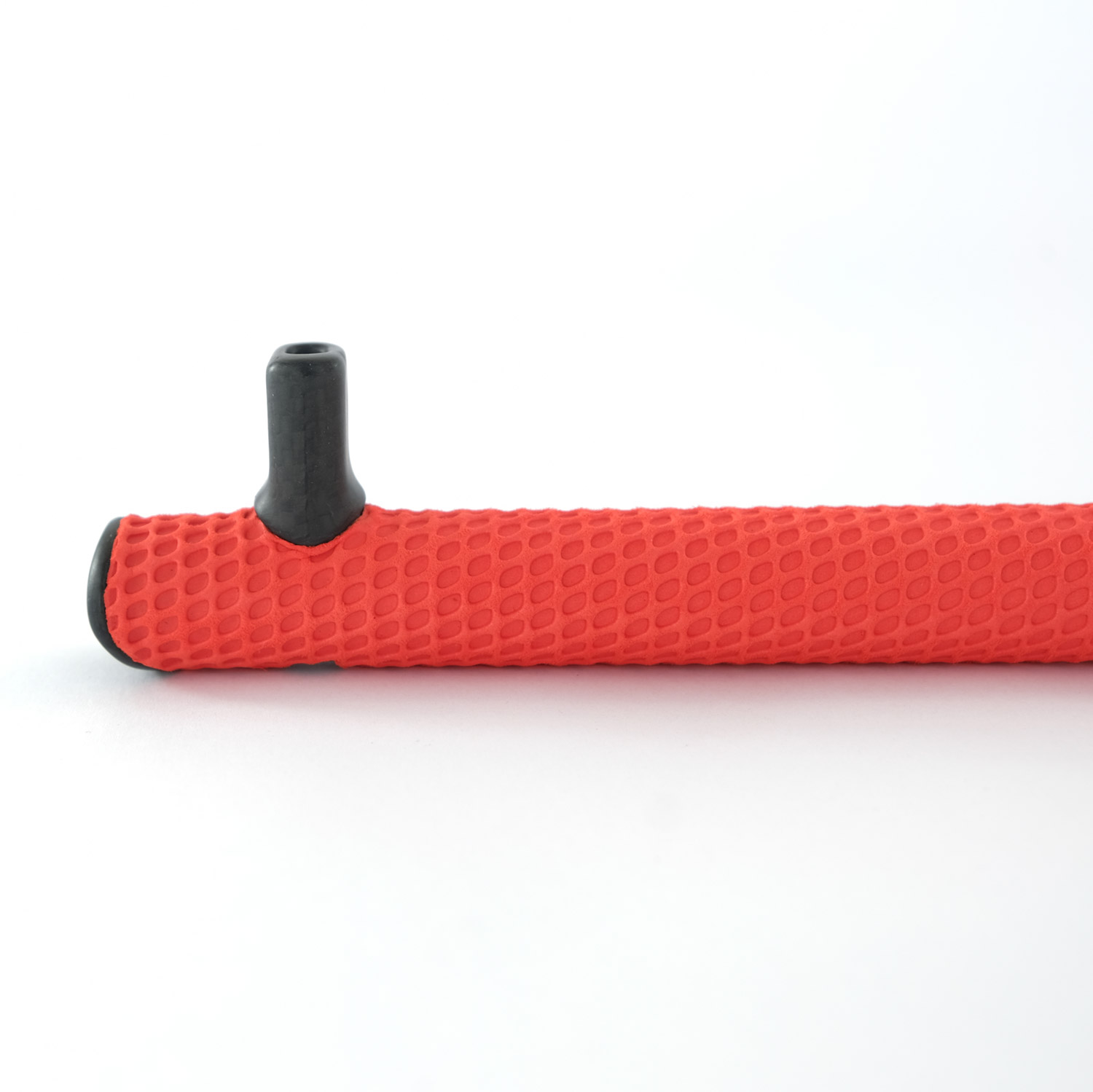
The control system has also been developed specifically for the Afterburner. Ozone has introduced a new 35cm monobloc carbon bar weighing just 90 grams.
Keeping the bar light is particularly important once everything has to be stashed against the rider’s body, but Ozone hasn’t simply chased the lowest possible number on the scales. The bar incorporates a textured EVA grip, an index finger overhang, an A-line protection nub that also provides additional purchase between the fingers, and a dedicated thumb resting point at the end of the bar.
The Afterburner is also designed with hooked-in riding in mind, allowing riders to take advantage of its performance without having to constantly hold the increased loads associated with powered riding. Each Afterburner comes with a fixed loop harness line attached to the bar.
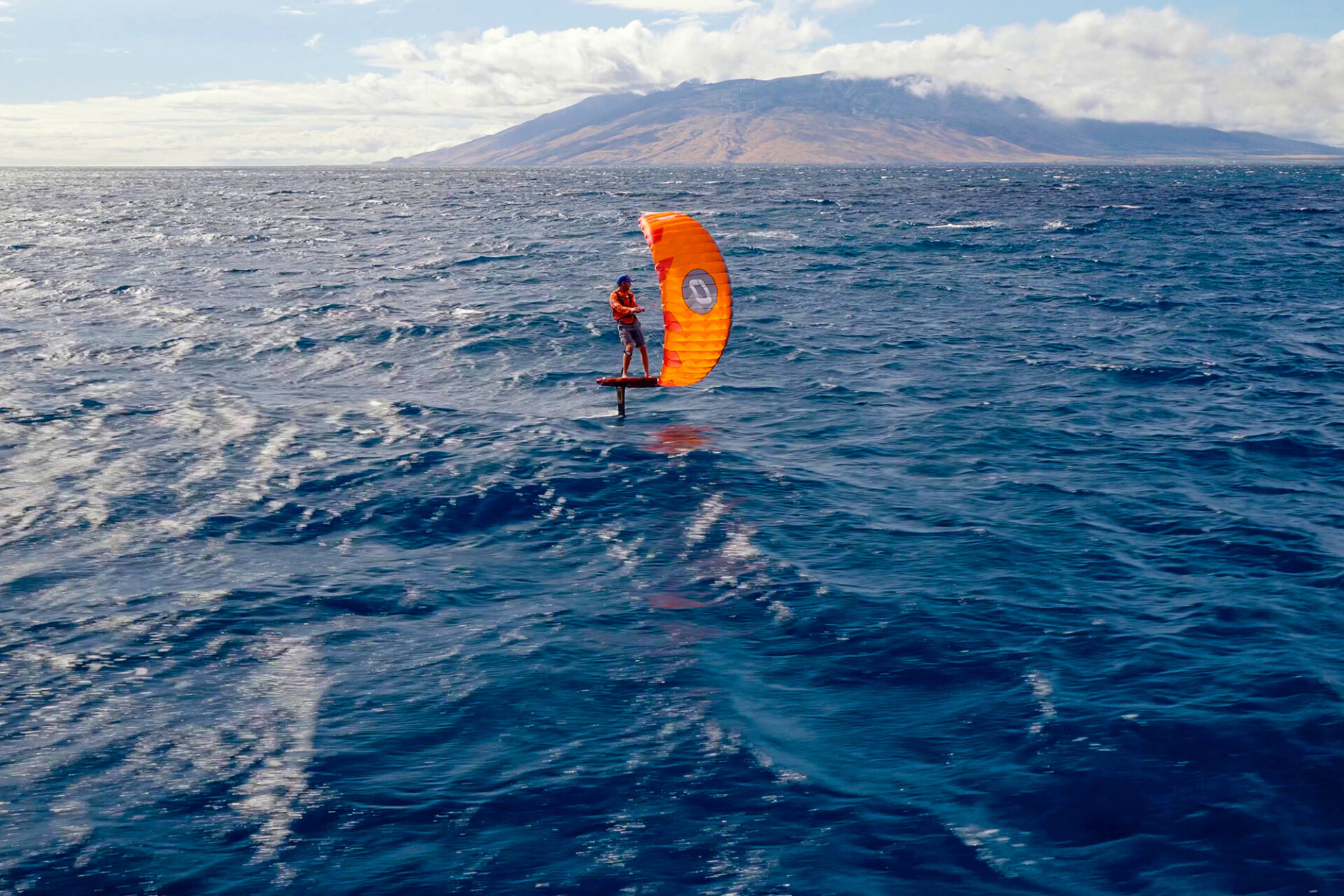
“Designers are no longer simply trying to make these wings work. They are beginning to optimise them for very different ways of riding.”
It is another indication of how quickly parawing equipment is becoming specialised. What was initially little more than a compact control bar attached to a handful of bridles is developing into a carefully considered interface between rider and wing.
Choosing The Compromise
There is, however, no escaping the fundamental engineering trade-off. More cells, a higher aspect ratio, and a more sophisticated bridle create a cleaner and more efficient wing, but they also create more material and lines to deal with when it comes time to make everything disappear.
Ozone is refreshingly clear about that. The Afterburner isn’t designed for riders whose sessions involve constantly stashing and redeploying the wing. The Pocket Rocket V2 and PowerPack remain better suited to that style of riding.
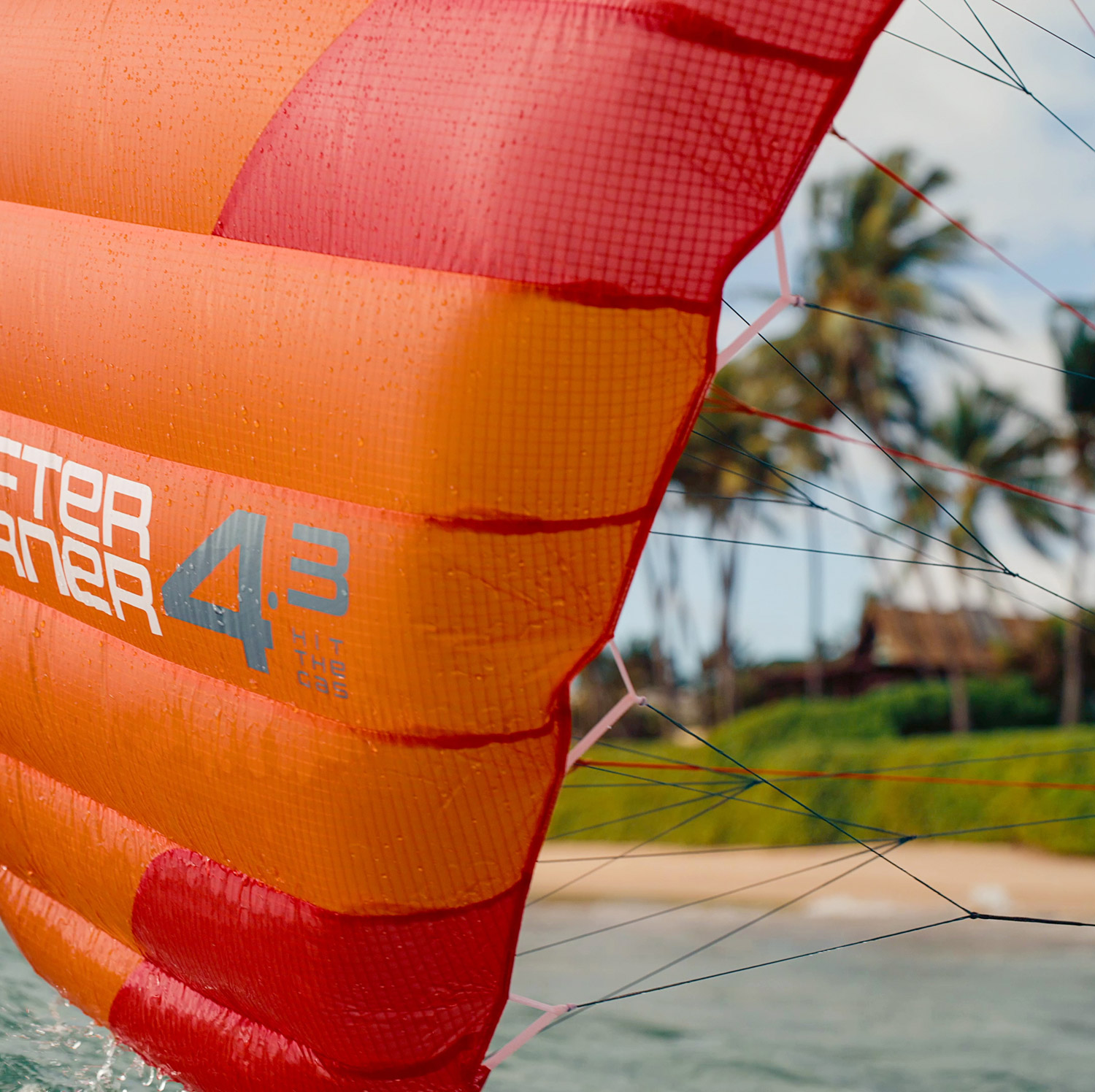
“Get upwind faster, go further, stash the wing, and give yourself a much longer ride home.”
Instead, this is aimed at riders who want to power efficiently upwind, stash once, and then spend a significant amount of time riding swell before deploying again.
As Zimmermann explains:
“If you already have some decent stashing technique, the Afterburner is easy to stash and redeploy, but it just takes a little more care and consideration due to the more complex design.”
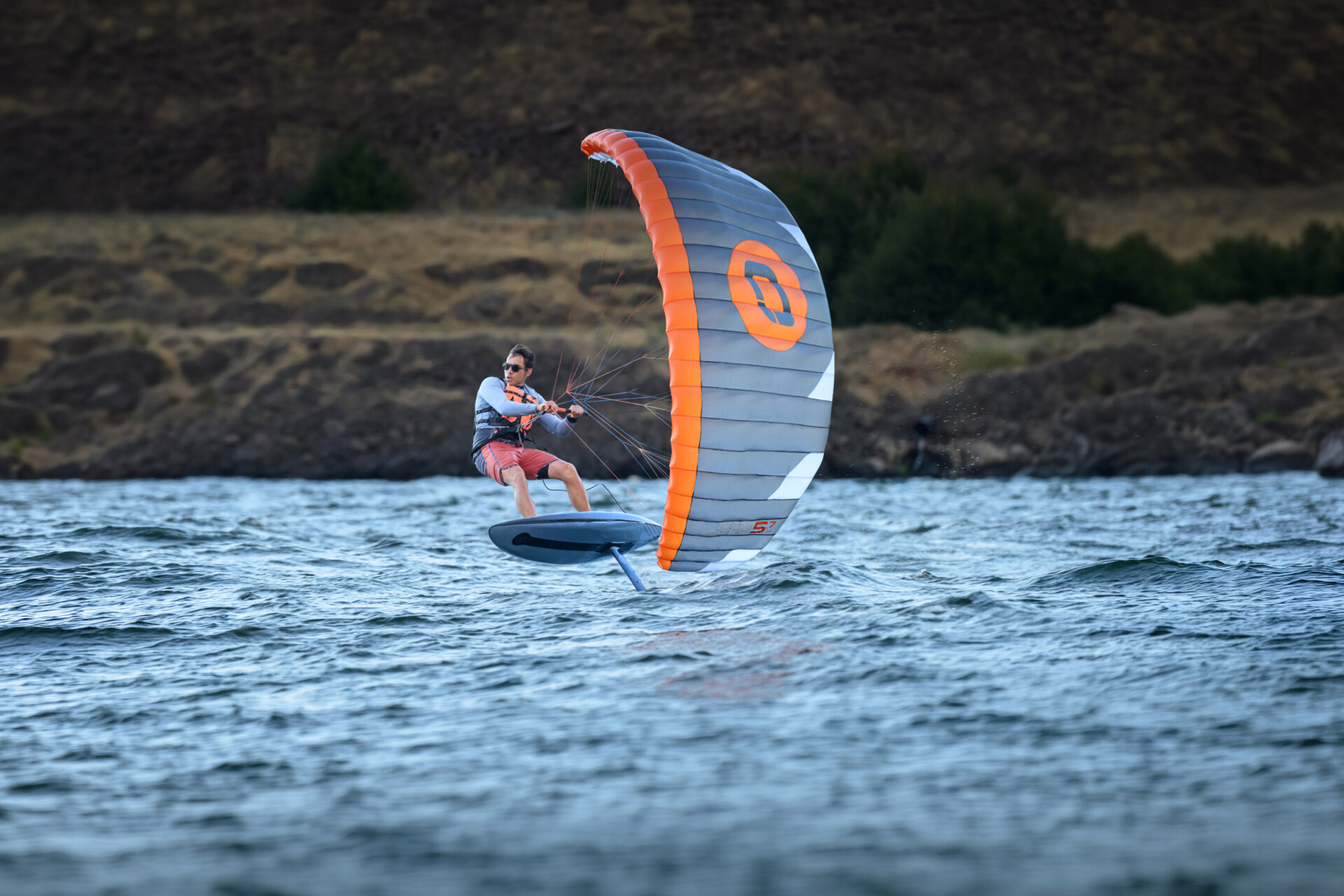
It is the price paid for the additional aerodynamic performance, and also demonstrates how quickly different branches of parawing design are beginning to emerge.
Expanding The Possibilities
The Afterburner represents another branch appearing on the rapidly growing parawing family tree. The category is already moving beyond the idea that one design needs to do everything.
The PowerPack concentrates on easy power and frequent stash-and-glide riding. The Pocket Rocket V2 occupies the versatile freeride middle ground. The Afterburner pushes towards speed, range, and maximum upwind efficiency.
That specialisation is arguably a sign of how quickly parawinging is maturing. Designers are no longer simply trying to make these wings work. They are beginning to optimise them for very different ways of riding.
For the Afterburner, the objective is particularly clear: get upwind faster, go further, stash the wing, and give yourself a much longer ride home.
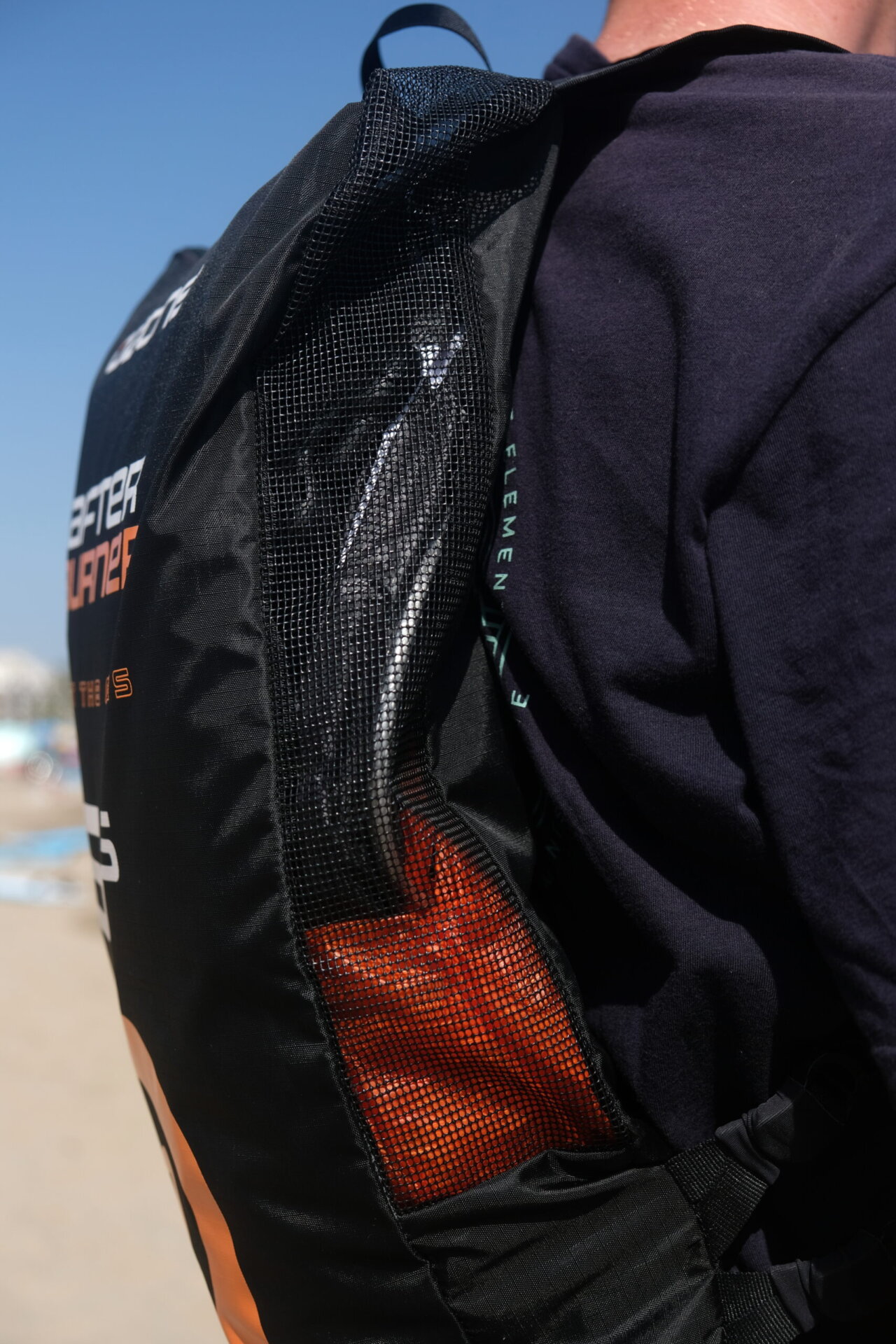
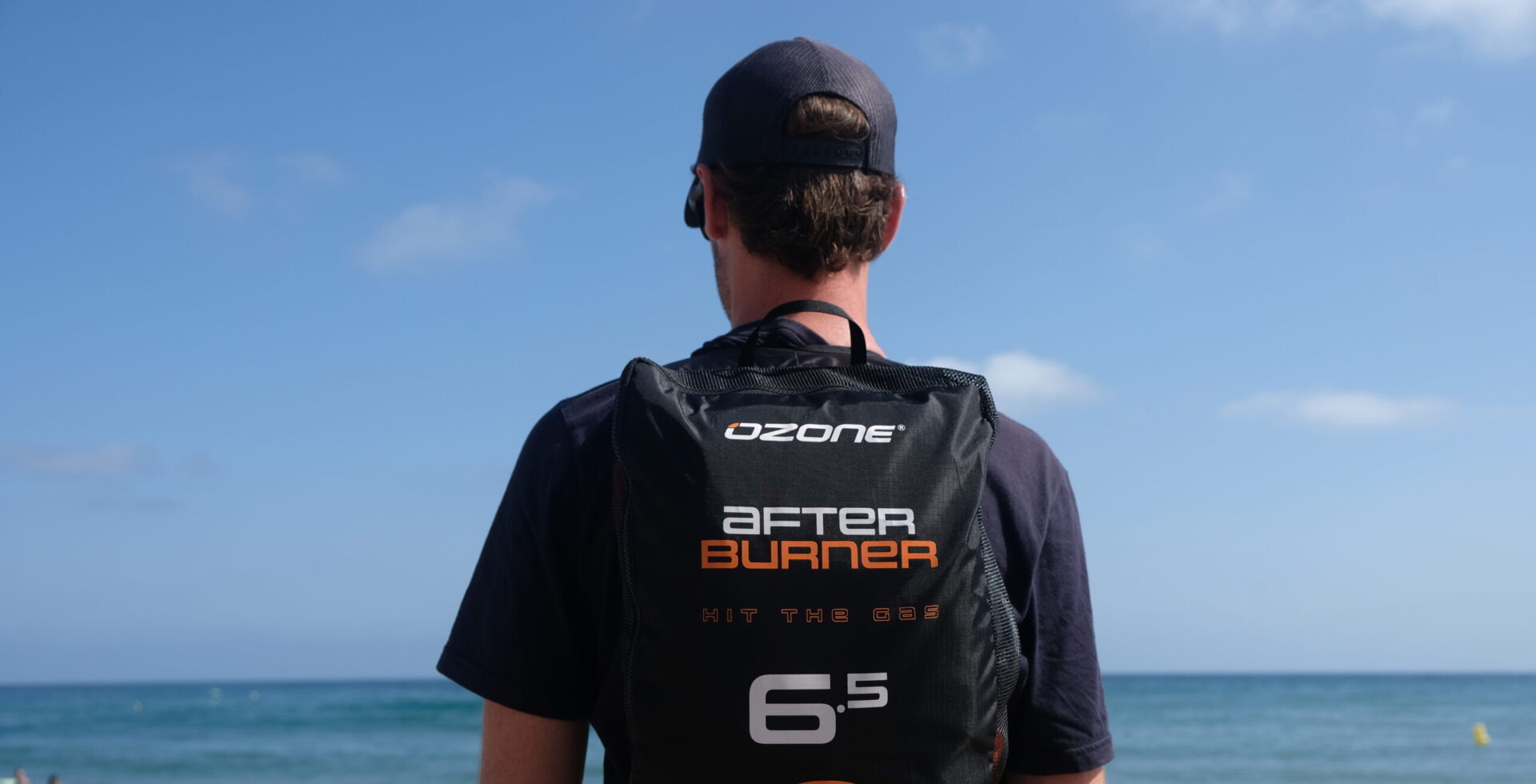
The Ozone Afterburner is available in 3.0m, 3.6m, 4.3m, 5.0m, 5.7m, and 6.5m sizes and is available from Ozone dealers now.
For more information, Click Here.