
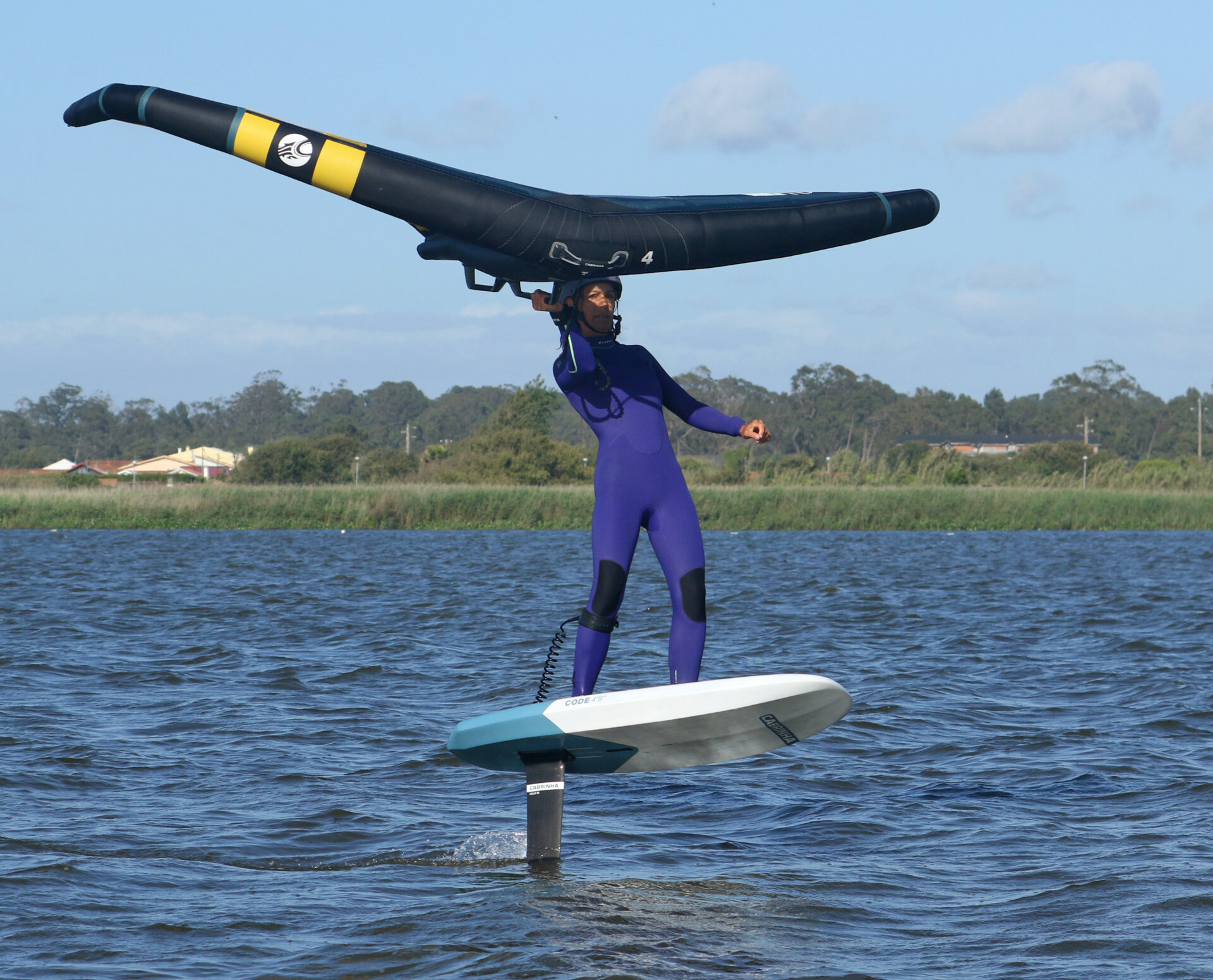
For those of you that enjoy a spot of gardening, Wing foiling gybes are like courgettes. Once you’ve got the first one, they come at you thick and fast, an invasion of possibilities and challenges. Well, you’ll be pleased to know that we won’t go off down an alternate recipe rabbit hole (gratin with potatoes and goat’s cheese if you insist), but we do have yet another way for you to change direction, and this time around it’s the Heineken Gybe. Dreamt up by the outstandingly quick kite and wing racer Johnny Heieneken, this gybe is all about avoiding the dreaded back winding when you drop the clutch. That said, it’ll work surprisingly well in lighter airs with big wings, in addition to when you’re giving it the beans. We’re going to have a look at the toe to heel version today. If you’re regular footed and right-handed this is probably you’re less difficult version as hand coordination plays a big part. We’ll cover the heel to toe in due course…
Basic requirements which indicate that you’re ready to give this a go. You need to be comfortable and competent with your toe to heel gybe. Your board and therefore your turning input from legs, feet and body will be the same. If you don’t need to think about the carving aspect of your gybe, you’ll have concentration left for the somewhat unconventional but utterly effective hand and wing movements.
What you don’t need to know!
We should preface this by stating that you don’t need to be a member of the magic circle and understand what apparent wind is. If you do it’s helpful in understanding many aspects of theory in winging. It’s a mix of the true wind and the induced wind and changes according to your speed. However, seeing as it’s hard enough to know where the wind is coming from, it’s safe to assume that no one is going to contemplate where the apparent wind is coming from at any given point during a gybe! Fortunately, your wing will find it if you ask it to.
Have a look at Sequence 1. The Heineken is all about where the wing flies and how it turns. It’s completely different to any of the gybes we’ve already looked at, as you’re actually using the apparent wind to support the wing as you gybe. This is why the Heineken gybe only works if you’re travelling faster than the wind speed. In essence you’ll fly the wing up over your head and to the outside of your carve, so that it’s effectively floating and flying on that mythical apparent wind. As you turn off and through the wind, you’ll encourage the wing to turn with you, and if all goes well it’ll obediently follow without being back winded from in front or catching any wind from behind. Abracadabra!!
Hands
As you can see and as alluded to, with a new wing movement comes a new set of hand movements. It’s a good idea to get your head around what your hands and wing do during the Heineken gybe before you give it a go.
1. First and foremost, you need to adopt an overhand grip with your front hand in order to guide your wing around the gybe.
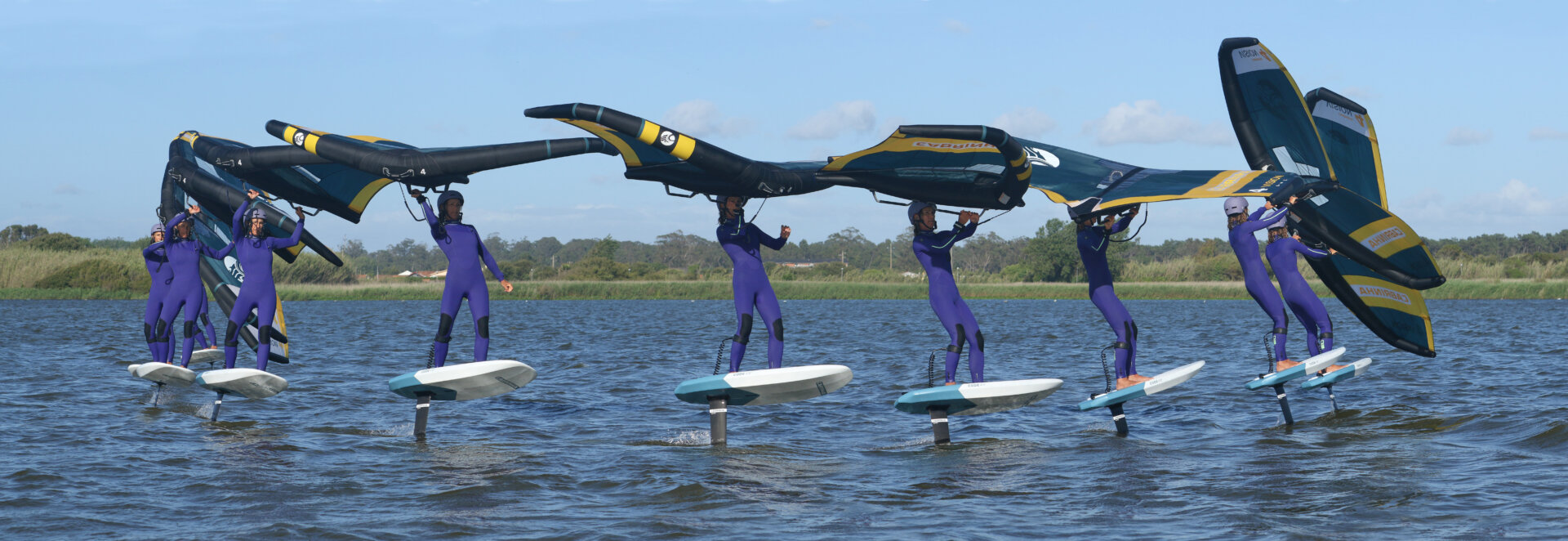
2. You’ll steer the wing up high by gently pushing down on your rear hand as you sheet out, allowing your front hand to rise. However, you don’t want to overdo it as your aim is to have the wing pointing out, not up into wind.
3. Releasing your rear hand sheets the wing out completely. The result is that your wing will fly just behind you, to the edge of its window. It’s now floating.
4. As you carve and therefore change direction, you will turn your wrist to allow the wing to turn, pointing downwind and floating magically.
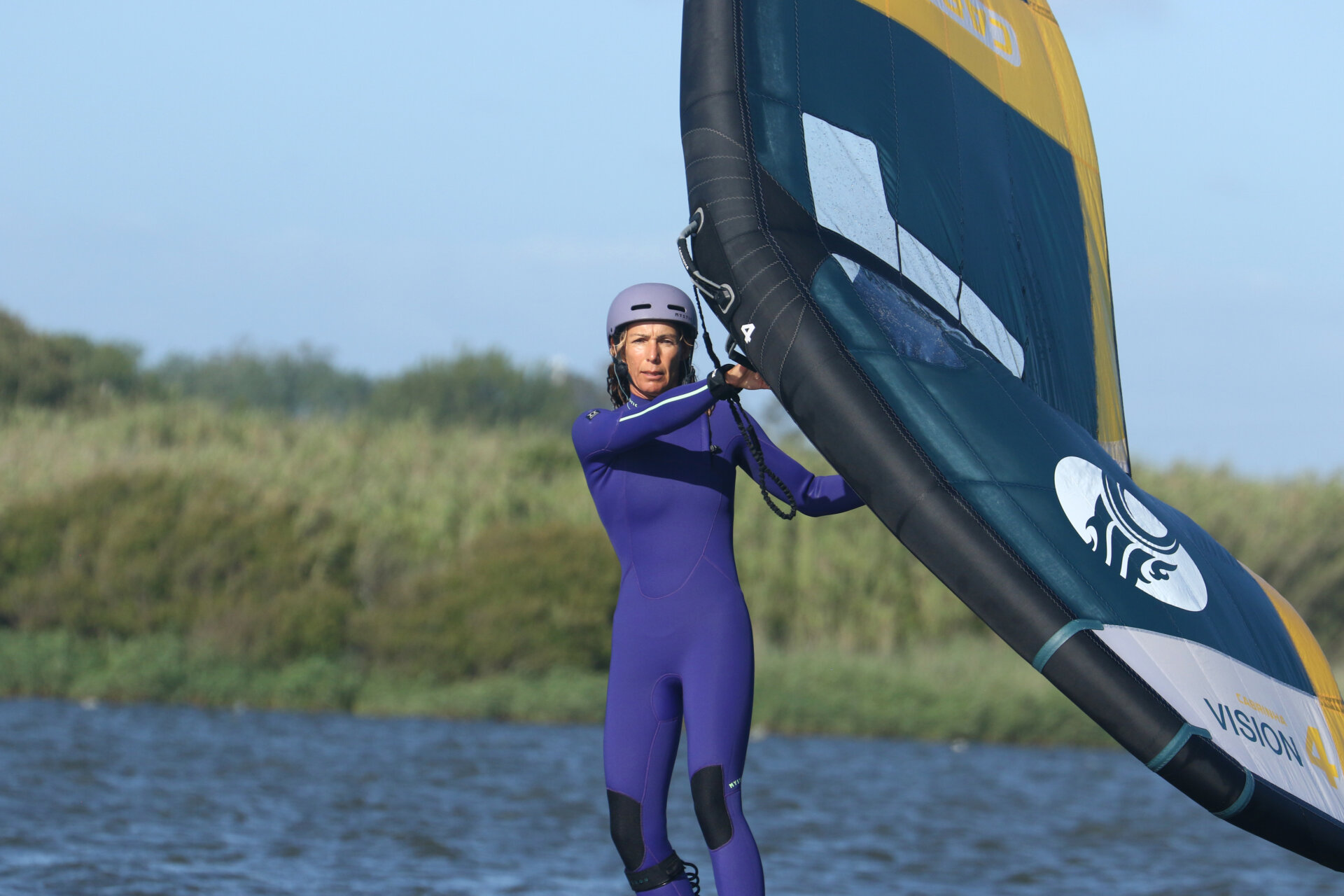
5. Before the hand swap you can bring your hand across, but it’s imperative that you don’t pull it down.
6. You can then swap hands, move the wing forward, take the rear handle and claim it.
Quite a different wing flip!
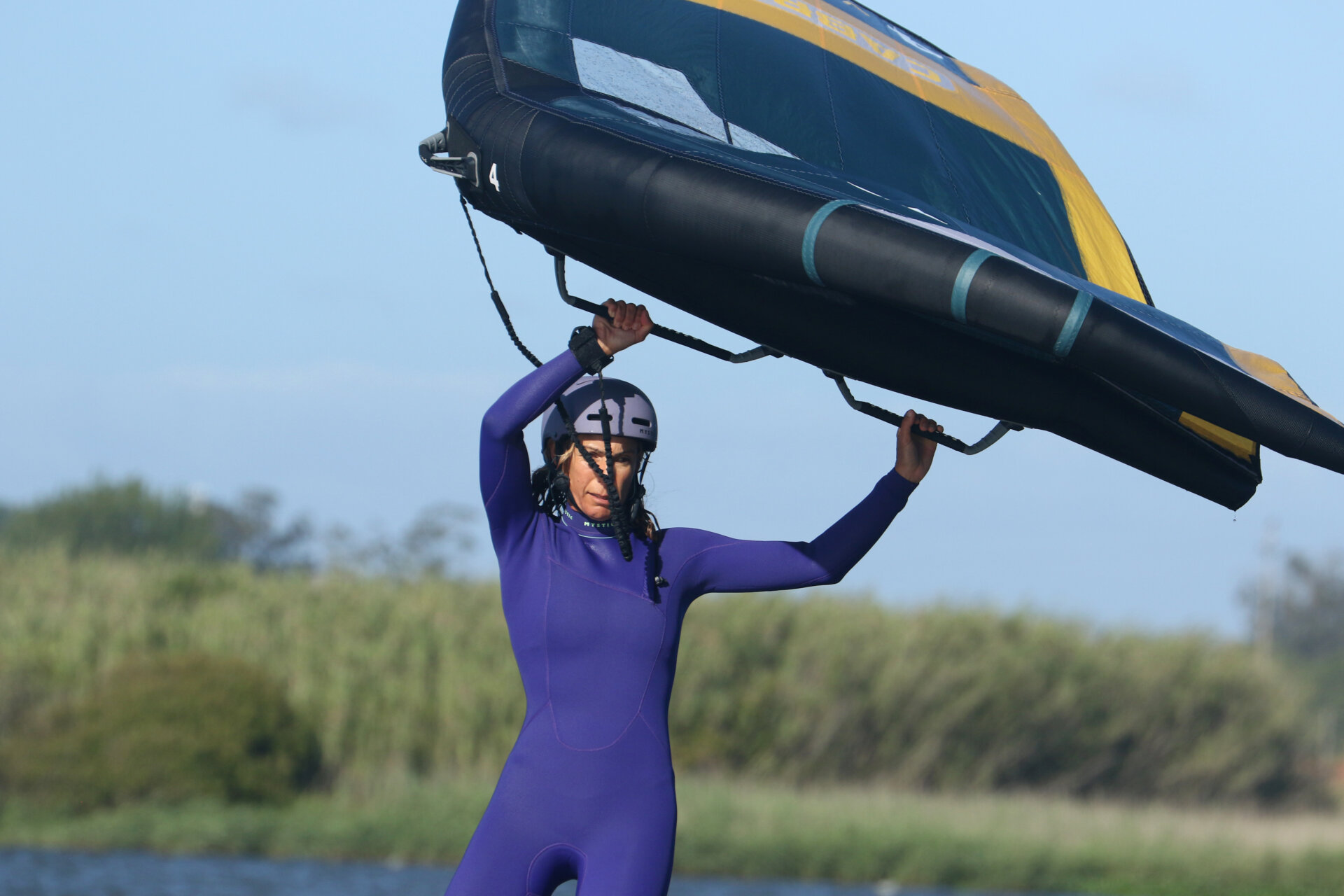
The Full Monty
Now to the duet, bringing the gybe in to accompany the wing for the grand finale.
Toeside Approach Pic A.
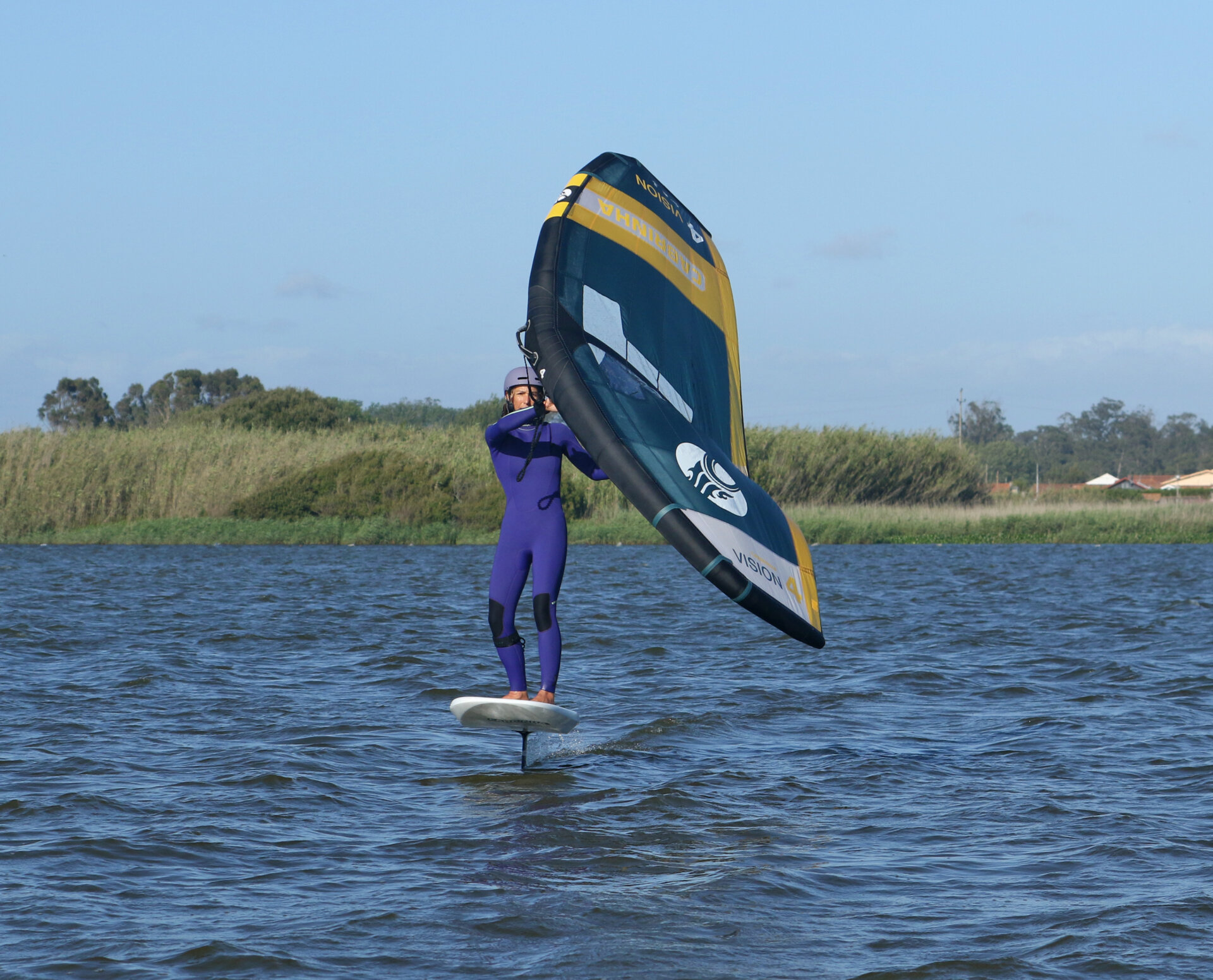
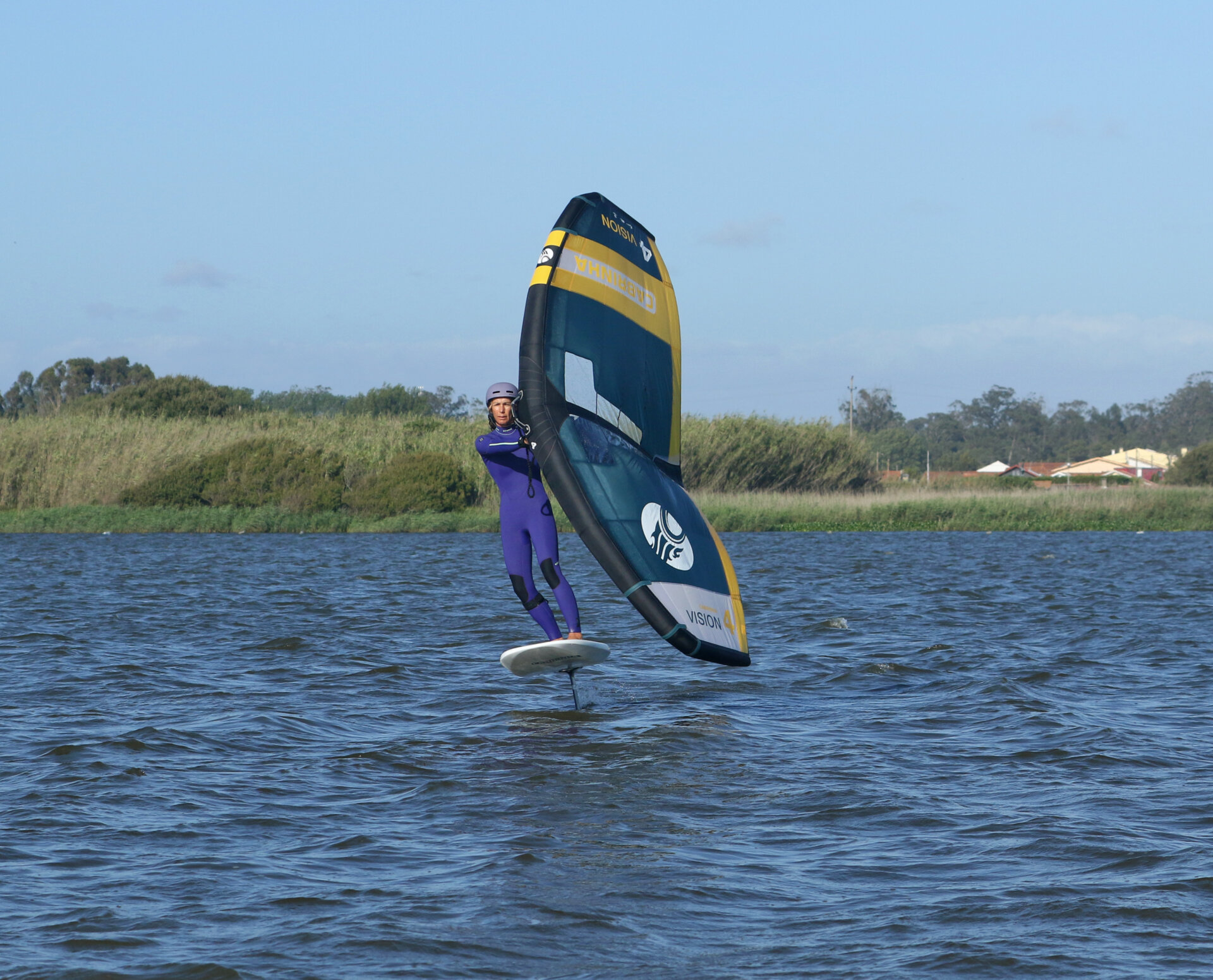
Your approach will be pretty much identical to any other toe to heel gybe. Riding slightly upwind to get your bearings and the same consistent starting point. Front hand a tad back on the front handle to assist bearing away and also to give room for the hand swap. Your rear hand should be forward on the rear handle, not too far back if you have a boom. This allows you to sheet out later. Feet in your comfortable dynamic offset stance and your back foot a touch forward to prevent too sharp a gybe. Check that the coast is clear and you’re ready for the off. Karine is balanced over her board, wing low, sheeted in and pointed forward for drive, not support. She’s heading gently upwind, she’s shifted her back foot a tad forward and has checked to make sure she has space to gybe.
Bear Away & Carve Pic B.
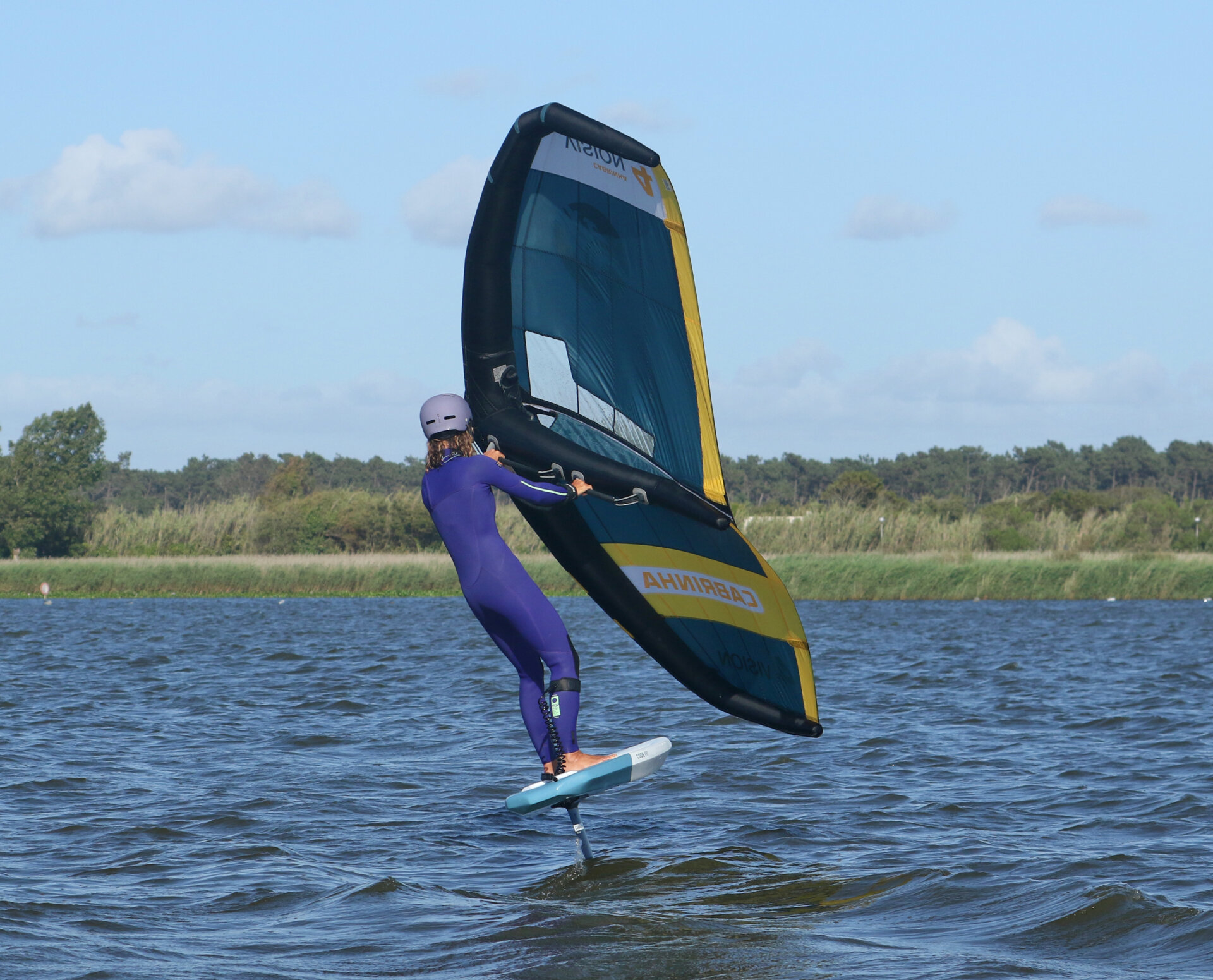
You should be well acquainted with the start of your gybe. Extend your front arm towards the nose of your board while keeping your wing sheeted in. This will lift your weight fully onto the board and as your drive through your front leg you’ll bear away. Once you’ve started to steer away from the wind you can drop your weight onto your heels to start carving. Here Karine has steered off the wind and has started to sit gently onto her heels to start her carve. Her front arm is extended, and her wing is sheeted in to the wind.
Lift Pic C.
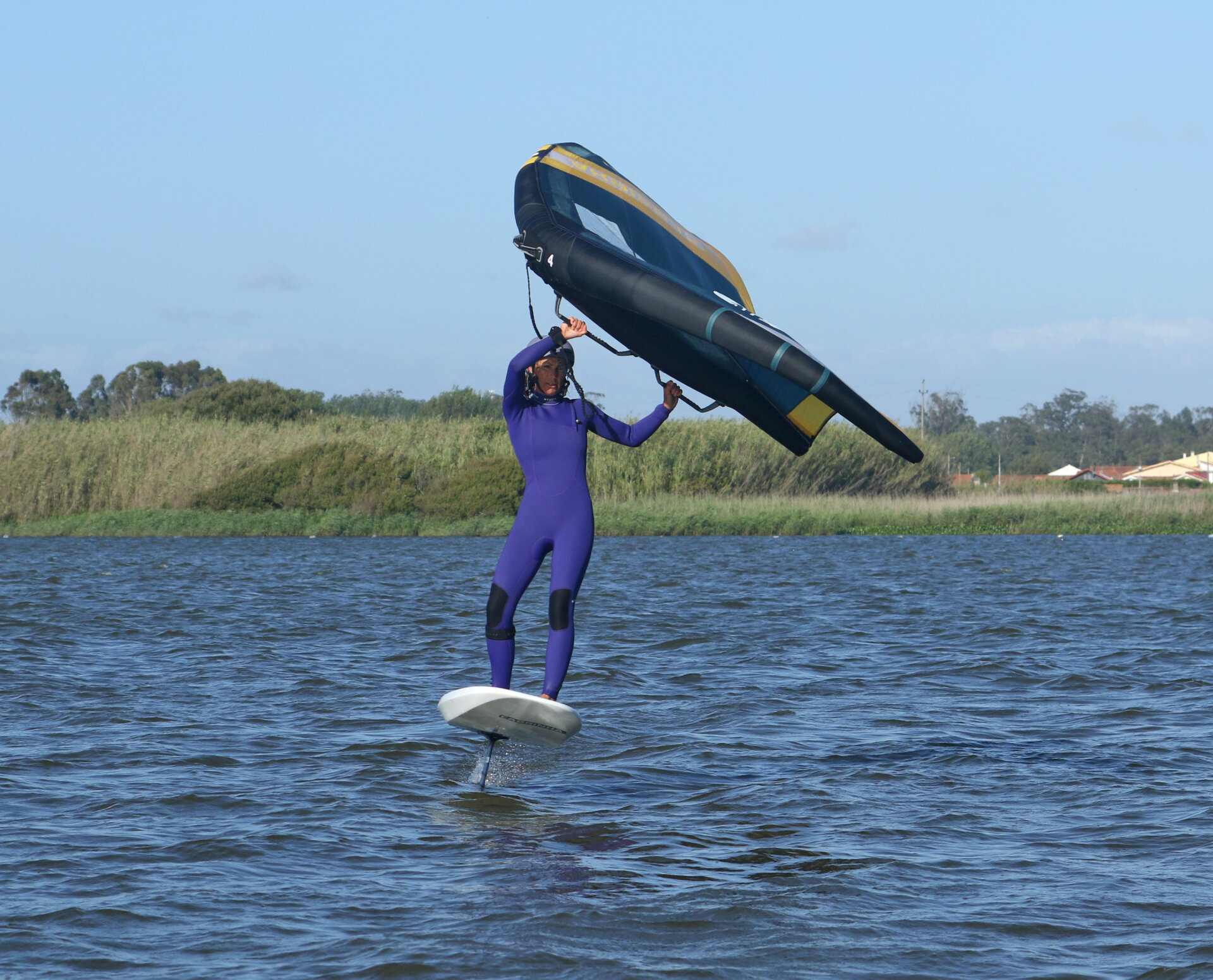
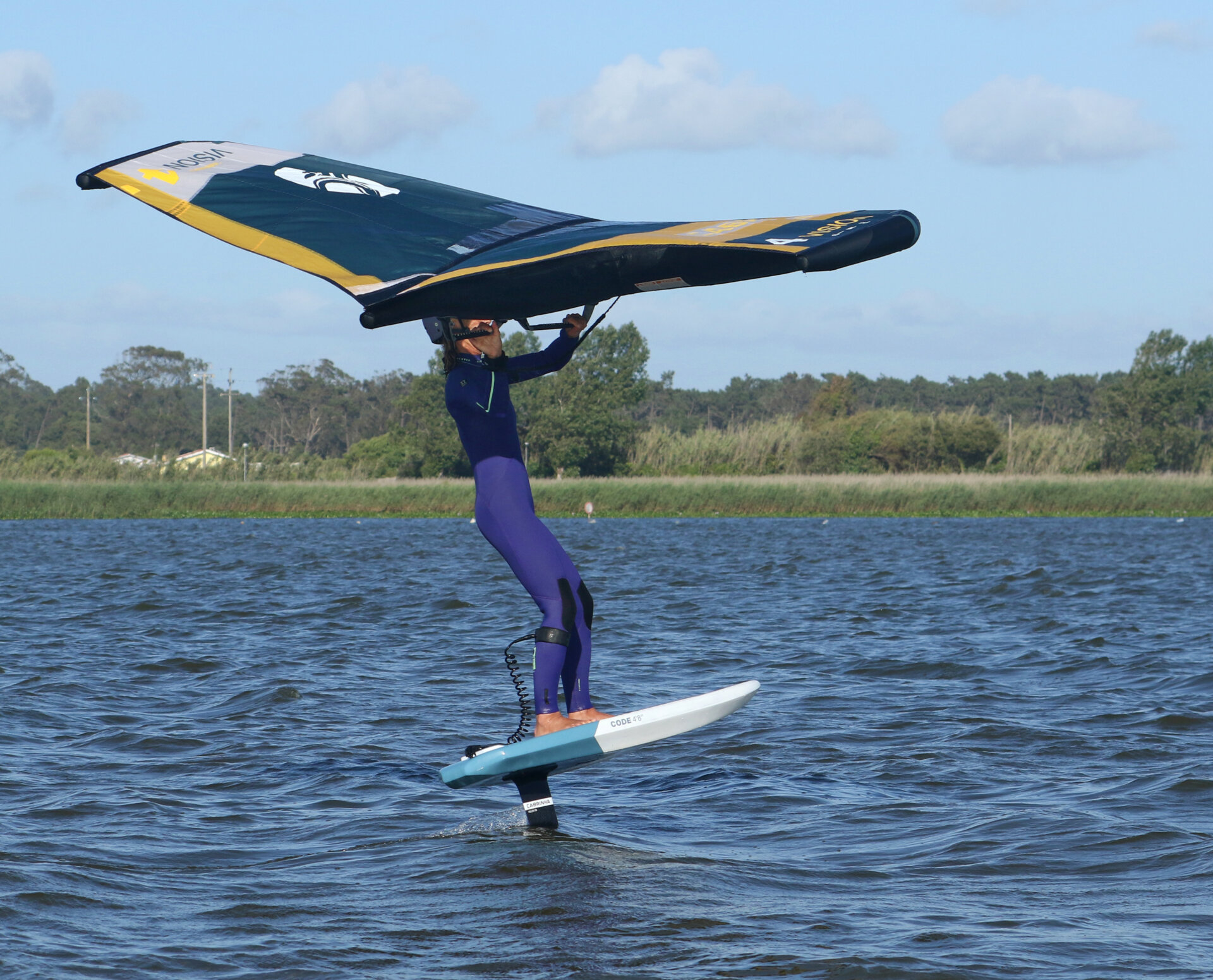
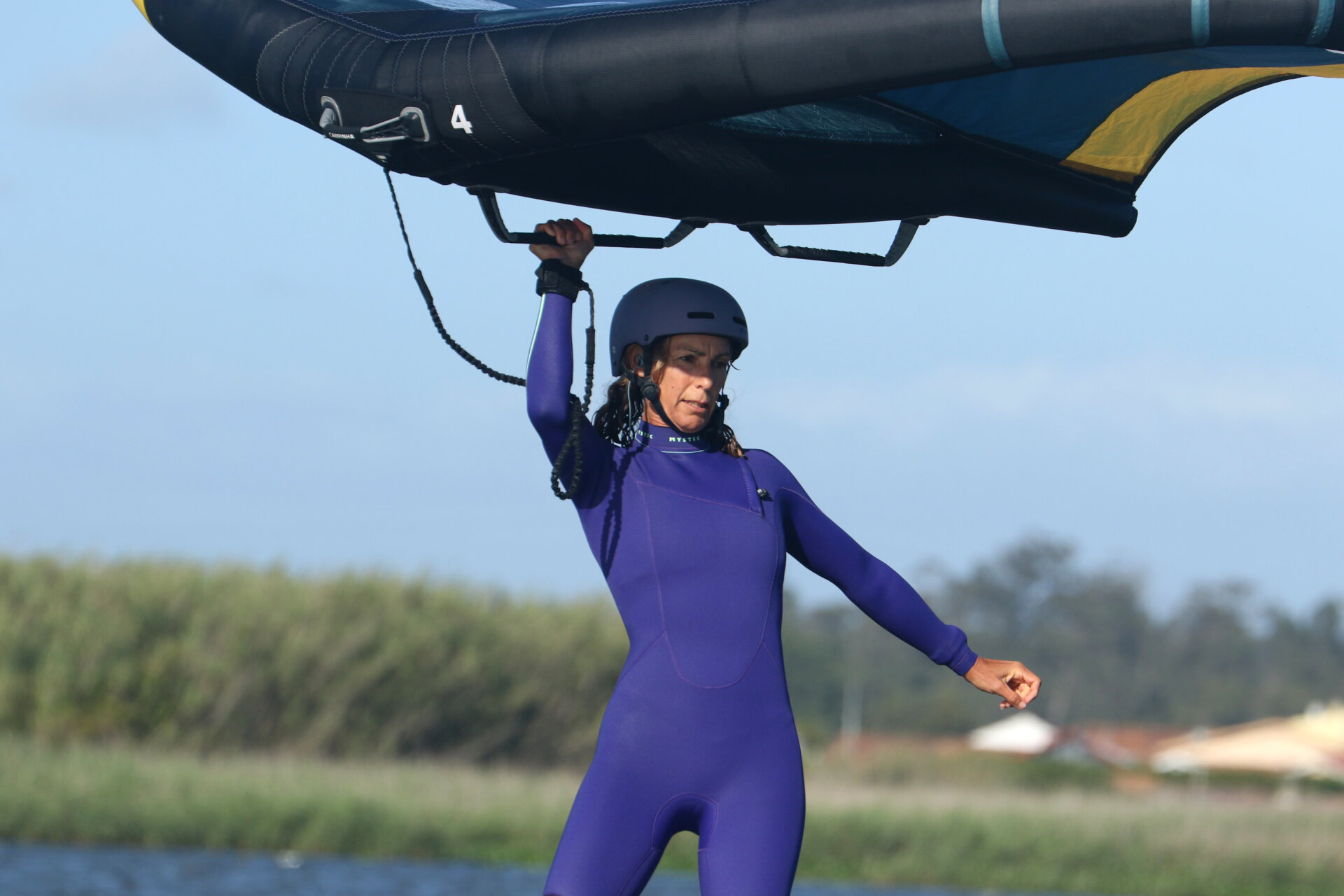
Now that you’ve got your carve on it’s time to lift the wing. Keeping a little power in the wing, gently push down with your rear hand and allow your front hand to fly up with the wing. As the wing lifts, you’ll transition from pushing down with your rear hand to pushing it away from you. As Karine steers her wing up, she’s pushing her rear hand away from her, effectively sheeting out. Her front arm is relaxed, allowing the wing to climb up, flying towards the edge of its window. Her weight is committed to the carve, hips inside and shoulders open.
Float Pic D.
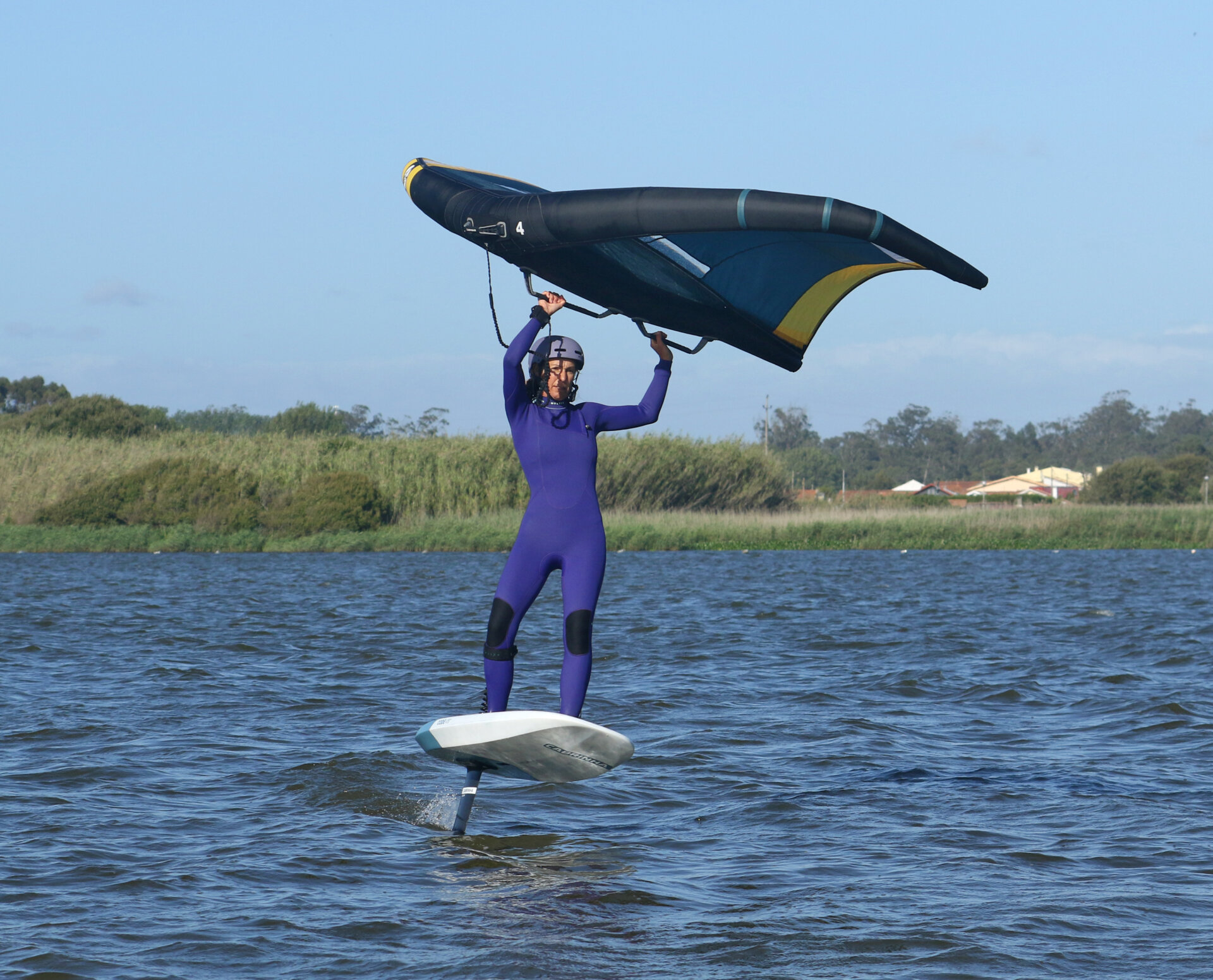
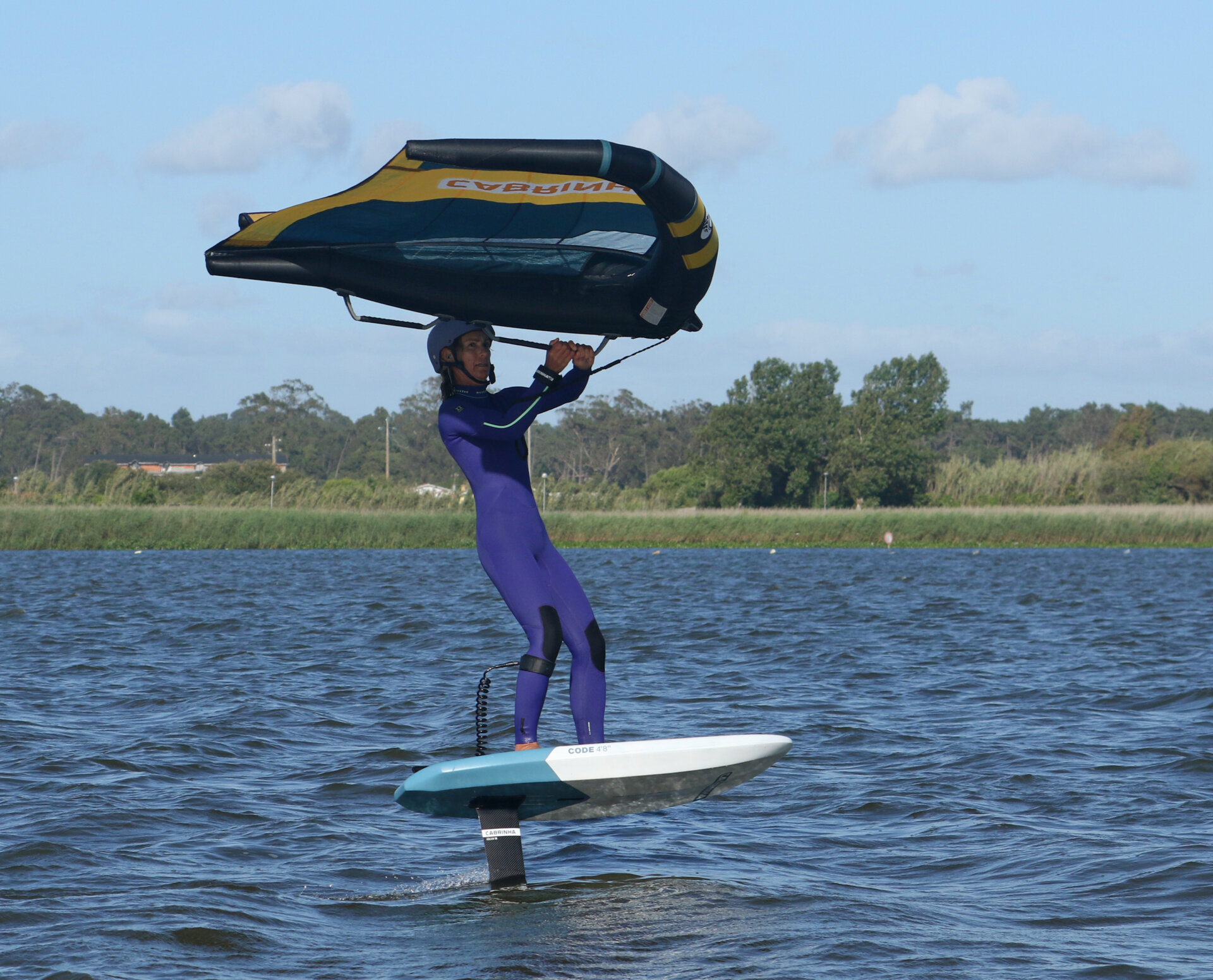
Keeping the smallest amount of pressure in the back hand will allow your wing to fly right out onto the edge, where it can happily float on the apparent wind. You may find that the wing will try and pull your weight back as it literally flies over and behind you. This is your cue to release your rear hand. Karine’s wing is over and behind her, pointing slightly out. To prevent being pulled off balance Karine will release her rear hand.
Balance Pic E.
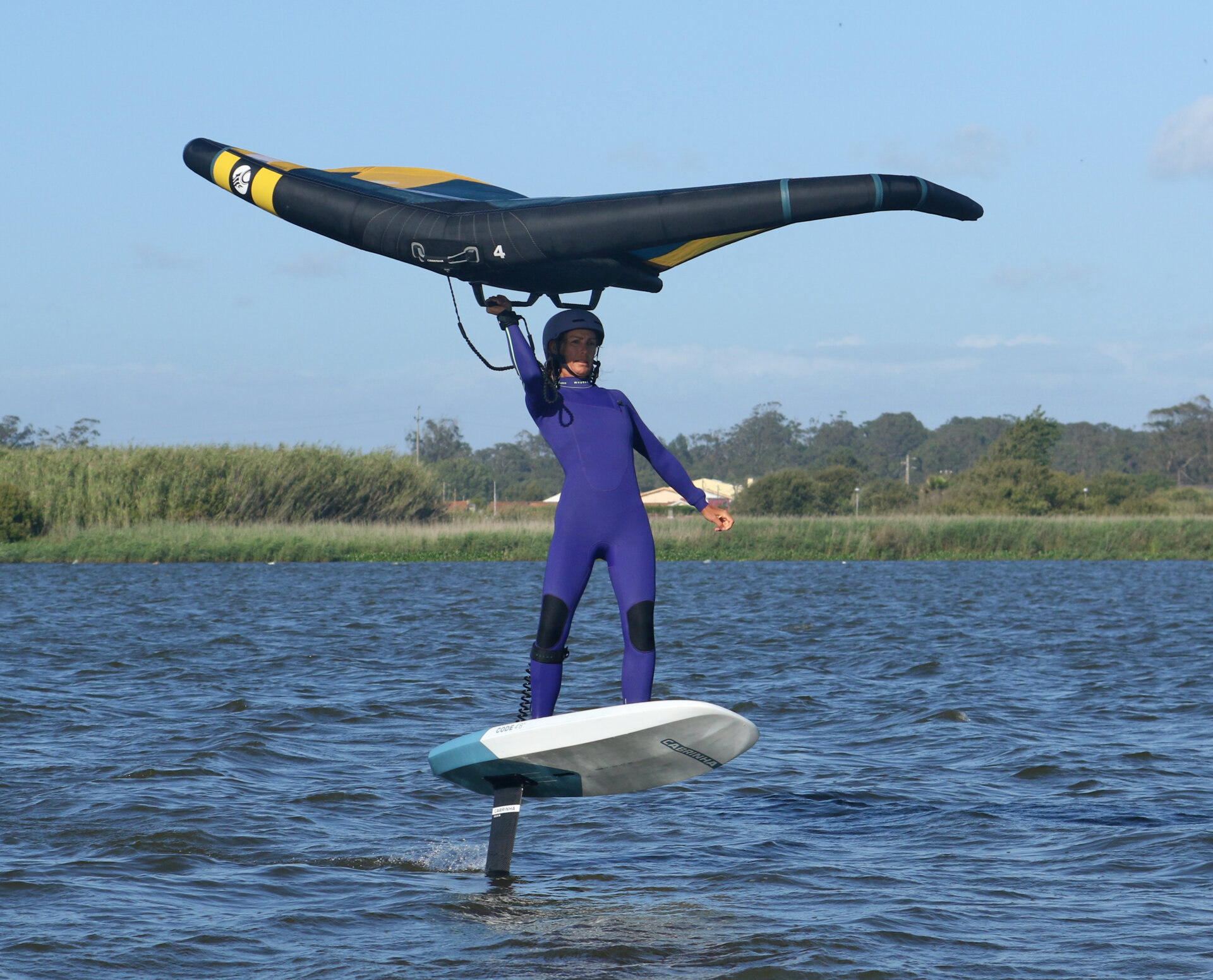
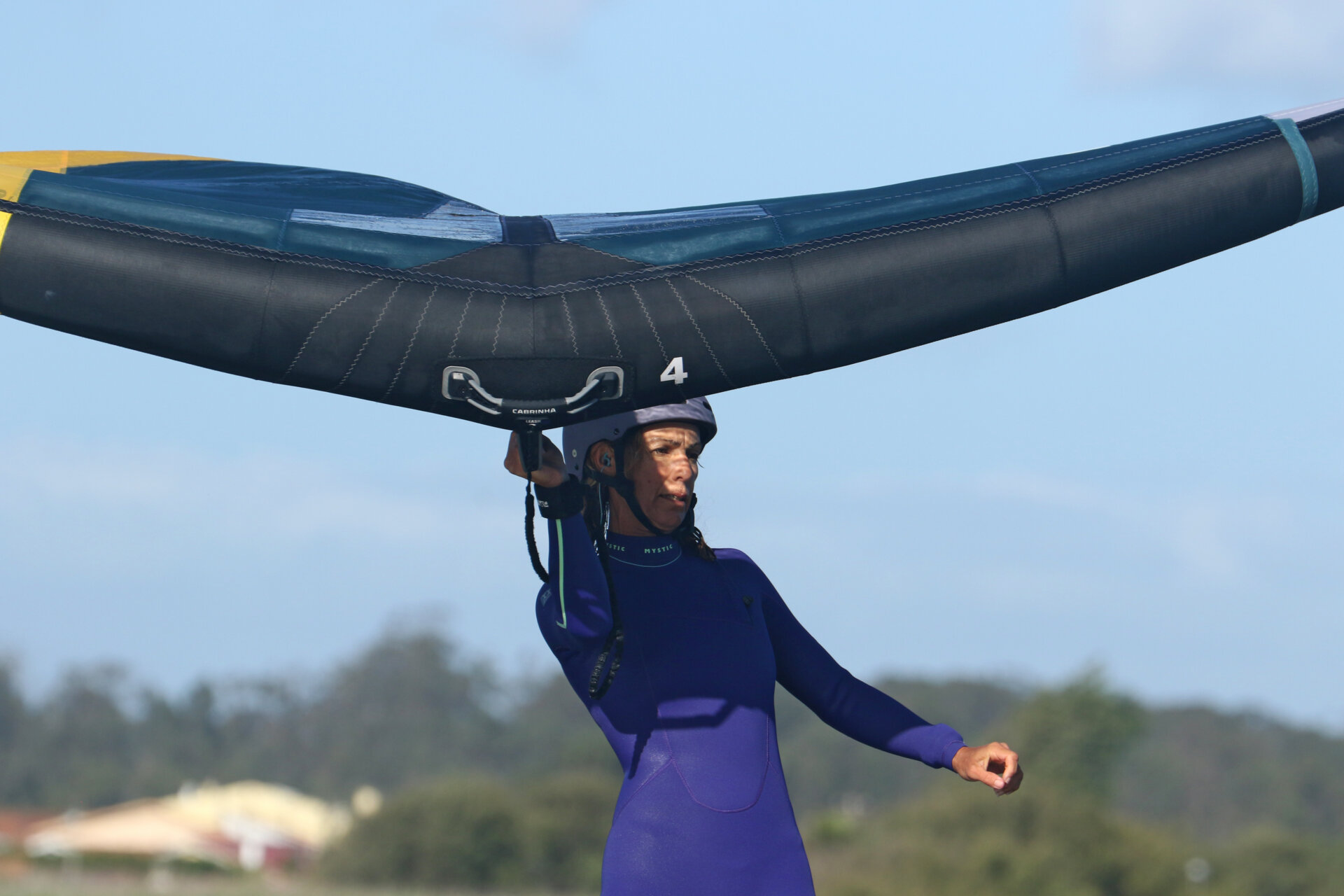
It’s now time to dig deep for your best waiter impression, the pedestrian looking but deftly executed shoulder carry. This may not be a tray of effervescent crystal, but keeping your hand steady will keep your wing floating and happy. Pull your hand down and you risk the subtle lift being destabilised and a possible backwinding from in front of you. Lift the hand too high and you risk the wing being pushed against you from behind. Keep your hand steady and concentrate on your carve. You can see Karine’s hand remains high, her wing is dancing to its own tune whilst Karine continues to carve towards downwind.
Through The Wind Pic F.
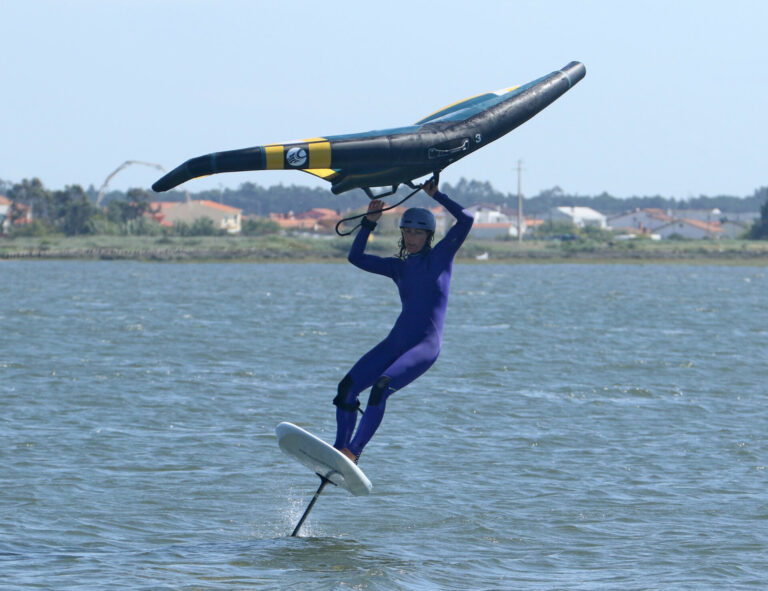
Theoretically and practically your wing will be pointing into the apparent wind throughout your gybe. As you carve through downwind, twist your wrist so that your wing will follow you and keep floating. This is a crux part of the move as it’s so very tempting to pull your hand down, especially if you’re not travelling particularly fast. Resist all your screaming synapses and hold your hand up as if you’re about to hurl a javelin, and yes, you’ve got it, keep carving. Here you can see Karine channelling her inner Daley Thompson, keeping her hand up and wing steady, whilst twisting her wrist and pointing her hand down wind.
Hand Swap Pic G.
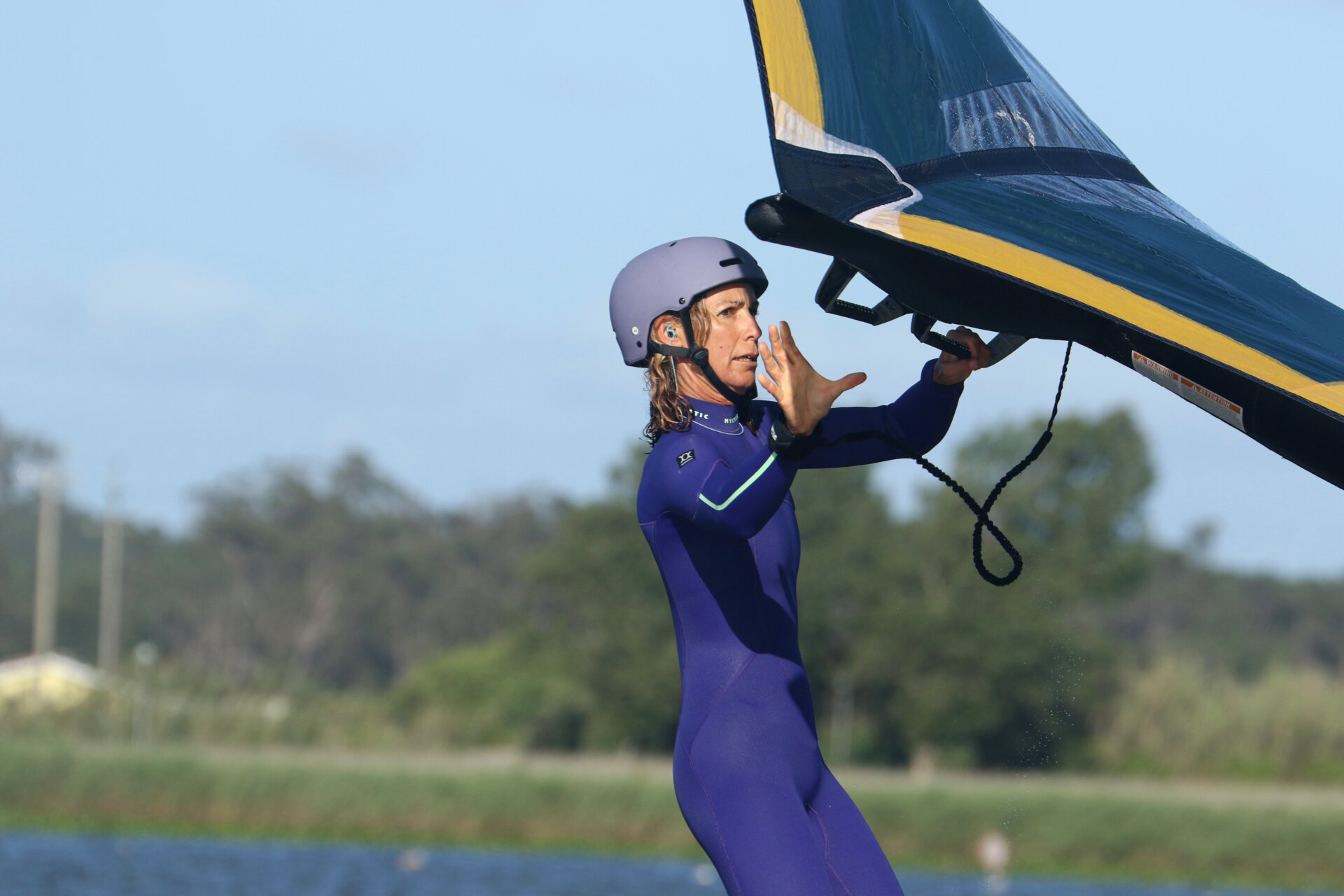
As you carve onto your new tack it’s time to get your new front hand on. The same applies as before, try and keep your hand up around eye level as you bring it and the wing in front of your head. Lift your free hand and grab the handle/boom in front of the other hand. Whether you grab overhand or underhand now is a matter of personal preference, but if you’re a regular of these pages, you’ll know that we do lean towards an overhand grip. As Karine brings the wing across, she keeps her hand high. You can see how the wing is still happily and magically floating above her.
Wing Forward Pic H.
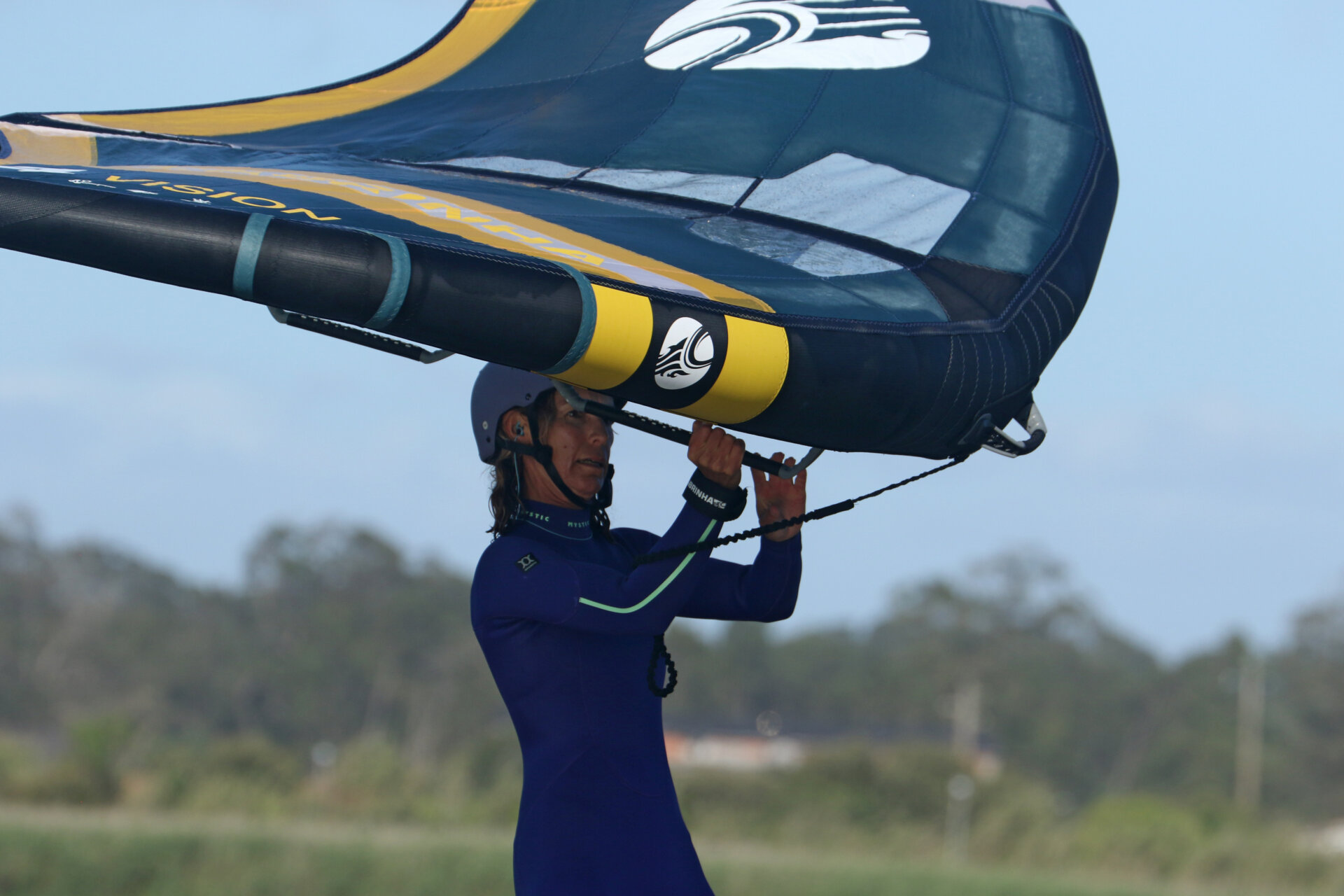
You need to get the wing in front of you so that it leads you out of the turn. This will also move the wing into a position where the rear handle is close and easy to grab without you needing to reach back for it. The Brucey bonus, by moving the wing forward it helps keep your board and foil trimmed and your carve smooth. As Karine moves her wing forwards, she can easily grab the rear handle.
Power On Pic I.
You know the drill! To get a clean exit bring the wing down, point it forwards in the direction of travel and sheet in whilst finishing your carve so that you can power out and upwind with the broadest of smiles on your face. Karine has her wing low and pointing forward, she’s sheeted in, her board is trimmed and she’s claimed it!
Top Tips
Less is more! Hands up, we may have written numerous words on how this works, but the trick is to actually do very little. Once your is floating your front hand slowly guides it around the turn as if you’re pulling it behind you. There are no large hand movements!
When you first attempt the Heineken gybe it will be better if you’re comfortable, just powered enough that it’s easy to foil. This way you’ll be happy to accelerate into your gybe without needing to go Mach 10. In lighter winds it’s simpler and less scary to go quicker than the wind!
As we said it’s difficult enough to know where you are in relation to the wind yet alone have a scooby where the apparent wind is coming from. Something that may help is to think that your wing will point slightly out from where the nose of your board is pointing and remain at the same angle to the nose as you carve around. Effectively your wing is following the nose, but a little bit late!
Really concentrate on keeping your hand and wing up, otherwise you’ll get backwinded.
Keep an eye out for the video coming soon on the TONIC YouTube channel.
Have fun, enjoy the challenge. C&K:)