
Dive into our overview below, and be sure to return for the complete review soon.
The Cabrinha Mantis 2027 is an all-round performance wing aimed at freeride, wave and big-air use. Cabrinha has retained the model's powered character while revising its aerodynamic profile, canopy loading and control platform. The result is intended to suit a wide spectrum of riders, from those taking their first flights to experienced foilers looking for a wing that can move between flat water, surf and jumping without becoming a narrowly specialised design.
Revised flight profile
For 2027, Cabrinha introduces new aerodynamic profiles intended to improve front-hand pressure and overall balance. Canopy tension has been adjusted to support early planing and consistent power delivery, while a radial load-distribution panel layout follows the principal forces acting through the sail. By aligning the panels more closely with those loads, the design aims to preserve a cleaner profile and control deformation when the wing is powered.
The Mantis uses a flatter canopy than the fuller Vision platform. Cabrinha explains that this shape requires more active pumping at the lower edge of the wind range, but once moving it is designed to build apparent wind, maintain speed and produce efficient upwind angles. Its leading edge also has less dihedral than the Vision, helping it sit in a balanced position from the front handle when flagged out. That behaviour supports wave riding, where the rider needs the wing to remain neutral while concentrating on the line across the face.
Airframe and canopy
The canopy is made from Teijin D2 double-ripstop cloth, with Teijin 75 panels reinforcing the trailing edge. Cabrinha combines this with a three-stage hybrid leading edge. A stiffer 160gsm material is used through the central area, while lighter 140gsm material is placed towards the wingtips. The centre section therefore carries greater structural stiffness, while the reduced tip weight is intended to preserve a reactive feel and limit swing weight.
A reinforced double centre section supports the most heavily loaded junction of the airframe. Aerodynamic battens along the trailing edge help control airflow and hold a stable exit profile, while the updated radial panel cut distributes loads across the canopy. Together, these elements focus on retaining designed shape and response over repeated use rather than relying on canopy tension alone.
Boom, strut and visibility
The redesigned drop strut changes the relationship between the boom and airframe to improve ergonomics and hand placement. A rigid single boom provides a continuous grip for sheeting, transitions and manoeuvres. Its Keylock angled attachment points index the boom at both connections so it cannot rotate around the fittings, creating a firmer and more direct control platform.
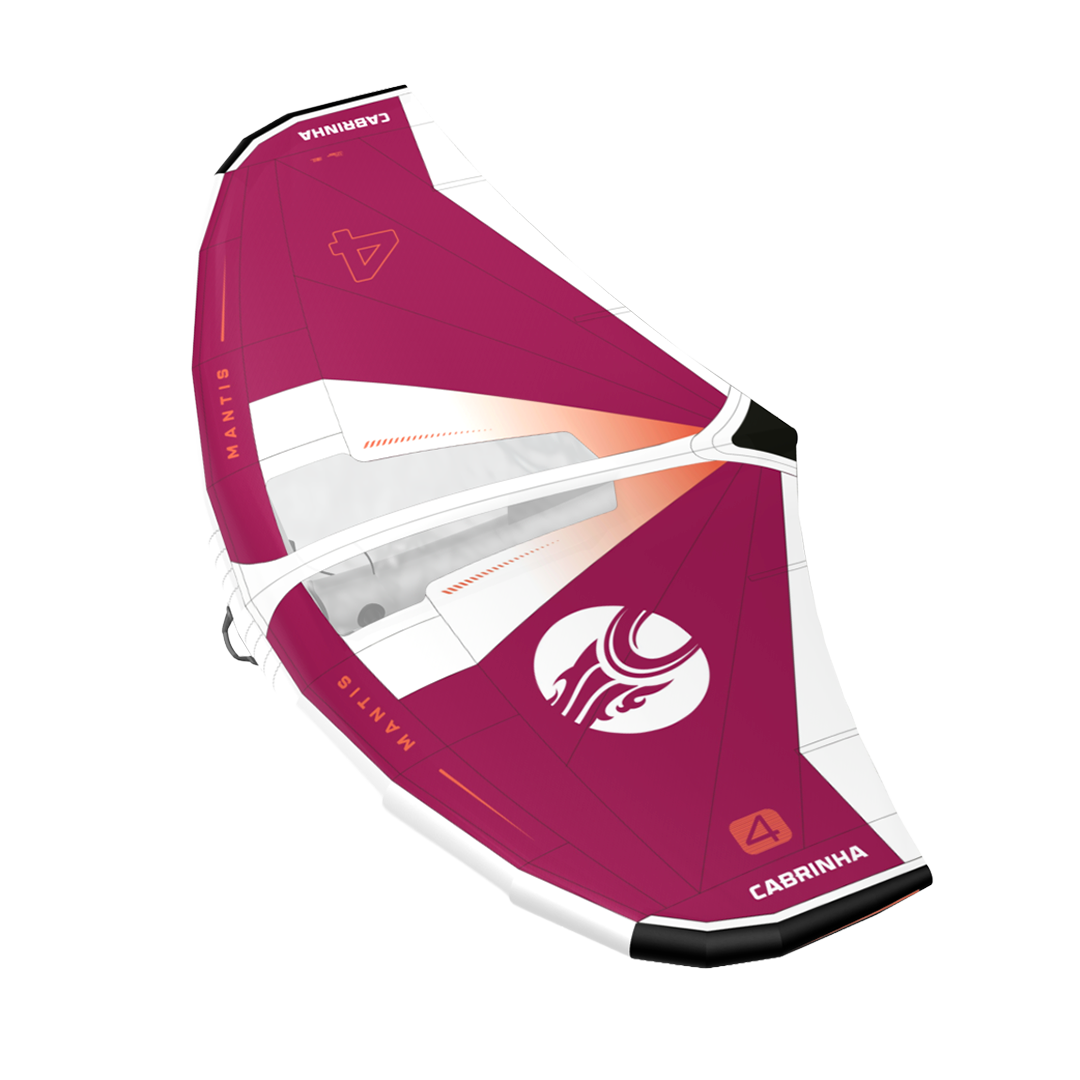
A rigid front handle gives the rider a defined control point when the wing is free-flying. The TruView mesh infill panel broadens the sightline through the centre of the wing while supporting the surrounding canopy profile. Inflation is handled by Cabrinha's high-capacity one-way airframe valve, which uses a twist-to-lock connection for setup and deflation.
Range and intended use
Nine sizes run from 2 to 6 square metres. Cabrinha's published wind ranges for a 75kg rider progress from 25–45 knots for the 2m through 20–40, 17–36, 16–34, 15–30, 13–27, 11–26 and 9–24 knots, reaching 7–20 knots for the 6m. Listed wing weights without the bag range from 1.90kg to 3.35kg, and spans range from 2.32m to 3.72m across those sizes. These figures provide a comparative guide; practical selection will still depend on rider weight, foil, board, conditions and ability.
The flatter profile and powered delivery place the Mantis toward riders who value speed, upwind efficiency and jumping as well as ordinary freeriding. Its balanced front-handle behaviour also gives it a clear role in surf. Cabrinha presents the larger Vision as the more dedicated choice for threshold light wind, whereas the Mantis prioritises a broader performance envelope and a more active riding style.
Summary
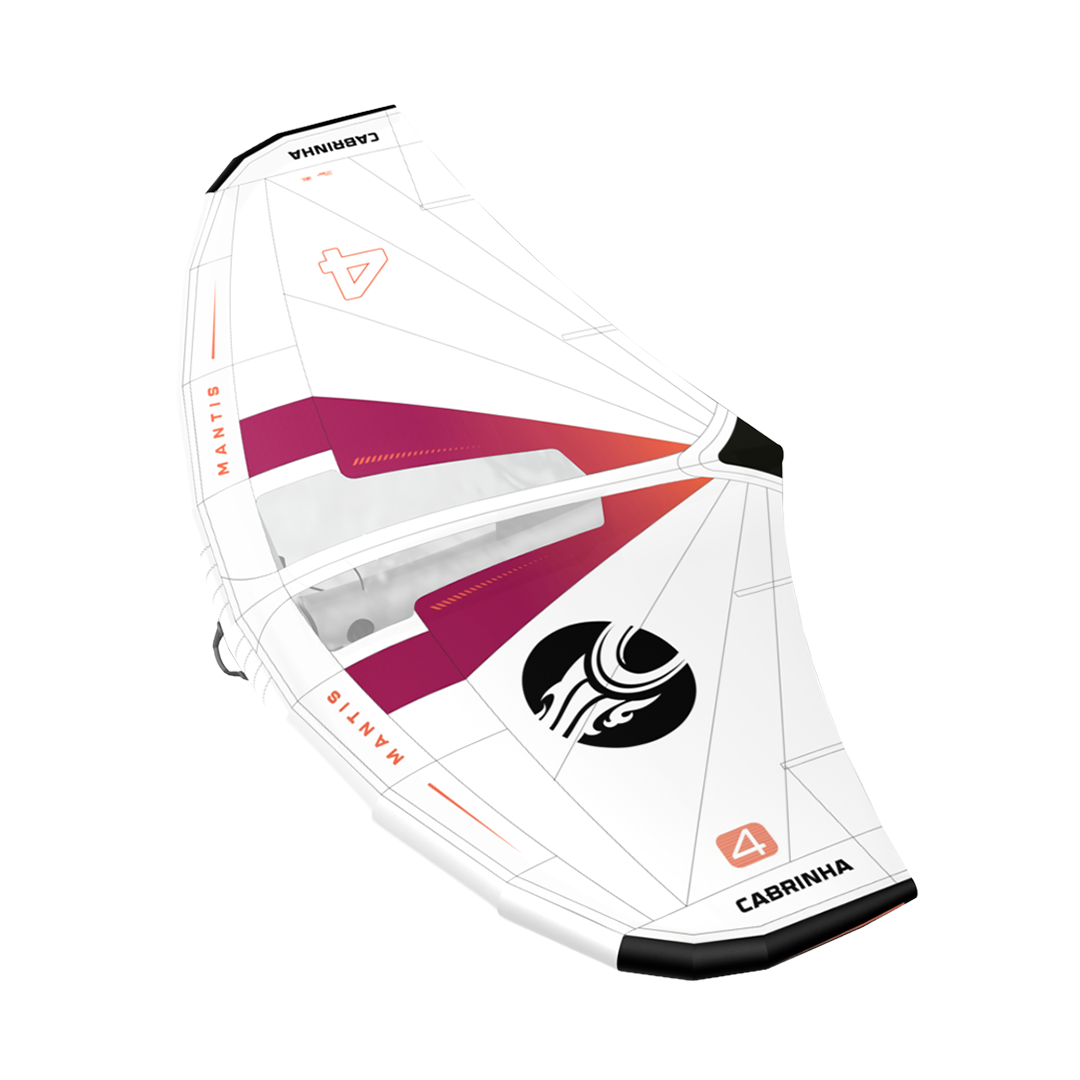
The Cabrinha Mantis 2027 is a versatile performance wing for freeriders, wave riders and foilers interested in big air. Revised aerodynamic shaping, radial canopy loading, the hybrid leading edge, Teijin D2 canopy, rigid boom and balanced flagged-out handling are its principal supported strengths, combining powered flight with control across a nine-size range.