
AFS may be a newcomer to the rapidly growing world of parawinging, but the French brand is no stranger to high-performance foiling. Over the past few years, it has built a reputation for producing beautifully engineered foils, wings and boards, with an uncompromising approach to design and construction. The Stow marks its first step into the parawing market, bringing that same engineering mindset to one of the sport’s fastest-evolving disciplines.
Extending The Wind Range
AFS may be a newcomer to the rapidly growing world of parawinging, but the French brand is no stranger to high-performance foiling. Over the past few years, it has built a reputation for producing beautifully engineered foils, wings and boards, with an uncompromising approach to design and construction. The Stow marks its first step into the parawing market, bringing that same engineering mindset to one of the sport’s fastest-evolving disciplines.
Rather than trying to reinvent the concept, AFS has focused on solving two of the biggest challenges facing every parawing rider: increasing the usable wind range and making stowage and deployment as easy as possible.
The Power Loop System
The standout innovation is the new Power Loop System.
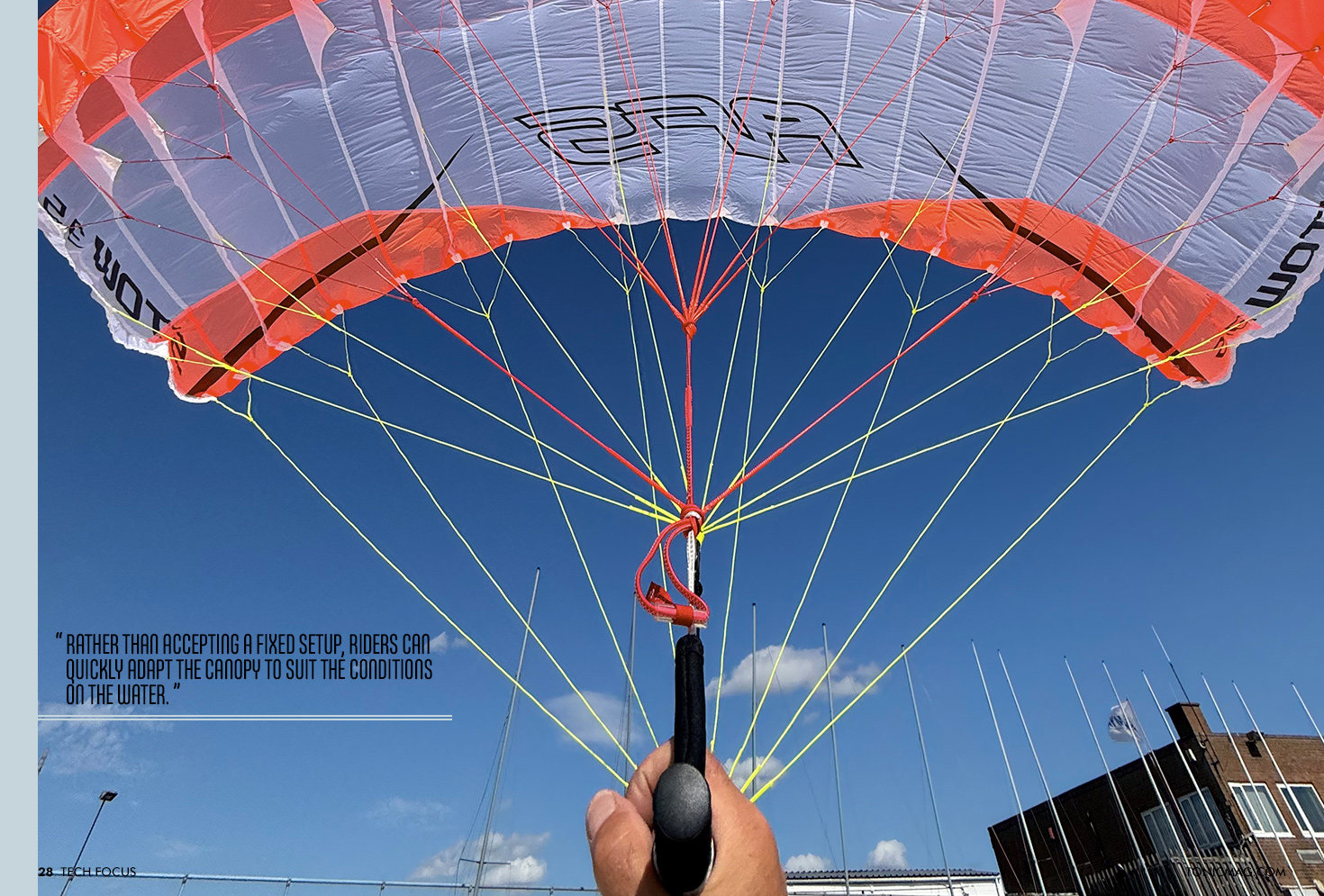
Under normal conditions and in lighter airs, you ride the Stow as you would any parawing, but then, as the wind increases, you can pull the loop down and hook it over the front of the bar. The system effectively shortens the front lines, changing the way the wing loads and allowing it to depower more efficiently. The result is greater control as the wind builds, extending the usable range of the wing without forcing riders to immediately swap down a size or ride permanently from the very front of the carbon bar.
It’s a clever solution because it changes the behaviour of the wing without changing the wing itself. Rather than accepting a fixed setup, riders can quickly adapt the canopy to suit the conditions on the water.
Designed Around Stowage
As its name suggests, the Stow has also been engineered around making the transition between powered riding and packing down as seamless as possible.
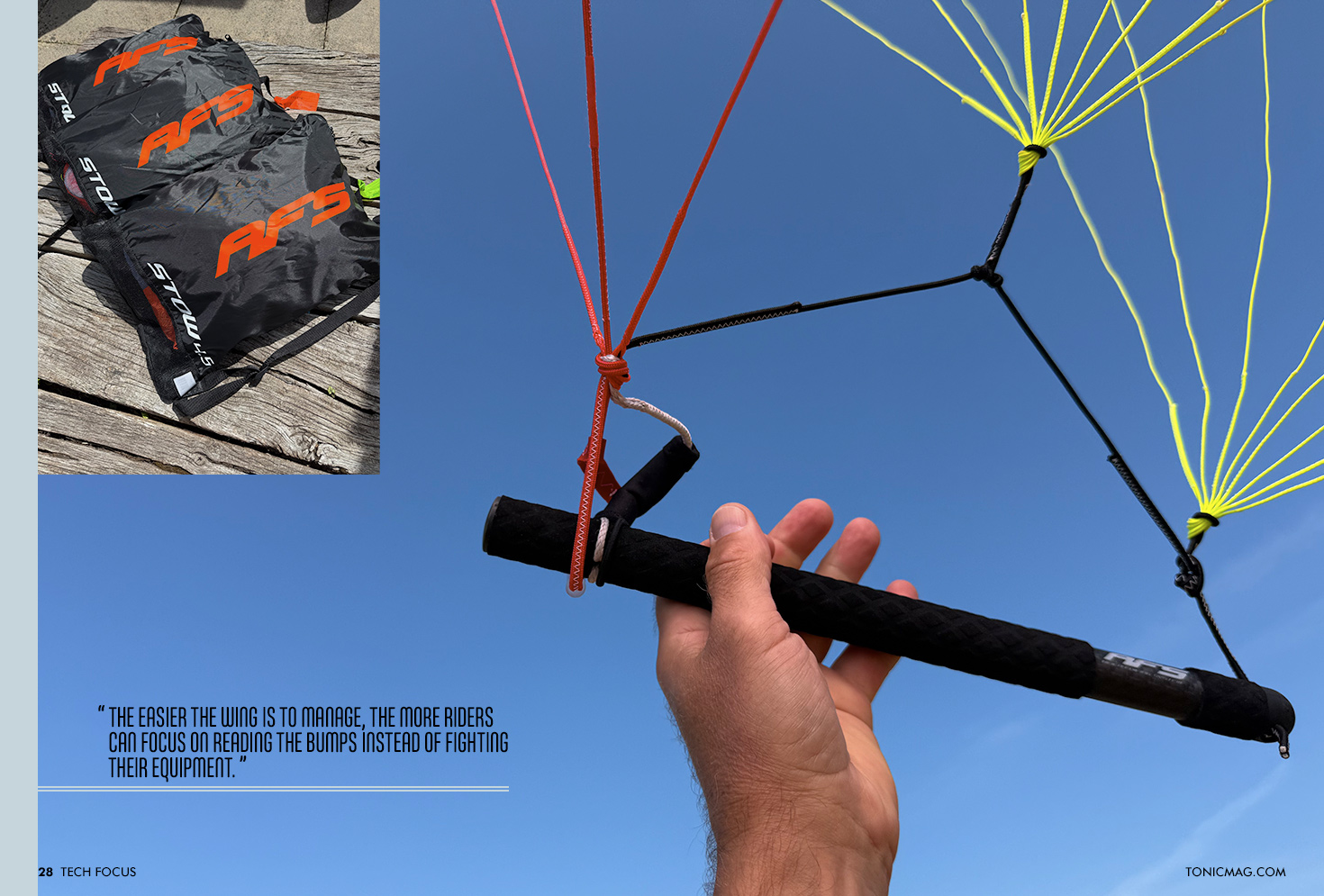
AFS has paid particular attention to packing, deployment and relaunch, recognising that these moments define the parawing experience just as much as outright flying performance. Colour-coded bridles, an intuitive layout and a compact bridle are all designed to reduce tangles and make getting the parawing back into the air as straightforward as possible.
It’s an approach that acknowledges the reality of parawinging: the easier the wing is to manage, the more riders can focus on reading the bumps instead of fighting their equipment.
Consistency Across The Range
AFS has also maintained the same 2.72 aspect ratio across every size in the range. Rather than each wing having its own distinct character, riders moving between sizes should find familiar handling and predictable behaviour, making it easier to choose the right canopy for the conditions without having to adapt to a completely different feel.
The Bigger Picture
AFS has concentrated on making the experience better where it matters most. The innovative Power Loop system extends the usable wind range, while the emphasis on easy stowage, deployment and relaunch removes much of the complexity that can make parawinging intimidating for newcomers.
For a first entry into the category, it’s a thoughtful piece of engineering that stays true to AFS’s reputation for producing refined, high-end foiling equipment.
Videos from this article