

For much of foiling’s development, conversations around mast design revolved around a single objective: stiffness.
Why Modern Mast Design Is About More Than Stiffness
For much of foiling’s development, conversations around mast design revolved around a single objective: stiffness.
As front wings became larger, faster and more efficient, reducing flex was the obvious route to improving precision and rider confidence. Carbon construction evolved rapidly, manufacturing techniques advanced, and each new generation of masts became progressively lighter and more rigid.
Today, however, the engineering challenge has changed.
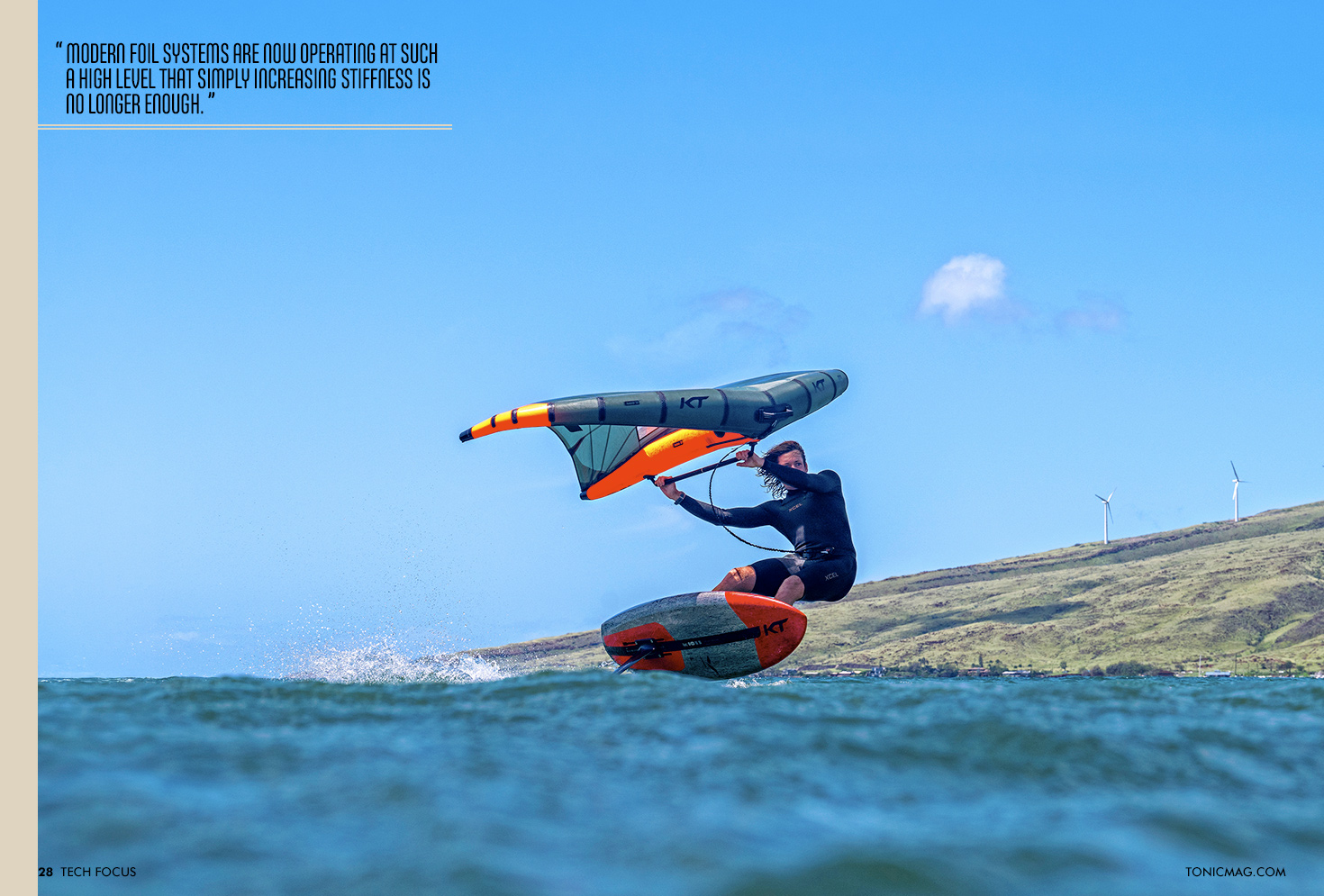
Modern foil systems are now operating at such a high level that simply increasing stiffness is no longer enough. Once a front wing is flying efficiently, the mast becomes one of the largest hydrodynamic surfaces moving through the water, meaning its influence extends far beyond structural support. It affects drag, acceleration, glide, ventilation characteristics and ultimately how efficiently the entire foil system performs.
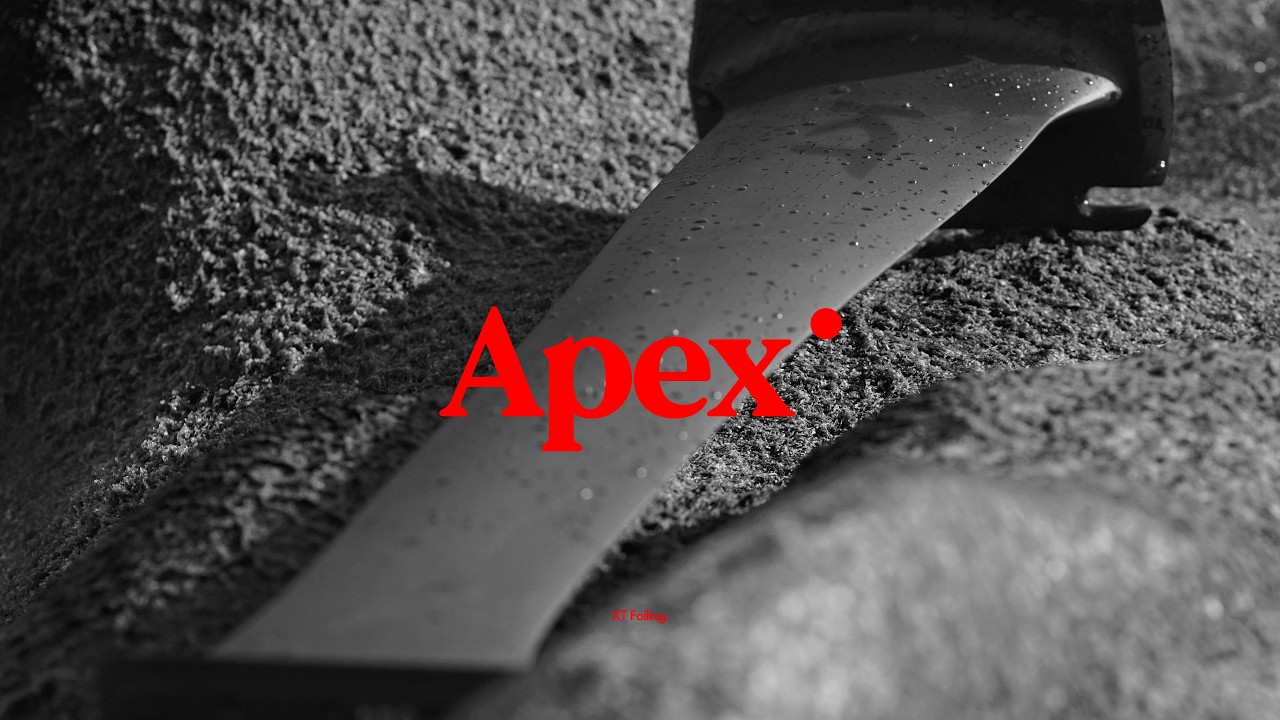
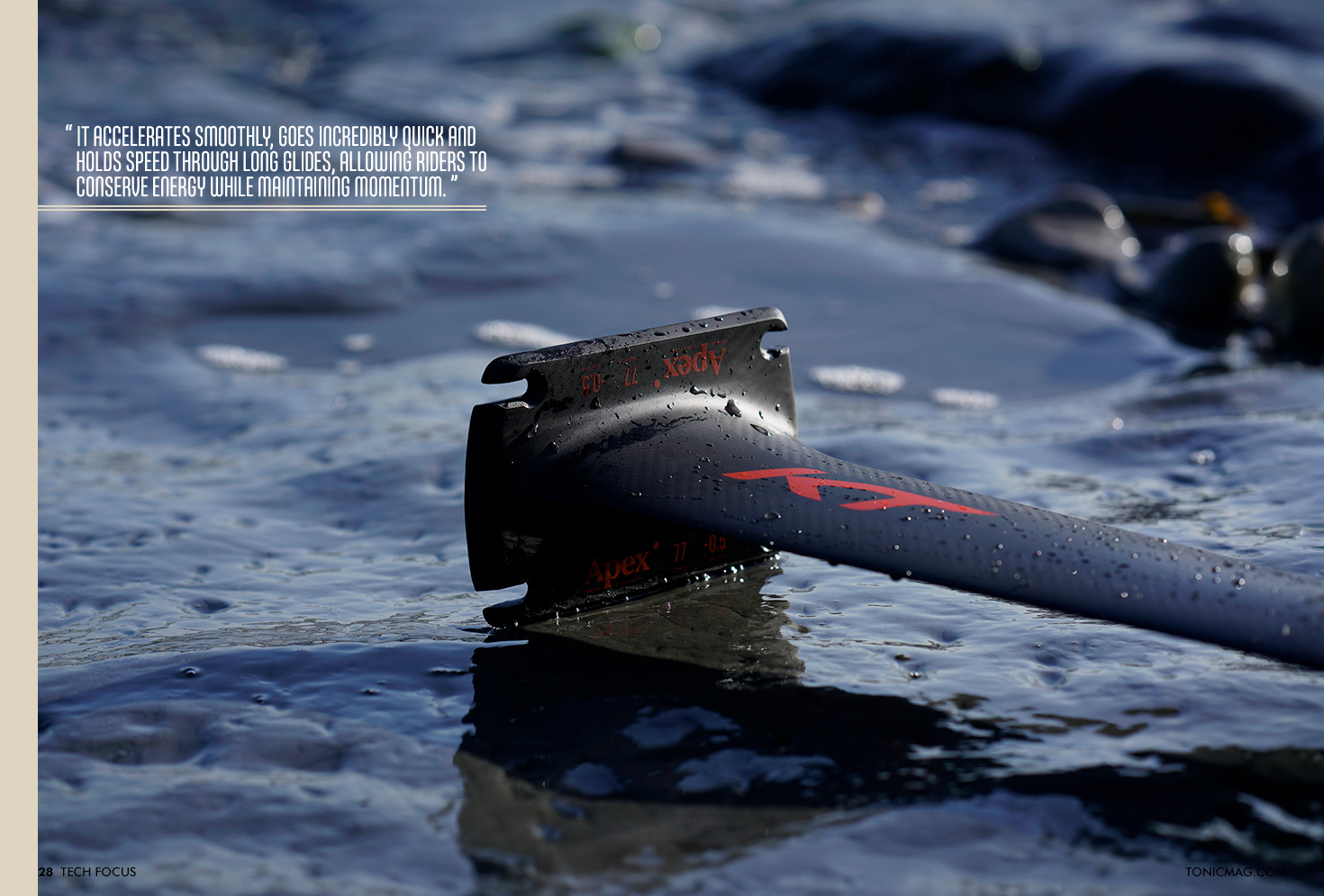
The KT Apex Mast reflects this shift in thinking.
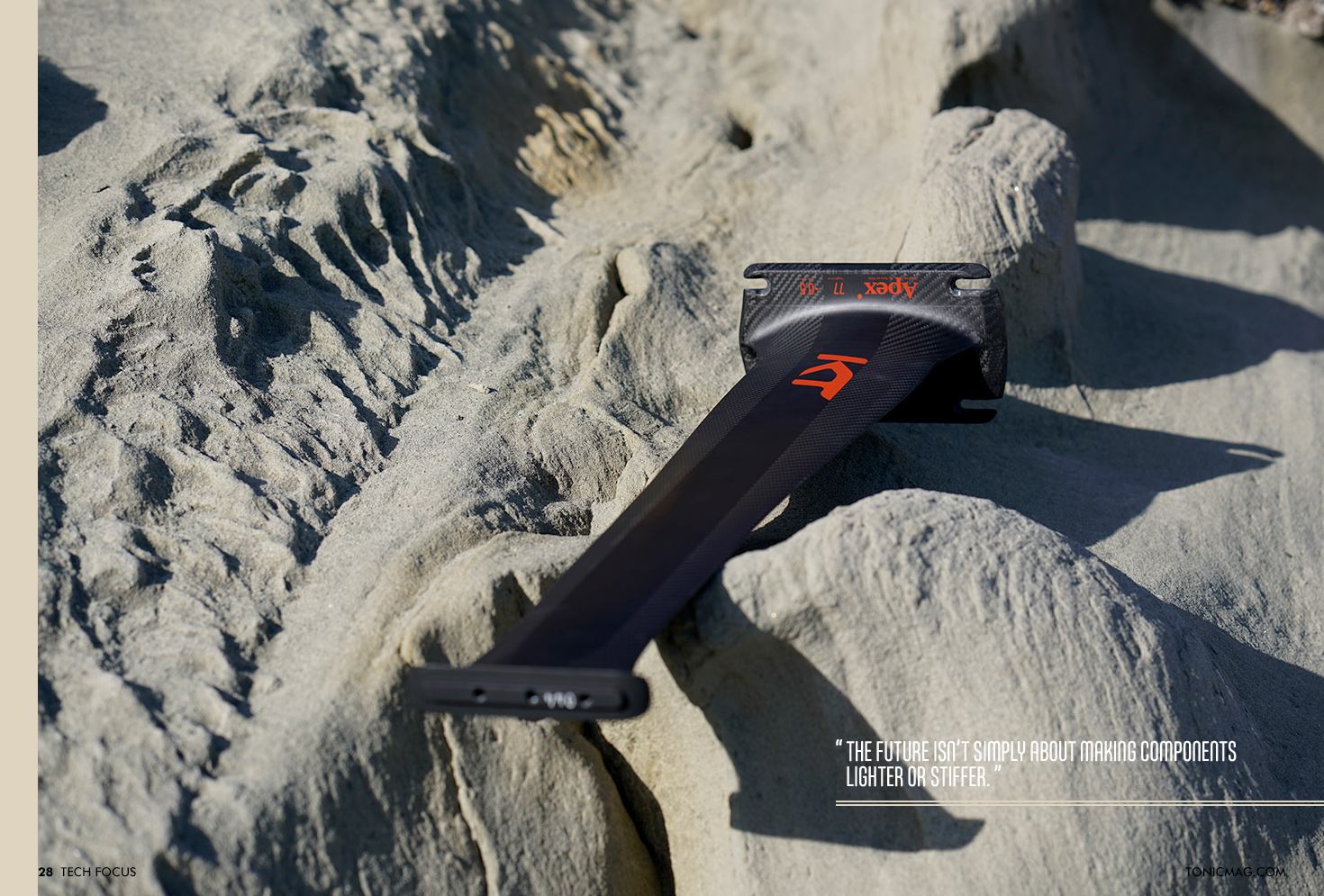
Rather than approaching the mast as a structural component connecting board and foil, KT has treated it as an active hydrodynamic element within the complete system. Every aspect of its design, from the carbon construction and foil profile to the baseplate geometry and even the individual mast lengths, has been developed with a common objective: improving the efficiency of the whole foil rather than focusing on one isolated performance characteristic.
Beyond Stiffness
Structural rigidity remains fundamental to any high-performance mast.
Every steering input, pumping movement and carving turn relies on the mast transmitting loads cleanly between the board and the foil. Excessive flex or torsional movement can soften those inputs, reducing the direct feeling that experienced riders look for.
The Apex addresses this through an Ultra High Modulus carbon construction, using exceptionally stiff carbon fibres to maximise rigidity while minimising unnecessary weight. Rather than adding more material to achieve stiffness, the construction allows KT to produce a lighter structure without compromising precision.
Importantly, though, stiffness is treated as the starting point rather than the final objective.
The real engineering challenge lies in combining that structural performance with hydrodynamic efficiency, ensuring the mast not only resists flex but also moves cleanly and predictably through the water.
A Different Approach To Hydrodynamics
Every foil mast generates drag.
As riding speeds increase and front wings become more efficient, that drag represents an increasingly important part of the overall performance equation.
For the Apex, KT has developed what it describes as a forward-offset multi-airfoil profile. Rather than relying on a single foil section throughout the mast, the profile has been refined to improve submerged efficiency while resisting ventilation and reducing spray drag when the mast approaches the surface.
It’s a subtle distinction, but an important one.
Hydrodynamic performance isn’t simply about making a mast thinner. Every change to the profile influences stability, control and predictability, so the challenge is always to reduce resistance without compromising the confidence riders expect beneath their feet.
The Apex demonstrates that balance. Instead of chasing the lowest possible drag figure, the design focuses on maintaining efficient, consistent water flow throughout the wide range of speeds and loading conditions encountered during modern foiling.
One Mast Doesn’t Suit Every Discipline
Perhaps the most distinctive aspect of the Apex range is that KT hasn’t simply produced one mast in several different lengths.
Each size has been developed as its own design.
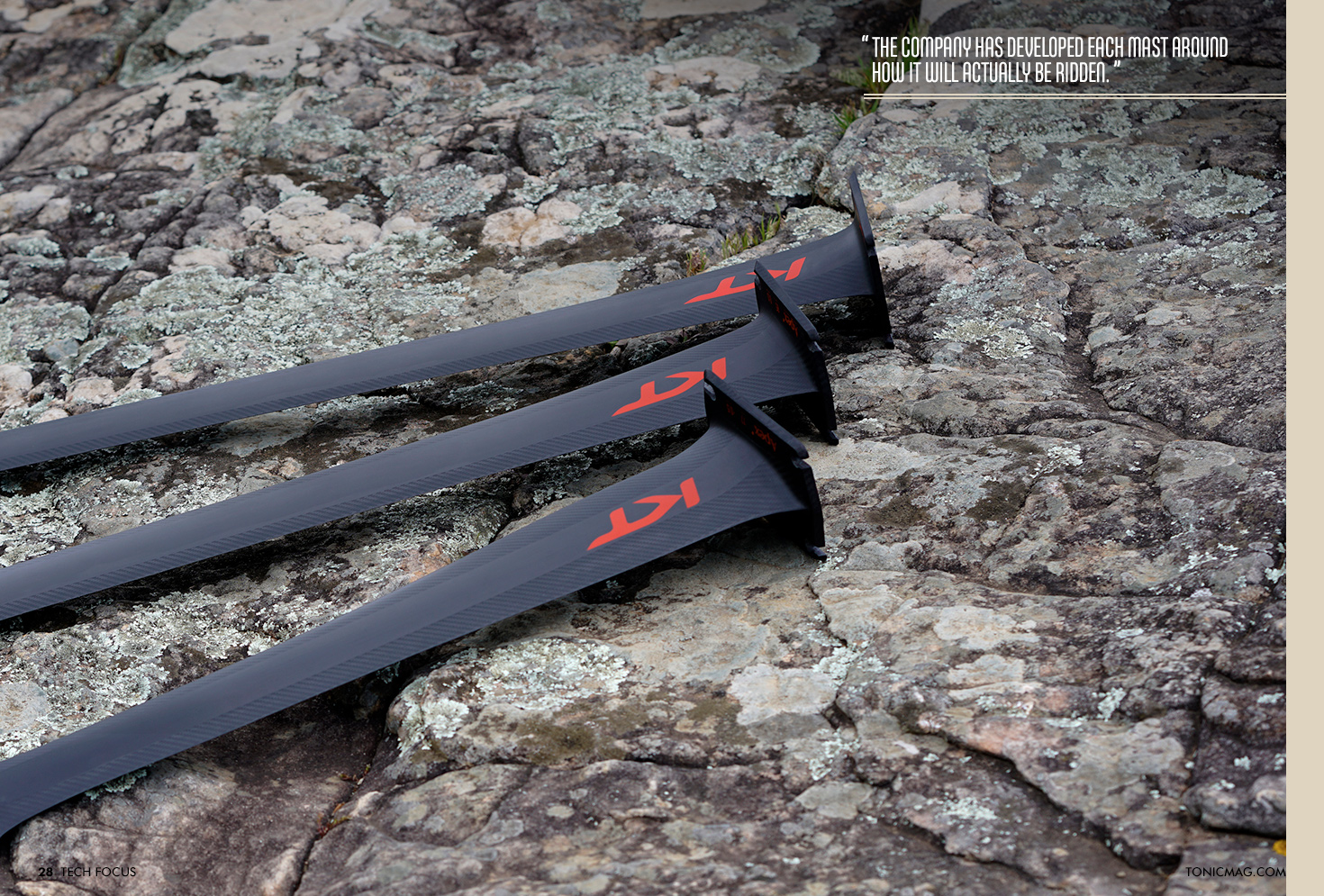
Rather than scaling a single profile, KT has refined the section, taper and performance characteristics of each mast according to its intended use. The 77cm version prioritises manoeuvrability and responsive handling; the 85cm has been tuned as the all-round option for everyday wing foiling and surf applications, while the 95cm focuses on maximising efficiency, glide and control for higher-speed riding and open-water conditions.
It’s a significantly more involved design process than simply extending the same mast by a few centimetres, but it reflects an important engineering principle.
Different mast lengths experience different loading characteristics, operate in different disciplines and place different demands on the rider. Designing each one independently allows those differences to be considered from the outset rather than accepted as compromises.
It’s an approach that says a great deal about KT’s design philosophy. Rather than assuming one solution fits every application, the company has developed each mast around how it will actually be ridden.
Refining The Connection
The interface between the mast and the board has also received considerable attention.
The Apex features a redesigned baseplate with a refined fairing that creates a cleaner transition into the mast itself. Hydrodynamically, this smoother junction is intended to reduce drag around the mast-to-board interface, particularly during take-offs and touchdowns, where disturbed water flow is most common.
KT has also moved the baseplate forwards, a change designed to reduce perceived swing weight while creating a more direct connection between rider and foil.
Neither refinement is dramatic on its own, but together they demonstrate the increasingly holistic way modern foil systems are being engineered. Performance gains are rarely found through one revolutionary feature. More often, they come from refining every interaction between the individual components.
Engineering For The Long Term
Performance isn’t simply about how a mast feels on its first session.
The Apex incorporates stainless steel coil inserts at the mounting points to improve long-term durability, recognising that repeated assembly, disassembly and regular use place significant demands on modern carbon components.
Like the rest of the mast, these details reflect a practical engineering approach.
The objective isn’t simply to build the lightest possible mast, but to produce one capable of maintaining its structural integrity and consistent performance over years of use.
The Bigger Picture
The Apex Mast illustrates how foil design continues to mature.
The biggest performance gains are no longer coming from making individual components dramatically different. Instead, they’re emerging through a deeper understanding of how every part of the system interacts with the next.
That’s exactly what makes the Apex interesting.
Ultra-high-modulus carbon provides the structural foundation. The forward-offset multi-airfoil profile refines the way the mast moves through the water. The redesigned baseplate improves the interaction between board and mast, while the decision to engineer each mast length independently acknowledges that different disciplines demand different solutions.
Individually, each refinement may appear incremental.
Collectively, they represent a very different way of thinking about foil design.
Rather than viewing the mast as little more than a carbon strut connecting the board to the foil, KT has engineered it as a genuine performance component, one that actively contributes to the efficiency, feel and balance of the entire system.
And perhaps that’s the clearest indication of where modern foil design is heading. The future isn’t simply about making components lighter or stiffer. It’s about ensuring every component works more intelligently as part of the whole.
Videos from this article