

As foiling continues to evolve, so does our understanding of the risks that come with it. We take a closer look at why impact vests have become an essential piece of equipment for riders across every foil discipline, before rounding up some of the best options available this season.
Why an Impact Vest Should Be the First Accessory Every Foiler Buys
Foiling has changed watersports forever. Whether you’re wing foiling or exploring the rapidly growing world of parawinging, the feeling is unlike anything else. The first time the board lifts clear of the water and everything goes silent beneath your feet, it’s easy to understand why so many of us have become completely obsessed.
Naturally, much of the conversation in our sport revolves around performance. We spend hours discussing the latest high-aspect front wings, mast stiffness, board shapes, and construction techniques. We analyse every new release, searching for equipment that will get us flying earlier, gliding further or carving harder. Yet while our equipment has evolved at an astonishing pace, one area still seems to receive surprisingly little attention: personal protection.
Spend a busy afternoon at your local beach, and you’ll probably see riders carrying several thousand pounds worth of carbon equipment down to the water. They’ll have the latest foil, a beautifully engineered board and an expensive wing, but many of them might not be wearing an impact vest. That has always struck me as slightly odd because, unlike almost every other watersport, foiling has fundamentally changed what happens when things go wrong.
When we surf, windsurf or paddleboard, we generally fall into the water from board level. Yes, those crashes can still hurt, but the distance is relatively short, and the impact is often spread across our body as we slide or tumble into the water.
Foiling is different.
We’re often standing close to a metre above the surface, travelling at speeds that would have seemed unbelievable only a few years ago. Beneath us is a carbon mast supporting wings with incredibly thin, sharp and efficient profiles. The foil is what gives us that magical sensation of flight, but it also means we’re carrying much more energy than we realise. When we crash, all of that energy has to go somewhere.
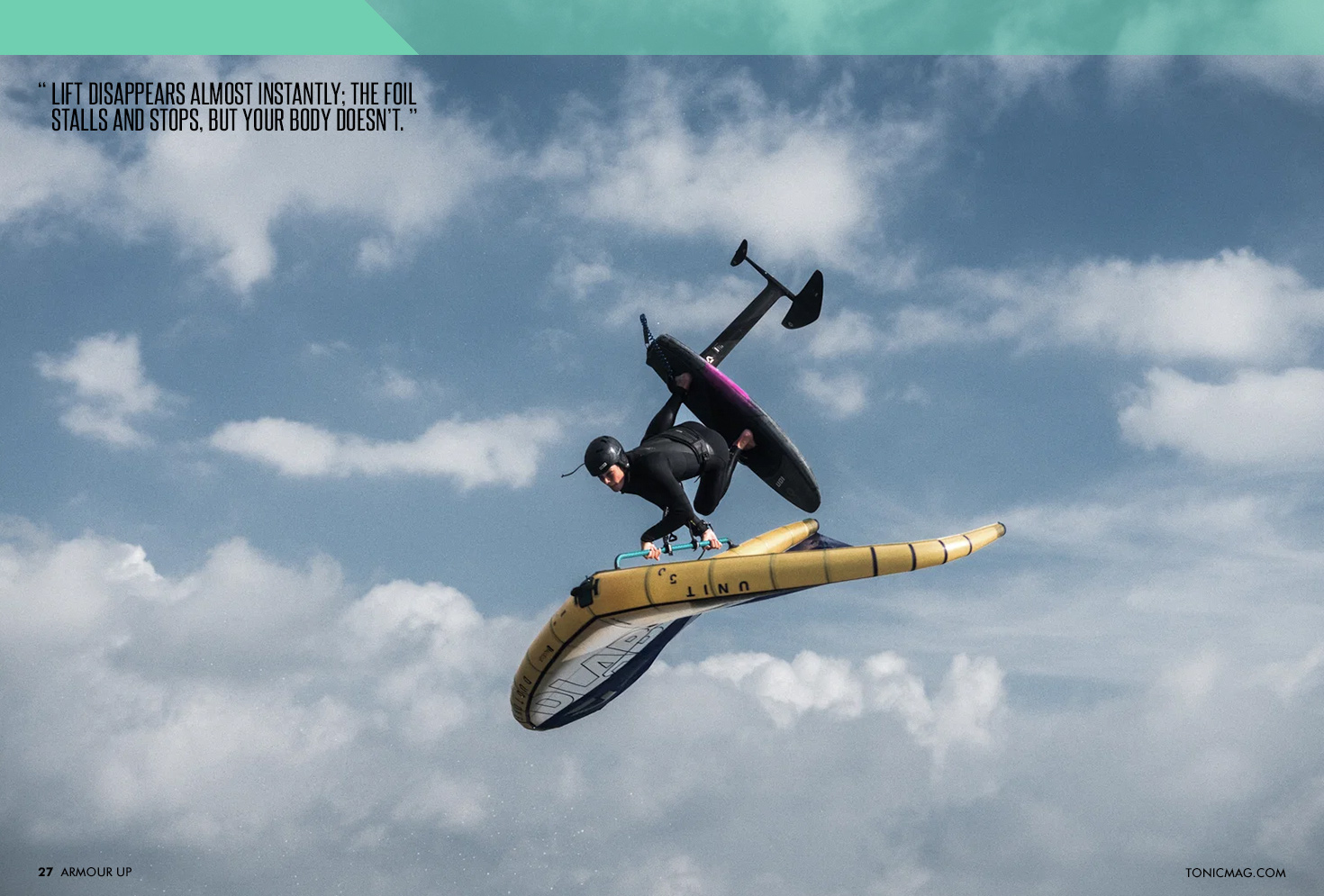
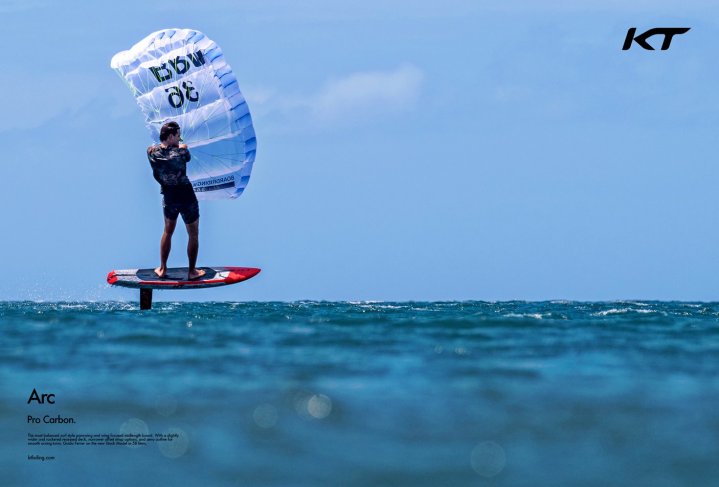
One of the most common crashes in wing foiling happens when the front wing breaches the surface. Lift disappears almost instantly; the foil stalls and stops, but your body doesn’t. It keeps travelling forward at the same speed it was moving a fraction of a second earlier. Because you’re still holding onto the wing, or increasingly a parawing, your hands are usually above your head. Instead of instinctively pulling your arms in to protect yourself, you are often stretched out, taking the full force of the impact on your chest and ribs, which are often the first part of your body to hit the water.
People often describe water as being soft.
It isn’t.
Hit it at twenty knots, and it feels remarkably solid.
Anyone who has experienced one of these crashes knows exactly what I’m talking about. Your ribs take the full force of the impact and, for a few seconds afterwards, all you can do is float there wondering what just happened while trying to remember how to breathe.
Sometimes you pop back up laughing.
Sometimes you don’t.
I’ve broken my ribs three times over the years while kitesurfing. None of those injuries happened while foiling, but they were enough to teach me a lesson I had no interest in learning again.
Broken ribs are horrible injuries.
Unlike a broken arm or collarbone, there isn’t really a treatment. You can’t put them in a cast or immobilise them while they heal. Every breath moves them. Every cough hurts. Sneezing becomes something you genuinely dread, and even something as simple as turning over in bed suddenly requires careful planning.
Then there’s the frustrating part for anyone who loves being on the water.
Time.
Recovery isn’t measured in days; it’s measured in weeks, and sometimes months. During that time, you’re constantly reminded of the injury every time you laugh, pick something up or climb into the car. For active people, it’s incredibly frustrating.
Those three injuries completely changed the way I look at chest protection.
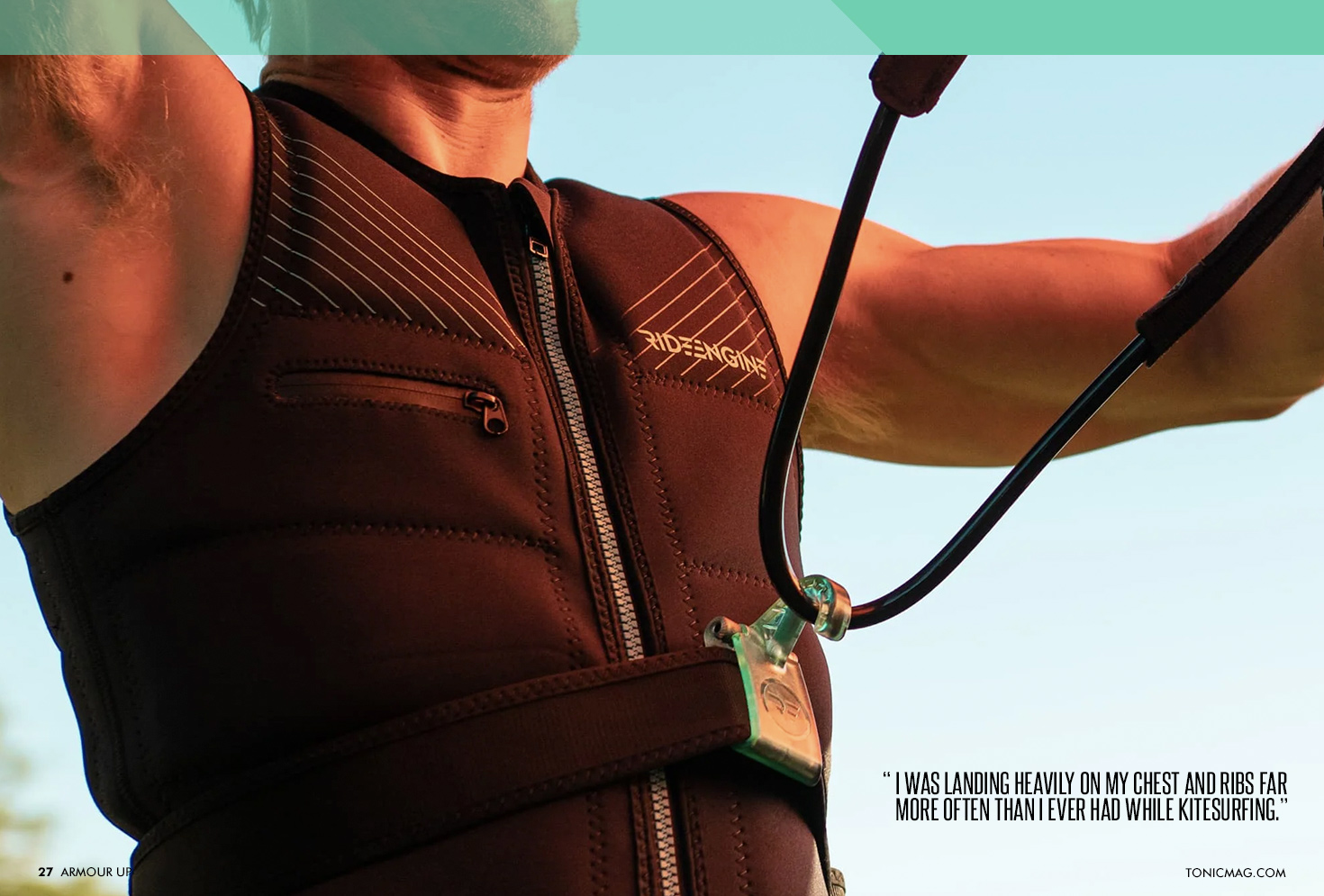
When foiling became my main passion, I started thinking much more carefully about the type of crashes I was having. I realised that although I wasn’t getting injured regularly, I was landing heavily on my chest and ribs far more often than I ever had while kitesurfing. The falls were different, and so were the forces involved.
That’s when I started wearing an impact vest every session. Now it goes on without a second thought, just like my wetsuit. Can I say it has definitely prevented broken ribs? No, because that’s impossible to prove.
What I can say is that I’ve taken some enormous chest-first slams while wearing one and walked away with no major injuries. Whether that’s luck, the vest, or a combination of both, I’m happy not to find out the alternative.
Modern impact vests aren’t designed to make you invincible, and that’s an important point to make. They’re also not a replacement for good judgement or sensible progression. If you’re riding beyond your ability or pushing the limits in dangerous conditions, no amount of foam is going to save you from every injury.
What they are designed to do is absorb and spread the force of an impact over a much larger area of your torso. Rather than concentrating all of that energy into one or two ribs, the foam compresses and dissipates some of the force before it reaches your body. It won’t eliminate every injury, but it can significantly reduce the severity of many impacts.
That’s exactly what they’re there for.
Of course, ribs aren’t the only thing they protect.
Heavy falls can also involve impacts to your sternum, your back and the soft tissue around your torso. Anyone who has caught the rail of their board, landed awkwardly during a pump foil session or been thrown forwards during a downwind run knows just how unpredictable crashes can become.
We’ve not even scratched the surface, excuse the pun, of actually hitting the foils, which does happen; we’ve all got holes in our wetsuits, we’ve all done it, and we all know horror stories. An impact vest is going to offer some much-needed protection for your vital organs in the event of an incident!
The faster our sport evolves, the more relevant this becomes. As our equipment progresses, the energy involved in our crashes inevitably increases as well.
For me, though, protection is only half the story.
The biggest benefit of wearing an impact vest is actually confidence.
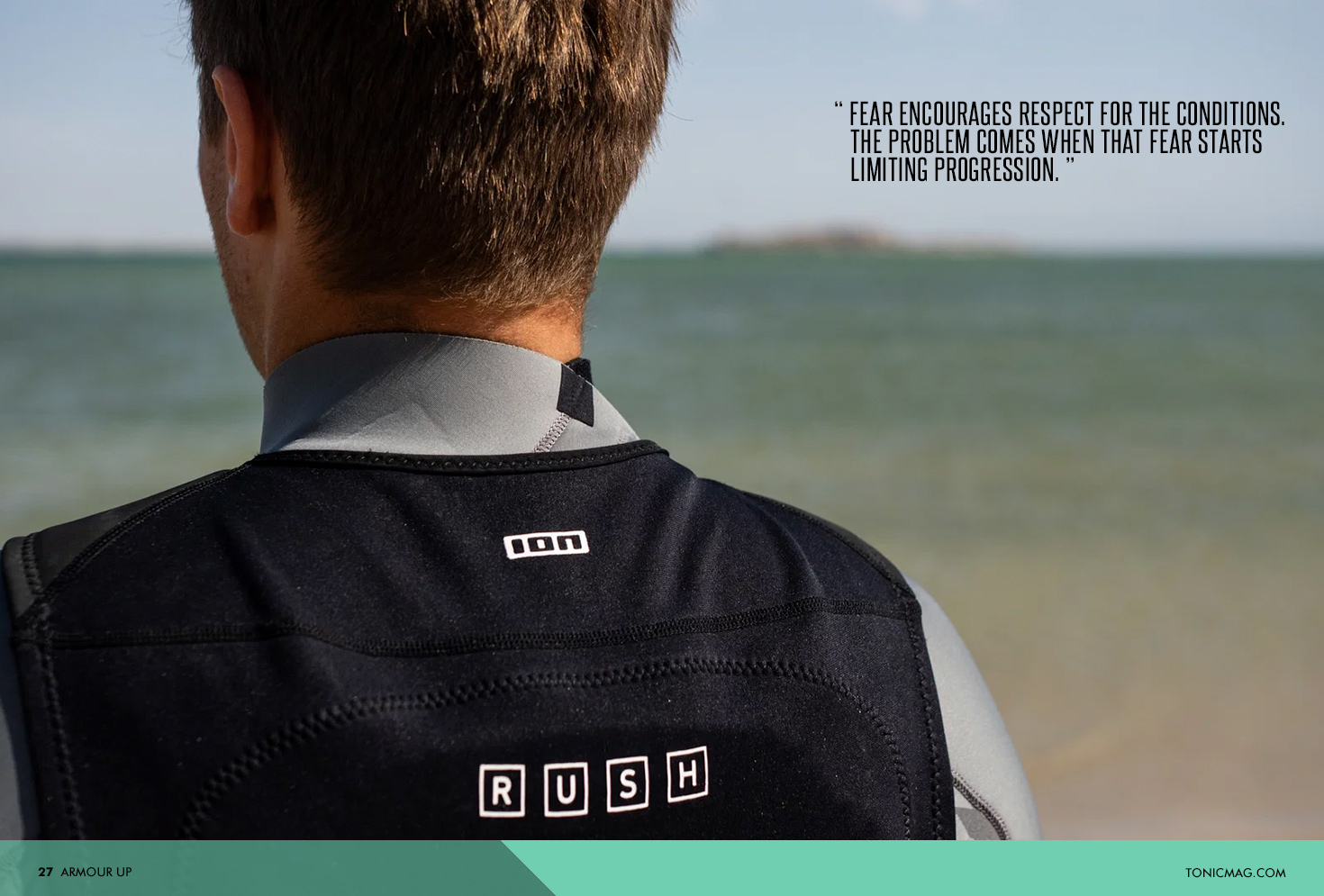
Every rider, whether they’re willing to admit it or not, carries a small amount of fear. That’s perfectly healthy because fear encourages respect for the conditions. The problem comes when that fear starts limiting progression.
You hesitate before committing to a gybe.
You back out of a tack.
You decide not to pump onto that bump because you’re worried about falling.
Knowing you’re wearing a layer of protection doesn’t remove the risk, but it often removes enough doubt that you’re willing to commit properly. Ironically, riding with confidence often leads to fewer crashes because you’re no longer second-guessing yourself halfway through a manoeuvre.
There’s another benefit that often gets overlooked, too.
Warmth.
That extra layer around your core makes a noticeable difference during colder sessions. It’s not why most people buy an impact vest, but after several hours on the water, it’s amazing how much difference that insulation can make.
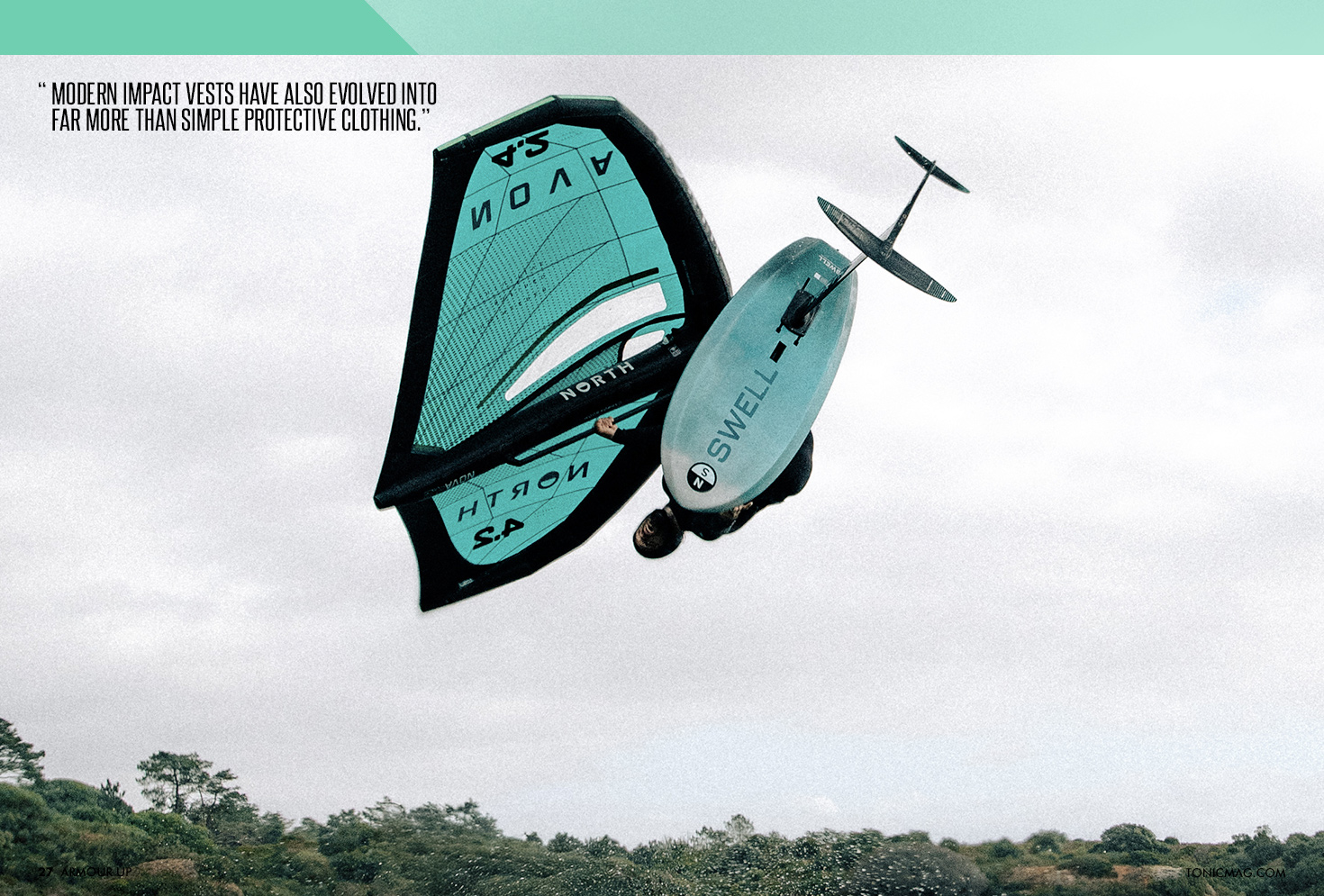
Modern impact vests have also evolved into far more than simple protective clothing.
Many now integrate wing harness systems directly into the vest, reducing fatigue while removing the need for a separate harness. Others include practical features like phone pockets, attachment points for safety knives and storage options for longer adventures.
As with almost every piece of foil equipment, there isn’t one perfect solution for everyone.
Freeriders may prioritise flexibility and comfort.
Long-distance riders might want storage.
Wing foilers using harness lines may prefer an integrated harness system.
The important thing is finding one that fits properly and feels comfortable enough that you’ll wear it every single session. The best impact vest in the world offers no protection when sitting in the back of your van because it feels bulky or restrictive.
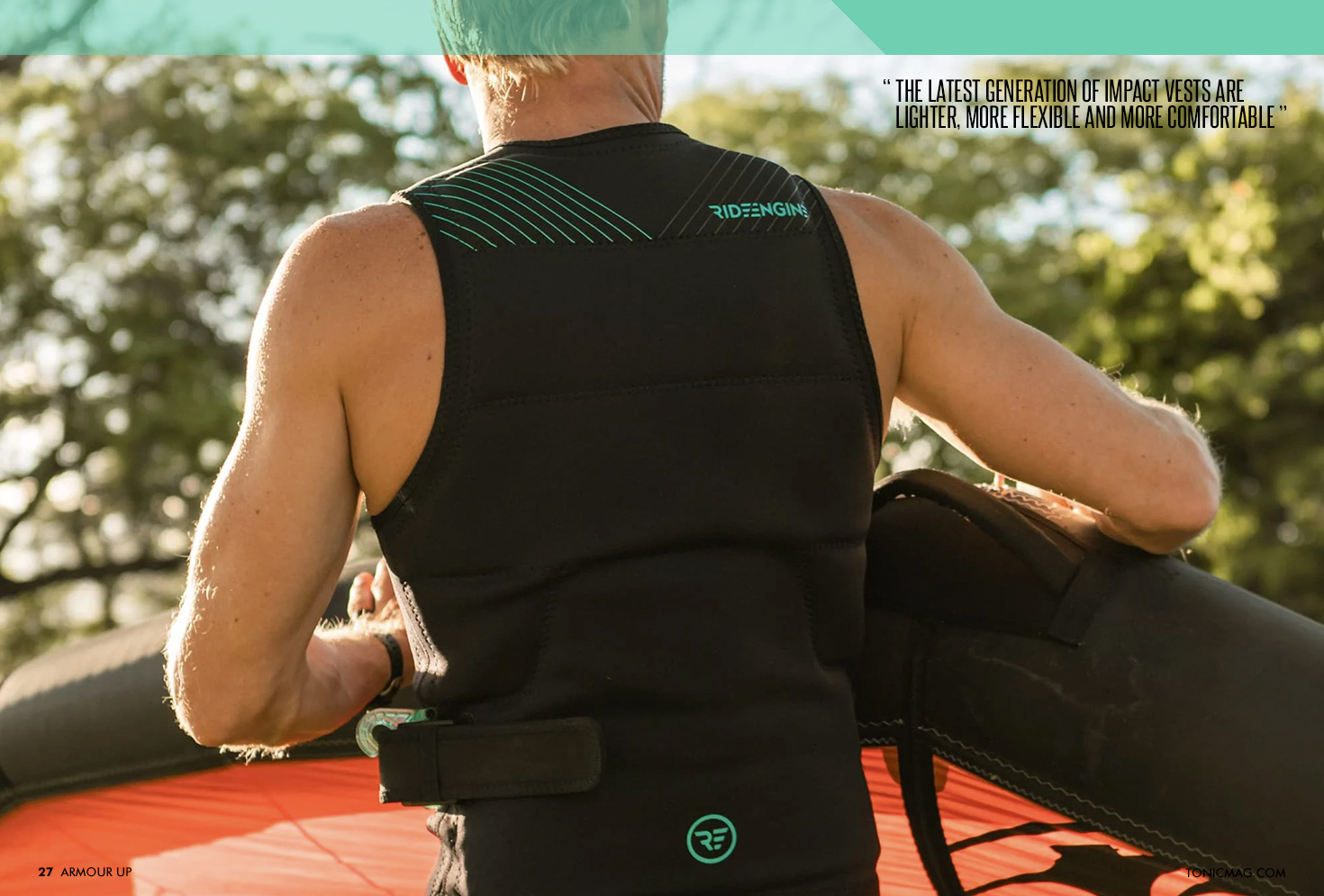
Fortunately, that isn’t really an issue anymore. The latest generation of impact vests are lighter, more flexible and more comfortable than ever before. Once you’re on the water, most riders forget they’re even wearing one.
I often hear people say they’ll buy an impact vest once they start jumping or once they become more advanced. Personally, I think that’s the wrong way round. Beginners crash far more frequently than experienced riders. They’re learning balance, foot placement, pumping technique and basic manoeuvres, all while adapting to a completely new sensation of flight. Those early sessions are exactly when protection makes the most sense.
Even experienced riders aren’t immune. If anything, we often crash harder because we’re riding faster, pushing bigger swell or attempting manoeuvres closer to our limits. The reality is that none of us plans to have a bad crash. They simply happen. I’ve reached the point where an impact vest isn’t something I think about anymore. It lives alongside my wetsuit, helmet and leash. It goes on before every session because it has become part of my standard kit.
Will it totally prevent every injury?
Of course not.
Nothing can.
But if it reduces the severity of one heavy impact, prevents one fractured rib or allows me to walk away from one crash that might otherwise have ended my season, it has already paid for itself many times over.
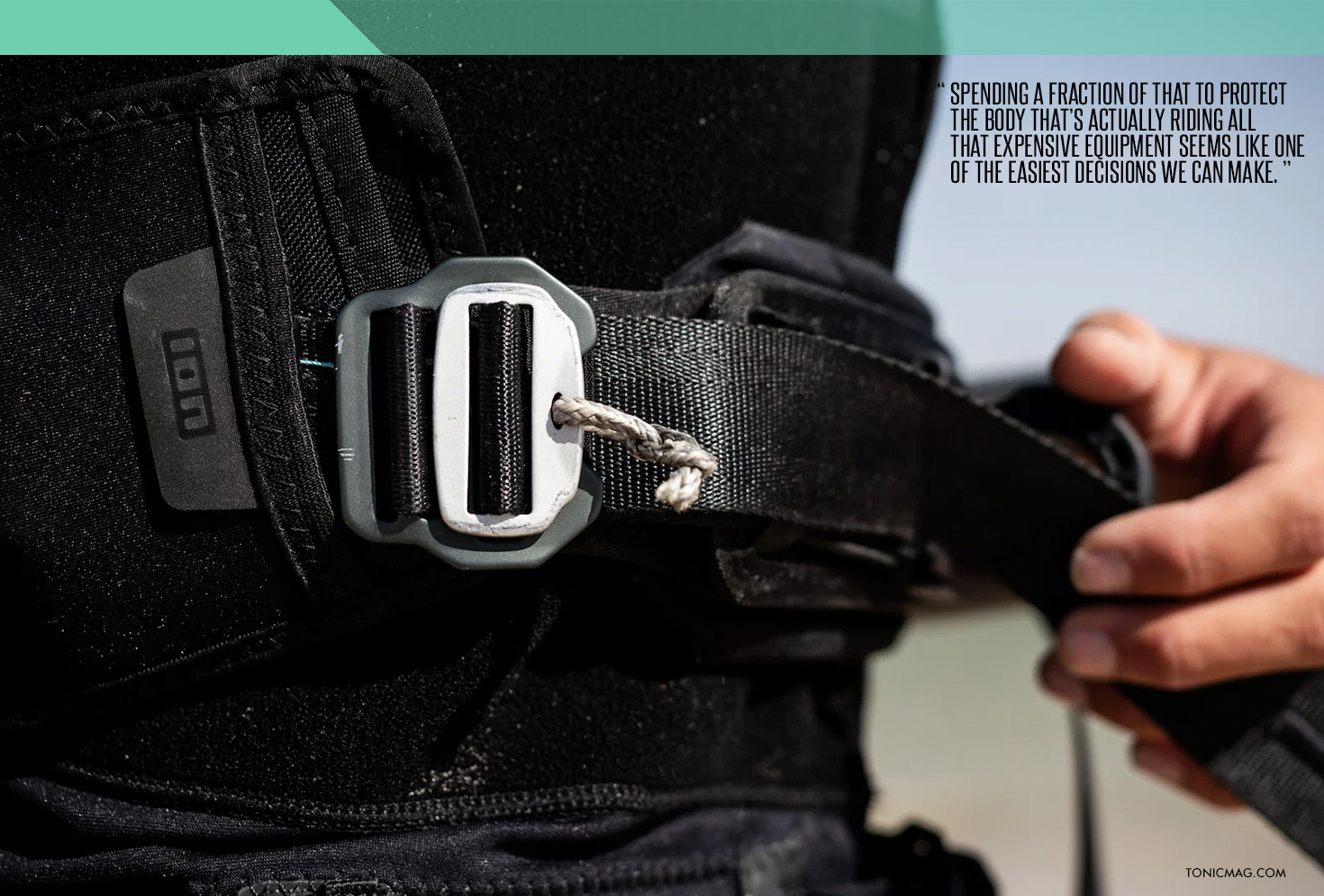
We spend a huge amount of money chasing performance in this sport. We happily invest in lighter masts, stiffer fuselages and the latest front wings in the hope of gaining a tiny improvement in efficiency or glide. Spending a fraction of that to protect the body that’s actually riding all that expensive equipment seems like one of the easiest decisions we can make. If I could recommend one accessory to every new foiler after they’ve bought their board, foil and wing, it wouldn’t be the latest gadget or the newest carbon upgrade.
It would be an impact vest.
Because sooner or later, every one of us is going to crash.
The only question is how well prepared we’ll be when we do.
Product Spotlight
Ride Engine Defender HF Impact Vest V2
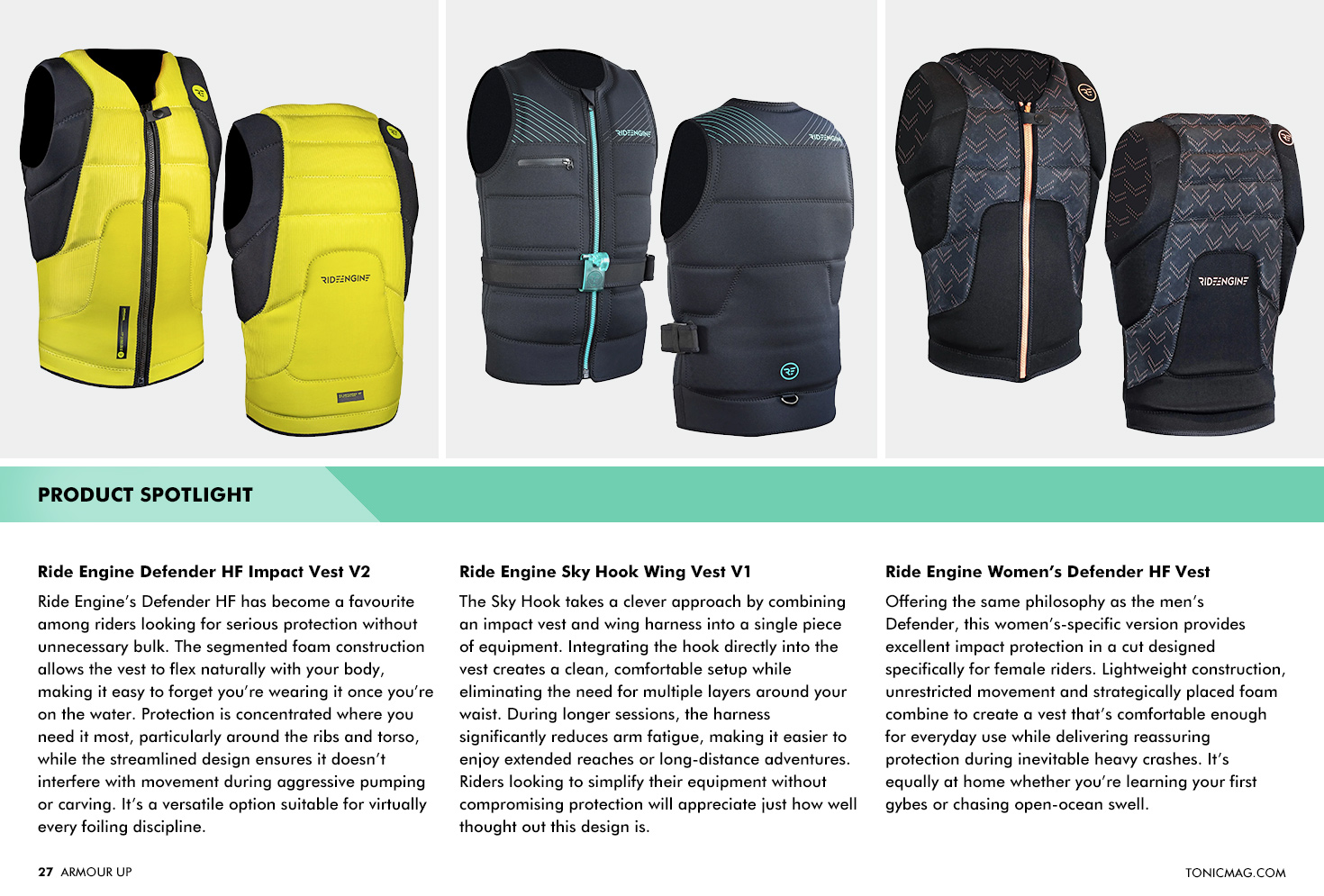
Ride Engine’s Defender HF has become a favourite among riders looking for serious protection without unnecessary bulk. The segmented foam construction allows the vest to flex naturally with your body, making it easy to forget you’re wearing it once you’re on the water. Protection is concentrated where you need it most, particularly around the ribs and torso, while the streamlined design ensures it doesn’t interfere with movement during aggressive pumping or carving. It’s a versatile option suitable for virtually every foiling discipline.
Ride Engine Sky Hook Wing Vest V1
The Sky Hook takes a clever approach by combining an impact vest and wing harness into a single piece of equipment. Integrating the hook directly into the vest creates a clean, comfortable setup while eliminating the need for multiple layers around your waist. During longer sessions, the harness significantly reduces arm fatigue, making it easier to enjoy extended reaches or long-distance adventures. Riders looking to simplify their equipment without compromising protection will appreciate just how well thought out this design is.
Ride Engine Women’s Defender HF Vest
Offering the same philosophy as the men’s Defender, this women’s-specific version provides excellent impact protection in a cut designed specifically for female riders. Lightweight construction, unrestricted movement and strategically placed foam combine to create a vest that’s comfortable enough for everyday use while delivering reassuring protection during inevitable heavy crashes. It’s equally at home whether you’re learning your first gybes or chasing open-ocean swell.
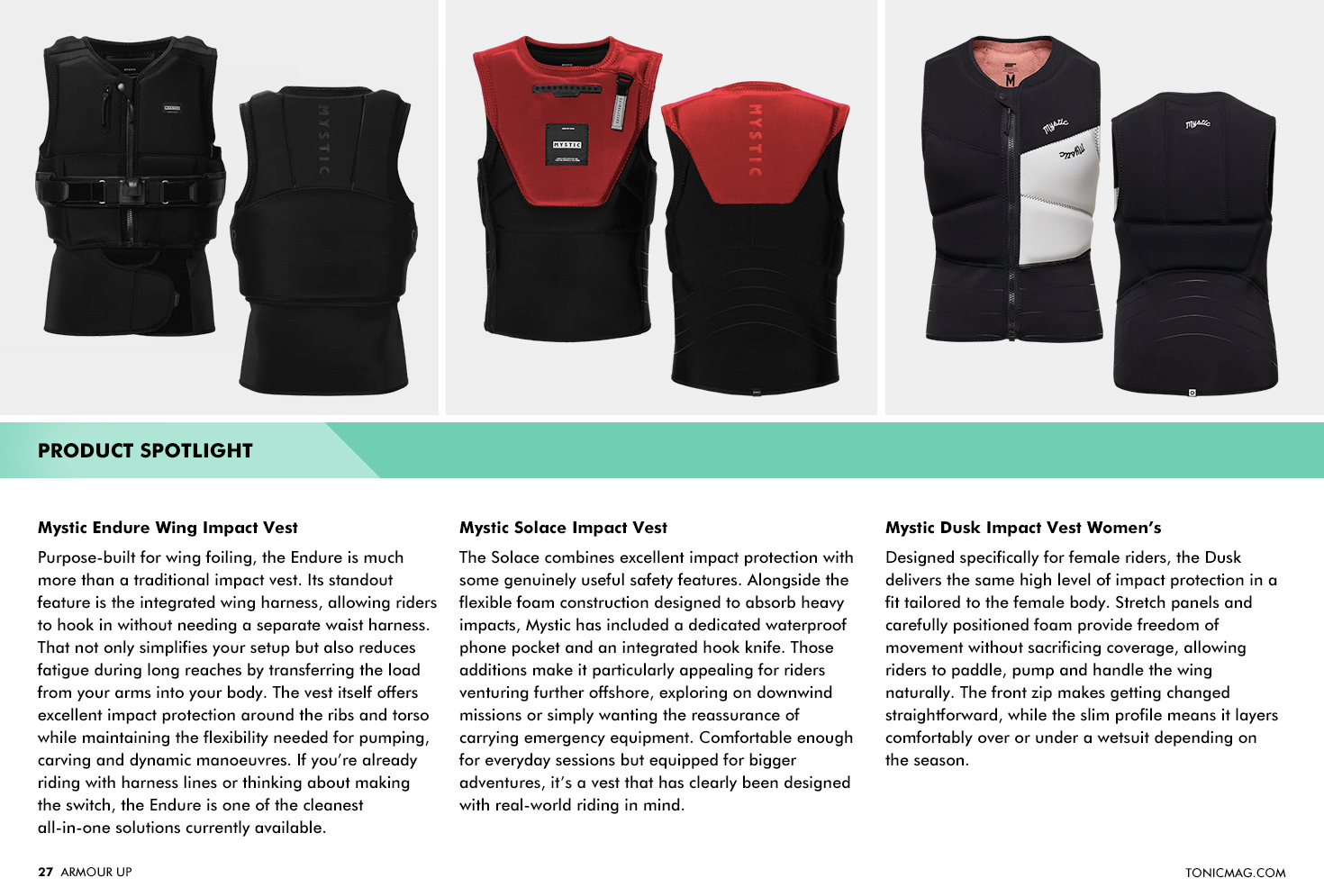
Mystic Endure Wing Impact Vest
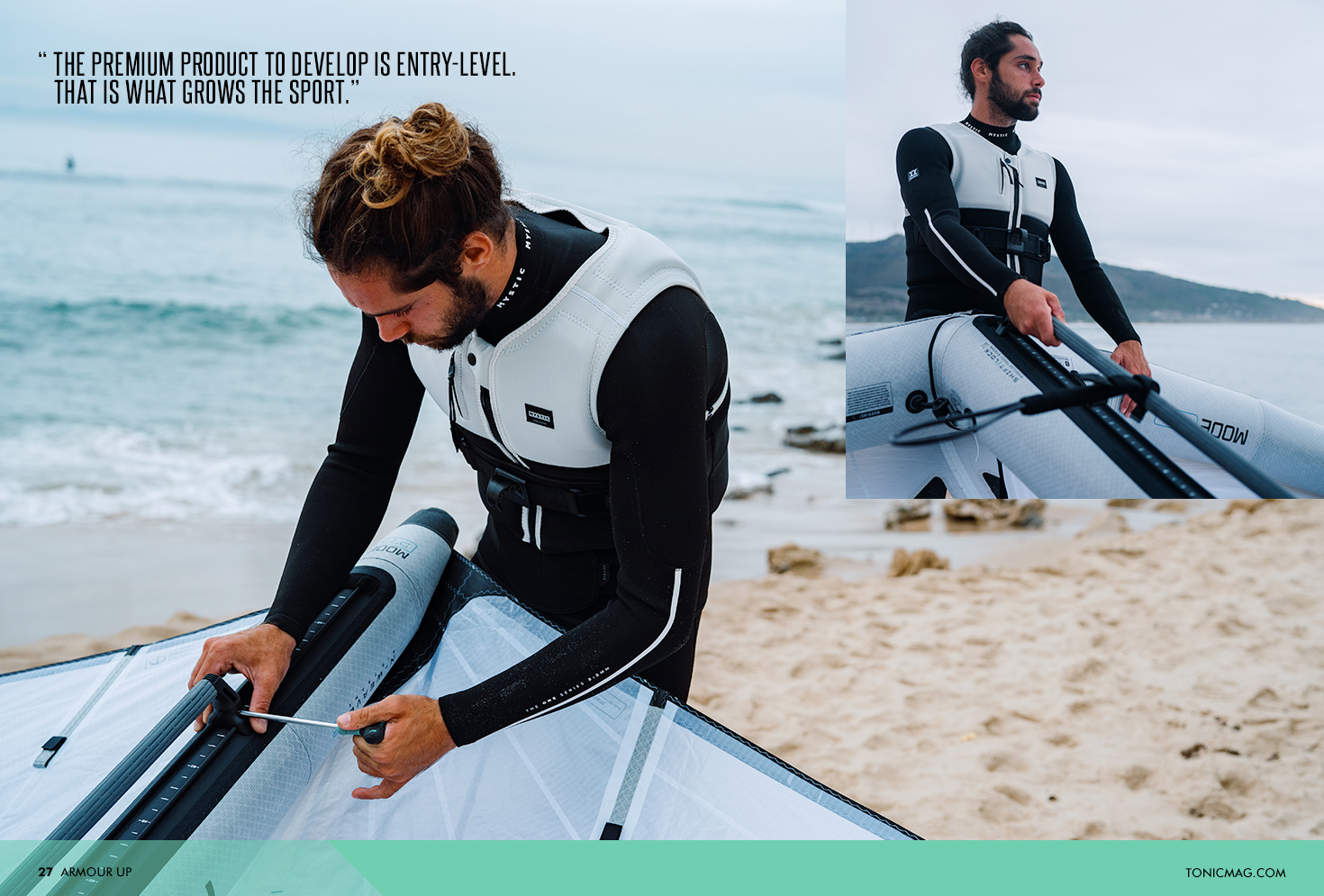
Purpose-built for wing foiling, the Endure is much more than a traditional impact vest. Its standout feature is the integrated wing harness, allowing riders to hook in without needing a separate waist harness. That not only simplifies your setup but also reduces fatigue during long reaches by transferring the load from your arms into your body. The vest itself offers excellent impact protection around the ribs and torso while maintaining the flexibility needed for pumping, carving and dynamic manoeuvres. If you’re already riding with harness lines or thinking about making the switch, the Endure is one of the cleanest all-in-one solutions currently available.
Mystic Solace Impact Vest
The Solace combines excellent impact protection with some genuinely useful safety features. Alongside the flexible foam construction designed to absorb heavy impacts, Mystic has included a dedicated waterproof phone pocket and an integrated hook knife. Those additions make it particularly appealing for riders venturing further offshore, exploring on downwind missions or simply wanting the reassurance of carrying emergency equipment. Comfortable enough for everyday sessions but equipped for bigger adventures, it’s a vest that has clearly been designed with real-world riding in mind.
Mystic Dusk Impact Vest Women’s
Designed specifically for female riders, the Dusk delivers the same high level of impact protection in a fit tailored to the female body. Stretch panels and carefully positioned foam provide freedom of movement without sacrificing coverage, allowing riders to paddle, pump and handle the wing naturally. The front zip makes getting changed straightforward, while the slim profile means it layers comfortably over or under a wetsuit depending on the season.
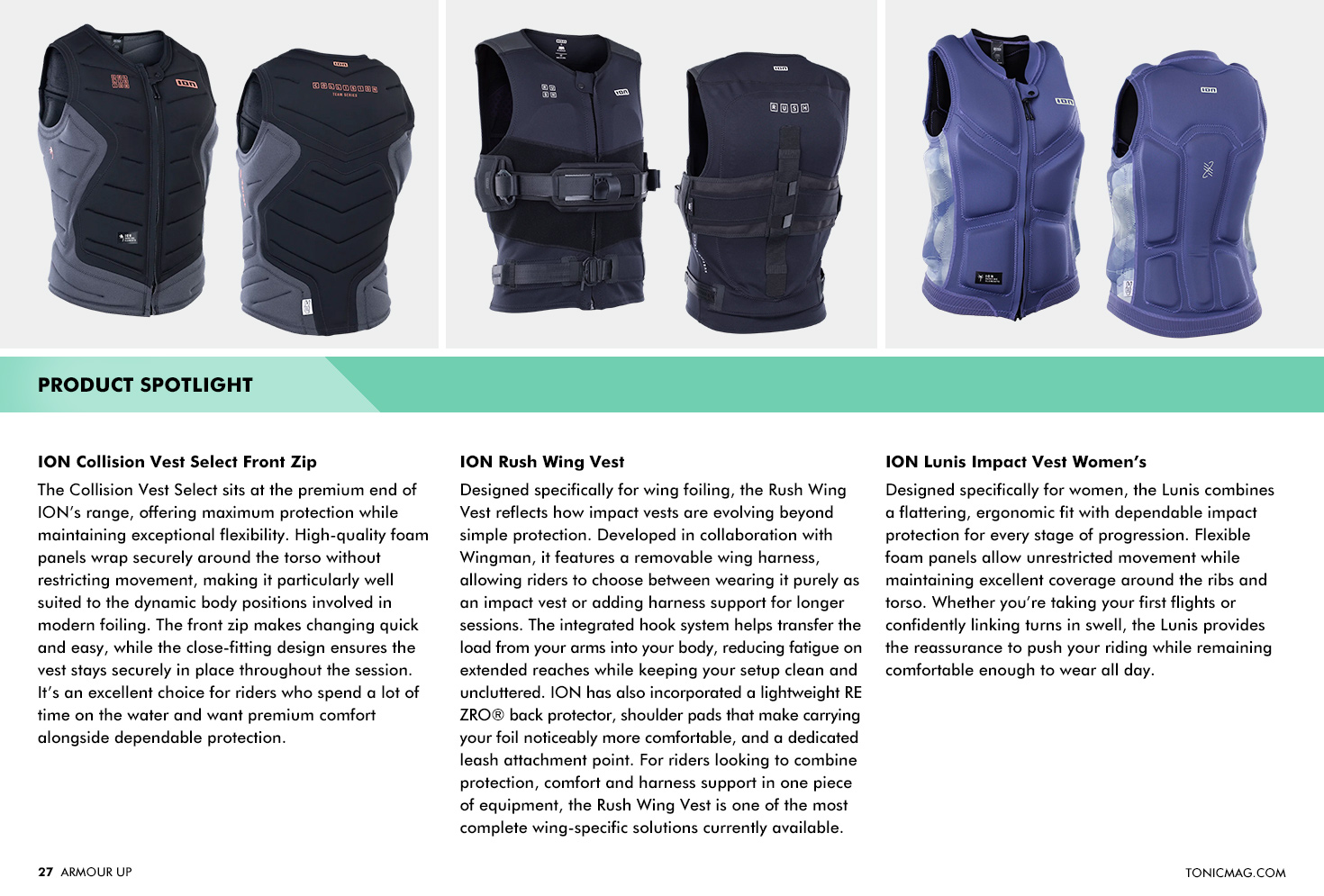
ION Collision Vest Select Front Zip
The Collision Vest Select sits at the premium end of ION’s range, offering maximum protection while maintaining exceptional flexibility. High-quality foam panels wrap securely around the torso without restricting movement, making it particularly well suited to the dynamic body positions involved in modern foiling. The front zip makes changing quick and easy, while the close-fitting design ensures the vest stays securely in place throughout the session. It’s an excellent choice for riders who spend a lot of time on the water and want premium comfort alongside dependable protection.
ION Rush Wing Vest
Designed specifically for wing foiling, the Rush Wing Vest reflects how impact vests are evolving beyond simple protection. Developed in collaboration with Wingman, it features a removable wing harness, allowing riders to choose between wearing it purely as an impact vest or adding harness support for longer sessions. The integrated hook system helps transfer the load from your arms into your body, reducing fatigue on extended reaches while keeping your setup clean and uncluttered. ION has also incorporated a lightweight RE ZRO® back protector, shoulder pads that make carrying your foil noticeably more comfortable, and a dedicated leash attachment point. For riders looking to combine protection, comfort and harness support in one piece of equipment, the Rush Wing Vest is one of the most complete wing-specific solutions currently available.
ION Lunis Impact Vest Women’s
Designed specifically for women, the Lunis combines a flattering, ergonomic fit with dependable impact protection for every stage of progression. Flexible foam panels allow unrestricted movement while maintaining excellent coverage around the ribs and torso. Whether you’re taking your first flights or confidently linking turns in swell, the Lunis provides the reassurance to push your riding while remaining comfortable enough to wear all day.