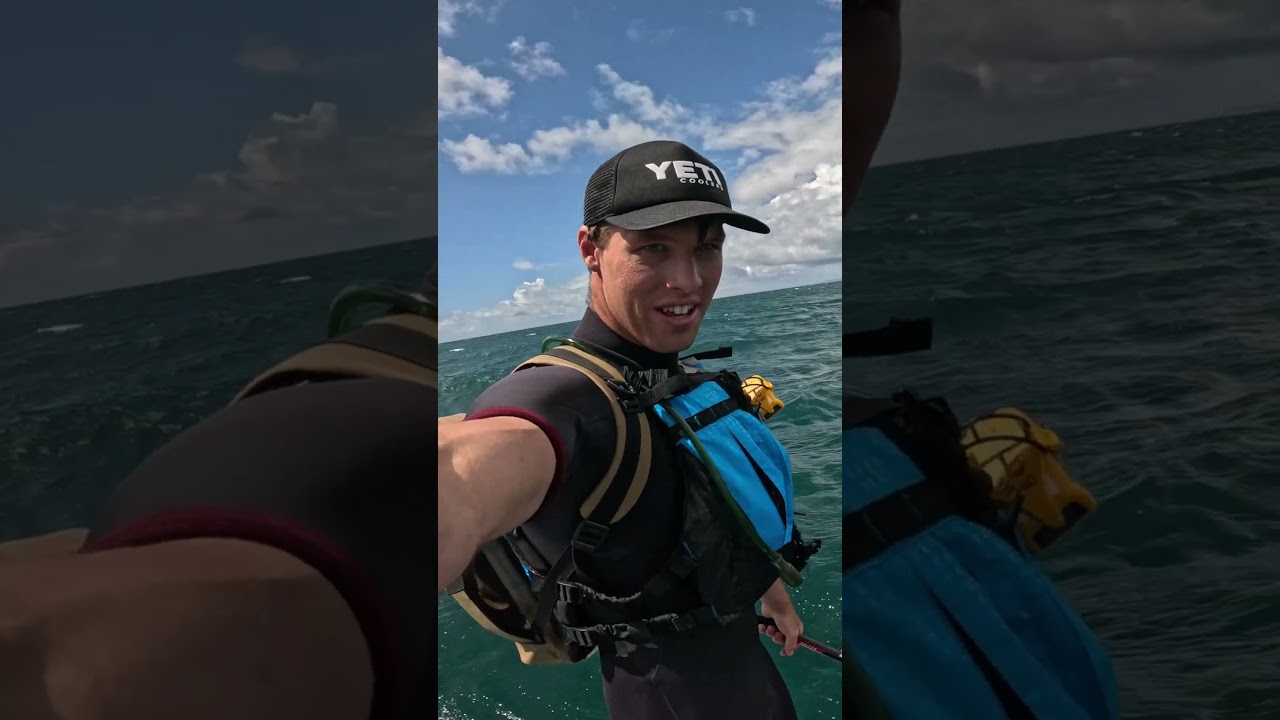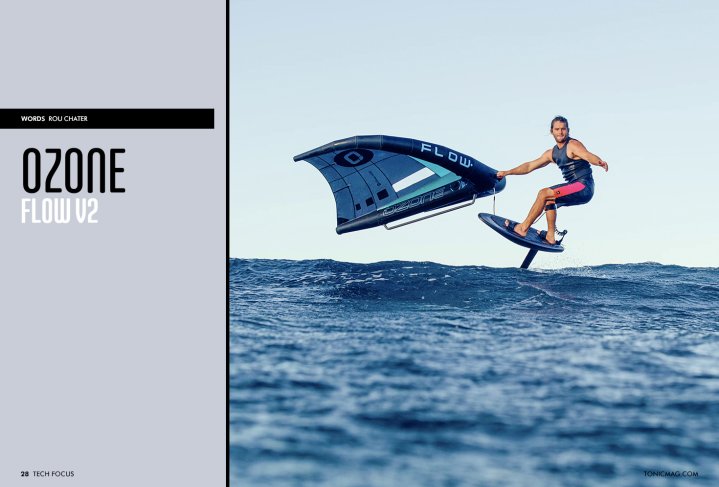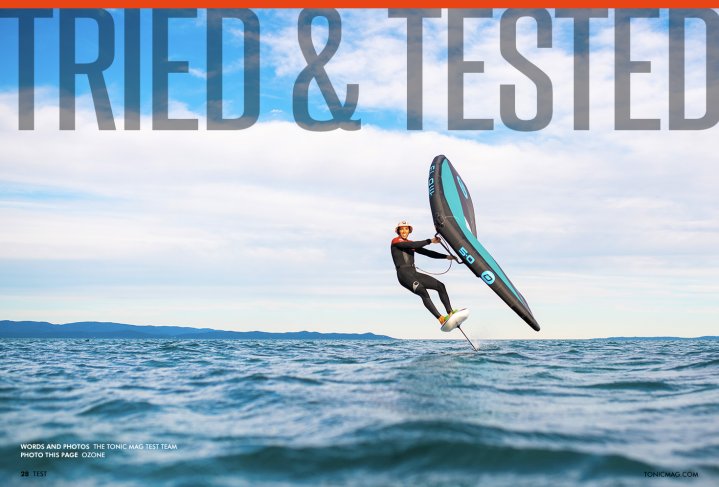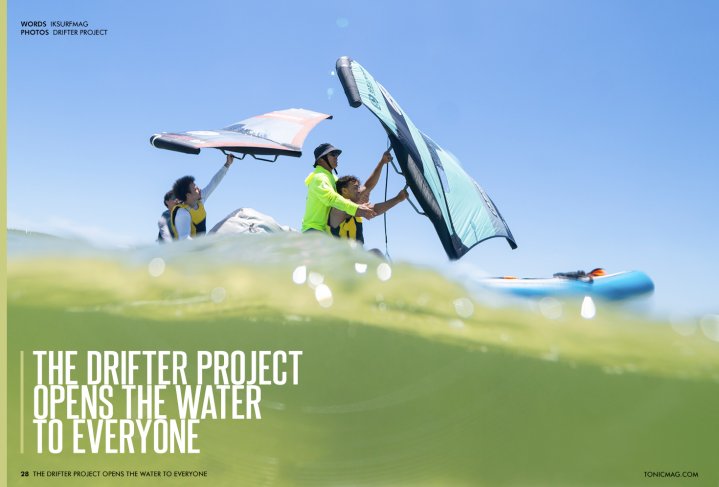

Sometimes the best adventures begin closer to home than you might think. Guy Bridge sets out on an ambitious downwind mission from his own doorstep, proving that with the right conditions, a bit of planning and plenty of determination, unforgettable journeys don’t always require a plane ticket.
Planning
In all fairness, there wasn't much planning involved. I'd been thinking about downwinding the South Coast for a while, as it lines up well with one of the more prominent wind directions here (west), and I've always loved the concept of walking out of the front door and just sending it, seeing how far I could get. There are also only a couple of months in the year where something like this is even possible: basically June, July, and August, due to the amount of daylight and enough warmth to avoid freezing.
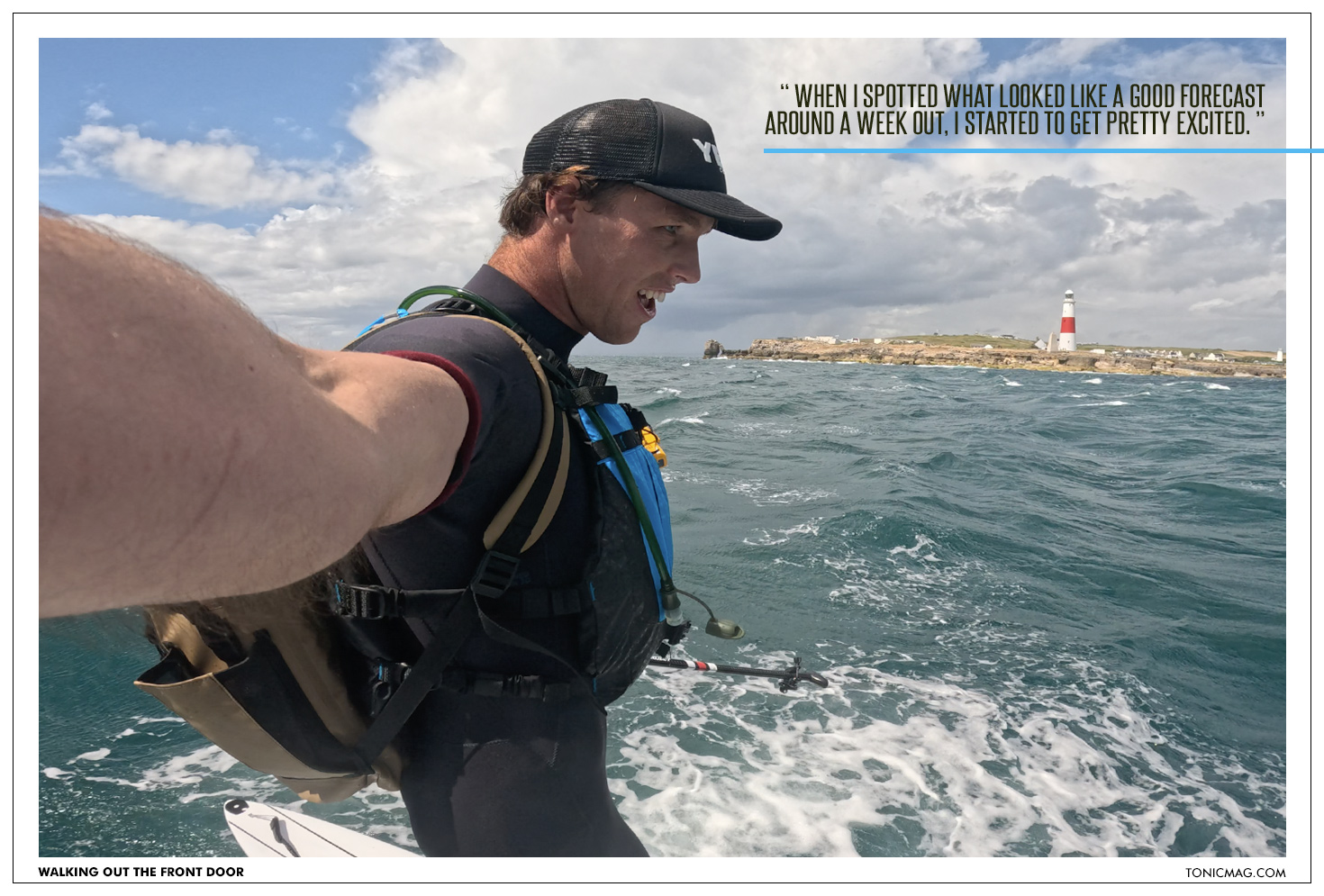
Earlier is better in the summer for the seaweed too, so when I spotted what looked like a good forecast around a week out, I started to get pretty excited. The forecast was looking decent overall, with wind and direction for three days in a row. It was starting lighter on Day 1, which I thought was ideal for navigating tidal landmarks like Portland Bill (notorious for strong currents) and St Alban's Ledge, which I'd actually never heard of until Emma called me from 3km offshore to warn me it was looking pretty hectic. Luckily she caught me in time. Day 1 was looking around 12-22 knots, with 25 knots plus for the following days. Pretty ideal. I was buzzing and started thinking seriously about what I actually needed for a trip this size.

I originally thought I'd just go on my own, as I didn't want to stitch anyone up with the amount of driving involved. My plan was to stay in random hotels or friends' houses along the way and get public transport home at the end. But the night before, Emma cleared her diary and decided to come with me, which turned out to be pretty key. Being able to get dry instantly, having someone handling logistics, safety, tracking, forecasts, and exit points, sleeping in the van overnight, and getting some good feeds in was all invaluable. It's always more fun doing these things together too. Emma also did an epic job grabbing footage throughout the trip, which made it so much easier to bring the story home.
Setup
- Board: 8'2" Downwind Ocean Board
- Day 1: UHA 770
- Days 2 & 3: UHA 670
- Mast: Performance X 795
- Stab: Dart 140
- Fuse: TC60
- Paddle: Black Project Foil X, Medium Blade
- Day 1: 3.6m Parawing
- Days 2 & 3: 3.0m Parawing
- Accessories: Buoyancy Aid, Dry Bag, Tools, Spares, Snacks
Day 1
The aim for Day 1 was to reach Swanage, around 130km east of my starting point.
I set off from Budleigh Salterton, the neighbouring town to our home in Exmouth. It didn't make sense to start from Exmouth itself as the local shooting range was firing that morning, and there wasn't enough wind to get clear of it anyway.
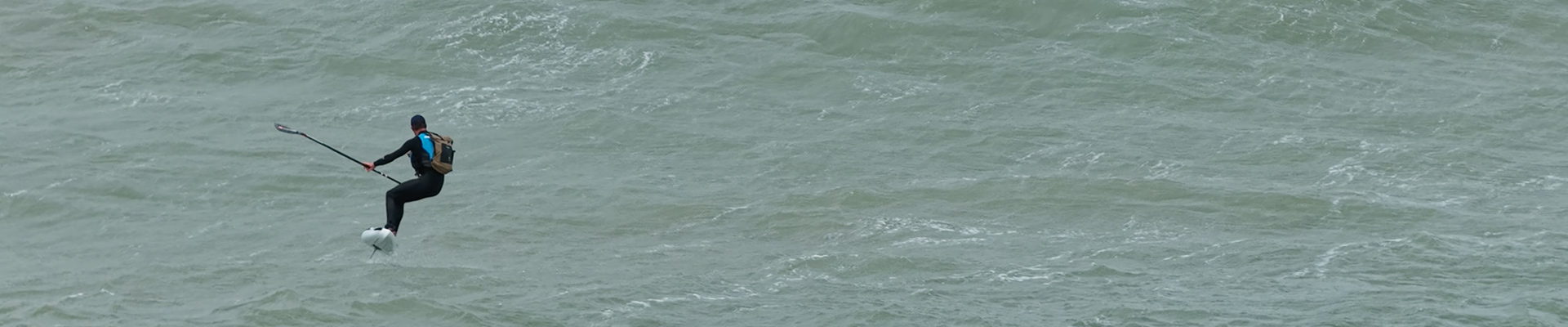
It started off super light. I parawinged off the beach and tried to get as far offshore as possible, but only really managed around 2km due to some sketchy conditions. The wind bumps were tiny, and I was a little worried the lack of energy was going to knacker me out too early doors. It gradually improved as I got down the coast and I got into some pretty fun bumps around 20km in, making decent progress and failing to avoid some seriously hectic rain squalls that took all the light out of the landscape.
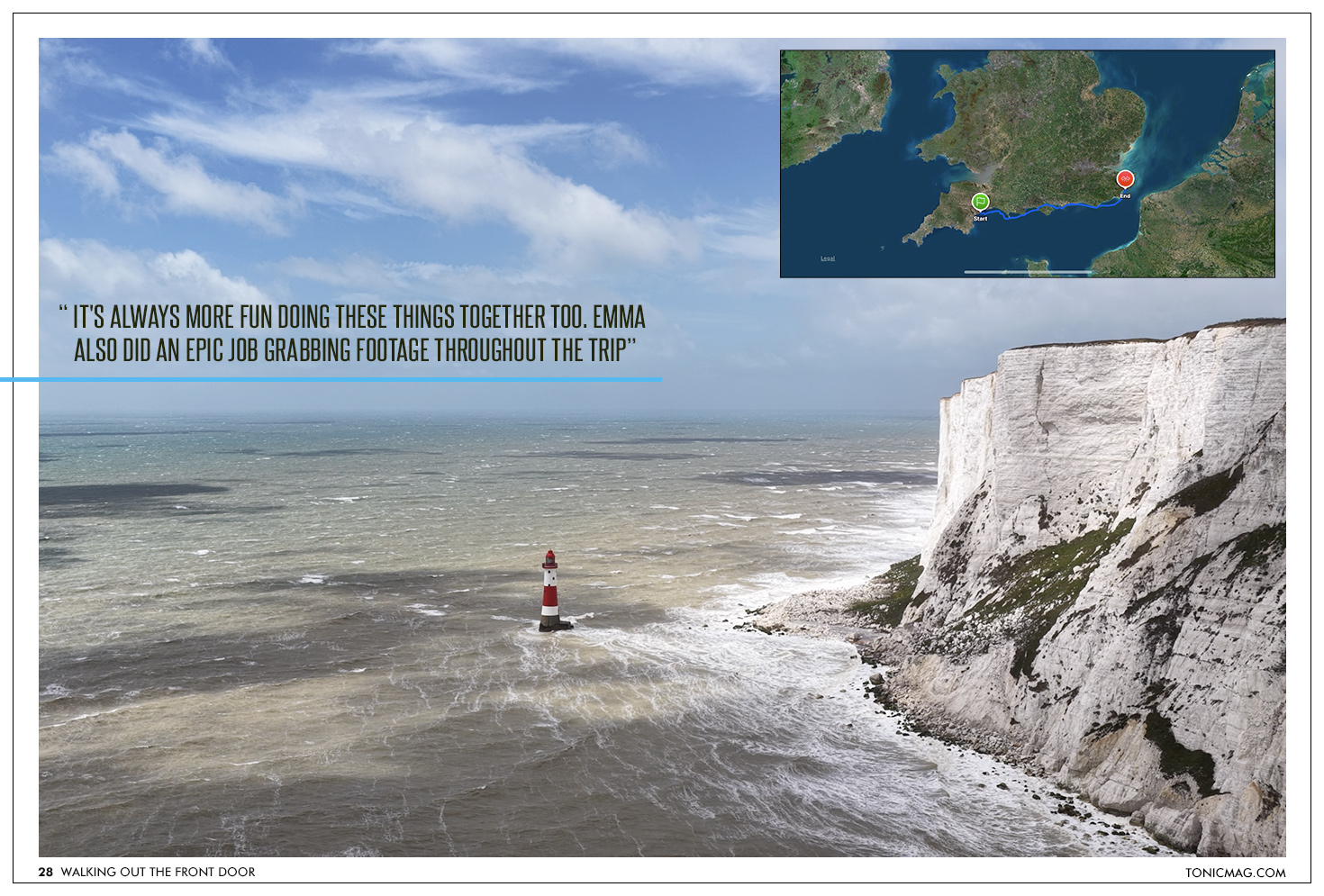
Around 80km in, I reached the first iconic landmark: Portland Bill.
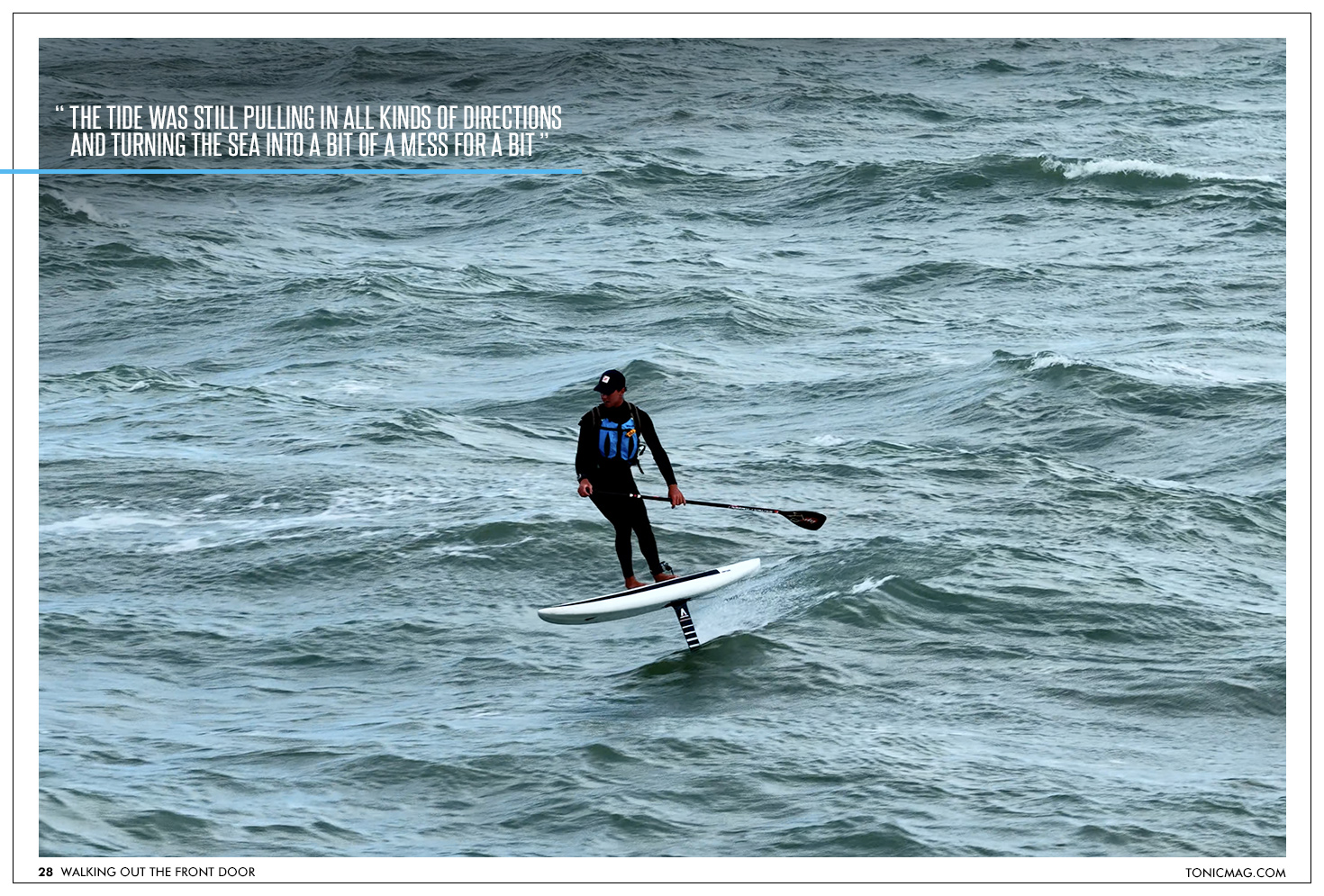
Portland Bill is made more hazardous by the strong Portland tidal race, a fast-moving current over a shallow seabed that creates waves, eddies, and seriously hazardous conditions. It's notorious for shipwrecks. I made it through without too many dramas, hugging close to the lighthouse off the Bill, which was definitely the easiest line. The tide was still pulling in all kinds of directions and turning the sea into a bit of a mess for a bit, but there were some epic standing waves off the Bill that made for some really fun riding.
I faded right from there, trying to stay in the bumps and keep heading towards Swanage. The tide was running east to west the whole time, creating a wind-against-tide effect that made the bumps super steep, so keeping focused was pretty critical. Emma called on this stretch to warn me about the next tidal race, St Alban's Ledge. She said it was looking hectic and advised me to stay close to the cliffs, which turned out to be spot-on advice.
There's always a balancing act on long downwinders between getting good bumps and getting overly hectic ones. Intense bumps are tiring, you have to concentrate hard and the risk of falling is higher. But equally, if there's no energy in the water, you're going to tire quickly, overheat, and cover a lot less ground. The Ledge was properly hectic, with breaking waves coming from all angles. Quite something to be foiling through that zone 120km into a downwinder.
That was basically it for Day 1. I was stoked to round the last headland, whipped up the parawing for a five-minute blast upwind into Swanage Harbour, and settled in for a big feed and some rest. It's a beautiful town, buzzing with rowing and sailing clubs and a real evening atmosphere. With building winds forecast, I planned to be on the water by 5am and wanted to get past the Solent before things got too wild. The big debate was whether to go outside the Isle of Wight or through the Solent. We decided going through was safer, as it was better to have Emma on the mainland with clearer support lines in unfamiliar water.
Day 2
The goal for Day 2 was to reach the popular windsports towns of Littlehampton and Worthing. The main challenge on this stretch was navigating the Solent, a 20-mile channel between the Isle of Wight and the mainland, and one of the busiest boating areas in the UK.
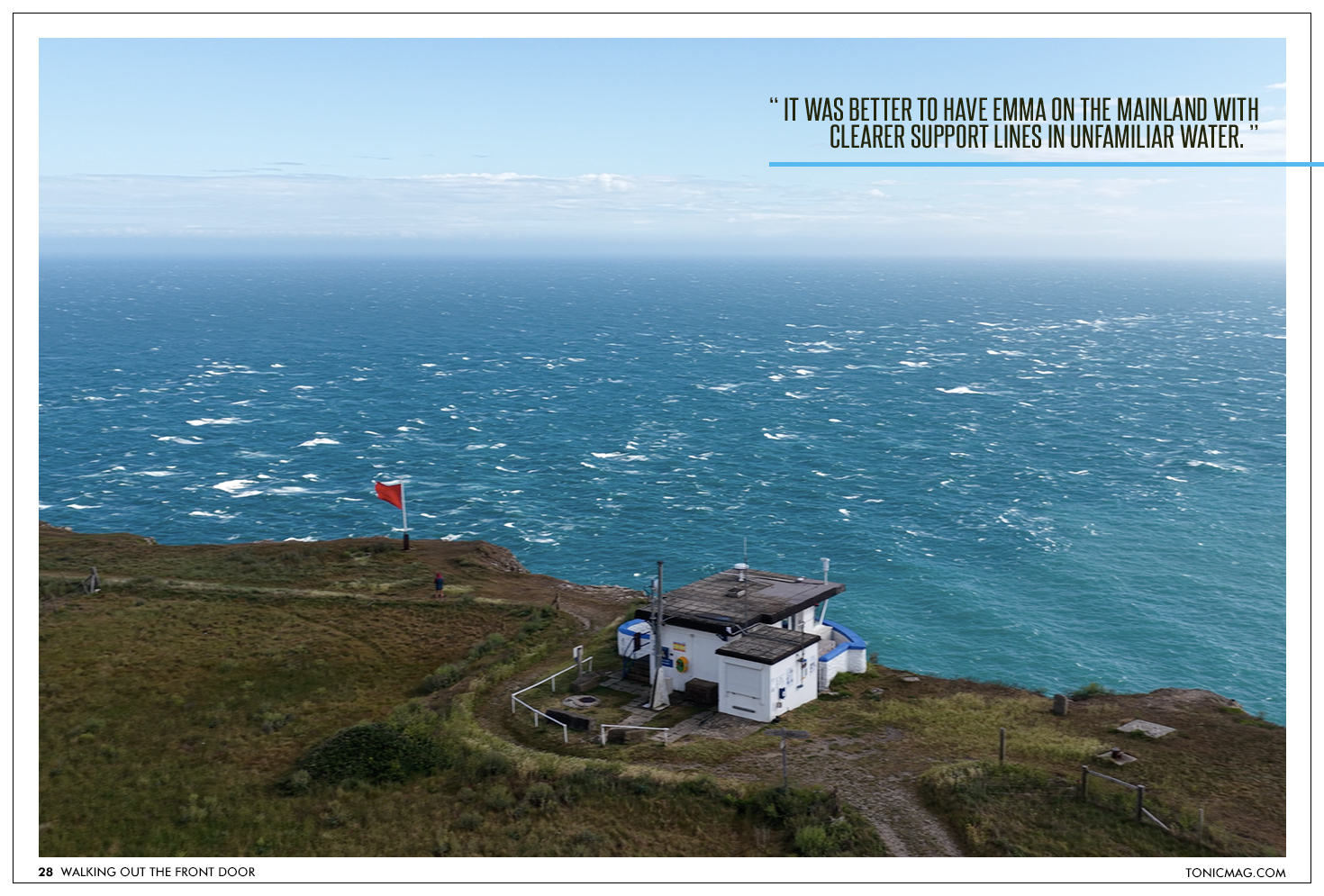
The weather was tricky. The forecast called for south-westerly wind early doors at around 12-20 knots, swinging south at 8am and ramping up rapidly to 35 knots, before veering back south-west at midday and sitting around 30 knots for the rest of the day. Given all that, we decided the smartest move was to go early, get the most challenging section done before conditions went full-on, and keep a decent wind angle before it went too far south.
We were up at 5am to a beautiful sunrise. I got as much food in as quickly as I could and hit the water by 5:30, parawinged off the beach at Swanage, where the wind was offshore, and got into the bumps as fast as possible. I dropped down a foil size from the UHA 770 to the UHA 670, expecting more wind and swell.
The run started off fairly small, with the tide flowing with me and flattening things off. It was hard work staying connected in the bumps, but I made it towards the Isle of Wight. Pretty spectacular and surreal to go past the Needles on a downwind board. I've kite foiled around the island before so it wasn't my first time in this area, but it's still an epic landmark. The wind and tide were still aligned, keeping the bumps small and low energy.
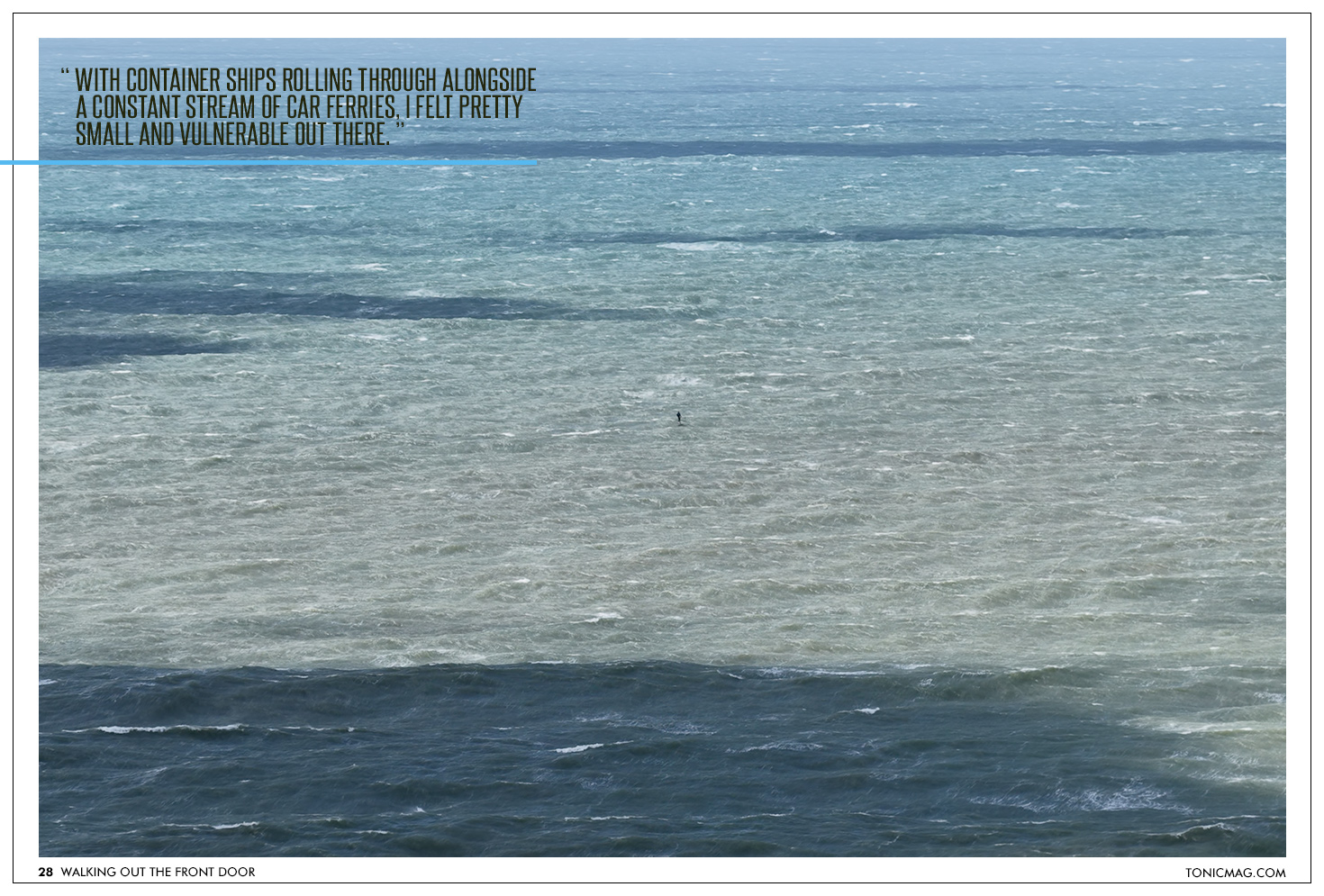
I made my way to the entrance of the Solent between Hurst Castle and the Isle of Wight. The bumps were still generally small, so I used the parawing to bridge the gaps, mixing downwinding and parawing sections. By this point the wind had shifted well south and the whole island was covered in fog.
I rounded the bottom of the island on the parawing in super light wind, basically pumping to stay on foil, with the wind swinging straight off the land and ranging between 6 and 18 knots. Navigating this busy shipping zone, with container ships rolling through alongside a constant stream of car ferries, I felt pretty small and vulnerable out there. I eventually made it through to the east side of the island. Phew.
I was lining up for Bognor Regis to meet Emma when the fog and rain closed in, leaving me trusting the direction of the bumps and Google Maps to stay on course. By the time I'd cleared the island, the wind had come in full force. I was massively overpowered. I packed down the parawing and started cutting east towards Bognor. The angle was tricky, but there was enough energy to hold a decent line, and I made it to just east of Bognor relatively comfortably.
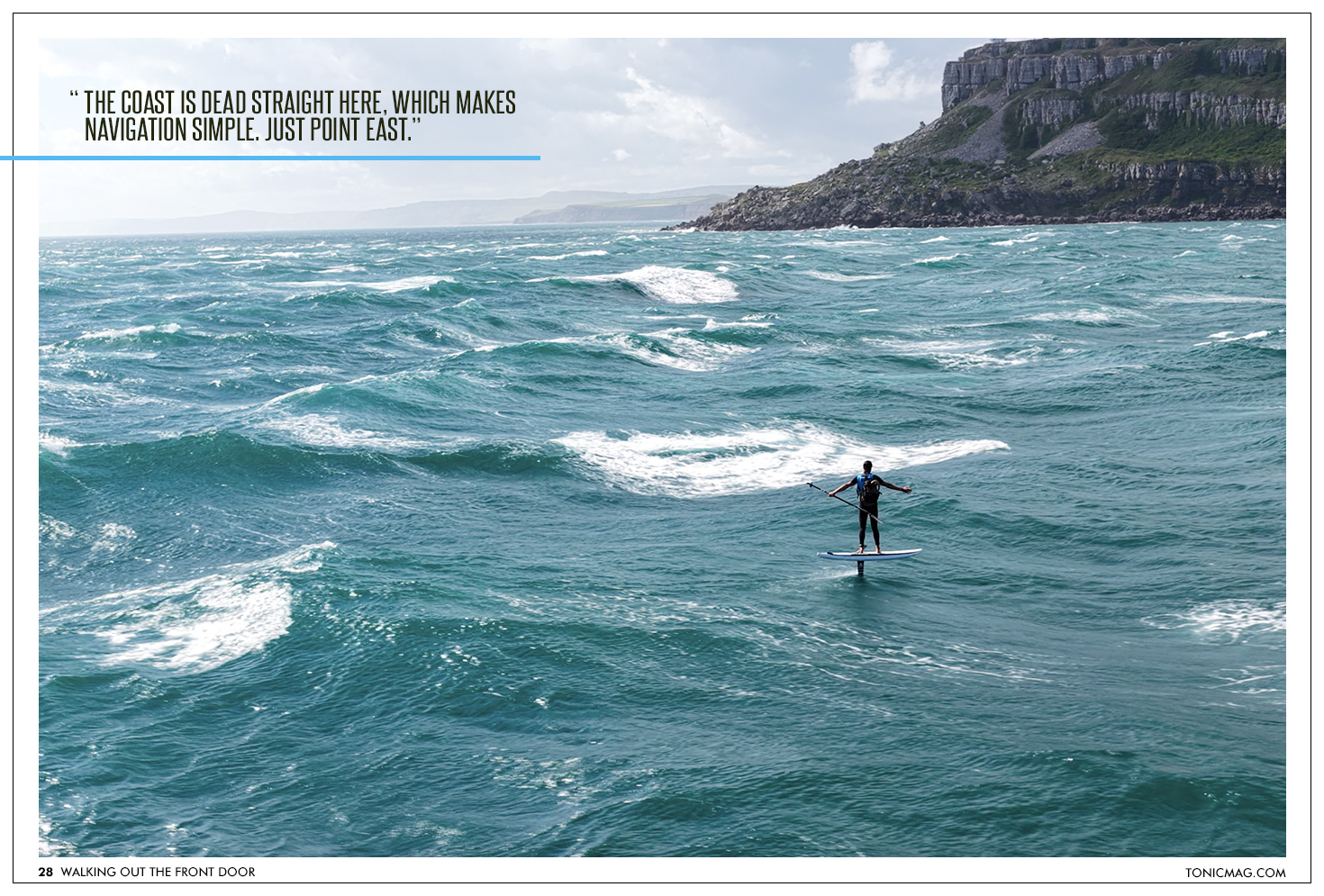
It was pretty mad to have covered over 100km before midday.
After a full English and a couple of hours off the water, we suited up for Run 2 of Day 2. The wind was cranking and straight side-shore, about as good as it gets for downwinding. The conditions looked too good to leave, and the best downwinders are always better when you're not alone. We checked trains, suited up fast, and set off from Bognor. Straight into good bumps, and the coast is dead straight here, which makes navigation simple. Just point east.
The main issue on this section was seaweed. It was thick and everywhere, making it hard to maintain good speed even with decent energy in the water. We came in near Worthing and faced the mission of getting back to the car at Bognor, which meant a 2km walk with full kit to the station. Cue the usual public commentary: "Wow, that's a big board, how does it work?" "What the hell are you wearing?" "Mate, you've got no shoes on!" I'm not sure many people on that train had any idea what we'd been up to. The conductor didn't seem too bothered about us blocking an exit with our gear. Maybe they've seen it all before.
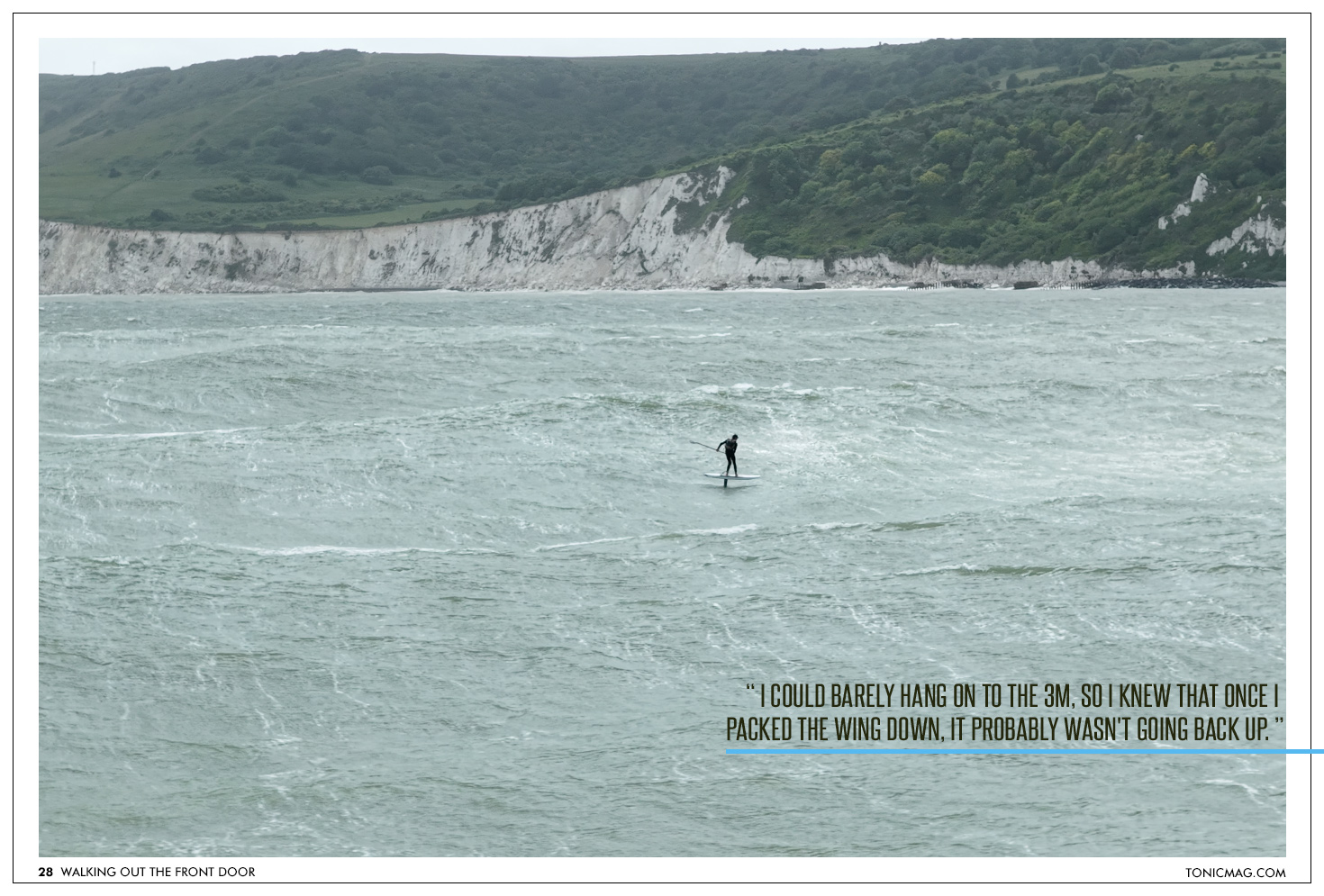
We made it back to Bognor at around 20:30, got a quick feed in, and got our heads down before Day 3.
Day 3
The goal for Day 3 was to push as close to Folkestone as possible, which had always been the real target.
The wind was the strongest and best-directed of the three days, so this was the day to cover as much ground as possible.
I set off from just west of Littlehampton, parawinged around a kilometre offshore, and the conditions were cranking from the start. I could barely hang on to the 3m, so I knew that once I packed the wing down, it probably wasn't going back up. The seaweed was bad again off Littlehampton, but it thinned out as I got down the coast, and by Brighton the riding got noticeably easier and I started making proper progress.
The sea was alive: very windy, swell running at around 3 metres, and I had to hold a hard right-hand cut across the swell for the entire leg from Littlehampton to Eastbourne. Eastbourne sticks out around 20km from Brighton, so it was a sustained and challenging angle. I made good progress though, and was soon approaching another iconic landmark: Beachy Head. The white chalk cliffs and lighthouse are seriously dramatic up close.
This run was around 67km and mentally pretty exhausting given how hectic the conditions were. I was hyper-focused the whole way, feeling completely exposed, with very few get-out-of-jail spots. Luckily Emma was up on the headland filming and gave me the heads-up that the bumps wrap around nicely on the Eastbourne side, a huge boost, and a good reminder to look up and take in the coastline rather than just staring at the water.
After lunch in Eastbourne, watching the wind and swell continue to pulse, I jumped back in for the final push towards Folkestone.
It started brilliantly. I got straight into some of the best bumps I'd ridden in a long time, sitting on one swell for what felt like an age, probably only a kilometre or so, but going around 35kmh and completely locked in. Magical.
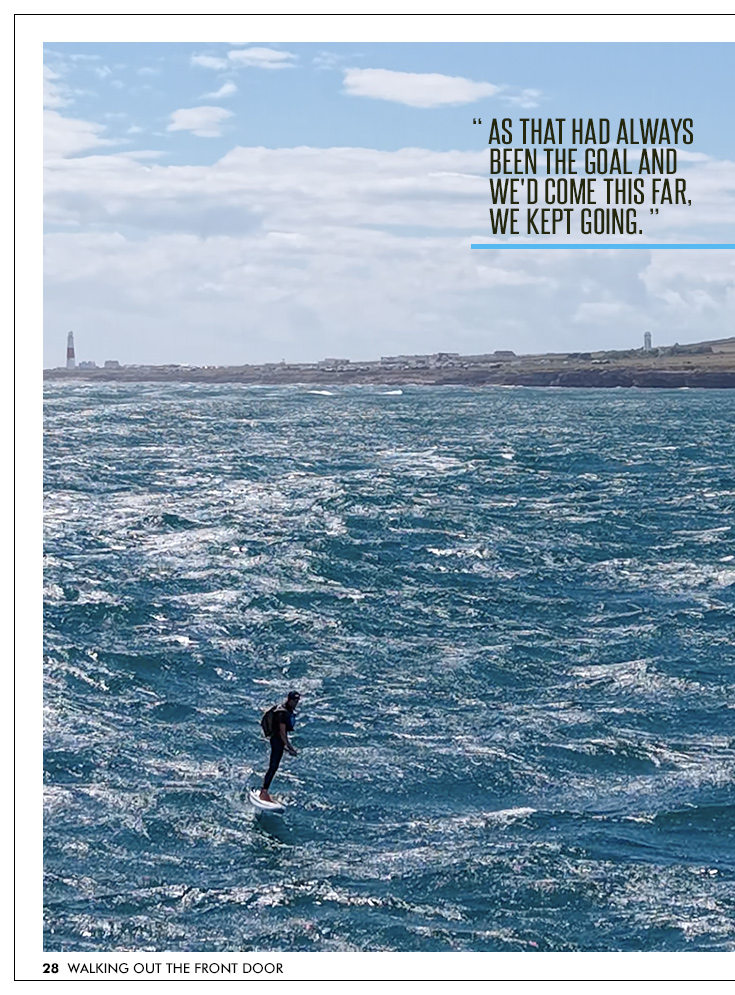
The bumps and wind started to veer during this run, pushing me further and further towards the English Channel. Emma called to ask if I was feeling good enough to push on to Folkestone. I was on track to round Dungeness, which we hadn't been sure about at this stage. As that had always been the goal and we'd come this far, we kept going.
Container ships and cruise ships started appearing more regularly and getting uncomfortably close. The light dropped to the point where I couldn't see any land, just open water, my phone, and the odd pod of dolphins for company. I kept my focus on navigation, trusting I was on track even when I couldn't make out anything around me. Then, slowly, some strange structures started to take shape ahead of me. I was convinced I was looking at a moored container ship. As I got closer, I realised: it was the nuclear power station at Dungeness. Eerie and iconic in equal measure. And it meant I was nearly there.
Once I rounded that final headland, the bumps got smaller but kept their energy, such a relief after a full day of massive swell, and I cruised into Folkestone.
Emma sent the drone four kilometres offshore to guide me in. Seeing it appear through the haze was one of the best moments of the whole trip. I'd actually done it.
403km covered | 19 hours 48 minutes on the water
Emma got out for a parawing session on the beach while I stood there and let it sink in: the warm breeze, the perfect sunset, and the strange calm at the end of something enormous. When I put Exmouth into Google Maps on the drive home, and it said five hours, that really put the distance into perspective.
Three days after leaving Devon. On a foil board. I'd do it all again tomorrow.
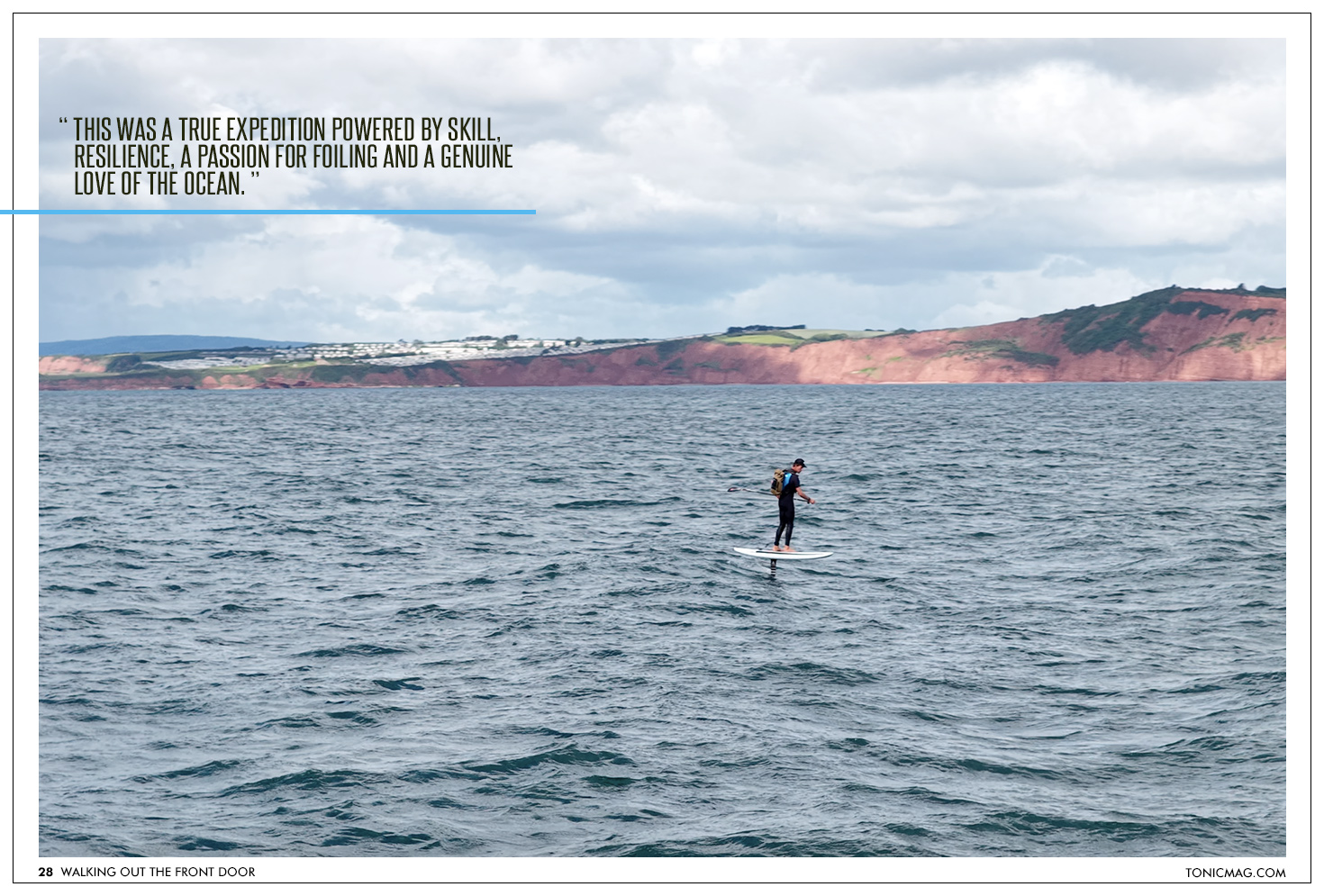
Guy’s journey is a reminder that some of the greatest adventures begin right on your doorstep. Covering more than 400 kilometres in under 20 hours on the water is an extraordinary physical achievement, but what stands out most is the spirit of exploration behind it. From sketchy tidal races and busy shipping lanes to endless glides and unforgettable sunsets, this was a true expedition powered by skill, resilience, a passion for foiling and a genuine love of the ocean. Congratulations to Guy and Emma on an incredible adventure that will undoubtedly inspire plenty more long-distance downwind missions in the years to come.
Videos from this article