

Making a Bigger Board Feel Smaller
The evolution of the mid-length foil board has been one of the defining stories in modern foiling. As riders continue to blur the lines between wing foiling, parawinging, foil assist and prone foiling, board design has had to evolve just as quickly. Stability, efficiency and early take-off remain essential, but they’re no longer enough on their own. Today’s riders expect a board to feel lively once it’s airborne, carving naturally and responding with the precision of something considerably smaller.
That’s a far greater engineering challenge than simply adding length or volume.
Every extra litre that improves stability before take-off has the potential to become unwanted swing weight once the board is flying. The question facing designers today isn’t how to make a board easier to launch, but how to make a larger board disappear beneath the rider once it’s on foil.
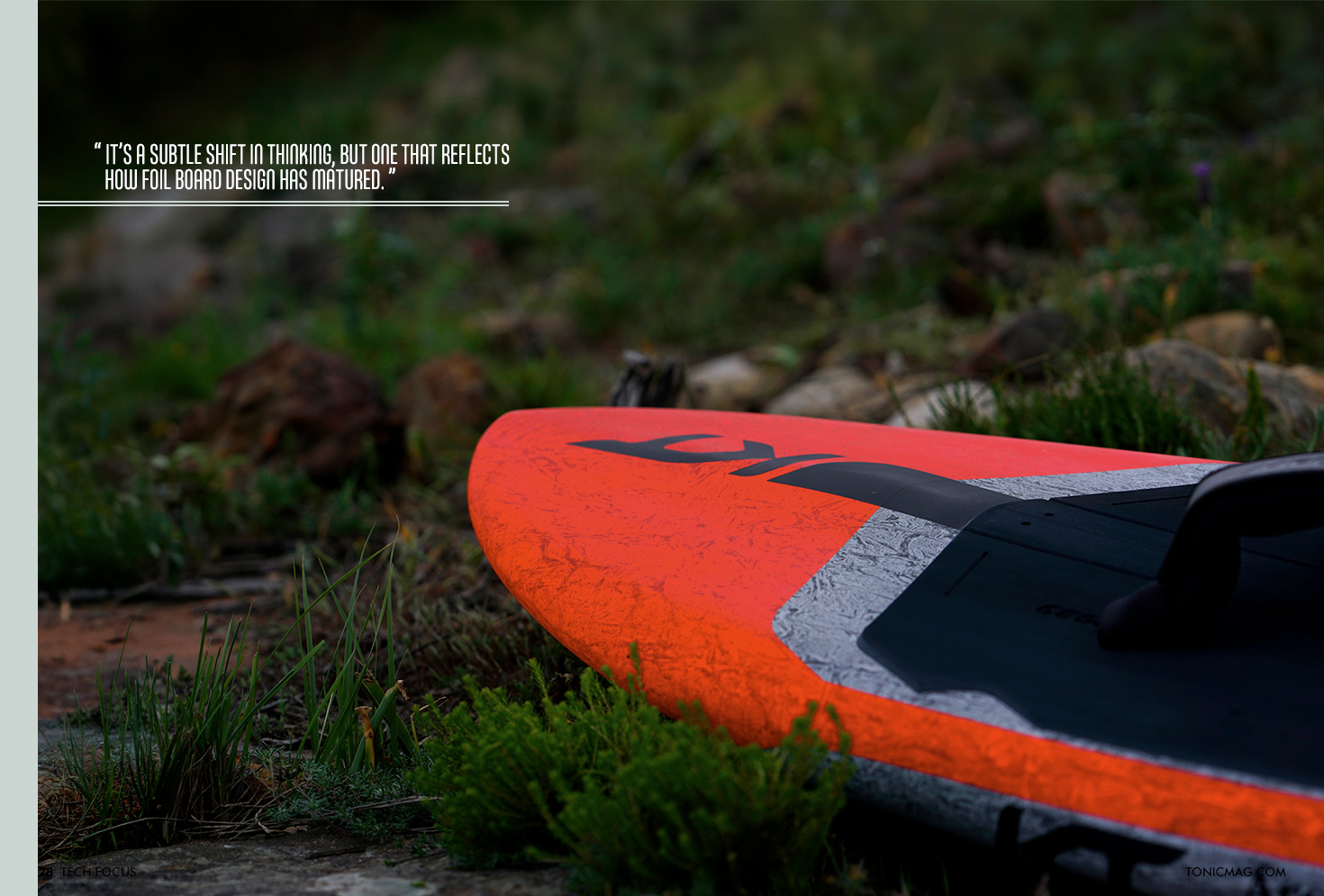
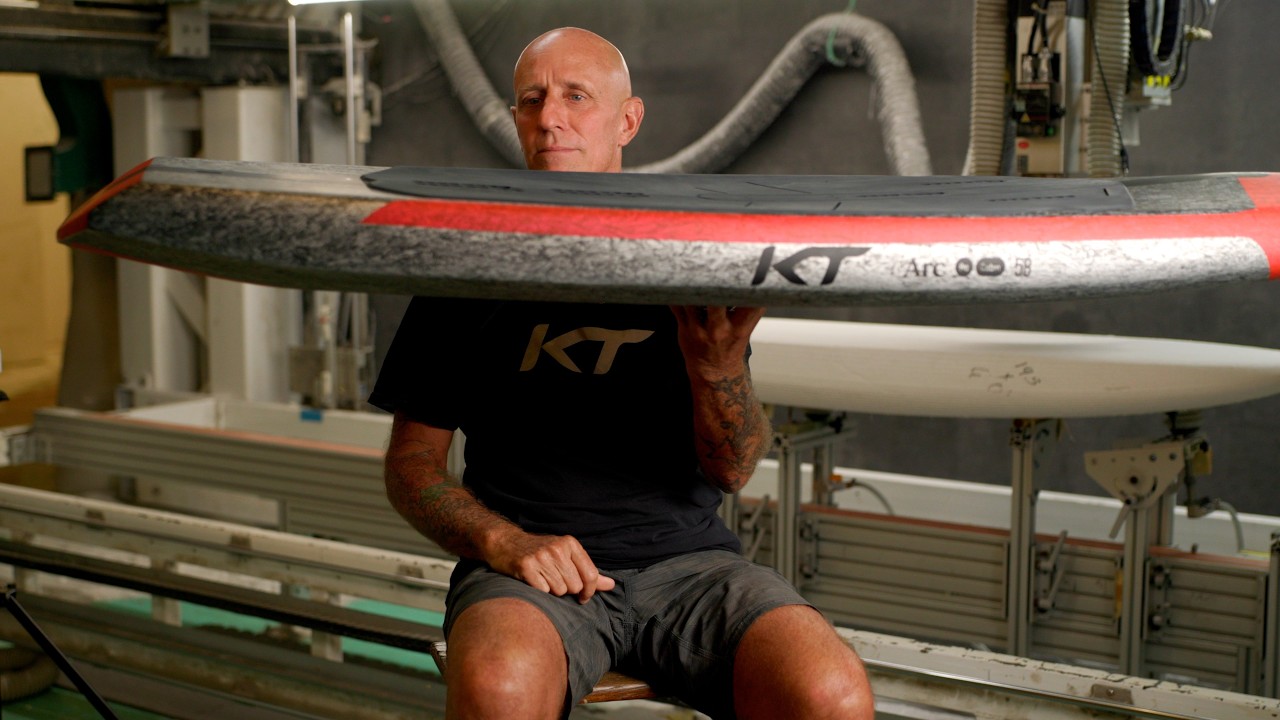
That challenge lies at the heart of the KT Arc Pro Carbon.
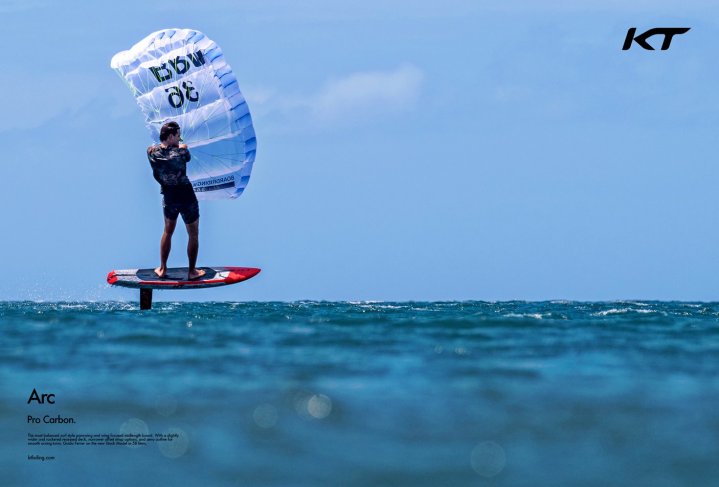
Developed with parawinging as a primary focus while remaining equally at home for wing foiling, foil assist and prone foiling, the Arc has been engineered around a simple idea: deliver the confidence riders want before take-off without sacrificing the responsiveness they expect once they’re flying. Rather than relying on one headline innovation, the board combines a series of carefully considered design decisions that work together towards the same objective.
Stability Through Design
It’s easy to associate stability with volume, but the way that volume is distributed is often far more important than the number printed on the deck.
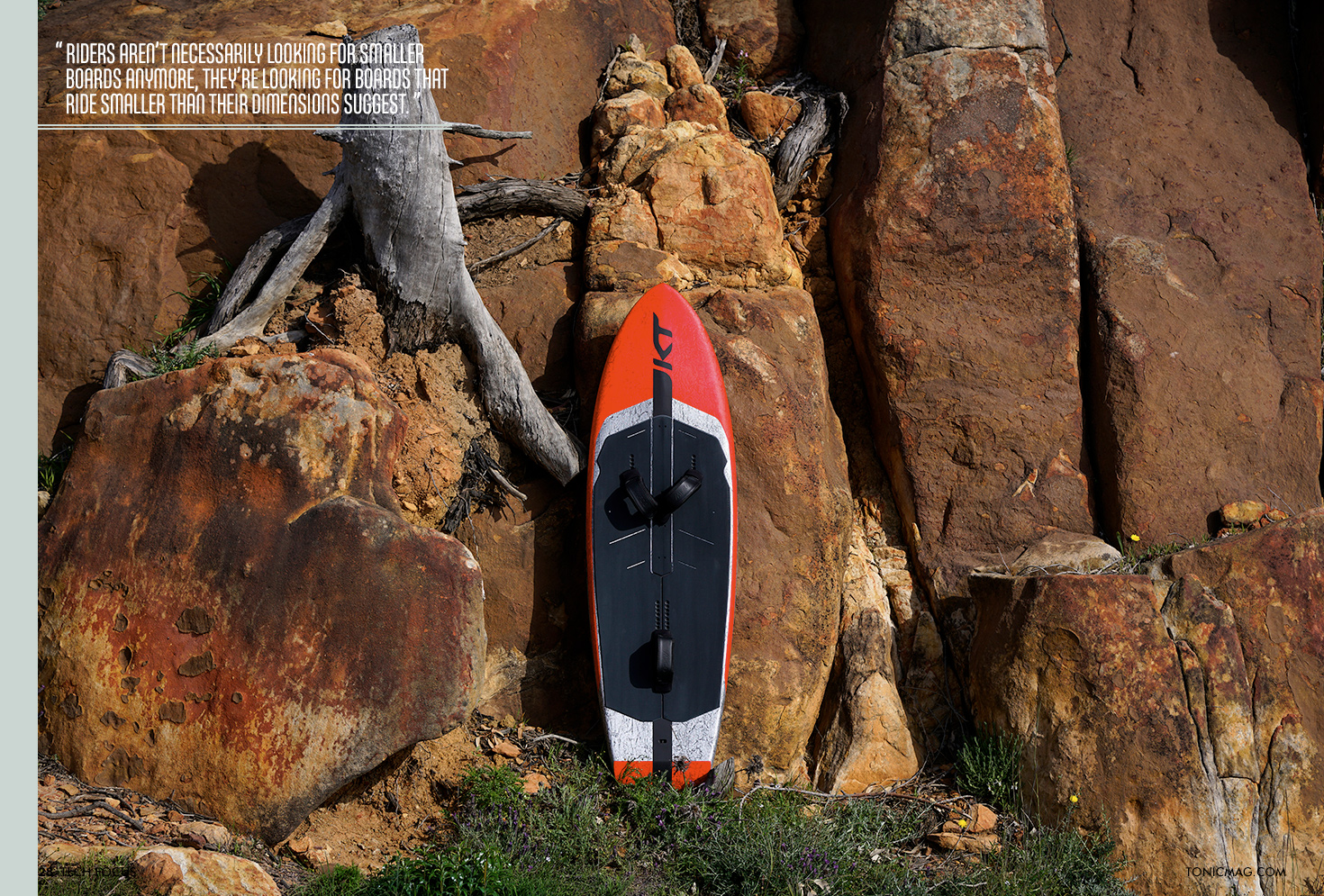
The Arc is slightly longer and wider than KT’s Super K2, yet noticeably thinner through the standing area. Instead of carrying unnecessary thickness beneath the rider, KT has opted for a recessed deck with subtle concaves that allow the rider to stand within the board rather than simply on top of it.
The effect is immediately understandable. Lowering the rider’s stance reduces the centre of gravity, creating a more settled platform when standing, balancing in chop or preparing to accelerate onto the foil. Rather than relying purely on additional volume for confidence, the Arc achieves much of its stability through rider positioning.
It’s a subtle shift in thinking, but one that reflects how foil board design has matured. Stability is no longer just about flotation, it’s about creating a platform that naturally inspires confidence before the board ever leaves the water.
Making Size Disappear
Once the board lifts clear of the surface, those same design decisions begin working in a different way.
The thinner profile reduces unnecessary bulk, while the refined volume distribution is intended to preserve the glide and efficiency expected from a mid-length without allowing the board to feel cumbersome in the air. Instead of constantly reminding the rider that they’re standing on a larger platform, the Arc has been designed to feel increasingly responsive as speed builds.
That’s becoming one of the defining goals of modern mid-length design. Riders aren’t necessarily looking for smaller boards anymore, they’re looking for boards that ride smaller than their dimensions suggest.
The Arc feels very much like a product developed around that philosophy.
The Deck Does More Than Provide Somewhere To Stand
The recessed deck isn’t simply there to improve balance before take-off.
By positioning the rider’s feet closer to the foil, it also increases leverage over the mast once airborne. Small movements through the feet are transferred more directly into the foil, creating a more connected feeling during carving turns and rail-to-rail transitions.
It’s an elegant piece of engineering because the same feature delivers different benefits throughout the session. Before take-off it promotes confidence and stability. Once flying, it enhances sensitivity and control.
The best design solutions often solve more than one problem, and the Arc’s deck layout is a good example of that approach.
Engineering The Structure
A well-designed shape can only perform as intended if the construction allows it to.
The Arc Pro Carbon combines a lightweight EPS core with a full carbon high-density exoskeleton, reinforced using both biaxial and unidirectional carbon within a high-density sandwich construction. The emphasis is on producing a structure that is both light and exceptionally stiff, allowing rider inputs to be transferred efficiently into the foil while helping the board retain its designed characteristics over time.
The construction also reflects the direction in which foiling continues to evolve. Integrated 2.4GHz signal windows allow compatibility with modern foil assist systems without compromising the carbon structure, while practical details such as the solid-state vent system acknowledge the demands placed on boards that are often used across multiple disciplines and in a wide variety of conditions.
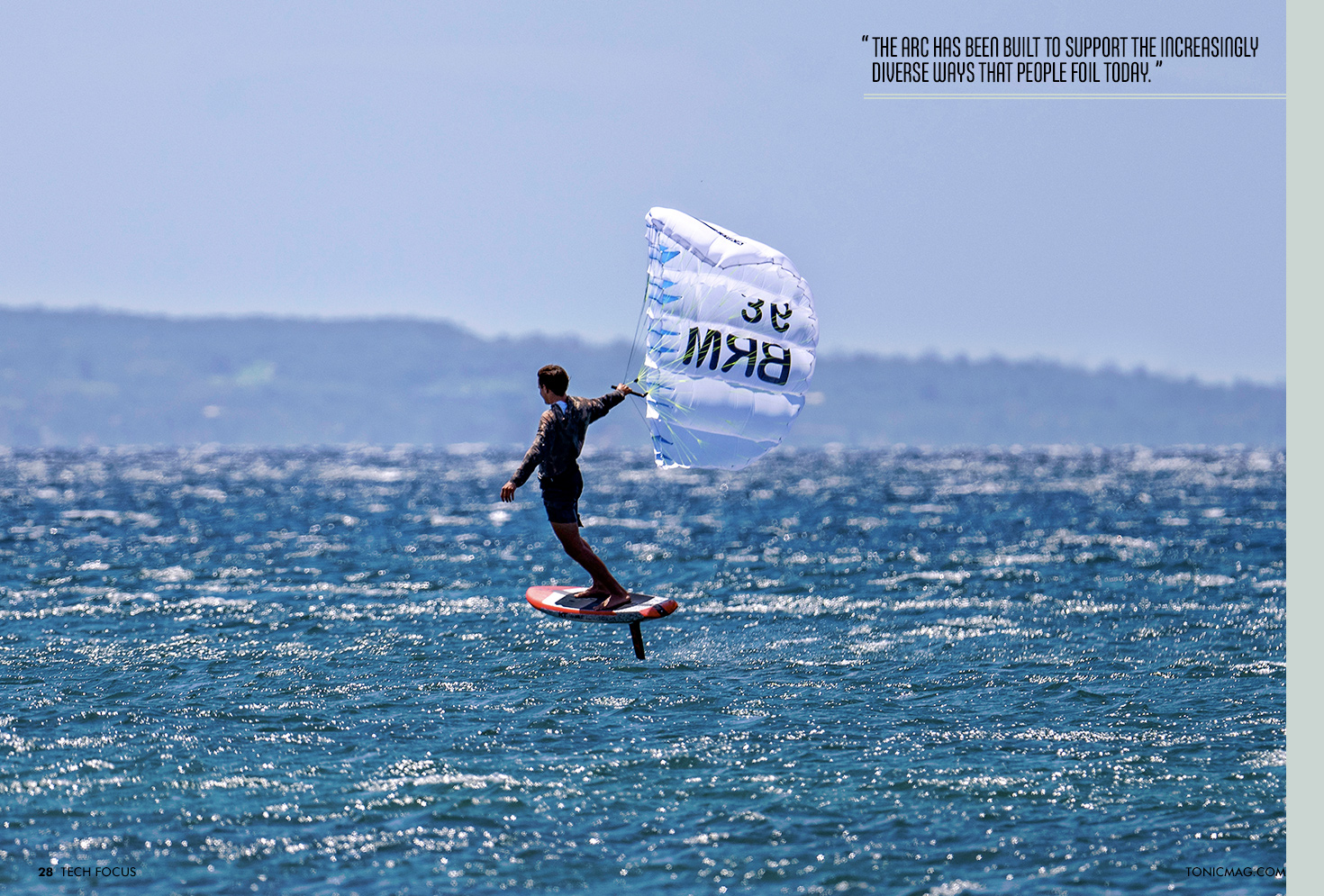
Rather than being designed around a single style of riding, the Arc has been built to support the increasingly diverse ways that people foil today.
Refining The Details
The smallest details often reveal the most about a board’s design philosophy.
The Arc features narrower offset footstrap positions that encourage a more natural, surf-inspired stance, allowing the rider’s body to align more comfortably through carving turns. It’s a small refinement, but one that reflects a broader emphasis on board feel rather than simply board function.
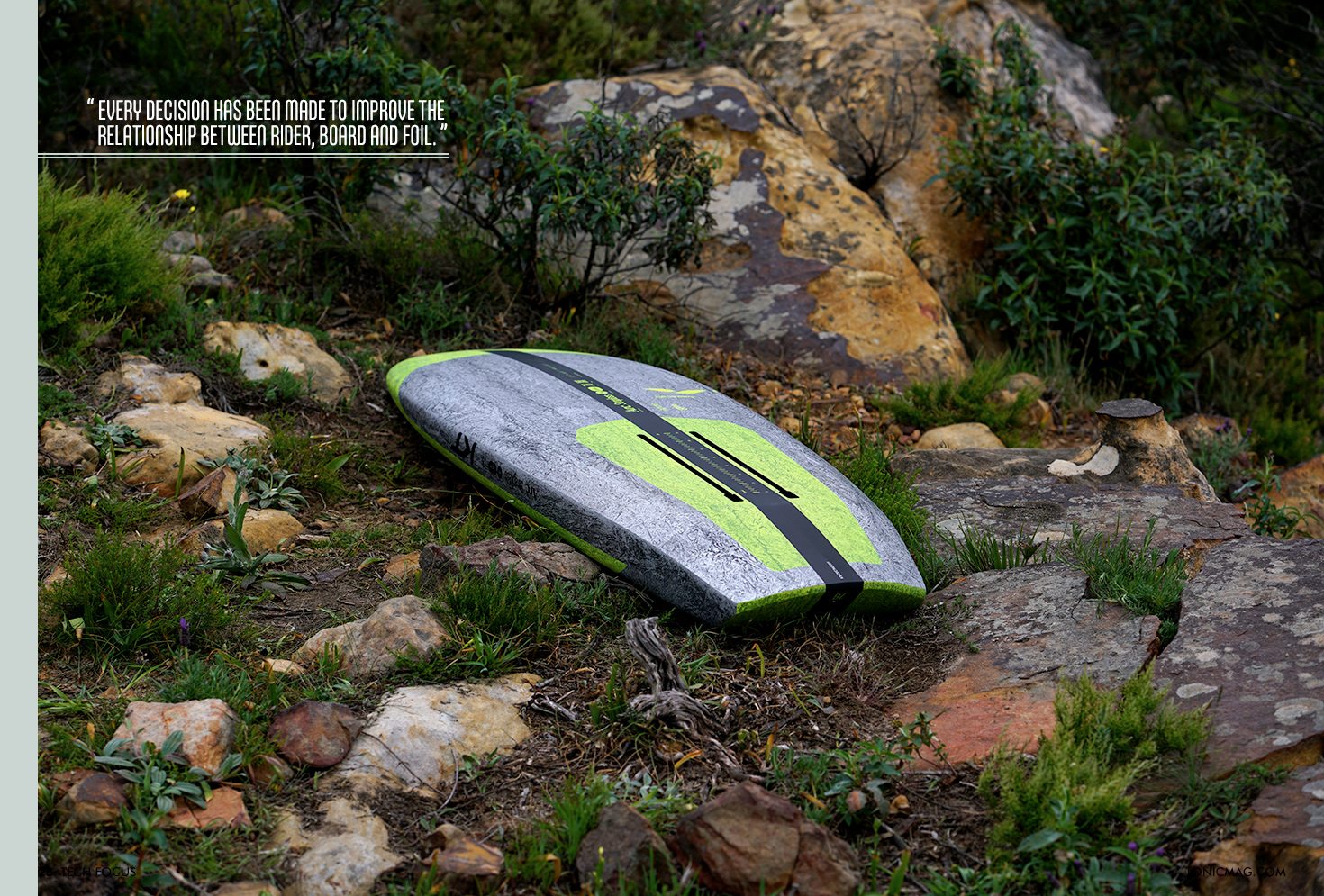
Throughout the design there is a clear sense that every decision has been made to improve the relationship between rider, board and foil. None of the individual features are intended to stand alone. Instead, they complement one another to create a board that feels balanced and intuitive from the first paddle or pump through to the final turn.
The Bigger Picture
The Arc Pro Carbon reflects just how far foil board design has progressed over the past few years.
Rather than forcing riders to choose between stability and performance, designers are increasingly finding ways to achieve both through intelligent shaping, thoughtful ergonomics and advanced construction techniques. The emphasis is shifting away from simply adding more volume and towards using that volume more effectively.
That’s exactly what makes the Arc so interesting.
Every major design decision, from the recessed standing area and thinner profile to the carbon construction and refined rider positioning, works towards making a larger board feel smaller once it’s flying. It’s an approach that feels entirely in tune with the direction modern foiling is taking, where efficiency before take-off and freedom on foil are no longer seen as competing priorities.
The Arc Pro Carbon doesn’t attempt to redefine the mid-length category overnight. Instead, it demonstrates how careful engineering and considered shaping can refine the experience in meaningful ways, creating a board that feels composed when you need stability and remarkably unobtrusive once you’re flying.
Videos from this article