

From shaping windsurf boards by hand to designing some of the most advanced hydrofoils on the market, Tiesda You has spent decades pushing the boundaries of board sports. We sit down with the head of Starboard Foils to explore the evolution of foil design, the role of modern engineering and where the sport is heading next.
Foiling has evolved at a remarkable pace. What started as a niche, slightly mysterious offshoot of other watersports has become one of the most exciting areas of design and progression on the water. Boards, wings, masts, fuselages and foils have all moved forward at speed, and behind every breakthrough is a designer trying to balance performance, accessibility, stiffness, simplicity and feel.
Few people understand that process better than Tiesda You. A long-standing designer at Starboard, Tiesda began his career shaping windsurf boards and has now turned his attention fully to hydrofoils. As Starboard launches its latest foil range, we caught up with him on The Foil Pod to talk about his route into design, how foiling has changed the rules, and why the future of the sport may lie in making things simpler, not more complicated.
Tiesda’s journey into watersports began in Qatar during the 1980s. At the time, the country looked very different to the modern skyline many people know today. There were no high-rise buildings, very little infrastructure and, in his words, “just sand everywhere.” What it did have, however, was wind.
The local Shamal wind would often blow 25 to 30 knots several days a week, creating surprisingly good conditions for windsurfing. Tiesda’s father introduced him to the sport, and like many young riders, he initially dreamed of becoming a world champion. But Qatar had no waves, and Tiesda soon realised he was not physically built to become a dominant slalom racer. Instead, he changed direction.
“I decided I’d become a shaper,” he says.
By the age of 12 or 13, he was already shaping his own boards. That early fascination with design became the start of a career that would eventually take him to Thailand and into the heart of one of the most recognisable watersports brands in the world.
After university, Tiesda took an internship with Starboard. At the time, the company was still small, with only a handful of people involved. Svein Rasmussen invited him to Thailand for three months, and Tiesda saw it as a chance to gain experience before returning home to start his own custom board factory.
The plan was simple: learn, leave, and build his own production line for prototypes and custom shapes. But three months became four, four became a year, and one year became another. More than two decades later, Tiesda is still there.
“I think one year became four, and I think it’s been 25 years now,” he laughs.
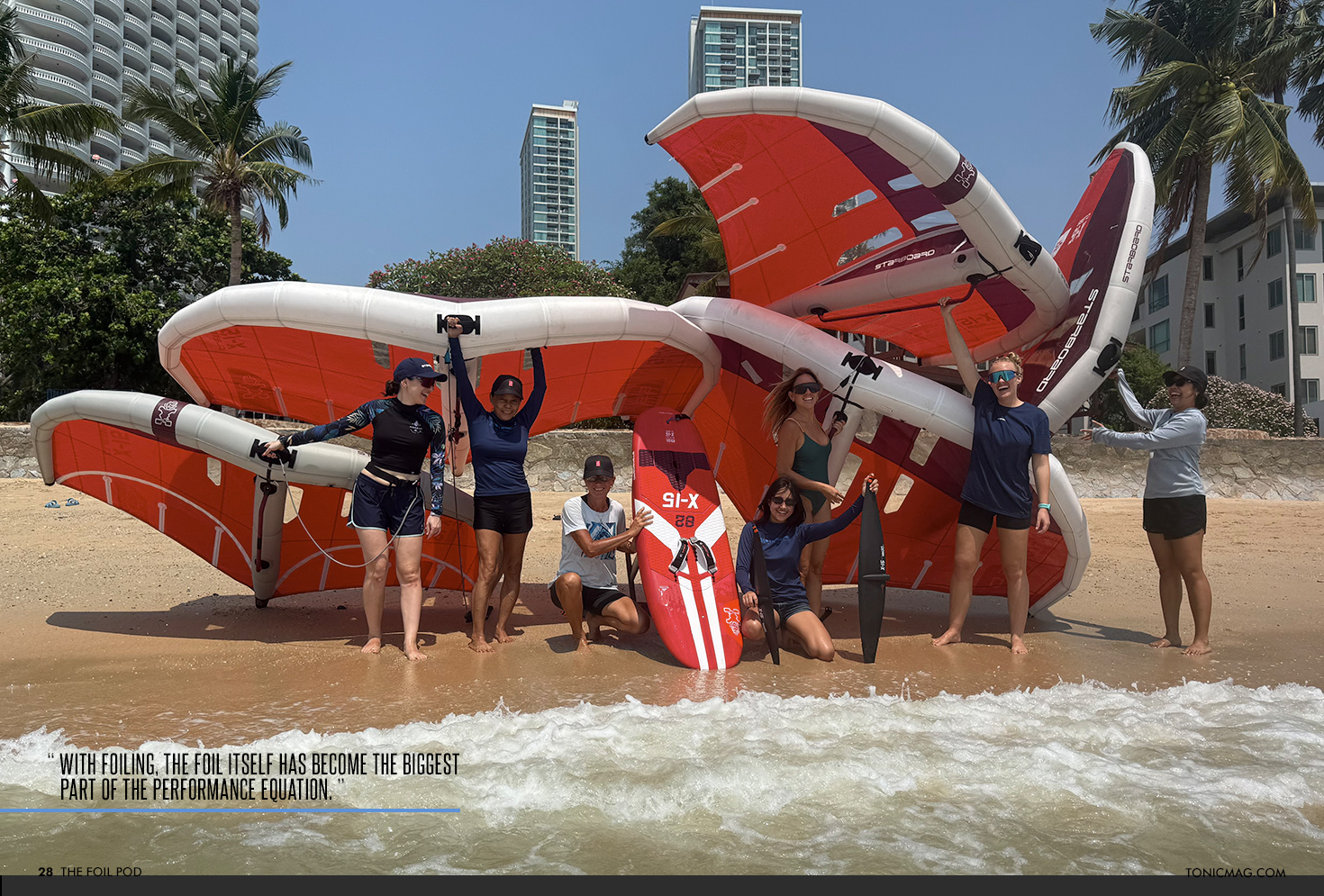
That long period has given him a unique perspective on how design has changed. When he started, board design was still rooted in shaping bays, foam blanks, sanding blocks and hand tools. Like many young shapers, he idolised the classic figures of the craft, those surrounded by dust, lights and beautifully sculpted blanks.
Today, especially in foiling, the world looks very different.
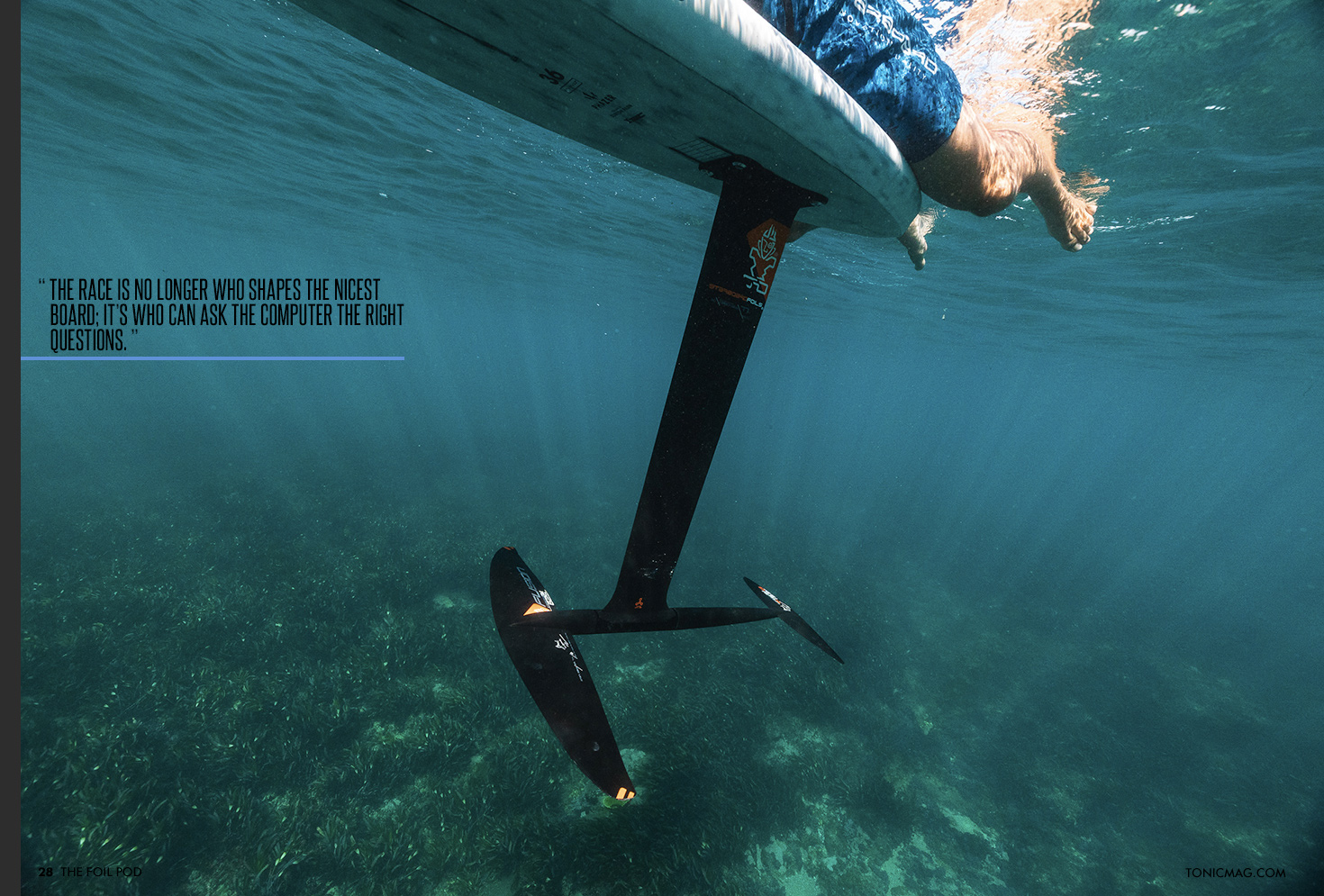
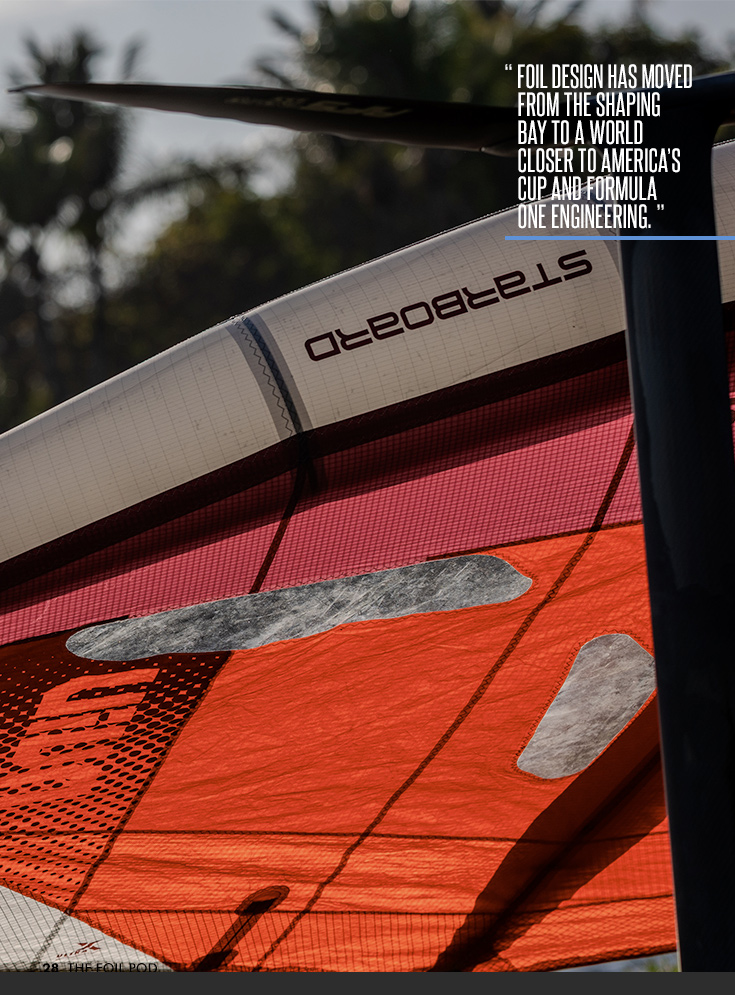
For Tiesda, modern foil design has shifted closer to the mindset of America’s Cup engineers or Formula One teams than to traditional surfboard shaping. The craft is still there, but the competitive edge now comes from knowing how to use computers, simulations and data in the right way.
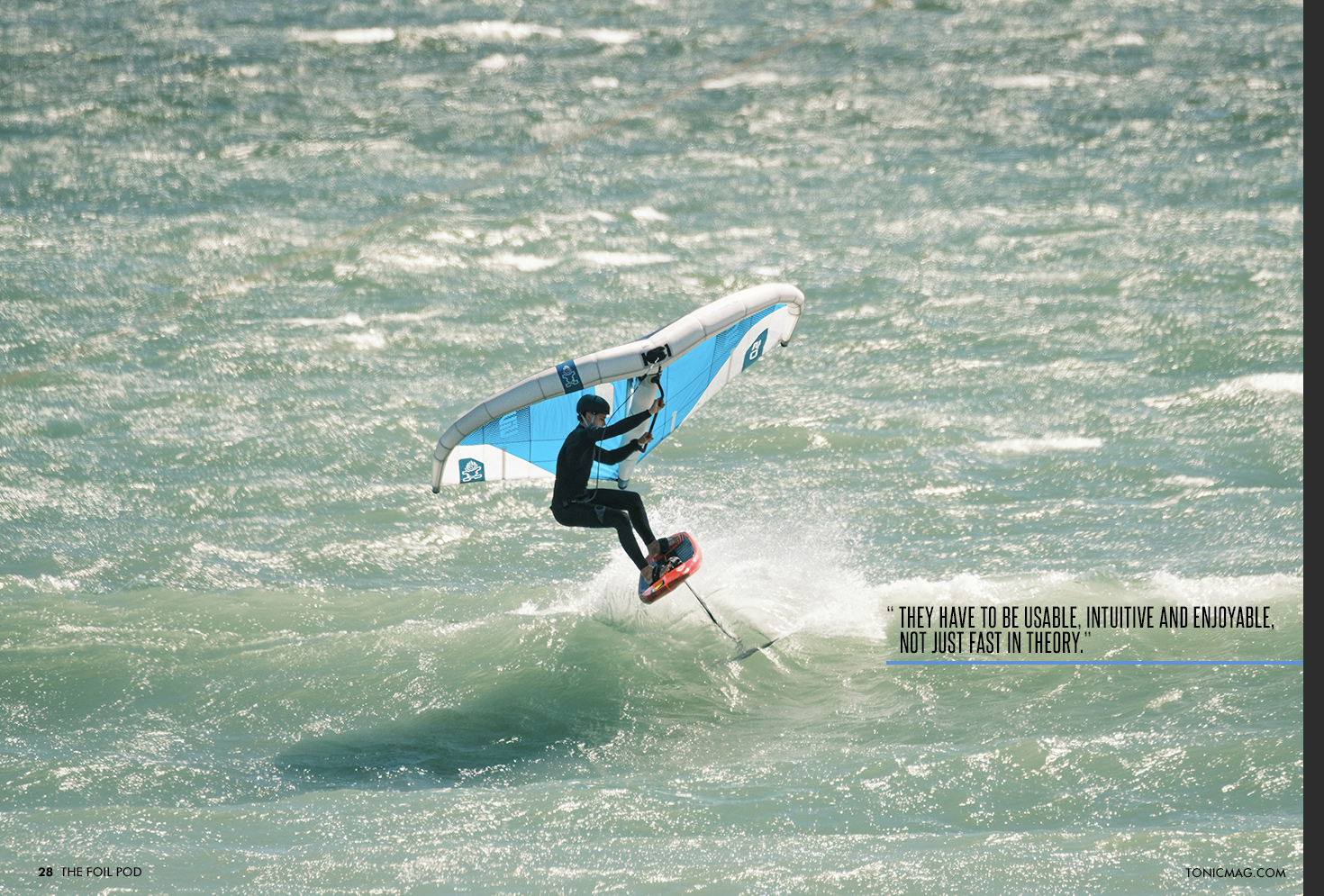
“The race now is no longer who shapes the nicest board in the shaping bay,” he says. “It’s who can utilise computing power to simulate in the best way, but also in the most relevant way.”
That last point is important. Computers can generate almost limitless information, but only if the designer knows what to ask. Foil design is not simply about running endless simulations. It is about choosing the correct questions, understanding the limitations of the tools, and knowing which details actually matter on the water.
In that sense, design has become both more advanced and more demanding. The designer still needs instinct, experience and feel, but now those qualities sit alongside engineering, materials science and hydrodynamic modelling.
Despite his background in hand shaping, Tiesda does not appear too nostalgic. He admits he sometimes misses the tactile side of design until he actually has to pick up a sanding block again. Recently, while working on a sample foil that was whistling, he found himself sanding the trailing edge by hand.
“I was sanding for about five minutes, and I was like, no, screw this, where’s my computer?”
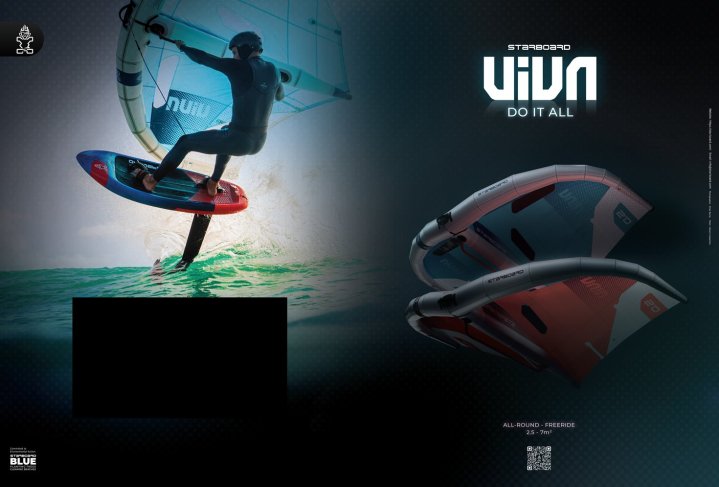
Foiling may be more technical than board shaping, but Tiesda sees strong similarities between the two worlds. The human side remains central. Starboard is ultimately making commercial products, and that means they have to be usable, intuitive and enjoyable, not just fast in theory.
He compares it to the early iPhone, where one simple home button created an easy way for people to understand the product. That kind of design thinking, he says, applies whether you are creating a board, a wing or a foil.
The proportions, however, have changed. In windsurfing, the board played a dominant role, with the sail and fin also contributing heavily to performance. In foiling, the foil itself is arguably the most important component. The board still matters, but compared with the foil, mast and connection system, its influence can feel relatively smaller.
That makes foil design an intricate puzzle. Front wings, tail wings, mast stiffness, fuselage length, connections, materials, angles and rider expectations all need to work together. The challenge is not simply to produce one fast wing, but to create a system that performs across disciplines while remaining understandable for everyday riders.
One of the biggest topics in the conversation was connection systems. Starboard’s current platform, UCS, stands for Universal Connection Standard, and it represents Tiesda’s attempt to solve a problem that many foil brands have wrestled with.
Every designer knows what they want from a connection system: stiffness, strength, simplicity, longevity, adjustability and compatibility. The difficulty is getting there without locking the brand or the customer into compromises that become limiting later.
Tiesda has been through that process. Earlier systems were designed with the best information available at the time, but as foils evolved, new requirements appeared. Wings became thinner, loads increased, riders demanded more stiffness, and old decisions started to reveal their limitations.
“You’re stuck between a rock and a hard place,” he says. “Then quite often there’s no other option but to start all over again.”
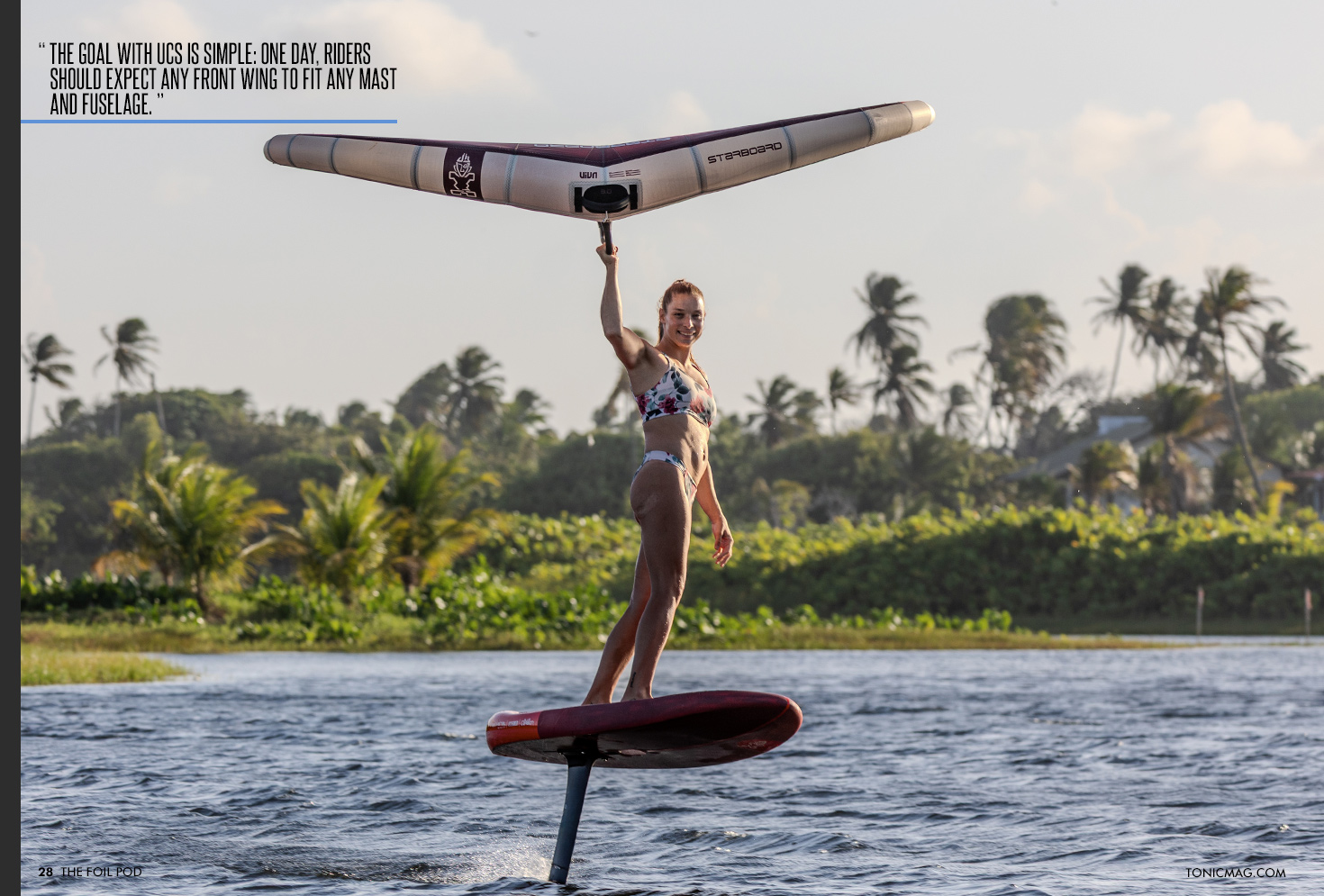
With UCS, the aim was to take everything Starboard had learned and build a system with a much larger sweet spot. The goal is not only to serve Starboard’s current range but potentially to create something that could be used more widely across the sport.
The idea is bold. Starboard has made the UCS standard available so other brands or manufacturers can create compatible parts. Tiesda’s hope is that, over time, it could become as accepted as twin-track foil boxes or other established watersports standards.
“In five or ten years’ time, people will take it for granted that this front wing will fit that mast and that fuselage,” he says.
It is a refreshing approach in a market where riders are often locked into proprietary systems. For Tiesda, opening the platform makes sense. If every foil fits every board through the existing track system, everyone benefits. He believes the same could be true for front wings, tails and fuselages.
This also ties into another major theme: simplification.
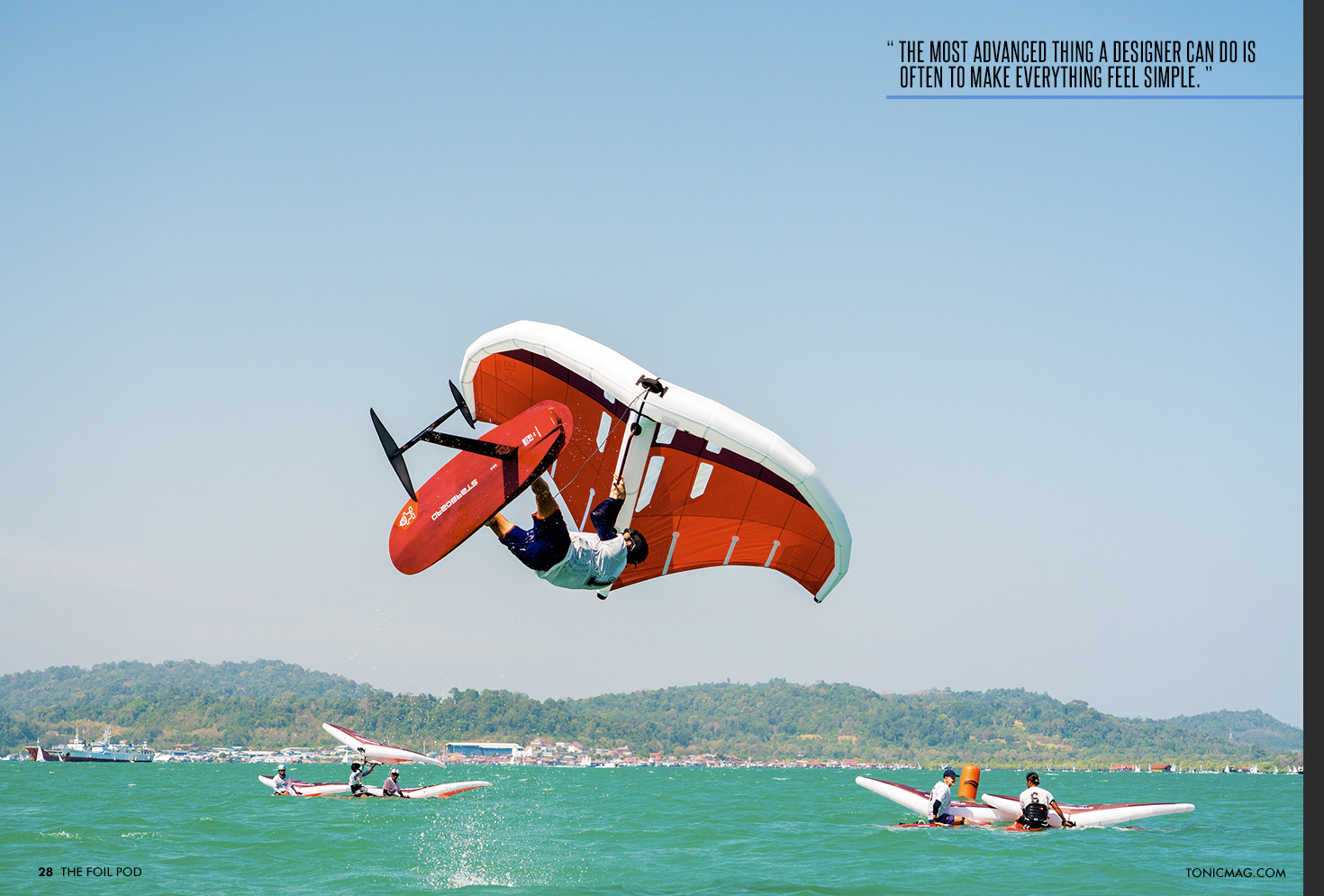
Foiling has become incredibly broad. Wing foiling, SUP foiling, downwinding, surf foiling, dock starting, windsurf foiling, freestyle, waves and racing all place different demands on equipment. For brands, the temptation is to create huge ranges with endless combinations. For customers, that can quickly become overwhelming.
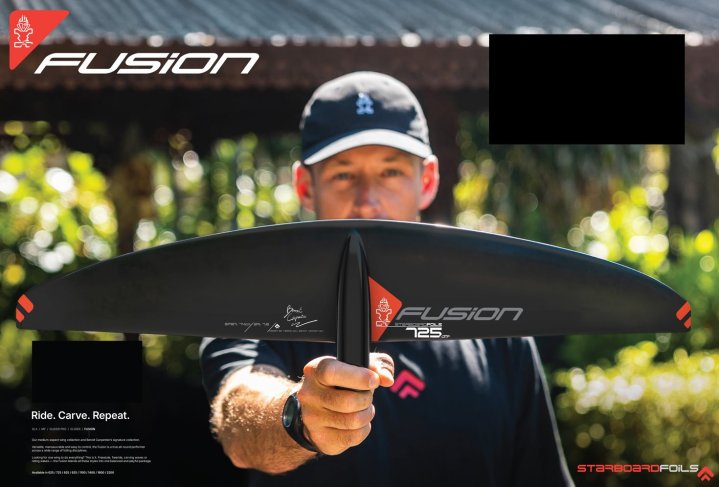
Starboard’s new foil range moves in the opposite direction. According to Tiesda, the latest line has been consolidated into a smaller, more intuitive system built around five front wing shapes. Within that compact structure, the brand aims to cover an enormous range of foiling, from high-level windsurf racing and wing racing through to downwind, waves, freestyle and beginner progression.
That reduction was not easy. During development, there were many possibilities, but the process became one of removing, refining and simplifying. Tiesda compares it to editing a film, where you begin with huge amounts of footage and gradually cut it down to what really matters.
The result, he believes, is a range that is easier to understand without sacrificing performance.
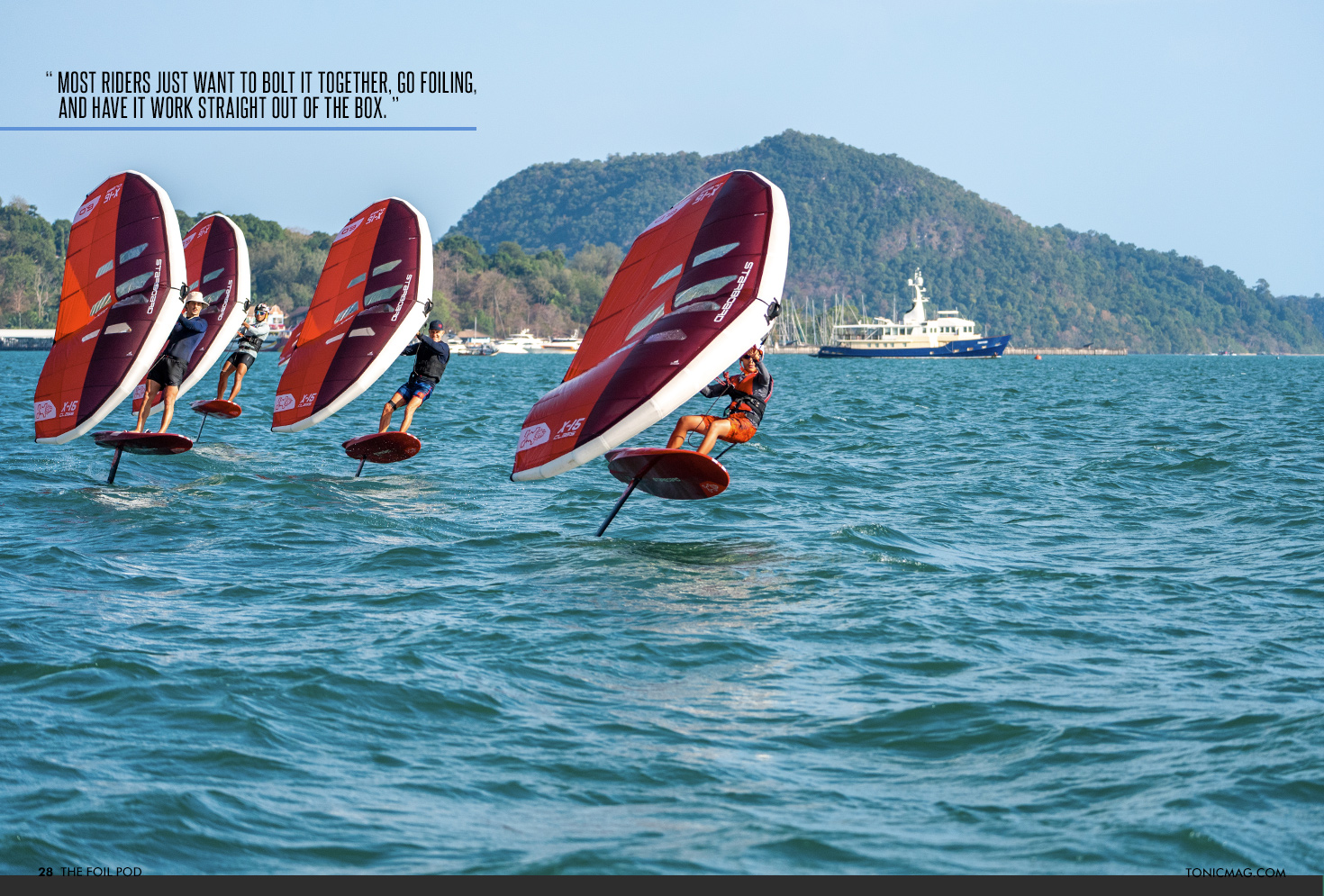
For everyday riders, that matters. Experienced foilers may enjoy experimenting with tail angles, fuselage lengths and tiny setup changes, but most people want equipment that works straight out of the box. Tiesda says UCS has been designed with that in mind. There are no adjustments required to get going, but for those who want to look deeper, there are still ways to tune front wing angle, tail wing angle and wing position.
Materials are another key part of the story. Foils are constantly being pushed thinner, stiffer and lighter, but there are no magic shortcuts. Without entirely new materials, designers are working within the constraints of carbon grade, construction method, titanium use, price and weight.
For Starboard’s highest-performance foils, that has meant using higher-modulus carbon and more titanium in some fuselage areas to reduce size while maintaining stiffness. In racing and downwind foils, those gains can unlock more extreme shapes.
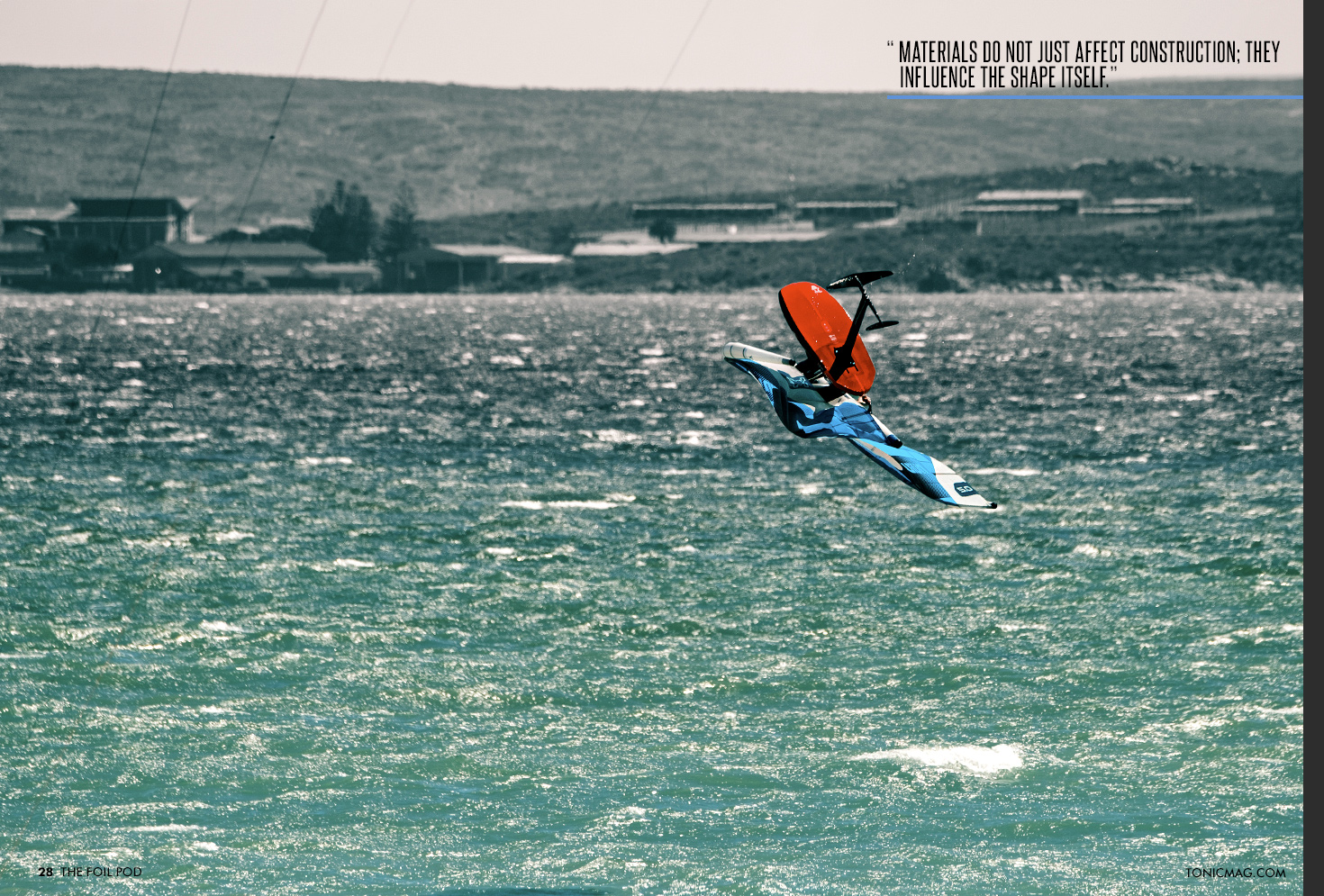
Tiesda explains that the optimisation process is heavily influenced by the materials available. Change the carbon grade, and the computer can produce a different wing because the stiffness constraints have shifted. In other words, materials do not just affect construction; they influence the shape itself.
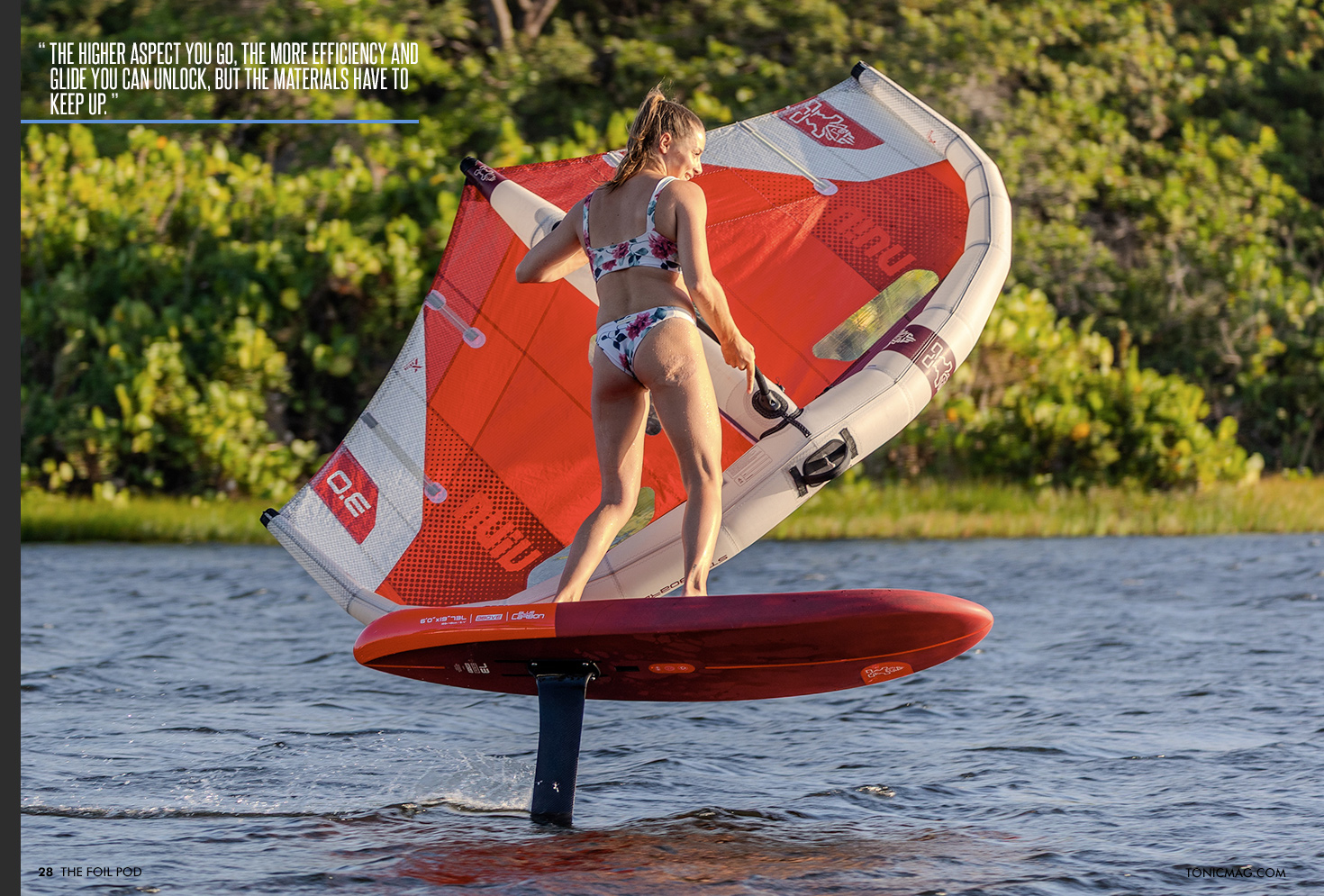
That is particularly relevant in high-aspect foils. Technically, increasing the aspect ratio can improve efficiency and glide, but it also creates structural challenges. The higher and narrower the wing becomes, the harder it is to keep it stiff, strong and manageable.
Starboard’s latest range includes some very high-aspect designs, particularly in the MF downwind line. Tiesda mentions an MF 580 with an aspect ratio of 19, while the MF 780, one of his personal favourites, sits around 16. He uses it for wing foiling in Thailand, where lighter winds make early lift and glide especially valuable.
High-aspect foils have changed dramatically in recent years. When they first appeared, many were difficult to ride, with abrupt stall behaviour and a narrow comfort zone. Today, medium and high-aspect foils can feel surprisingly approachable. Part of that is better design, but Tiesda offers another explanation too: the foiling community has simply got better.
As riders progress, they become more comfortable with the efficiency and different feel of high-aspect wings. What once seemed intimidating can become natural after time on the water. He has seen riders experience that leap firsthand, borrowing a friend’s more efficient foil and returning to the beach with a new level of excitement.
There is always a balance between specialisation and crossover. A foil designed purely for one rider, one race and one set of conditions might be the fastest possible tool for that exact moment, but it may not be the most useful product for the wider market. Starboard’s approach is to optimise for a primary use, then test across other disciplines to see how much performance carries over.
Often, Tiesda says, the compromise is smaller than expected. A wing created for downwinding might also be excellent for wing foiling or even interesting in waves, albeit with a different riding style. That crossover is one of the reasons modern foiling equipment feels so exciting. One good foil can now open the door to several disciplines.
Despite spending much of his time working on advanced prototypes and high-end racing equipment, Tiesda’s current favourite setup is surprisingly simple. After a recent distributor meeting, he found himself riding an Above 75 mid-length board with a Glider Pro 1260 front wing and a single skin wing in his hands.
It was not the most extreme setup. It was not the fastest. But it was fun, easy and versatile.
“I don’t even know why I’m struggling with this more extreme stuff,” he says. “This is probably the kind of foiling that I want to do going forward. Just one foil, forget about all the techy stuff and just have a good time.”
That comment says a lot about where foiling may be heading. The cutting edge will always matter, and racing will continue to push design forward, just as Formula One drives innovation in cars. But for many riders, the real magic lies in accessible performance: gear that gets up early, glides well, carves smoothly and lets you focus on the session rather than the setup.
Tiesda still loves the technical side, and he admits that within a couple of weeks, he may be back obsessing over some new extreme prototype. That is part of the designer’s curse. But his appreciation for simple, effective equipment feels important.
For him, one of the most satisfying parts of recent development has not been a single wing shape, but the UCS connection system. He describes it as planting seeds several years ago and then slowly watching people understand the idea. It is not perfect for every possible requirement, but as riders and partners begin to see the advantages, the satisfaction grows.
That long-term thinking is central to good design. Not every innovation is instantly obvious. Some take time to be understood, adopted and appreciated.
When asked what advice he would give to young people who want to follow a similar path, Tiesda’s answer is simple: get started. Passion matters, but so does education. He recommends engineering, design tools and a willingness to learn. Today, many of the tools that once felt inaccessible are available to anyone with curiosity and a computer.
Download Rhino 3D, follow tutorials, learn vector graphics, explore simulation tools, build your first digital models and let the process begin. Once that snowball starts rolling, excitement and learning feed each other.
For a designer who began shaping boards by hand as a child in Qatar and now works with advanced foil simulations in Thailand, it is fitting advice. The tools have changed, but the underlying drive is the same: curiosity, passion and the desire to make something that feels better on the water.
Foiling is still young, and the pace of progression shows no sign of slowing. But listening to Tiesda, it is clear that the future will not just be about thinner masts, higher aspect ratios or faster race wings. It will also be about smarter systems, better compatibility and equipment that helps more people enjoy the sport.
Sometimes the most advanced thing a designer can do is make everything feel simple.