
Evolving the Parawing Experience
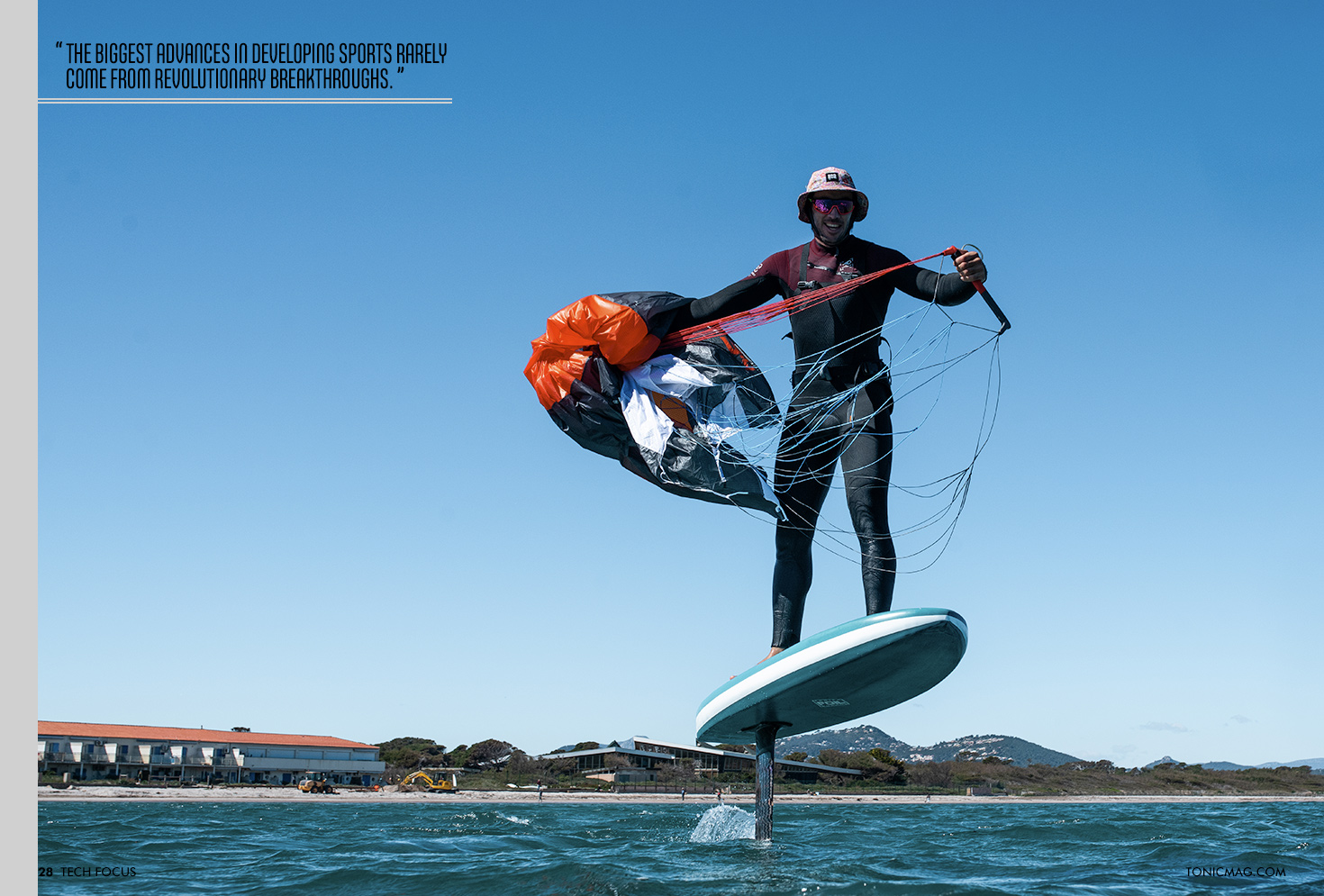
Few new disciplines have progressed as rapidly as parawinging. In little more than a year it has gone from an experimental corner of foiling to one of the most exciting developments in the sport, changing the way riders approach downwinders, coastal exploration and even everyday sessions.
The appeal is easy to understand. Rather than carrying an inflatable wing for an entire session, a parawing allows riders to use the wind to get up onto the foil before packing the wing away and letting the ocean do the rest. It’s a different way of thinking about foiling, one that prioritises efficiency, freedom and the simple pleasure of flying across open water.
As with any emerging discipline, however, the first generation of products answered some questions while raising plenty of others. Riders quickly discovered that outright performance was only one part of the equation. Ease of deployment, intuitive handling, efficient upwind angles, reliable packability and forgiving behaviour all became equally important. The challenge for designers was no longer proving that the concept worked, but refining it so the equipment became almost invisible once on the water.
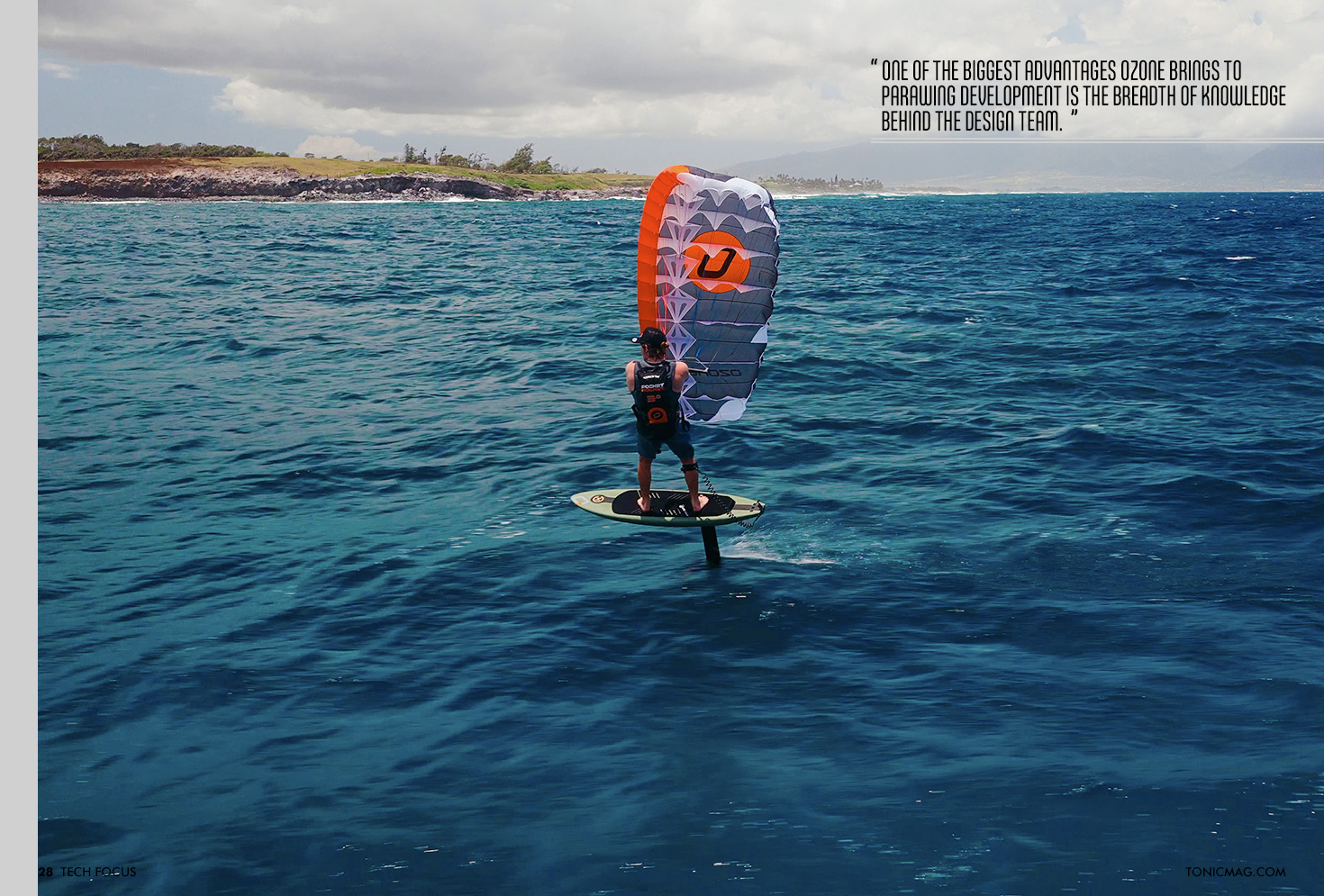
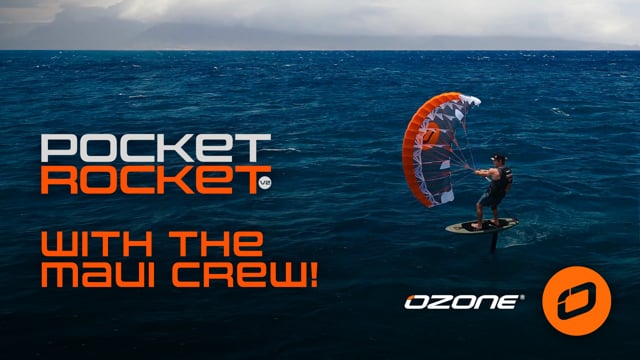
That philosophy sits at the heart of the Pocket Rocket V2.
Rather than starting again, Ozone has taken everything it learned from the original Pocket Rocket and combined it with decades of experience designing paragliders and high-performance foil kites. The result is not a radically different wing, but a carefully considered evolution that focuses on improving every stage of the ride, from the first launch through to the final glide.
Learning From Experience
One of the biggest advantages Ozone brings to parawing development is the breadth of knowledge behind the design team. While parawinging itself may be new, many of the aerodynamic principles involved are not. Understanding canopy tension, airflow management, profile stability and efficient power delivery has been central to paraglider and foil kite development for years.
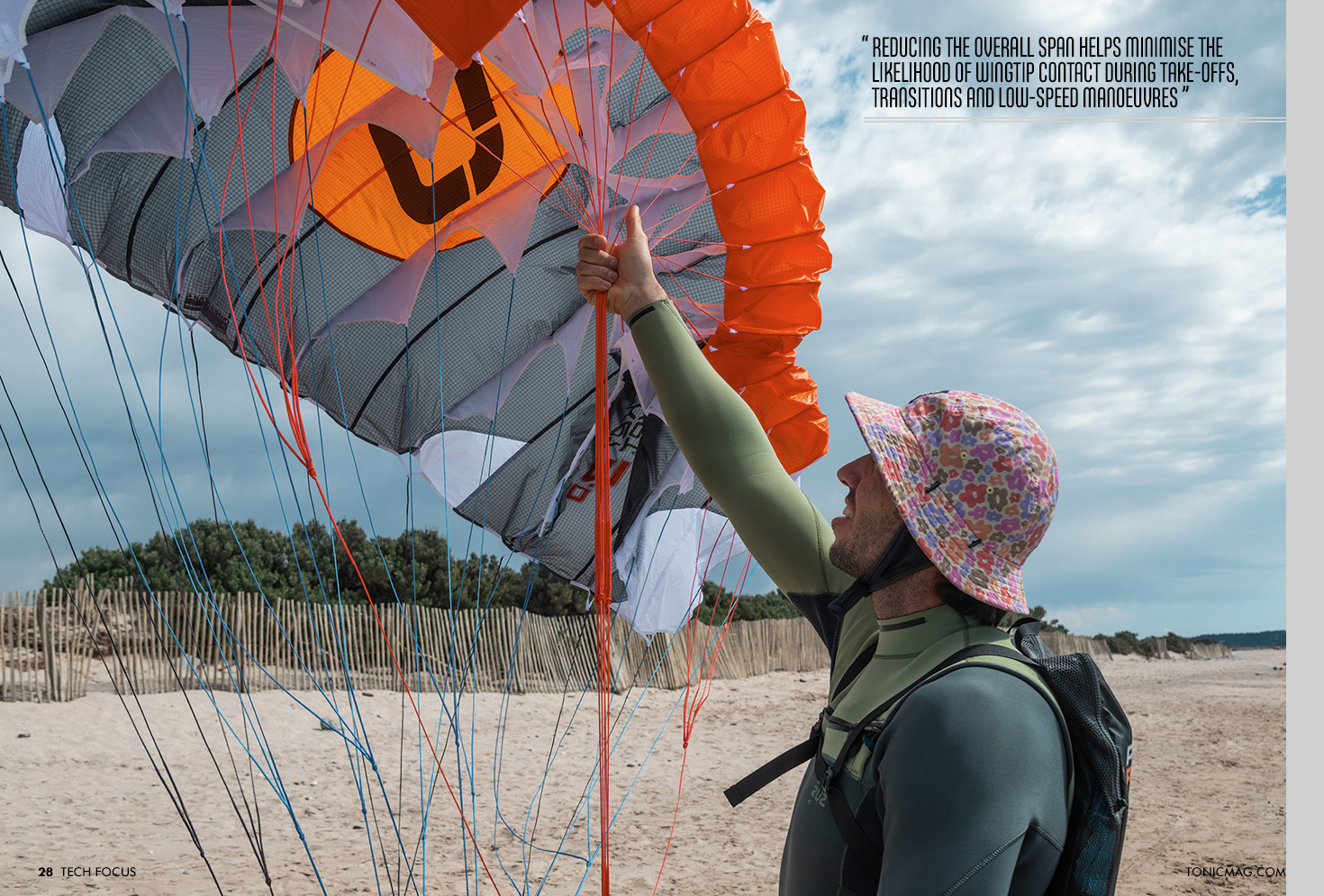
The Pocket Rocket V2 demonstrates how those different disciplines can influence one another.
Instead of chasing more power or higher speeds, the emphasis has been on making the wing easier to fly and more predictable throughout its operating range. Those refinements may appear subtle on paper, but they have a significant effect on how natural the wing feels in real-world conditions.
Ultimately, the less time a rider spends thinking about the wing, the more time they can spend concentrating on reading the swell and enjoying the glide.
A New Shape With A Clear Purpose
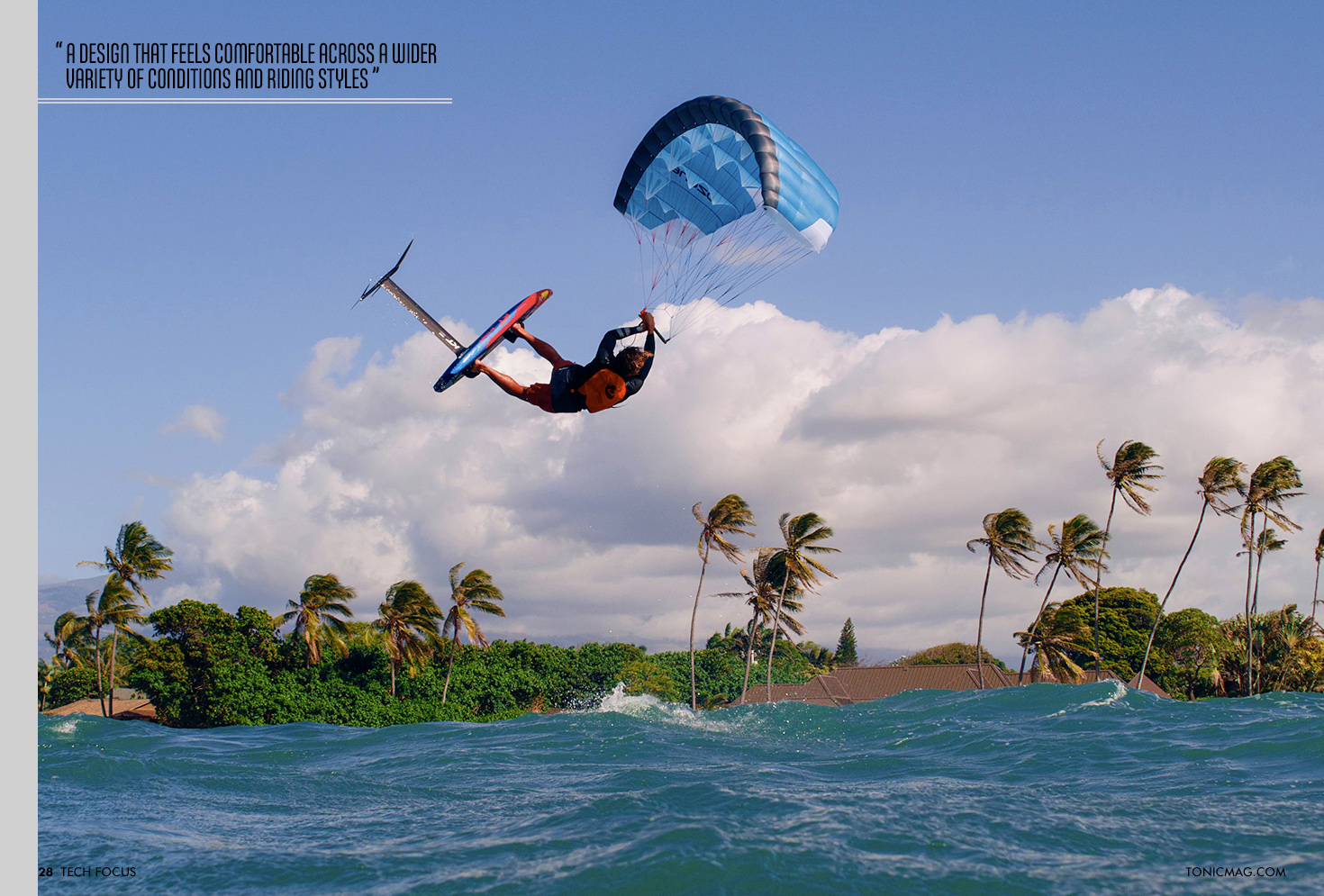
At first glance, the Pocket Rocket V2 retains the familiar DNA of the original, but its outline has been refined into a lower aspect, more compact design with an elliptical planform.
This isn’t simply an aesthetic decision.
Reducing the overall span helps minimise the likelihood of wingtip contact during take-offs, transitions and low-speed manoeuvres, while also contributing to a more compact feel in the hands. At the same time, the revised geometry improves low-end power, helping riders generate the drive needed to accelerate onto the foil without making the wing feel oversized once airborne.
It’s a good example of modern design thinking. Rather than optimising the wing for one specific characteristic, Ozone has aimed to broaden its overall usability, creating a design that feels comfortable across a wider variety of conditions and riding styles.
Refining Power Delivery
Power is only useful if it can be controlled.
The Pocket Rocket V2 features a revised profile and updated canopy shaping designed to deliver power more progressively throughout the wind range. Instead of feeling abrupt, the wing develops drive in a smoother, more predictable way, making it easier to pump onto the foil in lighter winds while remaining composed as conditions build.
Equally important is the increase in the wing’s usable sweet spot. Small inaccuracies in hand position or steering input have less influence on the behaviour of the wing, allowing riders to relax rather than constantly making corrections.
These aren’t headline-grabbing developments, but they’re exactly the kind of refinements that help transform a product from something that works well into something that’s genuinely enjoyable to use.
Simplifying The Bridle System
Bridles are fundamental to every parawing, but they also represent one of the biggest practical challenges.
Long, complex line layouts can slow deployment, complicate pack-downs and increase the chances of tangles during repeated launches. Ozone has addressed this by redesigning the Pocket Rocket V2’s bridle arrangement, shortening the overall system while introducing a revised front line configuration inspired by developments made on the PowerPack.
The objective is simple: make the wing easier to manage.
A cleaner layout allows riders to locate the canopy more quickly during deployment while helping reduce unnecessary complexity when packing the wing away. For riders undertaking long downwind runs where the wing may be deployed and stashed multiple times, these seemingly small improvements can have a surprisingly large impact over the course of a session.
Rethinking Rider Connection
The introduction of Ozone’s Bow Bar represents another important step in the evolution of the control system.
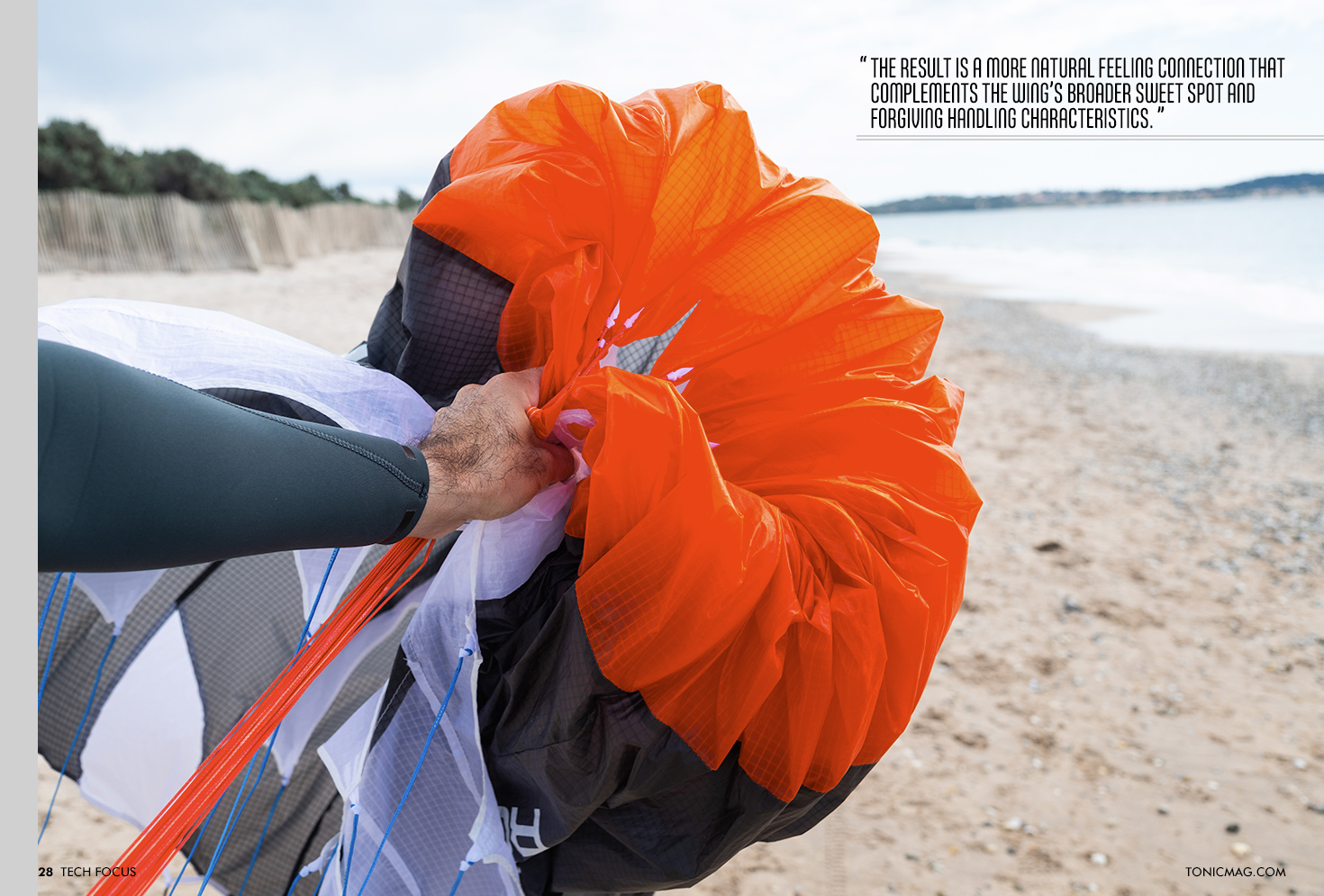
Rather than simply providing somewhere to hold the wing, the Bow Bar has been designed to improve the way rider inputs are transferred into the canopy. The system also removes the centre leader line used on the original Pocket Rocket, creating a cleaner hand position while allowing control inputs to be distributed more evenly across the wing.
The result is a more natural feeling connection that complements the wing’s broader sweet spot and forgiving handling characteristics.
Like much of the Pocket Rocket V2, it’s not about reinventing the riding experience, it’s about removing small distractions that allow the rider to focus more fully on the water ahead.
Stability Builds Confidence
One of the defining characteristics of any successful parawing is predictability.
The Pocket Rocket V2 has been developed to improve stability throughout its operating range. Upwind, the revised profile is designed to reduce the tendency to stall when pointing high into the wind, helping riders maintain efficient angles with greater confidence. Downwind, the wing offers a more forgiving feel as apparent wind decreases during long glides, making it easier to remain composed while linking swell after swell.
That balance between efficiency and forgiveness is particularly important as the sport continues to grow. Experienced riders benefit from equipment that encourages longer, more ambitious adventures, while newcomers gain a wing that supports progression rather than demanding perfection.
Built For Modern Parawinging
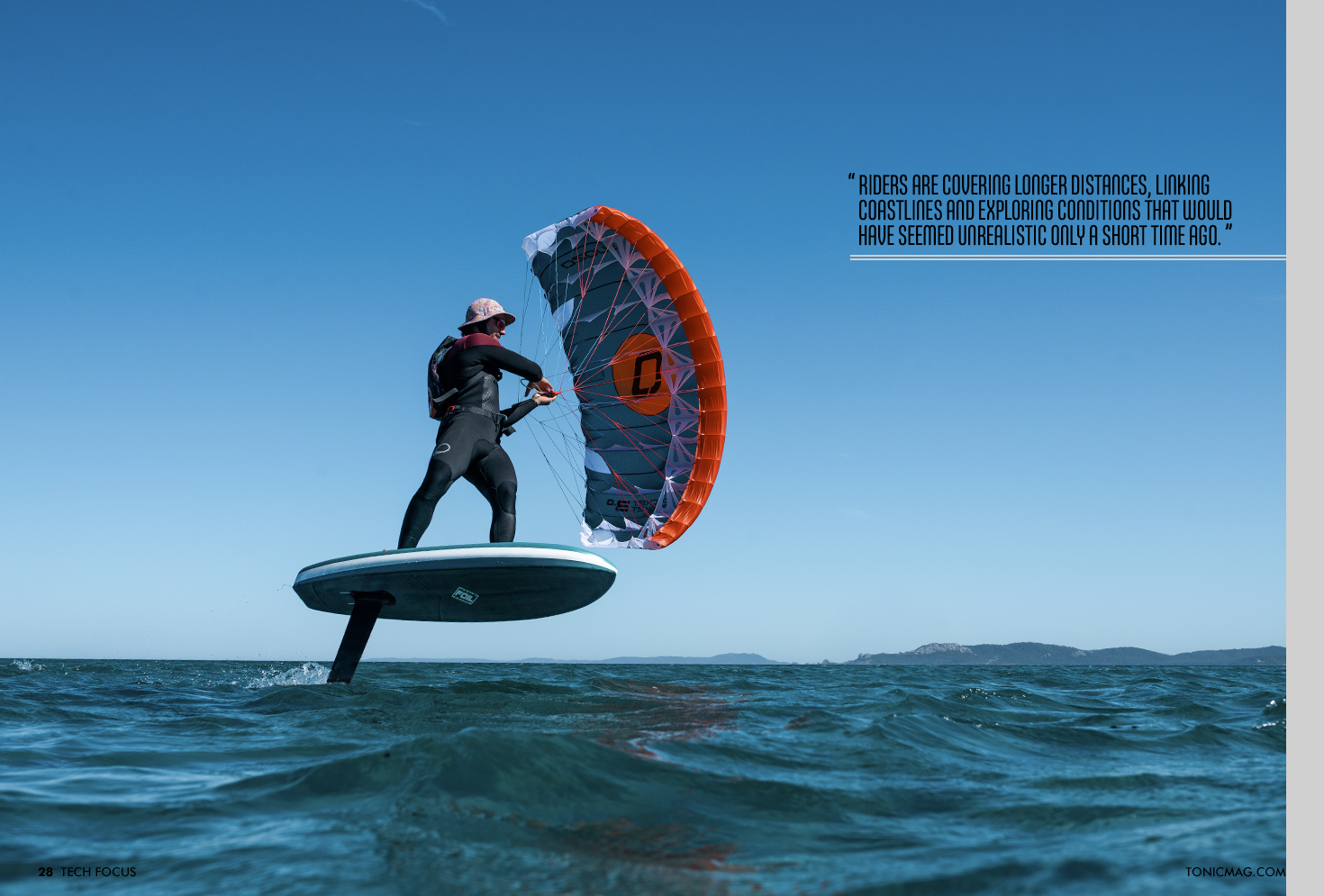
Parawinging is evolving beyond simply reaching the next wave. Riders are covering longer distances, linking coastlines and exploring conditions that would have seemed unrealistic only a short time ago.
Equipment needs to support that style of riding.
The Pocket Rocket V2’s compact pack size, simplified deployment and refined handling all contribute towards reducing workload over extended sessions. The addition of a new 5.7m size further expands the range, giving heavier riders and those sailing in lighter winds access to the same design philosophy found throughout the collection.
It’s clear that Ozone hasn’t simply designed a wing for short sessions close to the beach. The Pocket Rocket V2 has been developed with progression and exploration firmly in mind.
The Bigger Picture
Perhaps the most impressive aspect of the Pocket Rocket V2 isn’t any single design feature, but the way each refinement contributes towards the overall experience.
A revised canopy, a more compact outline, simplified bridles, improved power delivery and the Bow Bar control system all work together with a common objective: making parawinging feel more intuitive.
That’s an important distinction. The biggest advances in developing sports rarely come from revolutionary breakthroughs. More often, they arrive through hundreds of carefully considered improvements that make the equipment easier to trust, easier to understand and ultimately more enjoyable to use.
The Pocket Rocket V2 feels very much like that kind of product. It doesn’t attempt to redefine parawinging. Instead, it refines the experience in meaningful ways, allowing riders to spend less time managing the wing and more time enjoying what parawinging is really about, harnessing the wind just long enough to reach the next endless glide.
Videos from this article