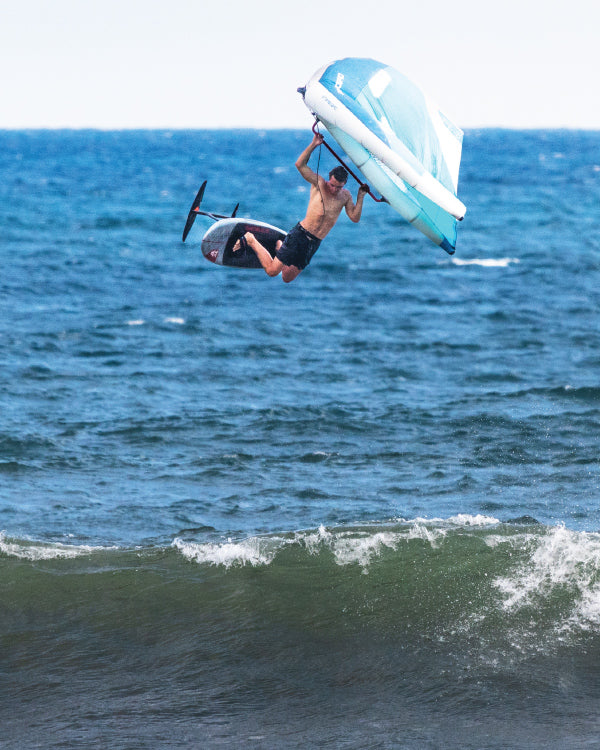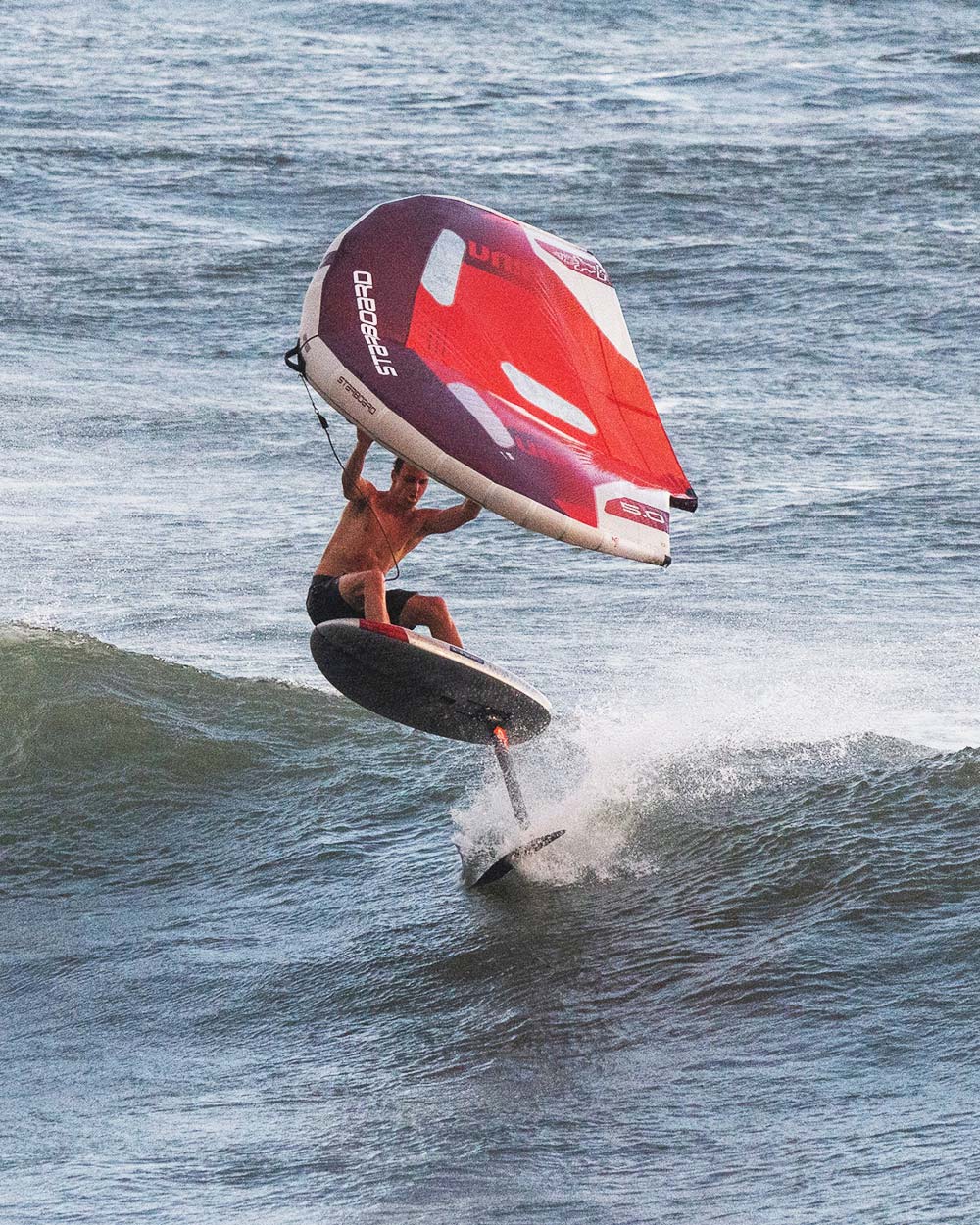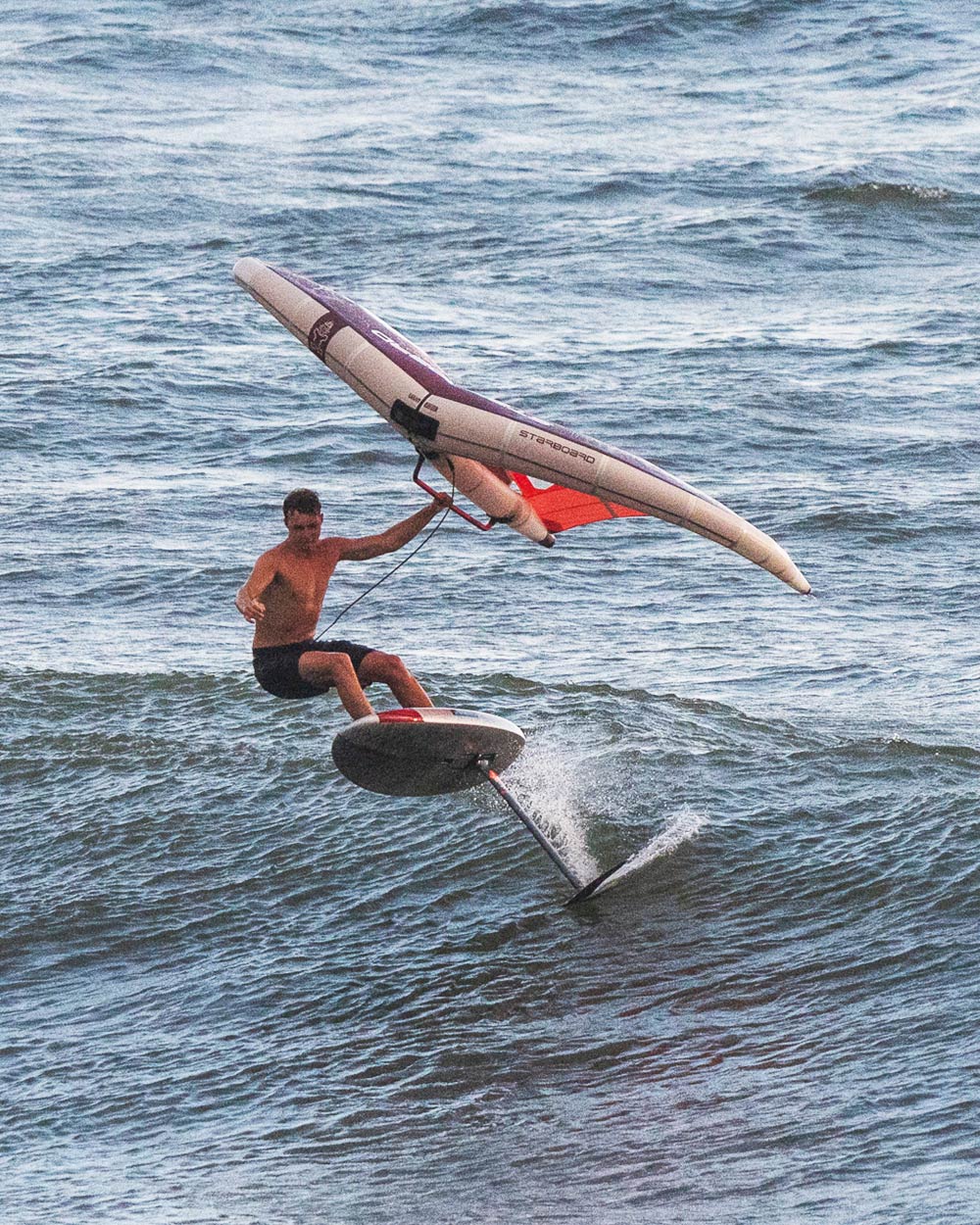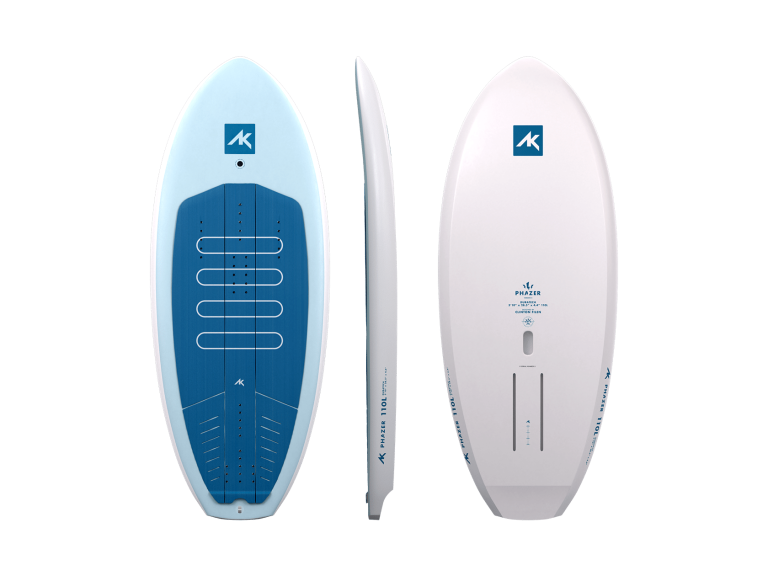

Dive into our overview below, and be sure to return for the complete review soon.
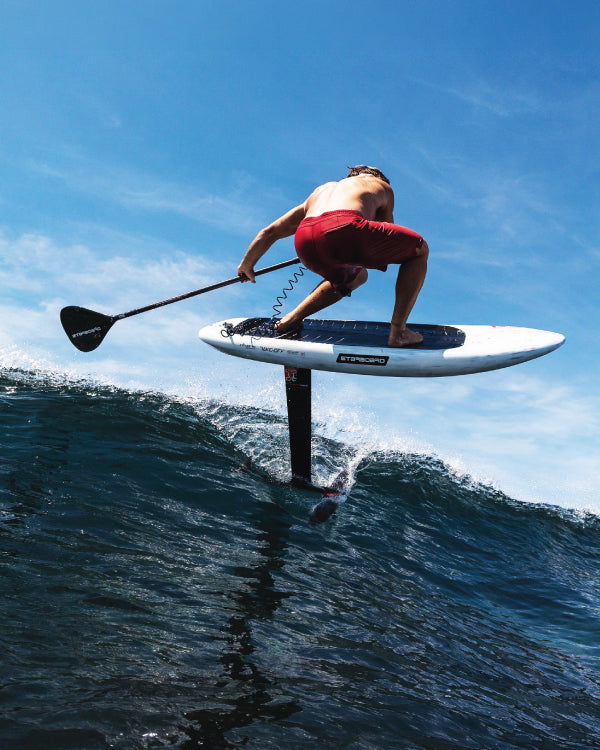
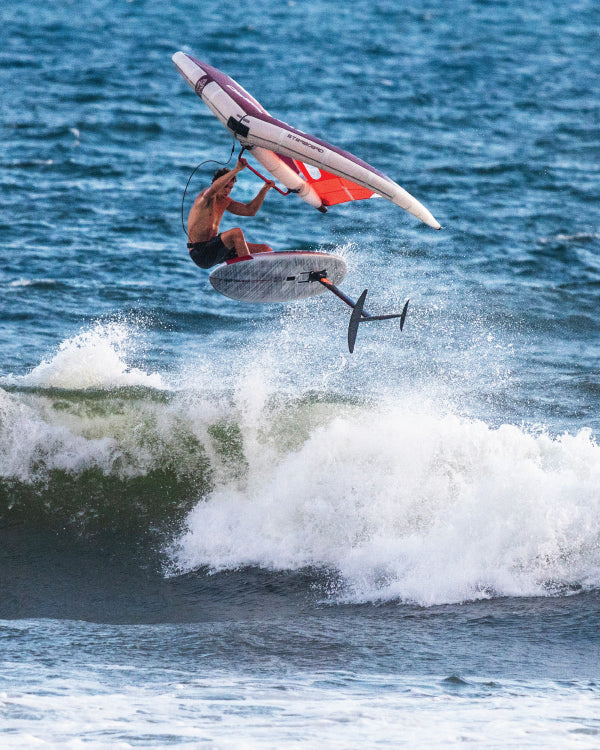
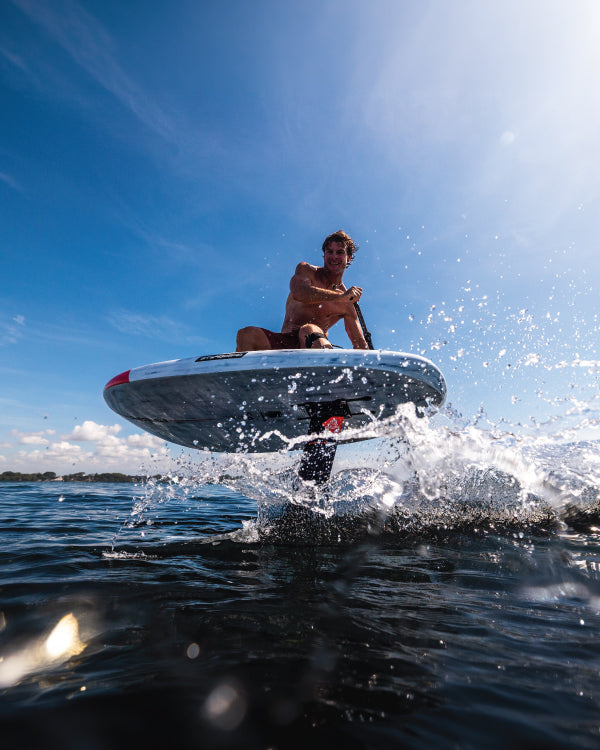
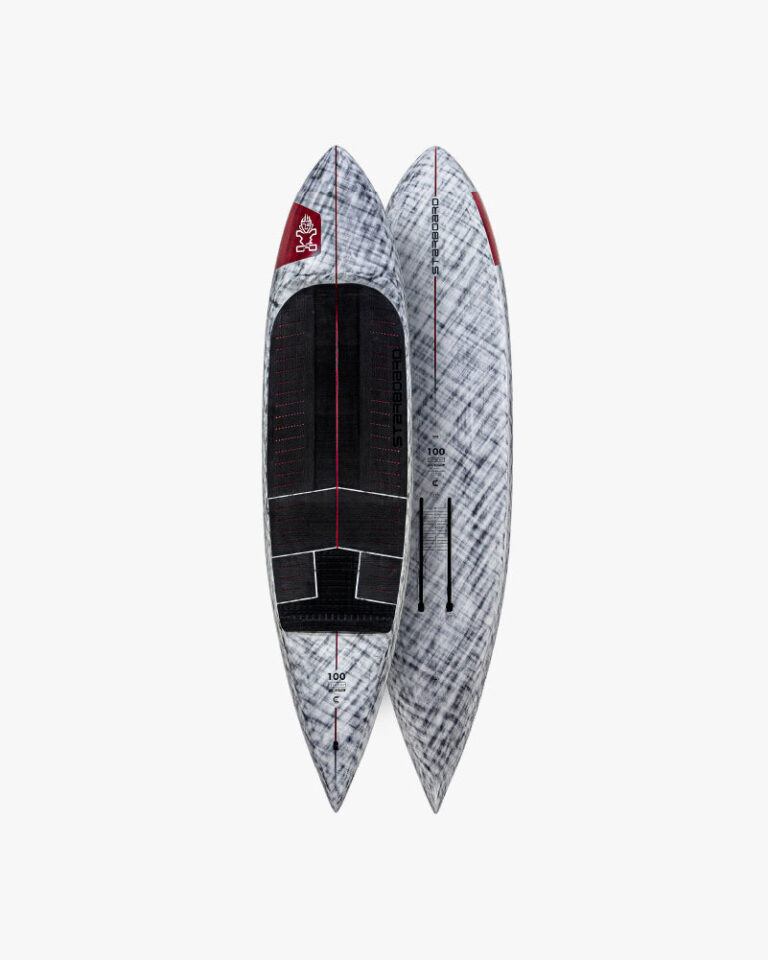
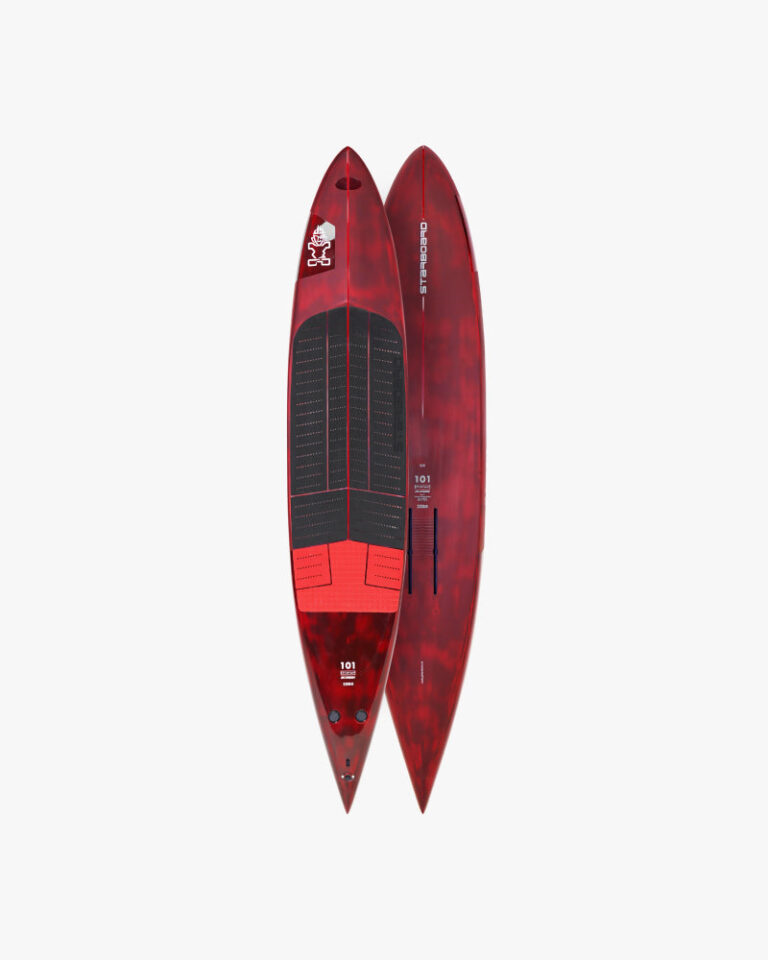
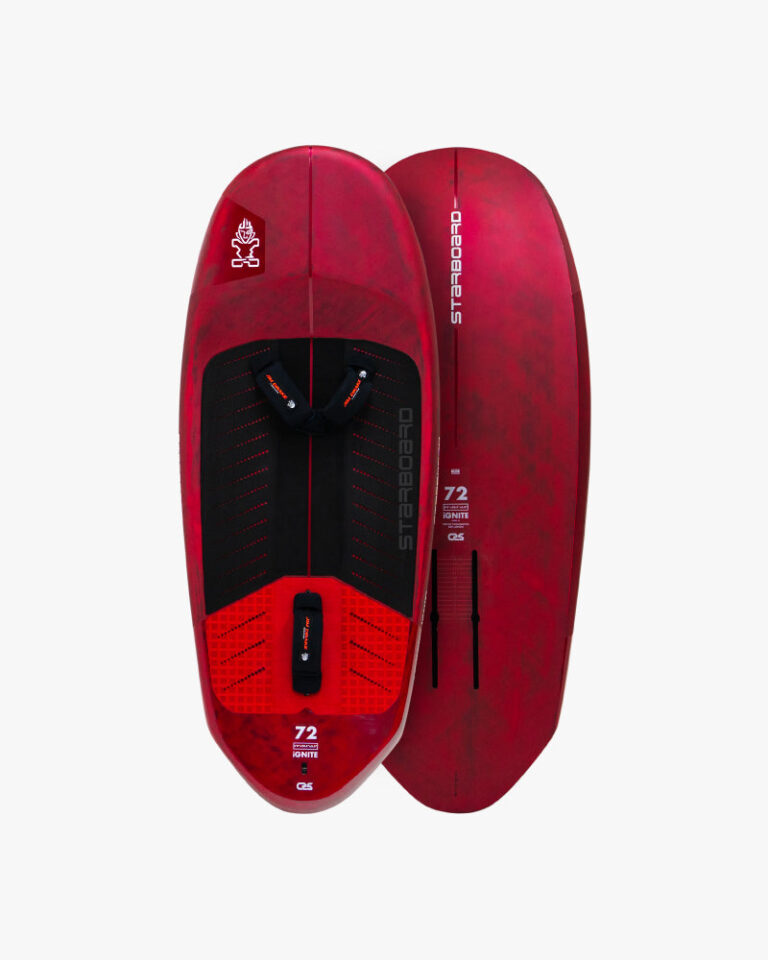
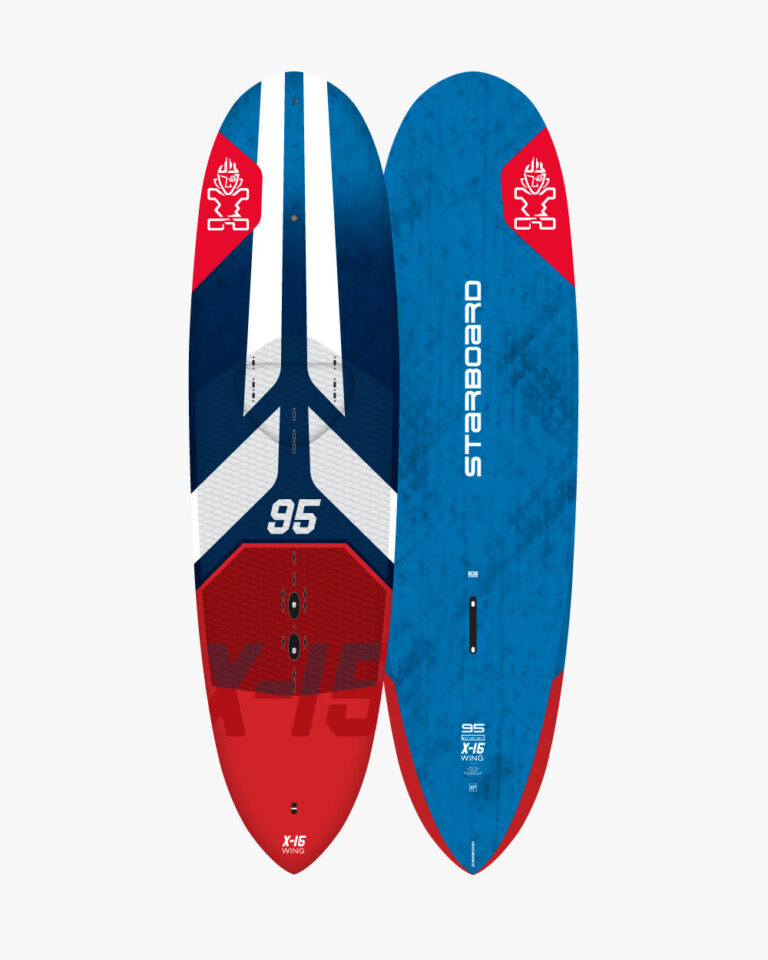
The Starboard Take Off Foilboard is a compact wave and freestyle platform designed to accelerate quickly, lift cleanly and recover smoothly when it reconnects with the water. The range centres on wing foiling, with smaller sizes aimed at agile wave and freestyle riding and larger versions adding the volume and glide required for freeride winging and SUP foiling. Its blend of a pulled-in nose, fuller tail and balanced volume is intended to provide responsive handling without making starts unnecessarily difficult.
Wave and Freestyle Shape
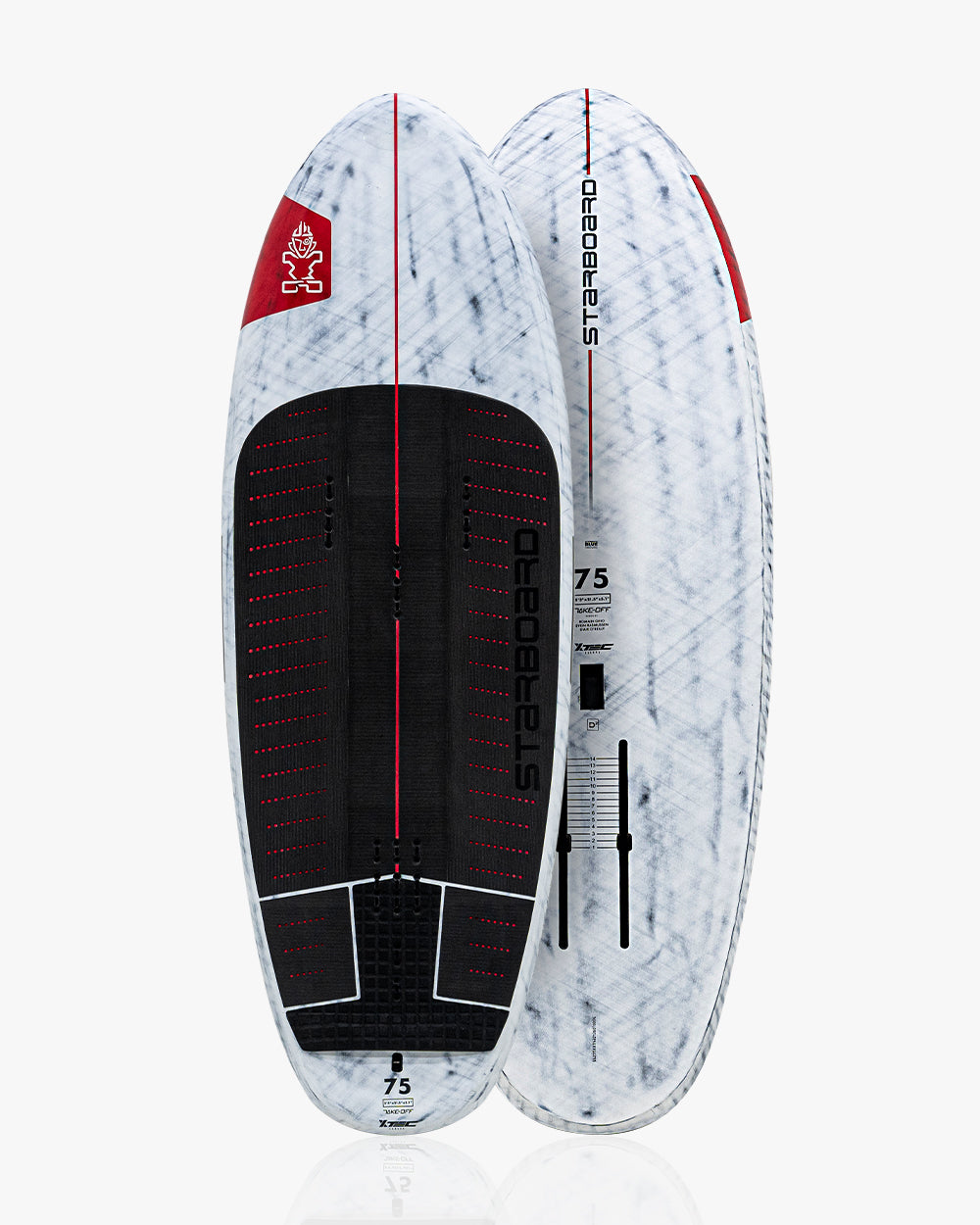
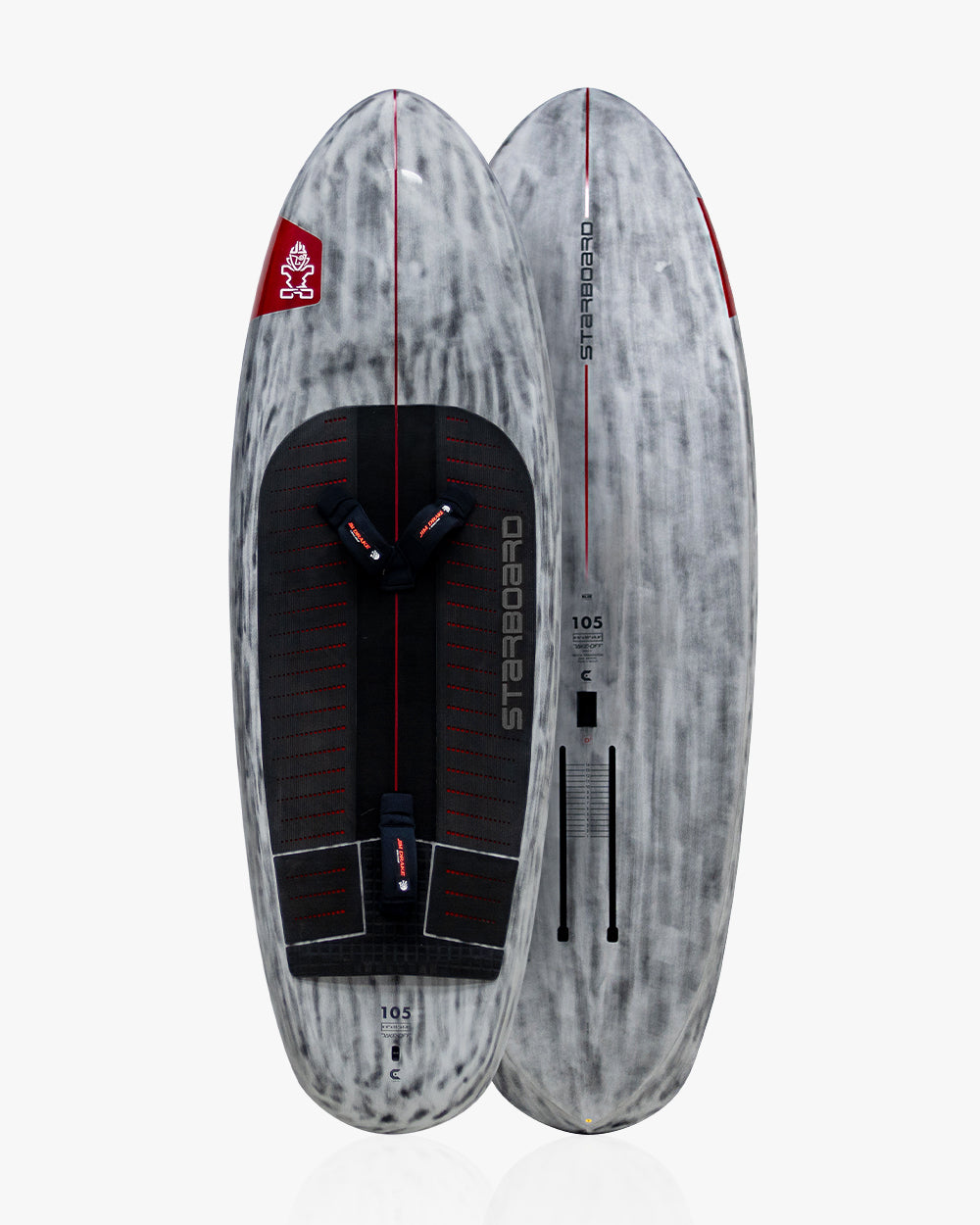
A V-shaped nose is used to soften touchdowns after jumps, turns and wave manoeuvres. The pulled-in outline at the front is intended to reduce the chance of catching a rail in steeper water and makes the board easier to redirect. More volume is retained through the tail, supporting the rider while building speed and helping the compact shape maintain balance before it lifts onto foil.
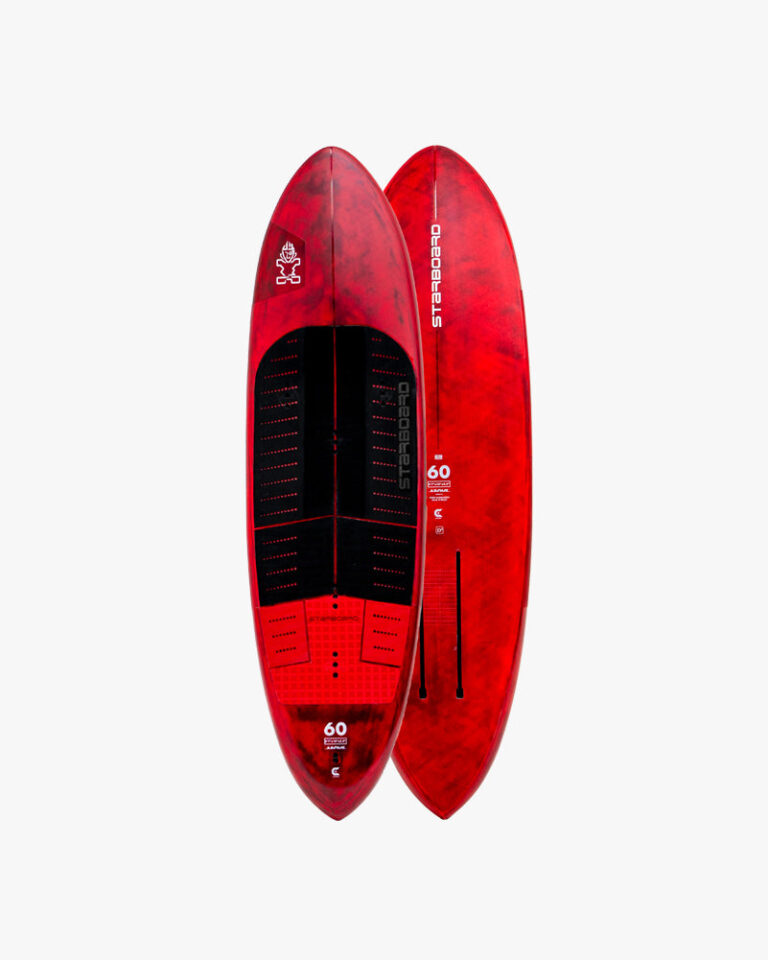
Starboard distributes volume evenly through the nose, rails and tail to combine pre-flight stability with controlled handling once airborne. On selected 2027 sizes, the nose rocker is reduced slightly to encourage faster acceleration and earlier release. The tail receives additional volume, the foil box moves forward to refine take-off trim, and the footstrap positions are updated for greater control during jumps and wave riding.
Foil Box and Stance
The reinforced US-track system varies with board length. Models measuring 6'0" and above use a 14-inch box, allowing a broad adjustment range for crossover and SUP setups. Boards of 5'7" and below use a 12-inch box suited to their shorter wave and freestyle outlines. The multiple footstrap positions support both manoeuvre-oriented wing stances and the control required for more traditional freeride use.
Size Range
The largest 6'6" x 25" model carries 105 litres and is intended for wing riders around 100 kg or SUP foil riders near 95 kg. The 6'0" x 24" 95 litre board is positioned as a freeride and performance crossover for riders around 95 kg when winging or 90 kg for SUP use. A 5'7" x 22.5" 90 litre option balances buoyancy with a shorter, more responsive outline.
The 5'3" x 21.5" board carries 75 litres and is aimed at riders around 80 kg, with enough reserve volume for variable wind while retaining manoeuvrability. The 4'10" x 20" 60 litre model targets wave and freestyle riders around 75 kg. At the performance end, the 4'8" x 19" board has 50 litres and is intended for advanced riders around 70 kg who prioritise tight turns and rapid rotation.
Construction
Carbon D2 is available across all six volumes. It uses a traditional epoxy lamination to minimise weight, additional carbon through the standing area, a carbon load-frame rail band and carbon reinforcement around the foil box. The Take Off also receives a PVC standing-area reinforcement to manage impacts from jumping, while a PVC Omega stringer ahead of the foil box helps distribute load.
XTEC Carbon D2 is offered on the 75, 90, 95 and 105 litre sizes. Its expanding epoxy sandwich structure is paired with an optimised lighter lay-up, carbon rail and foil-box reinforcement, and an extended Omega stringer. It provides an alternative that places additional emphasis on durability and impact resistance.
Summary
The Take Off is intended for wing foilers seeking a responsive board for waves and freestyle, with larger sizes capable of freeride and SUP crossover use. Its compact outline, V nose, supported tail, updated trim details, size-specific foil boxes and reinforced carbon construction options are its principal supported strengths.