

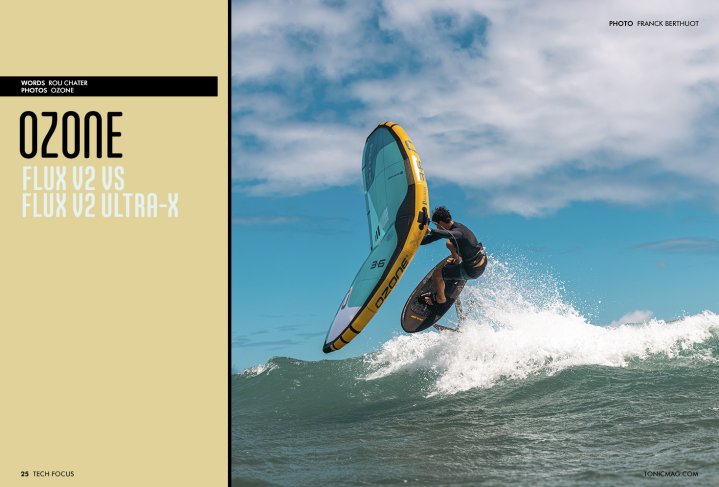
Flux V2 & Flux V2 Ultra X Comparison Feature
Issue 25 / Wed 3rd Sep, 2025
The original Ozone Flux set a new standard in wing design, balancing stiffness, speed, and usability across all disciplines. Now the Flux V2 refines that formula, with both a Dacron build and an Ultra-X Aluula frame. Rou Chater has been testing both to see how they perform in real conditions. Find out more in this Tech Focus: Ozone Flux V2 vs. Flux V2 Ultra-X feature.
When Ozone released the original Flux, just over two years ago, it quickly became a benchmark in wing design. It had the rare ability to please freeriders, freestylers, racers and wave riders, with a balance of stiffness, speed, and usability that put it ahead of its time. In many ways, it was the start of “Wing 2.0”, a generation of wings where performance really began to separate the serious brands from the rest.
Fast forward to today, and Ozone has pushed that platform further with the Flux V2. Now that they have the Fusion for racing and the Flow for all-round handling/wave riding, they have focused on making the Flux V2 the ultimate performance freeride wing. Capable of remaining comfortable at very high speeds, it offers riders the freedom to ride small, high-performance foils without needing to fully commit to a double-surface race wing. Equally, it’s as happy cruising or busting the latest tricks and everything in between.

I’ve been riding both models extensively, from gusty overpowered sessions to lightwind missions and putting them through their paces in the waves, too.
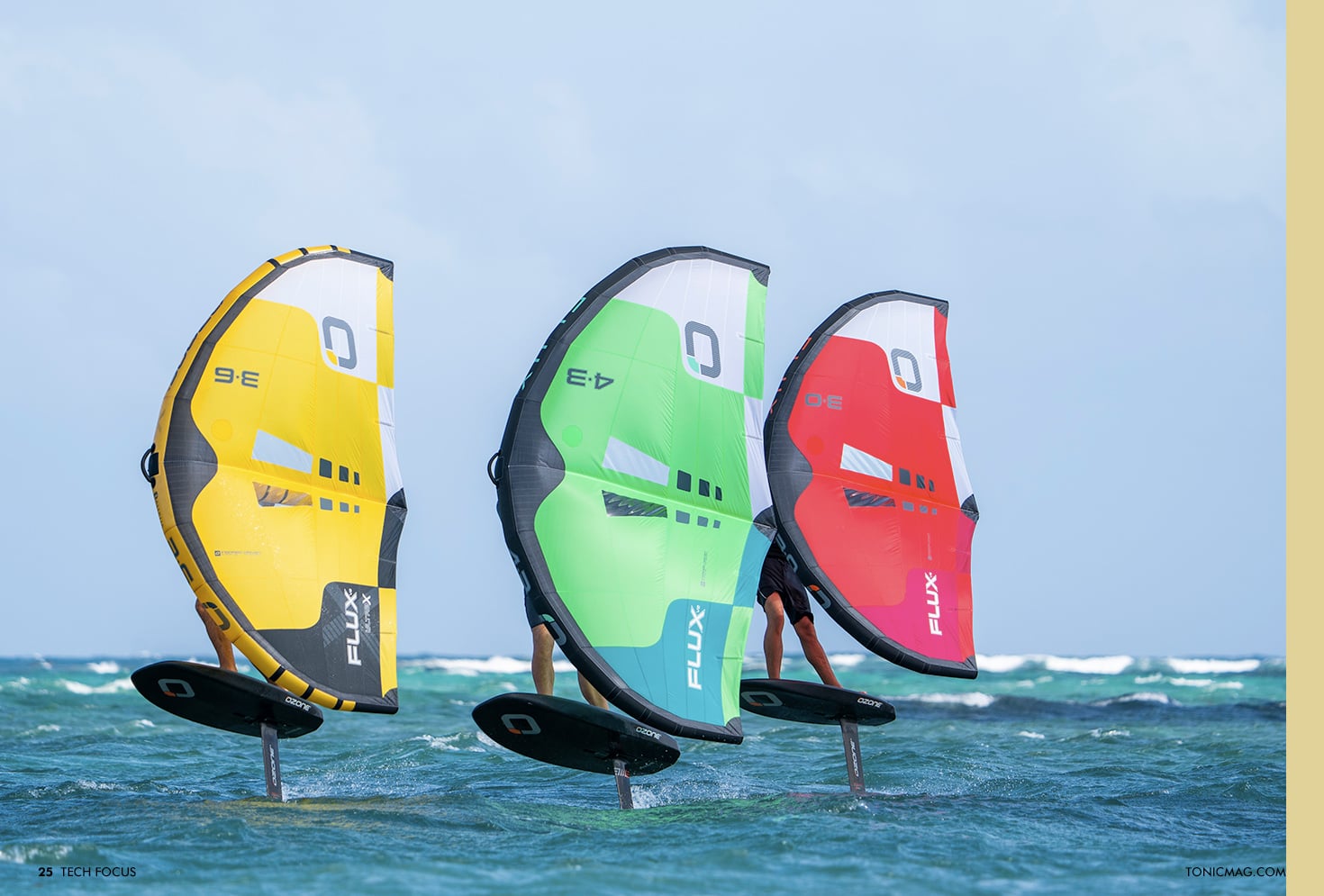
Materials Matter: Dacron vs. Aluula
Let’s start with the core difference: frame material.
Flux V2
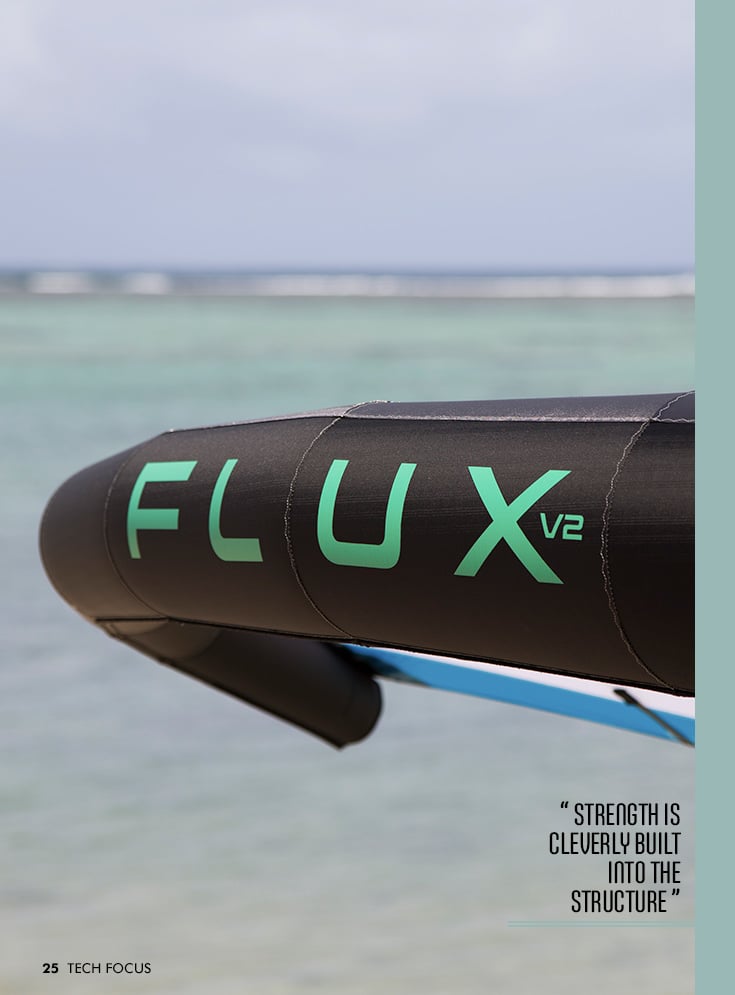
Uses high-tenacity Dacron for both leading edge and strut. This is a tried-and-true material, durable, reasonably stiff, and with just enough give to absorb abuse without compromising performance. Once again, with an Ozone product, the wing remains light thanks to their Born Light philosophy, which only uses extra material reinforcements where necessary. Strength is cleverly built into the structure thanks to the skilled workers who apply vast stitching and material experience in Ozone’s own factory. The Flux feel is all about great aerodynamic handling.
Flux V2 Ultra-X
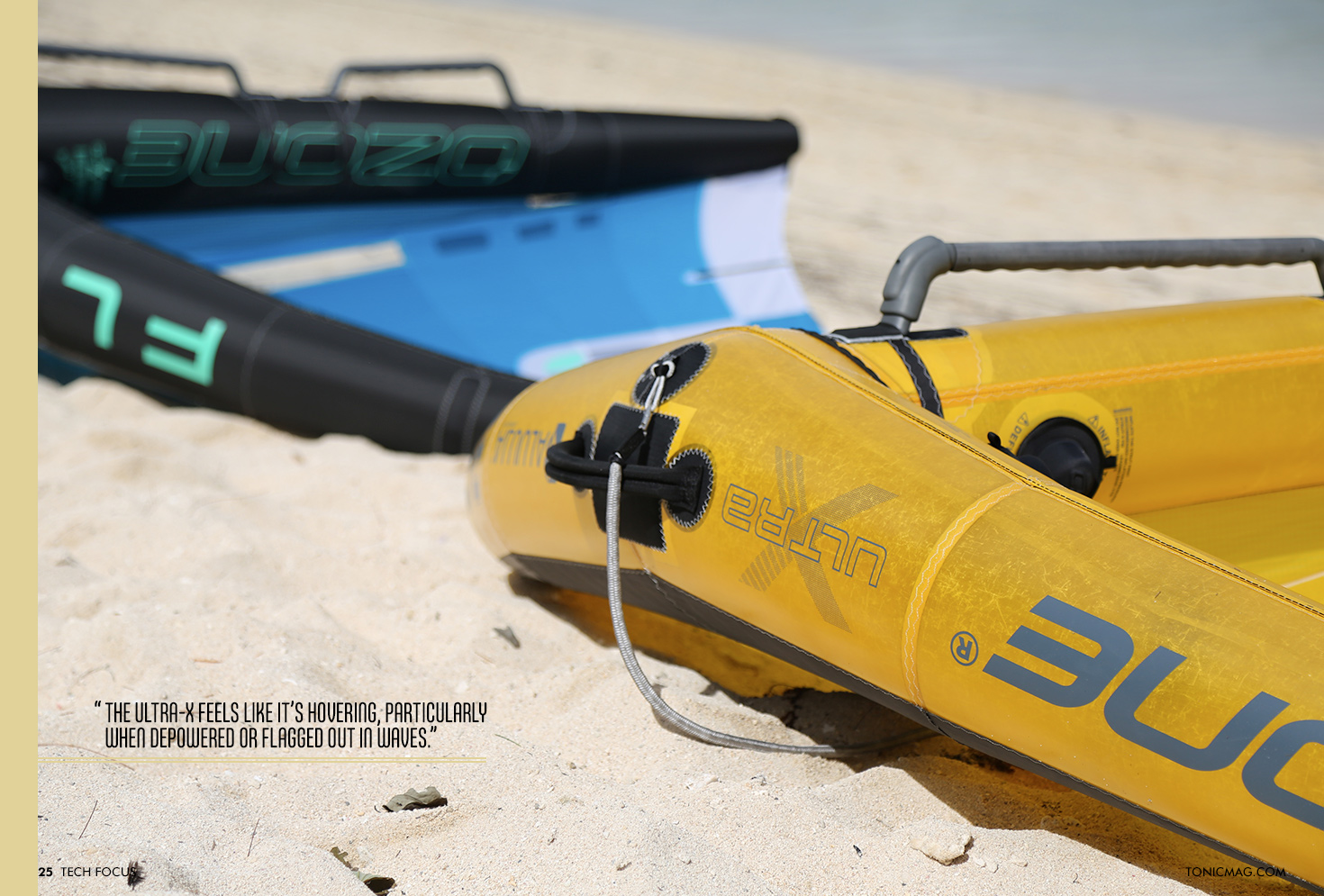
Features a full Aluula frame, a composite fabric that is both significantly lighter and dramatically stiffer than Dacron. The entire frame, leading edge, and strut are Aluula, giving the Ultra-X a crispness that you feel immediately in your hands.
That stiffness means more efficient pumping, cleaner energy transfer, and a wing that resists distortion under heavy load. The weight saving is also real: while the paper difference in grams isn’t enormous, in practice, the Ultra-X feels like it’s hovering, particularly when depowered or flagged out in waves.
Both versions share Ozone’s Teijin triple-ripstop canopy, which is held under notably high tension. The result is a wing that doesn’t flap or flutter, silent, smooth, and aerodynamically efficient.
The Details: Small Touches, Big Difference
Ozone has a reputation for sweat-the-small-stuff design, and it shows here.
Leashes: Both wings ship with waist leashes, each with a swivel to prevent twists. The Ultra-X takes it a step further by including a minimalist waist harness leash with a built-in hook and a pre-fitted harness line. That means you can experiment with hooking in straight away, no extra purchases required. You can, of course, purchase the harness line and harness for the V2 as well from your local dealer.
Windows: Ozone has refined window placement this season. They’re very functional, giving you clear sightlines with just a glance rather than awkward wing movements.
Handles: Both models feature carbon composite handles covered with EVA grip. The elongated front handle is a standout feature, allowing for true one-handed flying. This is perfect for wave riding, tricks, or simply adjusting your backhand position without losing balance in the wing.
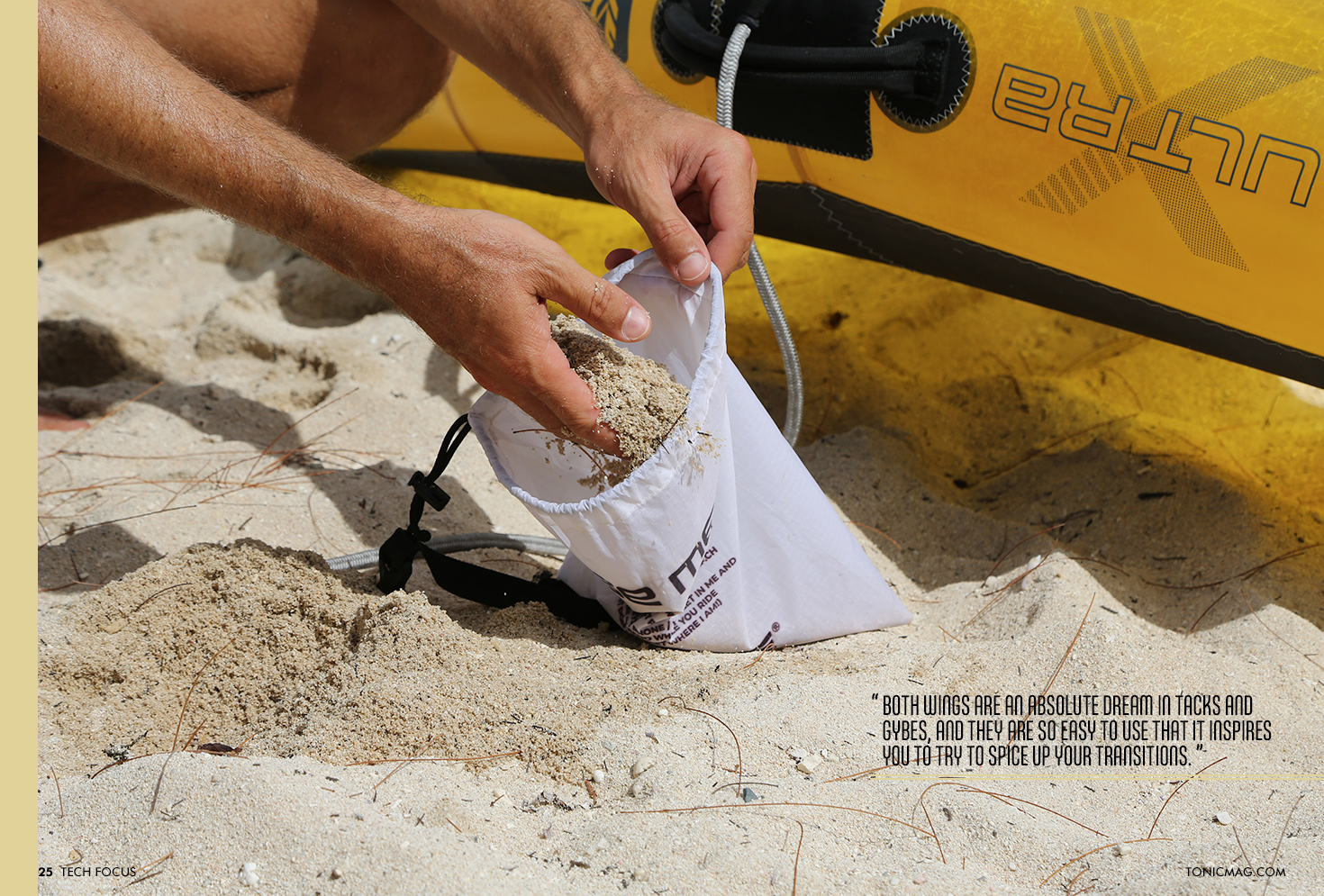
Bags: The Ultra-X arrives with an additional protective bag, a thoughtful nod to the premium Aluula frame, which can also double up as a travel bag, as it’s handy if you don’t want to deflate your struts. A sandbag to weigh down your wing on the beach without needing sharp sand/stones is also included in the Ultra-X model.
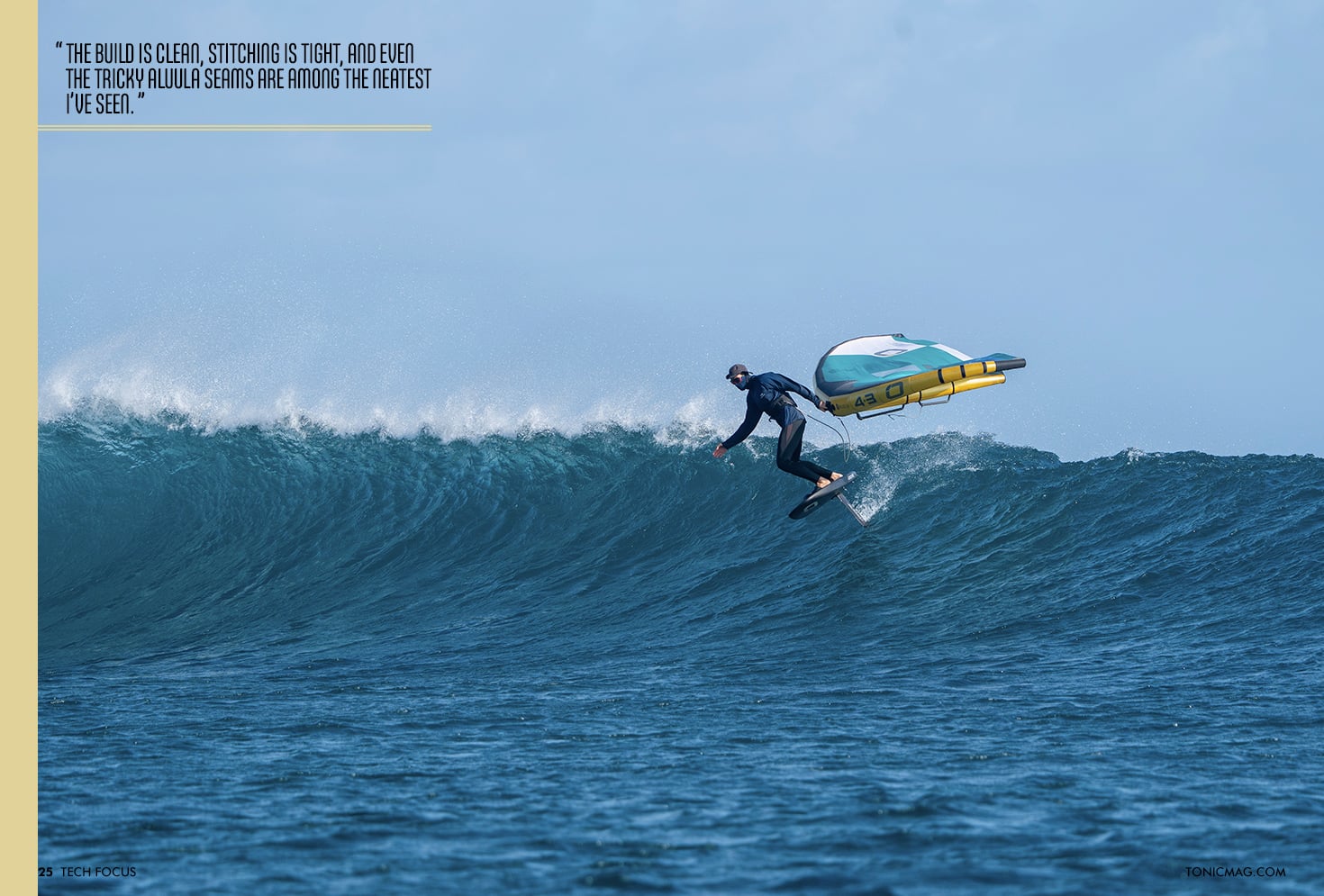
All wings are built in Ozone’s Parapex factory in Vietnam, which they own outright. That vertical integration shows in the finish: the build is clean, stitching is tight, and even the tricky Aluula seams are among the neatest I’ve seen. Many brands wrestle with Aluula’s difficulty in production, but Ozone has clearly mastered it.
On the Beach: First Impressions
Both wings look muscular. The leading edge is chunkier than those of many competitors, who have opted for slim profiles to reduce drag. My first thought was: will this thickness slow it down or make tacks sluggish?
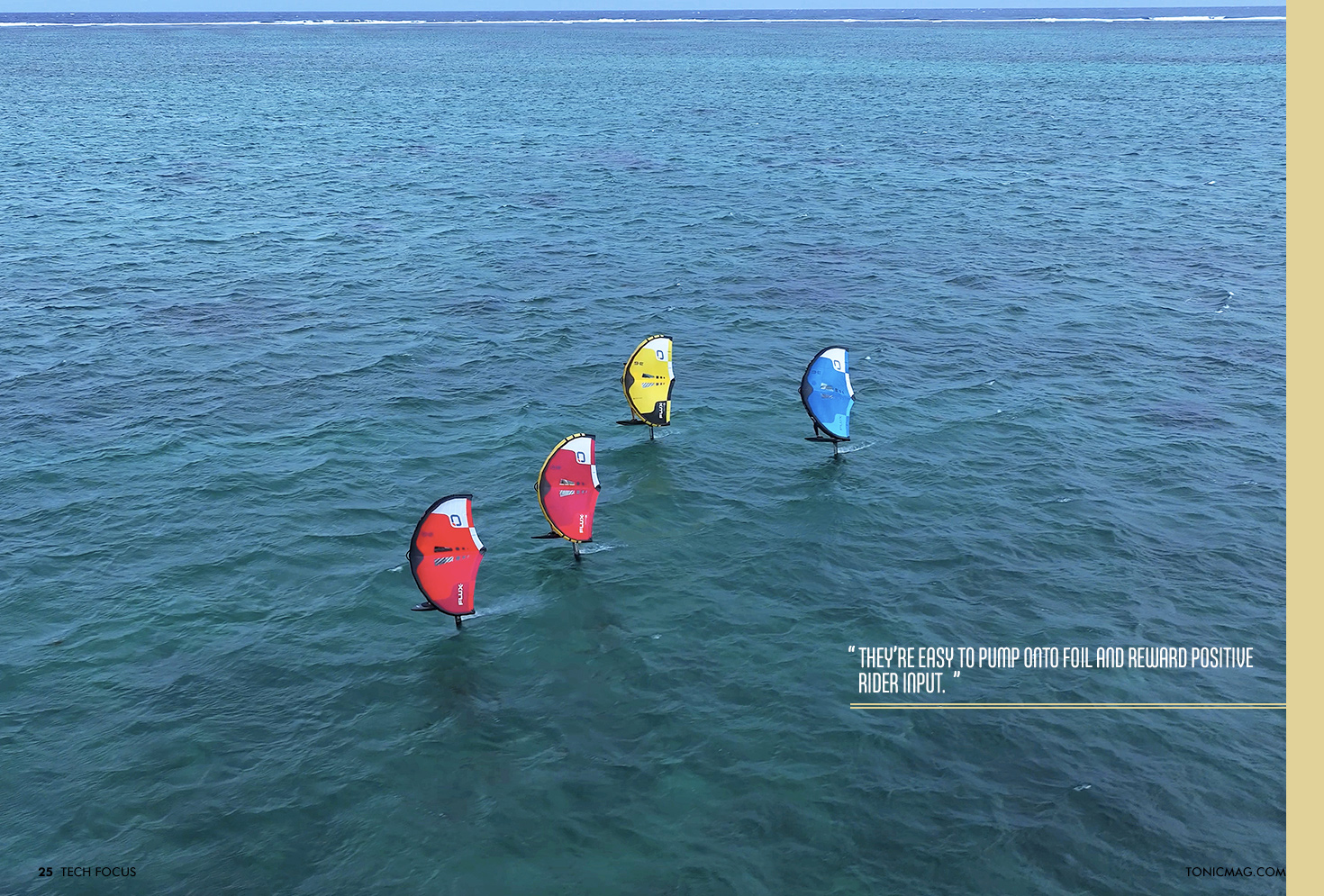
The answer turned out to be the opposite. That bigger tube gives both versions serious stiffness, which translates into dependable power delivery. The canopy stays locked, and despite the size of the leading edge, the wings rotate cleanly overhead in tacks and jibes. No hesitation, no clumsiness. This was a really surprising aspect of both wings for me.
On the Water: Performance Review
Low-End Power
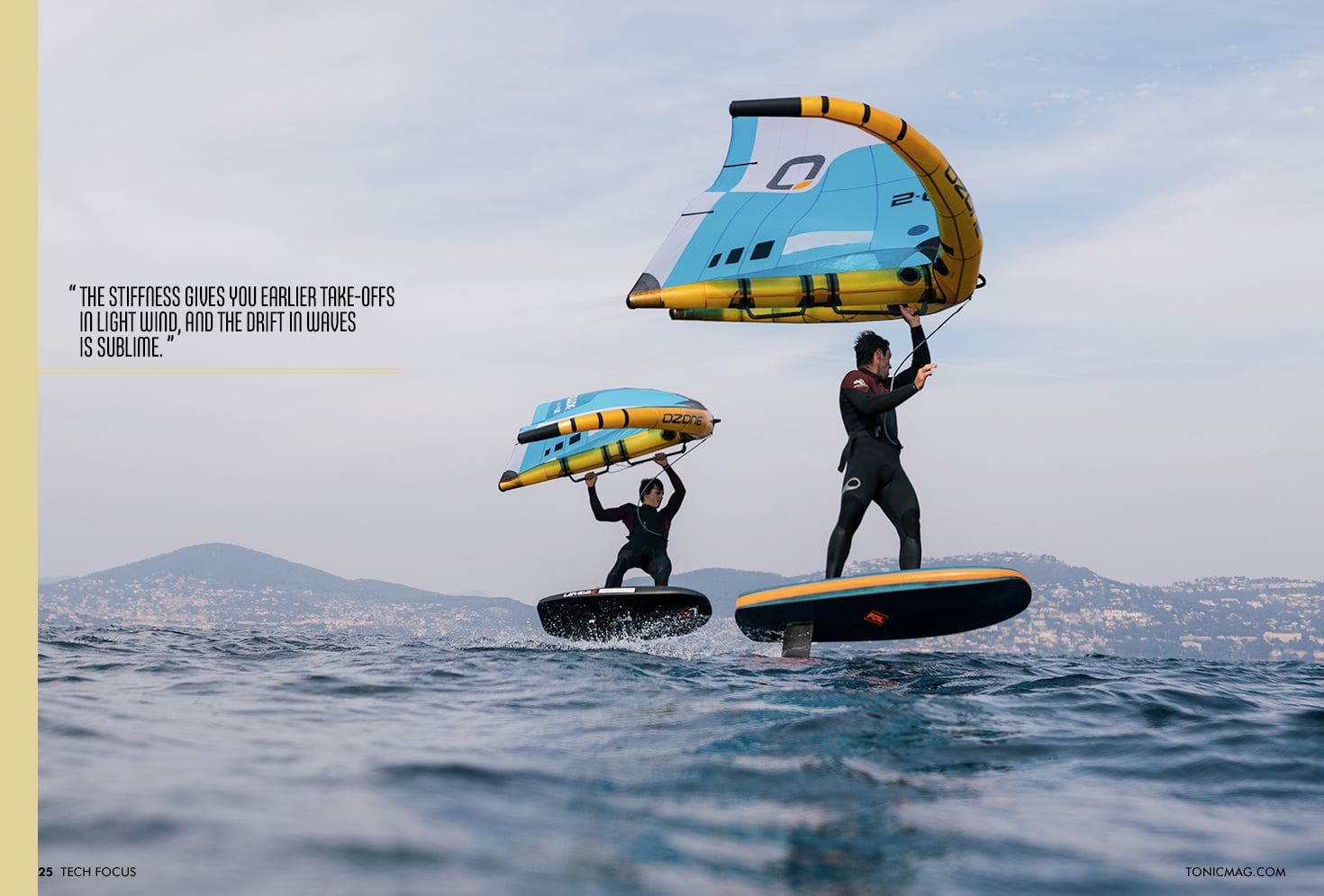
Both wings deliver excellent bottom-end grunt. They’re easy to pump onto foil and reward positive rider input. The Ultra-X has the edge here: the combination of lighter weight and higher stiffness makes each pump more effective, allowing you to foil earlier in marginal winds. It’s a fantastic wing for light wind riding. The 5m I tested would get me up on foil in the lightest of airs; it’s seriously efficient when you’re pumping.
Speed and Efficiency
The tight canopy pays dividends. Once flying, the Flux V2 accelerates quickly, cuts cleanly through the air, and has no flutter to sap energy. The V2 Ultra-X and V2 feel similar at cruising speeds, which is a testament to the design’s efficiency. Both wings offer truly silent running with zero flutter, even at high speeds and when overpowered.
Stability and Handling
Flagging the wing while riding waves is where the Ultra-X really shines. Because it feels nearly weightless, it drifts with minimal pull and doesn’t tire your arms. The V2 is no slouch here, but you’re more conscious of its weight; it’s not heavy by any stretch, it’s just that the Ultra-X feels almost weightless when you are using it.
The new elongated front handle is fantastic. Flying one-handed feels natural and is really useful in several situations, such as getting out of the way of waves, resting your arms, waving at your friends, and blowing your nose.
Both wings are an absolute dream in tacks and gybes, and they are so easy to use that it inspires you to try to spice up your transitions. I quickly realised I had never done a standard gybe and was just throwing the wings around, doing race and duck gybes. Tacks feel effortless too, with plenty of forward drive through the turn, even when overpowered.
Jumping and Freestyle
For powered moves, both wings deliver huge lift thanks to their ability to generate and hold speed. Landings on the Ultra-X feel more controlled; the stiff frame resists distortion, so power delivery is consistent when you sheet back in.

High-Wind Control
I tested both wings in winds topping 35 mph. At that point, any wing will start to twitch when fully depowered, but the Flux V2 remained manageable and surprisingly composed. The stiff leading edge seems to absorb load rather than buckle. The Ultra-X has the edge here, though, with the stiffer airframe keeping things tight regardless of the conditions.
Which One Should You Buy?
This is the real question.
Flux V2
If you’re upgrading from an older wing or looking for a reliable, high-performance all-rounder, this is a brilliant choice. It’s stiff, fast, powerful, and well priced compared to many rivals.
Flux V2 Ultra-X
If money is no object, the Ultra-X is pure refinement. The weight savings are noticeable every minute you ride, the stiffness gives you earlier take-offs in light wind, and the drift in waves is sublime. For serious riders, those differences will justify the premium.
My Recommendation
If I were building a quiver, I’d go Ultra-X in the bigger sizes (5m and above), where the lighter feel truly transforms low-wind sessions. For smaller sizes (3.5m and under), where the weight savings are less critical and wind power is plentiful, the V2 makes more sense, unless money is no object. This mix offers the best of both worlds: performance at a competitive price point in the smaller sizes and premium performance in the larger sizes, with a price tag that reflects the upgrades.
Overall
Ozone’s Flux V2 series sets a new standard for wing design. The V2 is already one of the stiffest, most refined wings I’ve flown this year. The Ultra-X builds upon that foundation, offering a lighter, crisper, and more responsive ride, with tangible benefits in light winds and wave riding.
While capable of cruising steadily, if you are hoping to step down in foils size, or already enjoy riding a small foil, the Flux V2 and V2 Ultra-X will both offer unrestricted freedom to really explore the performance of your foil. It’s at speed where these wings really feel special and light in the hands.
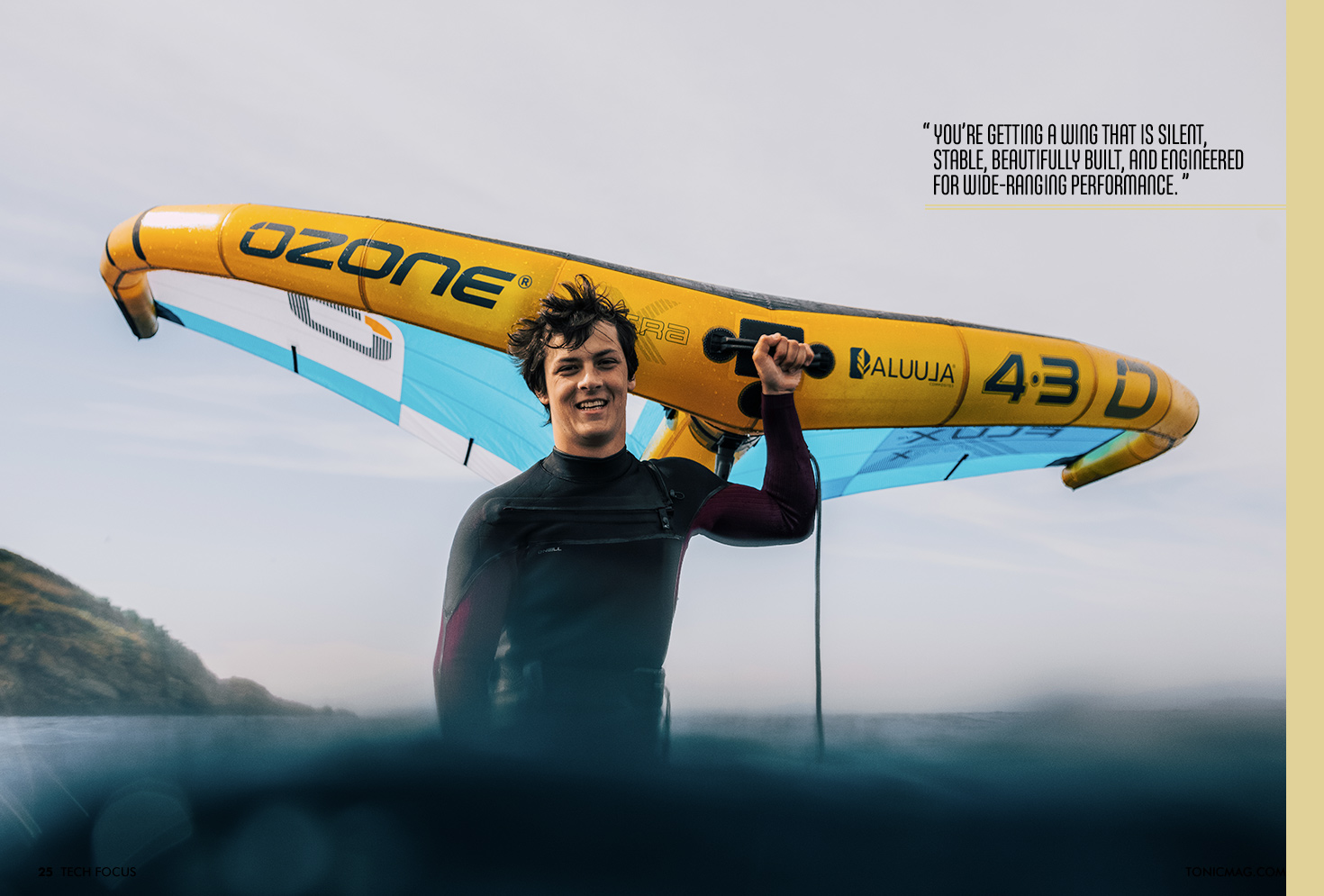
Whichever model you choose, you’re getting a wing that is silent, stable, beautifully built, and engineered for wide-ranging performance. Ozone has clearly invested heavily in R&D and production quality, and it shows in every seam and every session.
The only downside? Sending my demos back.
Videos



By Rou Chater
Rou Chater has been kitesurfing for over twenty years, paddleboarding for the last six years, and was there testing the first wingsurfer from Naish in Tarifa when it arrived on the continent. He is passionate about riding waves and exploring new places. As the publishing editor, he oversees everything at Tonic but also our sister magazines IKSURFMAG and IMB. He's been on the water since he was born and has never looked back, in the winter you'll find him chasing swells in the Caribbean and during the summer he can be found all over Europe at various SUP, Kitesurf and Mountain Bike events getting features for the magazines.