

From Kite to Tow
Issue 25 / Wed 3rd Sep, 2025
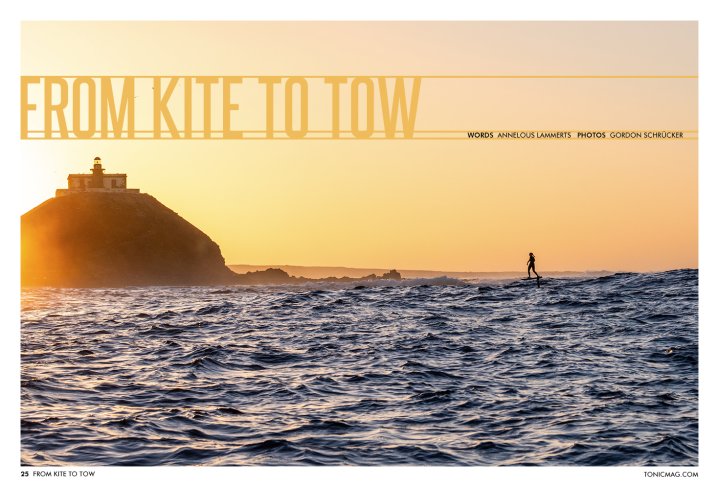
Annelous Lammerts is no stranger to progression. From freestyle podiums to Olympic kitefoil racing, she is always pushing boundaries, but tow foiling has taken her passion for watersports to a whole new level. In this exclusive Tonic Mag feature, she shares how she got hooked, the rush of that first wave, and why tow foiling is now a key part of her foiling journey.
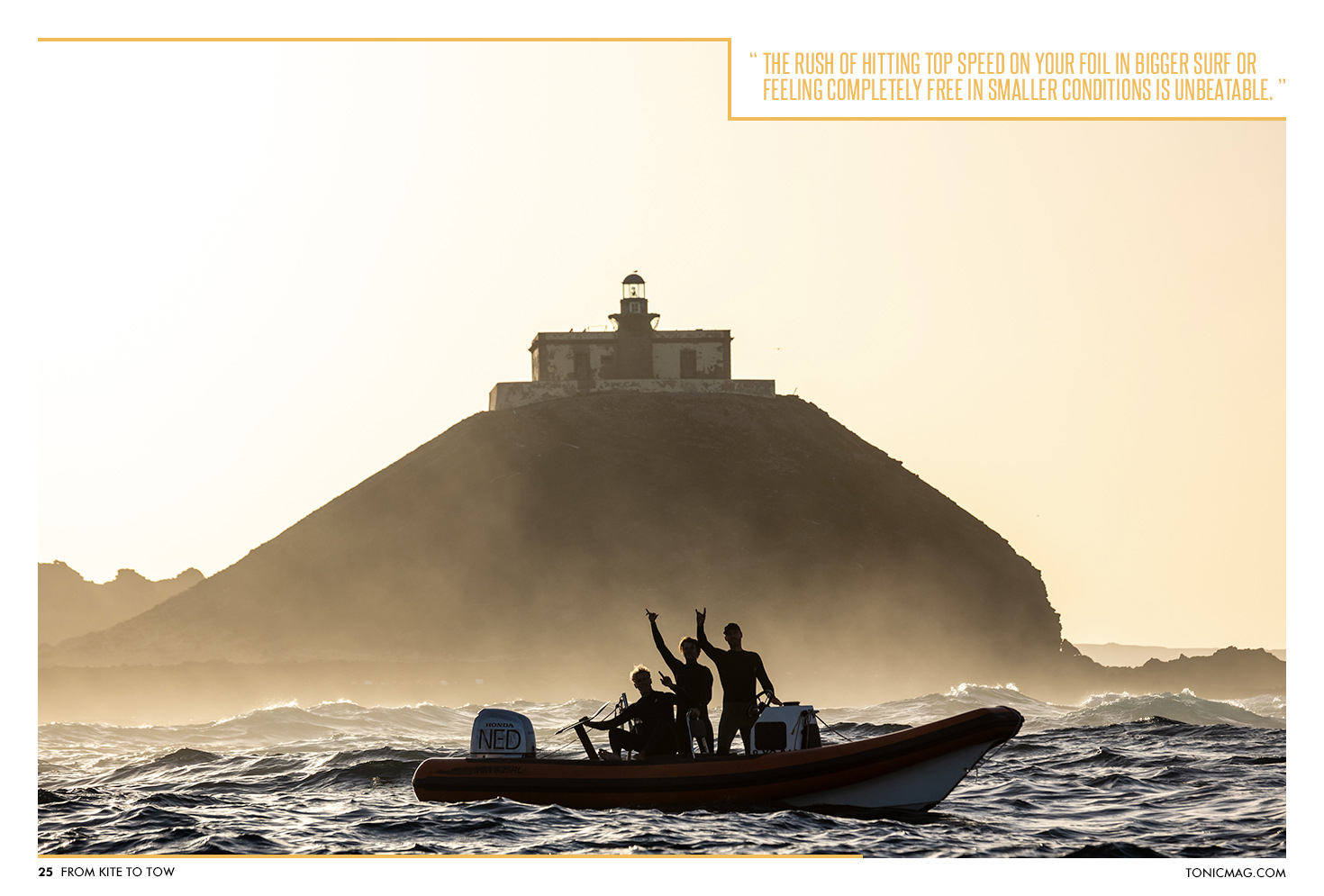
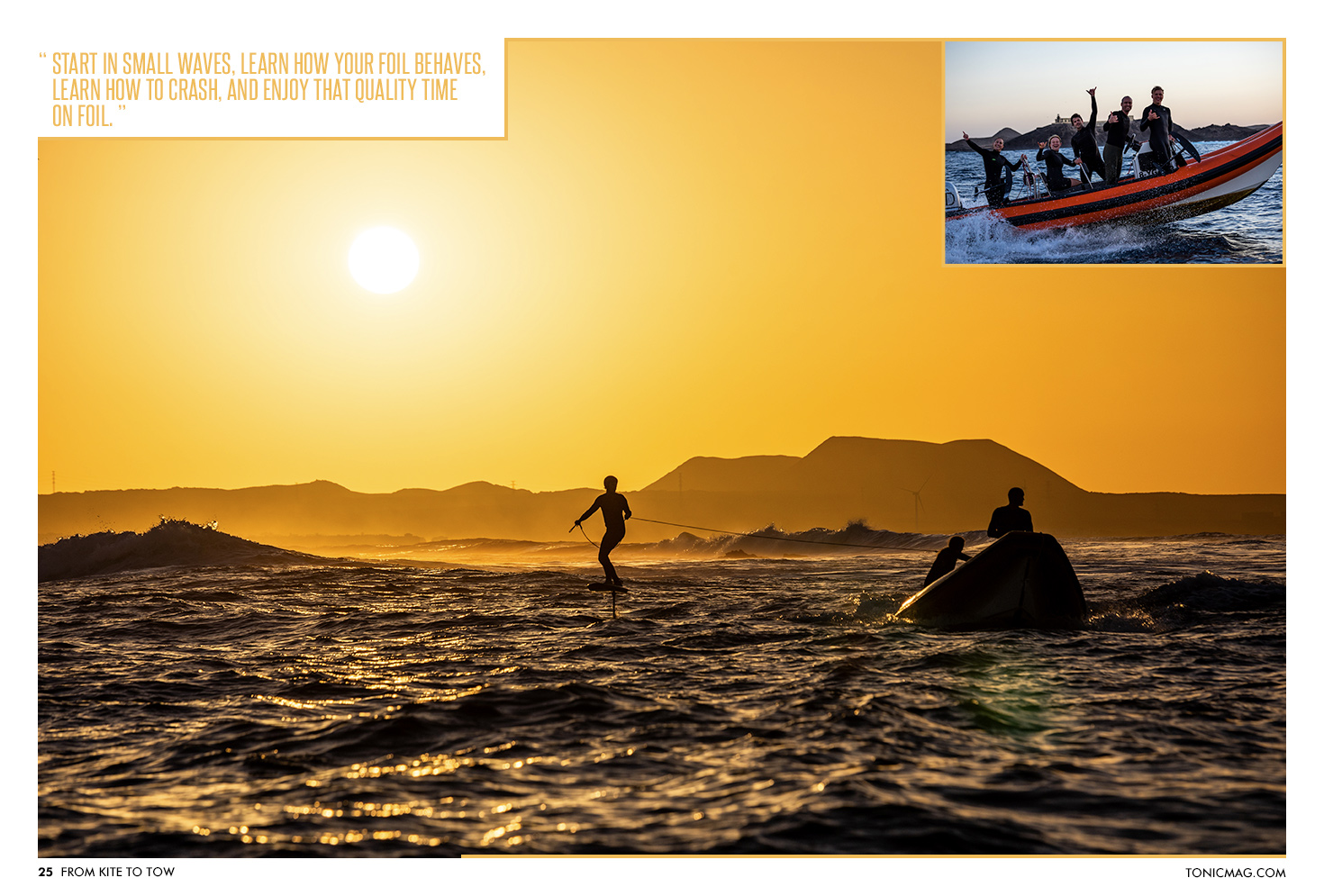
Not a wing or a kite, not a paddle, but just a rope tied to a boat or jet ski to get you into a wave. Tow foiling opens the door to riding bigger waves with total freedom once you are on them. It is a great way to focus purely on the foil, keeping it in the water and staying in the right part of the wave. The rush of hitting top speed on your foil in bigger surf or feeling completely free in smaller conditions is unbeatable. The freedom of not having a wing in your hands or a kite to keep in the air, while riding a small board and foil, is what makes it so special.
Foiling became part of my life in 2016 when Cabrinha launched its first kite foil. It was the perfect addition to my quiver. I had been so hooked on kiteboarding that I kept pushing it in marginal conditions, which meant a lot of waiting for wind, frustrating sessions, and more than one round of elbow tendinitis. Having a kite foil setup in the car solved that. Waiting turned into cruising around while no one else was out, riding in anything from 7 knots up until it was strong enough to switch to my freestyle board.
Eventually, I also got into prone foiling. The first time I tried was in Maui during a Cabrinha shoot with the whole team. I started on a surfboard, but we were swapping gear, and I got to try a foil setup. I barely stood up, but that first taste of flying without a kite was all it took. Pete, James, and the rest of the crew were zipping around, and I knew I had to learn. When I managed to ride my first waves, pump outside and catch long rides prone foiling, I absolutely loved this new way of surfing.
By 2020, my life had really started to revolve around foiling. With all my travel plans cancelled due to COVID, I suddenly had time to learn how to wing foil and explore kitefoil racing. I ordered my first wing and used a 35-litre prone foil board to get started. It was small, but with enough wind and determination, I got the hang of it. While I had to wait for good prone conditions, there were so many windy days with swell that the wing became my way to surf them. Suddenly, my home spot, which was rarely ideal for other water sports, became a playground. I would definitely recommend starting out on a bigger board, taking a lesson, and seeing how quickly you can size down. Having a lot of experience surfing and prone will help to get going on a small board really quickly, but there are many boards with a bit more size and volume that are almost as good to manoeuvre, and you won’t be sinking when the wind drops. I have been riding a small board since I started, since I like travelling with one board that can be used for wing-, prone-, tow- and kite foiling, but when I spend more time at home, changes are big, I’ll get one with a bit more volume like the Cabrinha Swift.
That same year, I joined the Dutch kitefoil race team. Kitefoiling had just been announced as an Olympic discipline, and I was invited to try out. At the time, I was still fully focused on competing in other kite disciplines, but with international travel off the table, I decided to give it a shot. At first, I was unsure, but my coach, Casper Bouman, convinced me I would love it just as much. And of course, the chance to one day compete at the Olympics was too good to pass up.
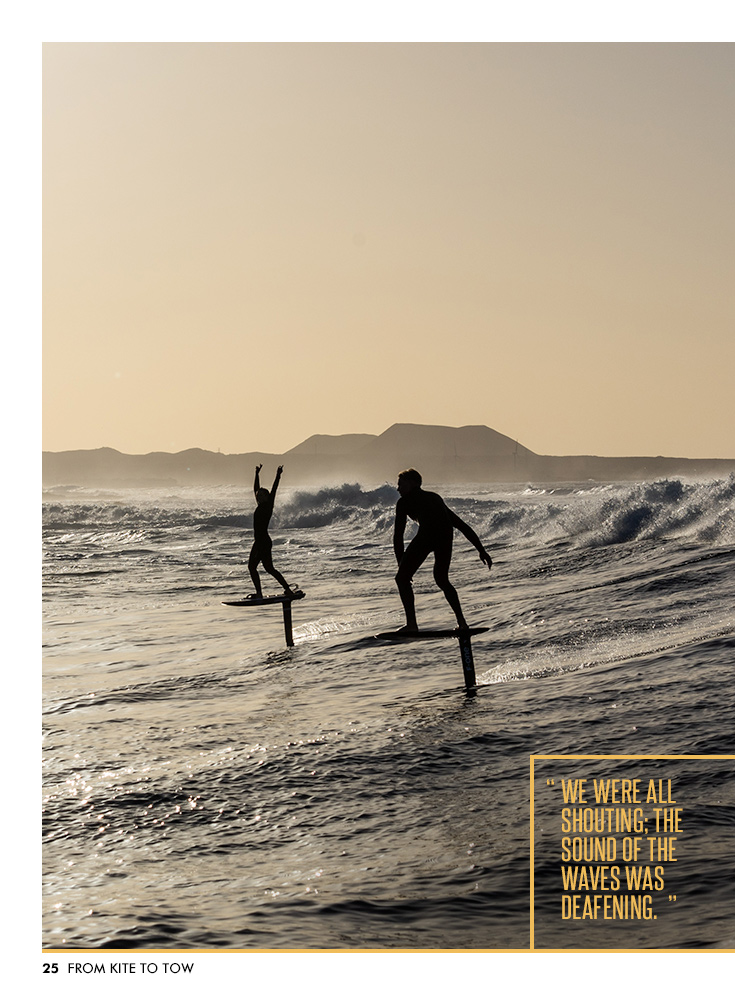
Casper was right. I had a blast, not just with kitefoil racing, but with everything that came with it. Travelling with the team, we always had our own coach boat with us. That is how I got to try tow foiling for the first time. I still remember my first wave. Casper was at the helm, and my teammate Sam had just caught a big one. Now it was my turn. A set rolled in, and we were all shouting; the sound of the waves was deafening. There was no room for hesitation. Casper spun the boat, and I was towed into one of the biggest waves I have ridden so far. I was utterly overwhelmed; my 800 square centimetre, high-aspect wing was way too much for the wave, but I somehow held on. The adrenaline rush was insane, focused because it was a no-fall zone, but mostly enjoying the thrill and the boys screaming from the boat.
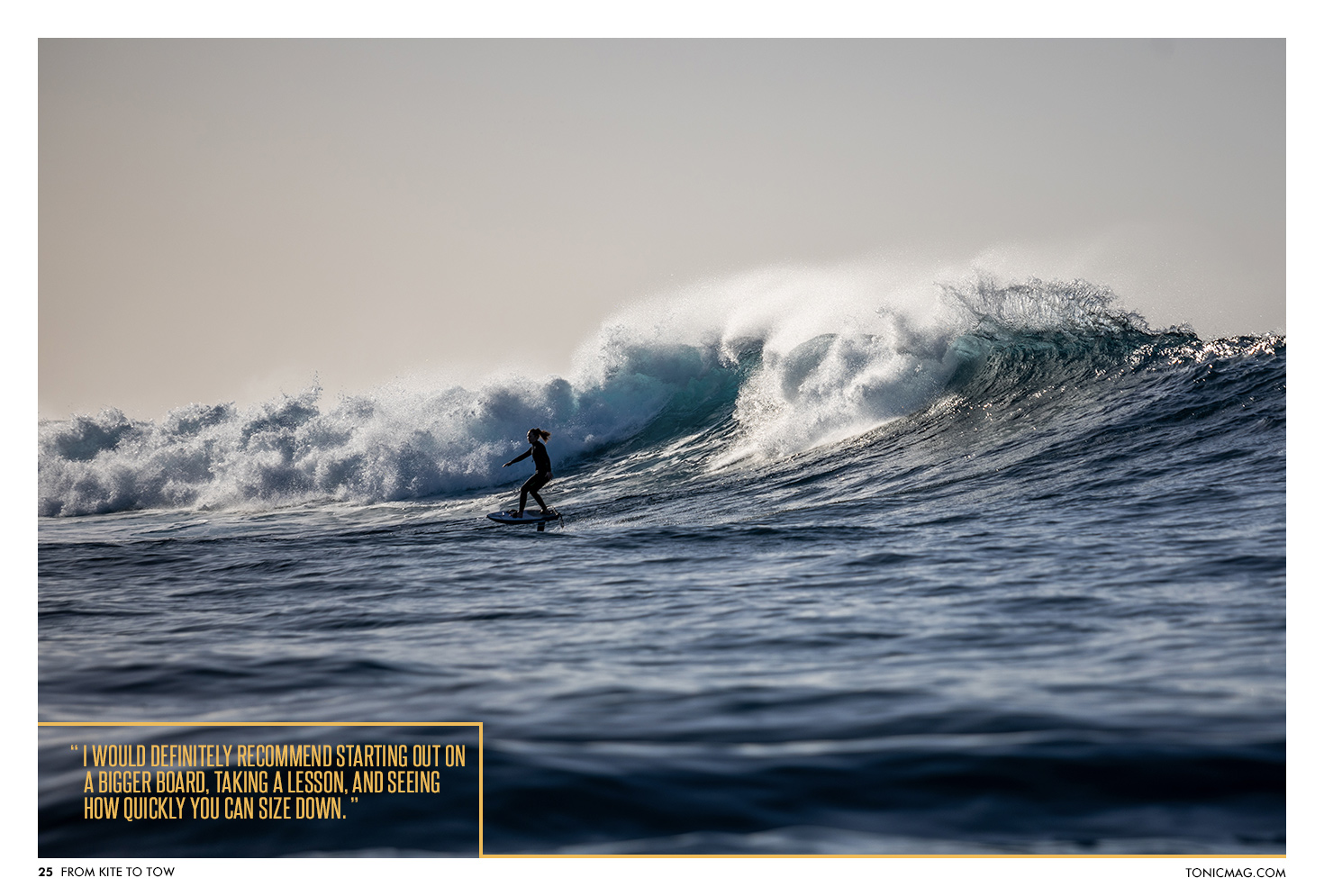
Since then, we have tried to fit in tow foiling sessions whenever possible. Tow foiling is magical and lets you enjoy the conditions to the fullest. Whether you are carving smaller, playful waves or chasing down massive sets, it is such a joy to be out there with friends riding waves others cannot reach. Compared to prone or wing foiling, it is also less physically demanding, making it a great balance to the mentally and physically intense Formula Kite training. It is both exciting and almost meditative. I would still love to visit a spot with long, perfect waves for surf foiling, like the long left in Peru, which would be a dream to ride one day.
If you get the chance to try a tow foil session with a school or a friend, go for it. Choose a safe and friendly spot with no shallow areas and a clear outrun into the channel. Start in small waves, learn how your foil behaves, learn how to crash, and enjoy that quality time on foil. It will help your progression across all foil disciplines. Don’t forget to wear a helmet and an impact vest, and using footstraps makes it a lot easier to control the board. A leash is also recommended, as it allows you to take the progression step by step and avoid pushing your luck by not hitting your foil. I never had a bad crash tow foiling, a big reason is that I try to minimise the risk and choose my sessions wisely.
By Tonic Mag
