

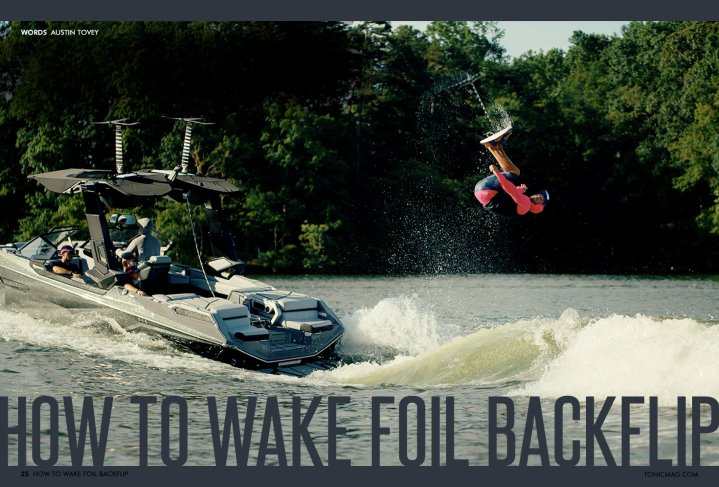
How to Wake Foil Backflip
Issue 25 / Wed 3rd Sep, 2025
Big air, big style, and no holding back: that’s Austin Tovey! Known for sending it in every discipline from wake to kite to tow foiling, Austin has now poured all that experience into designing his very own board with Armstrong. In this feature, he discusses the new Austin Tovey Pro Board, what sets it apart, and the mindset and mechanics behind the jaw-dropping tricks you see in his clips.
Austin Tovey isn’t the kind of rider who plays it safe. If there’s a way to go bigger, he’ll find it. Wake, kite, tow, pump, it doesn’t matter what’s pulling him; he’s always looking for that next-level feeling. You’ve probably seen the clips: huge airs, clean landings, and a style that makes it all look too easy. But behind every stomped trick is years of trial, error, and dialling in the gear to match. That’s what led Austin to co-design his own board with Armstrong.The result? The Austin Tovey Pro Board! A 3'4", 13L weapon that packs power, pop, and precision into a compact shape. Built for riders who want to push the limits, just like Austin does. It’s stiff where it counts, forgiving where it matters, and responsive enough to catch you when you’re coming down hard. In this article, Austin breaks it all down. Not just the gear, but the mindset, timing, and body mechanics that go into landing one of his signature wake foil tricks. Whether you’re chasing your first big air or looking to refine your style, this is your backstage pass.
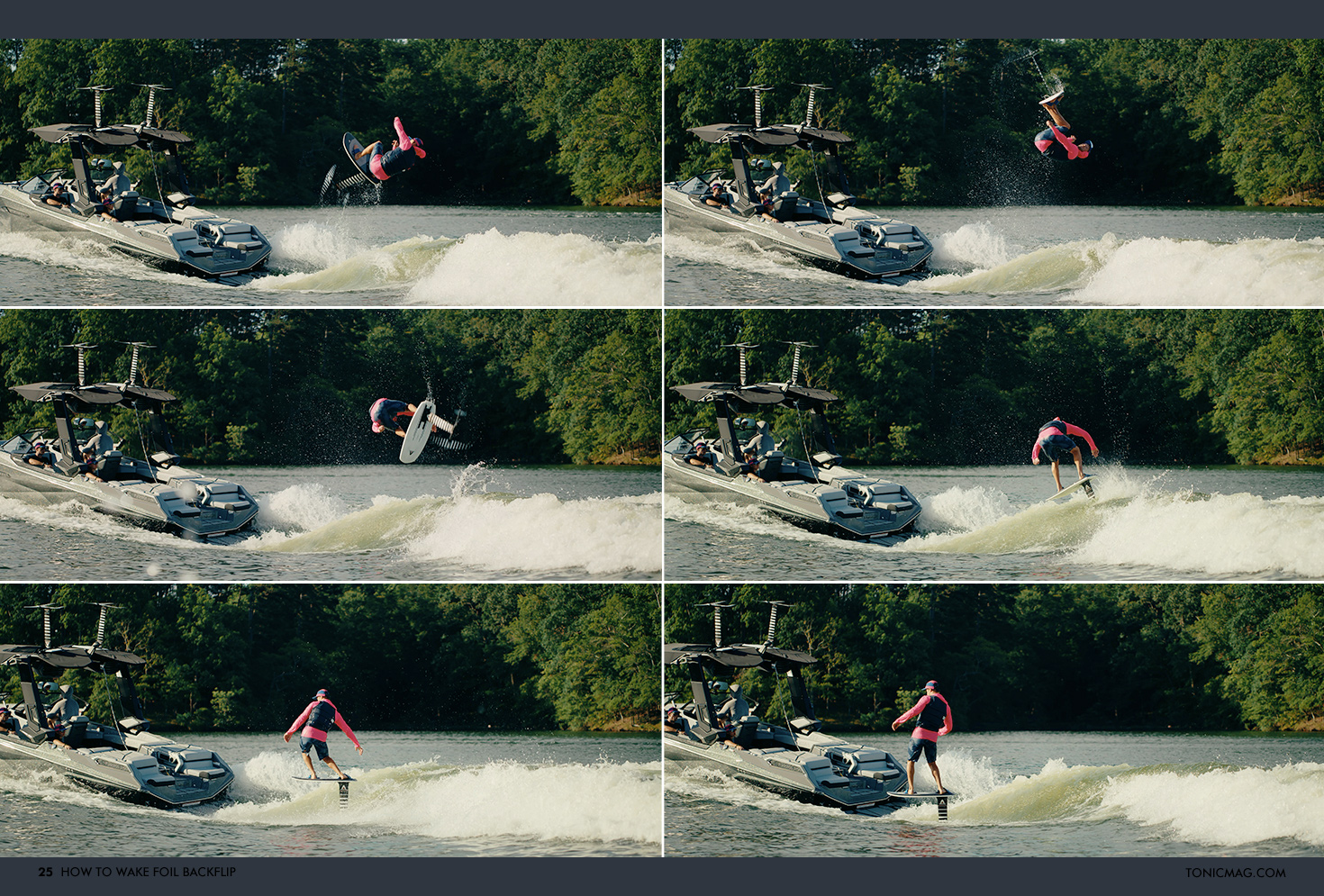
The backflip is all about patience, pop, and the follow-through. Here are some tips on how to go from zero to hero.

1. Stall Tall
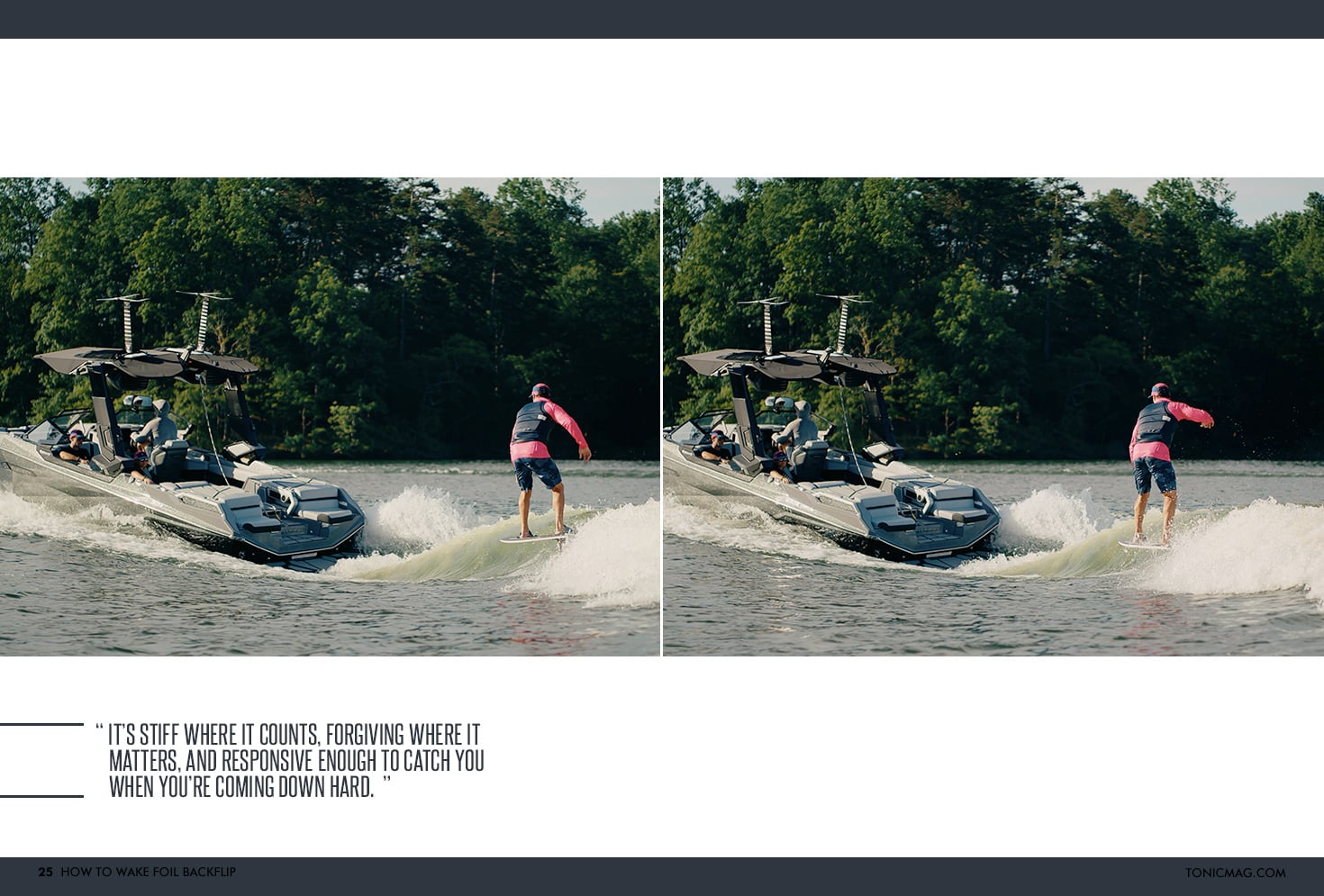
Start by stalling back on the wake when setting up for the backflip. I prefer to be 1-3 feet behind the break of the wake. This pause gives you the space to build your line toward the flip.
2. Two Pumps to Showtime
Give it one... maybe two pumps to generate forward momentum towards the boat. You’re not trying to reach orbit here, just enough speed to drive up the face clean.
3. Toes In, get Low
As you approach the wake, press onto your toes to drive yourself toward the face of the wake. You want to lean toward the face without tipping into it. Get low and bend your knees to prepare for releasing the foil from the water.
4. Drive Down, Load Up
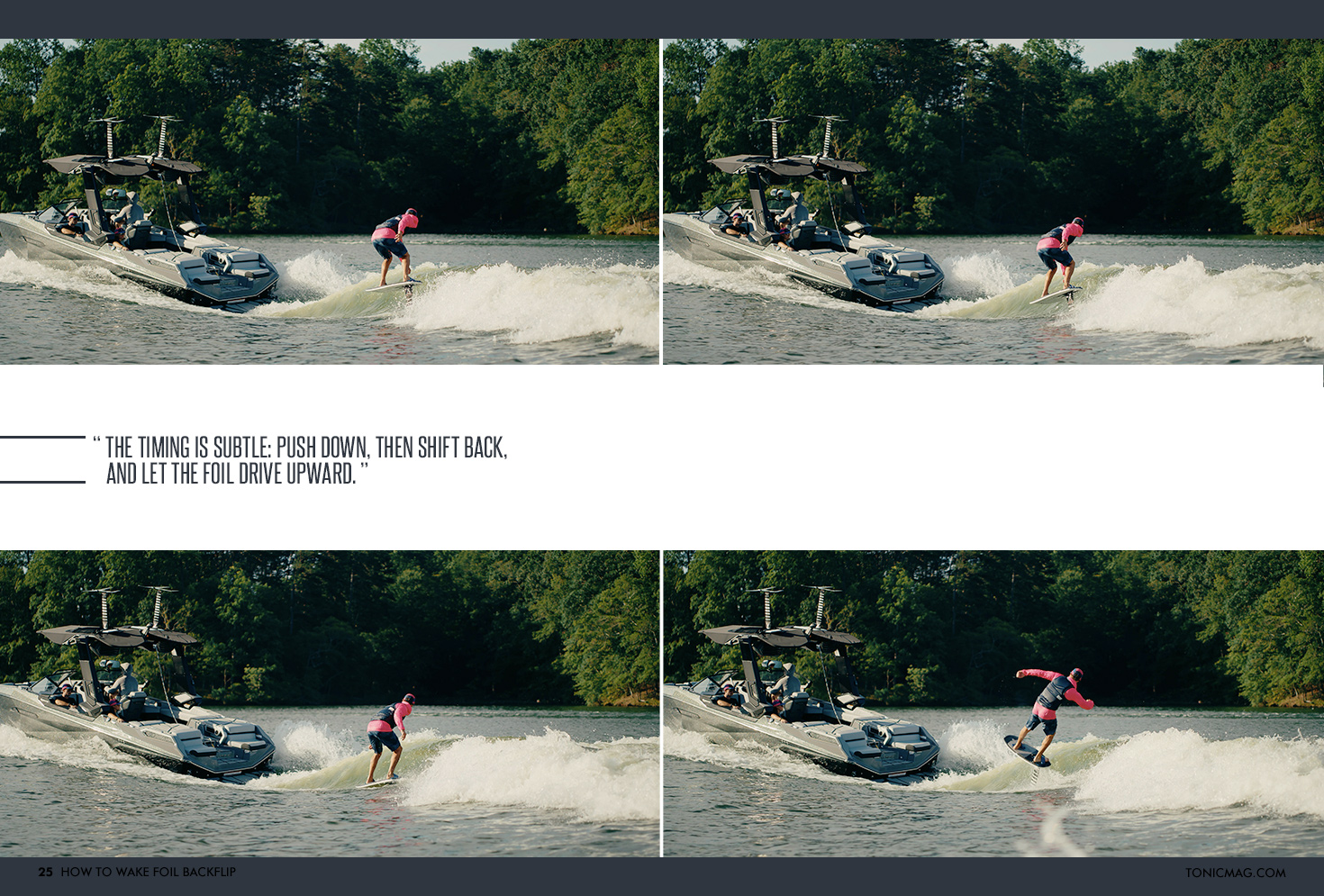
Drive the foil down into the water. Start transitioning weight to your back leg. This is your launch trigger. The timing is subtle: push down, then shift back, and let the foil drive upward.
5. Pop + Tuck and Commit
Now the commitment moment. As you spring up, turn your back shoulder toward the tail. At the same time, drive your feet overhead, keep your knees close to your chest and hold the rotation.


6. Spot the Water
Halfway through, you should be facing back toward the water. Try to spot your landing. Spotting helps you slow the rotation and prepare for landing.
7. The Landing
Let the foil re-enter the water smoothly. As the board touches down, shift weight to your back leg and ease into the lift. If you’ve timed it right, you’ll rise like a phoenix. If not, splash it off and do it again.
8. Claim It
Pump once, throw up a shaka and thank the driver. You’re now part of the flip club.

By Tonic Mag
