

Tech Focus: Ride Engine Wingfoil Harnesses
Issue 25 / Wed 3rd Sep, 2025
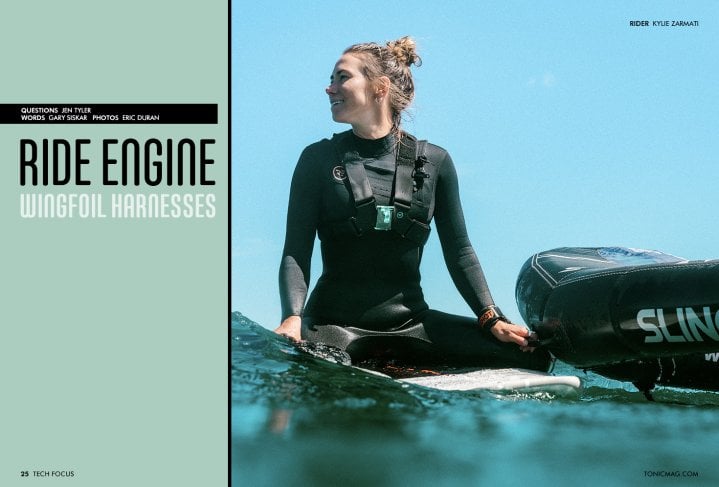
Ride Engine’s harness range has something for every rider, from minimalist waist styles to chest harnesses built for downwind missions. We caught up with Gary Siskar to break down the Bati, Vinaka, Vinaka Pro, Free Float, and Offshore Pack.
Hi Gary, thanks for joining us! Please give us a quick breakdown of the main differences between the Bati, Vinaka, Vinaka Pro, Free Float and Offshore Pack harnesses!
I’m always stoked to share what Ride Engine is doing to enhance your time on the water! This time, we’re diving into wing foil harnesses, which, let’s be honest, also shine in the fast-growing discipline of parawinging.
We offer two harness styles: waist and chest. In the waist category, the Vinaka, Vinaka Pro, and Bati each bring a unique level of support, giving riders the choice between soft flexibility and the structure of a rigid hardshell. In the chest category, the Free Float and Offshore stand out for their versatility. Both are equally at home in wing foiling and parawinging, and with the removable harness hook, they easily adapt for downwind SUP runs as well. Ride Engine’s harness range is designed to match every rider’s style, whether you’re chasing comfort, freedom of movement, or maximum support.
The Bati features Ride Engine’s signature Curv hard shell. How does that help while wing foiling?
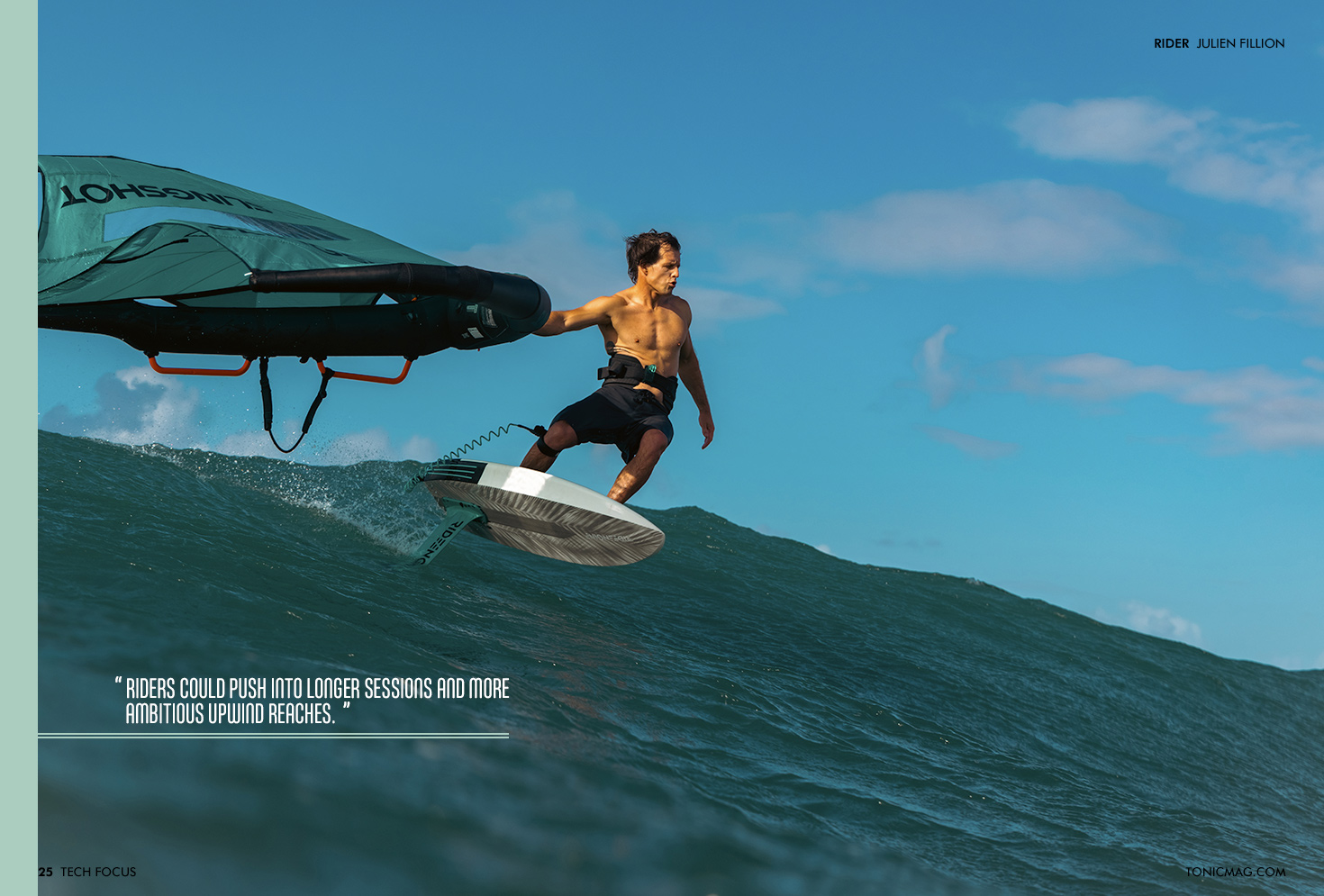
Ride Engine was the first to introduce a true wing foil harness with the Vinaka, a soft, streamlined design that integrated a harness hook and multiple leash attachment options. It didn’t take long to recognise the advantage a harness offers: riders could push into longer sessions and more ambitious upwind reaches. That progression also revealed a new need: greater support to disperse point loading better. Enter the Bati. Built with Curv composite material, it’s lightweight, waterproof, and engineered to spread the load from the hook evenly across the lower back.
The benefits are clear: Curv construction delivers more comfort during extended sessions, reduces point loading in every condition, excels when overpowered, and lets riders conserve energy by giving arms and hands a much-needed break.
The Nug sliding hook is used across several harness models. What makes it such a key feature?
Everyone loves the Nug! The original Vinaka launched with a metal hook that did the job, but had its drawbacks; it could bind, was tough to slide out of the way, and was designed exclusively for Ride Engine harnesses. When we set out to engineer the Nug, the goal was to take performance to the next level while opening up compatibility. Its refined geometry not only enhances the function of our harnesses but also works seamlessly with anything, from a simple webbing belt to virtually any harness on the market.
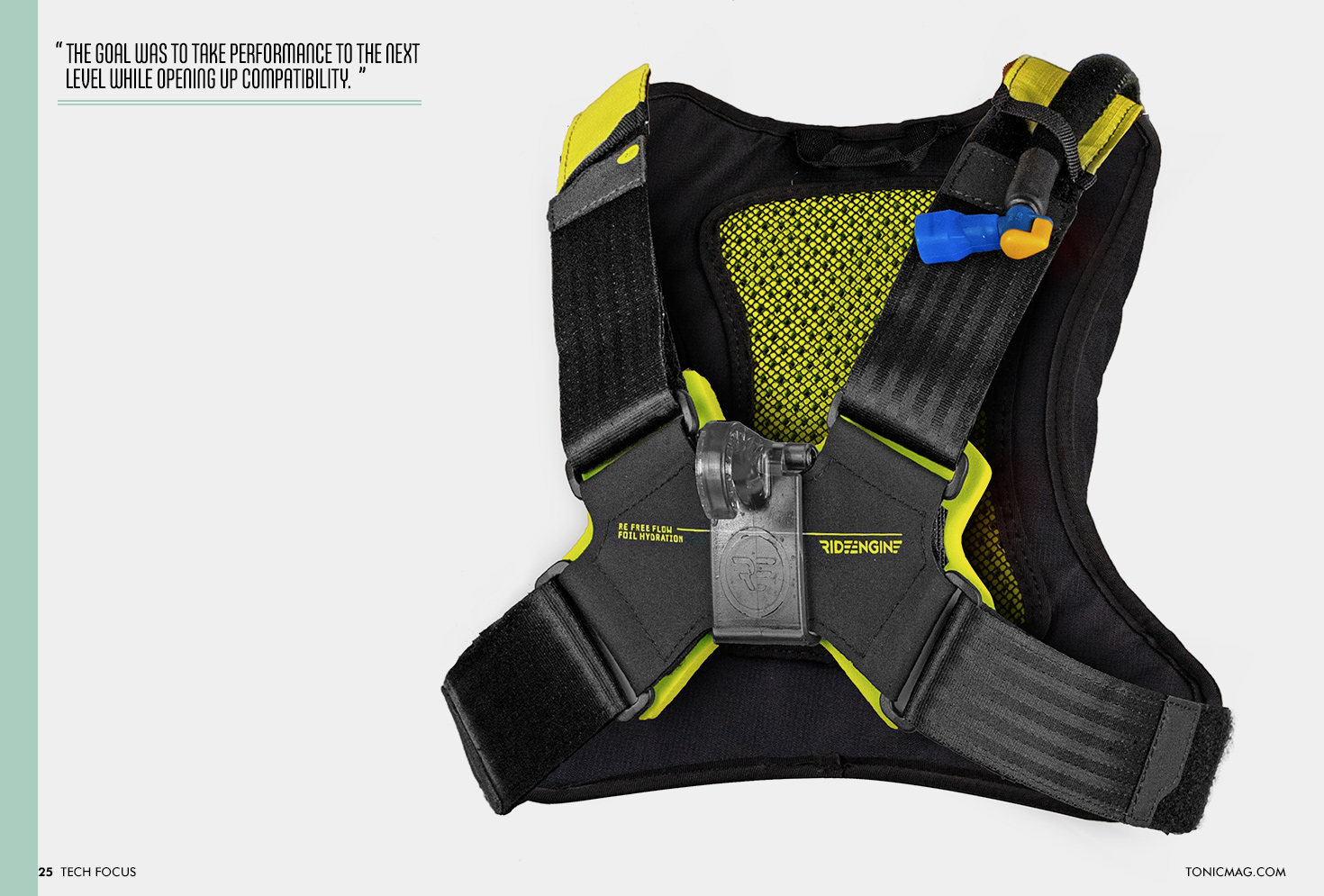
The Free Float and Offshore Chest Harnesses are interesting concepts. How did the idea of a chest harness come about?
The idea of a chest harness actually started in a passing conversation with Jeff Logosz, founder of Slingshot and CEO of Ride Engine. He asked if we had ever considered designing one, and honestly, our first reaction was no. But Jeff reminded us how, back in the day, windsurfers focused on wave sailing swore by chest harnesses to keep their waists unrestricted. That clicked, and we went for it. The benefits have proven to be spot on. A chest harness keeps the waist clear, perfect for running a waist leash with your wing, which is essential in waves or freestyle. For parawinging, it leaves room for a stash pack, and for longer sessions, both the Free Float and Offshore come ready for hydration with a bladder system or added storage for essentials like a phone in a dry pouch, snacks, or even a safety beacon.
Who would you say each harness is best suited for?
There are many ways to answer this, as it ultimately comes down to personal preference. Softer harnesses and chest harnesses in general deliver more mobility and freedom of movement. But if long upwind reaches or riding overpowered is your style, the Vinaka Pro and Bati provide the added support you’ll want. And for parawinging, chest harnesses are the clear choice in our opinion.
The Vinaka harness was one of the first wing foil-specific harnesses on the market. How has it evolved?
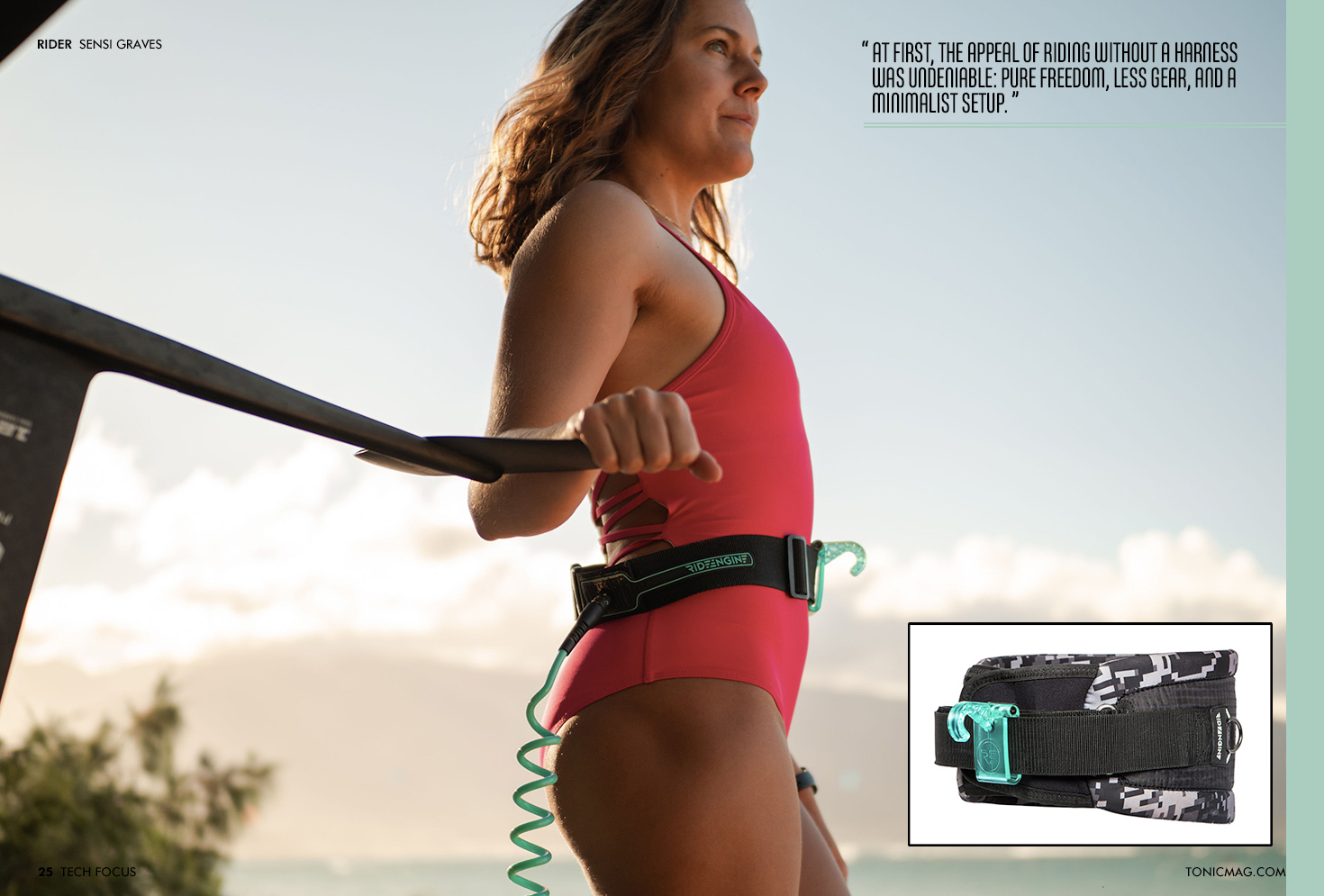
Harness innovation is at the core of Ride Engine’s DNA, so when wing foiling first emerged, we immediately started questioning the advantages of hooking in. At first, the appeal of riding without a harness was undeniable: pure freedom, less gear, and a minimalist setup. But as our sessions grew longer and our missions stretched from the Event Site in Hood River up to the Hatch, the benefits of a harness became impossible to ignore, and the need was clear. From there, it was a natural progression to bring our hard-shell expertise from kiteboarding into wing foiling. By applying the same proven technology, we were able to deliver the comfort, support, and performance advantages that hard-shell harnesses have long provided in kiteboarding, now refined for the unique demands of wing foiling.
How does the Vinaka Pro compare to the original Vinaka V1 and V2?
The Vinaka Pro marked our first step into bringing a more rigid shell structure to wing foil harnesses, and it remains just as relevant today. Compared to the Vinaka V1 and V2, our softest wing foiling harnesses, the Vinaka Pro delivers increased support while preserving the freedom riders love. Its pre-curved, glass-filled nylon shell strikes the perfect balance: flexible enough to maintain that free, natural feel of wing foiling, yet strong enough to take the load off your arms for longer, more comfortable sessions.
For riders prioritising weight savings and simplicity, is the Vinaka V1 still a go-to option?
All of our harnesses are designed to be lightweight and straightforward, with no unnecessary complexity, just clean functionality. The Vinaka V1 and V2 feature a hook-and-loop body wrap closure system that provides secure support. At the same time, the Vinaka Pro and Bati use streamlined webbing closures since their contoured waist belt shape and hard-shell back panels naturally deliver the structure. The lightest of the lineup is the Bati, built with non-water-absorbing materials and Curv composite, which is inherently lightweight by design.
When would you recommend going for a waist harness over a chest harness, or vice versa?
A waist harness positions the pull lower, which can make it more comfortable when holding down extra power. The lower hook placement also makes it easier for some riders to hook in and out. A chest harness, on the other hand, keeps the waist area free, ideal for riders using a waist leash with their wing. I often recommend chest harnesses to those spending time in the surf, where paddling out is required, or to riders who need to paddle to the wind line. The open waist is also a big advantage for parawingers, as it leaves space for a stash pouch without interference.

How do these harnesses perform in different disciplines?
Ultimately, it depends on your riding style. For those who thrive on being overpowered, like in racing, a lower pull delivers efficiency. But if your focus is on charging the surf, a chest harness gives you the edge. It allows you to run the wing leash off your waist for cleaner eliminating the wrist leash, which slows down paddling and board recovery.
The hydration pack on the Free Float and Offshore harnesses is a great addition! Was that designed with downwinders in mind?
Both the Free Float and Offshore Pack harnesses were designed with long downwind runs in mind. Here in the Columbia River Gorge, we have some long runs where a lot can happen: equipment failure, a sudden drop in wind, or simply a long wait for your shuttle. Having hydration on hand, plus storage for essentials like a phone in a dry pouch, cash, or snacks, is a huge plus.
Ride Engine is known for its sustainability goal. Are there eco-conscious materials used in these harnesses?
For us, sustainability today isn’t a choice; it’s expected. We recognise that the sports we love rely on equipment that leaves a mark on the environment, from resins and carbon in boards and harnesses to nylon in kites and wings. That’s why we work relentlessly to minimise and offset our impact: reducing packaging, eliminating polybags wherever possible, and turning to alternative materials are just a few. Through material science in our products, we push to integrate the most sustainable options available, not as a marketing angle, but as a mandate. For us, protecting the environment isn’t optional; it’s our responsibility to safeguard the playground that gives us so much joy.

By Tonic Mag
