

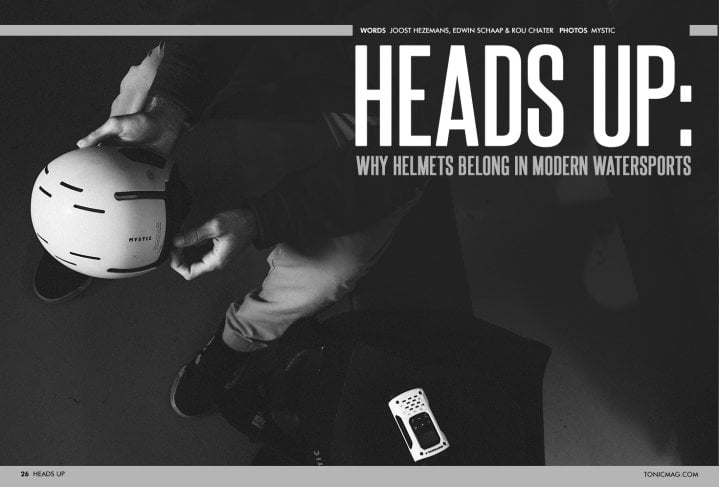
Heads Up: Why Helmets Belong in Modern Watersports
Issue 26 / Mon 15th Dec, 2025
Helmets are quickly being adopted in wing foiling, downwind foiling, and heavy-water surf. To understand the “why” and the “how,” we sat down with Mystic’s design duo, Edwin Schaap (Design Director) and Joost Hezemans (Technical Design Engineer), who have spent years developing protection that riders will actually want to wear.
The Culture Shift
In kiting, style long outweighed safety. Big, baggy “toadstool” lids looked clunky and felt draggy in the water, so many riders skipped them once lessons were over. Foiling changed that equation. You are closer to a wing with sharp edges, crashes happen near hardware, and speeds are deceptive. Surfing is seeing a shift, too. Crowds are up, leading to more crashes between surfers at busy breaks. At the other end of the spectrum, pro surfers are normalising helmets at heavy venues.
“It is strange that we still see so many bare heads,” Edwin says. “We all like sleek gear, but modern helmets can be as minimal as a winter hood, and they work.”
What Really Hurts You
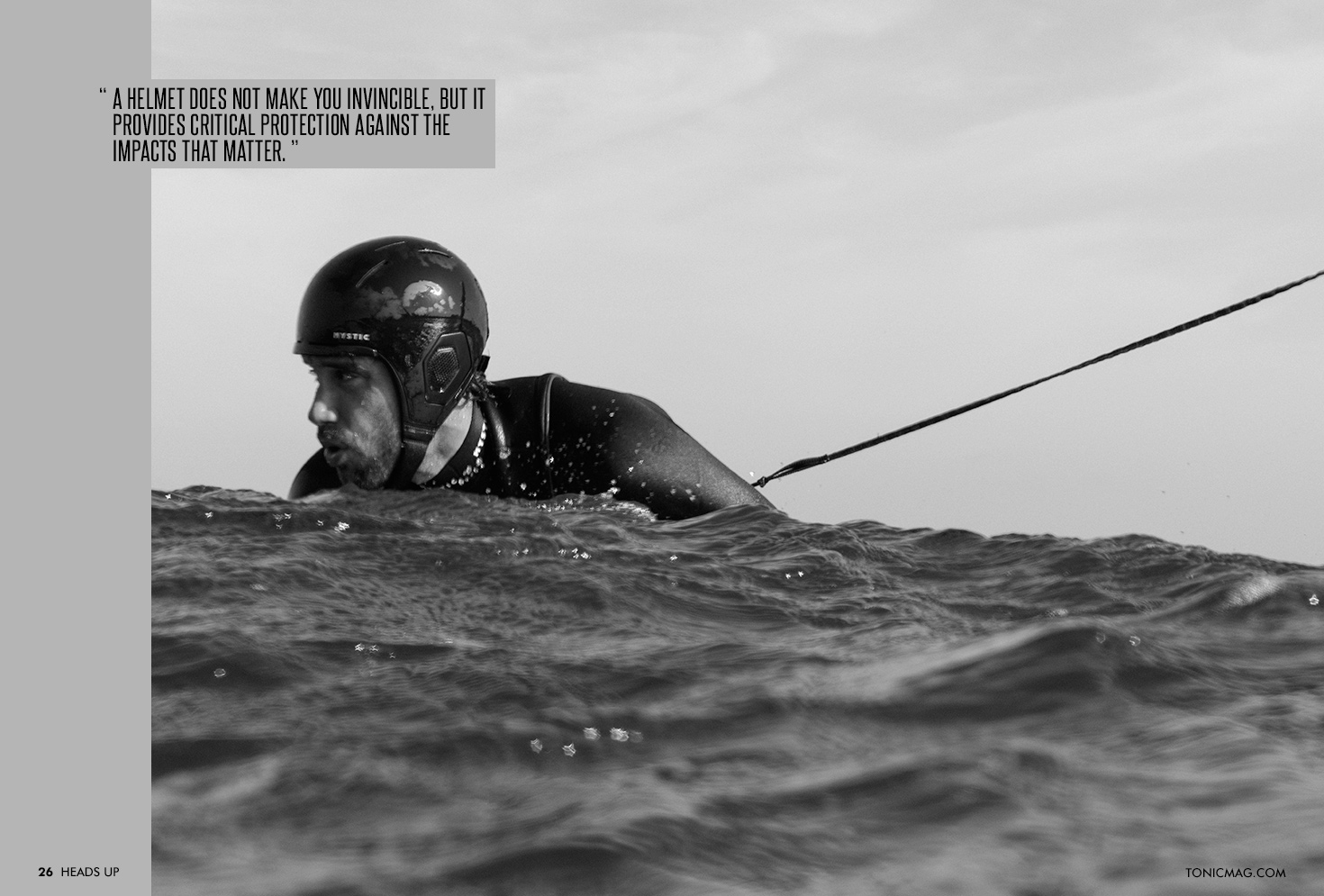
- Knockouts and drowning: The worst-case scenario is simple: unconscious in the water. A helmet does not make you invincible, but it provides critical protection against the impacts that matter.
- Sharp object impacts: Foil masts, front wings, surfboard fins, rails, and even other riders are real hazards. Side impacts to the temple or jaw are common when you tumble close to your board.
- Eardrum trauma and cold: Water impacts and wind chill can damage ears. Covered ear sections can reduce that risk while still allowing situational awareness.
Standards That Matter
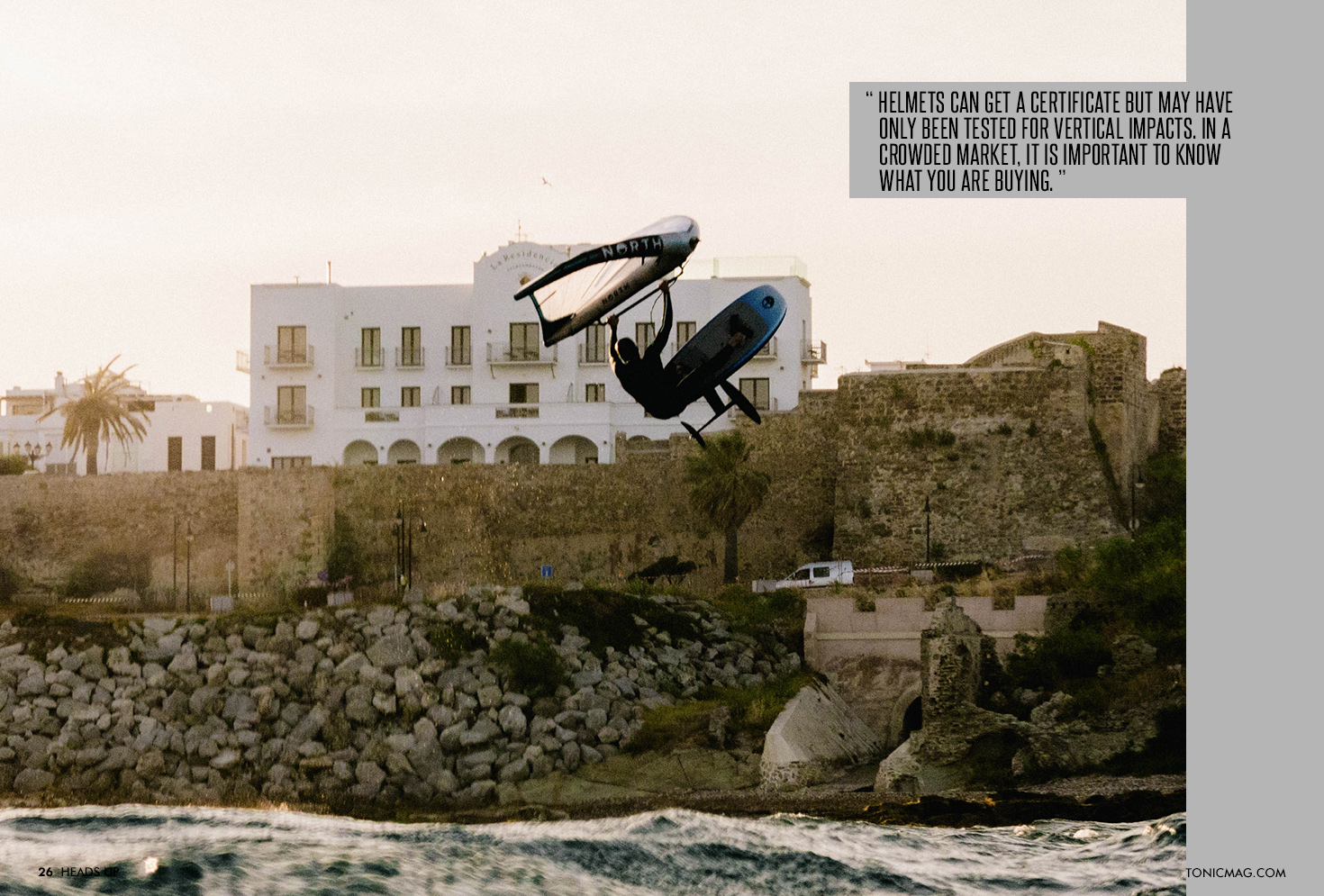
There is no single “kite” or “foil” certification today. The water helmets that take safety seriously are tested to EN 1385 (a whitewater sports standard used for kayak helmets). That standard requires impact tests from multiple directions and a secure chin-strap test. Some soft “bump cap” style helmets can get a certificate but may have only been tested for vertical impacts. In a crowded market, it is important to know what you are buying.
Quick Checklist When You Shop
- Look for EN 1385 on hard-shell water helmets.
- Confirm multi-directional impact testing.
- Check that the chin strap passes a pull test and that the helmet stays put when you jump in feet-first and head-first.
Why Fit Beats Bulk
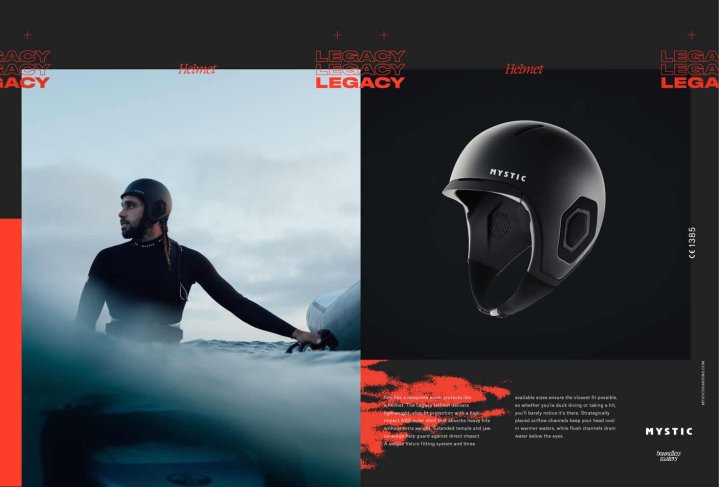
Most people rejected helmets because they felt like buckets. Mystic’s team attacked fit first: if it hugs like a hood, you forget you are wearing it. Their path ran from the slim Impact Cap (a viscoelastic “soft shell” that hardens on impact) to the Legacy, which borrows the sleek and snug design but also adds a hard shell and passes the full whitewater certification.
Two Key Ideas From Their R&D:
Shape adapts, not just size. Heads are rounder or more oval. A clever rear “slot” design lets the shell flex to both shapes, keeping the helmet low profile rather than ballooning.
Thin is not weak. Protection comes from the right combination of shell, foam, and curvature, not just thickness. The Legacy’s EVA blend and shell geometry hit the required G thresholds without the bulk.
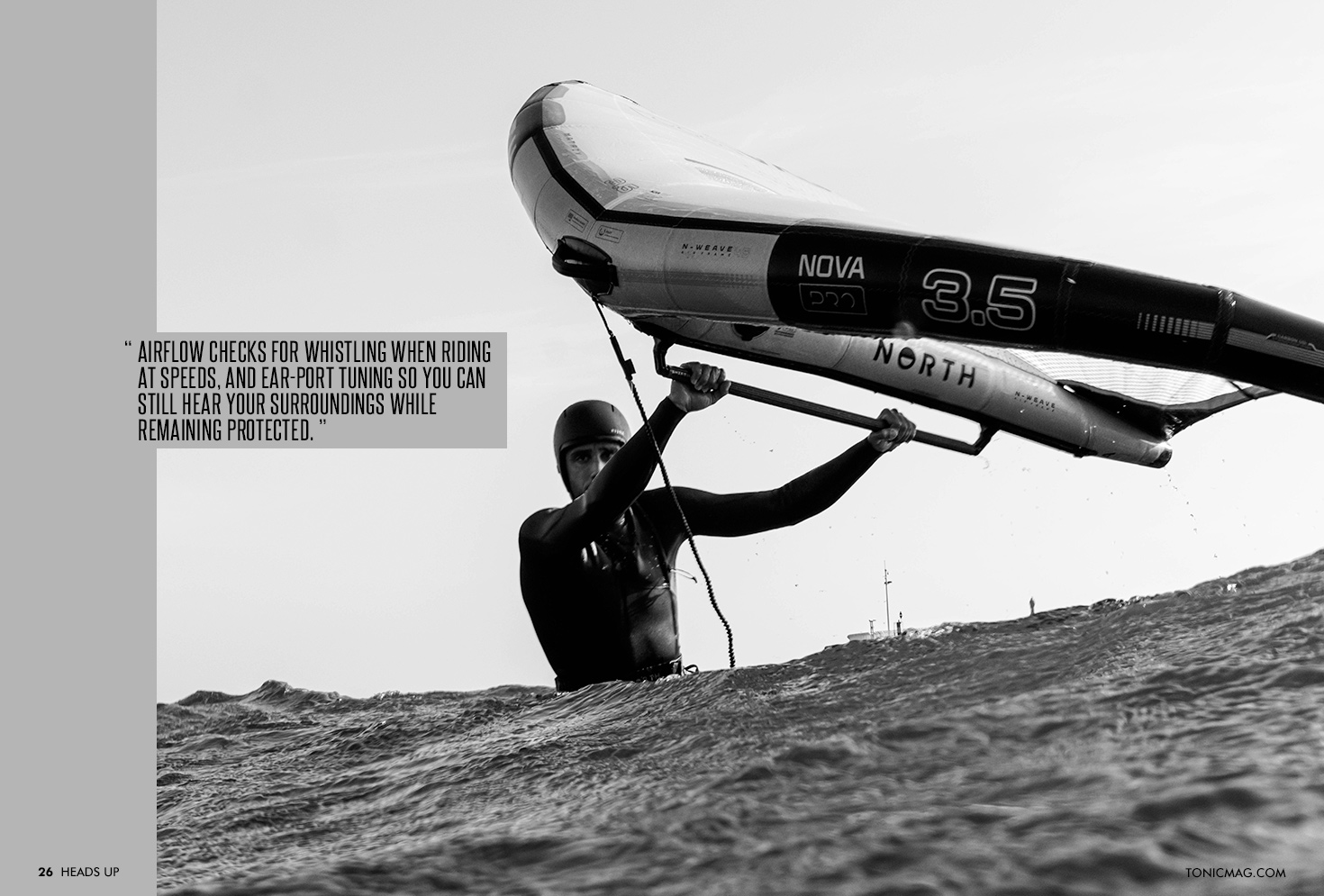
They also tested the basic stuff many brands skip: repeated water entries in a pool, utilising high-speed video to see where bubbles and turbulence collect, airflow checks for whistling when riding at speeds, and ear-port tuning so you can still hear your surroundings while remaining protected.
Water Specific Design Details To Look For:
Look for water specific details: smart drip management with small brims and internal channels that shed water away from your eyes after a duck dive or wipeout; ear coverage without “going deaf,” using mesh-backed openings or two-layer structures that protect your eardrum and cut wind roar while preserving awareness; vent paths that work in water, with front-to-top airflow that cools your head in summer without creating parachute effects or spray traps; and secure, simple retention, meaning a strap you can tighten with cold hands and a shell that won’t lift when you hit the water.
Soft vs Hard: Which One For You?
Hard shell (EN 1385)
- Best for foiling (wing, downwind, prone) and reef or heavy surf.
- Better against sharp-edge impacts (foil wings, fins, rails).
- Modern, low-profile models minimise drag and “mushroom” feel.
Soft cap/Bump cap
- Great for glancing blows and surface slaps, flatter water, and lighter surf.
- Ultra comfortable and very low profile, but not the same sharp-object protection as a hard shell.
Common Myths, Answered.
“A helmet will snap my neck.”Modern water helmets are light, low-volume, and designed for water entry. Mystic’s tests showed negligible lift and turbulence with tight-fitting profiles. The risk of head trauma far outweighs the theoretical neck risk for these sports.
“It whistles, and I cannot hear.” Poorly designed vents can whistle. Good ones use tuned mesh and port placement to reduce wind noise while keeping you aware. Your brain adapts to the slightly different soundscape within minutes.
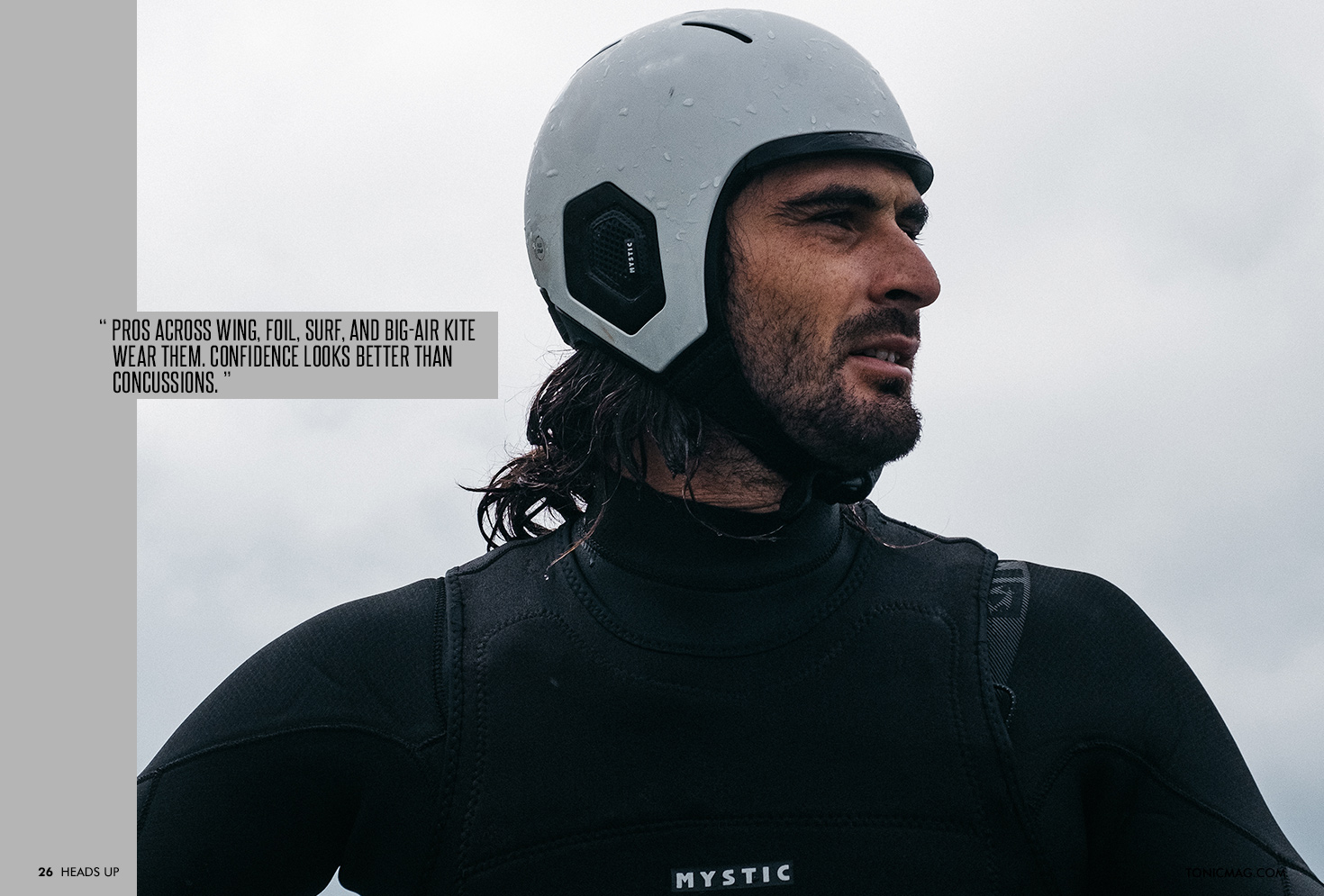
“It looks kooky.” Pros across wing, foil, surf, and big-air kite wear them. Confidence looks better than concussions.
How to choose and set up
Measure your head and try multiple sizes. A good helmet should feel snug without hot spots.
Dial the retention so it will not move when you jump in. Do a feet-first and head-first plunge test.
Pick coverage for your discipline. Temple and jaw coverage are smart for foiling and surfing in a reef environment.
Pair with an impact vest if you are pushing in it big conditions. More confidence often means safer landings.
Check and rinse. Salt kills gear. Rinse after every session and inspect the strap and foam regularly.
The Performance Upside
Protection is not just risk management. As Joost puts it, “When I wear an impact vest and a helmet, I feel more confident, so I push a little harder on the water.” That confidence can unlock progression, whether that is learning jibes on a wing, linking bumps on a downwind run, or committing to a late drop on a reef.
Competitions are already moving. At some big-air events, you cannot ride without a helmet. Insurance considerations also trend toward “wear one.”
Bottom Line
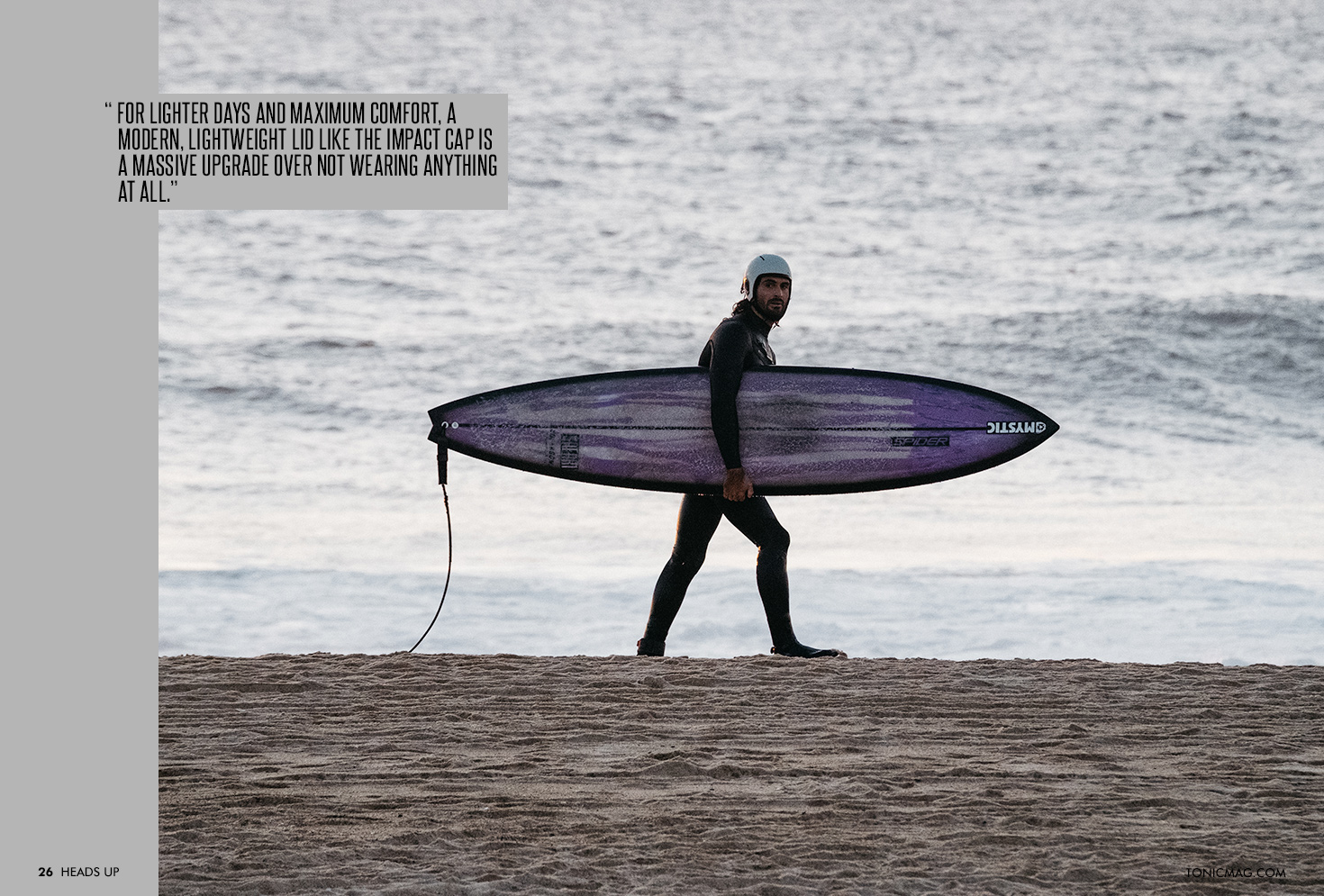
You use your brain for everything. Protect it. Today’s water helmets are low profile, purpose-built, and tested for the right kind of hits. They are now purpose-built for the sports we do, not just a repurposed surf or kayak lid. For wing foiling, downwind foiling, prone foiling, and surfing around people or reefs, a hard-shell that meets EN 1385 is a good bet. For lighter days and maximum comfort, a modern, lightweight lid like the Impact Cap is a massive upgrade over not wearing anything at all.
Make the choice once, set it up right, and then stop thinking about it. You will ride longer, progress faster, and come home safer; your family will thank you for it, too!
Videos

By Tonic Mag
