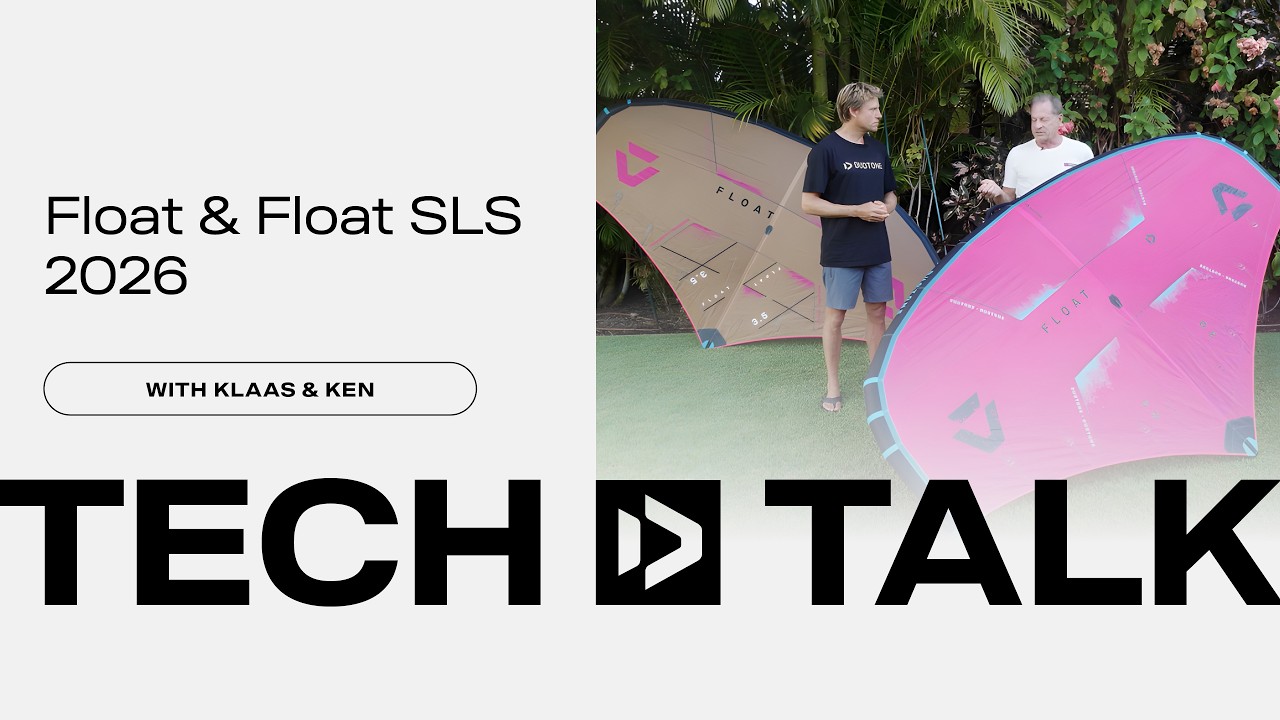

Dive into our overview below, and be sure to return for the complete review soon.
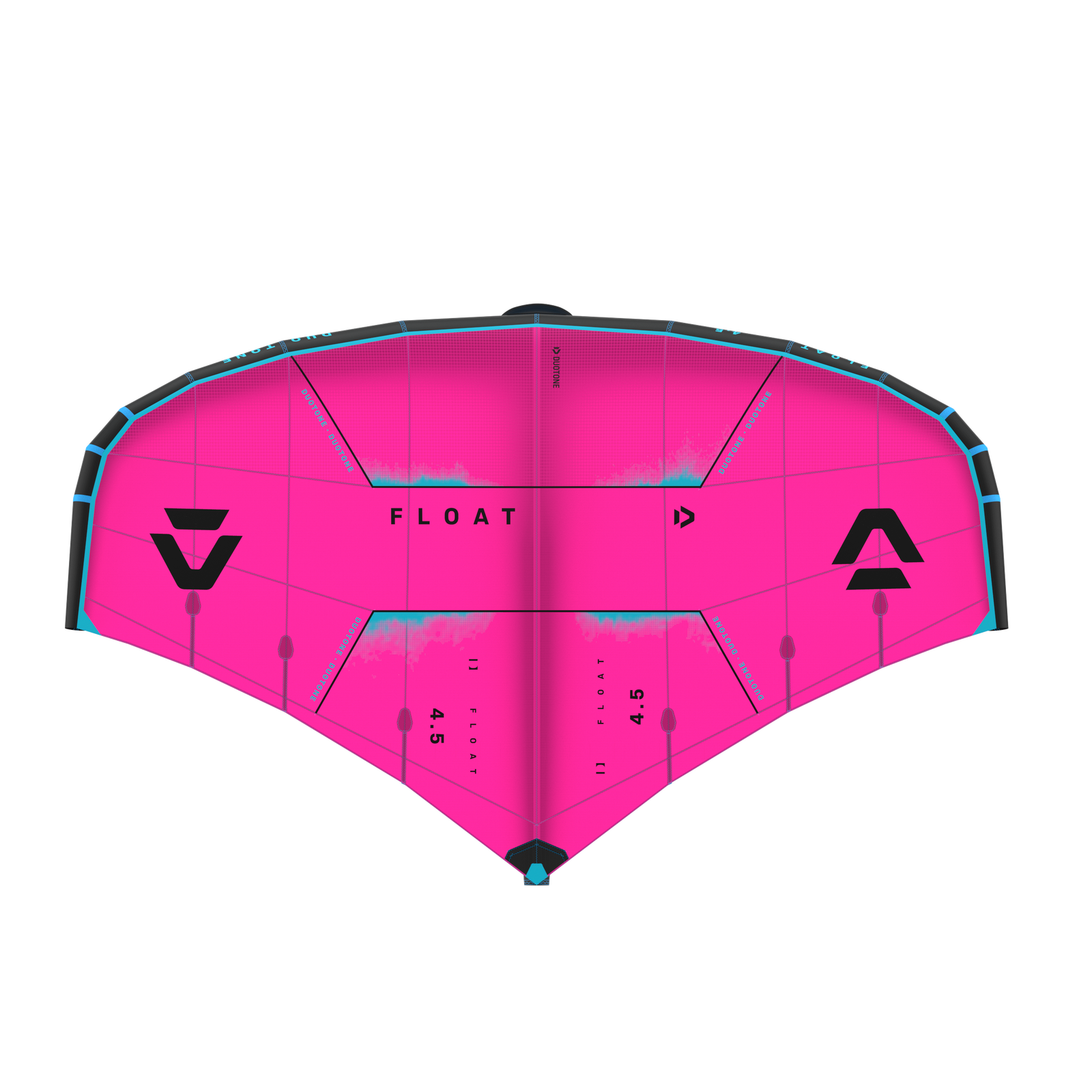
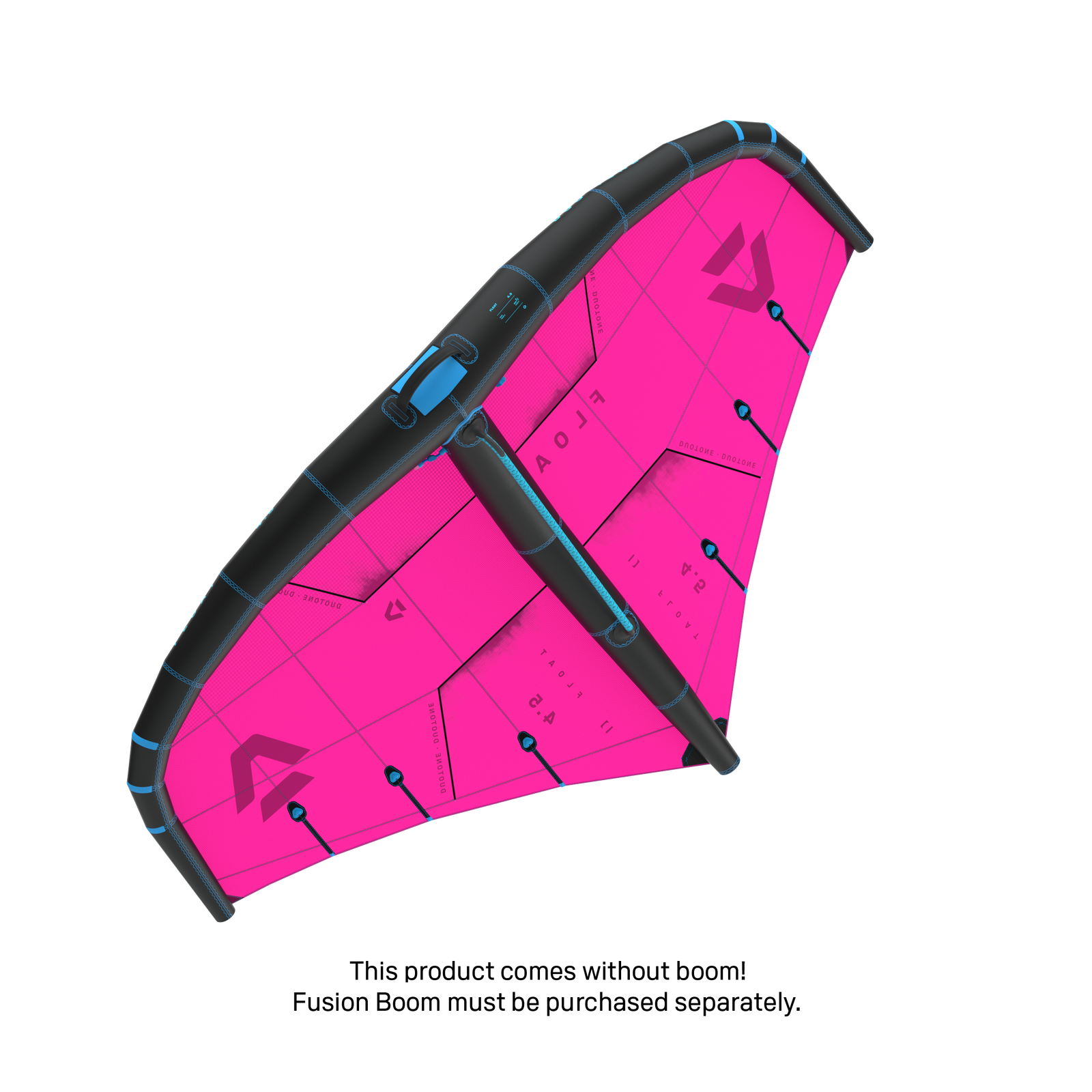
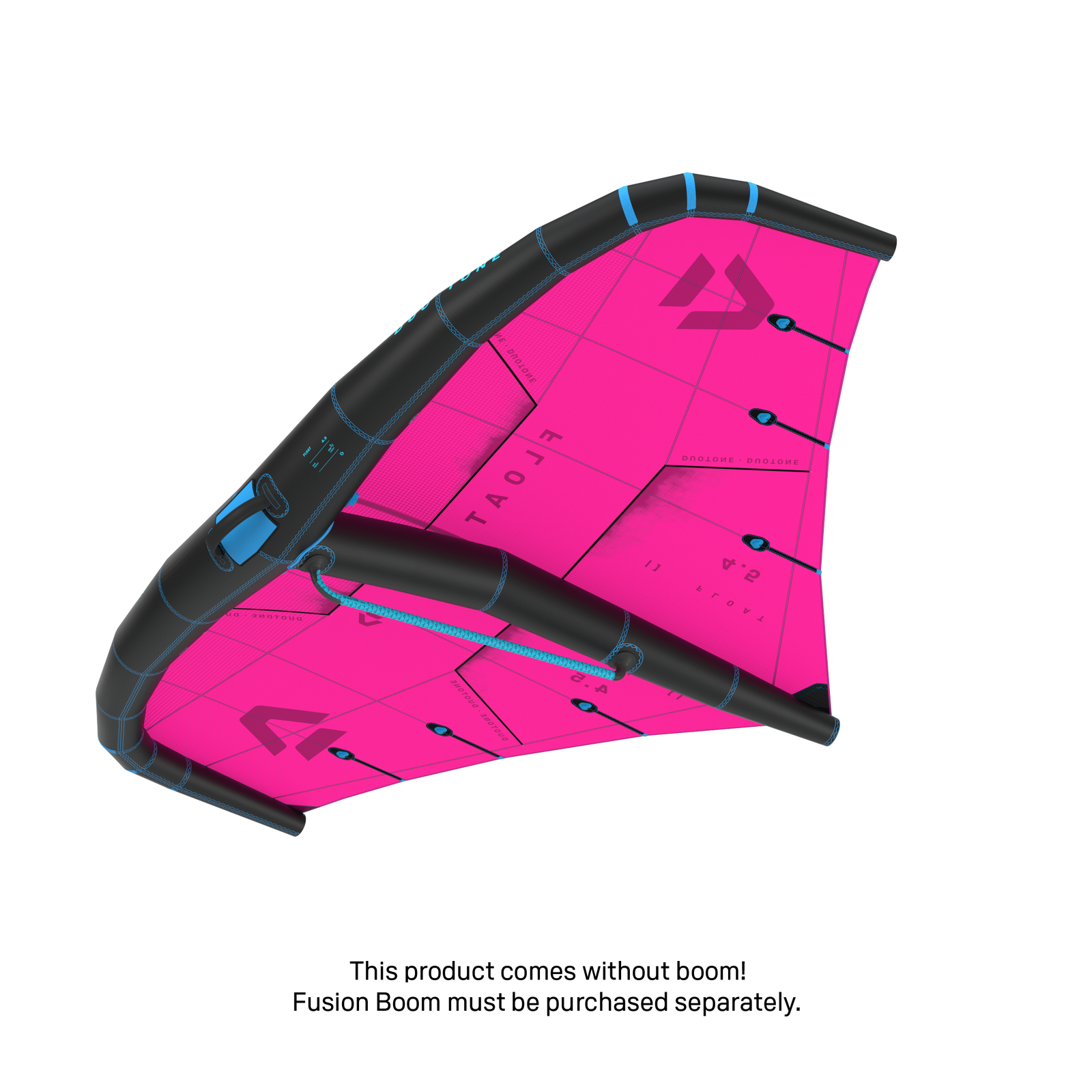
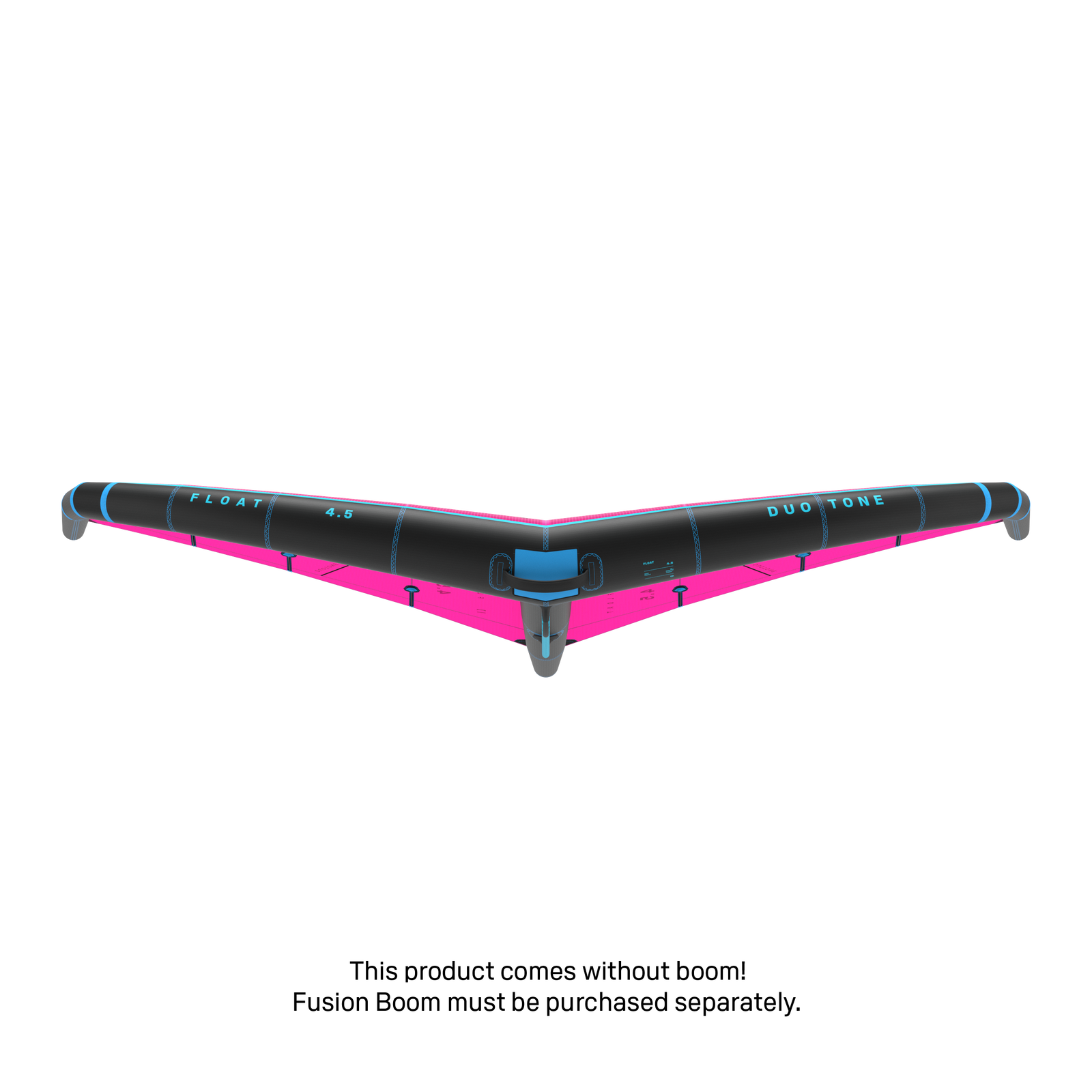
The 2026 Duotone Float is the second generation of the brand’s wave and freefly wing. Its design focuses on stable drift, smooth power delivery and uncomplicated handling when the rider allows the wing to flag out. A low sweep angle, forward-oriented profile and lower-angle wingtips work together to keep the wing elevated and controlled while carving a wave or linking swell. The resulting shape is intended to reduce the need for constant input and let the rider concentrate on the line being followed.
Profile and power delivery
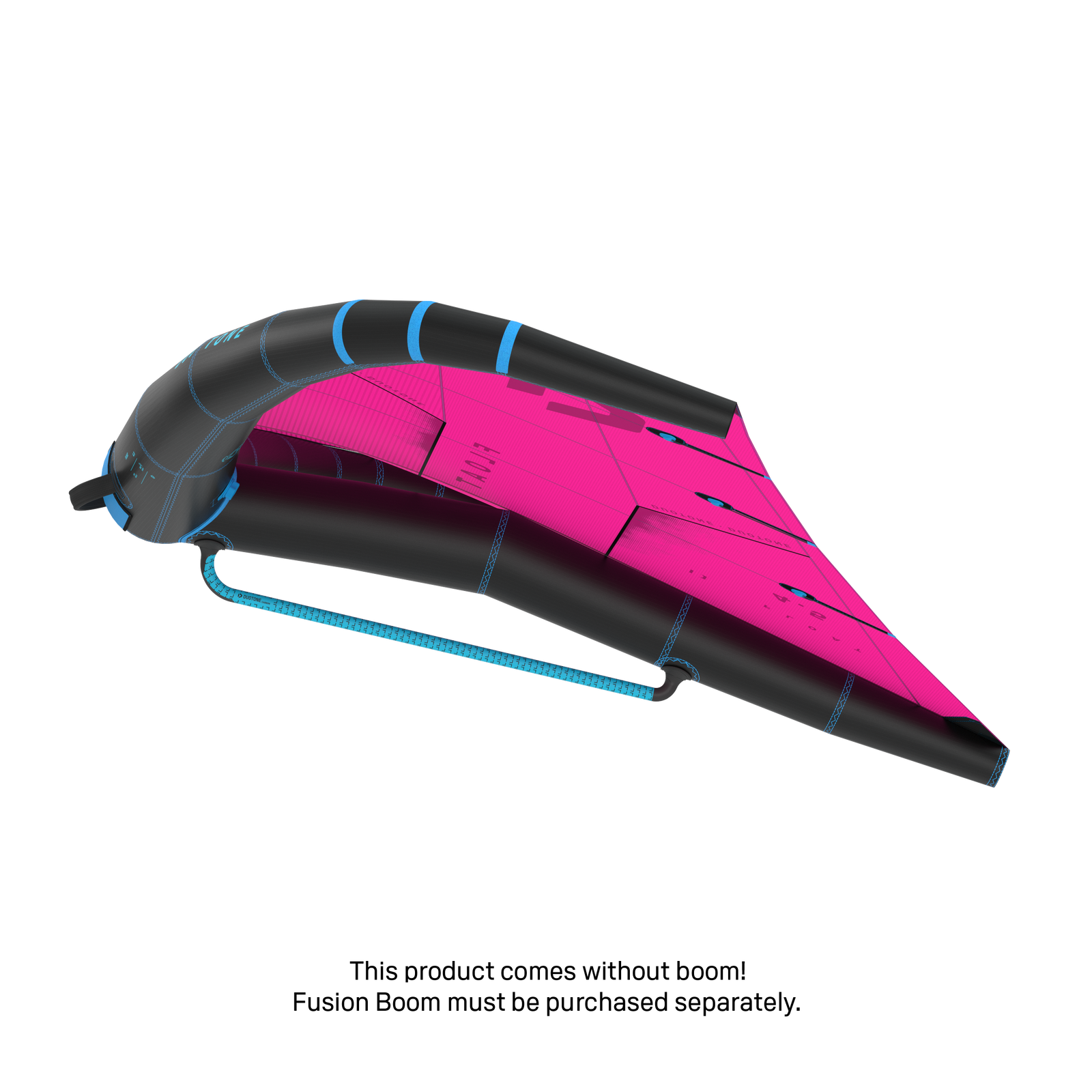
Duotone has reduced the profile depth through the centre while adding depth around the quarter-span points. This distribution is designed to smooth the sheeting response and balance power, control and stability. The Float carries its power slightly toward the front hand, giving the rider a consistent reference without making the wing feel excessively back-handed. When depowered, the lower-angle tips contribute to its floating behaviour and help it swing through changes of direction.
Drag reduction is another part of the wave-focused layout. The brand says the optimised shape supports flowing transitions and higher speed on the wave, including sections where the rider travels into the wind. The same profile changes are intended to improve both upwind and downwind riding angles. Although the Float is a specialist design, its controlled delivery and stable draft are presented as accessible to wave riders at different ability levels.
Construction and control system
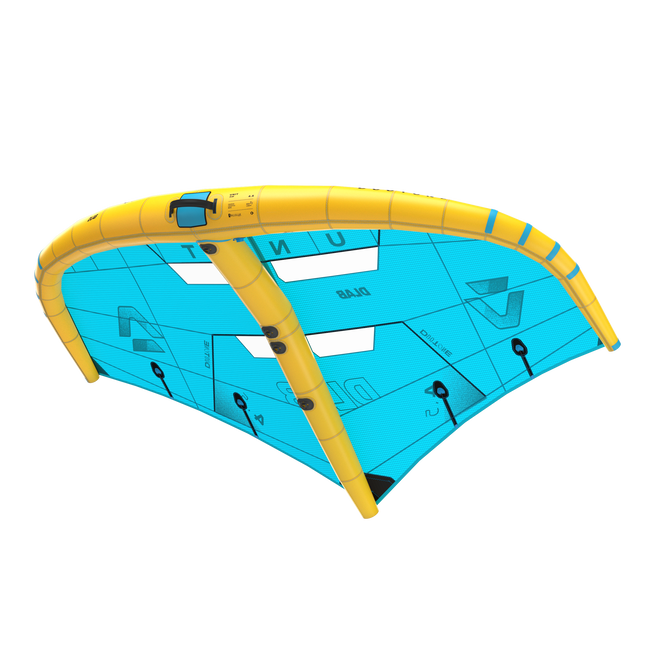
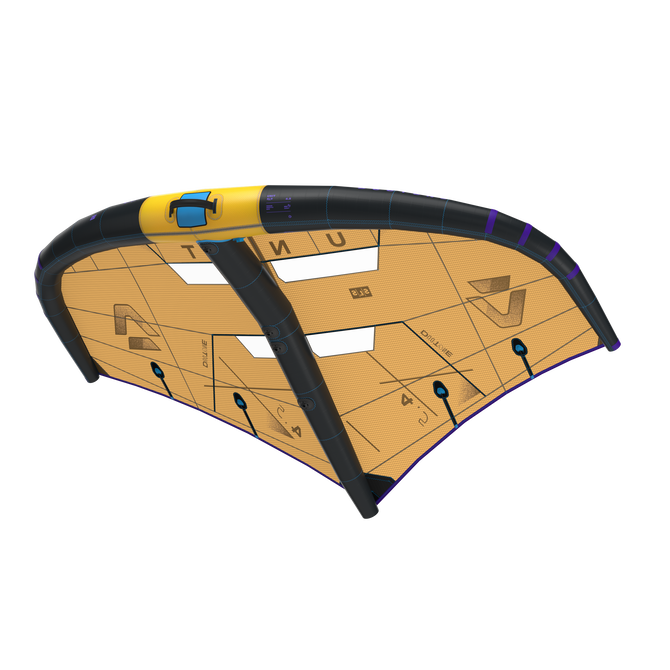
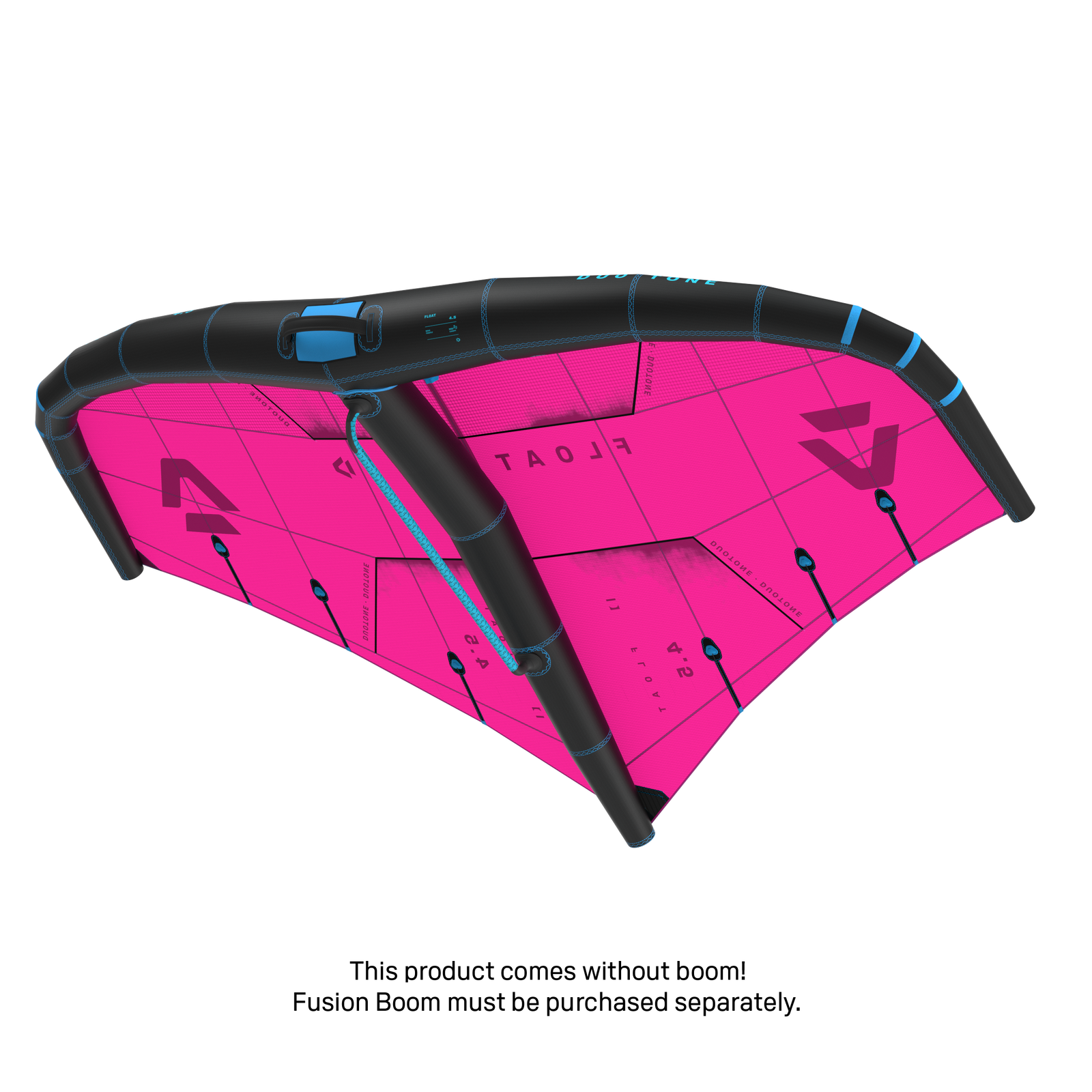
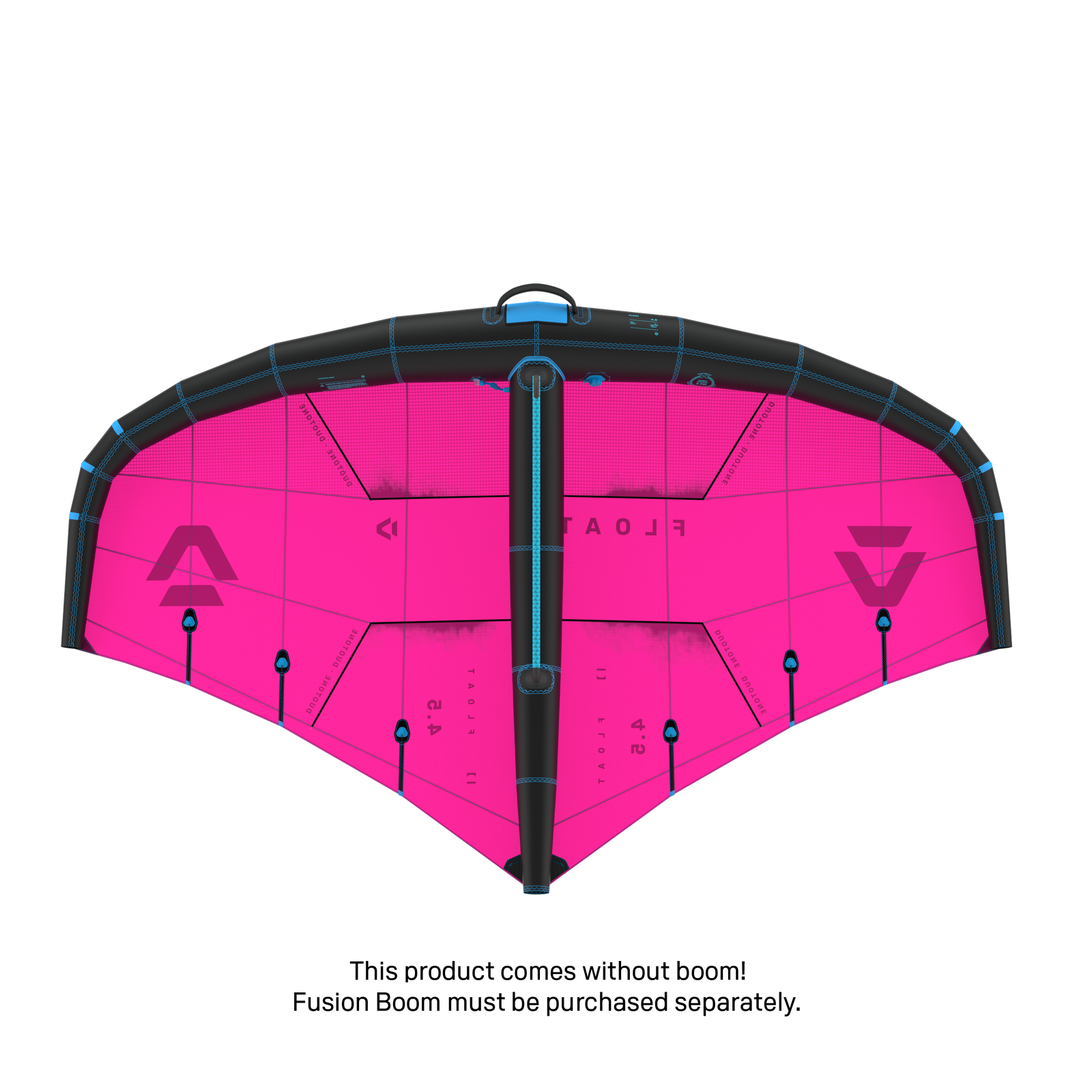
The standard Float uses proven 160 g Dacron throughout its inflatable frame. Its MOD3 S canopy supplies direct power, shape stability and durability, while the overall configuration omits windows to keep weight and visual complexity down. Control is through a Fusion boom only; handles are not offered for this model, and the boom must be purchased separately. The continuous boom gives the rider freedom to move either hand and find a comfortable position during transitions or while changing stance.
A wider and stiffer leading-edge handle is fitted for direct steering during flagged-out wave riding. Small, medium and large Fusion booms are assigned according to size: 72 cm for 2.0, 84 cm for 2.5 and 3.0, and 96 cm from 3.5 through 5.5. Every size uses six battens. They are 15 cm long on sizes 2.0 to 4.5 and increase to 20 cm on the 5.0 and 5.5.
Size range and specifications
The Float is available in eight sizes from 2.0 to 5.5 square metres. Published wind ranges extend from 22–40 knots at the small end to 8–16 knots for the 5.5, with overlapping steps that allow a quiver to be assembled around local conditions and rider weight. Weight without boom ranges from 1.22 kg to 2.17 kg, and wingspan increases from 215 cm to 351 cm.
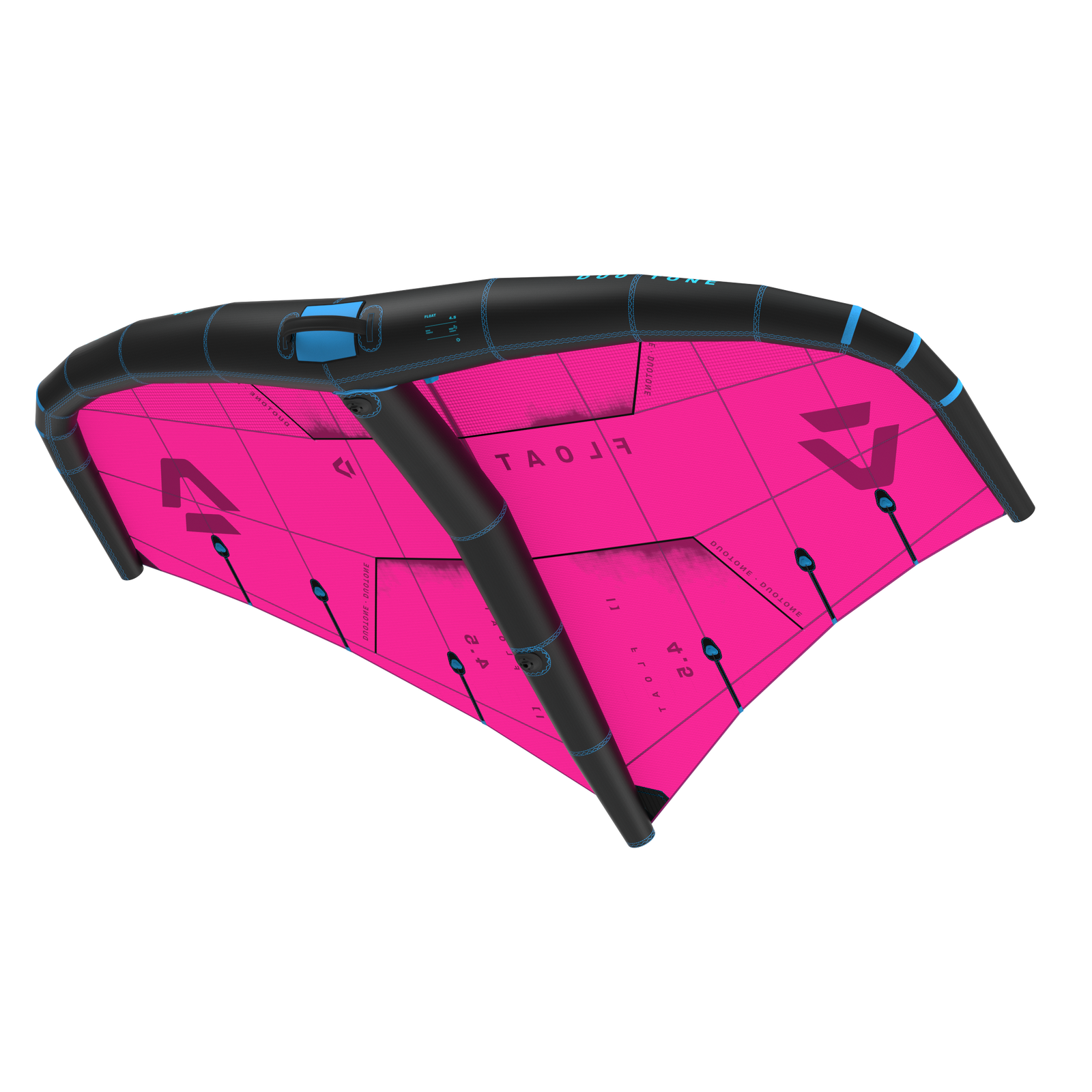
Inflation pressure varies across the range rather than using a single figure. The 2.0 is rated to 8 PSI, the pressure rises through 8.5 and 9 PSI to 9.5 PSI on the 3.5, then falls progressively to 7.5 PSI on the 5.5. Duotone recommends a medium 4-foot leash for sizes through 4.5 and a large 5-foot leash for the two biggest wings.
Summary
The 2026 Float combines a Dacron frame, MOD3 S canopy, no-window construction and boom-only control system in a dedicated wave package. Its key design themes are predictable sheeting, slightly front-handed power, reduced drag and stable freefly behaviour. Riders who want the same purpose with a lighter PentaTX frame can consider the Float SLS, while the standard model provides the complete Float geometry and size range in Duotone’s original construction.
Product videos