

Starboard SUP MF 820 2026
Reviews / Hydrofoils
 58,485
At A Glance
There aren’t many products that arrive with genuine race-winning credentials before they’ve even reached the wider market, but that’s exactly the case with the new Starboard MF range. Developed by Martin Fischer and Mathieu Durand using Starboard’s automated optimisation process, these wings had already made a strong impression before I ever got the chance to ride one.
I was on the start line at the Crozon Downwind Foil Festival in 2024 when Clément Colmas and Benoît Carpentier disappeared into the distance aboard prototype MF foils. They finished first and second, around 15 minutes ahead of an international field in extremely light conditions. It was one of those rare moments when everyone on the beach was asking the same question: What are they riding?
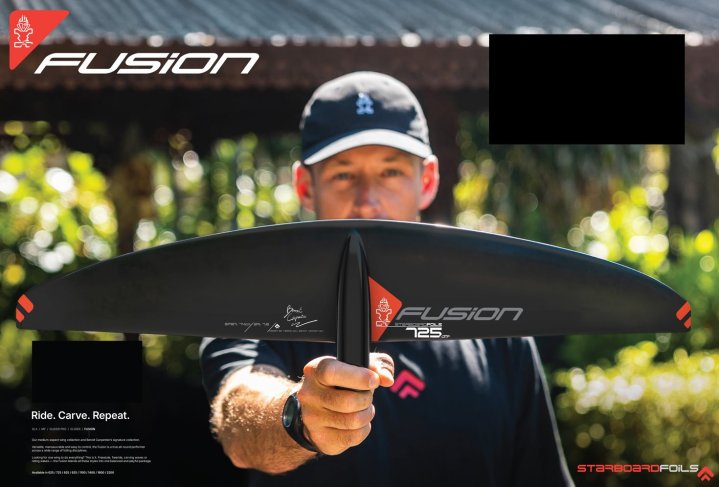
The answer was the MF, and it certainly looked impressive.
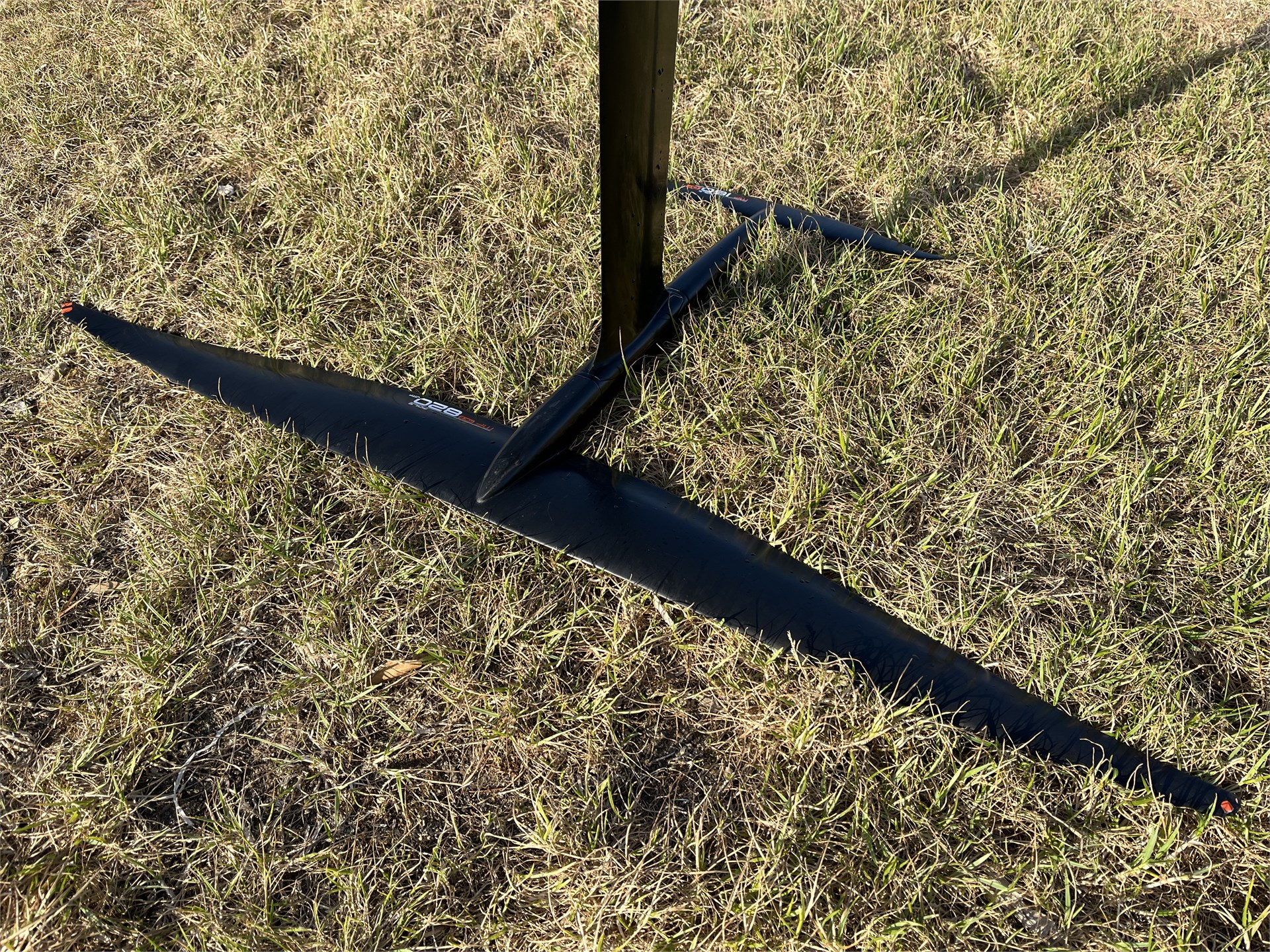
Designed with one objective in mind - maximum glide and sustained flight - the MF promises early lift, exceptional efficiency and a top end that continues to build as speeds increase. It’s aimed primarily at dedicated downwind foilers but also has plenty of appeal for wing foilers looking for maximum efficiency in lighter winds.
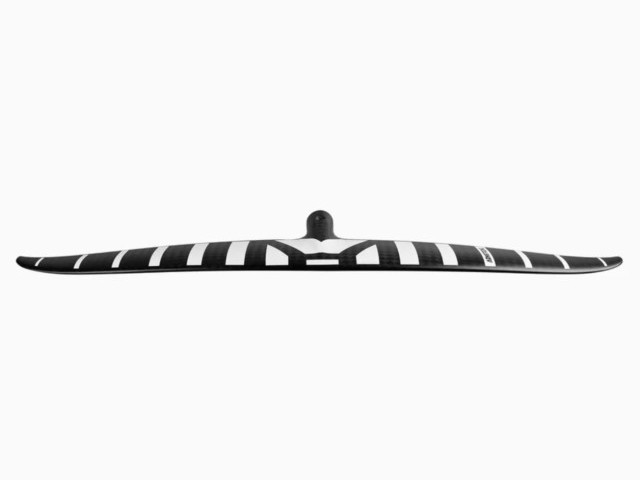
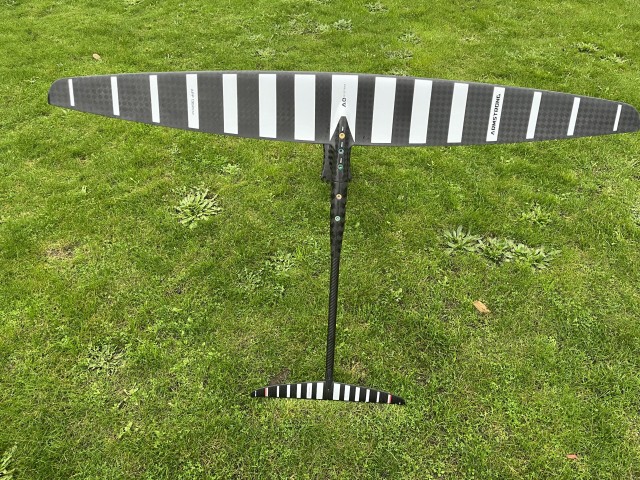
The range spans six front wings from 1160 cm² down to the incredibly high-aspect 580 cm², with aspect ratios extending all the way to an extraordinary 19.7. Those figures immediately reveal the design philosophy. This is a foil built to cover distance efficiently rather than carve tight turns, with the latest 640 and 580 models pushing that concept even further.
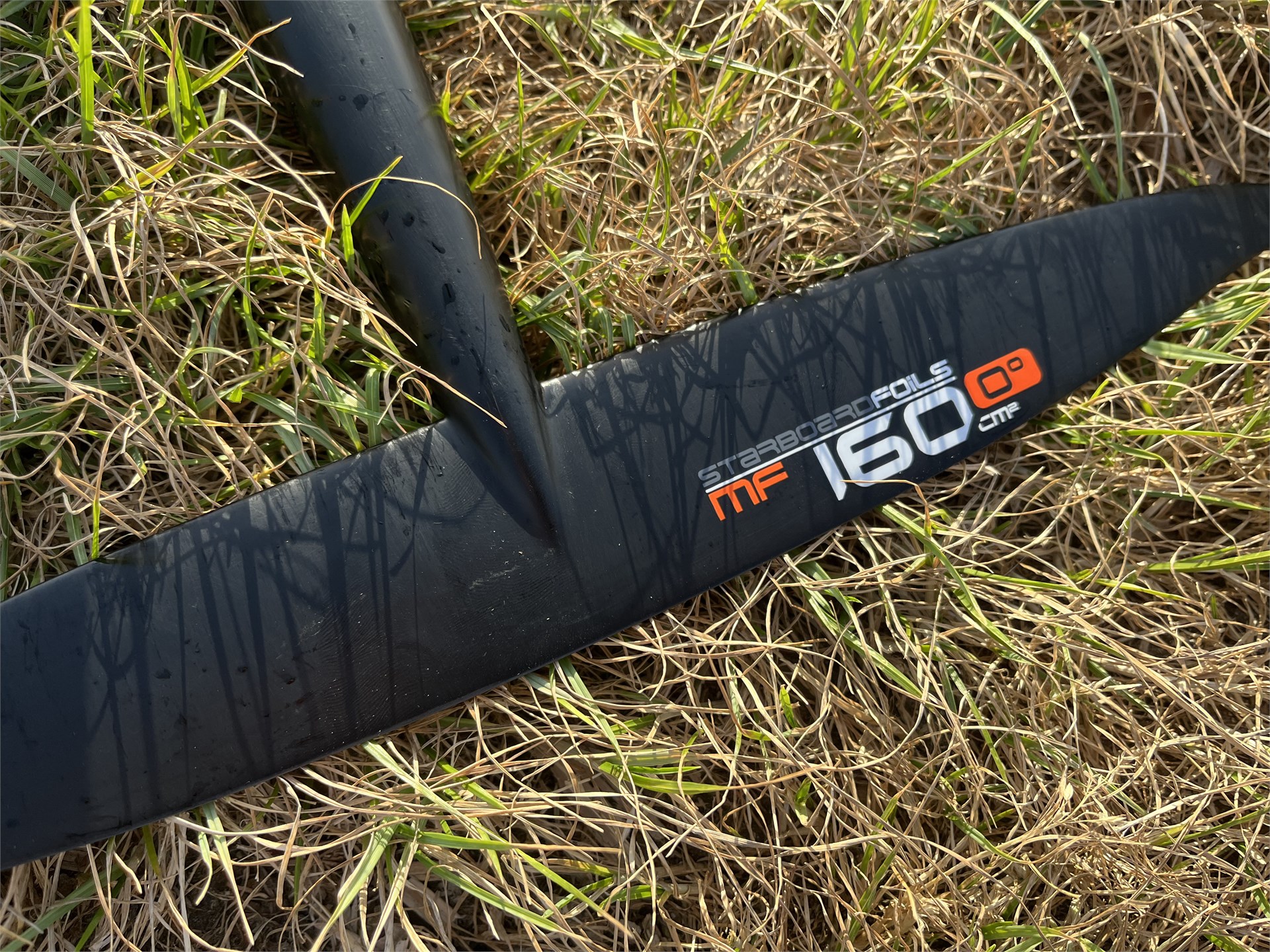
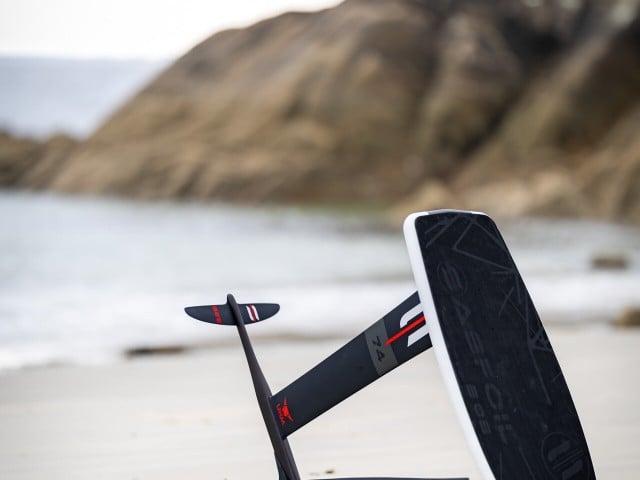
The front wings are paired with a dedicated family of tail wings, including the high-aspect MF160 and MF130 for experienced downwind riders, while the MF200 remains the recommended option for maximum glide thanks to its unique zero-degree angle of attack. Like all current Starboard foils, the MF range uses the UCS connection standard, making it compatible with any UCS mast. For this test, I rode the Carbon Solid Core C400 77cm mast with the MF160 stabiliser.
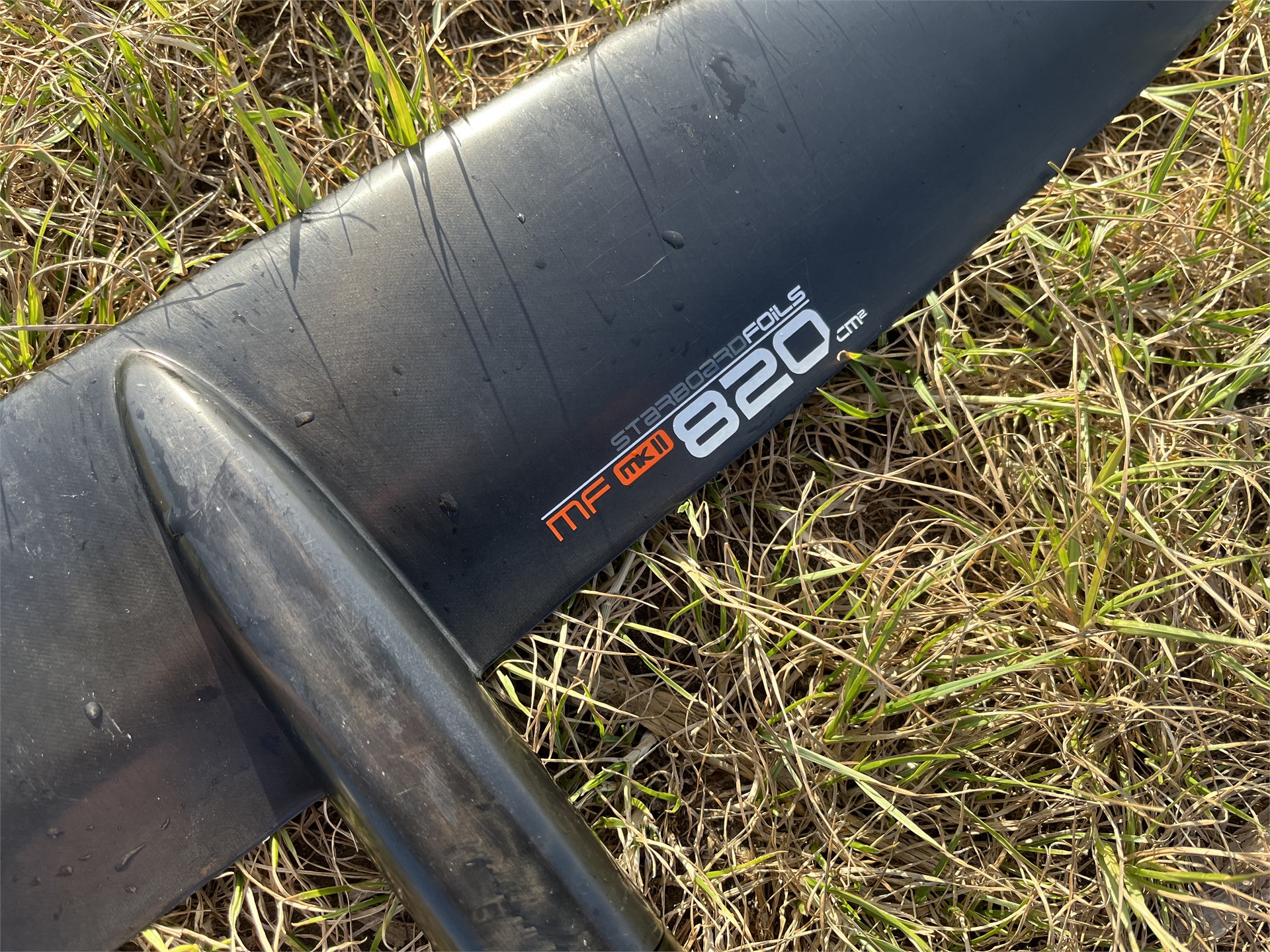
On paper, the MF certainly promises a lot. The real question was whether that impressive race pedigree would translate into a foil that delivers for the rest of us. Sizes: 580, 640, 720, 820, 960, 1160cm
On The Water
I wasn’t blessed with endless testing conditions during my time with the MF820, but perhaps that was no bad thing. When the opportunity finally arrived for a downwind run, I knew I’d get a genuine understanding of what this foil was capable of rather than simply enjoying an easy day.
My local run from Hengistbury Head offers around five kilometres of open-water bumps with plenty of fetch across the English Channel. I paired the MF820 with a 7’8” x 16¾”, 95L downwind board and a Black Project paddle.
As you’ll see in the accompanying video, by the time I’d paddled out to the bumps, the wind had eased to around 15 knots. Fortunately, it had been blowing all day, so there was still enough energy in the water to work with, although conditions were far from ideal. In many ways, those marginal conditions are where you really learn what a foil can do.
The MF generated lift surprisingly early, although I did need a few committed final paddle strokes to climb fully onto the mast. I suspect that had more to do with the fading conditions than the foil itself. Once flying, everything settled immediately. The foil felt incredibly composed and remarkably stable, with noticeably more glide than anything else I’ve ridden in this size.
Its 15.3 aspect ratio makes its intentions immediately clear. This is a long, efficient wing designed to maintain speed rather than encourage tight, playful turns. It rewarded an active, higher cadence pumping style, accelerated back to speed extremely quickly after each pump and made linking bumps feel almost effortless.
As the swell gradually lost energy further along the run, the foil continued carrying speed between sections with very little encouragement. Being able to connect increasingly weaker bumps without feeling like the foil wanted to drop off flight is one of the most satisfying aspects of downwind paddling, and the MF excelled here.
The stiffness of the entire system also stood out. Starboard has long produced exceptionally well-engineered foil systems, and the MF continues that tradition. The mast, fuselage and wing all fit together seamlessly to create a rigid, confidence-inspiring platform that never exhibited any noticeable flex while paddling onto foil, pumping or linking bumps. Anyone who regularly downwinds on SUP will appreciate just how important that stiffness becomes once you’re working hard to generate lift.
Overall
The Starboard MF Mk2 is clearly aimed at riders who prioritise efficiency, glide and covering distance over playful manoeuvrability, and it delivers on those objectives impressively well.
My testing focused solely on downwind SUP, where it proved exceptionally capable in less-than-perfect conditions. The same design philosophy should naturally suit parawing, prone downwind and light-wind wing foiling, although I wasn’t able to test those disciplines directly.
What impressed me most wasn’t outright speed but how easily the foil maintained flight once airborne. Even as the conditions faded, it continued linking bumps with very little effort, allowing me to keep moving efficiently across the water long after I expected the run to slow down.
It’s a beautifully engineered foil system that combines outstanding stiffness with exceptional glide, and after only one session, I was already hoping for another opportunity to ride it in bigger, faster conditions. For riders looking to maximise efficiency and cover serious distance, the MF Mk2 is a thoroughly impressive piece of equipment.
Videos

This review was in Issue 28 of Tonic Mag.
For more information visit Starboard SUPRelated


By Rou Chater
Rou Chater has been kitesurfing for over twenty years, paddleboarding for the last six years, and was there testing the first wingsurfer from Naish in Tarifa when it arrived on the continent. He is passionate about riding waves and exploring new places. As the publishing editor, he oversees everything at Tonic but also our sister magazines IKSURFMAG and IMB. He's been on the water since he was born and has never looked back, in the winter you'll find him chasing swells in the Caribbean and during the summer he can be found all over Europe at various SUP, Kitesurf and Mountain Bike events getting features for the magazines.